
Akahatsu
Akahatsu, Lactarius akahatsu, is a wild milkcap of East Asian pine and mixed forests that is sold in Yunnan markets, with its edibility and identity still needing species-level review.
 FermenteaWhere food goes to change
Mushrooms
Boletus subviolaceofuscus is a porcini described from Yunnan in 2016 and known from a narrow range in south-western China. A Yunnan wild-food list gives it as directly edible; no preparation or dish is documented.
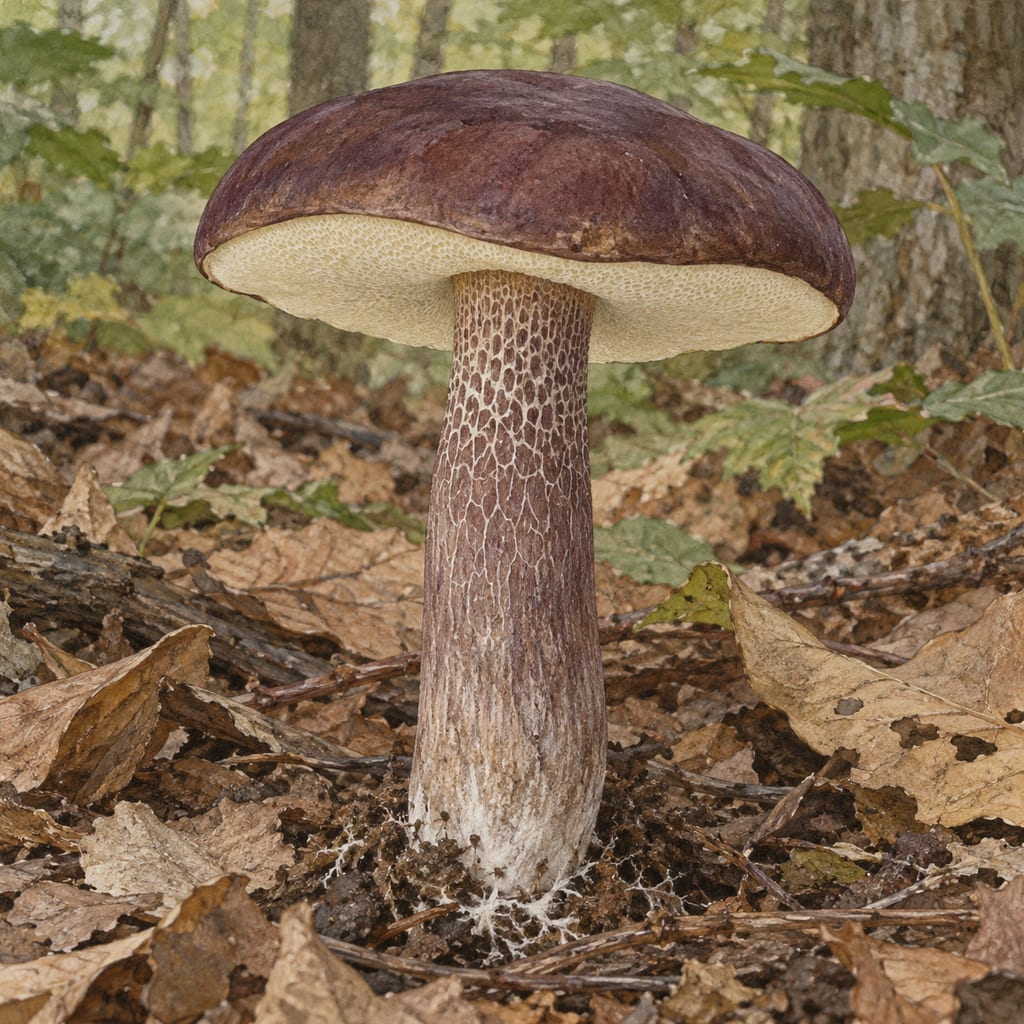
Boletus subviolaceofuscus is a porcini in the section Boletus. Its name refers to its resemblance to Boletus violaceofuscus, a separate species, and the original description treats the two as distinct. The names should not be used as if they were interchangeable.
The original account describes a dark purple to vinaceous brown cap and solitary or clustered fruiting in Lithocarpus forest. The species was characterized from both visible and microscopic features. Because it resembles other boletes, and even its describers note close similarity to B. violaceofuscus, colour and a photograph are not enough to identify a specimen.
The described collections come from Jingdong County on Ailao Mountain in Yunnan, at about 2,480 to 2,500 metres. The vouchers were collected in July and August. These are dates from one mountain area, not a range map for the whole of China or a general season.
A Yunnan list of common wild edible fungi, T/YEFA 002-2023, places the species in its table of directly edible wild mushrooms, with voucher HKAS 50325 and photograph number Li 571. The 2026 Chinese catalogue of edible and medicinal fungi includes it on a scientific edible checklist, and the supplied index records that the checklist has not been independently assessed. Those listings support describing the species as edible in these regional references.
The listings give no recipe, preparation method, raw-eating guidance or cooking time. 'Directly edible' is the list's own category label. It is not permission to eat a specimen identified from a picture, and it does not clear wild material gathered elsewhere. The sources reviewed also do not name a market, household tradition or Yunnan dish for this species, so those details remain open.
The species has no documented fermentation role, and its edible listing does not make it a culture or a starter. No evidence reviewed here describes a fermented preparation with it.
Similar boletes need specialist identification. Any wild mushroom should be handled only with qualified local expertise and applicable food-safety guidance. No specimen can be cleared by its name or colour description on this page.
Type area and voucher collections; the Yunnan list records it as directly edible.
Catalogue edible checklist entry; not an independent assessment.
Akahatsu, Lactarius akahatsu, is a wild milkcap of East Asian pine and mixed forests that is sold in Yunnan markets, with its edibility and identity still needing species-level review.
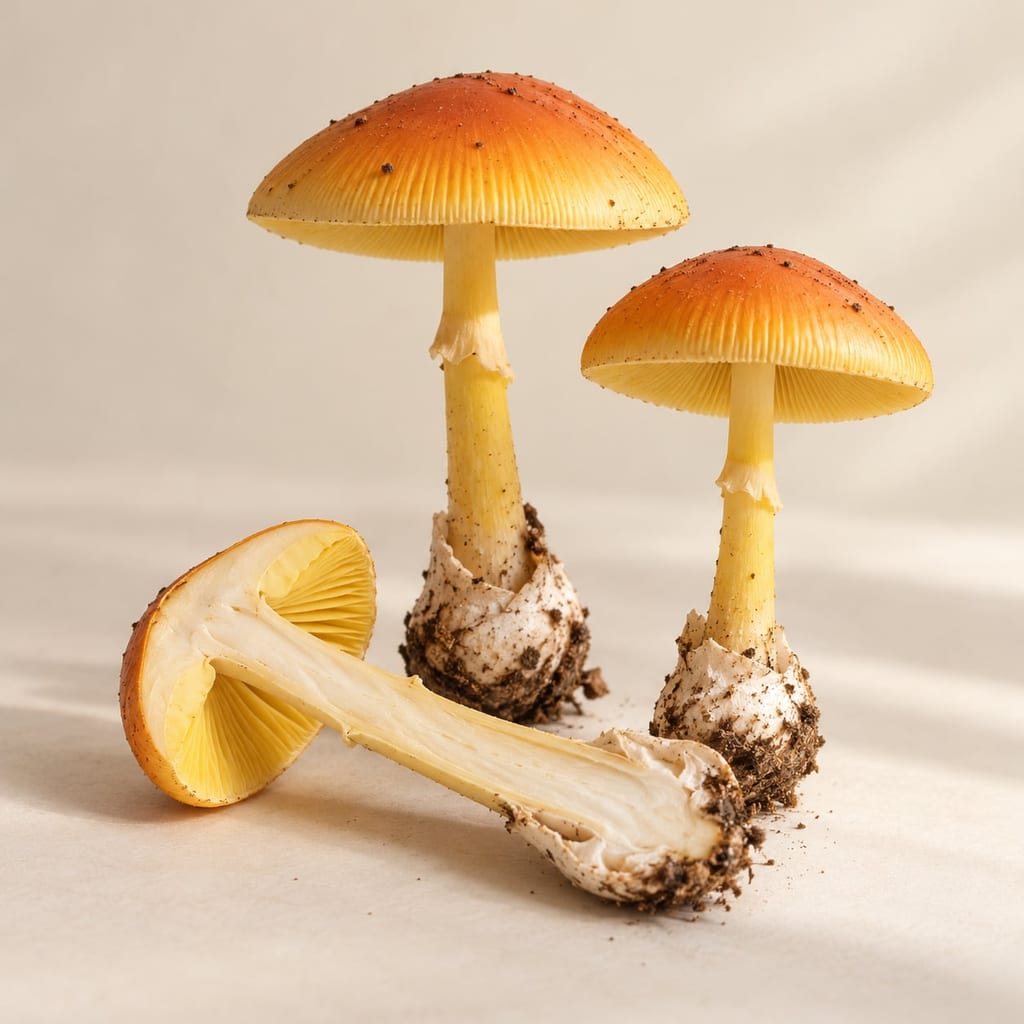
A wild Amanita of China, first reported there and listed as edible in a Yunnan ethnomycology study. The genus contains deadly species, so this page does not support identifying or eating it.
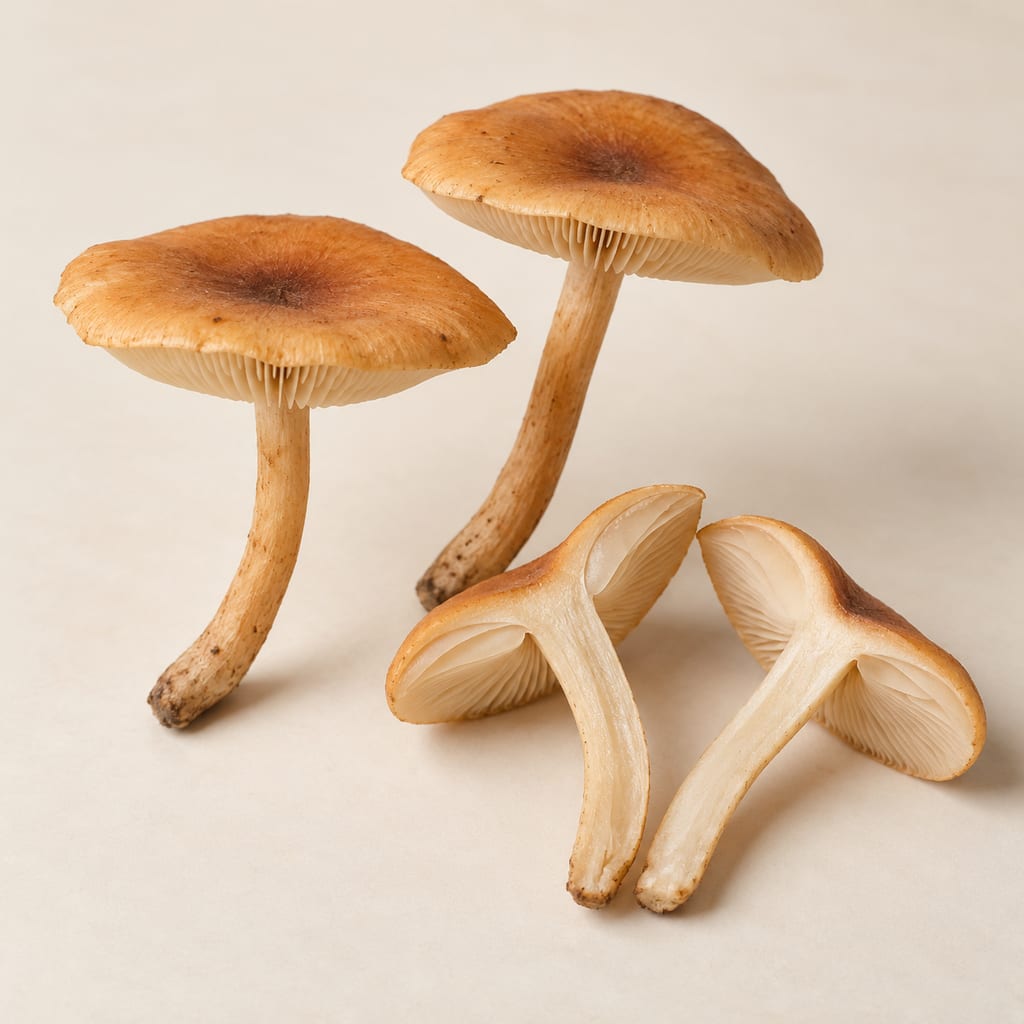
A wood-associated Armillaria recorded in Yunnan and Sichuan, China, and listed as edible in a 2026 Chinese catalogue.
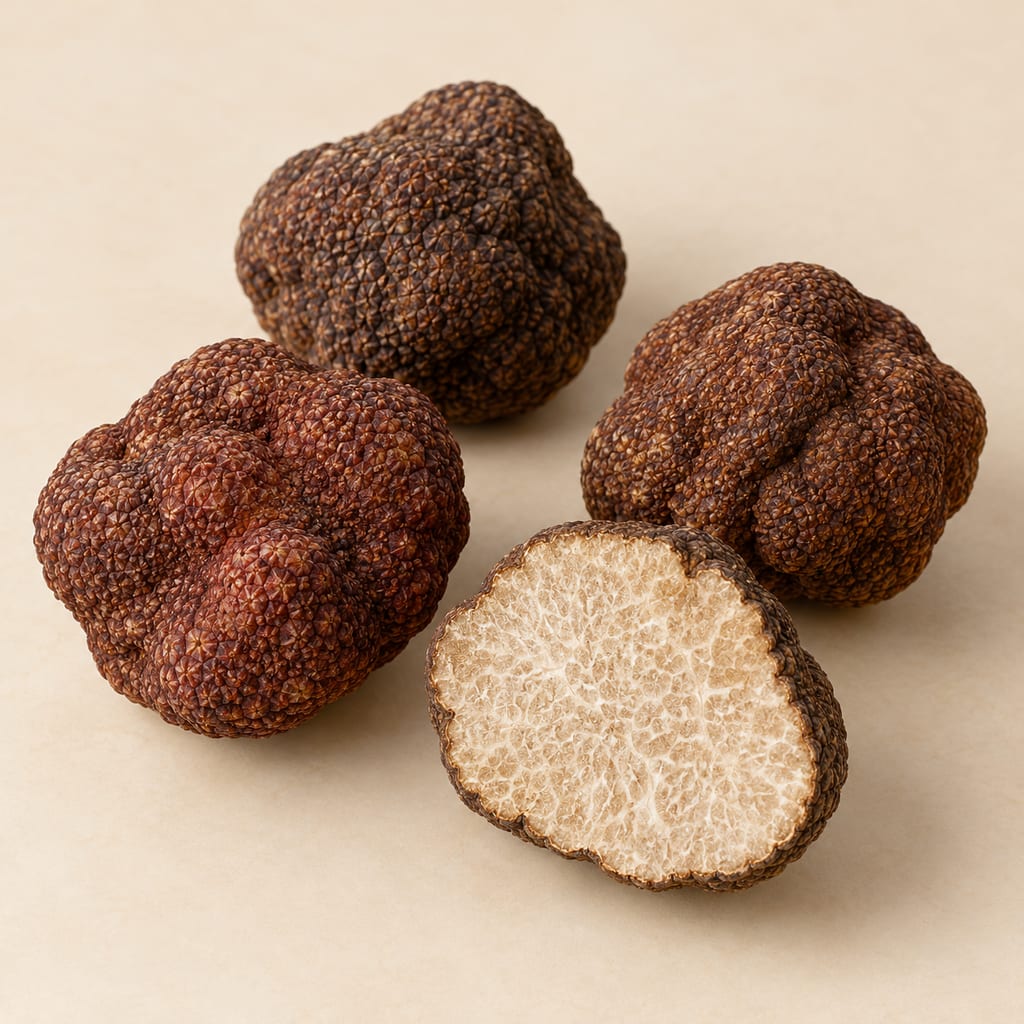
Tuber pseudohimalayense is a wild black truffle from Yunnan, China, listed as edible in a Chinese species catalogue. No independent assessment of its culinary use or safety is available.
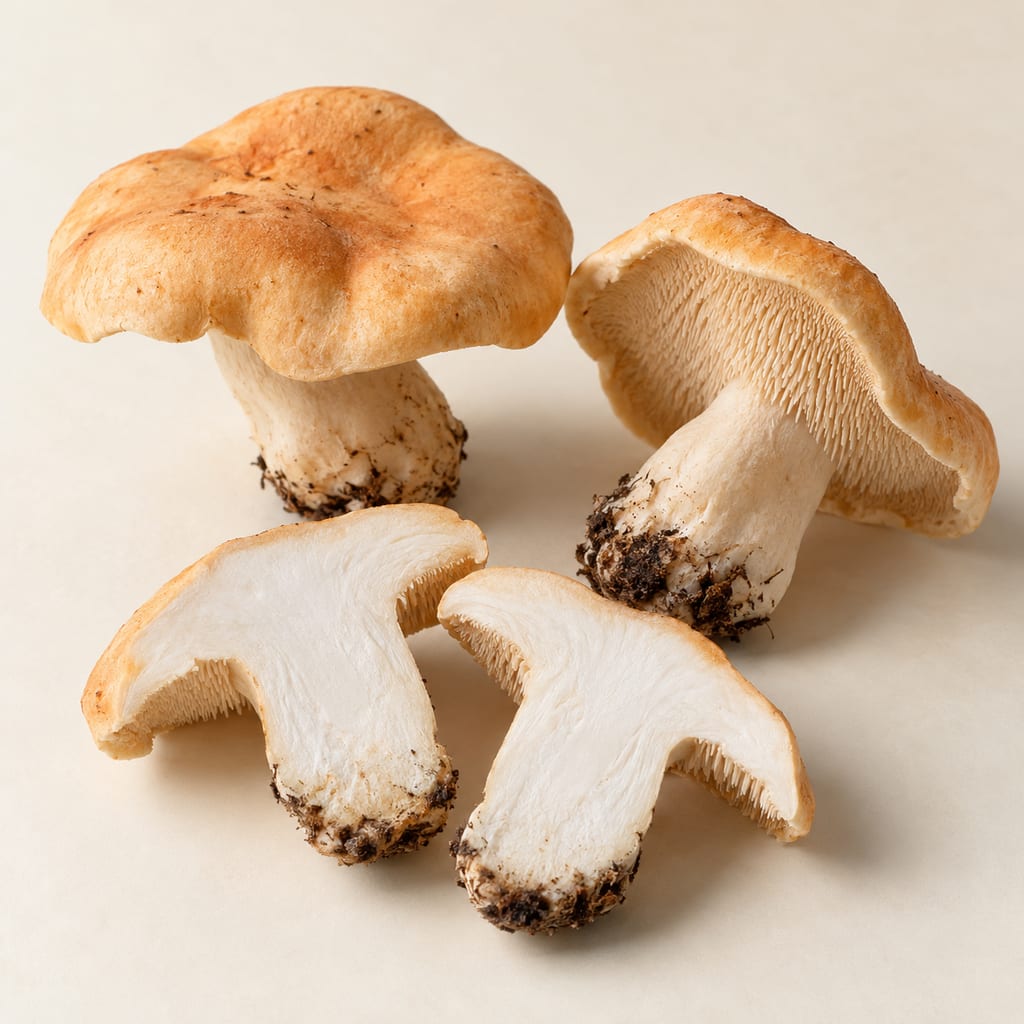
Hydnum berkeleyanum is a toothed, ectomycorrhizal forest fungus sold in food markets in Yunnan, China. Its regional identification is published, but its current name and local safety still need species-level review.
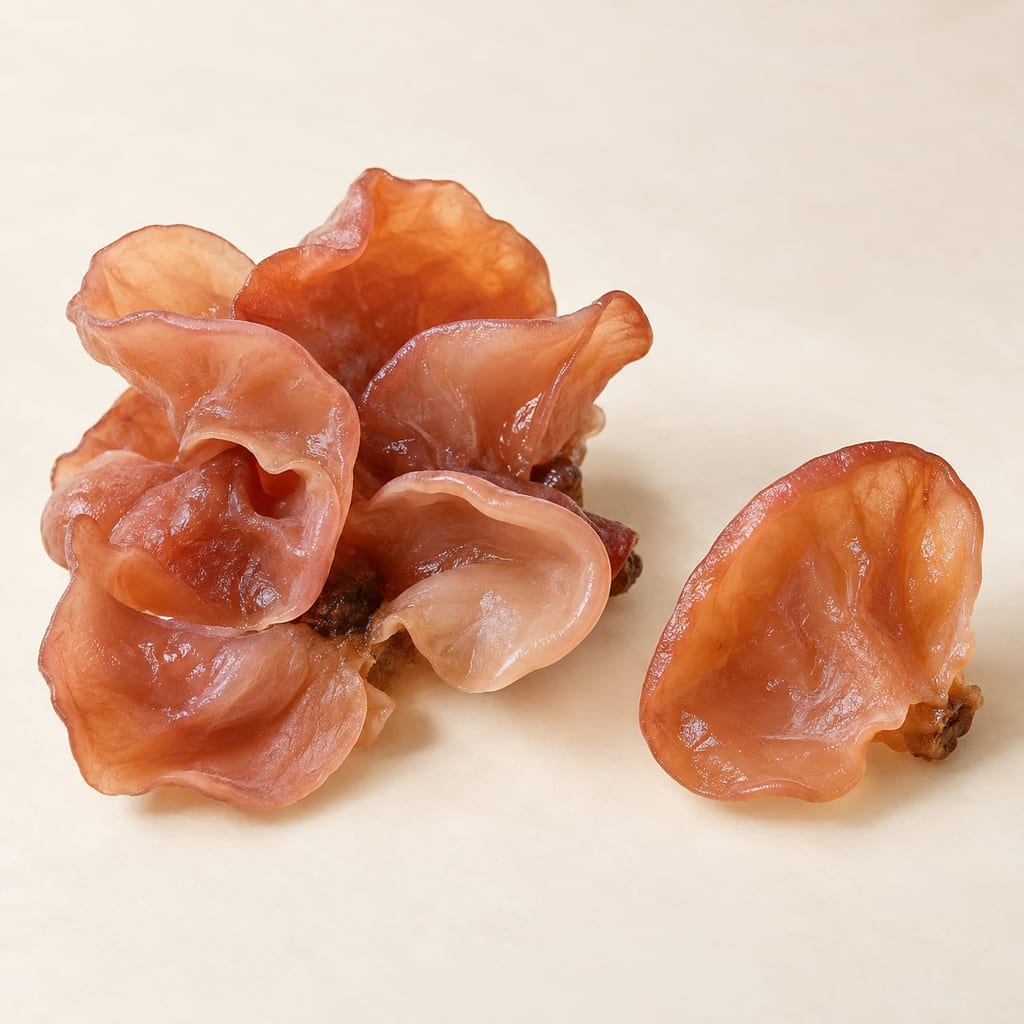
Auricularia thailandica is a thin, gelatinous wood ear described from Southeast Asian collections. Research reports it edible and experimentally cultivable, but species-specific recipes and everyday handling guidance are scarce.
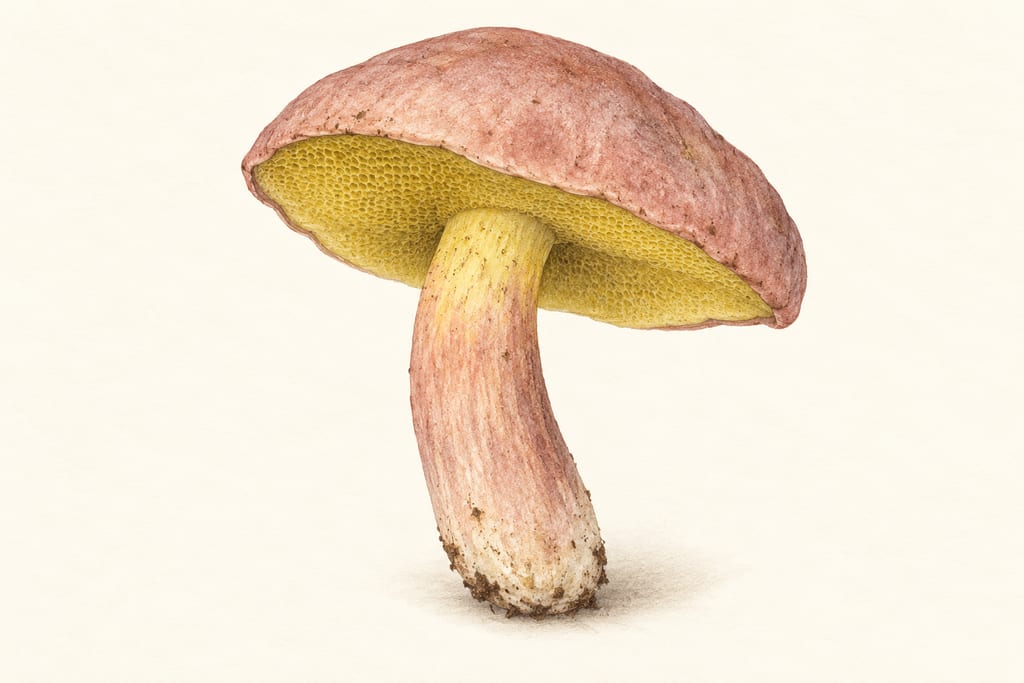
A 2023 Chinese taxonomic treatment accepts Boletellus indistinctus as a species. A separate Yunnan market record uses this name, but its specimen identification and local food safety have not been confirmed here.
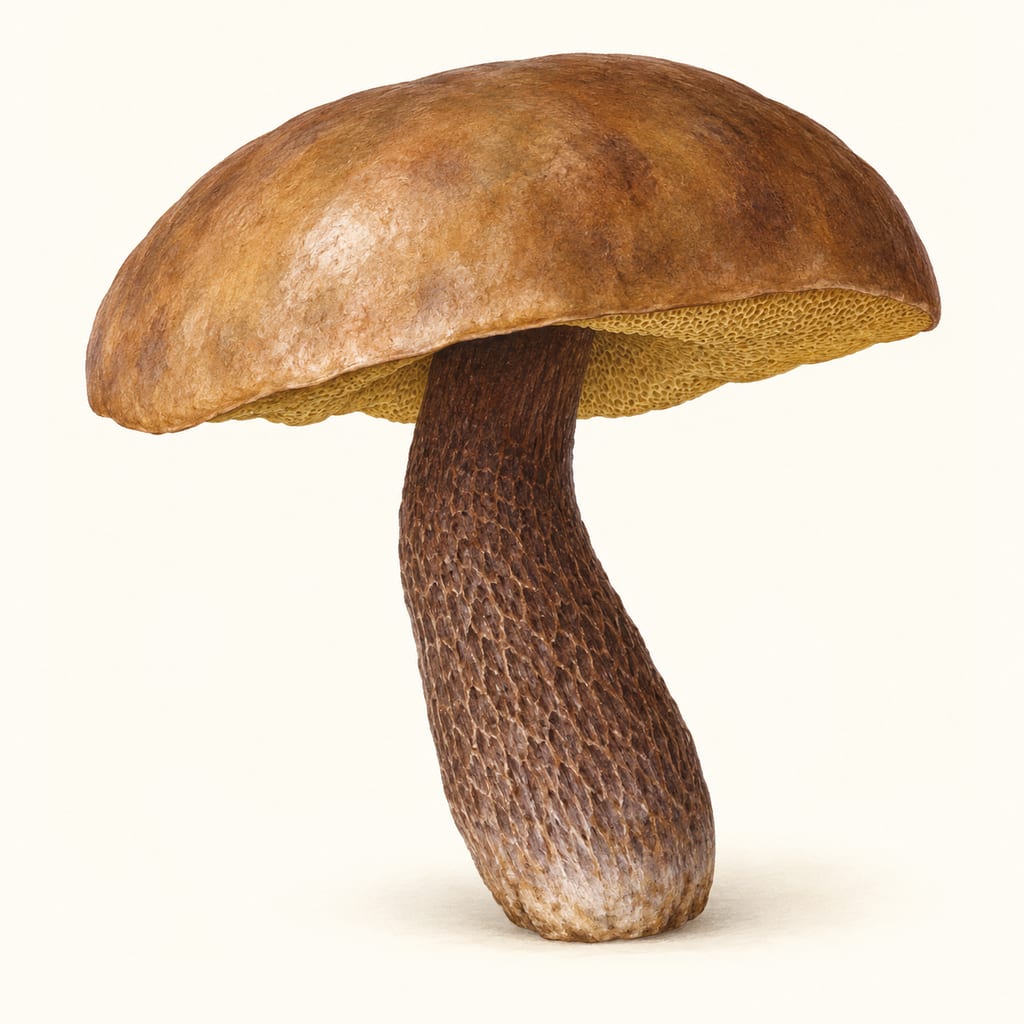
Boletus botryoides, the grape-coloured bolete, is a porcini-like wild bolete of central and south-western China. It is listed as edible in Chinese catalogues, but no dish or preparation is documented for it.
No community contributions have been published for this entry yet.
Sign in to contribute. Published comments and photos are free to read.
Fungal DiversityTaxonomy · Description · Distribution
Porcini mushrooms (Boletus sect. Boletus) from ChinaDark purple to vinaceous brown cap; Lithocarpus forest; Ailao Mountain collections; similarity to B. violaceofuscus
Cited in: Overview; Where it grows; Notes for cooks
Kunming Institute of Botany, CASTaxonomy
Porcini mushrooms (Boletus sect. Boletus) from China, publisher-hosted PDFPublisher-hosted copy of the 2016 description
Cited in: Overview
Yunnan Edible Fungi AssociationFood status
Yunnan Common Wild Edible Fungi List, T/YEFA 002-2023 (transcription)Table 1 lists the species among directly edible wild mushrooms, voucher HKAS 50325, photo Li 571; transcription only
Cited in: Food listings
MycosystemaFood status
Species cataloging of edible and medicinal fungi in ChinaScientific edible checklist, 2026; classification not independently assessed
Cited in: Food listings
MycosystemaTaxonomy
Catalogue of edible mycorrhizal fungi in ChinaIncludes B. subviolaceofuscus under Boletus
Cited in: Food listings