
Akahatsu
Akahatsu, Lactarius akahatsu, is a wild milkcap of East Asian pine and mixed forests that is sold in Yunnan markets, with its edibility and identity still needing species-level review.
 FermenteaWhere food goes to change
Mushrooms
A forest mushroom of Yunnan in China, sold in regional markets as a relative of matsutake. It grows with Fagaceae trees, has a lower market value than matsutake, and its edibility needs species-level review.
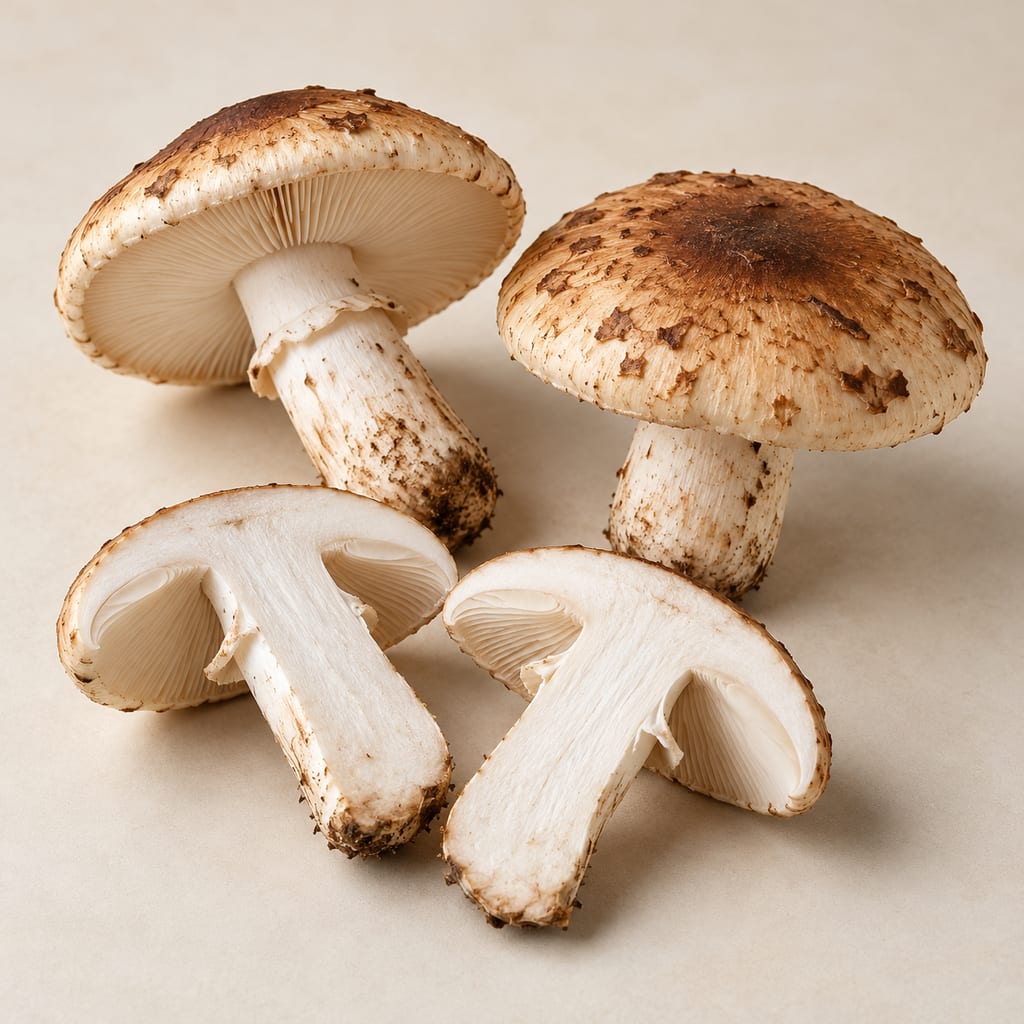
Tricholoma fulvocastaneum is an ectomycorrhizal mushroom of the forests of Yunnan in China. Regional markets sell it as a food mushroom, and the catalogue gives it the English label chestnut matsutake relative. It is one of several Tricholoma species grouped with the matsutake, the prized Tricholoma matsutake.
The name is a published regional identification. The catalogue states that contemporary taxonomy and local safety still need species-level review, so the name should be treated as provisional.
Tricholoma matsutake is one of the most valued wild mushrooms traded in East Asia. A 2017 review in Scientia Fungorum groups T. fulvocastaneum with the related species and describes it as having lower commercial value than T. matsutake. Its market value and its taste are therefore not the same as those of matsutake, and no source here supports treating the two as interchangeable in a recipe.
Calling it a matsutake relative describes a taxonomic group, not a substitute. A cook who buys a mushroom under this name should not assume that it has the aroma or price of matsutake.
The species is ectomycorrhizal, which means it grows in partnership with the roots of trees. An in vitro study reports that it forms moderately valuable mushrooms and is found in nature only with trees of the family Fagaceae, which includes oaks and chestnuts. In that study it formed a less extensive mycorrhizal network than T. matsutake.
Its fruiting depends on the host forest, so supply depends on the woodland where the host trees grow. The catalogue records supply as wild.
The catalogue records it as a named food mushroom found in regional markets in Yunnan. The source gives no preparation, quantity or cooking method for it, and the catalogue states that its food use rests on regional identification.
Any preparation would need a regional recipe source and a specialist's name check. Matsutake cookery is not a valid guide to this species, because the sources give no evidence that the two are prepared alike.
Market presence is not an identification or edibility verdict. The catalogue asks for species-level review of both the name and local safety. A specimen should not be identified from this page, and ectomycorrhizal mushrooms in the Tricholoma group have look-alikes that need local expertise to separate.
Appearance, smell and taste do not establish that a mushroom is safe, and sellers' names may not match the species.
The sources do not give the taste, the nutritional profile, the recorded edibility in detail, or the accepted name in current taxonomy. A next research question is a regional field or market study that names specimens and their hosts, checked by a Tricholoma specialist.
The market record names Yunnan; it does not place the species at a single site.
Akahatsu, Lactarius akahatsu, is a wild milkcap of East Asian pine and mixed forests that is sold in Yunnan markets, with its edibility and identity still needing species-level review.
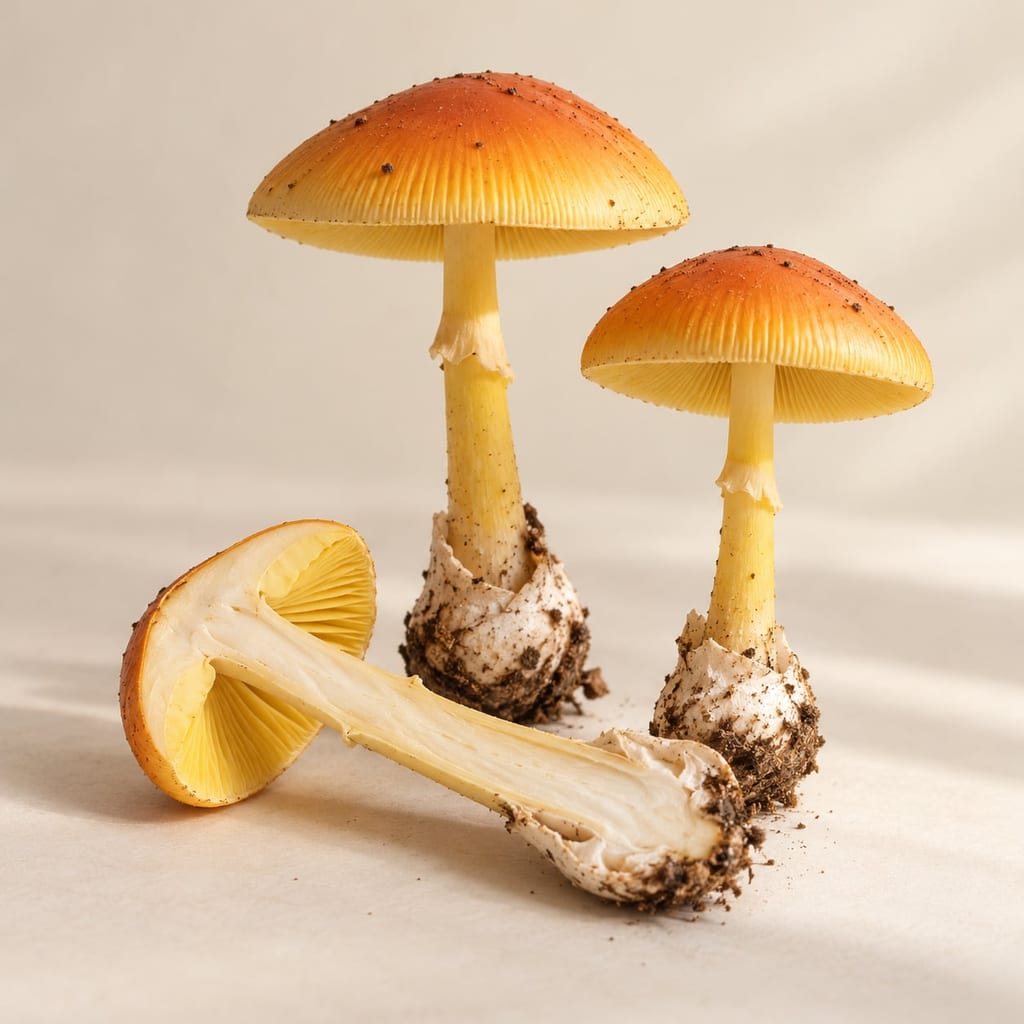
A wild Amanita of China, first reported there and listed as edible in a Yunnan ethnomycology study. The genus contains deadly species, so this page does not support identifying or eating it.
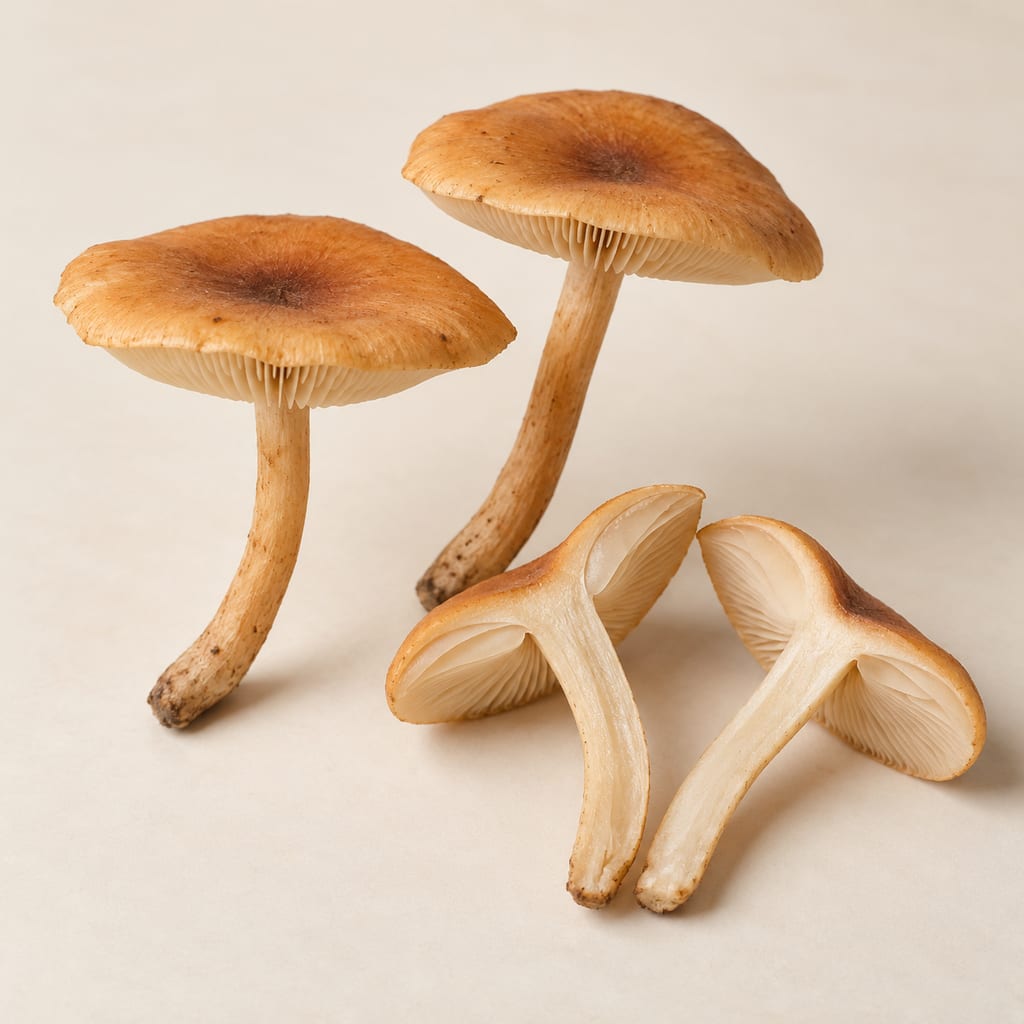
A wood-associated Armillaria recorded in Yunnan and Sichuan, China, and listed as edible in a 2026 Chinese catalogue.
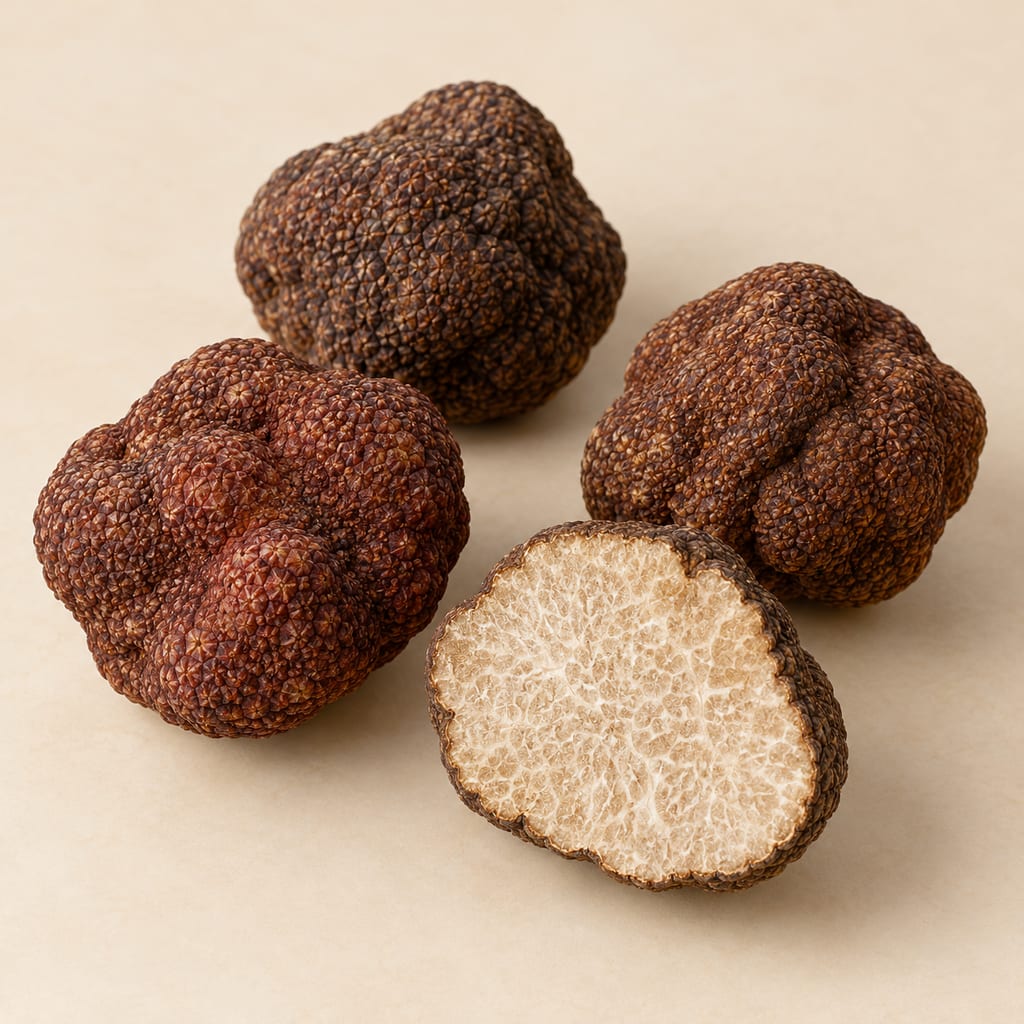
Tuber pseudohimalayense is a wild black truffle from Yunnan, China, listed as edible in a Chinese species catalogue. No independent assessment of its culinary use or safety is available.
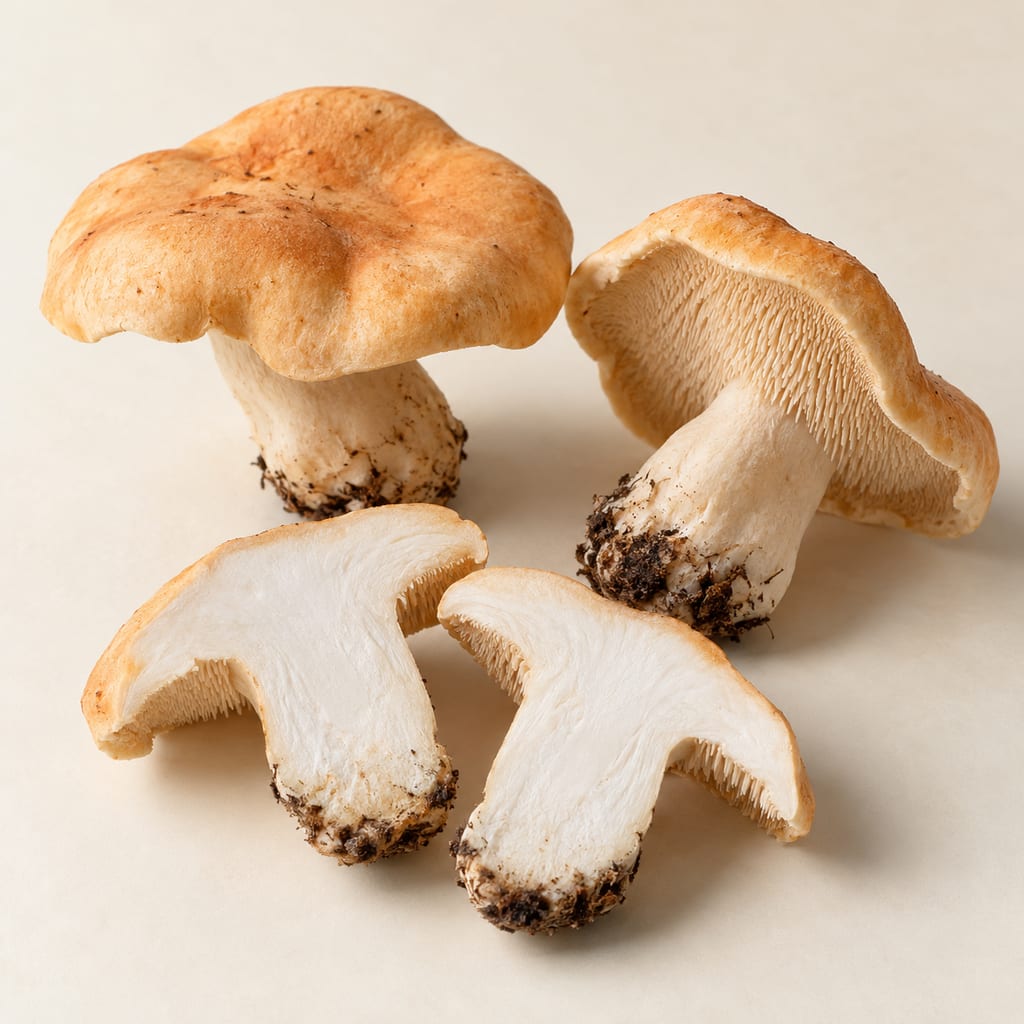
Hydnum berkeleyanum is a toothed, ectomycorrhizal forest fungus sold in food markets in Yunnan, China. Its regional identification is published, but its current name and local safety still need species-level review.
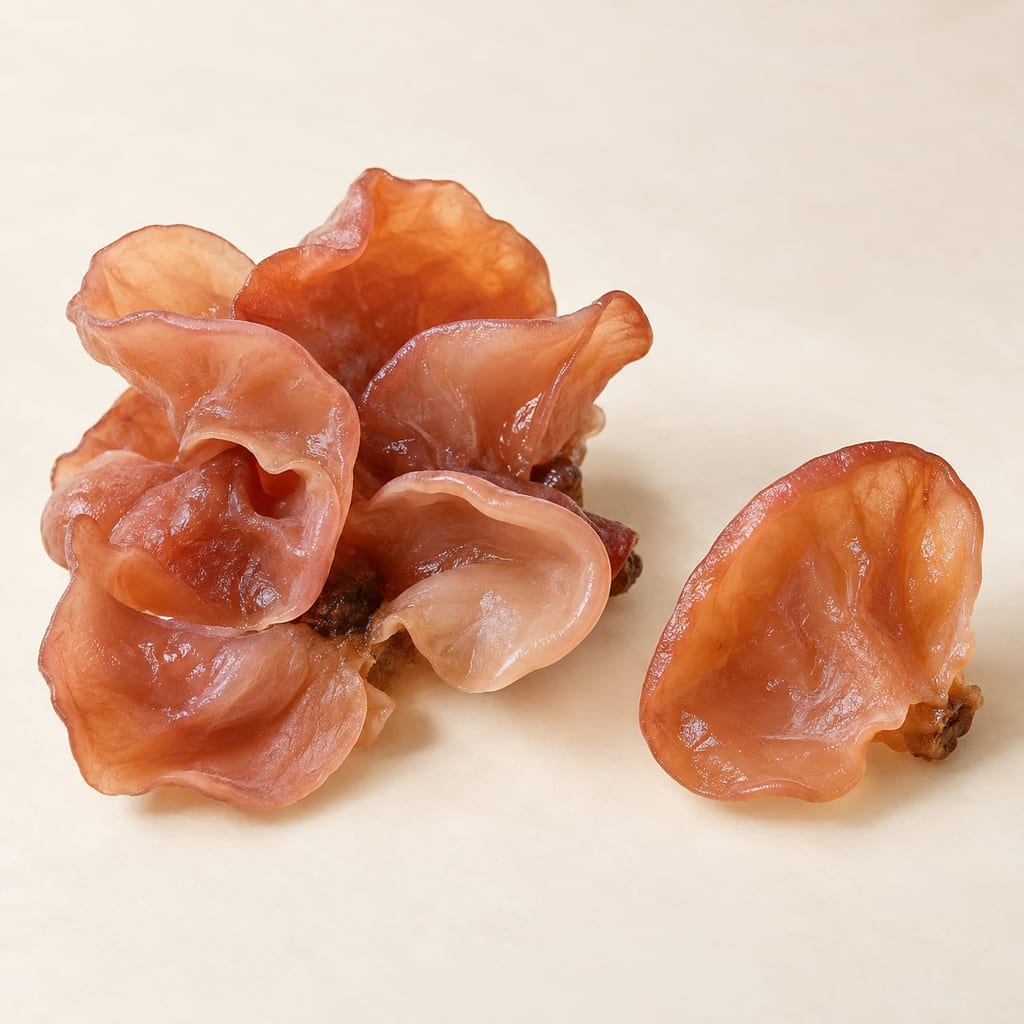
Auricularia thailandica is a thin, gelatinous wood ear described from Southeast Asian collections. Research reports it edible and experimentally cultivable, but species-specific recipes and everyday handling guidance are scarce.
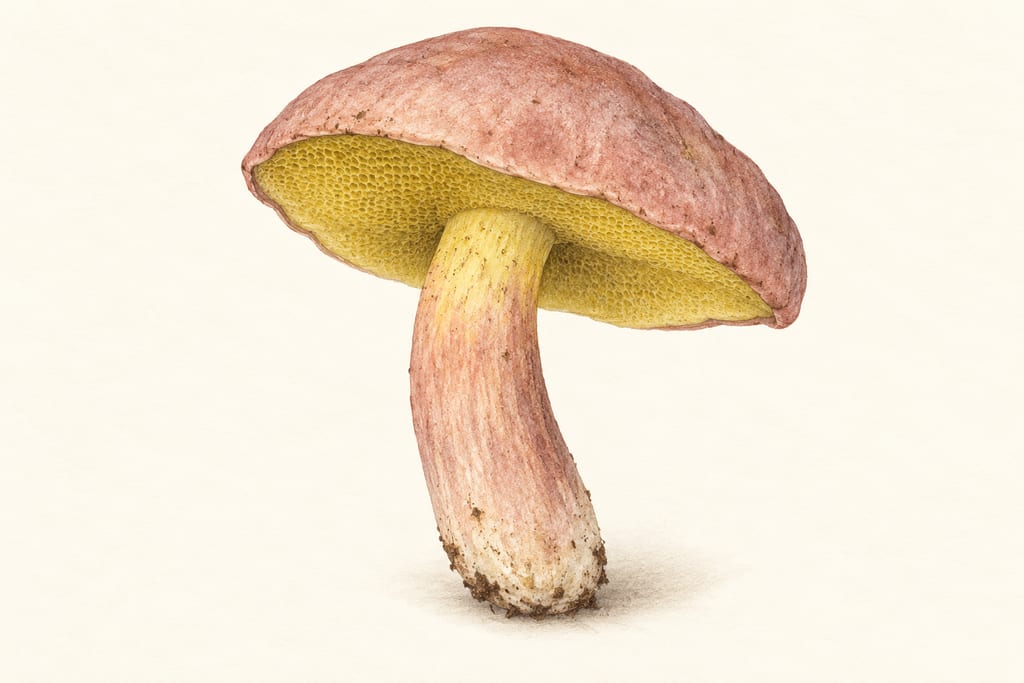
A 2023 Chinese taxonomic treatment accepts Boletellus indistinctus as a species. A separate Yunnan market record uses this name, but its specimen identification and local food safety have not been confirmed here.
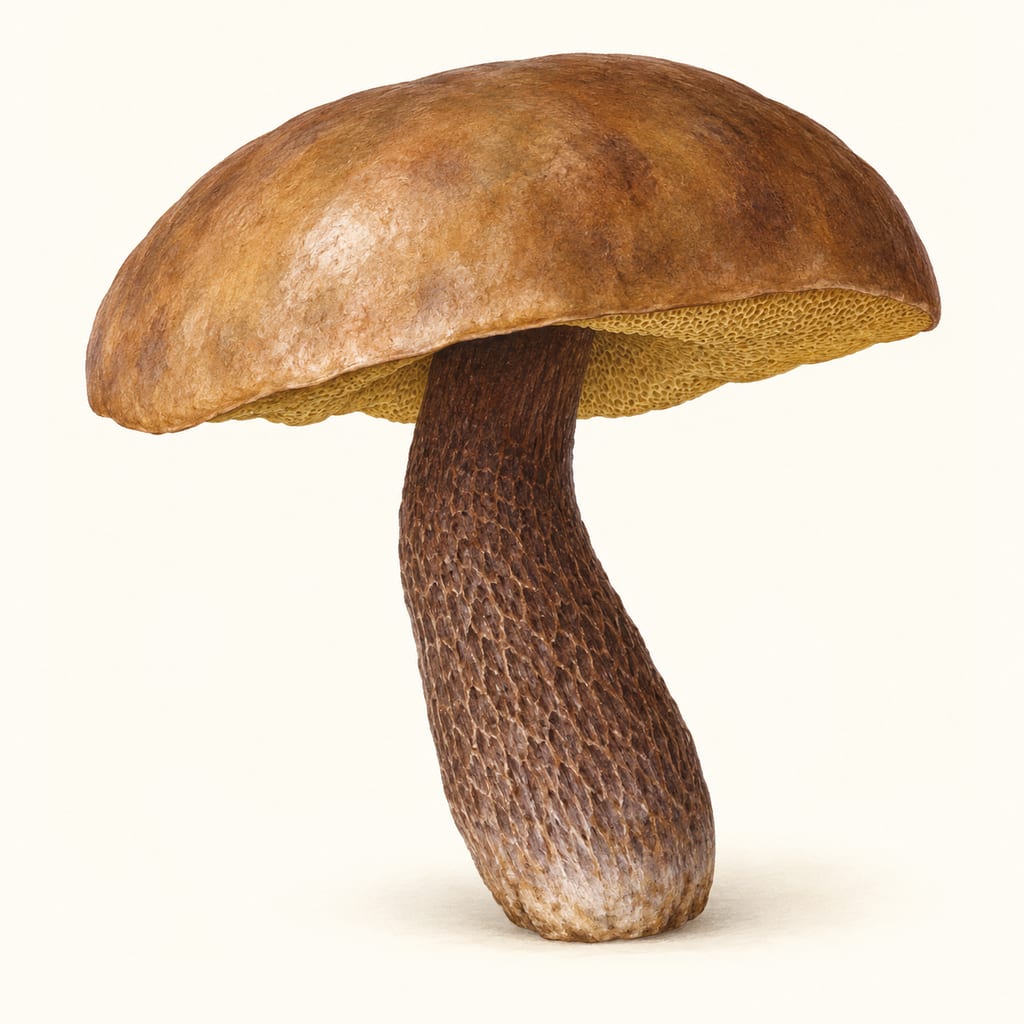
Boletus botryoides, the grape-coloured bolete, is a porcini-like wild bolete of central and south-western China. It is listed as edible in Chinese catalogues, but no dish or preparation is documented for it.
No community contributions have been published for this entry yet.
Sign in to contribute. Published comments and photos are free to read.
Journal of Ethnobiology and Ethnomedicine (BioMed Central)Food use · Safety
https://link.springer.com/article/10.1186/s13002-022-00551-7Named food mushroom found in regional markets in Yunnan; wild supply; ectomycorrhizal.
Published regional identification retained; contemporary taxonomy and local safety need species-level review.
Cited in: Overview; Ecology; Market and food use; Safety and identification
Scientia FungorumTaxonomy · Ecology · Market
Tricholoma matsutake: un hongo comestible micorrícico de gran importancia socio-económica en ChinaTricholoma fulvocastaneum is a related species with lower commercial value than T. matsutake.
Forms moderately valuable mushrooms and is associated with Fagaceae in nature (in vitro study context).
Cited in: Overview; Relation to matsutake; Ecology; What is still unknown