Seal meat
Seal meat is the flesh of hunted seals, eaten fresh, frozen, boiled, dried and, in distinct preparations, aged or fermented. Species and community practices vary; the name describes neither one recipe nor one place of origin.
 FermenteaWhere food goes to change
Dwarf fireweed (Epilobium latifolium) is a northern wild herb whose tender leaves and flowers appear in distinct Arctic food traditions.
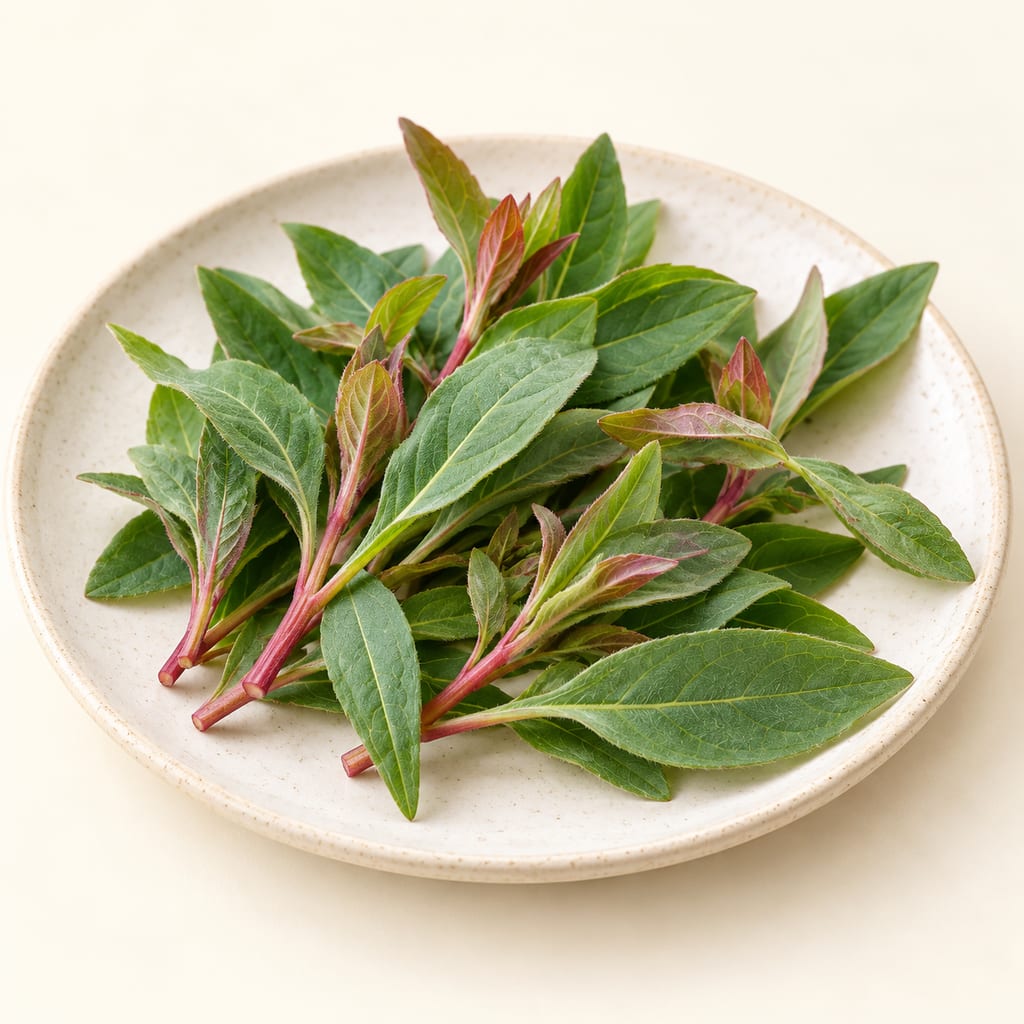
The 2014 ethnobotanical handbook by Naukan authors Liudmila Ainana and Igor Zagrebin places river beauty among the edible plants collected by Siberian Yupik communities of the southeastern Chukchi Peninsula. It is a record of community knowledge and language, not a universal Arctic recipe. A later study of Naukan ethnobotany combined interviews, participant observation and plant vouchers in villages where Naukan people live after the closure of the old settlement in 1958. It reports plant foods as part of a changing food landscape, with elders’ memories, current practice and neighboring traditions kept distinct.
These accounts matter because a plant name or a broad label such as fireweed can conceal several species and several local foodways. This page focuses on *Epilobium latifolium* L., used in the cited sources as dwarf fireweed or river beauty. Its food history is known through specific regional records: leaves are gathered young, cooked, stored or served with other foods. The record does not establish when this use began, how widely it was practiced across all Yupik or Chukchi communities, or whether it is practiced in every place today.
Kew’s Plants of the World Online accepts *Epilobium latifolium* L. Other botanical works use *Chamerion latifolium* (L.) Holub or *Chamaenerion latifolium* (L.) Sweet; these are treated as synonyms, not additional edible species. Kew lists a broad native range from northern Europe through temperate Asia and across western and northern North America. The Canadian Arctic flora notes that the species was described from Siberia. None of these nomenclatural facts establishes a single point of origin for its food use.
The common names include dwarf fireweed, river beauty, Arctic fireweed, broad-leaved willowherb and short fireweed. They are helpful search terms but do not replace a botanical identification. The names recorded by ELOKA are also community-specific: Chukchi вевевтыт (vevevtyt), Naukan ўе̄ўе̄хты (wiawiagte), and Russian иван-чай широколистный (ivan-chay shirokolistny). A North Slope Alaska source records the Iñupiaq name Tilaaggik. These names should not be transferred from one language community to another without evidence.
This species is separate from rosebay or tall fireweed, *Epilobium angustifolium* L. Kew accepts that as a different species, and the North Slope field guide distinguishes its slender, pointed leaves from dwarf fireweed’s thicker, broader foliage. Their English names overlap, but the taxa and edible plant records are not interchangeable.
Dwarf fireweed is a low perennial herb of the evening-primrose family, Onagraceae. In the Canadian Arctic flora description, plants are about 5–30 cm tall, with horizontal rhizomes and ascending or reclining aerial stems. Leaves are alternate or sometimes opposite, sessile, and lanceolate; the blades are fleshy and may be gray-green or slightly glaucous. The flowers are conspicuous pink to purple and occur in leafy clusters. The North Slope guide gives a similarly compact stature and contrasts it with the taller, narrow-leaved fireweed found farther south.
These descriptions help explain the common name and why the species can be noticed in flower, but young plants gathered before flowering will not display the showy flower cluster. The botanical descriptions give broad, fleshy leaves and a compact form; they do not offer a complete field key for every growth stage or region. A generated food photograph is editorial artwork, not a specimen photograph or an identification guide.
The species is recorded across Arctic and temperate northern regions. Kew’s distribution list includes Greenland, Iceland, northern Russia, Alaska, northern Canada and many interior parts of western North America and Asia. The Canadian Arctic flora describes it on gravel bars, floodplains and other well-watered, sandy or gravelly sites; the North Slope Borough account also places it on gravel bars and stream margins. ELOKA’s Beringian plant project describes its regional work as documenting plant knowledge on both sides of the Bering Strait.
Harvest timing in the food records is tied to tenderness rather than a calendar date. ELOKA’s Naukan and Chukchi accounts describe gathering the leaves before flowering, while they are still soft; the North Slope guide notes that new shoots appear early along streams. These observations are regional and seasonal. They do not support one harvest date for all latitudes, elevations or years, nor do they document commercial cultivation or a standard market grade.
The most consistently documented food part is the leaf. In the Naukan account published by ELOKA, people gather the soft upper leaves before flowering, boil them and press out water. The leaves can then be cooked with walrus or seal meat. The Chukchi account describes tender leaves gathered before flowering and often kept moist; some people dry them. Leaves are boiled with wild rhubarb and willow leaves, combined with reindeer or marine-mammal blood and fat in a dish translated as “green porridge,” and eaten with fish or walrus flipper. The same source describes dried leaves added to soup as seasoning.
The National Park Service handbook gives a fuller set of distinctions among nearby Siberian Yupik communities. It describes Naukan use of the plant’s leaves, including lightly boiling, pressing and moist storage; separate accounts describe warming fresh leaves with marine-mammal oil and adding them to dried salmon roe, or boiling leaves with walrus flippers. The book also attributes a winter food to cask-stored leaves compacted with boiled gray-whale muktuk and covered with water. These are source-specific descriptions, not instructions to reproduce a preserved animal food or proof that all communities used the same method.
Other Arctic records describe a different range of uses. A.E. Porsild’s 1953 survey reports that the large flowers could be eaten raw and that fleshy leaves were used cooked; it records occasional raw leaves and flowers with seal blubber in Greenland. The Canadian Arctic flora summarizes northern food uses of the shoots, leaves and petals, drawing on cited ethnobotanical literature. A University of Alaska program says young leaves may be eaten raw or boiled, older leaves may be used for tea, and flowers may be made into honey or jelly. These broaden the documented forms but do not establish that every form is traditional in every community.
Use details are not identical even within the ethnobotanical handbook. Its account says Naukan people used the leaves; Chaplino people did not gather this plant in that account because other local greens were available, while Sireniki gathering was uncommon and one recorded use paired fresh leaves warmed in marine-mammal oil with dried salmon roe. A separate St Lawrence Island account describes leaves packed under water, drained and frozen for later meals with warm oil, marine-mammal meat and muktuk. The handbook keeps these as different local practices rather than interchangeable steps. They show how the same plant can serve as a cooked green, a soup seasoning or part of a seasonal stored-food meal according to place and community.
Descriptions of taste and texture are limited. Porsild compares the cooked leaves with spinach and notes that raw leaves can taste somewhat acidic; the Canadian flora likewise records a spinach-like comparison. These are qualitative observations from older regional literature, not a measured flavor profile or a guarantee that any plant will taste the same. ELOKA’s account of dried leaves used like a bay leaf is about their seasoning role in soup, not a claim that they are botanically or chemically equivalent to bay.
The plant is used as a gathered green, not as a cultivated vegetable in the sources consulted. The useful food form is tender foliage before flowering. The record does not establish a named cultivar, standardized size, commercial form, nutritional analysis for a typical serving, or a modern supply chain. Its regional food value lies in how gathered leaves and flowers fit particular northern meals, rather than in a standardized ingredient specification.
Storage accounts should be read as descriptions of practice, not as validated preservation procedures. ELOKA reports boiled and pressed Naukan leaves packed in a container and weighted down; the account notes that they freeze when the weather turns cold and notes present-day drying or refrigerator storage. It separately says Chukchi leaves are commonly kept moist and that some are dried. The NPS handbook reports other local accounts of cask storage, water coverage and freezing. Those details describe distinct reported methods and communities; they do not supply controlled temperatures, salt concentrations, acidification targets, container sanitation, storage duration or microbiological results.
Nothing in these records establishes that dwarf fireweed itself is fermented. A leaf being stored moist, weighted, covered with water, frozen or dried is not by itself evidence of fermentation. The published ethnobotany article discusses regional plant-storage techniques in general and specifically identifies fermentation of rose root (*Rhodiola integrifolia*) in a different preparation. That report must not be transferred to fireweed. This page therefore treats dwarf fireweed as an ingredient and describes storage without offering a fermentation recipe or a shelf-life claim.
The reports do not say whether the storage vessels were airtight, how long the leaves remained in storage, or what conditions controlled spoilage. The mention of freezing in northern settings is part of the account, not a universal preservation specification. Drying is a separate reported option, and the sources do not compare its keeping quality with moist storage. Readers cannot infer a safe shelf life from the fact that a method was historically used.
Identity and condition matter with any wild food. Regional field guides describe distinguishing traits, but this page is not a field key and the generated image cannot confirm a wild specimen. Do not gather or eat a plant on the basis of a common name, a photograph or resemblance alone; have the species identified with reliable local botanical guidance. The sources consulted do not provide a complete lookalike hazard assessment for the plant across its range, nor a validated cleaning or cooking protocol for every use.
Do not treat the reported medicinal beliefs in the ethnobotanical sources as evidence of clinical benefit. The foods described include raw leaves in some settings, while other accounts boil or cook them; this historical description is not a modern safety assessment of raw consumption. The sources provide no species-specific allergy assessment, dose guidance, contaminant limits or general safety assurance. Fresh plant material gathered from roadsides, polluted water margins or sites exposed to animal or human waste is not addressed in these records; the ecological location alone cannot establish food quality.
Marine-mammal foods in some regional accounts have separate, substantial food-safety considerations. This ingredient page does not provide a process for preparing walrus, seal, whale or roe products, and a fireweed leaf does not make such foods safe. Readers should use current local food-safety and community guidance for any animal foods. The historical storage descriptions are not substitutes for validated controls.
The sources do not give an earliest date for dwarf fireweed as food. Kew’s 1753 botanical publication and the nineteenth-century nomenclatural history concern the scientific name, not the first culinary use. Porsild’s 1953 paper is a dated written account of Arctic plant foods; the NPS handbook appeared in 2014; the Naukan research describes fieldwork conducted in 2014–2016 and was published in 2017. These milestones show documentation, not the beginning of the practice.
The evidence base is strongest for leaf gathering and particular regional preparations in the Bering Strait area, with additional Greenland and North Slope accounts. ELOKA presents oral knowledge shared by named community contributors; the NPS ethnobotanical manual combines botanical, language and food information; the 2017 study describes oral histories, interviews, observation and voucher specimens. The available sources do not support a universal recipe, worldwide origin story, complete modern cultivation profile, commercial specification or fermentation claim.
Naukan and Chukchi accounts document leaf foods and storage in this region; the records are community-specific and do not imply one shared recipe.
Porsild records occasional raw leaves and flowers with seal blubber; this is a published regional account, not a universal Greenland practice.
Regional sources record leaf, tea and flower uses; this does not establish a food practice across all Iñupiat communities.
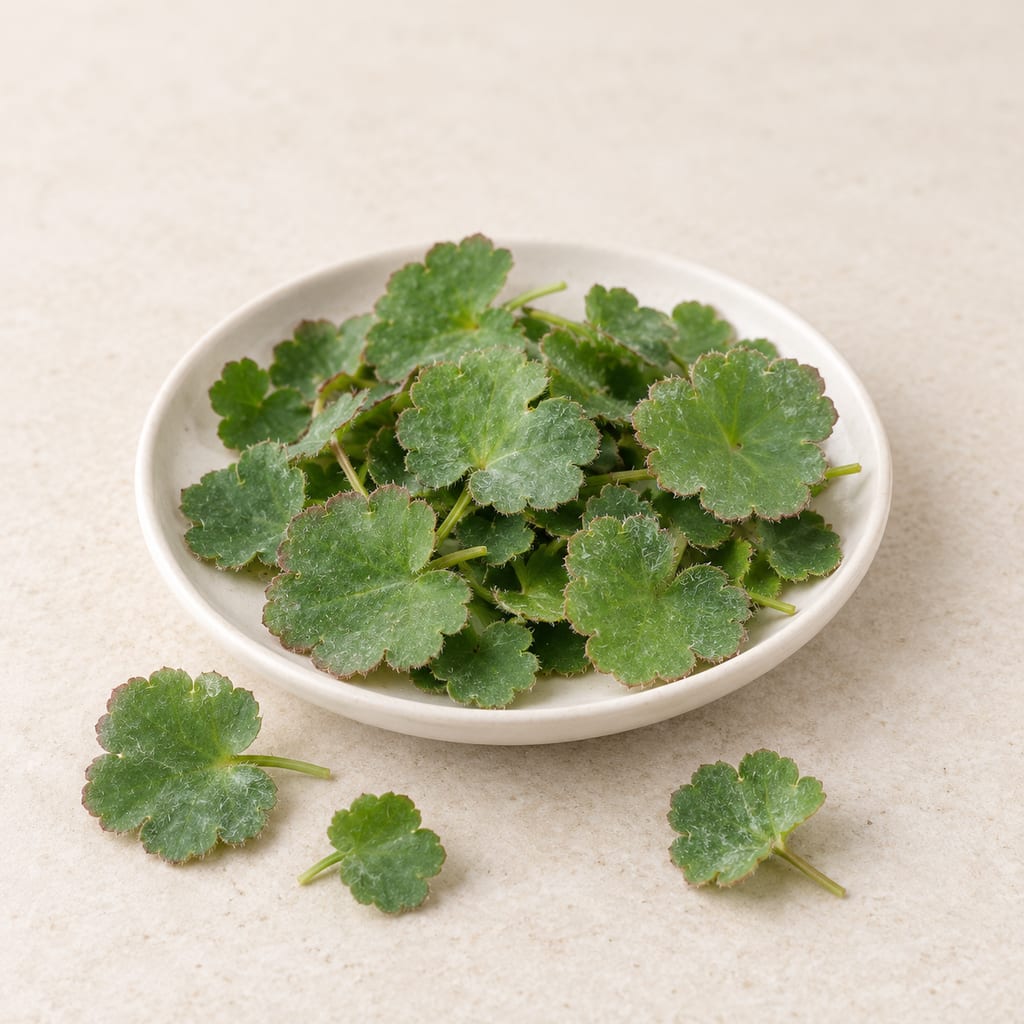
Heartleaf saxifrage is a small Arctic perennial whose soft, toothed leaves are recorded as food among Naukan and Chukchi communities. The botanical name appears as Micranthes nelsoniana and Saxifraga nelsoniana in different references.
No community contributions have been published for this entry yet.
Sign in to contribute. Published comments and photos are free to read.
Plants of the World Online, Royal Botanic Gardens, KewIdentity · Taxonomy · Distribution
Epilobium latifolium L.Kew accepts Epilobium latifolium L. and lists Chamerion latifolium and Chamaenerion latifolium among its synonyms.
The accepted species has a broad native range in northern Europe, temperate Asia, and western and northern North America.
Cited in: Accepted identity, names and a separate fireweed species; Range, habitat and harvest season; What the written record can and cannot date
Canadian Museum of NatureIdentity · Taxonomy · Names · Morphology · Distribution · Food use
Flora of the Canadian Arctic Archipelago: Chamerion latifolium (L.) HolubRecords dwarf fireweed, Arctic fireweed, broad-leaved willow herb and river beauty; gives Inuktitut names and synonymy with Epilobium latifolium.
Describes a 5–30 cm perennial with fleshy leaves and Arctic gravel-bar and floodplain habitat.
Summarizes edible flowers and leaves and Greenland raw-use accounts with seal blubber.
Cited in: Accepted identity, names and a separate fireweed species; A low plant with fleshy leaves; Range, habitat and harvest season; Texture, taste and ingredient role; What the written record can and cannot date
Grand Valley State University, ITEX-AON Arctic Ecology ProgramIdentity · Morphology · Habitat · Food use
Dwarf FireweedDescribes low-growing gray-purple stems, fleshy broad leaves, pink-purple flowers and riverbank habitat; distinguishes dwarf from narrow-leaved fireweed.
Reports young leaves raw or boiled, older leaves for tea, and flower uses in honey or jelly.
Cited in: A low plant with fleshy leaves; Range, habitat and harvest season; Leaves and flowers in regional cooking; Texture, taste and ingredient role; Identification and food-safety limits
Exchange for Local Observations and Knowledge of the Arctic (ELOKA), National Snow and Ice Data CenterNames · Food use · Storage · Regional practice
Epilobium latifoliumRecords Chukchi, Naukan and Russian names for this species.
Documents community-specific harvest before flowering, cooking with meat, moist storage, drying, weighted storage, freezing, green porridge and soup seasoning. Medical beliefs are not presented here as efficacy.
Cited in: Accepted identity, names and a separate fireweed species; Leaves and flowers in regional cooking; Storage records and the limits of a preservation claim; Identification and food-safety limits; What the written record can and cannot date
National Park Service, Shared Beringian Heritage ProgramFood use · Regional practice · Storage · Names
Edible Plants Used by Siberian Yupik Eskimos of Southeastern Chukchi Peninsula, RussiaIdentifies river beauty/dwarf fireweed as Chamerion latifolium, synonymous with Epilobium latifolium, and distinguishes it from narrow-leaved fireweed.
Describes leaves gathered young and used in distinct Naukan, Chaplino, Sireniki and St. Lawrence Island accounts; includes lightly boiled, pressed, moist-stored and dried forms, meals with meat, roe and oil, and a reported winter cask preparation.
Cited in: A northern gathered green in specific food traditions; Leaves and flowers in regional cooking; Storage records and the limits of a preservation claim; Identification and food-safety limits; What the written record can and cannot date
Arctic Institute of North America, Arctic, volume 6, issue 1Food use · Morphology · Distribution · History
Edible Plants of the ArcticDescribes broad-leaved willow-herb as an Arctic perennial with fleshy leaves, flowers and gravelly/well-watered habitat.
Reports raw flowers, cooked leaves with a spinach-like comparison, and occasional Greenland raw leaves and flowers with seal blubber.
Cited in: Accepted identity, names and a separate fireweed species; Leaves and flowers in regional cooking; Texture, taste and ingredient role; What the written record can and cannot date
Journal of Ethnobiology and Ethnomedicine, Springer NatureFood use · Regional practice · History · Research method
Naukan ethnobotany in post-Soviet times: lost edibles and new medicinalsReports fieldwork from 2014 to 2016 using oral history interviews, participant observation and voucher specimens in Chukotka and other study locations.
Table 2 records Epilobium latifolium leaves as lightly boiled, pressed and stored moist, eaten with meat; its later-use column records drying.
Documents a regional record of plant foods changing over time; does not date the first use of fireweed.
Cited in: A northern gathered green in specific food traditions; Leaves and flowers in regional cooking; Storage records and the limits of a preservation claim; Identification and food-safety limits; What the written record can and cannot date
North Slope Borough, Department of Wildlife ManagementNames · Morphology · Habitat · Food use
Plant List: D–JRecords the Iñupiaq name Tilaaggik, low stature, broad fleshy leaves, stream and gravel-bar habitat, and young-leaf, tea and flower uses.
Cited in: Accepted identity, names and a separate fireweed species; A low plant with fleshy leaves; Range, habitat and harvest season; Identification and food-safety limits
Exchange for Local Observations and Knowledge of the Arctic (ELOKA), National Snow and Ice Data CenterResearch method · Regional context
Beringian PlantsDescribes the ELOKA project as documenting plant knowledge from Western Alaska and Chukotka, Russia, through work on both sides of the Bering Strait.
Cited in: A northern gathered green in specific food traditions; Range, habitat and harvest season; What the written record can and cannot date