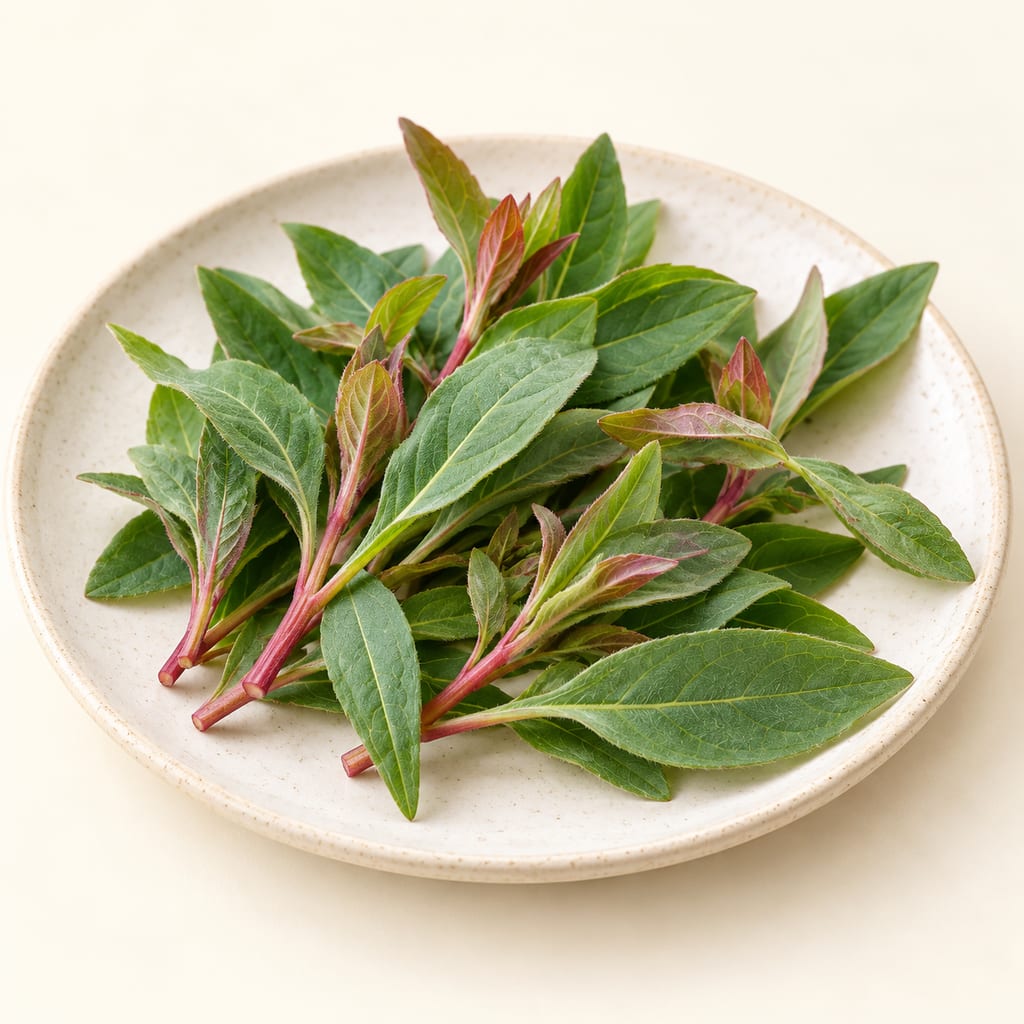
Dwarf fireweed
Dwarf fireweed (Epilobium latifolium) is a northern wild herb whose tender leaves and flowers appear in distinct Arctic food traditions.
 FermenteaWhere food goes to change
Walrus meat is an Arctic subsistence food whose forms, names, and uses vary by community. Its fermented preparations require source-specific description, and fermentation or freezing cannot be assumed to control Trichinella.
Walrus meat is the flesh and edible organs of the walrus, Odobenus rosmarus, the sole living member of the family Odobenidae. The animal is a marine mammal rather than a fish: it has dense muscle, thick skin, and a substantial layer of blubber. In the Pacific, the subspecies is O. r. divergens; the Atlantic form is O. r. rosmarus. They are related subspecies of one species, not different foods with interchangeable cultural histories.
The U.S. Fish and Wildlife Service describes Pacific walruses across the Bering and Chukchi seas, with occasional movement into the East Siberian and Beaufort seas. That biological range is not a map of any one food tradition. It spans communities with distinct languages, histories, laws, and food practices. Walrus meat is best understood as a subsistence food rooted in particular coastal and island communities, not as an ordinary commercial meat category.
Fresh walrus muscle is typically dark and coarse-grained, while blubber, skin, and connective tissue have different textures and uses. Those parts are not synonyms for meat. The animal's substantial harvest can include muscle, fat, skin, flippers, and organs; local choices depend on community practice, season, and the intended food. Historical outsiders often described its taste in blunt or disparaging terms. Such accounts reveal the observer's palate and circumstances as much as the food, and should not stand in for the knowledge of people who harvest and eat it.
Older accounts by European and North American visitors sometimes describe walrus meat as a novelty or rate it against familiar domestic meats. Those notes can preserve evidence that explorers and whalers ate it, but their vocabulary is not a neutral guide to a food's quality. The 19th-century *Curiosities of Food*, for example, reports meat and organs eaten by northern residents and whalers while evaluating them for readers at home. A historical palate is useful evidence about contact and provisioning; it cannot speak for contemporary Inuit, Yup’ik, Iñupiat, Chukchi, or Siberian Yupik cooks.
Across the circumpolar North, walrus has supported food systems that depend on hunting, knowledge of ice and animal movement, and the work of processing and sharing a large harvest. In Alaska, Yup’ik and Iñupiat households and communities use meat alongside other parts of the animal. The distribution of the harvest can connect hunters, elders, relatives, and neighbors; it is a social practice as well as a way to provision a household.
Those uses have taken place under changing colonial and state systems. Commercial hunting for ivory, hides, and blubber sharply altered walrus populations and the conditions of subsistence. Later conservation rules also restricted Indigenous access, sometimes without consultation. A contemporary account of Qayassiq, in Bristol Bay, records how Togiak residents and other tribal leaders worked to reopen a limited hunt after decades of closure, and how local and agency co-management now carries that harvest forward. The record matters because it locates walrus food in continuing community decisions, rights, and stewardship rather than in a frozen past.
No single summary can represent all communities. Knowledge differs by place, household, language, season, and generation; not every practice has been recorded publicly. The Chukotka report was produced through collaboration with local hunters and researchers and describes a specific Russian Far East context. Inuit fermented-food researchers likewise call for work that acknowledges Inuit knowledge and the particular social and geographic settings where these foods are made. This page therefore names bounded examples rather than assigning one universal Arctic method.
Food practice is also tied to access. Harvesting, sharing, storing, and preparing a walrus require knowledge of marine conditions and careful labor across a community. A subsistence harvest is not a supply chain that can be expanded on demand, and the history of commercial hunting shows why scale and purpose matter. The 2023 account from Qayassiq describes family continuity and a negotiated co-management arrangement, while Alaska agencies frame use in the context of subsistence. These are contemporary relationships with a living food system, not a warrant to generalize about all Indigenous communities.
The word walrus meat can conceal several different foods. Some people eat fresh or cooked muscle; others dry strips, store pieces frozen, prepare meat with blubber or skin, or make named aged and fermented preparations. Organs such as liver, heart, and kidneys may also be eaten, but an organ is not a cut of muscle and its use is locally specific. Preserved products are not interchangeable simply because English descriptions call them fermented walrus.
In Chukotka, the 2010 community report records names including kymgyt or kamgyt for some meat rolls and several local spellings of kopal'khen or kopal'gyn for other preparations. A Russian parasitology study uses the spelling kopalhen for a fermented walrus preparation. Spellings in translation and transliteration vary, and descriptions should remain attached to the source community and practice that supplies them. The name does not authorize a writer to merge every roll, pit-aged meat, or other Arctic animal food into one process.
In parts of the Inuit Arctic, igunaq names an aged or fermented food made from walrus or other animal materials, with the exact species and preparation varying by region. Researchers report walrus among the animal-sourced fermented foods discussed in Inuit knowledge and microbiome research. A preparation called igunaq in one place should not be assumed to match every other local use of that name. This ingredient page introduces those contexts; it does not turn them into a single recipe.
The shape in which meat is used follows the harvest and the skill of processing a large marine mammal. Chukotka's community researchers document local butchering and the use of different parts, including muscle, skin, blubber, and organs. Their account records meat rolls and other preparations alongside cooked and dried foods, showing that preservation choices vary rather than following one fixed sequence. It is a situated record, not a set of transferable household instructions.
Alaska sources describe meat being cut and shared as part of subsistence use. Season and storage can affect whether a household works with fresh meat, dried strips, frozen portions, or a prepared product. Contemporary reporting from Bristol Bay describes hunters returning with a harvest that is portioned and distributed in the community. For a reader, this means the relevant question is not simply 'which cut should I buy?' Walrus meat may not be legally or practically available in ordinary retail, and access depends on Indigenous subsistence harvest and applicable rules.
The animal's meat is protein-rich muscle, but the sources consulted here do not provide a standardized composition table for particular cuts or preparations. Blubber has a different fat composition and role from lean muscle; dried or aged pieces have also undergone physical or microbial change. It would be misleading to assign one nutrient profile, texture, or flavor description to every species, cut, season, or local preparation.
A piece sold or described simply as walrus meat can also obscure how it reached a household. Community sources describe processing the whole harvest and sharing portions; cuts that look familiar in a butcher's case may not reflect local distinctions or priorities. This record does not rank cuts or offer a buying guide because the sources do not establish a general commercial market or one accepted standard of quality. Where a source gives a local preference, it should stay attached to that place and source instead of becoming an all-Arctic rule.
Fermentation is one documented way of changing walrus meat, not a synonym for all walrus preservation. Microorganisms and their enzymes can transform available food components, altering aroma, taste, texture, and digestibility. In meat preparations, the surrounding tissue, fat, skin, salt if used, oxygen exposure, temperature, time, and the microbial community all shape what happens. The published knowledge on Inuit animal-sourced ferments remains preliminary; the research review describes the importance of studying the microbial communities in collaboration with the communities who make and eat these foods.
Drying and freezing are separate operations. Drying removes water and changes texture; freezing slows change while the food remains frozen. Neither alone makes a preparation a ferment, and neither is a universal substitute for another. Some community descriptions place meat in covered pits or hanging racks at particular stages, but the details vary, and a record of one practice cannot be reduced to 'bury it for a while.' The local material, site, weather, season, animal, and community expertise are part of the method.
Kopalhen is especially important to distinguish from a generic folk claim that fermentation makes raw meat safe. In a Russian study of a tested walrus preparation, Trichinella nativa larvae remained viable and infective; the study's fermentation did not reliably eliminate them. A 2022 review of Inuit fermented-food research also describes a separate study in which larvae from fermented igunaq were non-infective. These findings concern different preparations and study conditions. Together they show why a result from one product cannot certify another, and why researchers call for context-specific investigation that works with the communities who make these foods. Neither result characterizes every Indigenous practice or replaces community expertise.
The scientific picture is still developing. A survey of microbial communities can show organisms present, but identifying a microbe is not by itself proof that a process is safe, that the organism caused a flavor, or that a named ferment has a medical effect. The collaborative Inuit research perspective cautions against studying foods without the social conditions and knowledge that shape them. It treats food microbiome work as both a scientific question and a relationship with people whose expertise and food sovereignty matter.
This is not a routine supermarket ingredient in many regions. Walrus meat is obtained through local subsistence systems, and any access must respect community rules, applicable wildlife law, and the rights of Indigenous harvesters. A reader should not use a product of uncertain species or origin as a substitute for a locally sourced, properly handled harvest. The sources do not establish one universal grading scheme, retail label, or storage life for walrus meat.
There is a specific documented parasite hazard. Alaska public-health investigations reported two outbreaks of trichinellosis in 2016–2017, each involving five cases and linked to raw or undercooked walrus meat. Trichinella is a tissue-dwelling parasite; people in the outbreaks became ill after eating meat that was raw or cooked only to medium. The CDC report emphasizes culturally sensitive communication with communities who use traditional food handling and preparation.
The same investigations explain why familiar preservation language is not enough: smoking, drying, and fermenting do not reliably kill Trichinella nativa, and this Arctic species can tolerate freezing. A product's appearance, smell, taste, age, or traditional name cannot establish that it is free of parasites. In its outbreak follow-up, CDC explained the U.S. wild-game advice to cook meat to 160°F (71°C), measured with a meat thermometer. That number belongs to the cited U.S. public-health guidance; it does not describe or validate a traditional fermentation process and should be read with current local health and harvest guidance.
The sources available for this page do not support a general safe fermentation duration, salt amount, temperature, pH, water activity, or storage life for raw walrus meat. No such limit is supplied here. Readers should not infer safety from successful fermentation, from a frozen state, or from sensory inspection. Anyone handling or eating wild marine-mammal meat should follow current local food-safety advice and consult appropriate public-health or community experts.
Trichinellosis symptoms in the CDC report included muscle pain, fever, weakness, rash, edema, and difficulty walking. They appeared after a delay, and the reported patients required clinical assessment and treatment. Those symptoms are a reason to seek prompt medical attention after a possible exposure, not a way to screen meat before eating. A piece of meat cannot be visually inspected for microscopic larvae, and a person should not wait for a particular symptom pattern to consult health professionals.
The evidence supports a broad ingredient page and several bounded examples, but not a universal walrus recipe. The Chukotka report records local names and practices; the Inuit microbiome perspective places fermented foods within Inuit knowledge and geography; and the Russian laboratory study tests one named fermented preparation for one parasite. These sources answer different questions. A laboratory result does not replace Indigenous expertise, while cultural authority does not turn a recorded technique into a generic safety guarantee.
One existing Fermentea record, Kopalhen, discusses a specific fermented preparation, and the atlas links walrus as its material. That relationship belongs in the site graph rather than being copied into a second recipe here. A reader should be able to follow the link to the preparation record and encounter its own evidence. If a source later documents a distinct local name, species, cut, or method, it should be assessed as its own variant rather than folded into the general ingredient.
The ingredient record is therefore deliberately broader than the preparation record but narrower than an encyclopedic account of every Arctic marine-mammal food. It distinguishes muscle from blubber and organs, identifies the animal and its range, and names a small number of well-sourced regional examples. More precise claims belong with the communities and sources that establish them, and a process-specific claim belongs on the preparation page where its ingredients, method, evidence, and limits can be examined together.
Community researchers record walrus food use and named preparations in Chukotka; this is not a claim that all Chukotka communities use the same methods.
The research describes Inuit-prepared fermented animal foods in Nunavut and discusses fermented walrus; it does not assign one method to all Inuit regions.
Alaska Native subsistence use and walrus-associated trichinellosis are documented; the row is not a claim of a statewide uniform preparation.
Reporting documents a particular Yup'ik community harvest and sharing context around Qayassiq, not all walrus use in Alaska.
Dwarf fireweed (Epilobium latifolium) is a northern wild herb whose tender leaves and flowers appear in distinct Arctic food traditions.
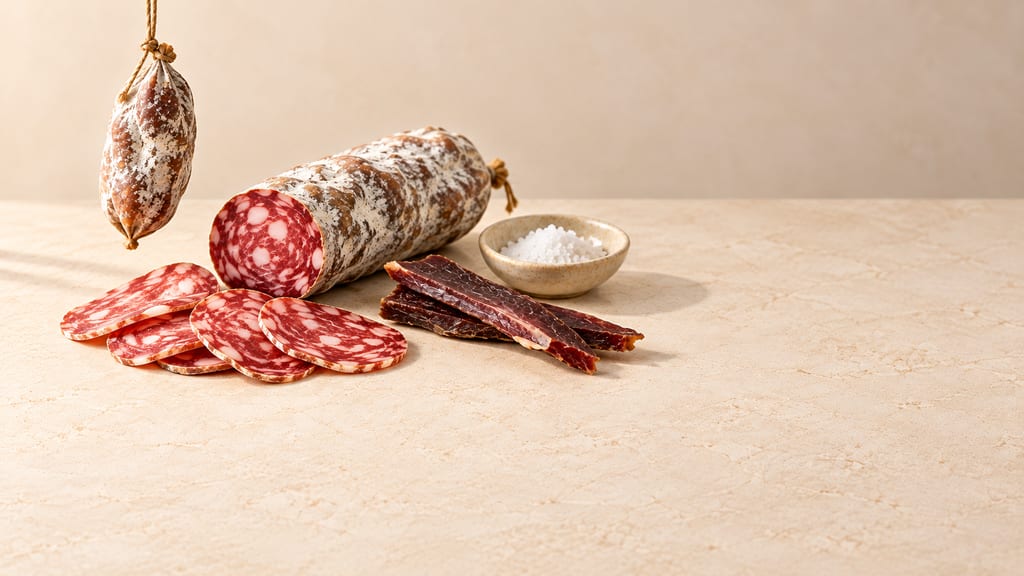
Dry salami, sour pork with rice, matured sheep and aged blubber follow different paths from animal to food. Their stories connect microbes with climate, slaughter, migration and the meals people share.
No community contributions have been published for this entry yet.
Sign in to contribute. Published comments and photos are free to read.
U.S. Fish and Wildlife ServiceIdentity · Geography · Ecology
Stock Assessment Report for Pacific Walrus Alaska StockThe species is Odobenus rosmarus, in family Odobenidae; the report recognizes Atlantic and Pacific subspecies.
The Pacific walrus ranges across the Bering and Chukchi seas, with occasional movement into the East Siberian and Beaufort seas.
Cited in: An Arctic marine mammal and a valued food
Chukotka Association of Traditional Marine Mammal Hunters and Eskimo Walrus CommissionHistory · Geography · Use · Names
Traditional Knowledge of the Native People of Chukotka about WalrusThe 2010 report records local knowledge from Chukotka and distinguishes named uses of walrus parts and preparations.
Pages 28–32 document local butchering and use, including some meat rolls and pit-fermented products, with locally variable terminology and practices.
The authors identify community knowledge as locally grounded and affected by external legal and social systems.
Cited in: An Arctic marine mammal and a valued food; Food, sharing, and changing access; Walrus foods and local names; Harvest, butchering, and the forms that reach the kitchen; Fermentation changes the food, but does not define every preparation; What the record can and cannot say
Microbiome Research ReportsFermentation · Microbiology · Cultural context
Better understanding of food and human microbiomes through collaborative research on Inuit fermented foodsThe authors discuss Inuit animal-sourced fermented foods and argue microbiome research should be collaborative and grounded in the specific geographic, social, and cultural contexts.
They report preliminary research on microbial communities in Inuit fermented foods and emphasize Inuit knowledge in harvesting, preparing, sharing and consuming these foods.
Cited in: Food, sharing, and changing access; Walrus foods and local names; Fermentation changes the food, but does not define every preparation; What the record can and cannot say
Российский паразитологический журналFood history · Fermentation · Safety
Влияние процесса ферментации на сохранение инвазионных свойств личинок трихинелл в традиционной пище коренных жителей ЧукоткиThe study examined kopalhen made from walrus meat with skin and found that fermentation did not reliably destroy Trichinella nativa larvae, which remained viable and infective under the tested conditions.
Cited in: Walrus foods and local names; Fermentation changes the food, but does not define every preparation; Choosing, handling, and health; What the record can and cannot say
Morbidity and Mortality Weekly Report, Centers for Disease Control and PreventionSafety
Two Outbreaks of Trichinellosis Linked to Consumption of Walrus Meat — Alaska, 2016–2017Two Alaska outbreaks in 2016–2017 involved five cases each and were linked to raw or undercooked walrus meat.
CDC notes that smoking, drying and fermenting do not reliably kill Trichinella nativa and that this Arctic species is freeze tolerant.
In its outbreak follow-up, CDC explained U.S. wild-game cooking advice of 160°F (71°C), measured with a meat thermometer; this advice is context-specific and is not a description of traditional processing.
Cited in: Choosing, handling, and health
Alaska Department of Fish and GameUse · Handling · Cultural context
Pacific Walrus Subsistence UsesAlaska Native communities use walrus meat and other parts as subsistence foods and materials; uses should be described as community and subsistence practices rather than routine commercial supply.
Cited in: An Arctic marine mammal and a valued food; Food, sharing, and changing access; Harvest, butchering, and the forms that reach the kitchen; Choosing, handling, and health
KDLG / KTOOContemporary use · History · Community context
Qayassiq’s walrus hunt, once banned, now carries traditions of sharing and management to the next generationThe 2023 report describes Yup’ik family and community walrus harvest and sharing around Qayassiq, Bristol Bay, and the restoration of a co-managed hunt after a state restriction.
Cited in: Food, sharing, and changing access; Harvest, butchering, and the forms that reach the kitchen
Project GutenbergHistory
The Curiosities of FoodThe 1859 book describes walrus meat and reports whalers eating tongue, heart and liver; it reflects an outsider's historical perspective.
Cited in: An Arctic marine mammal and a valued food