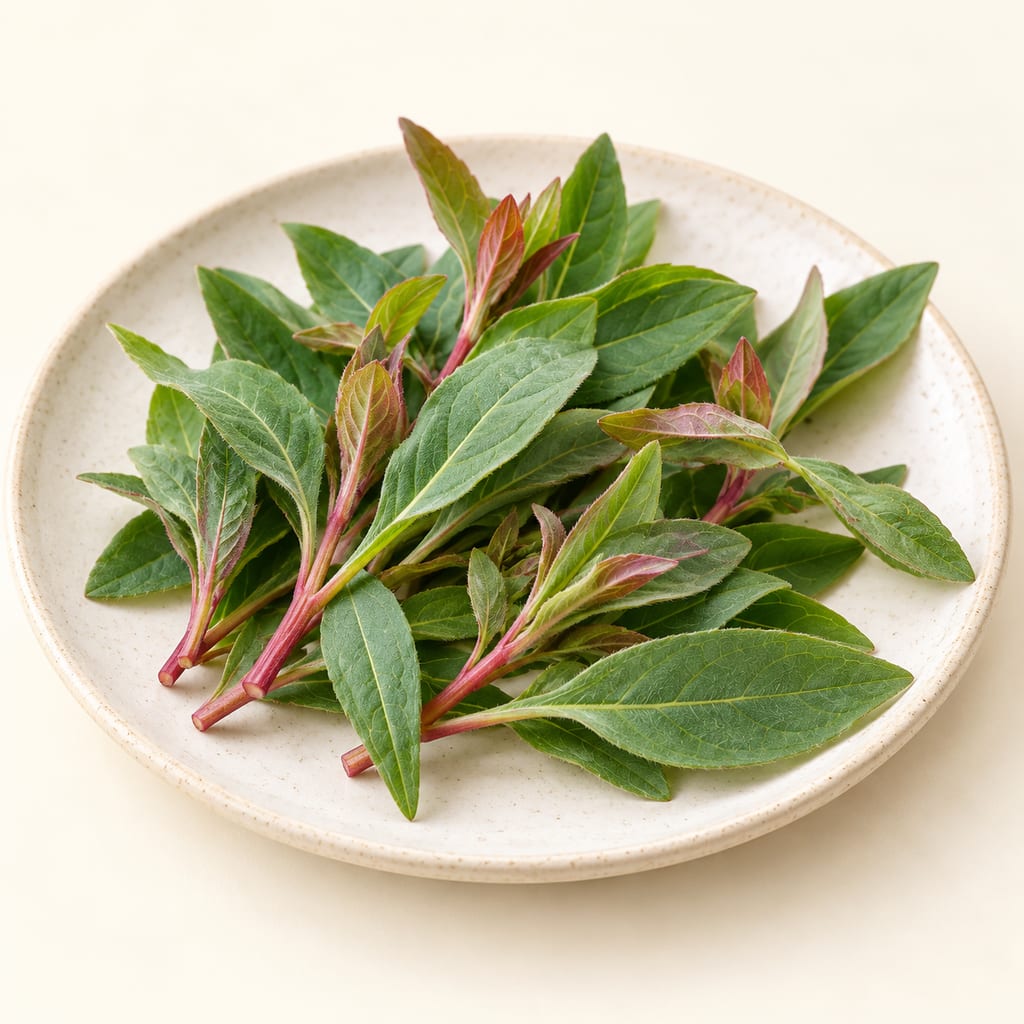
Dwarf fireweed
Dwarf fireweed (Epilobium latifolium) is a northern wild herb whose tender leaves and flowers appear in distinct Arctic food traditions.
 FermenteaWhere food goes to change
Substrates
Seal meat is the flesh of hunted seals, eaten fresh, frozen, boiled, dried and, in distinct preparations, aged or fermented. Species and community practices vary; the name describes neither one recipe nor one place of origin.
Seal meat is the flesh of a seal used as food. The everyday name covers several species, cuts and food traditions. It is not a standardized butcher's specification. A label that says only “seal” leaves open which species supplied the meat, which part was cut, whether fat or skin is included, and whether the meat is fresh, frozen or preserved.
The available records name ringed seal (called Phoca hispida in an older study), bearded seal (Erignathus barbatus), harp seal (Phoca groenlandica, as identified in a Greenland market photograph) and grey seal (Halichoerus grypus, in an experimental parasite study). These are not interchangeable research subjects: a finding about grey-seal muscle or a local ringed-seal preparation cannot automatically be transferred to every seal species. “Fur seal” also appears in historical trade and food records, but that label should remain distinct when a source identifies a fur seal rather than a species of true seal.
This ingredient page refers to the raw animal material. Aged seal flippers, dried strips, smoked products and fermented preparations are foods with their own cuts and processes. Blubber is a separate fat material; liver, heart, intestine and other organs have distinct composition and use. People may eat several of these parts, but their names should not be collapsed into the single word meat.
Descriptions of flavour and texture vary with species, age, diet, cut, fat, handling and preparation. A raw cut at a Greenland market does not look or behave like a dried strip or a cooked seal fry. Neither a picture nor colour alone identifies species or freshness. If that information matters, it must come from the harvest or seller's record.
Seal has long been a food resource for Inuit and Inuvialuit communities across the Arctic, but this broad statement does not describe one pan-Arctic cuisine. Communities harvest from different waters, use different species and cuts, and make choices in response to season, local knowledge, household needs and available equipment. The Government of the Northwest Territories' factsheet, developed around Inuit and Inuvialuit food knowledge, notes that meat, flippers, blubber, liver and other parts may be eaten in several forms.
For Inuvialuit, country foods are connected to more than what appears at a meal. The Inuvialuit Regional Corporation describes harvesting, processing, distributing and preparing them as cooperative work that expresses sharing and generosity. Seal is listed alongside caribou, muskox, fish, birds and other country foods. The food is part of a system of relationships among people, animals, land and water, not simply an alternative protein sold through a uniform supply chain.
A Greenlandic survey conducted in 1993–1994 with 1,580 adult Inuit respondents found seal meat was the most frequently reported traditional food in its study, with a fifth reporting daily consumption. The pattern varied by residence and other factors. It shows the importance seal meat had in that survey and period; it should not be quoted as a current statistic for every Greenlandic settlement or as proof that imported foods replaced country foods everywhere.
The visual record also has different contexts. A photograph of a raw harp-seal cut at Upernavik documents a local market purchase; a 1924 image from Alaska documents seal meat drying in the Pribilof Islands; an archival photo of flaying in the White Sea comes from a commercial sealing expedition. These records help show the breadth of ways seal flesh enters food systems, but they do not represent one community's shared history or one method.
The word meat can refer to large muscle cuts or smaller pieces prepared for a household dish. The documented uses in Arctic food references include meat that is eaten raw or frozen, meat that is boiled, and strips that are dried. A cooked dish, a piece served frozen and a dried strip are different food forms; their names, texture, moisture and practical handling are not the same.
Fat is an important material in seal foods, but seal blubber should not be mistaken for the meat itself. A factsheet from the Northwest Territories reports that seal meat and blubber contain omega-3 fats and lists protein, iron and B vitamins among nutrients supplied by a serving of boiled ringed- or bearded-seal meat. The chart makes explicit that its reference serving and nutrient ratings are based on particular serving sizes and the dietary needs of teenage girls. Those values should not be turned into a generic nutrition label for all species or cuts.
The animal's other edible parts have their own profiles. The same government resource gives separate nutrient entries for liver, heart, brains, eyes, intestines, blubber and aged flipper. Their values differ, which is one reason a recipe needs to identify the part it uses. A page that says “seal meat” cannot silently supply the composition of liver or blubber.
Where a study reports a species, age group, serving size or cooking state, keep that context attached to the result. Composition varies among animals and tissues; the sources consulted do not establish one universal fat percentage, nutrient label or standard cut definition for seal meat. A seller's identification and an item's actual form are more useful than a broad comparison with beef or another mammal.
Fresh or frozen seal meat remains an ingredient. Once someone deliberately ages, dries, salts, smokes or ferments it, the result becomes a preparation with its own name and process. That boundary matters because a dried strip called mipku and an aged seal-flipper preparation do not have the same ingredients, handling or history as a fresh cut.
The Inuvialuit Regional Corporation describes mipku, or dry meat, as thin strips of meat hung to dry; its examples include bearded seal alongside whale, caribou and goose. The Northwest Territories factsheet lists dried and fermented forms of seal among foods eaten in Inuit and Inuvialuit communities. These records establish broad categories of use, not one universal cutting size, drying period or endpoint.
A separate experimental study used infected seal meat to examine Trichinella nativa in igunaq, air-dried nikku and sausage. Under the study conditions, infective larvae survived at least five months in all three product groups, including fermented igunaq and air-dried meat. The researchers warned against using the controlled experiment as a universal consumption guideline. It demonstrates that drying and aging do not by themselves prove that infected meat has become safe.
A preparation's texture, moisture and taste may change during drying or aging, but a desired sensory result is not a safety test. Different animal parts, container forms, weather and community practices can lead to different outcomes. None of the sources here provides a single validated household recipe for all seal meat, and this ingredient page does not supply one.
Igunaq refers to an aged marine-mammal food in particular Inuit contexts, but sources differ in the animal, parts, container and practice they document. Some studies examine walrus igunaq; another directly studied seal igunaq in Nunavik. The name therefore belongs to a preparation, not to raw seal meat, and it should not be used as a blanket label for every aged Arctic food.
Leclair and colleagues interviewed 20 makers of seal igunaq in five Nunavik communities and examined four preparations. Their study considered how seal meat and fat could contact environmental sources during harvesting, butchering and aging. Two of 32 raw meat or fat samples contained type E spores, while two of four finished preparations tested contained botulinum toxin. The small, selected field investigation is not a prevalence estimate for Nunavik, let alone for all Arctic foods. Its value lies in showing concrete contamination pathways and the limits of sensory judgment.
In that field study, some meat or fat contacted coastal rocks, seawater or other environmental material. The researchers traced contamination through handling as well as the aging environment; “fermented” does not mean isolated from contamination. The study also reports that producers assessed appearance, smell and taste, yet those qualities did not reliably reveal toxin. A normal smell or appearance cannot rule out botulism.
A review of country-food safety describes seal and seal-flipper igunaq separately from walrus preparations and notes variation within and between communities. A general entry on igunaq may discuss several species; a raw-material relationship should identify which animal a source actually studied. The existing Igunaq record is broad and already includes walrus-centered documentation, so this ingredient is linked with a note that preserves the seal-specific evidence rather than treating the two materials as one.
The strongest seal-specific safety evidence in the sources consulted concerns botulism and parasites. Leclair and colleagues studied Clostridium botulinum type E in seal meat and seal igunaq. The organism can produce a potent toxin in food under conditions where it grows. The Northwest Territories factsheet warns about warm, air-excluded storage and says botulinum toxin has no reliable smell or flavour cue. These warnings should be read as specific hazards, not as a complete process specification or proof that any described traditional practice is either safe or unsafe in every case.
The Trichinella study tested products made from experimentally infected seals. Its result that larvae survived in igunaq, nikku and other products matters for these specific tested foods, but it does not say how often wild seals carry the parasite. A second experimental study used grey-seal meat infected with Toxoplasma gondii. In that experiment, the starting meat was infective to cats and none of the prepared foods tested were, but the authors called for further study, including work on Arctic strains. That negative result cannot certify any individual piece of seal meat or any community process.
These studies answer narrower questions than the broad topic “seal safety.” Each uses named species, inoculation conditions, product forms, storage or aging conditions, and assays. A result about parasite survival is not a botulism control; the absence of detected toxin in one tested sample is not a universal absence. Separate evidence is needed for species, harvesting area, handling and product.
Use clean food-contact equipment and keep raw juices away from ready-to-eat food. Do not rely on smell, taste, appearance, a traditional label or a process name to establish safety. The sources reviewed do not provide a validated critical temperature, salt concentration, acidity, aging duration or storage limit for all seal meat. Where such control is necessary, follow current advice from the relevant local health authority and community food-safety experts rather than inventing a number from a different animal or preparation.
Nunavik is the clearest location in the evidence for the seal-igunaq field study. Its participants came from five villages in northern Quebec, and the fieldwork included ringed and bearded seals. That localized study should stay separate from Greenlandic market images, Inuvialuit community food descriptions and Alaska drying records.
Greenlandic survey research and market photographs establish that seal meat has been eaten and sold in parts of Greenland, with harp seal named in the Upernavik image. A broad country label does not identify one Greenlandic recipe or prove that all seals are legally available everywhere. Harvest rules, conservation conditions, local preferences and trade have changed over time; readers should consult current local authorities for present-day availability.
The Inuvialuit cultural food page records seal and bearded seal among the foods of the Inuvialuit Settlement Region. In Alaska, a National Park Service photograph records meat drying at a Cape Krusenstern summer camp, while the archival Pribilof photograph identifies another local context. These sources support several distinct northern uses, not a single origin claim or a transfer of preparation knowledge from one region to another.
The names used in records also depend on language, taxonomy and time. For example, an older Canadian study uses Phoca hispida for ringed seal; current taxonomic sources may use Pusa hispida. The Greenland photograph uses Phoca groenlandica for harp seal. Retaining the names attached to each source makes it easier to see what was studied without pretending that the broad ingredient title resolves every identification.
When the source or seller can provide it, useful details include the seal species, locality, cut, whether the piece includes skin or fat, and whether it is raw, frozen, cooked, dried or aged. This information supports a meaningful food description and distinguishes a cut of meat from a preparation. Do not infer species from colour or appearance alone.
The documented eating forms include fresh or raw meat, frozen meat, boiled dishes, dried strips and particular aged foods. These are different uses rather than substitutions: the form affects texture, water content and the work a cook must do. The Inuvialuit description of mipku offers one named dry-meat category; it does not instruct a reader to produce it. Community knowledge and local guidance remain important when describing foods with place-specific methods.
Seal is a mammal. The CDC explains that alpha-gal is present in most mammals and that alpha-gal syndrome can cause serious reactions to foods containing it. People already diagnosed with the syndrome should follow their clinician's advice about mammalian foods; this page makes no claim about the amount of alpha-gal in a particular seal species or cut.
Wild animal foods can also raise contaminant questions that depend on species, place and local advisories. The Greenland survey noted concern about contaminants as dietary practices changed, while the Northwest Territories directs readers to region-specific contaminant resources. No universal contaminant level or safe serving can be inferred from the ingredient name. Use current local advisories for harvested foods from a named area.
The records reviewed do not establish a first date for seal meat, a single place where it began, a universal name in an Indigenous language, or one standard set of cuts. A preparation term such as igunaq is not a raw-ingredient synonym. Those gaps remain open because the sources available here document particular communities and periods rather than the full history of seal use.
They also do not create a universal recipe or a validated safety process. Traditional knowledge is specific, living knowledge held by communities and practitioners. A research paper can document a small set of practices and hazards, but it cannot replace the knowledge of those who harvest, prepare and share the food. This page keeps those sources separate and does not turn observation into instructions.
For Fermentea, seal meat links to the existing aged-seal-flippers preparation and to the existing Igunaq record with a note specifying that the evidence concerns seal igunaq in Nunavik. The fur-seal meat preparation remains distinct because its prospect names fur-seal meat and a different region and preservation account. Blubber also remains a separate ingredient. These distinctions let readers follow the relationship without flattening species, parts and regional foods into one process.
Leclair et al. studied seal-meat igunaq producers and handling in Nunavik; this documents particular practices and hazards, not a uniform regional method.
The Inuvialuit Regional Corporation lists seal among traditional country foods; its page places food within cooperative harvesting, processing, distribution and preparation.
A survey reports frequent seal-meat consumption among Greenlandic Inuit; dated images document raw harp-seal meat at Upernavik and a seal at Nuuk market, not a claim about every community.
Archival and National Park Service photographs document drying seal meat in the Pribilof Islands and Cape Krusenstern; these images support historical and contemporary documentation, not one shared practice.
Dwarf fireweed (Epilobium latifolium) is a northern wild herb whose tender leaves and flowers appear in distinct Arctic food traditions.
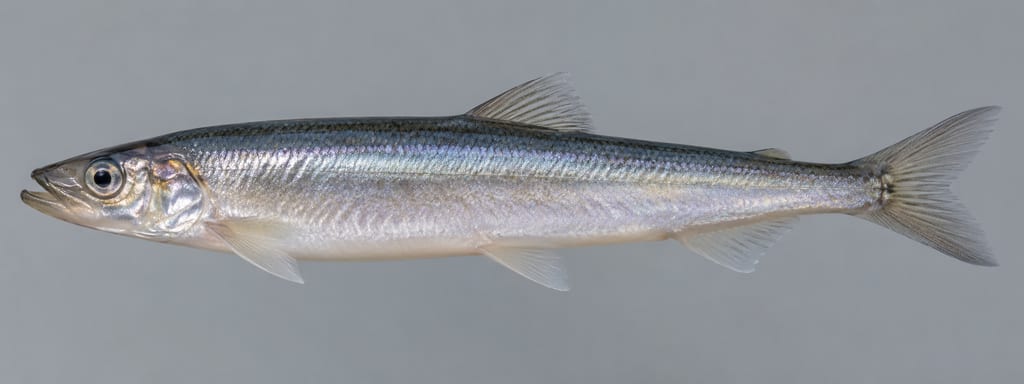
Eulachon (Thaleichthys pacificus) is a small anadromous North Pacific smelt used fresh, dried, smoked and, in some communities, to make rendered grease. Ripened fish and eulachon grease are separate stages and products.
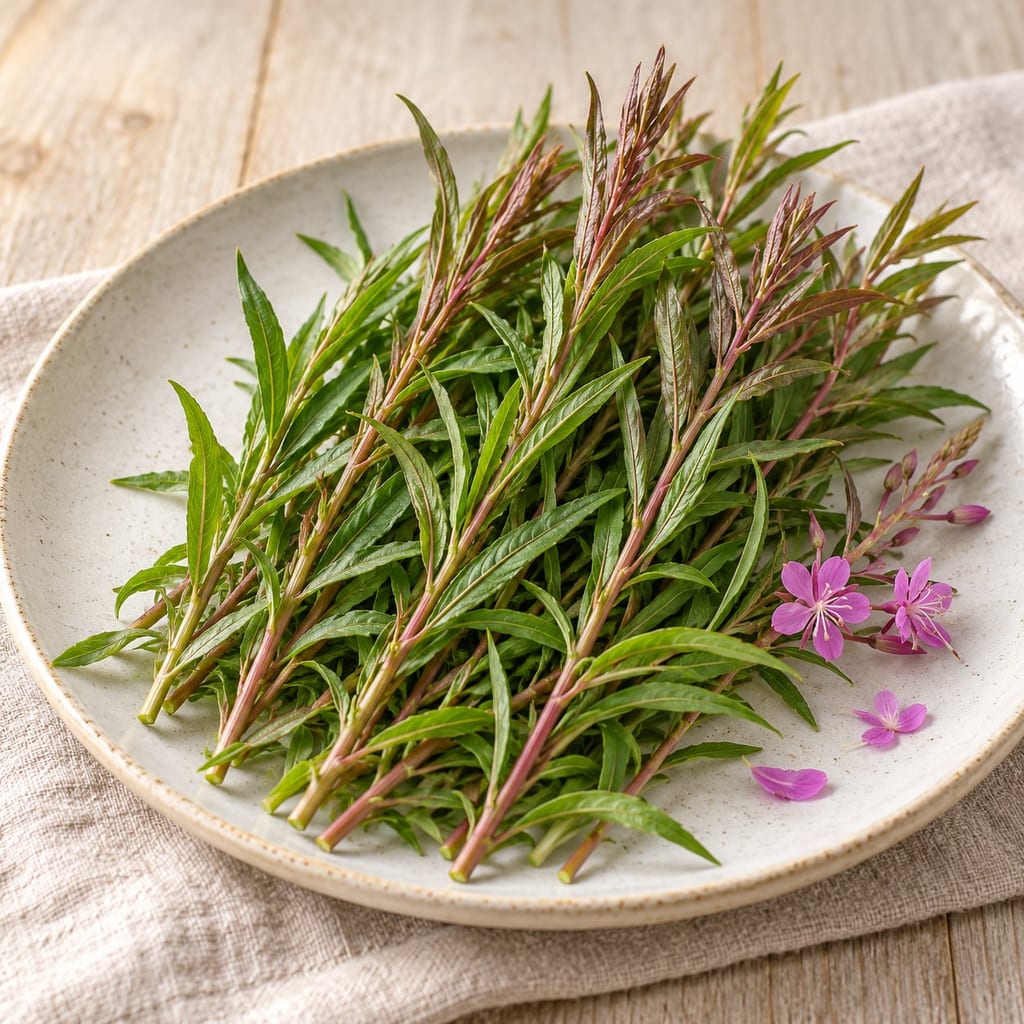
Rosebay willowherb (fireweed) is a widespread northern perennial whose tender shoots, young leaves and pink petals have distinct seasonal uses. Mature leaves become tougher and stronger in flavor; its leaf tea may be mildly laxative.
Salmon roe is the eggs of salmon, eaten fresh, salted or dried and preserved in distinct regional ways. Nuxalk records distinguish fresh roe from aged mutsi; those accounts are historical, not safe-process instructions.
Walrus meat is an Arctic subsistence food whose forms, names, and uses vary by community. Its fermented preparations require source-specific description, and fermentation or freezing cannot be assumed to control Trichinella.
No community contributions have been published for this entry yet.
Sign in to contribute. Published comments and photos are free to read.
Government of the Northwest Territories, Department of Health and Social ServicesIdentity · Traditional use · Nutrition · Food safety
SealInuit and Inuvialuit Elders describe seal as a valued food; parts including meat, flippers, liver and blubber are eaten raw, frozen, boiled, dried, aged or fermented.
The factsheet's nutrient table identifies protein, iron and B vitamins in boiled ringed- and bearded-seal meat; its serving and nutrient ratings have stated reference assumptions.
The factsheet warns about botulism in warm, air-excluded storage and says toxin cannot be detected by smell or flavour; it does not validate one universal aging process.
Cited in: What seal meat names; A country food embedded in Arctic life; Fresh meat, fat and organs; Preservation changes the ingredient into another food; What the hazard studies say and do not say; Places, species and changing availability; Choosing, handling and eating; The sources leave important questions open
Inuvialuit Regional CorporationTraditional use · Culture · Geography
FoodSeal and bearded seal are among traditional Inuvialuit country foods.
The organization describes harvesting, processing, distributing and preparing country foods as cooperative activities that express sharing and generosity.
Mipku or dry meat may use thin strips of bearded seal among other meats; this is a distinct dried preparation, not a name for all seal meat.
Cited in: What seal meat names; A country food embedded in Arctic life; Fresh meat, fat and organs; Preservation changes the ingredient into another food; Places, species and changing availability; Choosing, handling and eating; The sources leave important questions open
International Journal of Circumpolar Health 76(1):1380994Food safety · Traditional preparation · Geography
Tracking sources of Clostridium botulinum type E contamination in seal meatThe study interviewed 20 seal-igunaq producers in five Nunavik communities and observed four preparations; its results are limited to those sites and samples.
It detected type E spores in 2 of 32 raw meat or fat samples and botulinum toxin in 2 of four igunaq preparations; researchers identified handling routes involving coastal rocks, seawater and other environmental sources.
Sensory examination did not reliably reveal toxin; the findings concern measured samples and do not estimate prevalence across all Arctic seal foods.
Cited in: Igunaq is a family of preparations, not a synonym for seal meat; What the hazard studies say and do not say; The sources leave important questions open
Journal of Food Protection 66(10):1857–1863Food safety · Parasites
Infectivity of Trichinella nativa in traditional northern (country) foods prepared with meat from experimentally infected sealsIn a controlled experiment using meat from experimentally infected seals, infective Trichinella nativa larvae survived at least five months in igunaq, nikku, raw frozen sausage and poorly cooked sausage.
The authors cautioned that the controlled results should not be used as universal guidelines and that survival under field conditions could differ.
This is a hazard study of specific products and infected meat, not a recipe or general prevalence estimate.
Cited in: Preservation changes the ingredient into another food; Igunaq is a family of preparations, not a synonym for seal meat; What the hazard studies say and do not say
Journal of Food Protection 72(8):1756–1760; record indexed by PubMedFood safety · Parasites
Infectivity of Toxoplasma gondii in northern traditional (country) foods prepared with meat from experimentally infected sealsThe researchers prepared igunaq, nikku and sausages using grey-seal muscle experimentally infected with Toxoplasma gondii.
The starting meat was infective for cats, while none of the prepared foods tested in that experiment were; authors emphasized that more study was needed, including Arctic parasite strains.
These bounded experimental results are not assurance that wild seal meat or any preparation is safe.
Cited in: What the hazard studies say and do not say
Arctic 54(1)History · Traditional use · Geography
Contemporary Use of Traditional and Imported Food among Greenlandic InuitA 1993–1994 survey of 1,580 adult Inuit reported seal meat as the most frequently eaten traditional food in the survey; one fifth of respondents reported eating it daily.
Consumption varied with residence and other factors, and the authors raised concerns about contaminants and changing food habits.
The survey describes its sample and period; it is not a current estimate for every Greenlandic community.
Cited in: A country food embedded in Arctic life; Fresh meat, fat and organs; Places, species and changing availability; The sources leave important questions open
National Collaborating Centre for Environmental Health / Food Safety NetworkFood safety · History · Terminology
Safe Preparation and Storage of Aboriginal Traditional/Country Foods: A ReviewThe review distinguishes seal igunaq and seal-flipper igunaq from walrus preparations and reports that methods and timing vary within and among communities.
It summarizes parasite and botulism evidence and explicitly describes cultural preparations as variable rather than one standard method.
Its synthesis is secondary and community-specific; it is not a validated recipe.
Cited in: Preservation changes the ingredient into another food; Igunaq is a family of preparations, not a synonym for seal meat
U.S. Centers for Disease Control and PreventionAllergy · Dietary context
About Alpha-gal SyndromeCDC says alpha-gal is found in most mammals and that alpha-gal syndrome can cause serious reactions to mammalian foods; seal is a mammal, so this context may matter to affected readers.
Cited in: Choosing, handling and eating
Wikimedia CommonsRaw product photograph · Geography
Phoeca groenlandica piece of meat, Upernavik, 26 June 2007Description identifies a piece of young harp-seal meat purchased at Upernavik, Greenland, and suggests seal soup as a use.
Image is of a raw cut; it is not an image of a prepared or fermented food.
Cited in: What seal meat names; Places, species and changing availability
Wikimedia Commons / National Park ServiceDrying photograph · Geography
Drying Seal MeatImage description identifies strips of seal meat drying on a rack at a summer subsistence camp in Cape Krusenstern, Alaska.
This depicts meat during drying, not raw or finished fresh seal meat.
Cited in: Places, species and changing availability
Wikimedia CommonsRaw product photograph · Geography
Seal MeatDescription identifies a seal at a butcher shop in Sisimiut, Greenland, on 15 August 2015; used here as market-context photography, not as evidence of an edible cut's condition.
University of Washington Freshwater and Marine Image Bank via Wikimedia CommonsHistorical photograph · Drying · Geography
Drying seal meat for natives, Pribilof IslandsA 1924 photograph is described as drying seal meat for residents of the Pribilof Islands, Alaska.
The image is historical context for dried seal meat, not a preparation instruction.
National Archives of Norway (Riksarkivet), via Wikimedia CommonsArchival photograph · Raw processing
Flåing av piselest. Fremsveivene skjæres av (5742330390)The archive description identifies a 1931 image from a White Sea sealing expedition and captions flaying a seal with the front flippers being cut away.
This depicts raw carcass processing in a commercial sealing context and does not represent Inuit or Inuvialuit subsistence practice.
Cited in: A country food embedded in Arctic life