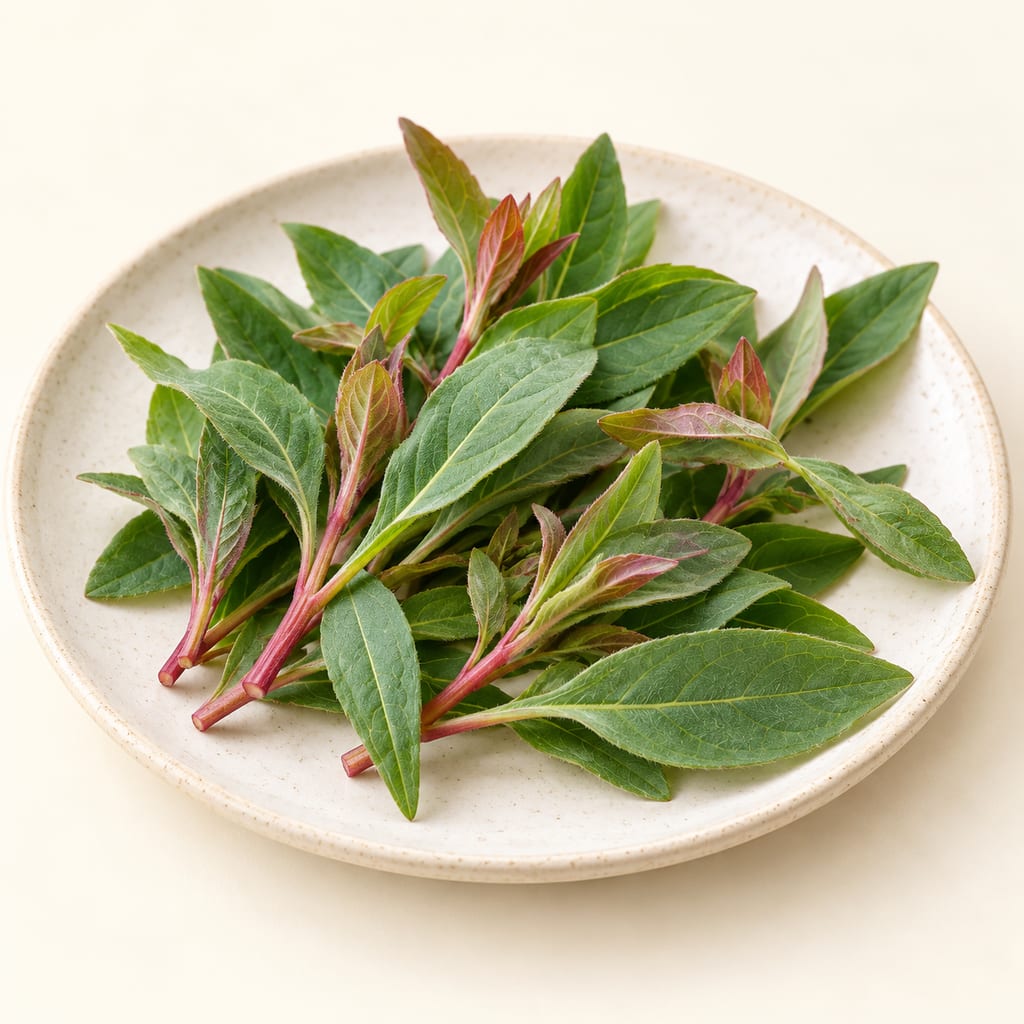
Dwarf fireweed
Dwarf fireweed (Epilobium latifolium) is a northern wild herb whose tender leaves and flowers appear in distinct Arctic food traditions.
 FermenteaWhere food goes to change
Spices and aromatics
Rosebay willowherb (fireweed) is a widespread northern perennial whose tender shoots, young leaves and pink petals have distinct seasonal uses. Mature leaves become tougher and stronger in flavor; its leaf tea may be mildly laxative.
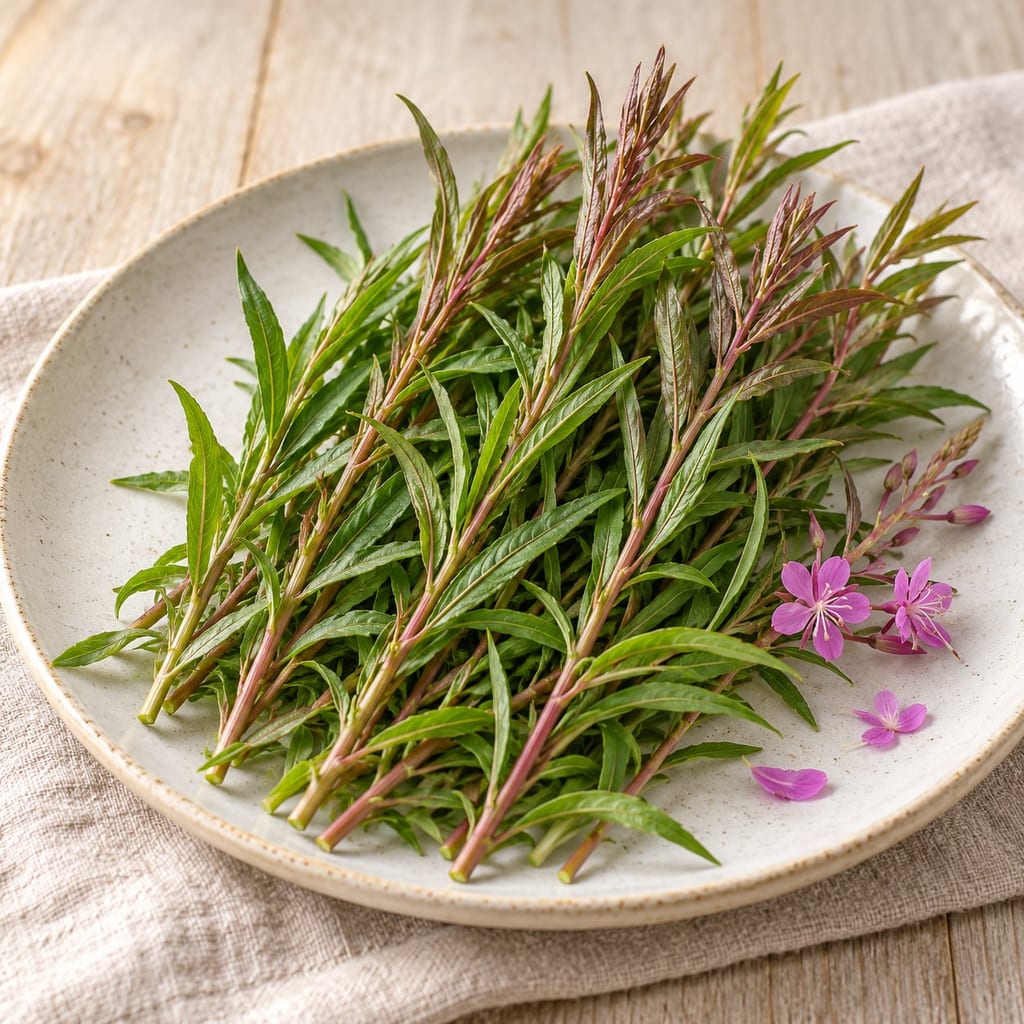
Rosebay willowherb is the familiar name in Britain and much of Europe; fireweed is common in North America. It is a tall, erect perennial with narrow lance-shaped leaves and a long flowering spike of pink to reddish-purple blossoms. University of Alaska Fairbanks describes the flowers opening progressively from the lower end of the spike upward, a conspicuous seasonal marker. The green plant is less showy before flowering, when its tender shoots are most useful in the kitchen.
The species is *Epilobium angustifolium* L. Plants of the World Online at Kew accepts this name and treats *Chamerion angustifolium* and *Chamaenerion angustifolium* as synonyms. These names explain why older and contemporary books may file the same plant under different genera. The common name “willowherb” is also applied to other species, so it is not a safe identification by itself. Kew records a native range across temperate parts of the Northern Hemisphere, extending from Alaska and northern Europe through Asia and into parts of North Africa and Mexico; it is a circumboreal plant, not an ingredient tied to one nation or one cuisine.
Rosebay willowherb often appears in open places and after disturbance. UAF notes meadows, riverbeds and recently burned ground; the Finnish wild-herb association describes it as a pioneer that quickly occupies cleared or burned land before receding as other vegetation returns. Those habitats help explain its abundance, but they do not make every roadside or disturbed patch a suitable place to gather food.
The plant is not a single interchangeable edible part. In early spring, the young shoots are short, tender and often tinged red; Finnish guidance places gathering soon after snowmelt and through early summer. UAF similarly describes the emerging shoots as a food and says young leaves become tougher and stronger in taste later in the season. The first shoots can be cooked like asparagus, sautéed or steamed, chopped into salads, or pickled. A small portion can be kept whole as a vegetable; the slender tips can also be cut into pieces for soups, omelettes and mixed greens.
Leaves are usually gathered while young and before flowering for fresh greens or herbal drinks. The Finnish association recommends picking leaves before flowering and separating them from pieces of stem; it notes that wilting before drying deepens the aroma. UAF says leaves and unopened buds can be mixed into salads and that the flavor grows stronger as the season advances. For cooks, this means timing matters as much for eating quality as it does for plant appearance: older leaves are not simply a larger version of the tender spring ingredient.
Once the flowers open, only the fresh petals are useful for the floral applications described by the Finnish source; its guidance cautions that the green parts can taste bitter. UAF recommends young, undamaged blossoms, noting that older flowers become bitter. Petals may add color and mild flavor to salads, infusions and sweet preserves. Each form therefore has its own window: shoots at the start of growth, leaves before flowering, and blossoms shortly after opening.
The comparison with asparagus is a useful kitchen cue, not a claim that the plants taste or behave identically. Both UAF and the Finnish wild-herb association describe young fireweed shoots as an asparagus-like vegetable. Their advice supports gentle cooking methods such as steaming or sautéing, but it does not prescribe a universal cooking time, portion size or seasoning. Treat the shoots as a seasonal green: inspect their tenderness, trim any tough base, and cook until just tender rather than applying a time from another plant as though it were tested for this one.
UAF also documents pickled shoots, and supplies one refrigerator-pickle example using vinegar, salt, water and optional sugar. The source explicitly says that its shoot-pickle recipe has not been safety-tested for canning and directs readers to refrigerate it. That distinction matters: a vinegar pickle stored cold is not interchangeable with a shelf-stable canned preserve. A reader should follow the source's refrigerator-storage limit and use a separately tested canning recipe if a shelf-stable product is wanted.
Young leaves and buds can be folded into salads or vegetable dishes, where their fresh green flavor is a supporting note rather than a bulk base. If the leaves are already coarse or strongly flavored, the extension guidance suggests they are past their best fresh stage. The page describes several legitimate forms but does not give a standardized ingredient specification for commercial lots, so a recipe should name whether it means shoots, leaves or petals and whether they are fresh or dried.
Fireweed leaves can be infused fresh or dried. UAF's home-use direction is simple: gather young leaves before flowering, place a generous handful in a warmed teapot, cover with boiling water and steep for five to ten minutes. The resulting drink is light green and sweet-tasting, and it can be served without sugar or milk or blended with other wild teas. This is a household infusion description, not a standard medicinal dose or a validated commercial tea specification.
The same extension page says leaves or blossoms can be spread in a single layer to air-dry for about two days and then stored in a sealed container in a cool, dry place. Finnish guidance also describes drying leaves whole or after wilting. These are alternative handling descriptions from their respective sources, not proof that every temperature, humidity or storage duration will yield equivalent aroma. Drying changes the ingredient from tender green to a shelf-stable herb, concentrating its presence in a cup while removing the fresh texture that defines spring shoots.
Fermented-leaf tea is often marketed or described today as Ivan tea or Russian tea, but the historical record is more complicated than a single ancient national custom. A peer-reviewed comparison of ethnobotanical interviews and literature from Russia, Finland, Estonia, Latvia, Lithuania, Belarus and Ukraine found that many recorded recreational-tea uses were recent, and that some contemporary makers used leaf fermentation followed by drying. That study distinguishes observed practice from repeated recommendations in popular plant books. This page therefore records fermented-leaf tea as a modern documented practice, not as a universal or timeless preparation.
The pink petals are used for their color as well as their flavor. UAF gives a procedure for extracting color from packed petals and buds in hot water, then uses the strained juice in jelly; its page also includes fireweed vinegar and floral scones. These are examples from an Alaska extension publication, not recipes for every region or cultivar. In the vinegar example, flowers are steeped in vinegar for several weeks and strained. The source's jelly uses the prepared juice with sugar, lemon and pectin, so the color is part of a sweetened preserve rather than a stand-alone extract.
The Finnish wild-herb association describes a beverage made from the flowers, and says only the pink petals should be collected because the green parts may add bitterness. That direction aligns with UAF's advice to choose young, undamaged blossoms and avoid older flowers. The petals can be used sparingly to tint a drink, salad or dessert; their delicate color is not a guarantee of a fixed hue, which varies with the amount collected and how a recipe handles the liquid.
Some sources also mention roots as flour or a coffee substitute, and older literature has proposed other uses. These are not the main food forms established by the two extension sources, and the reviewed material does not provide a tested household method for preparing roots. They are therefore recorded as reported uses rather than practical recommendations here. The clearly documented kitchen forms are young shoots, young leaves, leaves for infusion, and fresh petals or blossoms for color and flavor.
Ethnobotanical writing places rosebay willowherb in several distinct food histories. The peer-reviewed study *Gaining momentum* reports that Sámi communities used the plant in more than one context: a nineteenth-century account by Petrus Læstadius described boiling and chopping it into bread during food shortage, while later ethnographic sources document young plants boiled before being added to reindeer milk preserved in vessels. The plant gave one form of that milk preparation the name *abrek-kombo*. This record supports a specific relationship between plant and dairy preservation; it does not establish the plant as a starter culture or say that the species alone caused fermentation.
The same study notes other geographically separate examples, including food use among Nivkh communities and records from Kamchatka. Those histories should not be collapsed into a single “traditional fireweed cuisine.” The authors emphasize that food uses, medicinal claims and tea recommendations travelled through different books and contexts, and that later popular guides sometimes repeated suggestions as though they were recorded practice. Their analysis is especially useful because it separates documented local accounts from promotional advice.
A second field study, based on interviews across eastern Europe, found use as a food among only a small portion of interviewees and as recreational tea among more, with many tea accounts described as recent. These results are not a global census and should not be generalized to every community. Together, the studies show why careful regional attribution matters: rosebay willowherb is widespread botanically, but the ways people have eaten, preserved or brewed it differ by place, period and source.
Rosebay willowherb has more than one relationship to fermentation, and the distinctions matter. In the documented Sámi milk preparation called *abrek-kombo*, the plant was one of several gathered herbs added to milk after boiling; it was an ingredient in a mixed preservation practice. The historical account does not identify it as a pure starter, report a controlled inoculation, or give a reproducible temperature, time or safety endpoint. The recipe record that names this ingredient should be read within that context and its own source evidence.
A separate modern practice ferments leaves before drying them for an herbal infusion. The eastern-European study notes that informants described variable technologies, generally involving leaf fermentation and subsequent drying. It also records that some participants found the process demanding or abandoned it. This is evidence of reported practice; interview descriptions do not constitute a validated process guide. No universal time, temperature, acidity target or preservation claim should be inferred from the name Ivan tea or from the fact that fermentation is involved.
For ordinary cooking, the plant can simply be prepared fresh or dried without fermentation. Pickling young shoots in a refrigerator is another documented form, but UAF explicitly separates its untested-for-canning recipe from shelf-stable preservation. The ingredient entry keeps these methods distinct: fresh vegetables, dried infusion leaf, fermented-and-dried tea leaf, cold refrigerator pickles, and a historical herb added to milk are not interchangeable products.
A food use only applies to the correctly identified species. Kew's accepted name and UAF's description offer a starting point: a tall perennial, narrow leaves and a long terminal spike of pink-purple flowers. Yet a flowering photograph is not a reliable substitute for checking an early shoot in the field. The eastern-European study specifically notes that early-stage recognition can be difficult, one reason foragers and cooks should be cautious about relying on popular-name lists or a single image. Consult a regional botanical guide or an experienced local identifier and compare the whole plant at the appropriate growth stage; if uncertain, do not eat it.
Choose clean, undamaged growth from a place where gathering is allowed. The UK Food Standards Agency advises that foraging should be both safe and sustainable, and Mississippi State University Extension advises confident identification and avoiding areas where contamination from chemicals may occur. Roadsides, sprayed ground and polluted land are poor gathering choices even though the species itself is often described as growing in such disturbed places. Wash collected material as UAF directs to remove dust and insects, and refrigerate fresh greens as one would other salad leaves. Gathering permission and seasonal restrictions vary by landowner and jurisdiction, so abundance in a clearing does not imply permission to harvest there.
The plant spreads readily and provides nectar and habitat, so take only what is needed and leave enough growth for the patch and local wildlife. For spring shoots, avoid stripping an entire stand. For flowers, gather modestly rather than treating every bloom as a culinary harvest. These are stewardship choices, not a measured yield prescription from the cited sources.
Young leaves are described as mild, flower petals as mildly flavored, and later growth as stronger or bitter. UAF describes a sweet-tasting leaf tea and notes that fireweed tea can be mildly laxative, advising moderation. That is the clearest consumption caution in the food source used here. It is not a therapeutic effect, a dose recommendation, or evidence that the drink treats a condition. Claims that rosebay willowherb tea cures urinary, digestive, inflammatory or other illnesses are outside this ingredient account; the historical papers document beliefs and reported practices, not clinical efficacy.
UAF lists vitamins A and C among nutrients in the young shoots, and the Finnish association reports nutrients in leaves. Those statements refer to the source's plant material and context, not to a guaranteed amount in every serving, dried tea or preserved product. This page does not assign a nutrient value or health benefit to an individual ingredient portion.
The source material supports culinary use of young shoots, young leaves, infusions and petals, with region- and stage-specific cautions. It does not establish that every part of every willowherb is edible, that mature leaves retain the same texture, or that a historical preparation can be safely recreated from a name alone. A recipe should specify the part and stage it uses and should follow tested preservation guidance where storage safety depends on it. No formal allergen profile is established here; the empty list means none was identified in this research, not that individual sensitivity is impossible.
A documented regional association for the Sámi milk preparation abrek-kombo and food-shortage use; it does not establish a single practice across all Sámi communities or a source for modern lots.
The Finnish wild-herb association documents seasonal gathering and culinary forms; this records published use guidance, not ingredient provenance.
University of Alaska Fairbanks Extension documents edible forms and household preparation; this does not claim that a particular ingredient lot comes from Alaska.
Dwarf fireweed (Epilobium latifolium) is a northern wild herb whose tender leaves and flowers appear in distinct Arctic food traditions.
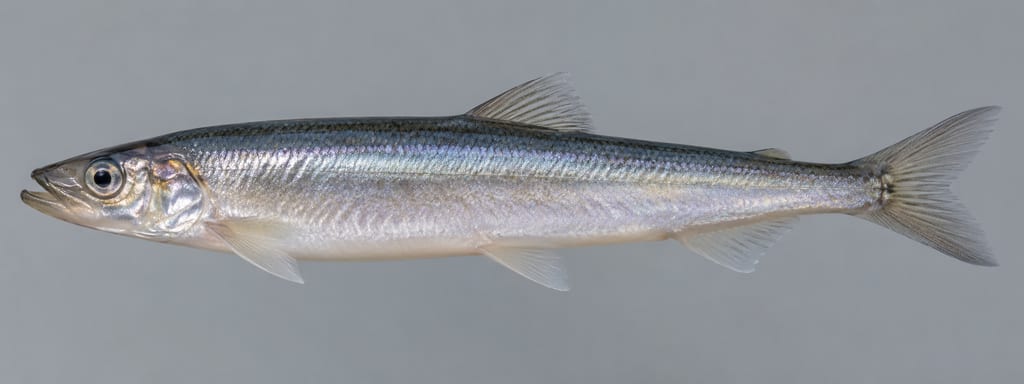
Eulachon (Thaleichthys pacificus) is a small anadromous North Pacific smelt used fresh, dried, smoked and, in some communities, to make rendered grease. Ripened fish and eulachon grease are separate stages and products.
Salmon roe is the eggs of salmon, eaten fresh, salted or dried and preserved in distinct regional ways. Nuxalk records distinguish fresh roe from aged mutsi; those accounts are historical, not safe-process instructions.
Seal meat is the flesh of hunted seals, eaten fresh, frozen, boiled, dried and, in distinct preparations, aged or fermented. Species and community practices vary; the name describes neither one recipe nor one place of origin.
Walrus meat is an Arctic subsistence food whose forms, names, and uses vary by community. Its fermented preparations require source-specific description, and fermentation or freezing cannot be assumed to control Trichinella.
No community contributions have been published for this entry yet.
Sign in to contribute. Published comments and photos are free to read.
Plants of the World Online, Royal Botanic Gardens, KewIdentity · Taxonomy · Distribution
Epilobium angustifolium L.Kew accepts Epilobium angustifolium L. and lists Chamerion angustifolium and Chamaenerion angustifolium as synonyms.
The native range spans temperate parts of the Northern Hemisphere, including Alaska, Finland, Norway and Sweden.
Cited in: A tall willowherb with more than one name; Identification and responsible gathering
University of Alaska Fairbanks Cooperative Extension ServiceFood forms · Harvest · Culinary use · Storage · Preservation · Caution
Fireweed (FNH-00106)Describes emerging shoots, young leaves and unopened buds, pink blossoms, and seasonal texture and flavor changes.
Gives household preparation examples for shoots, tea, jelly, vinegar, scones and refrigerator pickles.
States that its shoot-pickle recipe has not been safety-tested for canning and should be refrigerated; notes that fireweed tea may be mildly laxative.
Cited in: A tall willowherb with more than one name; The season determines the ingredient; Spring shoots: a tender green, not a fixed substitute; Leaves as a drink and a dried herb; Flowers, color and other documented kitchen uses; How it relates to fermentation; Identification and responsible gathering; Flavor, nutrition claims and limits
Arktiset Aromit ry (Association of Finnish Food Culture)Identification · Seasonality · Culinary use · Handling
Rosebay WillowherbDescribes the plant's upright hollow often reddish stem, narrow leaves and pink flowers.
Recommends gathering young shoots after snowmelt, leaves before flowering and only pink petals for flower uses; notes possible bitterness from green parts.
Documents shoots served like asparagus, leaves used in salads and beverages, and leaves dried whole or after wilting.
Cited in: A tall willowherb with more than one name; The season determines the ingredient; Spring shoots: a tender green, not a fixed substitute; Leaves as a drink and a dried herb; Flowers, color and other documented kitchen uses; Flavor, nutrition claims and limits
Appetite, volume 150 (2020), article 104638Ethnobotany · History · Culinary use · Modern tea practice
Gaining momentum: Popularization of Epilobium angustifolium as food and recreational tea on the Eastern edge of EuropeCompares ethnobotanical fieldwork and literature across Russia, Finland, Estonia, Latvia, Lithuania, Belarus and Ukraine.
Reports that of 599 interviewees, nine used the species as food and 59 as recreational tea; many recorded tea uses were recent.
Discusses distinct documented food contexts, including Sámi use in bread during food shortage and rosebay willowherb in abrek-kombo; distinguishes local records from promoted suggestions.
Cited in: Leaves as a drink and a dried herb; Flowers, color and other documented kitchen uses; A regional history, not a single origin story; How it relates to fermentation; Identification and responsible gathering; Flavor, nutrition claims and limits
Journal of Ethnopharmacology, volume 247 (2020), article 112254Ethnobotany · History · Traditional use context · Claim limits
Inventing a herbal tradition: The complex roots of the current popularity of Epilobium angustifolium in Eastern EuropeAnalyzes historical and contemporary reports and warns against treating repeated recommendations as proof of a uniform old tradition.
Documents diverse regional contexts and describes how modern popularity and historical plant uses have different evidentiary bases.
Historical medicinal reports record beliefs and practices; they are not clinical proof of efficacy.
Cited in: A regional history, not a single origin story; How it relates to fermentation
UK Food Standards AgencyForaging safety · Sustainability
Guidance for safe foragingForaging requires care to ensure gathered foods are safe and collection is sustainable.
Cited in: Identification and responsible gathering; Flavor, nutrition claims and limits
Royal Horticultural SocietyIdentification · Habitat · Ecology
WillowherbsNotes that many species share the common name willowherb and identifies rosebay willowherb as Epilobium angustifolium / Chamaenerion angustifolium.
Describes rosebay willowherb as a nectar source and a host plant for invertebrate larvae, and notes its wind-dispersed seeds and spread.
Cited in: A tall willowherb with more than one name; Identification and responsible gathering
Mississippi State University ExtensionForaging safety · Identification
Forgotten Foods: Introduction to Wild Edible Plants (Publication P4173)Advises confirming wild-plant identity before eating, learning the edible part and stage, and not relying on one identifier.
Advises avoiding sites where contamination from herbicides, pesticides, heavy metals or industrial runoff may occur, including roadsides and industrial areas.
Cited in: Identification and responsible gathering