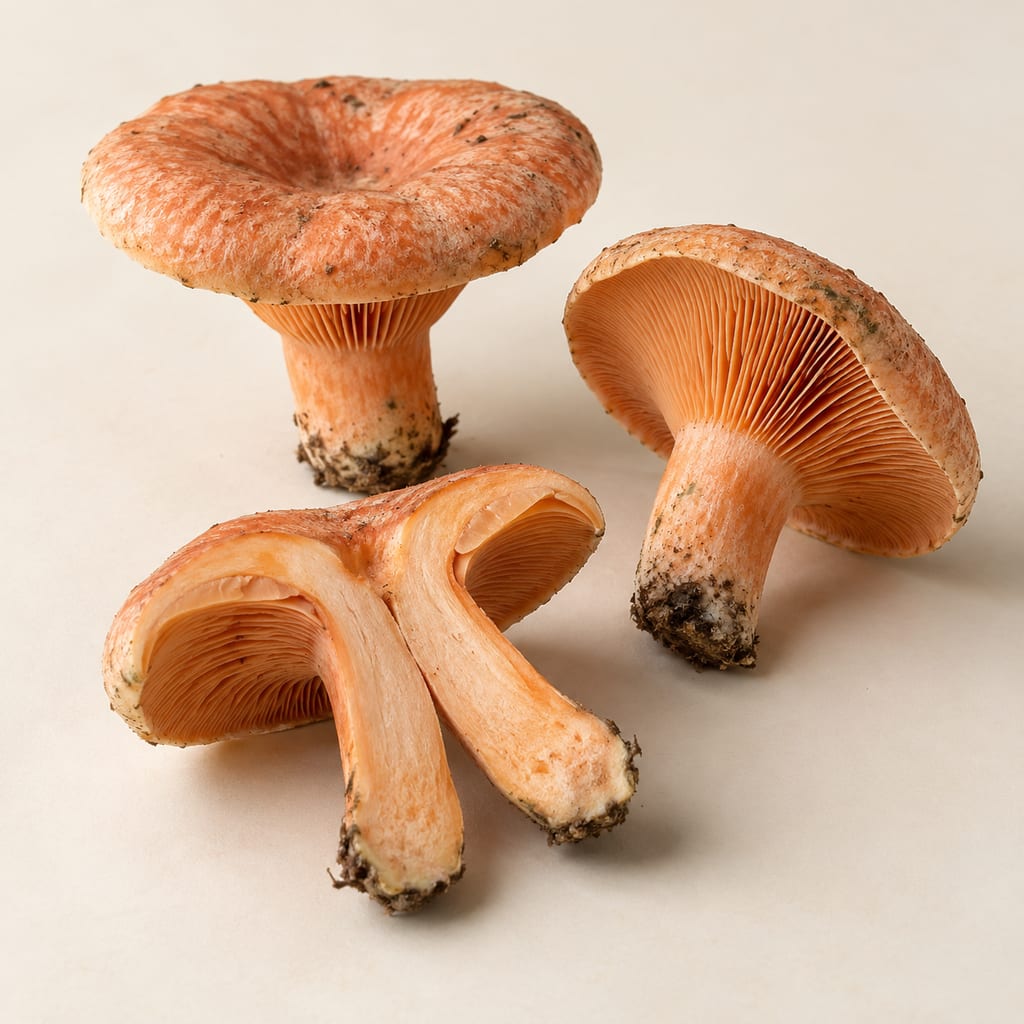
Akahatsu
Akahatsu, Lactarius akahatsu, is a wild milkcap of East Asian pine and mixed forests that is sold in Yunnan markets, with its edibility and identity still needing species-level review.
 FermenteaWhere food goes to change
Substrates
A vase-shaped ectomycorrhizal fungus sold as a scaly chanterelle in Pu'er markets, Yunnan. Its edibility is contested in the sources, and the name may cover populations that differ in toxicity.
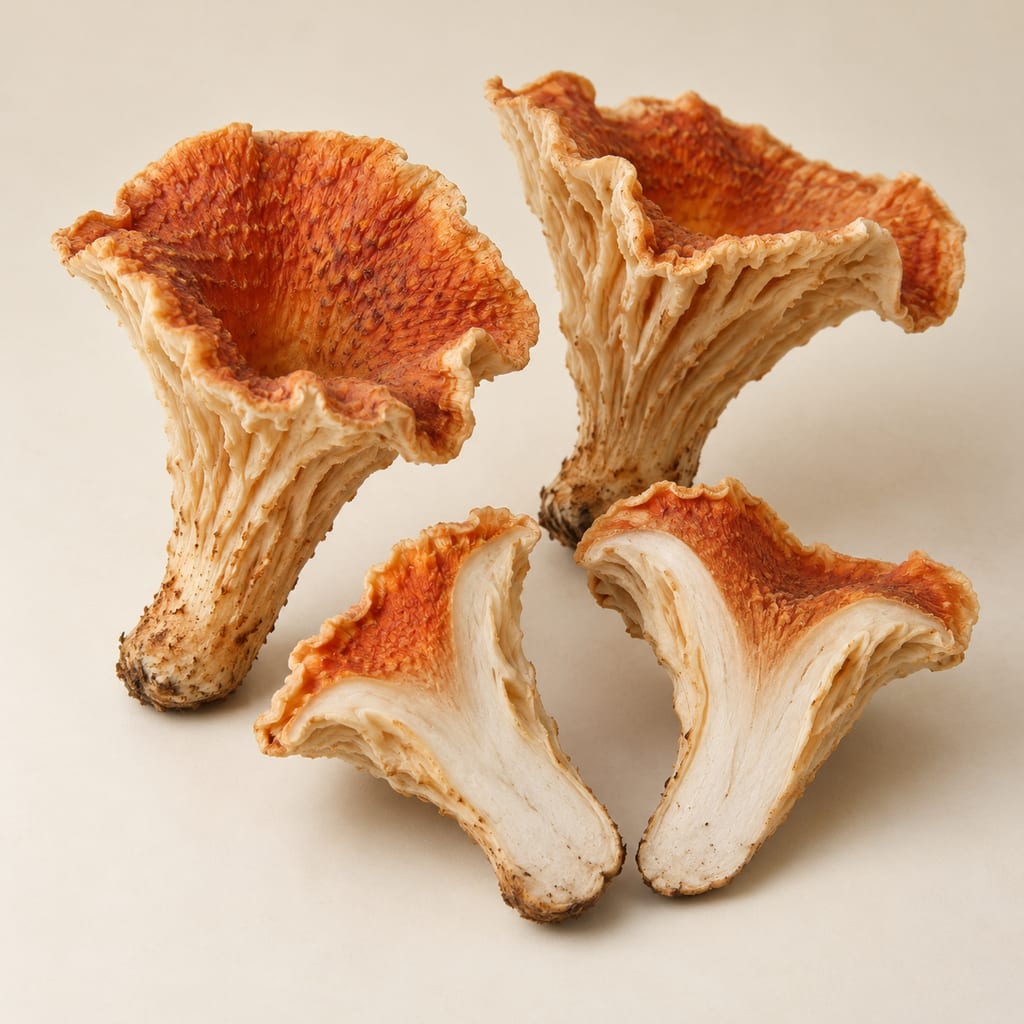
Turbinellus floccosus is a vase-shaped, ectomycorrhizal fungus, meaning it lives in partnership with tree roots. It is called scaly chanterelle or woolly chanterelle in English, and the catalogue notes that it is not a true chanterelle. Its previous name, Gomphus floccosus, still appears in many sources, so a record under either name may refer to the same fungus.
The catalogue records the ecology as ectomycorrhizal and the supply as wild. Other common names in the catalogue do not all refer to this species, so the scientific name is the reliable key.
The catalogue places the food tradition in Pu'er markets in Yunnan, China, and gives the wider range as the Himalayas and other temperate regions. One source lists the species as recorded from Japan, North Korea, China, Tibet, India, Nepal and Pakistan. Yunnan is not named in that source, so the Yunnan market record is not confirmed by the range list.
The Yunnan food-market record comes from a supplied study cited in the catalogue. The full text could not be read during this work, so the details of the market, its season and its prices are not recorded here.
The sources disagree on edibility. Several guides advise against eating the scaly chanterelles of the Pacific Northwest and British Columbia, because they cause nausea, vomiting and diarrhoea in some people. Another describes the species as non-edible but not lethal. A Wikipedia mirror lists it as poisonous, and a source on the North American form says it is not an edible except for the very bold.
The catalogue flags the record as a safety conflict for research only. It notes conflicting reports of gastrointestinal poisoning. No specific poisoning case or outbreak is cited in the sources reviewed, including any from Yunnan.
DNA data suggest that the Pacific Northwest and British Columbia population differs from the material called Turbinellus floccosus in central Mexico and India. The Mexican and Indian material is treated as a good edible. Asian and Yunnan collections may therefore not match the North American toxicity reports, and they may not match the Mexican or Indian material either.
One source attributes gastrointestinal distress to norcaperatic acid in the fungus. That is a single claim, and the sources reviewed do not give its concentration or test its effect.
Do not eat this fungus on the basis of this page. The catalogue records a safety conflict and asks for research only. Chanterelle-like fungi are easy to confuse, and the sources disagree about whether the species is edible at all. A specialist review with vouchers from the Yunnan market, and a comparison with the North American and Mexican material, is the next research step.
Recorded as a regional eating tradition in Pu'er markets. The catalogue gives no dates or quantities.
Distribution list from one source. It does not record food use in these places, so the relationship is unknown.
Akahatsu, Lactarius akahatsu, is a wild milkcap of East Asian pine and mixed forests that is sold in Yunnan markets, with its edibility and identity still needing species-level review.
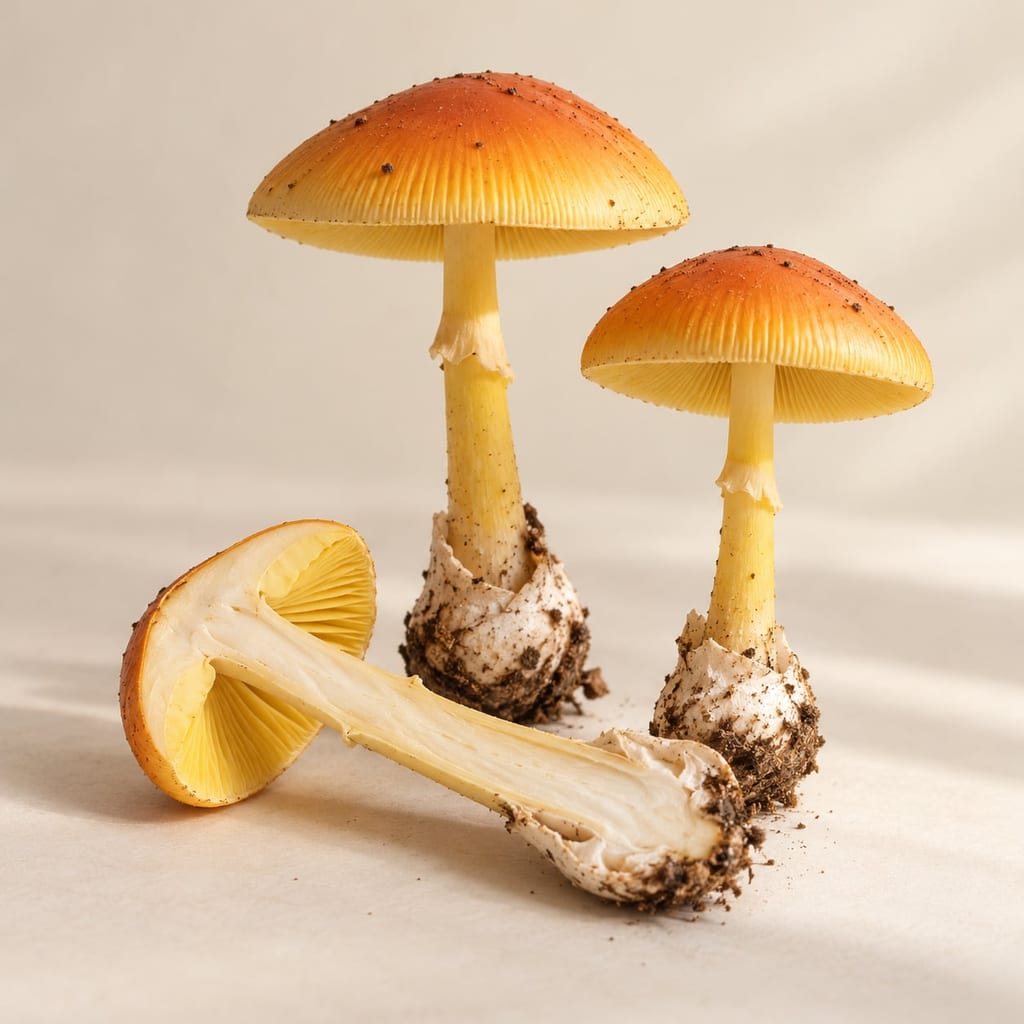
A wild Amanita of China, first reported there and listed as edible in a Yunnan ethnomycology study. The genus contains deadly species, so this page does not support identifying or eating it.
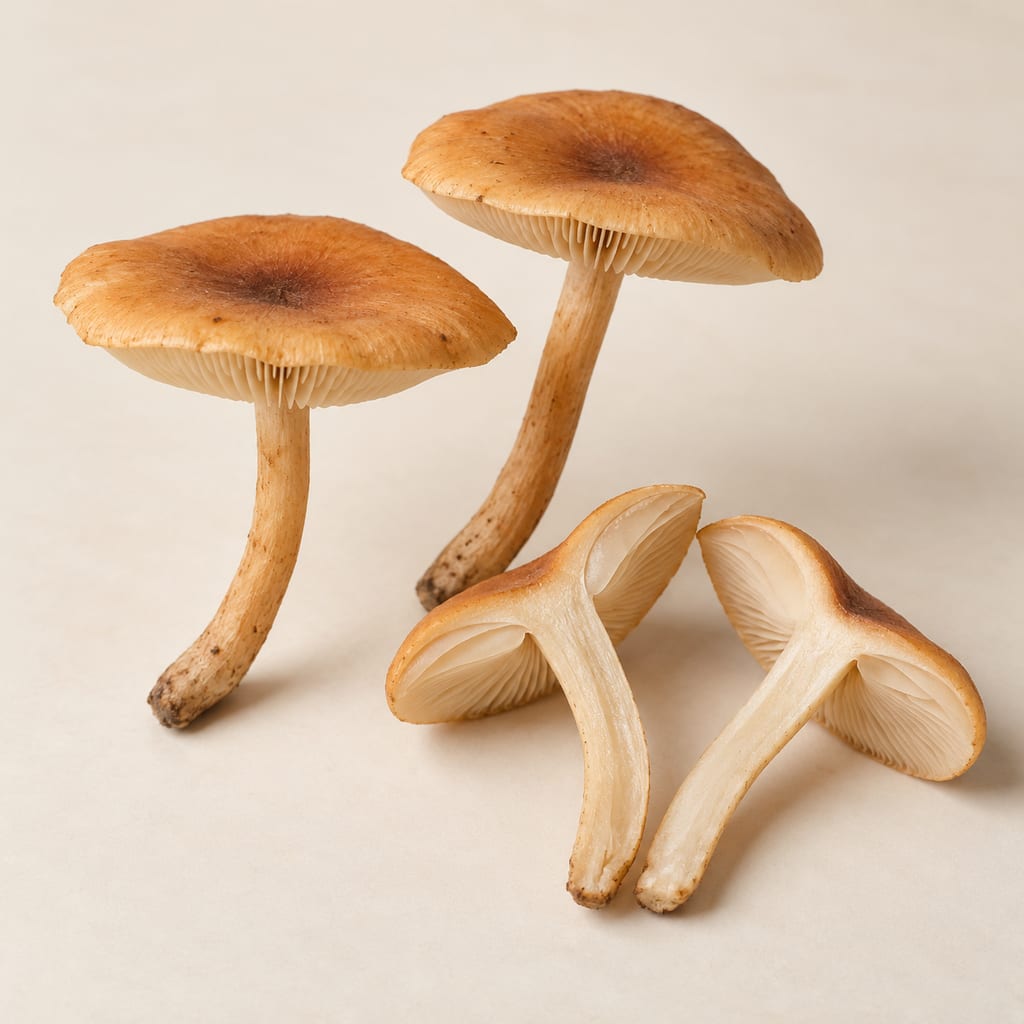
A wood-associated Armillaria recorded in Yunnan and Sichuan, China, and listed as edible in a 2026 Chinese catalogue.
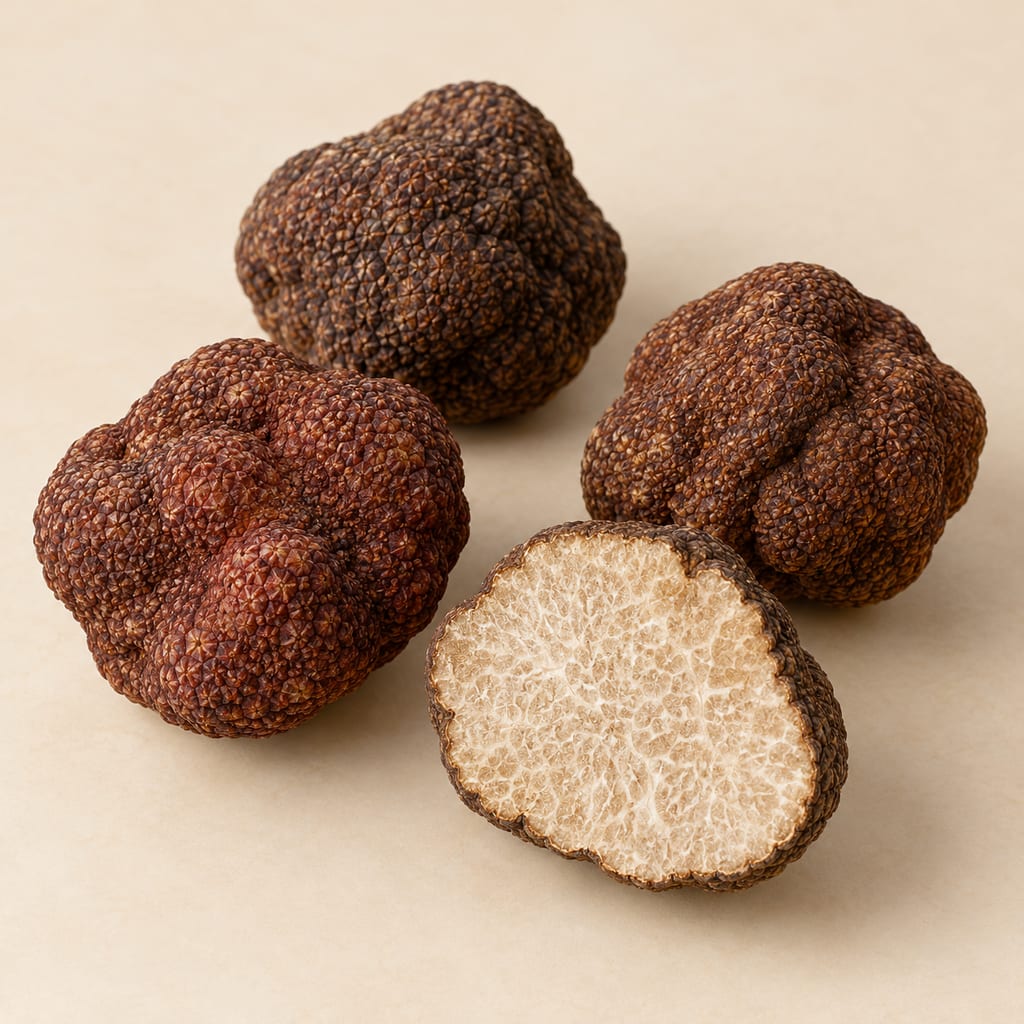
Tuber pseudohimalayense is a wild black truffle from Yunnan, China, listed as edible in a Chinese species catalogue. No independent assessment of its culinary use or safety is available.
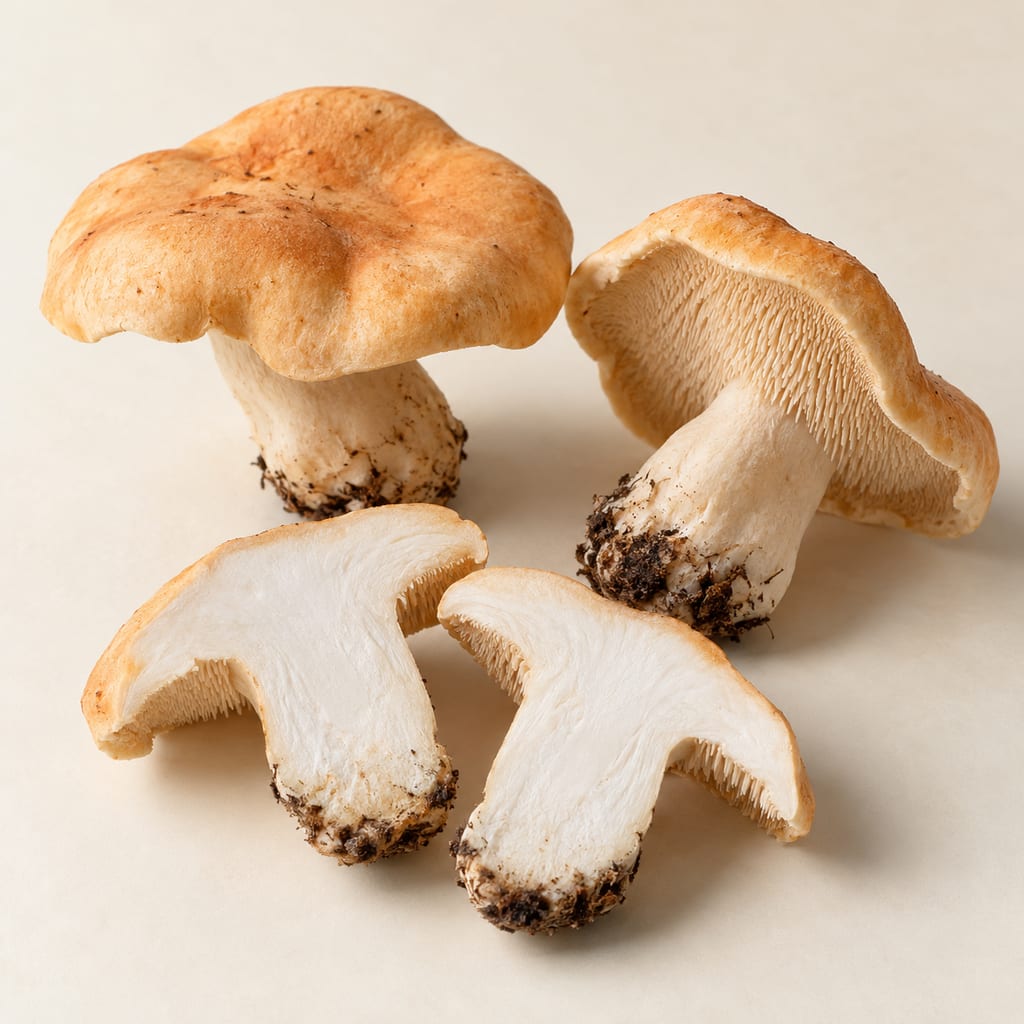
Hydnum berkeleyanum is a toothed, ectomycorrhizal forest fungus sold in food markets in Yunnan, China. Its regional identification is published, but its current name and local safety still need species-level review.
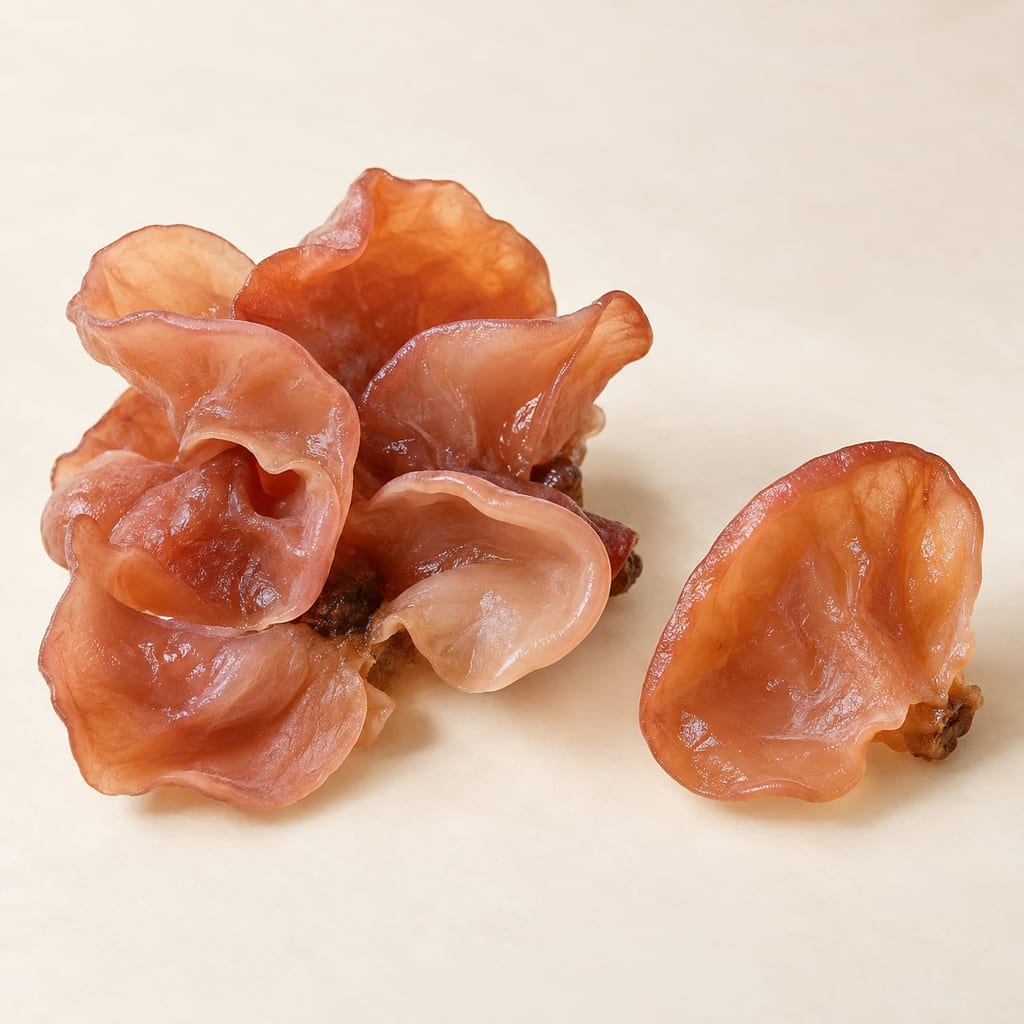
Auricularia thailandica is a thin, gelatinous wood ear described from Southeast Asian collections. Research reports it edible and experimentally cultivable, but species-specific recipes and everyday handling guidance are scarce.
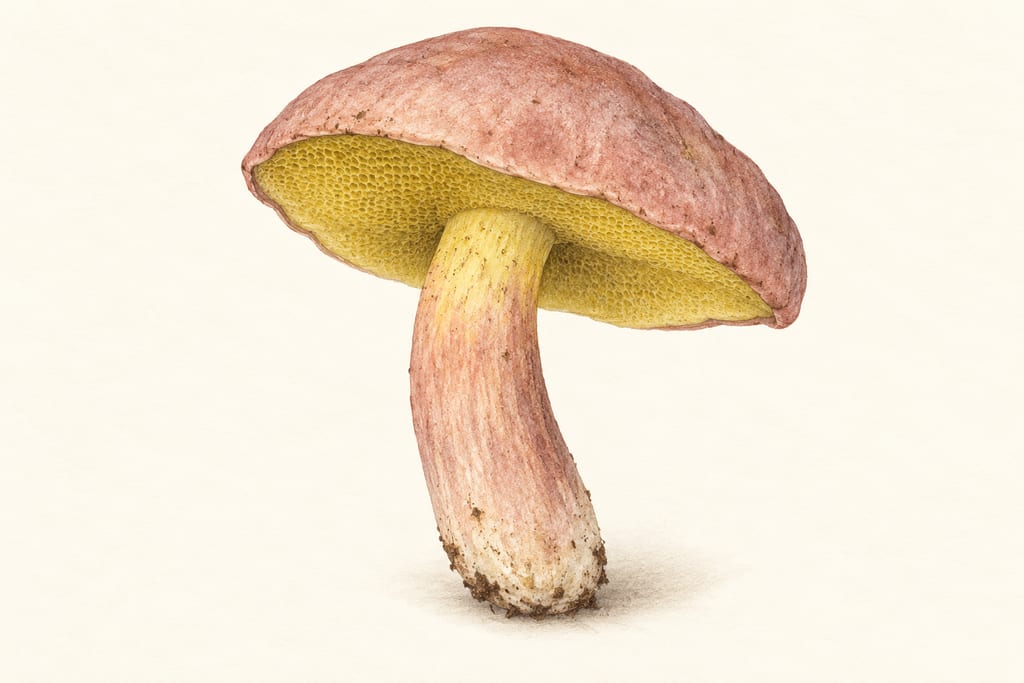
A 2023 Chinese taxonomic treatment accepts Boletellus indistinctus as a species. A separate Yunnan market record uses this name, but its specimen identification and local food safety have not been confirmed here.
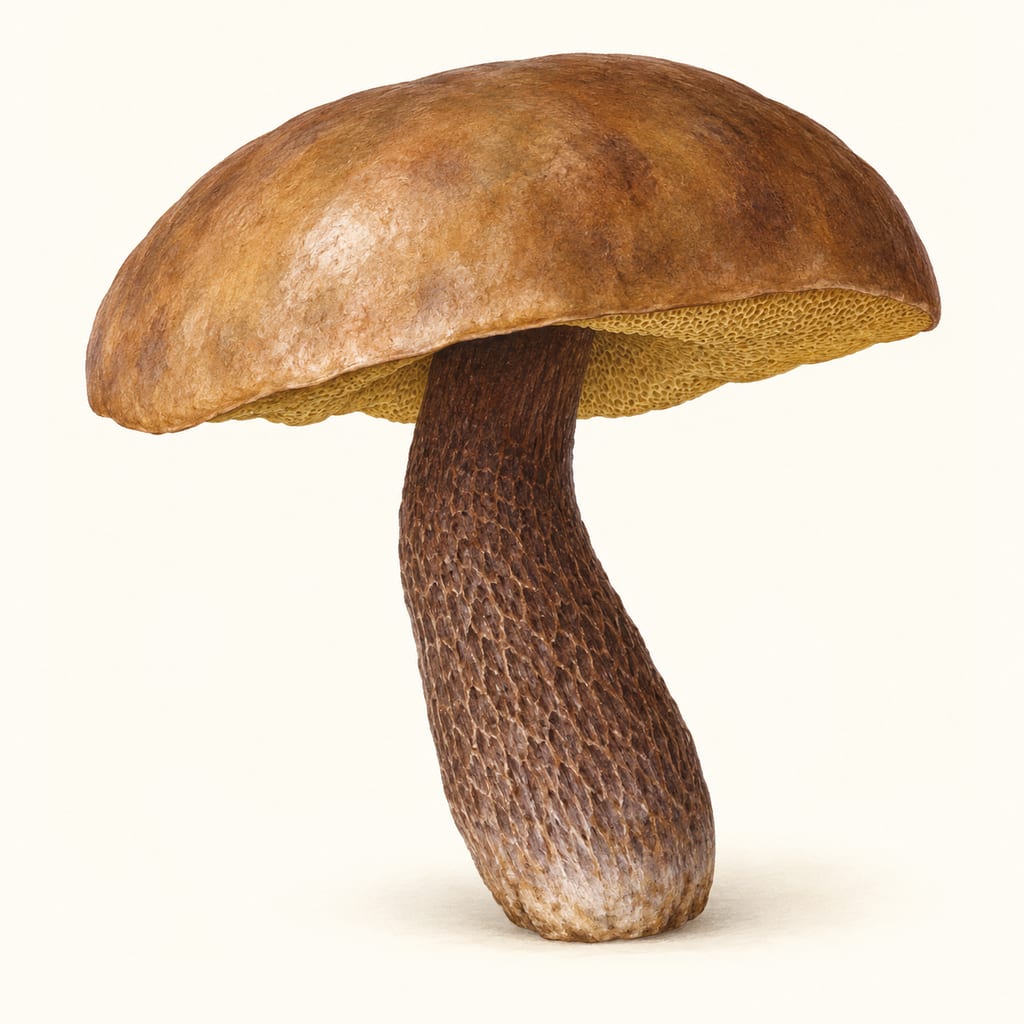
Boletus botryoides, the grape-coloured bolete, is a porcini-like wild bolete of central and south-western China. It is listed as edible in Chinese catalogues, but no dish or preparation is documented for it.
No community contributions have been published for this entry yet.
Sign in to contribute. Published comments and photos are free to read.
UBC Beaty Biodiversity Museum, Mushrooms of CanadaIdentification · Safety conflict · Taxonomy
Turbinellus floccosus, scaly chanterelle, woolly chanterelle, woolly false chanterelleScaly and woolly chanterelle names; reports of gastrointestinal upset in the Pacific Northwest (search summary; page not fetched in full)
Cited in: A chanterelle that is not a chanterelle; Edibility is in dispute; Taxonomy and the populations that differ; Safety
Jungle DragonDistribution · Chemistry
Woolly chanterelleRecorded range Japan, North Korea, China, Tibet, India, Nepal and Pakistan; norcaperatic acid claim (search summary; page not fetched in full)
Cited in: Where it is recorded; Taxonomy and the populations that differ
SpringerFood use · Market
Supplied Pu'er market study (S032)Regional eating tradition recorded in Pu'er markets (catalogue summary; article not readable during this session)
Cited in: Where it is recorded; Edibility is in dispute; Safety