
Akahatsu
Akahatsu, Lactarius akahatsu, is a wild milkcap of East Asian pine and mixed forests that is sold in Yunnan markets, with its edibility and identity still needing species-level review.
 FermenteaWhere food goes to change
Mushrooms
Tricholoma equestre, the yellow knight, is a yellow ectomycorrhizal fungus of pine woods whose long market history in Europe is overshadowed by serious rhabdomyolysis poisonings, so the sources read do not support eating it.
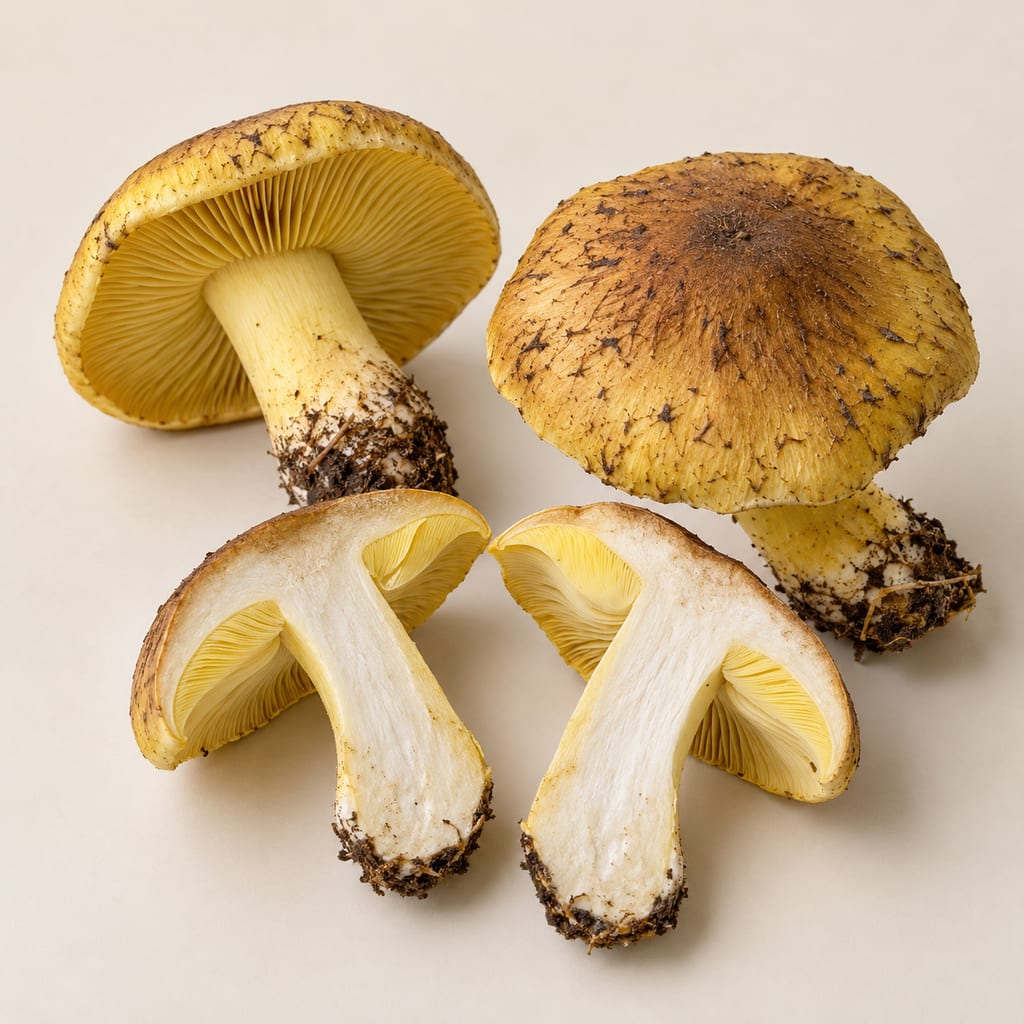
Tricholoma equestre is a fungus of the genus Tricholoma that forms a mycorrhizal partnership with pine trees. Its cap is about 5 to 15 centimetres across, usually yellow with brownish areas toward the centre. The stem is yellow and brownish at the base, and the gills are yellow. The spore print is white.
The species is known as the yellow knight and as the man on horseback. The name Tricholoma flavovirens is an older name the article calls superseded. It was first described by Linnaeus in 1753 as Agaricus equestris, and that name takes precedence.
For a long time the yellow knight was prized as an edible mushroom and sold in European markets, and some authors still regard it as tasty. The Wikipedia article states that the poison in the mushroom remains unknown.
The catalogue records the species as historically eaten and recorded in Yunnan markets. That record rests on a cited ethnobiology paper that could not be read in this recovery, and the Wikipedia article does not confirm it.
Concern about the species was first raised in southwestern France, where patients had eaten three or more meals containing it within two weeks before treatment. Symptoms began one to four days after the last meal and included muscle weakness, sometimes with pain and stiffness, and dark urine. Nausea, sweating and facial reddening were also reported, without fever.
The suspected mechanism is rhabdomyolysis, the breakdown of muscle tissue. The Wikipedia article describes deaths among patients treated for the poisoning and cites a 2001 New England Journal of Medicine paper on wild-mushroom intoxication as a cause of rhabdomyolysis. No poisoning cases were reported in North America, and look-alike species may be involved.
A 2018 Polish study fed ten volunteers 300 grams of fried mushroom each and reported no consequences. A 2020 systematic review by Nieminen and Mustonen raised concern and advised not to harvest and consume the species. The sources read therefore disagree about the risk, and the review is the more cautious of the two.
The catalogue carries the workbook label SAFETY CONFLICT and keeps the species outside an approved edible list. That label is a supplied flag, not an identification or toxicology conclusion.
The sources read do not support eating this mushroom. The Wikipedia infobox gives its edibility as not recommended or poisonous, and the cited review advises against harvesting and consuming it.
This record is not a guide to identifying wild mushrooms, and it does not identify a specimen. Do not eat a fungus identified as yellow knight, or any yellow Tricholoma, on the strength of a market or a historical account. Tricholoma contains species that are not safe to eat, so identify any specimen with an expert before eating it.
Region-level record. The article says the species was long prized and sold in European markets; the poisoning reports come from southwestern France.
The catalogue records use in Yunnan markets. The Wikipedia article does not mention Yunnan, and the cited ethnobiology paper was not readable in this recovery, so the record is not verified here.
Akahatsu, Lactarius akahatsu, is a wild milkcap of East Asian pine and mixed forests that is sold in Yunnan markets, with its edibility and identity still needing species-level review.
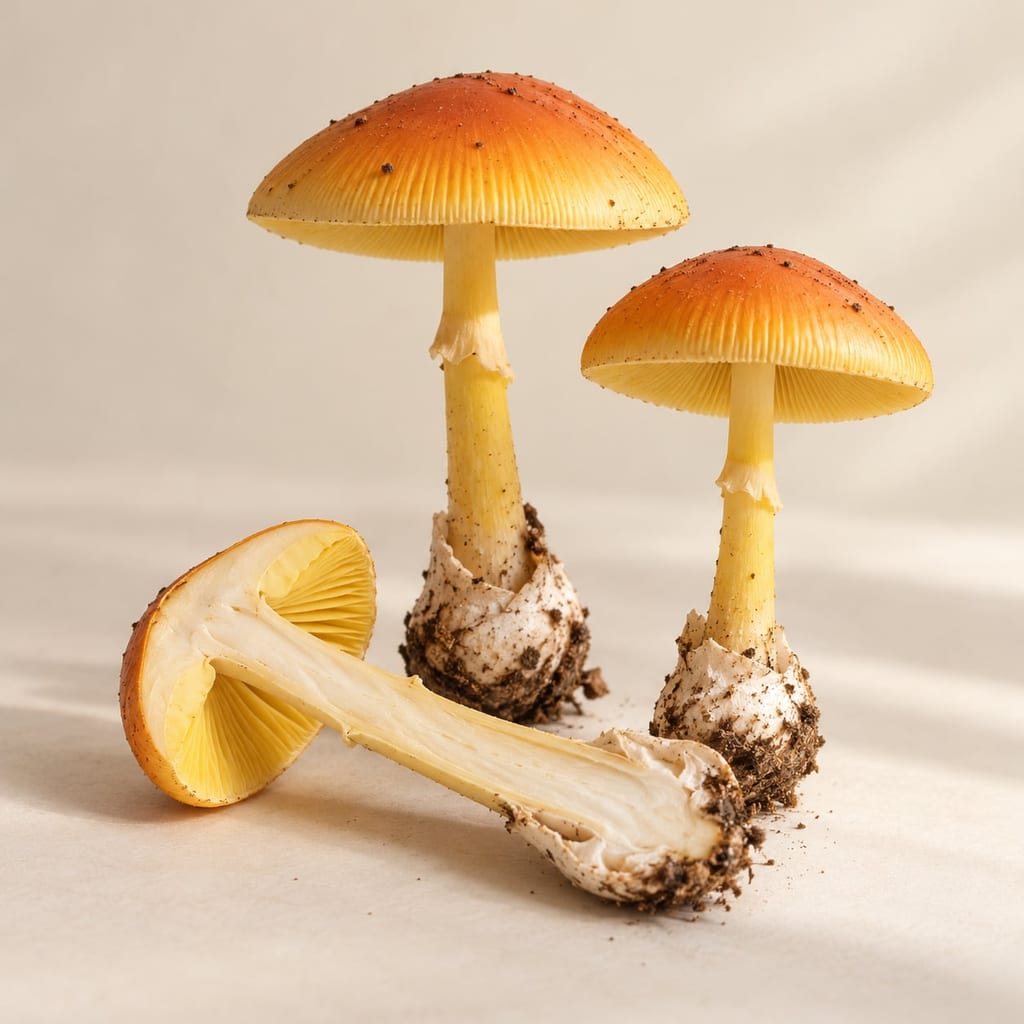
A wild Amanita of China, first reported there and listed as edible in a Yunnan ethnomycology study. The genus contains deadly species, so this page does not support identifying or eating it.
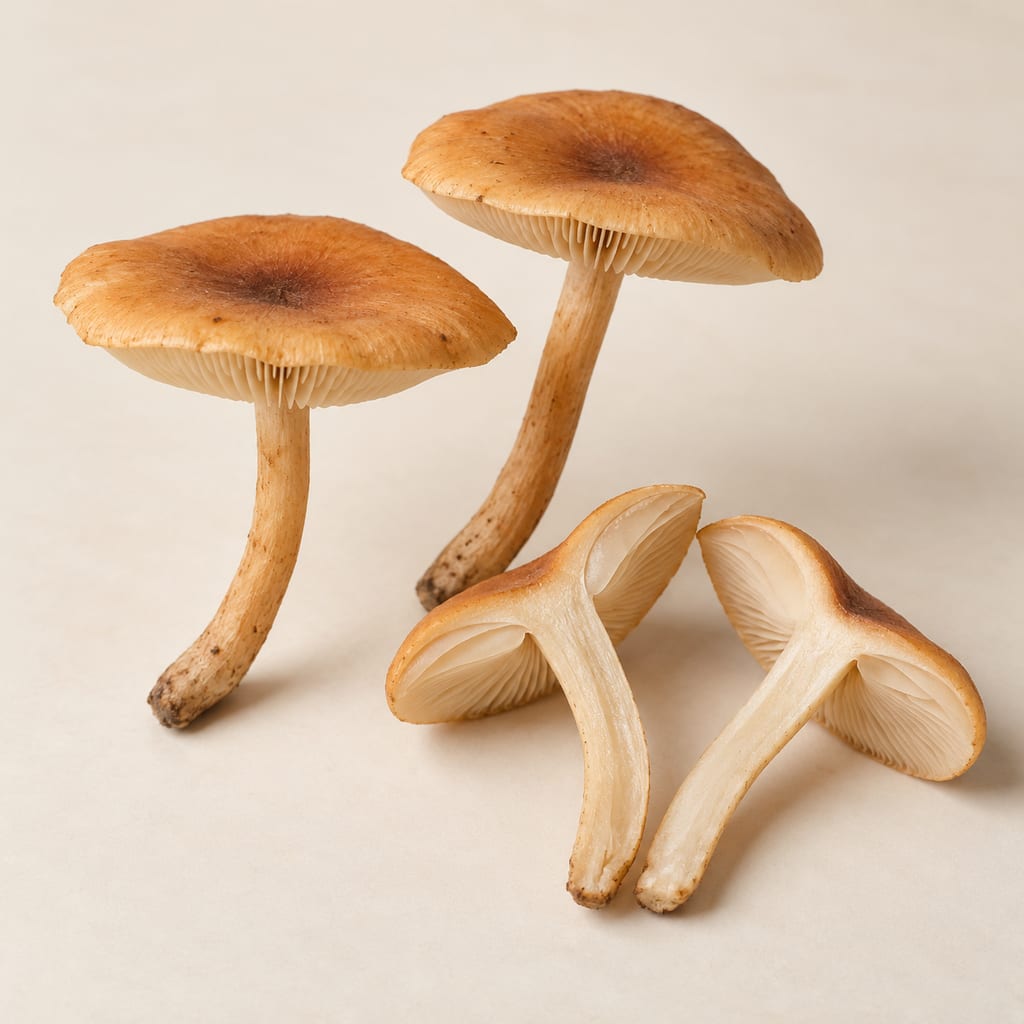
A wood-associated Armillaria recorded in Yunnan and Sichuan, China, and listed as edible in a 2026 Chinese catalogue.
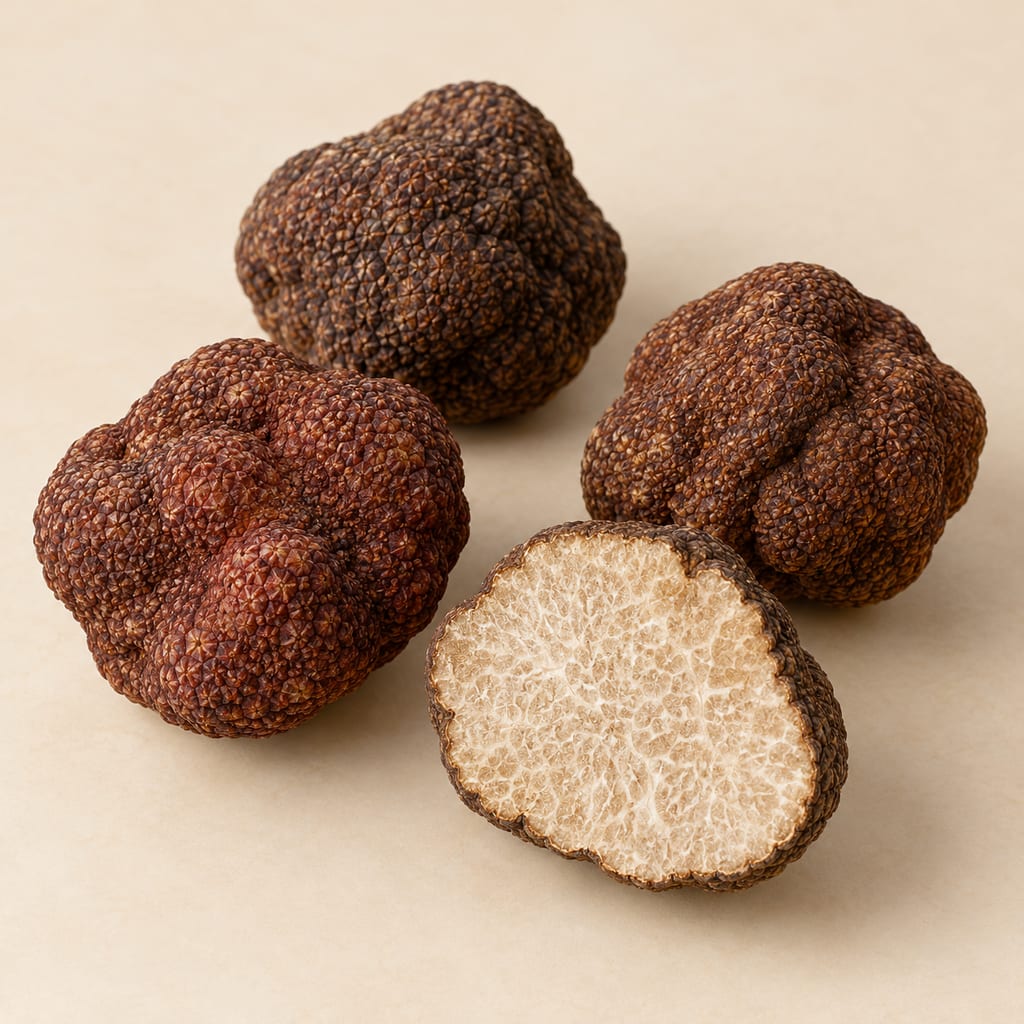
Tuber pseudohimalayense is a wild black truffle from Yunnan, China, listed as edible in a Chinese species catalogue. No independent assessment of its culinary use or safety is available.
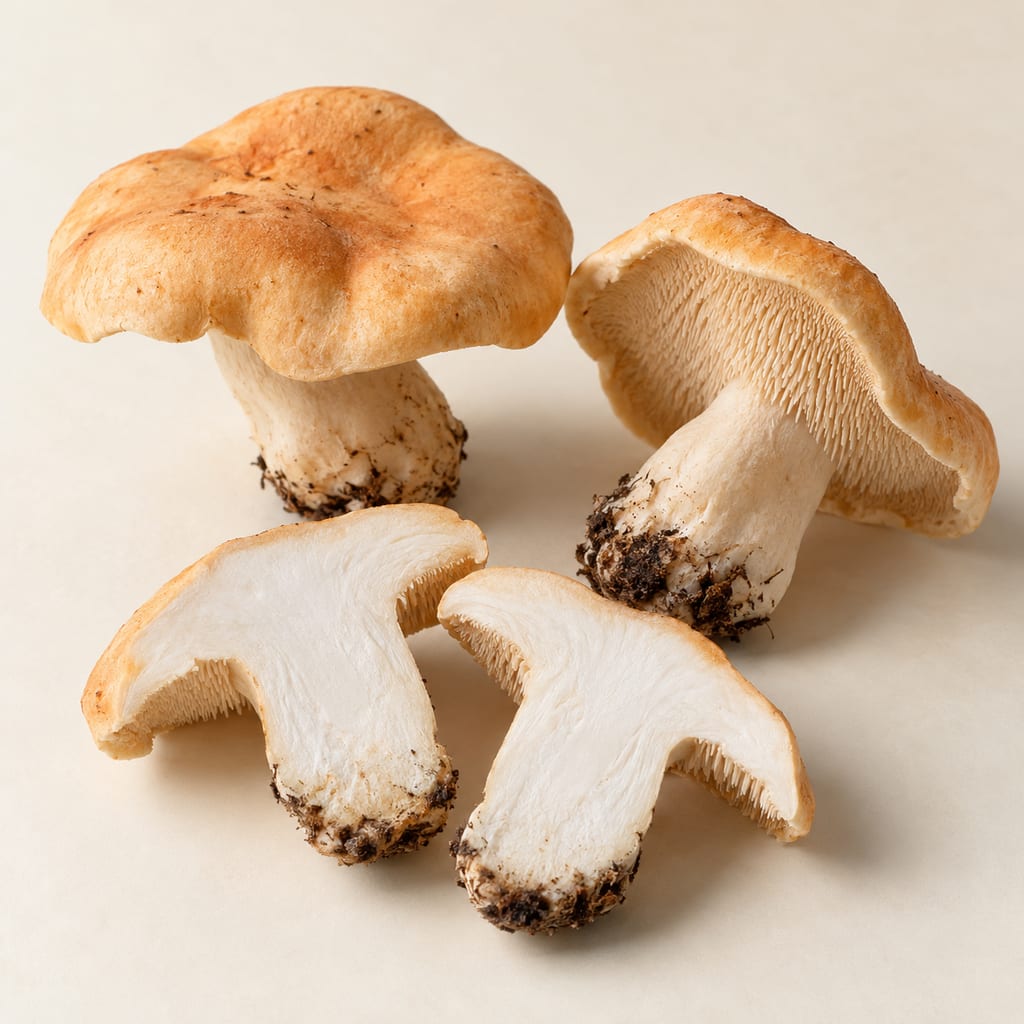
Hydnum berkeleyanum is a toothed, ectomycorrhizal forest fungus sold in food markets in Yunnan, China. Its regional identification is published, but its current name and local safety still need species-level review.
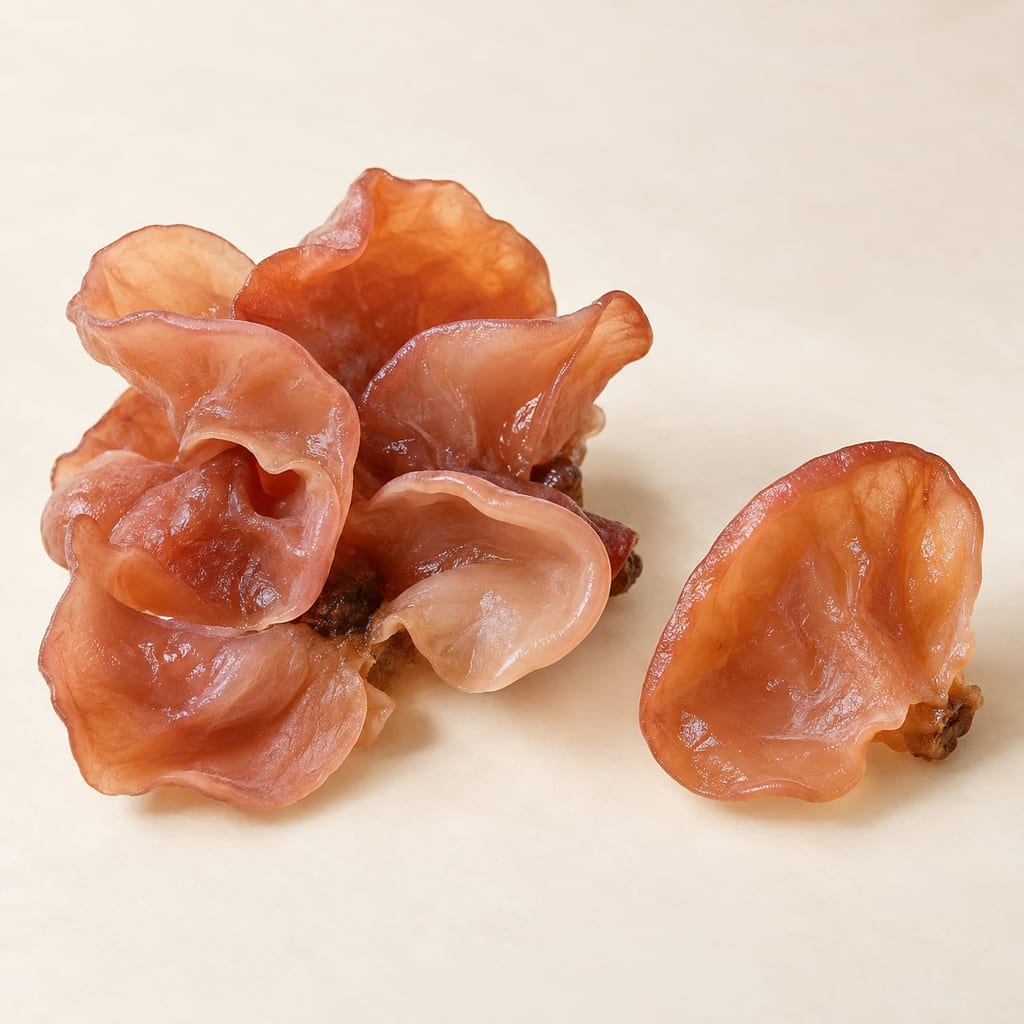
Auricularia thailandica is a thin, gelatinous wood ear described from Southeast Asian collections. Research reports it edible and experimentally cultivable, but species-specific recipes and everyday handling guidance are scarce.
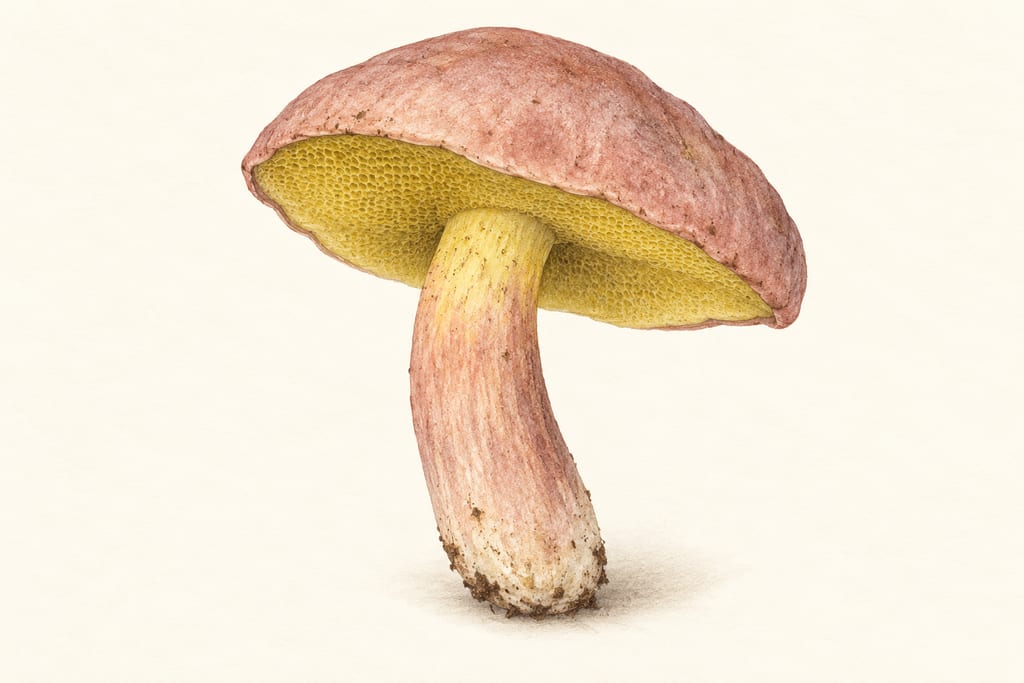
A 2023 Chinese taxonomic treatment accepts Boletellus indistinctus as a species. A separate Yunnan market record uses this name, but its specimen identification and local food safety have not been confirmed here.
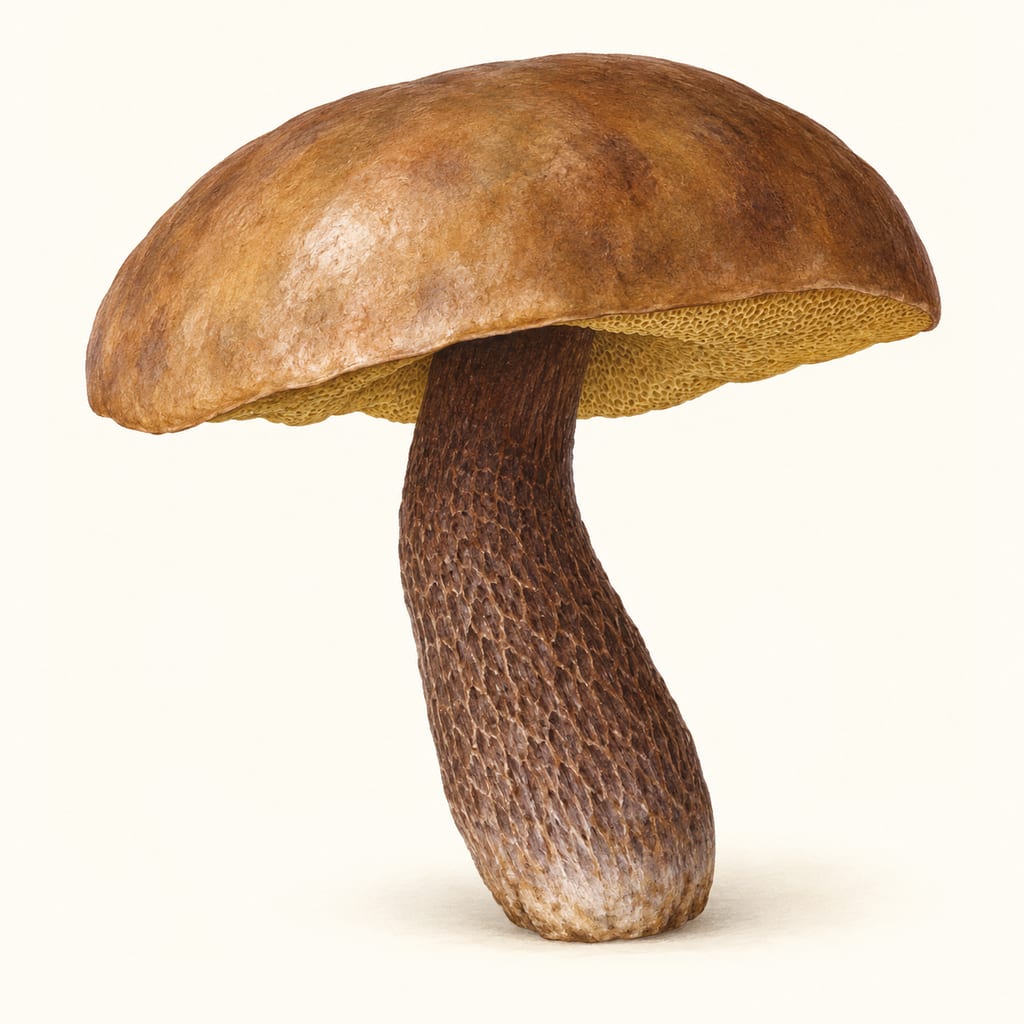
Boletus botryoides, the grape-coloured bolete, is a porcini-like wild bolete of central and south-western China. It is listed as edible in Chinese catalogues, but no dish or preparation is documented for it.
No community contributions have been published for this entry yet.
Sign in to contribute. Published comments and photos are free to read.
WikipediaIdentity · Safety · History · Taxonomy
Tricholoma equestreNames: man on horseback, yellow knight, Tricholoma flavovirens; ectomycorrhiza with pine; cap 5 to 15 cm, yellow with brownish centre; stem 4 to 10 cm; yellow gills; white spore print
Infobox: edibility not recommended or poisonous; poison unknown
Long prized and sold in European markets; some authors regard it as tasty
Rhabdomyolysis concern first raised in southwestern France; symptoms 1 to 4 days after the last meal; deaths among treated patients described; NEJM 2001 paper cited; 2018 Polish feeding study of ten volunteers; 2020 systematic review advised not to harvest and consume
Cited in: What it is; Food history; Poisoning reports; Conflicting studies and the current advice; Safety
SpringerFood
Ethnobiology paper cited in the catalogue (Journal of Ethnobiology and Ethnomedicine, 2022)Catalogue-cited source for Yunnan market use; full text not readable in this recovery
Cited in: Food history