
Drinks
The boza makers' parade
Murad IV made Istanbul's boza makers march last in his guild parade, with only cymbals and drums. Evliya Çelebi's sweet and sour boza, the Flour Hall porters, the pickle makers and Vefa.
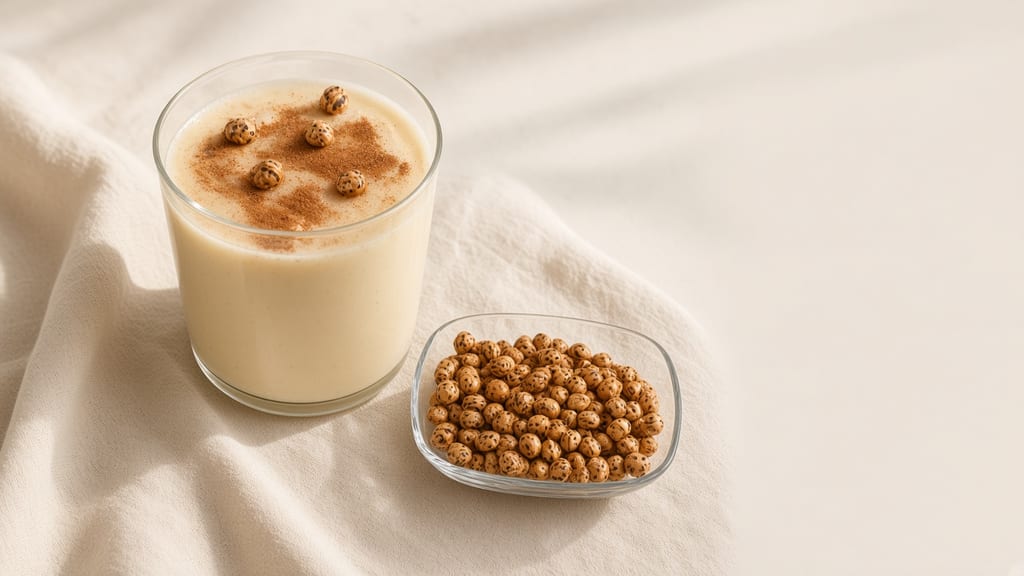
Thick pale boza in a glass topped with cinnamon and roasted chickpeas on warm ivory linen.
Last in line
In the spring before Sultan Murad IV marched on Baghdad, every guild of Istanbul was ordered to parade past the sultan's pavilion with its tools, its wares and its band. Evliya Çelebi, who grew up in the city, describes the order in his Book of Travels. The bakers rode on wagons, kneading and baking as they went and throwing small loaves into the crowd. Sailors rolled ships along the street, firing muskets and singing the Greek towing song. Each guild came with its own band, and the great guilds marched to the mehter, the eightfold Ottoman military music.
One guild was told to come last. The boza makers, who brewed and sold a thick, sour, lightly alcoholic drink of fermented grain, were to bring up the rear of the whole procession. They were forbidden the eightfold music. They could pass "only with cymbals and drums".
The order is a small piece of ceremonial snobbery, and it carries a puzzle. A sultan who closed the city's coffee-houses and taverns, and who had men executed for smoking, still wanted the boza makers in his army. Evliya explains why in a sentence: boza "gives heat and strength to the body of Moslim warriors, and serves to allay hunger."
What the order said
Murad's words survive in two English versions, and they disagree on one point. Joseph von Hammer's translation of 1834 has the sultan command "that the guild of the Buza-makers should pass the last of all, and no inn-keepers be found in the Imperial camp." The next sentence reads: "They shall assist the Buza-makers and serve them as Yamak or fellow-assistants in the procession." A yamak was a junior guild attached to a senior one. In von Hammer's reading the tavern keepers, whose wine was forbidden to Muslims, were made the boza makers' helpers on parade day.
İklil Selçuk, working from the modern Turkish edition of Evliya's manuscript by Robert Dankoff, Seyit Ali Kahraman and Yücel Dağlı, reads it differently. The wine-house keepers, "despised by everyone", must not join the army at all, while the boza makers "must be paid and must be providers in the army". On procession days they may not march to the eight-measure band and must go by with two measures of music. Both versions end with the same instruction: the sultan wanted to know how many boza houses and wine houses there were in the city, and how many tavern keepers.
That last line is the practical point. A parade of every guild was also a count of every guild, and Murad wanted the drink trade counted.
A city counted in three months
Murad's decree went out as imperial rescripts to the grand vizier Bayram Pasha, the chief mufti Yahya Efendi and the judges of Istanbul, Eyüp, Galata and Üsküdar. They were to write down every guild with its chief, every shop, every pious foundation and every monument in the four judicial districts. Those who wrote it, the decree warned, had to be impartial; anyone who was not would be quartered.
According to Evliya the survey took three months and filled a book called the Description of Constantinople. The court historian Solakzade read it aloud to the sultan "day and night". Evliya's own guild chapter, the long central part of his first volume, claims to follow it, guild by guild, with head counts and shop counts for each.
The procession has no date in Evliya's text beyond its place before the Baghdad campaign. Baghdad fell to Murad in 1638 after a forty-day siege, which puts the parade in the late 1630s. Murad had closed the coffee-houses and banned tobacco in 1632. In 1634 he banned the sale and drinking of alcohol and closed the taverns. Evliya says he prohibited "all the coffee, wine, and búza-houses", and that "every day some hundreds of men were executed" under those bans.
Rank in the line
Place in the parade mattered, and guilds fought over it. When the captains of the Mediterranean ships heard that the butchers were to march ahead of them, they petitioned the sultan that it would be "their complete ruin, and an everlasting shame" to follow "the blood-shedding butchers". They carried the food of Egypt to the capital and seventy thousand pilgrims to Mecca. Murad settled it by decree: the captains first, then the butchers.
The leading guilds put on spectacles. They made loaves the size of a bath-house dome, covered with sesame and fennel, each weighing fifty quintals, and dragged them on rafts of poles behind seventy to eighty pairs of oxen. No oven could hold them, so they were baked in pits under hot ashes. The Black Sea captains staged a sea battle in the street with captured Cossack boats.
Against that, marching last without a band put the boza makers at the bottom of the order, in front of everyone.
Why the army wanted them
Evliya's case for the boza makers is plain. "The Buza-makers are however, a very necessary corporation in a camp," he writes. Boza, "though fermented", is not forbidden like wine; it warms, strengthens and fills an empty stomach. In another chapter, writing about saddlers, he lists the craftsmen an Ottoman army could least do without: saddlers, farriers, cooks, barbers and boza makers.
He also tells a story against the soldiers. When Persian troops besieged the castle of Ahıska in the east, not one janissary could be pulled out of the taverns, the Armenian houses or the boza houses to defend it, and the castle that Sultan Selim had taken fell.
The Turkish text files the sour-boza brewers under a telling title. Selçuk quotes Evliya's heading as Esnaf-ı Bozacıyan-ı Mezmûmân, the guild of the blameworthy boza makers. The army needed them and the moralists disowned them, and the parade order kept both views.
Two drinks under one name
Evliya counts two boza guilds, and the difference between them explains most of the arguments about boza that followed. The sellers of ordinary boza, which von Hammer glosses as "fermented liquor of barley", numbered 1,005 men with 300 shops. The sweet-boza makers numbered 105 men with 40 shops.
The ordinary boza was sour and mildly intoxicating. Evliya's position on it is the jurists' one: "Drinking boza in general is not forbidden, however, getting drunk by it is forbidden." He adds that boza sellers would mix wine into a serving on request, even into sweet boza.
The sweet boza sat at the other end of the scale. Pious men drank it openly. Selçuk compares it to the malt drinks sold in chemists' shops today, a nourishing thing for invalids and mothers, and treats the two as almost separate commodities that shared a word.
White boza in a handkerchief
Evliya's sweet boza was white, made from millet. Selçuk's reading of the Turkish names the millet of Tekirdağ, on the Sea of Marmara. It was so thick, von Hammer translates, that it "resembles a jelly", and the makers tested it by pouring it into a handkerchief: not a drop came through. A layer of cream formed on top. A man could drink ten mugs, Evliya says, and still not be drunk.
The two translations part again over what sweetened it. Von Hammer has "must of Tenedos, with cinnamon, cloves, ginger and Indian nuts": grape must from the wine island off the Dardanelles. Selçuk, from the modern edition, has molasses from Kuşadası on the Aegean coast, with cinnamon, cloves, ginger and coconut sprinkled on top. Both readings point to the Aegean, and both put the spice on top.
It was sold from tubs "large enough to contain a man's body". The Turkish word for those containers was kutu, a box, and the drink was called kutu bozası, box boza. Selçuk lists its best-known pitches: the Aya Sofya market and the entrance to the Hippodrome, the Kadırga harbour, Aksaray, inside the Unkapanı grain hall, and Usta Ahmet's boza in front of the Azablar bath.
Sheikhs and scholars drank it. Pregnant women drank it so that the child would be "sound and stout", and nursing mothers drank it for milk.
Evliya's one drink
Evliya is careful about his own habits. In the sweet-boza entry he swears that he never drank anything on all his travels except the sweet boza of Istanbul "preserved in boxes", the rice-water boza of Egypt and the makssama of the Crimea. Then he lists what he did not drink, and the list runs to more than eighty items: coffee, tea, tobacco, salep, every wine from date to muscat to coconut, arak, kumis, beer, cinnamon water, sulphur water, opium and a long run of named electuaries.
"I never tasted any other electuary but that of sweet lips," he concludes. He learnt about the rest, he says, through his friends.
Sour boza at the Flour Hall
The sour boza had its own geography. Its centre was Unkapanı, the Flour Hall on the Golden Horn, where grain came in by sea and porters carried it up into the city. Selçuk counts thirteen boza houses there in Evliya's Turkish text, each with forty to fifty servers and five to six hundred drinkers. Some porters sat in a boza house from morning to sunset; others drank so much that other porters had to carry them home.
Evliya describes the Unkapanı porters with a showman's relish. Each one eats a sheep or a lamb, drinks forty mugs of boza and carries a thousand okka, well over a tonne. When a cargo arrives from the southern Marmara ports, ten men lift a single sack onto one porter's shoulders and the beam of the scale spins. At the door of the Sinan boza house hung a vessel on a chain big enough to hold three men, and one porter, Evliya says, drank it dry between morning and evening.
Von Hammer's English volume ends, by chance, at the same spot, and with a different number. Its last lines read: "There are many buza-houses at Constantinople; at the Flour-hall, where there is a great number of porters and others, are only three Buza," and there the volume stops. The modern Turkish edition gives thirteen.
The Flour Hall had another fermenting trade. The sultan's vinegar works stood inside it, with a hundred tubs and casks each big enough to hold five to ten men and vinegars thirty to forty years old. Old casks, Evliya says, turned plain hot water into good vinegar in three days.
Liver, haggis and the boza house
Boza houses fed people as well as filling their cups. Evliya's guild list includes 300 liver sellers, all Albanians from Ohrid and nearby towns, who carried fresh sheep's livers on poles. After them come the haggis sellers, who "establish their tennurs (portable stoves) in all the places where búza is sold" and sell minced liver, spleen and offal. Selçuk's text gives 400 Albanian cooks with an oven in a corner of every boza house, frying liver, kidneys, heart and liver meatballs for the drinkers.
A seventeenth-century court case found by the historian Eunjeong Yi shows the boza makers defending this trade. They claimed fried liver as their own speciality by long custom; meatballs and other dishes could be sold by any cook, but liver belonged to the boza house.
Evliya's story of Gülabi Ağa shows the same table. Gülabi, a palace watchman, follows a janissary into "a Búzah khánah in the market of Ayá Sófiyah", where the soldier "ate some kabábs and bread and drank búzah (a kind of beer)" and gave the hungry Gülabi nothing.
Noisy as a boza house
By Evliya's time a boza house was a byword for noise. He tells of Kılıç Ali Pasha, Murad III's admiral, whose first language was Italian. At the first Friday prayer in his new mosque, as hymns to the Prophet were sung, the pasha jumped up and shouted: "What is this gu gu gu and hin ku ku? Is this a wine house or a boza house?"
The drink followed the ships. At the Kara Piri Pasha landing, where vessels laid up for the winter, Evliya counts nearly two hundred shops, most of them taverns and boza houses for the crews. At Tophane the cookshops sold kebab, fruit compote and millet boza for the levends, the irregular marines.
At Kasımpaşa, by the naval arsenal, Evliya describes something darker. Gangs from the shipyard took men blindfolded to boza houses and taverns, got them drunk, told them they owed the treasury for what they had eaten and drunk, and put them on the oars. After six months at sea the men were handed a thousand akçe and let go.
Patron saints and Tatar sellers
Every Ottoman guild claimed a patron saint, and the boza makers' claim annoyed Evliya. They said their patron was Sarı Saltuk, the holy warrior who in legend converted the Balkans. Evliya calls this a great mistake. Boza, he says, was first made by Salssal the Tatar, killed by an arrow at Akkerman. He spends a page on Sarı Saltuk's deeds from the Dobruja to Danzig and then asks what likelihood there is that such a saint invented boza.
The sellers, he says, were "for the greater part Tatar gipsies". Selçuk's Turkish reading adds that the drunks of Istanbul volunteered as helpers to the army's chief boza maker so that they could drink for free. Von Hammer has the sorbet makers of the city as the boza makers' assistants, riding on wagons in the parade, crying "Buza!" and pouring it for the crowd.
Evliya passes on one proverb about the drinkers: "Dogs are no friends to Buza-drinkers." Heavy drinkers, he explains, suffered from gout and dropsy, always walked with a stick, and so had no friends among the dogs.
Bursa: ninety-seven boza houses
Evliya found the biggest boza houses in Bursa, the old Ottoman capital, which he visited in 1640. There were ninety-seven, "wainscoted with fayence, painted, each capable of accommodating one thousand men." In summer the boza was "cooled in ice, like sherbet", and the leading men of the town were not ashamed to go in. Bursa's coffee-houses, he adds, had become famous since Murad closed those of the capital. Over the gate of the butter khan hung a cask that, filled with boza, one man had once drunk dry to win a bet.
Bursa also has the paper trail. Selçuk's own earlier work used the city's court registers, and the records run back to a receipt of 20 March 1491, in which the tax farmer of the Bursa boza houses confirms that the holder of the Kanber boza house has paid his dues in full. In 1521 a man in Üsküdar rented a boza house from a charitable foundation for twelve months at 840 akçe.
Later cases show the trouble. In 1583 a Bursa woman told the court that her husband had sworn to divorce her if he drank wine or sour boza. In 1614 a group of men were found in the Hamzabey quarter with a pitcher of sour boza and two women. In 1630 the wine houses and boza houses were shut before the Ramadan festival, and on its second day a gang broke the locks, opened the wine casks and held a party with women dressed as men. In 1671 a neighbour complained: "We are unable to go out because of the boza drunks."
Rice for the palace
The palace drank boza too. The historian Arif Bilgin, working through the accounts of the imperial kitchen, found the rice issued to its confectionery for boza: 7.5 tonnes in 1631 and 3.9 tonnes in 1638, the year of the Baghdad campaign. He also traced the boza trade's taxes to the office that bought for the palace.
Rice boza was the palace's kind. Evliya knew it best from Cairo, where it was made from rice water, and drank it there as one of his three permitted kinds.
The pickle makers in the same parade
Boza shared the procession with another sour trade. Evliya's guild of pickle makers, the turşucular, had 1,200 men and 70 shops, and counted as kin of the vinegar makers and the cooks. They carried large china dishes of pickled parsley, cauliflower, capers, cucumbers, aubergines, cabbage, carrots and garlic, and handed pickles to the crowd as they passed.
Their motto was an Arabic saying that cut against them: "The faithful are sweet and the wicked sour." Evliya defends them anyway: these sour things "increase the appetite and strengthen the stomach."
The pickle trade can be followed in later records. Münife Obuz, drawing on the food historian Priscilla Mary Işın, gives seventy pickle shops in Istanbul in the seventeenth century, 121 by the end of the eighteenth and 122 early in the nineteenth. The pickle makers marched in Mehmed IV's guild parade of 1657 too. In 1726 an Istanbul court refused a man named Halil Bey a pickle-shop licence for want of qualification, and a decree of the same period let pickle makers sell any pickle they liked while grocers could sell only cabbage pickle and vinegar.
The two sour trades met at table. At the helva evenings held in Ottoman houses, Obuz notes, masters pulled hot sugar into threads of keten helva while guests ate assorted pickles alongside sherbet-sweetened boza. Near some bath-houses stood pickle shops, where customers coming out of the steam drank a glass of peppered cabbage-pickle juice, which was believed to keep off chills.
Sarajevo and Białystok
The boza makers' world reached well beyond Istanbul. In Sarajevo the bozadžije carried boza through every quarter in special jugs. The city museum shows a boza seller's ewer and tells the story of Hadži Hasan the boza seller, who in 1585 paid for a mosque in Logavina Street out of his earnings. The mosque still stands. Sarajevo boza, the museum notes, was made from maize flour, yeast, sugar and water, and was drunk in summer to cool the body.
The drink also travelled north. In Białystok, in north-east Poland, Macedonian settlers sold millet buza between 1912 and 1915, before Russian forces withdrew and took the makers with them. It came back after the war and was sold in swing-top bottles through the 1930s. Poland put it on its list of traditional products in 2018, as a cloudy, faintly fizzy millet drink with raisins and lemon, eaten with a piece of halva.
Prizren to Vefa
The boza shop most Istanbul people know today was opened by an Albanian. Hacı Sadık Bey came to the city from Prizren, now in Kosovo, in 1870, according to the family's own history. About two hundred makers were then selling a runny, dark, sour boza. He made a different one: thick, pale yellow and only faintly sour, at the moment the first bubbles of fermentation appear. For six years he made it in his cellar and carried it on winter nights around the streets near the palace in copper cans on his shoulder. In September 1876 he opened a shop in Vefa, near Şehzadebaşı.
His great-grandson, interviewed by Milliyet in 2013, described the difference in material terms. The old Istanbul boza was as thin as ayran, and Bulgarians still drink it thin, sour and dark. Hacı Sadık used millet instead of maize. Maize is easier to work, his great-grandson said, but millet tastes better. The modern recipe is millet semolina, water and sugar; about 20% sugar goes in and fermentation brings it down to about 12%. Boza drawn in the shop still contains live yeast and keeps for three days; the bottled boza sold in markets has none and keeps for about fifteen. A glass with roasted chickpeas, leblebi, on top keeps you full, he said.
A Hürriyet report of 2000 tells the founding differently: it puts Sadık's arrival in 1876 with the refugees from the Balkans, describes the two hundred rival makers as Armenians, and says he moved boza out of wooden barrels, which soured and smelled, into marble jars. The shop keeps a glass that Atatürk drank from.
Boza is a winter drink, so the shop needed a summer trade. Hacı Sadık made grape şıra, the sweet half-fermented grape juice, and from the şıra he made vinegar. The family business still sells boza, şıra and vinegar, the same three sour products that stood side by side at the Flour Hall.
What happens in the pot
Boza is a cereal porridge fermented by lactic acid bacteria and yeasts together. Hancıoğlu and Karapınar followed one through a day in 1997, a boza made from cooked maize, wheat and rice flours. Over 24 hours the lactic acid bacteria rose from about 7.6 million to 460 million per gram, the yeasts from about 225,000 to 8.1 million, and the pH fell from 6.1 to 3.5. Alcohol rose from almost nothing to 0.79%. Leuconostoc species made up the largest share of the bacteria, followed by Lactobacillus sanfrancisco, the bacterium of San Francisco sourdough. Of the yeasts, 83% were Saccharomyces uvarum and the rest S. cerevisiae.
The alcohol figure is the jurists' problem in numbers. After a day this boza held less alcohol than almost any beer, but a boza left standing in a warm boza house went on fermenting.
Studies of Bulgarian boza find a varied community. Petrova and colleagues isolated strains of Lactobacillus plantarum and Lactobacillus pentosus that can break down starch themselves. Osimani and colleagues, working on three unpasteurised commercial samples, found several Lactobacillus and Pediococcus species, Weissella and Leuconostoc, and yeasts of the genus Pichia with Torulaspora and Galactomyces. A 2013 review of Turkish fermented drinks by Altay and colleagues notes that boza is usually started with a previous batch, sourdough or yoghurt, and that alcoholic and lactic fermentation run side by side, as in kefir. The same review covers şalgam, the purple carrot and turnip juice of southern Turkey.
The fuller science and the comparison with bouza, busa and bozo are on Fermentea's page on sour mixed-culture cereal drinks.
The pickles in English
The pickle makers' wares reached print in English in 1864, when Turabi Efendi published his Turkish Cookery Book in London. His pickle chapter has eleven recipes, from aubergine to turnips in mustard water. The cucumber pickle is three sentences long: small cucumbers in a stone jar between layers of fennel, covered with salt water, held down under a board and a heavy stone, put in the sun for a few days and then somewhere cool for eight or ten.
The same recipe appears in the Ottoman cookbook Melceü't-Tabbâhîn, printed in Istanbul in 1844. Fermentea's turşu recipe follows it, with the salt, temperature and timing of a tested modern method.
The last of the parade
Evliya's guild chapter puts the boza makers at the end of the book as the sultan put them at the end of the line. The bakers had gone by with their ovens, the pickle makers with their china dishes, the vinegar men rolling their casks and crying "Good excellent English vinegar." Then came the boza makers' wagons, with the sorbet sellers pouring for the crowd, no shawms and no trumpets, only cymbals and drums.
Related
Discussed in this article
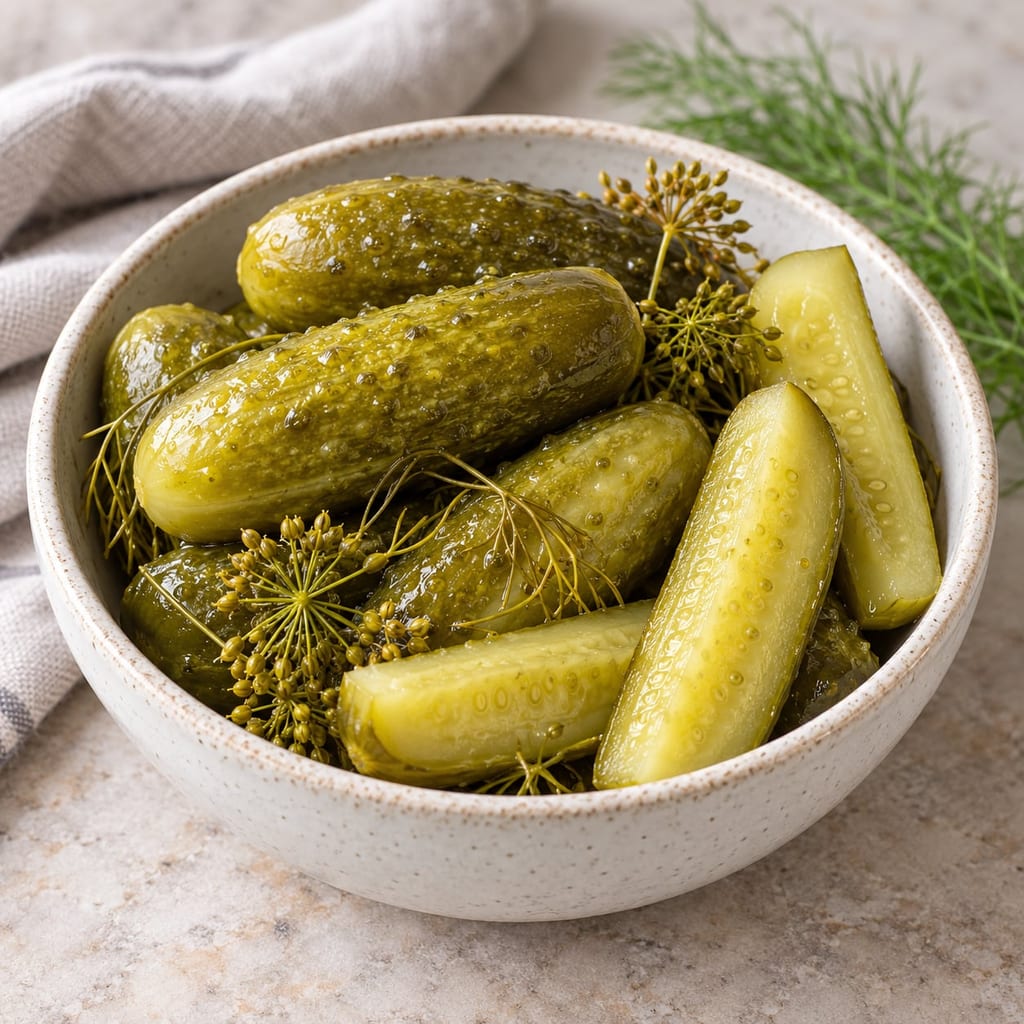
Fermented dill pickles
Trimmed cucumbers layered with dill and covered with a salt brine containing 5% vinegar, weighted and fermented three to six weeks.
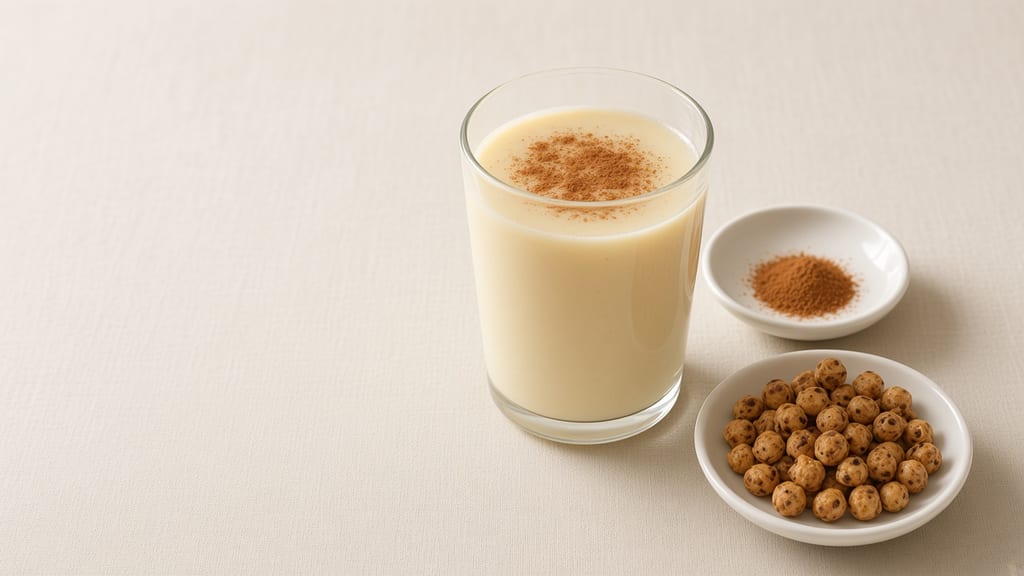
Istanbul bulgur and rice boza
A thick, pale Turkish winter drink of bulgur and rice cooked to a soft cereal base, sweetened with grape molasses and fermented for two days.
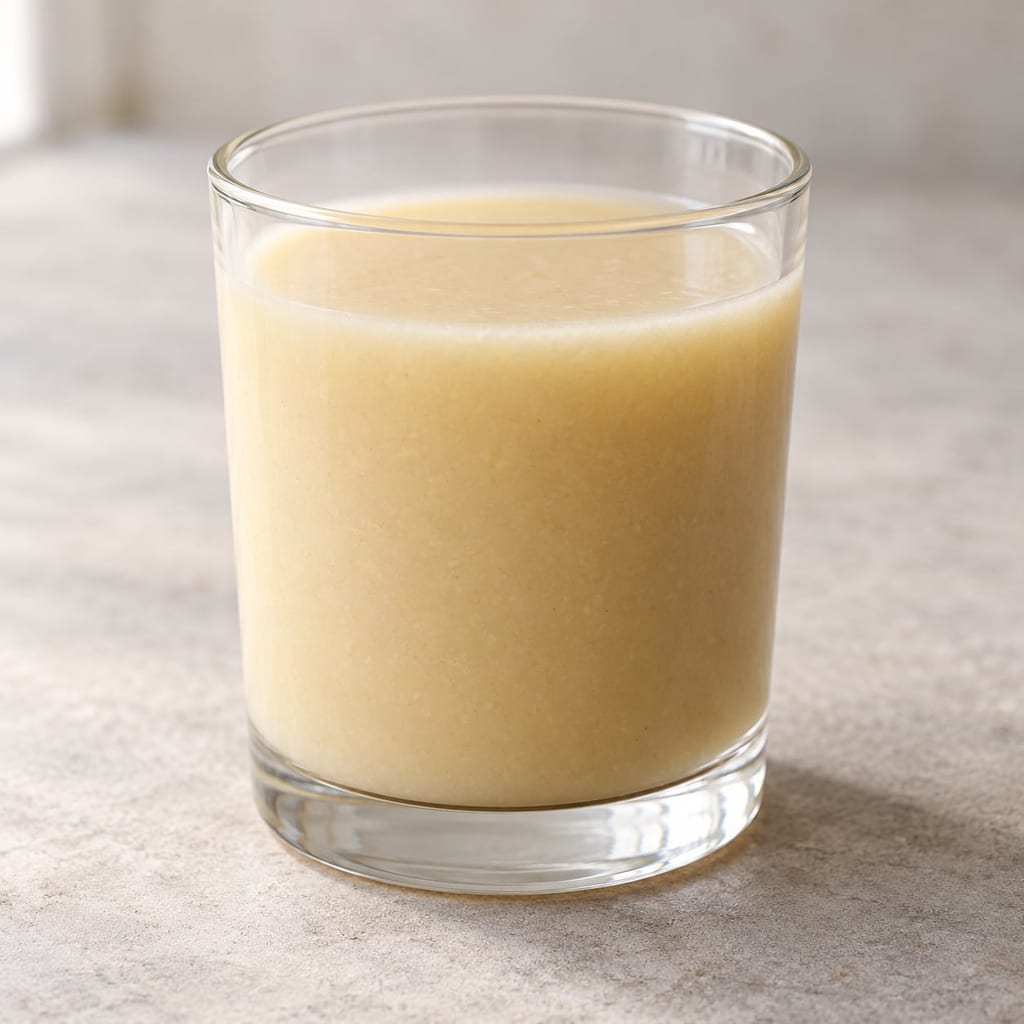
Kyrgyz Bozo
Kyrgyz Bozo is a mixed-fermented cereal drink made with ground grits, sprouted-wheat ugut and carried-over starter. This registry preparation leaves cereal selection, water and starter allocation unresolved.
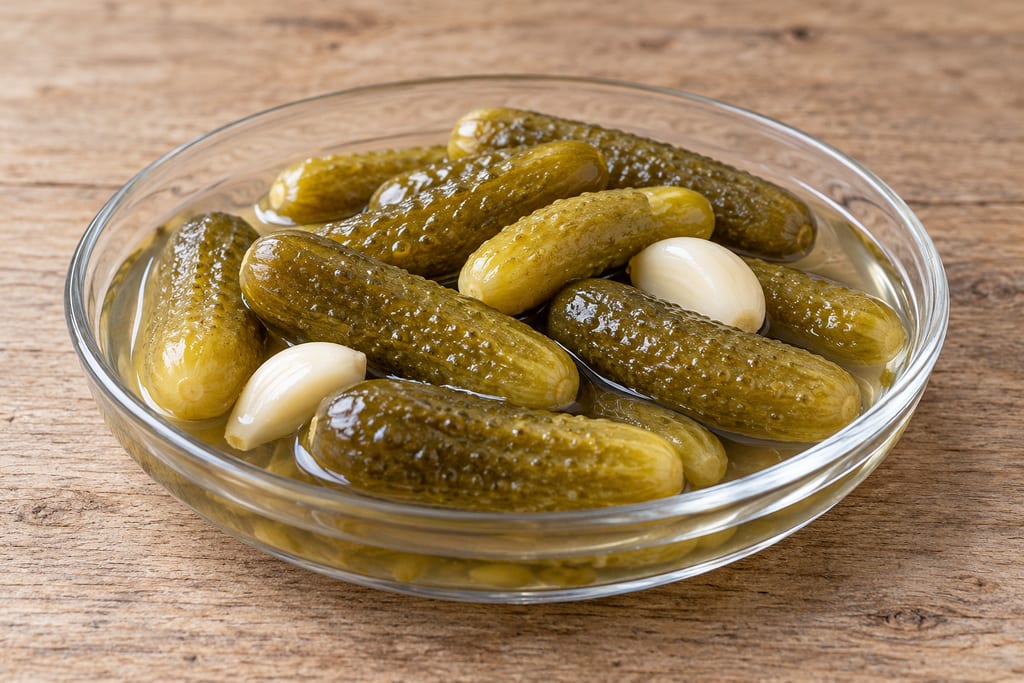
Orhangazi Gedelek turşusu (cucumber)
Cucumber variant of the registered Gedelek pickle family from Orhangazi, Bursa: cucumbers in a salt brine with garlic and a small amount of acid, held for about 20 to 30 days.
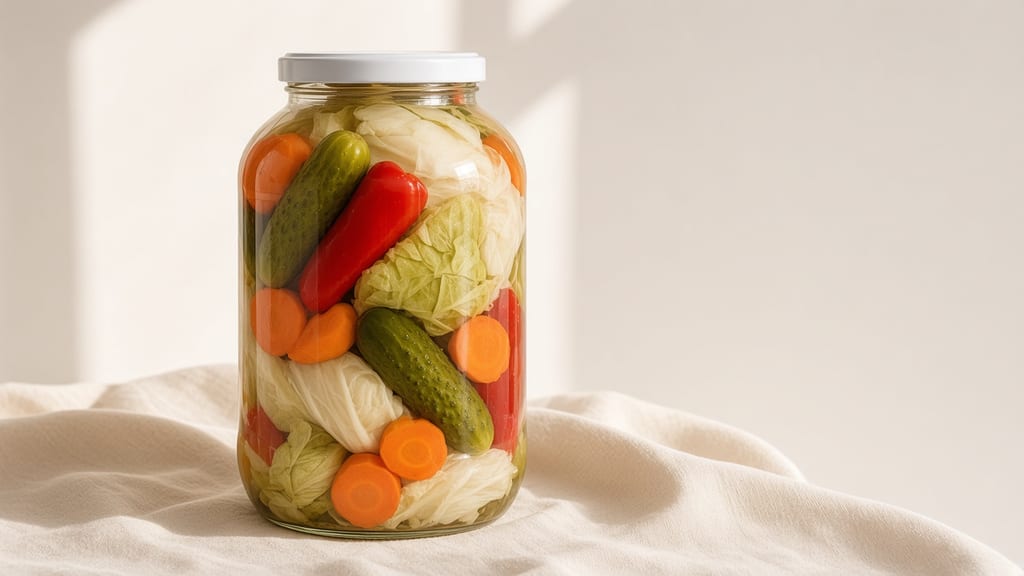
Ottoman turşu
Small cucumbers fermented in salt brine between layers of fennel, the Ottoman turşu of 1844 and 1864, made with tested modern salt, temperature and time and kept in the fridge.
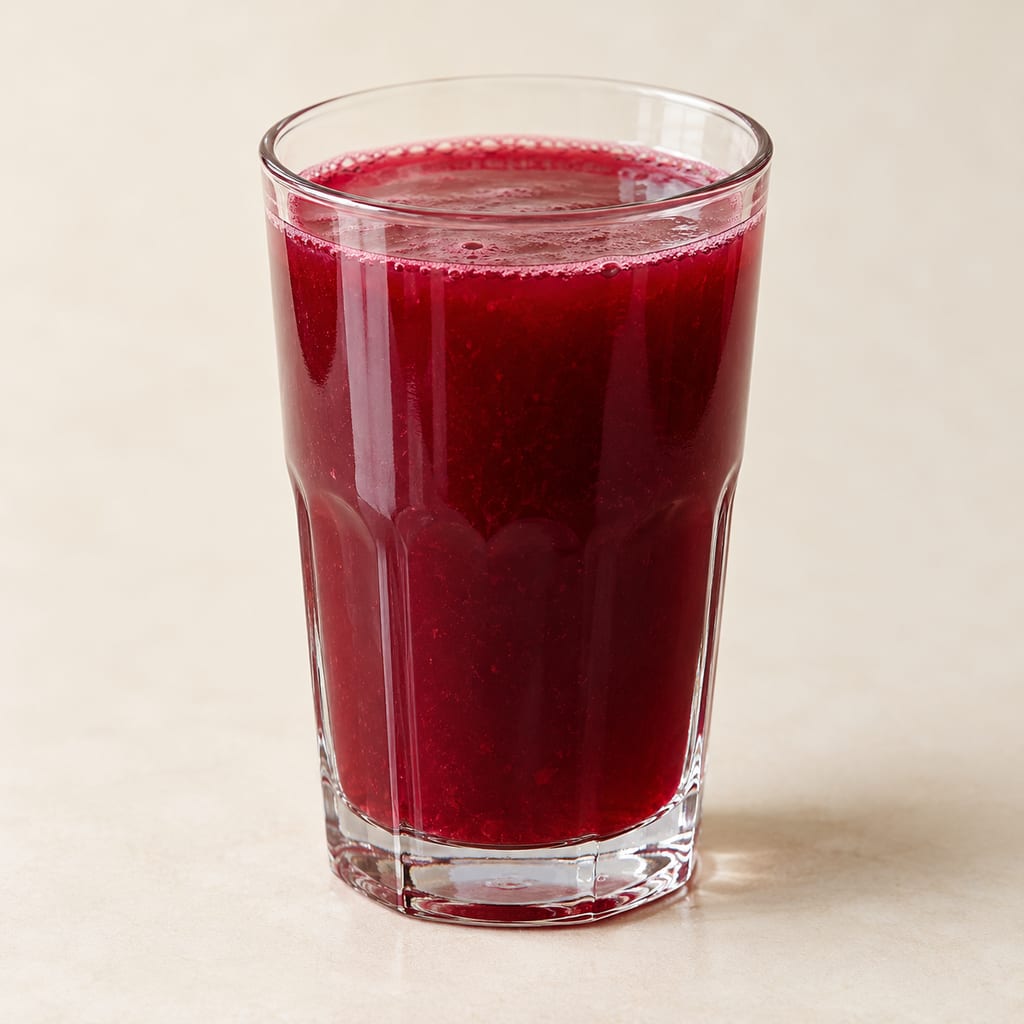
Şalgam
A sour, red Turkish drink of black carrot, rock salt and bulgur or sourdough, fermented in a traditional two-stage method or a direct one, and drunk with food in southern Turkey.
Community
No community contributions have been published for this entry yet.
Share what you made
Sign in to contribute. Published comments and photos are free to read.
Sources
Akademik İncelemeler Dergisi 11(1), 2016, İklil Selçuk
Boza Consumption in Early-Modern Istanbul As an Energy Drink and a Mood-Altering SubstanceCited in: What the order said; Why the army wanted them; Two drinks under one name; White boza in a handkerchief; Evliya's one drink; Sour boza at the Flour Hall; Liver, haggis and the boza house; Noisy as a boza house; Patron saints and Tatar sellers; Bursa: ninety-seven boza houses; Rice for the palace
Fermentea research
Sour mixed-culture cereal beverages (FT035 research dossier)Cited in: What happens in the pot
Evliya Efendi, tr. Joseph von Hammer, Oriental Translation Fund, 1834 (Internet Archive)
Narrative of Travels in Europe, Asia and Africa in the Seventeenth Century, Vol. I, Part 2Cited in: Last in line; What the order said; A city counted in three months; Rank in the line; Why the army wanted them; Two drinks under one name; White boza in a handkerchief; Evliya's one drink; Sour boza at the Flour Hall; Liver, haggis and the boza house; Patron saints and Tatar sellers; The pickle makers in the same parade; The last of the parade
Evliya Çelebi, tr. Joseph von Hammer (Project Gutenberg)
Narrative of Travels in Europe, Asia, and Africa, in the Seventeenth Century, Vol. ICited in: Last in line; A city counted in three months; Liver, haggis and the boza house
Evliya Çelebi, tr. Joseph von Hammer (Project Gutenberg)
Narrative of Travels in Europe, Asia, and Africa, in the Seventeenth Century, Vol. IICited in: Bursa: ninety-seven boza houses
Vankulu Sosyal Araştırmalar Dergisi 9, 2022, Münife Obuz
Osmanlı'da turşu kültürü üzerine bir değerlendirmeCited in: The pickle makers in the same parade
International Journal of Food Microbiology 35 (1997), Hancıoğlu and Karapınar (PubMed)
Microflora of boza, a traditional fermented Turkish beverageCited in: What happens in the pot
Zeitschrift für Naturforschung C 65 (2010), Petrova et al. (PubMed)
Amylolytic Lactobacillus strains from Bulgarian fermented beverage bozaCited in: What happens in the pot
International Journal of Food Microbiology 194 (2015), Osimani et al. (PubMed)
Unpasteurised commercial boza as a source of microbial diversityCited in: What happens in the pot
International Journal of Food Microbiology 167 (2013), Altay et al. (PubMed)
A review on traditional Turkish fermented non-alcoholic beveragesCited in: What happens in the pot
Ministry of Agriculture and Rural Development, Poland, list of traditional products
Buza / bozaCited in: Sarajevo and Białystok
Turabi Efendi, London (Internet Archive, Wellcome Collection copy)
Turkish Cookery Book (1864)Cited in: The pickles in English
Melceü't-Tabbâhîn transcription site
Hıyar turşusu (Melceü't-Tabbâhîn 1844, p. 65), transcriptionCited in: The pickles in English
Gaps
- The Tenedos and Kuşadası readings of the sweetener are unchecked against the manuscript, because the Dankoff, Kahraman and Dağlı Turkish edition of Evliya's first volume is known here only through Selçuk's quotations.
- Evliya gives no year for the procession; the late 1630s rests on its placement before the Baghdad campaign of 1638.
- Eunjeong Yi's court case on the liver monopoly and Arif Bilgin's palace rice figures are known here only through Selçuk.
- Shop counts for pickle makers after Evliya come from Işın via Obuz.
- The 1870 and 1876 arrival dates for Hacı Sadık Bey, and the identity of the two hundred earlier makers, rest on family and newspaper accounts that disagree.
- The microbiology figures come from abstracts of studies of modern boza, not of seventeenth-century boza.
Updated 2026-11-15