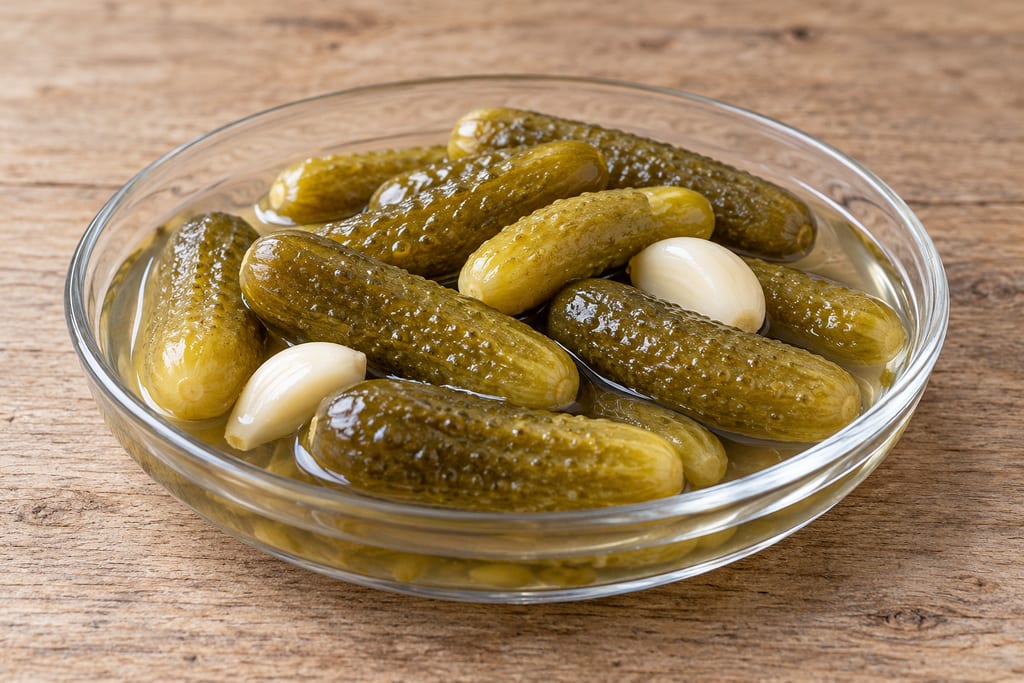
Orhangazi Gedelek turşusu (cucumber)
Cucumber variant of the registered Gedelek pickle family from Orhangazi, Bursa: cucumbers in a salt brine with garlic and a small amount of acid, held for about 20 to 30 days.
 FermenteaWhere food goes to change
hıyar turşusu · turşu · hıyar turşusu · Ottoman cucumber pickle · tursu
Small cucumbers fermented in salt brine between layers of fennel, the Ottoman turşu of 1844 and 1864, made with tested modern salt, temperature and time and kept in the fridge.
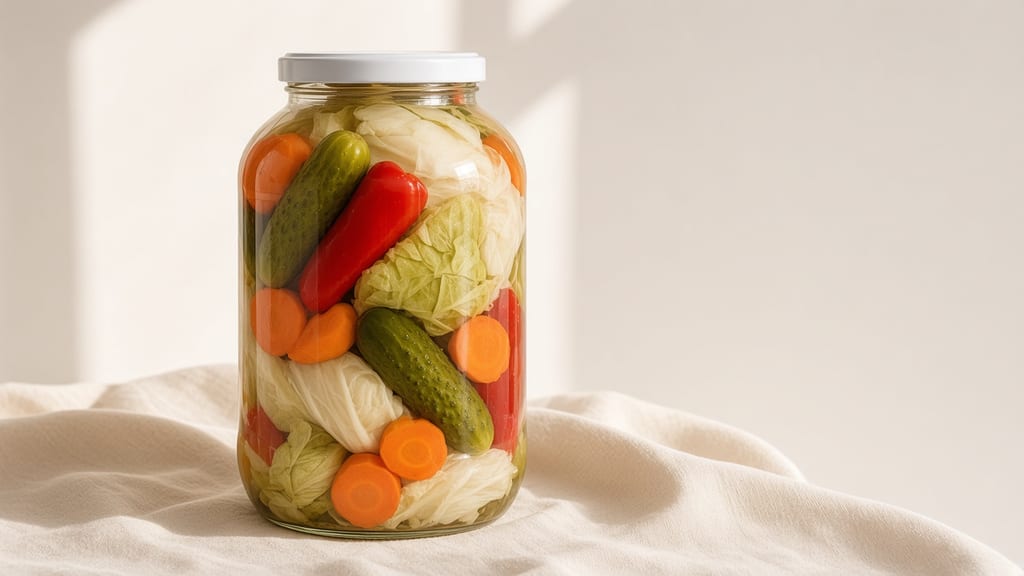
The cucumber pickle in Turabi Efendi's Turkish Cookery Book, published in London in 1864, takes three sentences. Put fennel in the bottom of a stone jar, the small cucumbers on it and more fennel on top. Cover them with salt water, lay a board over them and an iron weight or a heavy stone on the board. Leave the jar a few days in the sun or somewhere warm, then move it somewhere cool for eight or ten days before eating.
That is a lactic ferment. Nothing in it is sour at the start; bacteria already on the cucumbers turn their sugars into acid under the brine. This page makes the same pickle with the salt, vinegar, temperature and time of a tested modern method, and keeps the fennel.
Turabi took his pickle from an Ottoman book. Melceü't-Tabbâhîn, the Cooks' Refuge, was printed in Istanbul in 1844. Its hıyar turşusu, on page 65, is the same recipe: small cucumbers stacked between handfuls of fennel in a cask or a jar, salt water over them, a heavy stone on top, a few days in the sun and then a cool place.
Two pages later comes a plainer version without fennel, and it says more about the method. The salt water should stand a karış, a hand's span, above the cucumbers, under a board and a heavy stone. After three or four days the scum on top must be lifted off: "this rule must be kept; if not, it rots." When the pickle turns sour it is ready. Some cooks, the book adds, toss the brine every three to five days, and then it is done sooner.
The scum is still the main job. The tested modern method asks for the same thing, a check several times a week and the scum or mould taken off.
Pickles were a trade in Istanbul long before they were a printed recipe. Evliya Çelebi, describing the guilds of the city in the 1630s, counts 1,200 pickle makers with 70 shops, grouped with the vinegar makers and the cooks. In the guild parade they carried large china dishes of pickled parsley, cauliflower, capers, cucumbers, aubergines, cabbage, carrots and garlic, and handed them out to the crowd.
Their trade had a saying against it, "The faithful are sweet and the wicked sour," and Evliya defended them: these sour things "increase the appetite and strengthen the stomach." Just ahead of them came the vinegar makers, whose imperial vinegar works stood inside the Unkapanı Flour Hall.
The pickle makers marched again in Mehmed IV's parade of 53 guilds before the campaign of 1657. Later counts show the trade growing. The historian Münife Obuz, drawing on Priscilla Mary Işın, gives 70 pickle shops in the seventeenth century, 121 at the end of the eighteenth and 122 early in the nineteenth. A pickle shop needed a licence. In 1726 an Istanbul court turned down a man called Halil Bey because he was not qualified, and a decree of the same years let pickle makers sell any pickle while grocers could sell only cabbage pickle and vinegar. In 1826 a pickle maker in Arvansaray asked the court to close a rival who had rebuilt his burnt-out shop nearby; the rival had been there first, and the court sided with him.
The palace made its own pickles in the confectionery kitchen, the Helvahane, and bought in what it could not make. A document of 1650 records 4,000 vakiyye of vinegar bought from Bursa for the sultan's pickles at 20,000 akçe. In 1667 caper pickle was ordered from Osmancık in north-central Anatolia, and in 1677 yellow vinegar came from Bursa again.
Ramadan needed its own store. In 1777 the Ramadan pantry received 1,150 okka of salt, close to 1.5 tonnes, and vinegar was bought for the month's pickles. A decade later the pickle store of the Helvahane cost 1,042 akçe a month to run.
The palace pantry had a post called turşucu, the pickle man, who supplied the sultan with his pickles and his yoghurt. Mehmed II, the conqueror of Istanbul, is said to have liked artichoke pickle made from the city's market gardens, and the kitchen of his mosque complex made grape, cabbage, cucumber, turnip and onion pickles for him and his household.
In the city, Obuz concludes, cabbage and cucumber were the pickles most eaten, with mint, aubergine, grape and turnip after them. The palace added lemon, bitter orange, squash, artichoke, caper and kavata. Pickles packed in earthenware jars came to Istanbul by sea in state boats from Gelibolu, Kemerburgaz, the Bosphorus and the Kazdağı mountains. Cucumber pickle in particular, Obuz notes, was made with fennel.
Turabi's pickle chapter has eleven recipes, and they fall into two kinds. The cucumber pickle ferments in salt water. The mixed pickle of gherkins, finger-sized marrows, walnut-sized melons and button onions is scalded, pricked with a wooden needle and covered with the best wine vinegar; if it is to keep, the vinegar is changed every five days. Unripe fallen fruit sits in very strong wine vinegar for thirty or forty days.
The cabbage pickles show the brine side again. Turabi's white cabbage goes into a stone jar on "a little yeast" with chopped ripe peppers, under brine that is poured to and fro every five days until the cabbage is sour. Melceü has the same pickle on a starter, and a shredded cabbage it calls Urus turşusu, Russian pickle, layered with Wallachian salt under a ring of vine canes and a stone. In about fifteen days, the book says, it turns "very fine and yellow": sauerkraut.
Grapes went into a stone jar in layers with mustard seed, covered with boiled grape juice and sealed for thirty or forty days; Turabi calls them "very refreshing on account of their agreeable acidity." Turnips were half covered with sweetened mustard water and half with wine vinegar.
This page follows the brine kind. The modern brine carries a quarter cup of vinegar in two litres of liquid; the sourness of the finished pickle comes from fermentation.
In the 1978 Turkish film Neşeli Günler, a married couple split up over one question: is the best pickle brine made with lemon or with vinegar? The scenes were shot at Asri Turşucu in Cihangir, Istanbul. The shop opened in 1913 at Edirnekapı selling olives, moved to Cihangir in 1938 and began making pickles there.
Its owner gave Evrensel his answer in 2019: neither. For five or six years the shop had made its pickles with rock salt alone, as lactic ferments. Vinegar pickles, he said, should be eaten within one or two months. The shop makes about 50 tonnes a year, closes in June, July and August, and spends those months putting up pickles in Gedelek, a village in Orhangazi near Bursa, because of the spring water there.
Water, he said, matters most. The Gedelek spring comes down from the mountain with the right amount of lime in it, and water with too little or too much makes a soft pickle; Istanbul tap water never gave him the quality he wanted. Salt is the main ingredient, and once a pickle is put up it should not be opened until it is ready.
Gedelek has its own registered cucumber pickle, which Fermentea covers separately.
Pickle brine has long been drunk on its own. Ottoman bath-goers, Obuz notes, went from the bath to a nearby pickle shop for a glass of peppered cabbage-pickle juice, which they believed kept off chills. Istanbul taverns set cabbage pickle on the table beside meze and roasted chickpeas.
The brine from this jar, once the cucumbers are sour and the jar is in the fridge, can be poured off a glass at a time. It is salty and sour and tastes of fennel.
The quantities come from the National Center for Home Food Preservation's fermented dill pickle, scaled to a 4-litre container. For each US gallon of container it gives 4 lb of 4-inch pickling cucumbers, half a cup of salt, a quarter cup of 5% vinegar and 8 cups of water. In metric that is about 1.8 kg of 10 cm cucumbers, 120 ml of salt, 60 ml of vinegar and 1.9 litres of water. The fennel takes the place of the dill.
The tested method ferments at 21–24 °C for three to four weeks, or at 13–18 °C for five to six weeks, and warns against temperatures above 27 °C, which make the pickles soft. That is why this recipe leaves out the old books' days in the sun. A warm kitchen in summer can pass 27 °C easily; a cool larder in autumn fits the slower range.
Use canning or pickling salt and measure it by volume as given. Do not cut the salt.
Use small, firm pickling cucumbers about 10 cm long. Cut a thin slice, about 1.5 mm, off the blossom end, the end opposite the stem, and throw it away; leave about 6 mm of stem.
Turabi and Melceü both use fennel, rezene in Turkish, and plenty of it. Use fresh fronds with a few stalks. Garlic is optional in the tested method, two cloves to the gallon.
Look at the jar several times a week. Lift any scum off the surface of the brine with a clean spoon, as Melceü says, and take off any mould.
Taste one after three weeks at 21–24 °C, or after five at the cooler range. The old books say only that the pickle is ready when it has turned sour; cut one open and it should be sour to the middle.
If the pickles turn soft or slimy, or smell bad, throw the whole batch away.
Fully fermented pickles keep in the fridge in their own brine for about four to six months, as long as any scum or mould on top is taken off regularly. Move the cucumbers and brine into clean glass jars if the fermenting crock is too big for the fridge.
For longer storage the tested method heats the brine to a boil, packs the pickles in jars with the hot brine and processes them in a boiling-water canner, 10 minutes for pint jars and 15 for quarts up to 300 m above sea level, longer above that. It also gives a gentler pasteurisation at 82–85 °C for 30 minutes, which keeps a firmer pickle but needs a thermometer and careful control.
Turşu went with drink and with charity food. The public kitchen of the Atik Valide complex in Üsküdar served a fresh grape pickle mixed with grape juice and mustard every day. The Armenian writer Kömürciyan describes waterside arak houses serving pickles with fish. The pickle makers marched in the same guild parade as the boza makers, and the two sour trades met at Ottoman helva evenings, where guests ate pickles alongside sweetened boza.
Fermentea's article on the boza makers' parade tells that story.
Evliya Çelebi counts 1,200 pickle makers with 70 shops in 1630s Istanbul. The brine cucumber pickle with fennel is printed in Melceü't-Tabbâhîn (1844) and in Turabi Efendi's English Turkish Cookery Book (1864). Pickle shops numbered 121 by the late eighteenth century.
Istanbul pickle shops such as Asri Turşucu, founded in 1913, still make brine-fermented pickles.
Yield 4 litre container · Scaling: scale linear
Above 27 °C pickles soften, and uncovered cucumbers or unskimmed scum and mould can spoil the batch.
Hazard sourceTested salt and vinegar ratio
Control sourceFermentation temperature
Control sourceSkim and keep submerged
Control sourceCold storage
Control sourceDo not put the jar in the sun as the old recipes do; keep it below 27 °C.
Throw the batch away if the pickles turn soft or slimy or smell bad.
Do not reduce the salt.
Pickle makers' guild, shops and the 1844 cookbook.
Vinegar bought for the palace pickles.
Where Asri Turşucu puts up its pickles.
Cucumber variant of the registered Gedelek pickle family from Orhangazi, Bursa: cucumbers in a salt brine with garlic and a small amount of acid, held for about 20 to 30 days.
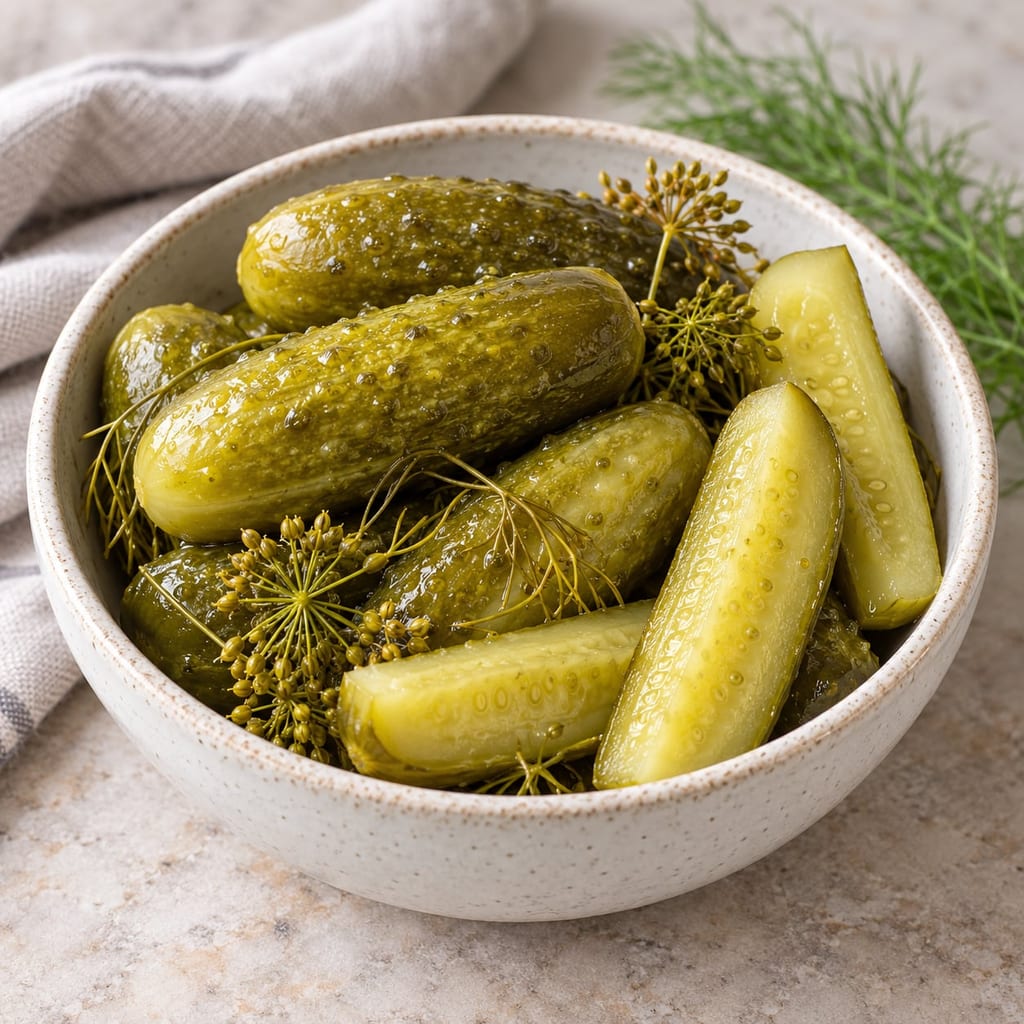
Trimmed cucumbers layered with dill and covered with a salt brine containing 5% vinegar, weighted and fermented three to six weeks.
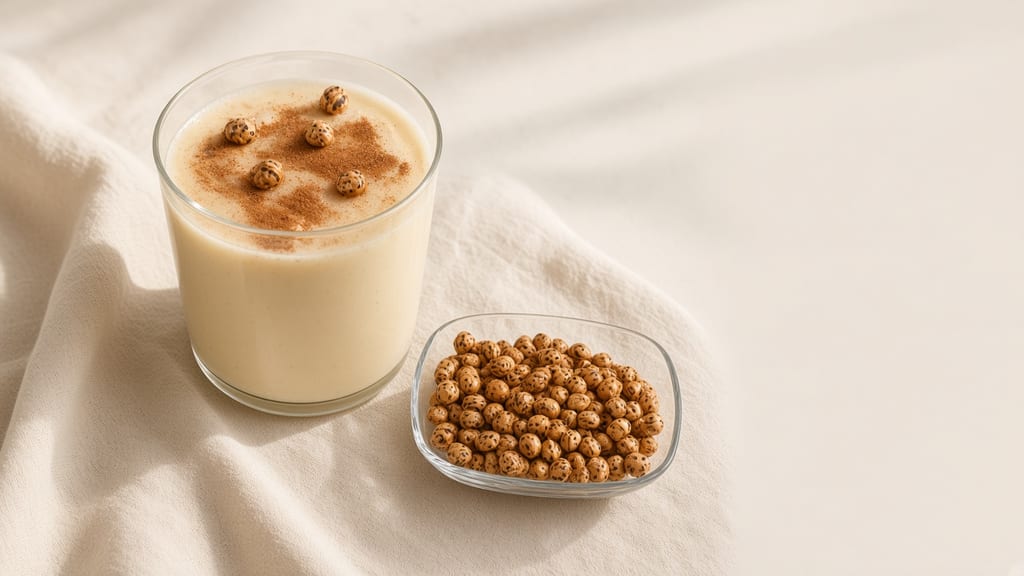
Murad IV made Istanbul's boza makers march last in his guild parade, with only cymbals and drums. Evliya Çelebi's sweet and sour boza, the Flour Hall porters, the pickle makers and Vefa.
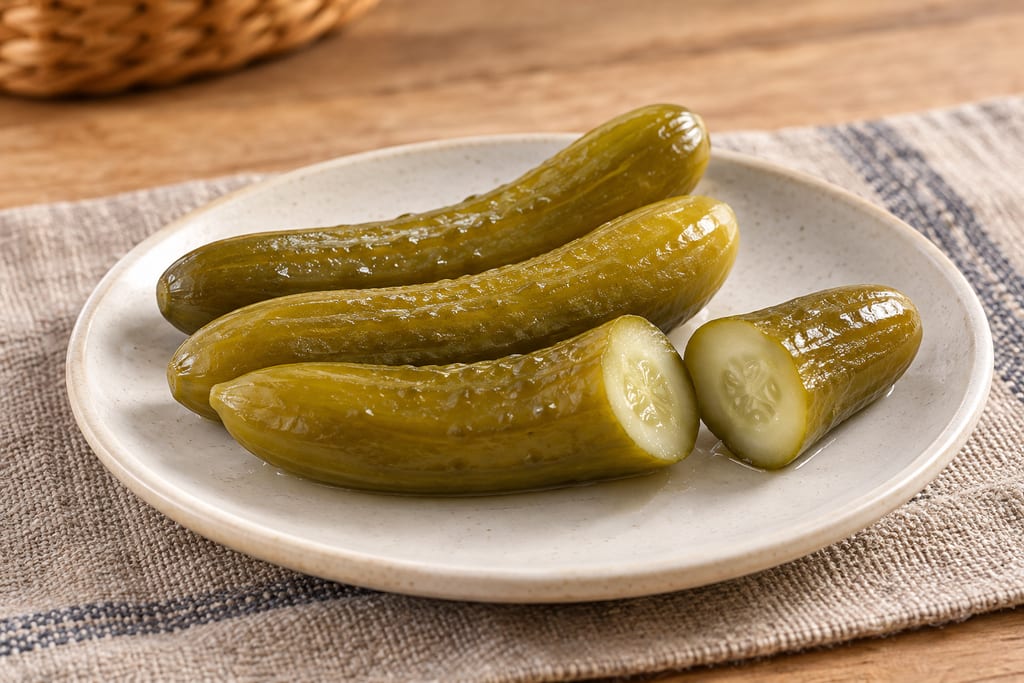
Çubuk turşusu is a registered pickle from Çubuk district in Ankara. Its cucumber variant is sold as Salatalık Turşusu, and a commercial specification sets its brine and room-temperature period.

Ayran is Turkey’s cold, savoury yogurt drink: plain yogurt is loosened with water and lightly salted, then whisked smooth or aerated into a soft cap of foam.
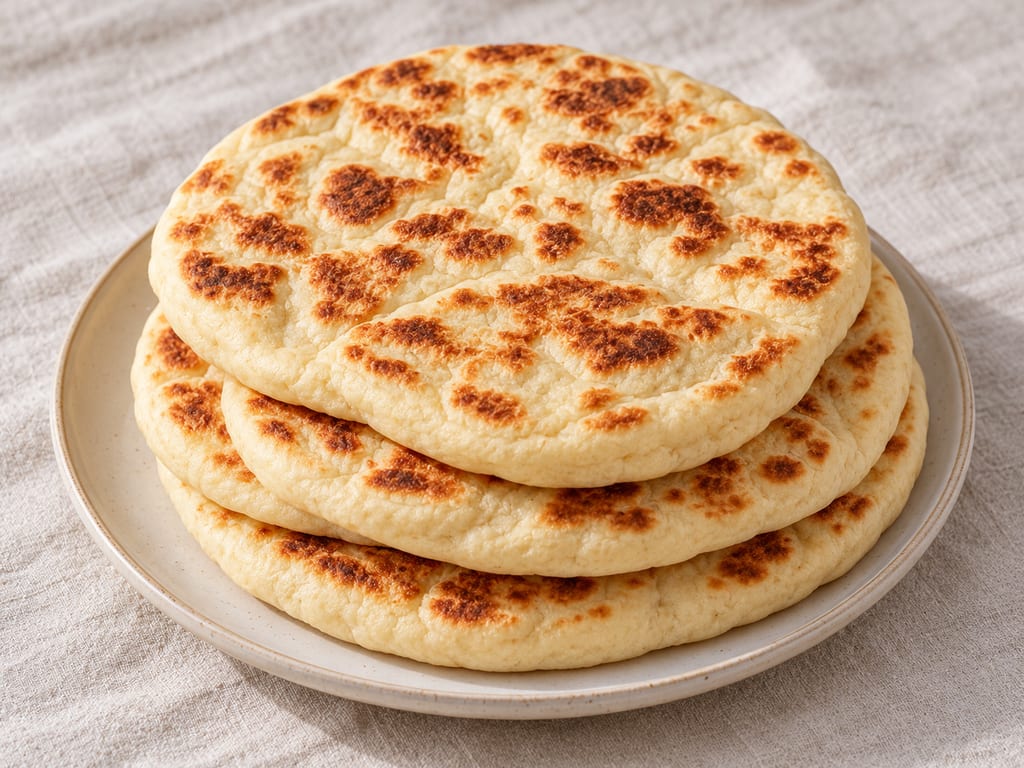
This Turkish bazlama uses yeast, plain yogurt and olive oil for a soft dough cooked in a skillet. Shape it into twelve small or six larger rounds, flip as bubbles appear, and wrap the breads to keep them soft.

Beyaz peynir is a Turkish white cheese matured in brine. Sheep milk, alone or mixed with other milks, gives a close-textured cheese cut into blocks and packed in cans.
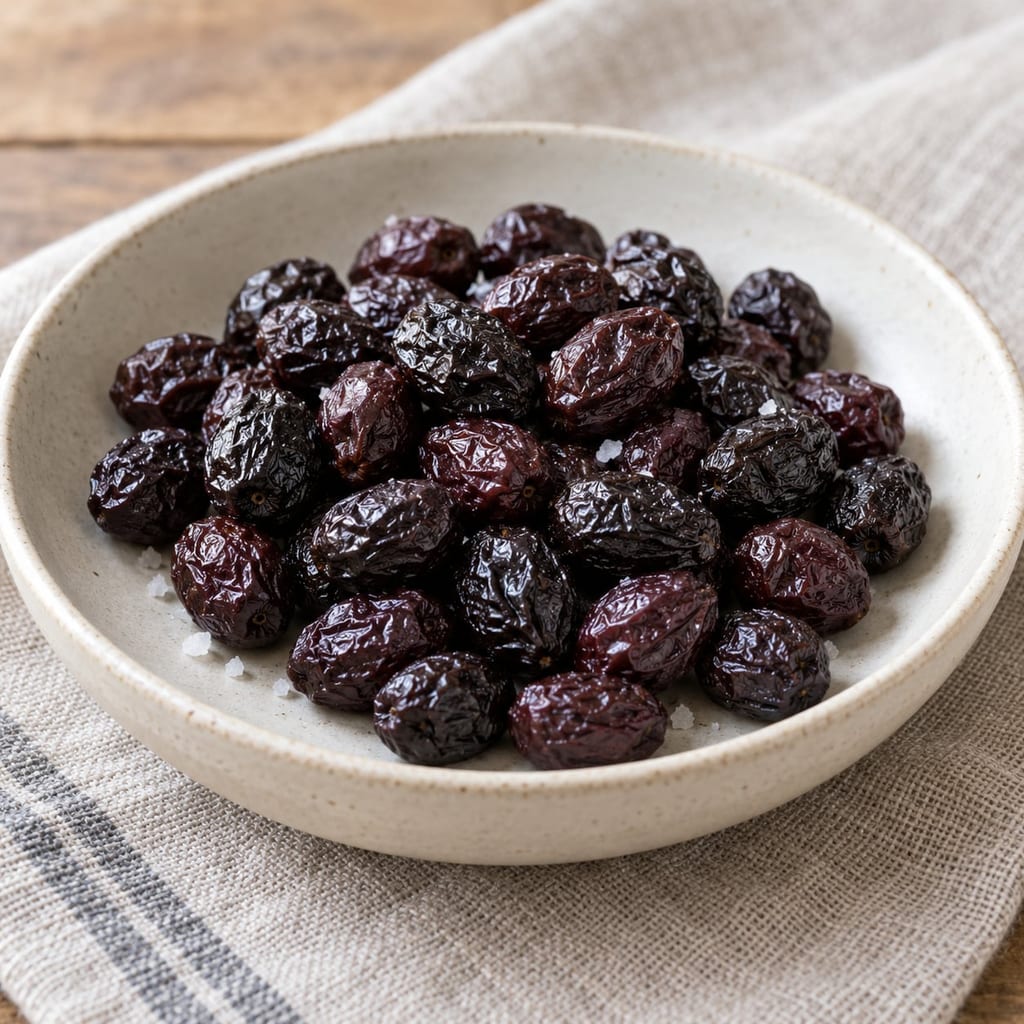
Fully ripe dark olives are mixed with salt and turned weekly as salt draws out moisture. Distinct from existing brine-fermented and lye-treated olives.
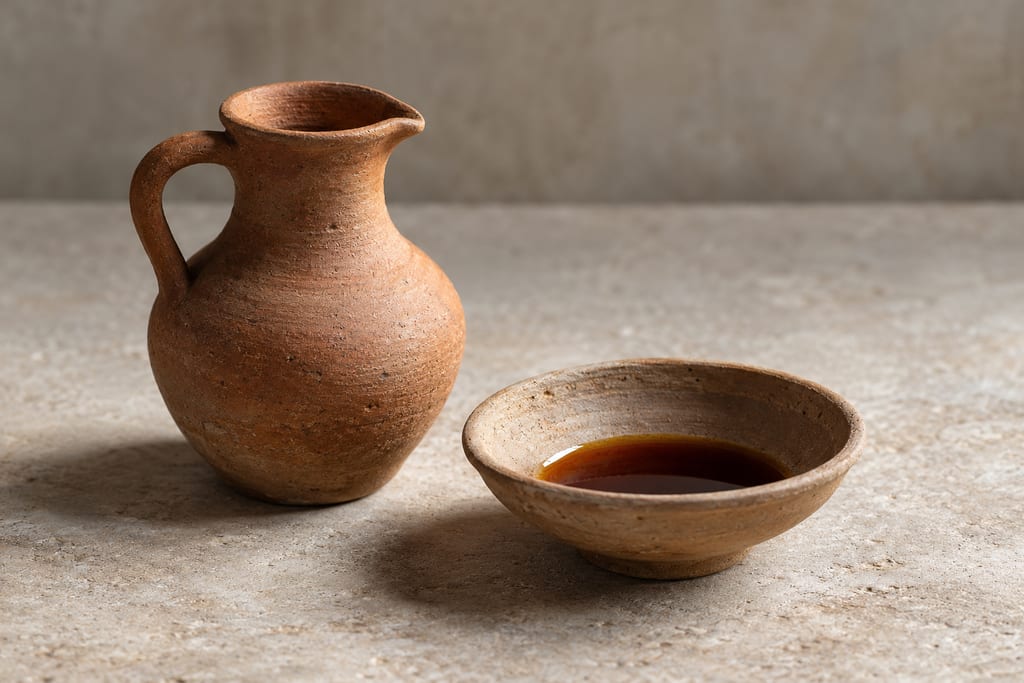
Garum, Greek garos and Latin liquamen, was the fish sauce of the ancient Mediterranean: fish and viscera salted and left in the sun, then drained off as a savoury liquid.
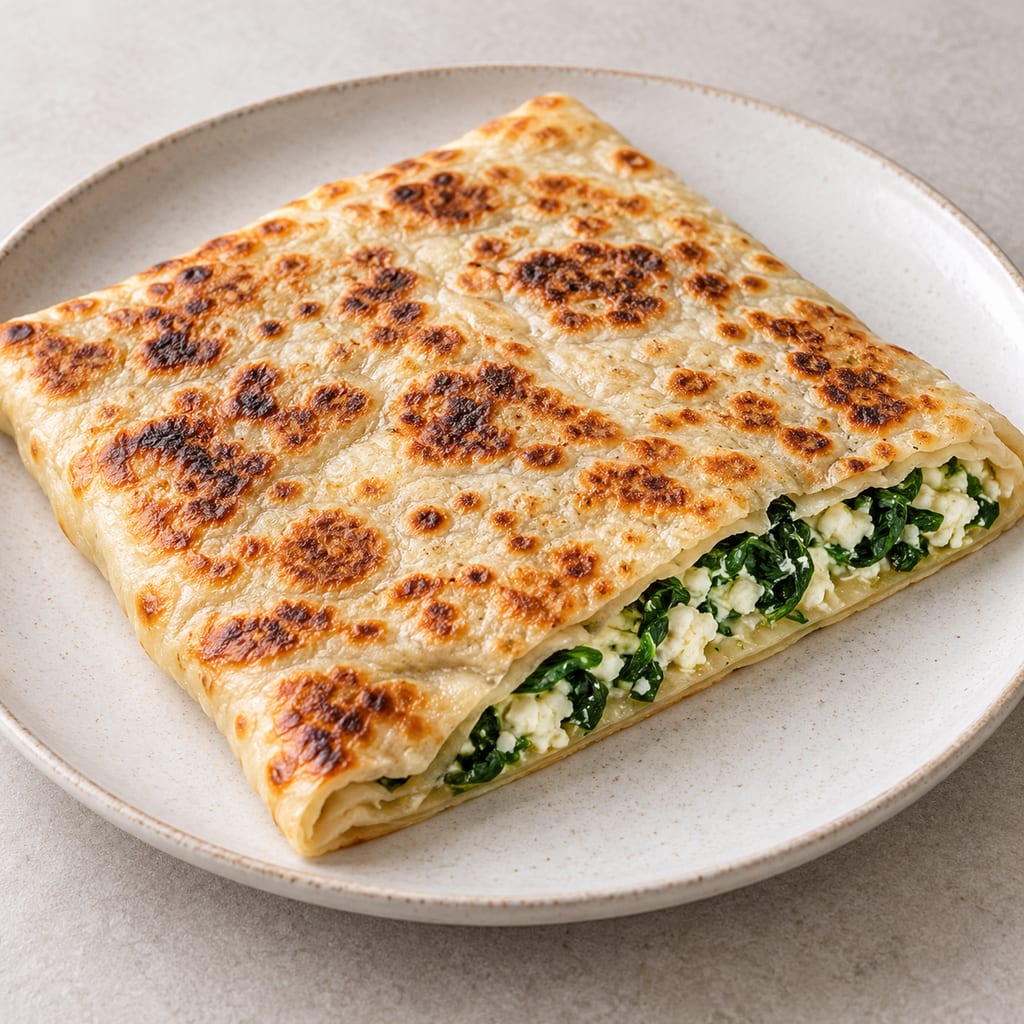
A yeast-and-yogurt dough is rolled into a large thin sheet, filled with spinach, onion and feta, folded closed, then cooked on an oiled griddle. This is Özlem Warren’s spinach-and-cheese family-style version.
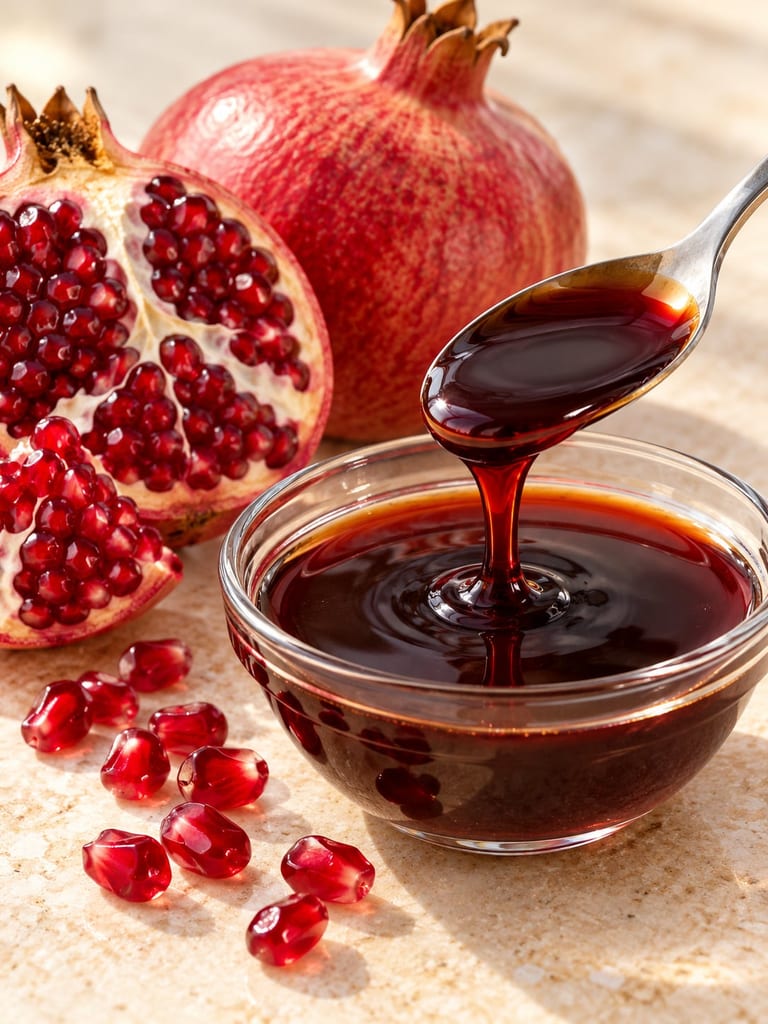
The registered Hatay method presses pomegranate arils and slowly concentrates the strained juice. Its 100 kg source batch and experienced-producer endpoint are retained; no home-scale time or shelf-life is inferred.
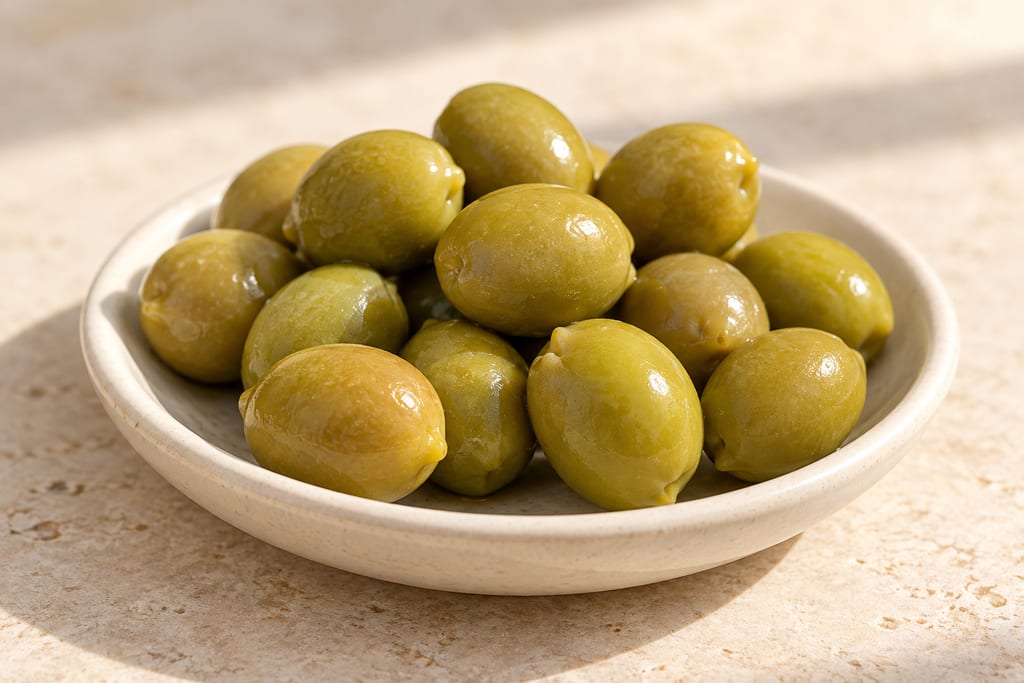
A Portuguese table-olive product from the Negrinha cultivar in northeastern Portugal, sold in three commercial styles, two of them brined fermentations and one oxidised to black.
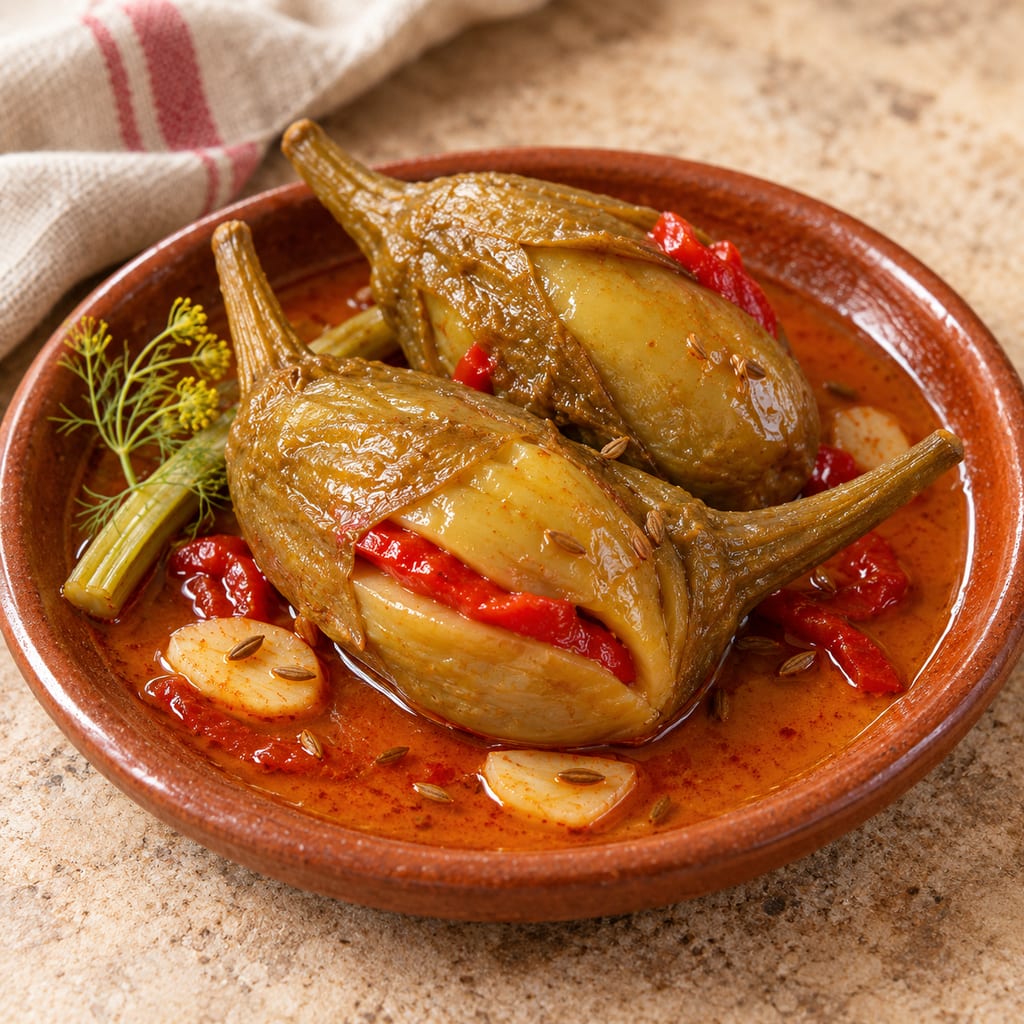
A protected aubergine preserve from Ciudad Real in Spain: tender fruit of the local Dealmagro variety, cooked briefly and then fermented in a vinegared, paprika-seasoned dressing.
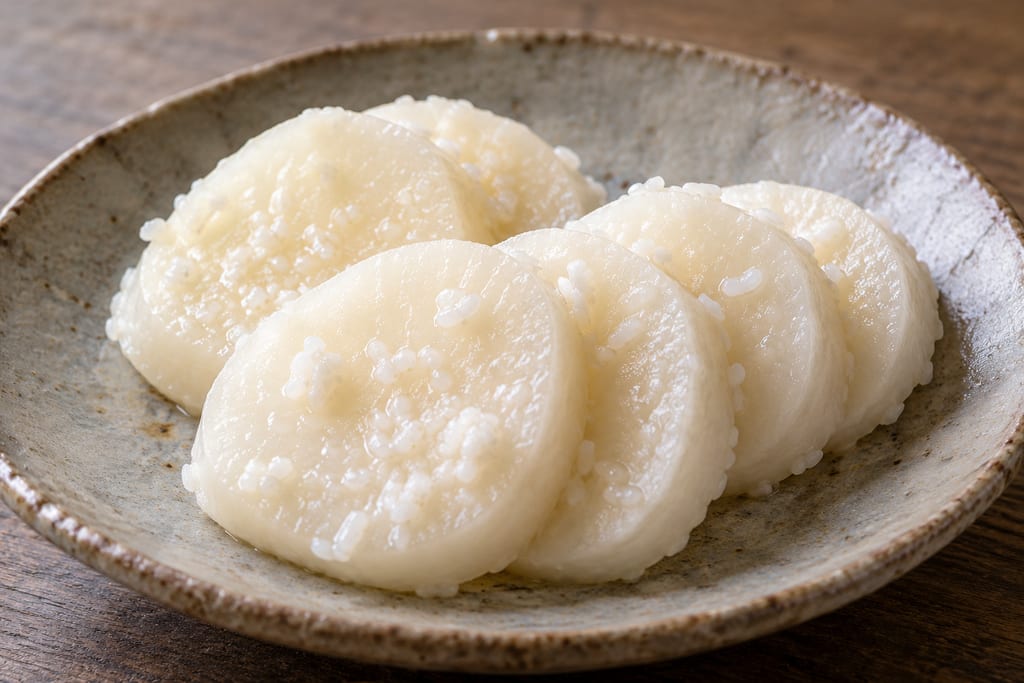
A sweet, crisp Japanese daikon pickle from Tokyo's Nihonbashi district, made by salting fresh radish and dressing it in rice koji, sugar or koji amazake without the heavy drying used for takuan.
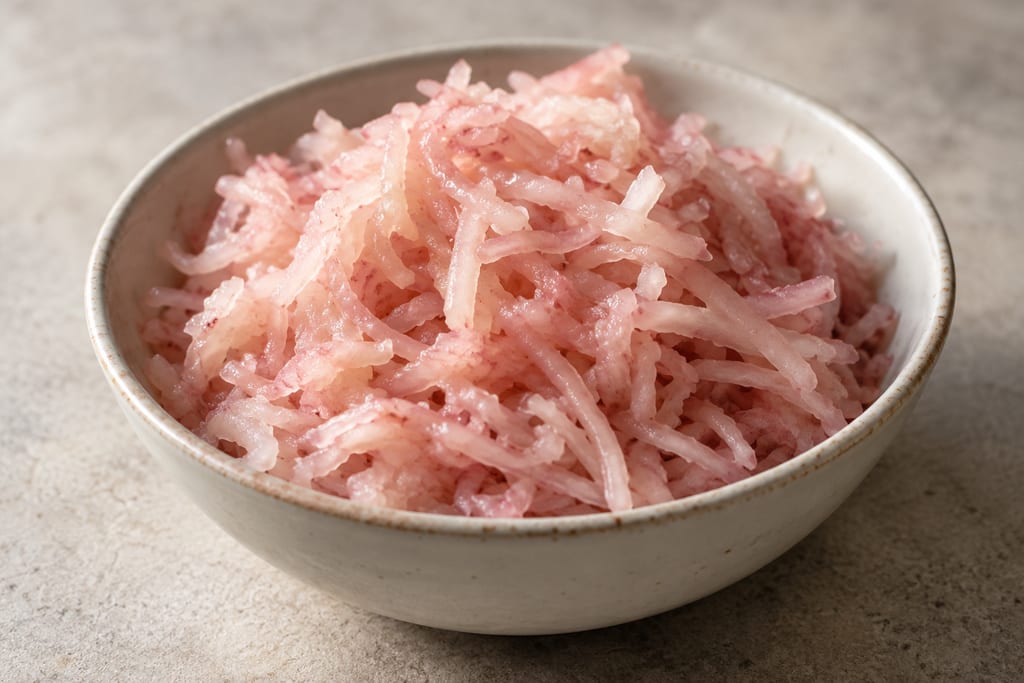
Source-specific Brovada DOP producer method for Friuli Venezia Giulia turnips and red-grape marc. This records a regulated producer process; it is not a validated home-scale recipe.
An industrial fermentation patio places factory-made fiberglass-reinforced polyester olive tanks below floor level, with drainage and transfer infrastructure arranged around the buried vessels.
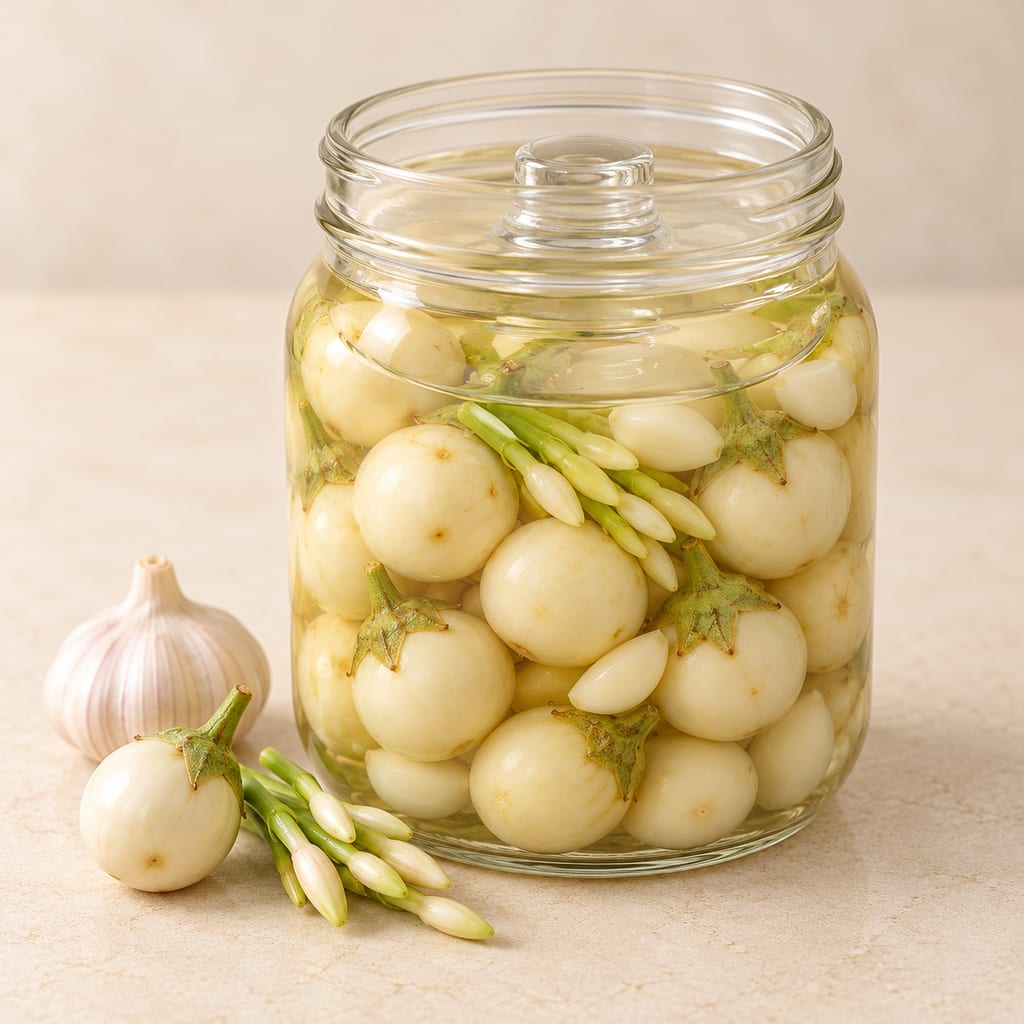
Vietnamese salted and fermented small eggplant, dried on the day of purchase, then held submerged in warm salty water with garlic and galingale flower for a week or longer.
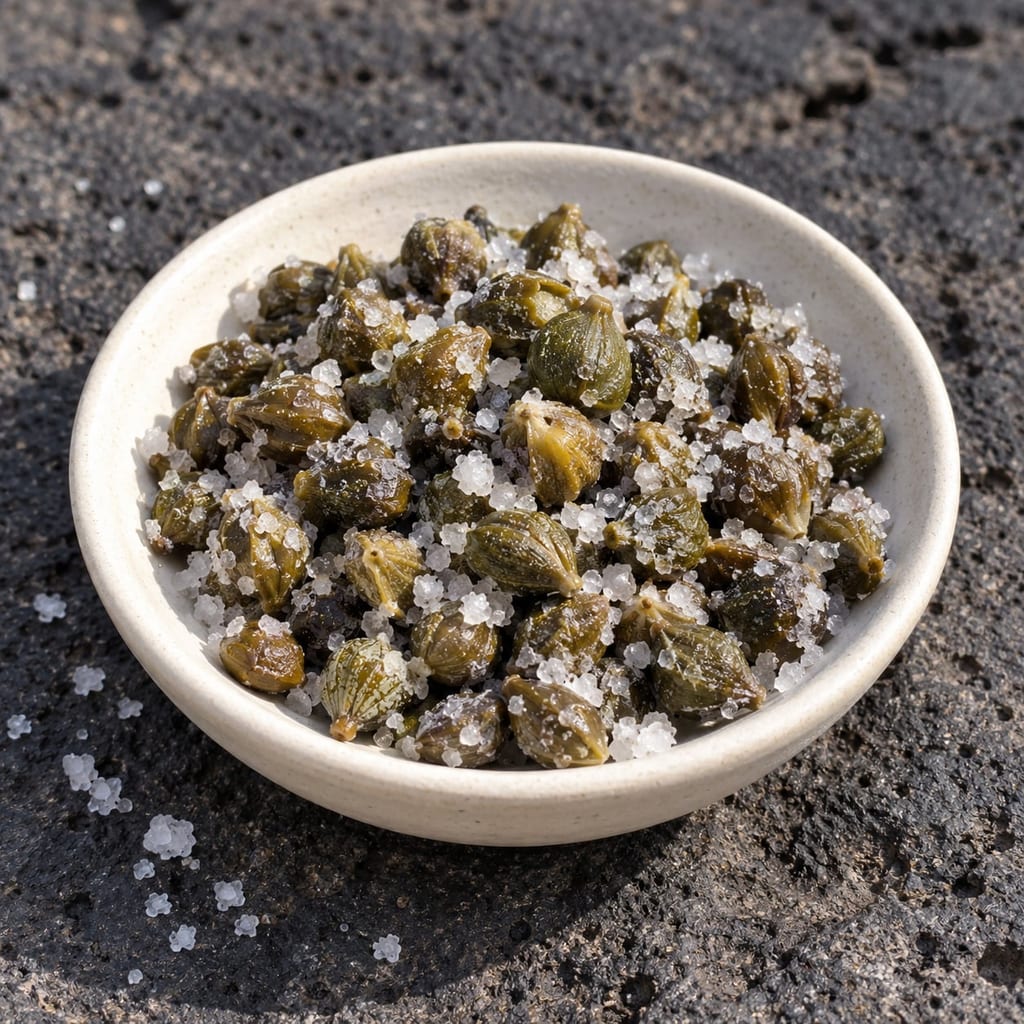
A protected Sicilian product: unopened caper buds from the island of Pantelleria, dry-salted with sea salt in a two-stage process that encourages lactic fermentation.
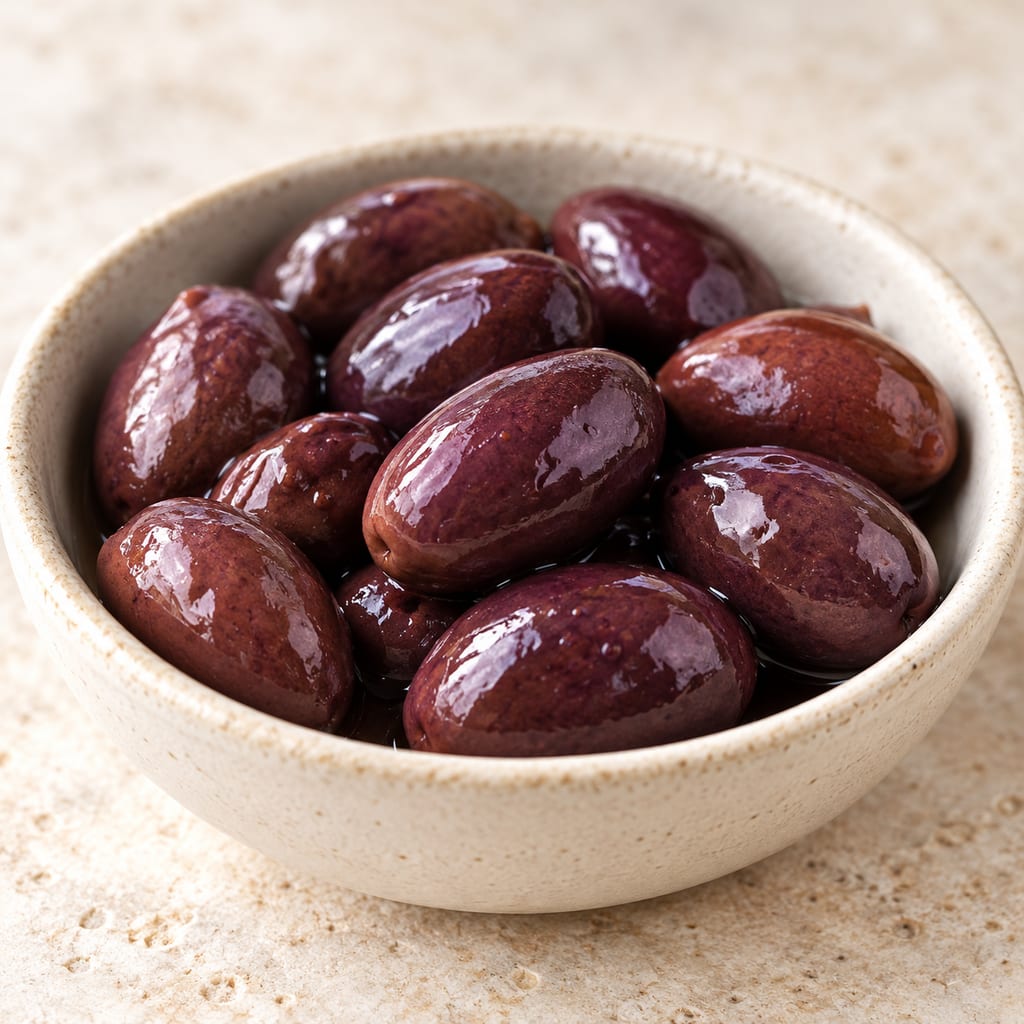
Elia Kalamatas is a Messinia table olive of the Kalamon variety, picked before full ripeness and fermented in brine for six to nine months; it is a PDO product, not a generic black olive.

A gelling polysaccharide extracted from red seaweeds, sold as kanten strips or powder; it sets firm at a low concentration and stays solid until about 85 °C.

A Dominican table and seasoning condiment of sour orange juice, mixed with lime and salt and bottled raw; garlic, oregano or a hot pepper may be added for meat or a spicier bottle.

Cicerbita alpina is an alpine perennial whose tender shoots and leaves have been eaten raw or cooked. Sámi milk preparations and modern Carnian dishes are distinct uses, with serious identification and preservation limits.

Japanese skipjack tuna cooked, then repeatedly smoked and dried over a wood fire by the hand-fired tebiyama method into a hard block for shaving into dashi: the first stage of katsuobushi.

A Swedish-style spirit vinegar made by fermenting neutral alcohol with live vinegar bacteria, with a separate guide to commercial ättika strengths.

A yeast-raised wheat ring shaped from a firm dough, briefly boiled and baked. This source-batch formula gives a gently malted crust and a chewy crumb.

A warm dip of garlic, anchovy and olive oil, often enriched with butter, that Piedmont serves over a flame with raw and cooked vegetables and bread.

Bechamel is a white sauce of milk thickened with a butter and flour roux, one of the French mother sauces, and the base from which Mornay and other cheese and cream sauces are made.
No community contributions have been published for this entry yet.
Sign in to contribute. Published comments and photos are free to read.
Turabi Efendi, London 1864 (Internet Archive, Wellcome Collection copy)History · Method
Turkish Cookery Book: a collection of receipts, Part XVI, Pickles215 cucumber pickle: fennel, stone jar, salt water, board and weight, a few days in sun or warm place, then 8 to 10 days cool
216 mixed pickle in wine vinegar, change the vinegar every five days to keep
217 unripe fruit in strong wine vinegar 30 to 40 days
218 cabbage on a little yeast, brine poured to and fro every five days
223 grapes with mustard seed in boiled grape juice
224 turnips in sweetened mustard water and vinegar
eleven pickle recipes in the chapter
Cited in: A pickle in three sentences; Brine pickles and vinegar pickles; Why these quantities; Cucumbers and fennel
Melceü't-Tabbâhîn transcription siteHistory · Method
Hıyar turşusu (Melceü't-Tabbâhîn 1844, p. 65), transcriptionsmall cucumbers between layers of fennel in a cask or jar
salt water over, heavy stone, a few days in the sun, then a cool place
Cited in: The 1844 original; Why these quantities; Cucumbers and fennel
Melceü't-Tabbâhîn transcription siteHistory · Method
Âdi hıyar turşusu (Melceü't-Tabbâhîn 1844, p. 67), transcriptionbrine a span above the cucumbers
board and heavy stone
skim after three or four days or it rots
some toss the brine every three to five days to speed it
Cited in: The 1844 original; Watching the jar
Melceü't-Tabbâhîn transcription siteHistory
Mayalı lahana turşusu (Melceü't-Tabbâhîn 1844, p. 75), transcriptioncabbage on a starter in a jar, lightly salted water, brine tossed every three to five days, red pepper
Cited in: Brine pickles and vinegar pickles
Melceü't-Tabbâhîn transcription siteHistory
Urus turşusu (Melceü't-Tabbâhîn 1844, p. 85), transcriptionshredded cabbage with Wallachian salt, vine-cane ring and stone, about fifteen days, pale yellow
Cited in: Brine pickles and vinegar pickles
Evliya Efendi, tr. Joseph von Hammer, 1834 (Internet Archive)History
Narrative of Travels in Europe, Asia and Africa in the Seventeenth Century, Vol. I, Part 2pickle makers 1,200 men, 70 shops
'The faithful are sweet and the wicked sour'
pickles increase appetite and strengthen the stomach
parsley, cauliflower, capers, cucumbers, aubergine, cabbage, carrots, garlic in china dishes
imperial vinegar works in the Flour Hall
Cited in: Twelve hundred pickle makers; At the table
Vankulu Sosyal Araştırmalar Dergisi 9 (2022)History
Osmanlı'da turşu kültürü üzerine bir değerlendirmeshop counts 70, 121, 122
1657 procession of 53 guilds
1726 licence refused; grocers limited to cabbage pickle and vinegar
1826 Arvansaray dispute
1650 Bursa vinegar 4,000 vakiyye for 20,000 akçe
1667 Osmancık caper pickle; 1677 Bursa yellow vinegar
1777 Ramazan store salt 1,150 okka; 1787 pickle store 1,042 akçe a month
palace turşucu post; Mehmed II artichoke pickle; palace pickle list
cucumber pickle made with fennel
hamâm-goers drank peppered cabbage pickle juice
meyhane cabbage pickle; Atik Valide grape pickle; Kömürciyan pickles with fish
helva evenings with pickles and sherbet boza
Cited in: Twelve hundred pickle makers; Vinegar from Bursa, capers from Osmancık; What the palace pickled; Turşu suyu; At the table
Evrensel, 26 October 2019Modern
'Neşeli Günler'e ev sahipliği yapan turşucu: Ne sirke ne limon, işin sırrı kaya tuzuAsri Turşucu opened 1913 at Edirnekapı, Cihangir 1938
50 tonnes a year, closed June to August
pickles made in Gedelek, Orhangazi, with spring water
rock salt only for five or six years
vinegar pickles to be eaten within one or two months
water lime content; do not open a pickle once put up
Neşeli Günler 1978
Cited in: Lemon or vinegar
National Center for Home Food PreservationMethod · Safety
Dill Pickles (fermented)per gallon: 4 lb 4-inch cucumbers, 1/2 cup salt, 1/4 cup 5% vinegar, 8 cups water, 2 tbsp dill seed or 4 to 5 heads dill, optional garlic
trim 1/16 inch blossom end, leave 1/4 inch stem
70 to 75 F 3 to 4 weeks, 55 to 65 F 5 to 6 weeks, avoid above 80 F
check several times a week and remove scum or mould
discard if soft, slimy or bad smelling
refrigerated 4 to 6 months
canning and low-temperature pasteurisation options
Cited in: A pickle in three sentences; The 1844 original; Brine pickles and vinegar pickles; Why these quantities; Cucumbers and fennel; Watching the jar; Storing