What canning and pickling salt is
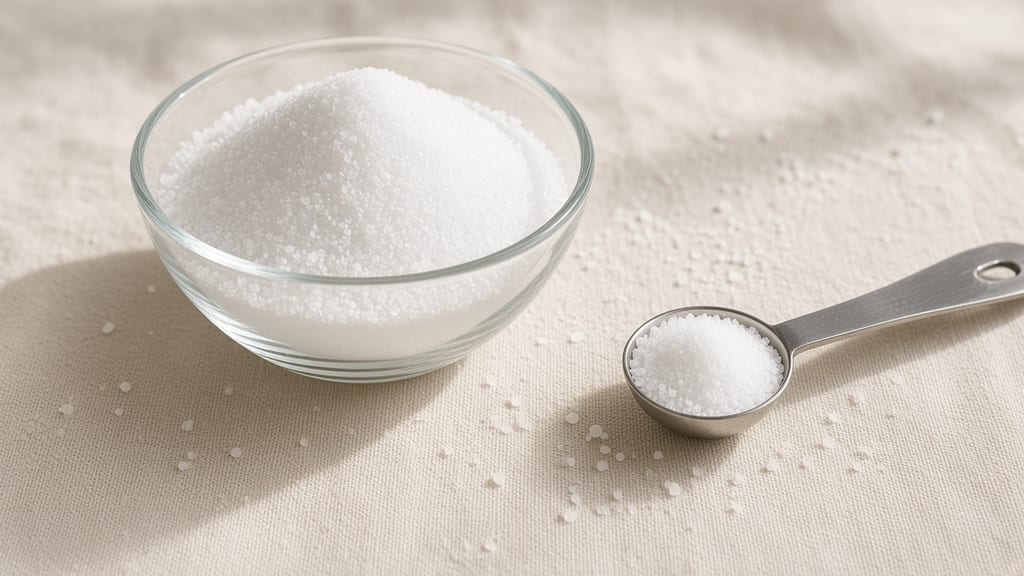
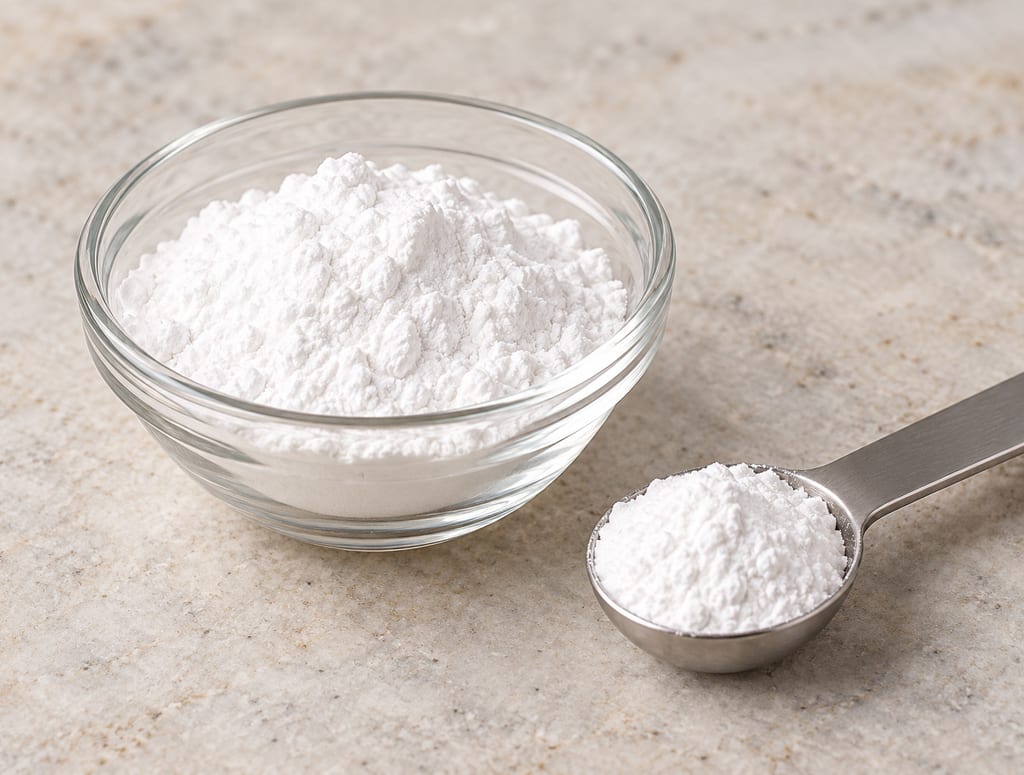
Canning and pickling salt is plain granulated sodium chloride with nothing added. It has no iodine and no anti-caking agent. The grains are fine and even, so the salt dissolves fast and leaves a brine clear enough to see the vegetables through the glass.
Ordinary table salt is a different product. Besides sodium chloride it can carry potassium iodide, if it is iodised, a little dextrose and calcium silicate, which stops it caking in the shaker. The calcium silicate does not dissolve and can cloud the liquid in a stored jar, and the iodide can darken some vegetables.
US home-preservation guidance recommends canning or pickling salt for pickles and fermented vegetables. The reason is partly appearance and partly arithmetic. The tested recipes were worked out with this salt, measured by volume, and the measures only come out right with salt of the same grain.
Sources for this section
Why the grain size matters
Most tested pickle recipes give salt in cups and spoons, not grams. A spoonful of salt weighs what it does because of how closely the crystals pack, and crystal shape changes that more than crystal size does.
Canning salt is made of small rounded cubes about 0.5 mm across that sit tightly together. One measured tablespoon of a common US canning salt weighed 18.9 g. The same spoon of a flaky kosher salt weighed 8.2 g, so a cook would need 2.3 spoonfuls of the flakes to add the same amount of salt. Extension tables put canning or fine table salt at about 6 g per teaspoon and 18 g per tablespoon, and one US cup of granulated salt at 10.2 oz, or 289 g.
In the NCHFP Quick fresh-pack dill pickle batch, the overnight soak uses 3/4 cup of canning salt in 2 gallons of water and the brine takes another 1/2 cup. Made by the same cups with the flakiest kosher salt in that comparison, both would come out at less than half strength.
Weighing removes the problem. Where a recipe gives volume, weigh the stated volume of a fine table salt or canning salt once, write the grams down, and use that weight of whatever salt is to hand.
Sources for this section
Salts to keep out of the jar
Flake and kosher salts are not recommended unless the recipe names them. If you must use one, use it by weight.
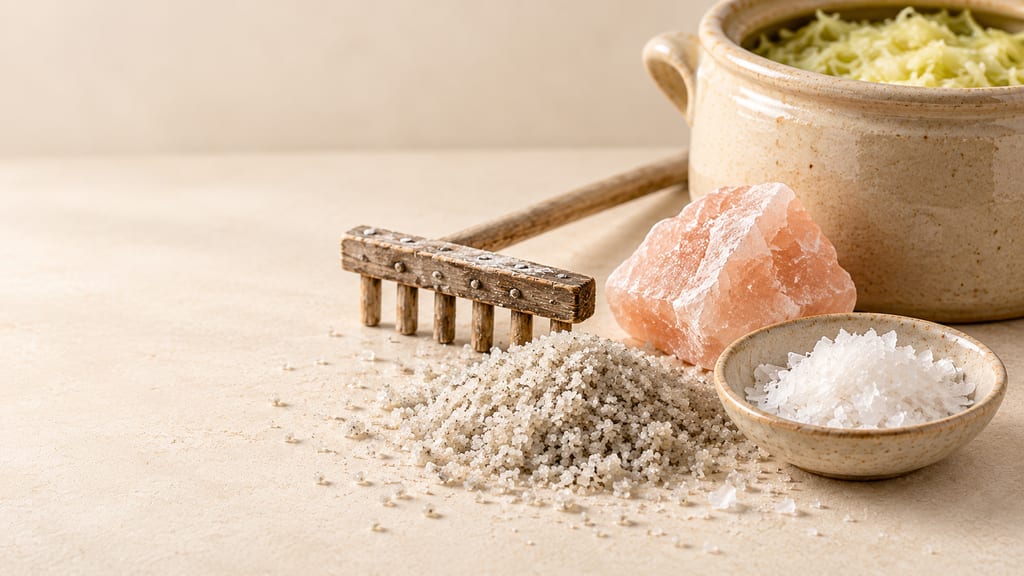
Sea salt, Mediterranean salt and pink Himalayan salt can carry other minerals. These can discolour the pickles or give off-flavours, and the insoluble part of a pink salt settles as grit at the bottom of the jar. Their crystals also measure differently by volume.
Ice-cream salt and rock salt may contain impurities that are not safe to eat. Sour salt tablets, a mix of citric acid and salt sold as a water softener, are not a pickling salt either.
Salt substitutes based on potassium chloride make crisp pickles that taste bitter. NCHFP allows reduced-sodium salt only in the quick pickle recipes that list it, and advises against it in any fermented pickle.
Sources for this section
What the salt does in a quick pickle and in a ferment
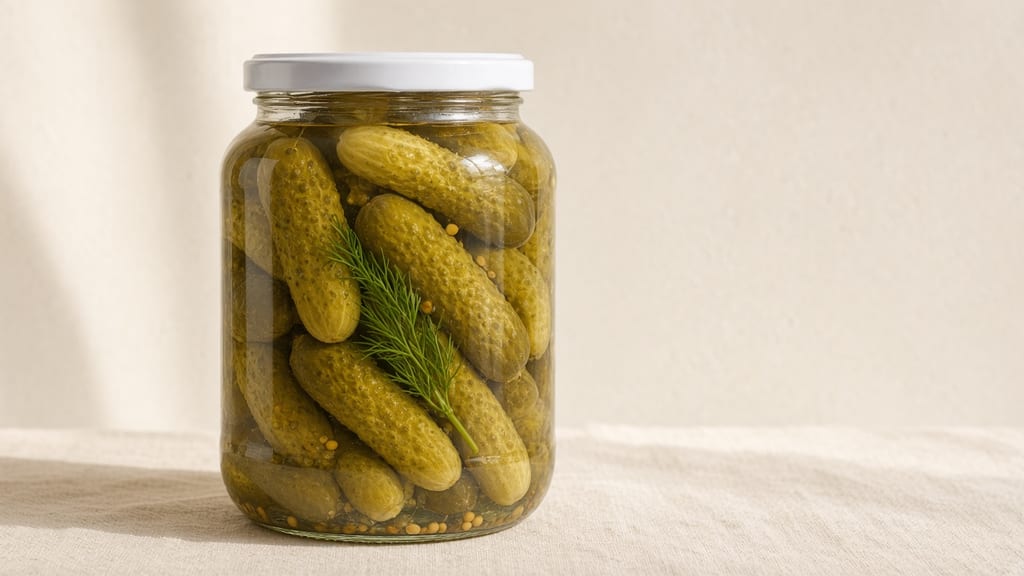
In a fresh-pack pickle such as vinegar gherkins, the vinegar makes the jar safe. The salt affects their texture and flavour. Tested fresh-pack recipes can be made with less salt or none, but the texture and flavour change noticeably.
In sauerkraut and brine-fermented pickles the salt is part of the safety system. At the right concentration it lets the lactic acid bacteria grow and make acid while it holds back other bacteria. Do not reduce the salt in a fermented recipe, and do not change its concentration.
Iodised table salt is not dangerous in either kind of pickle. NCHFP says fermented and fresh-pack pickles may both be made safely with iodised or non-iodised table salt. The objection to it is cloudiness and colour, not safety.
Sources for this section
Salt in the Georgian pickle jar
Georgian cookbooks set brine strength without weights. Hannah Glasse's gherkins of 1758 went into spring water with, for every gallon, "as much Salt as will make it bear an Egg". The brine was boiled two or three minutes and poured over the cucumbers. Her vinegar pickle then took "a little Bay-salt and a little white Salt, but not too much."
Elizabeth Raffald's cucumbers sat in "strong salt and water" for nine or ten days before they were greened and pickled, and her vinegar for them took "a handful of salt" to two quarts. Eliza Acton gave the salt a weight. Her brine for gherkins in 1845 was six ounces of salt to each quart of water, poured on boiling and left for 24 hours, and her spiced vinegar took 1¼ ounces of salt to the quart.
Arthur Hill Hassall, writing against copper-greened shop pickles in 1855, named salt as half of the honest alternative. Copper, he wrote, was wholly unnecessary, because the colour of green vegetables could be kept "by the use of pure vinegar, and the addition of a proper quantity of salt." A modern tested recipe states that proper quantity exactly. Use it as written.
Sources for this section
Buying and keeping
Look for packs labelled canning salt, pickling salt or canning and pickling salt, with sodium chloride as the only ingredient. Plain non-iodised table salt will do if that is all there is, at the cost of a slightly cloudy brine.
Sources for this section
Places
United States
Documented use · Country evidenceUS extension guidance recommends this salt for tested home pickling recipes; the row does not claim where the product is made.