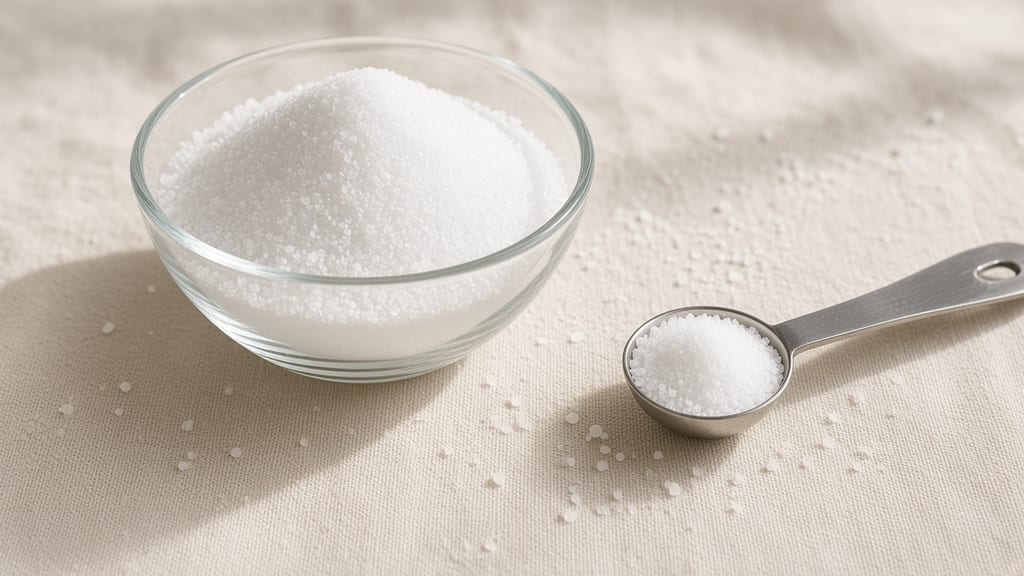
Canning and pickling salt
Canning and pickling salt is fine, pure sodium chloride with no iodine or anti-caking agent. Tested pickle recipes are measured with it, so it keeps brines clear and salt levels right.
 FermenteaWhere food goes to change
vinegar gherkins · Georgian gherkins · pickled gerkins
Small cucumbers under hot spiced vinegar, the pickle Georgian cooks greened in copper pans. This version uses the tested NCHFP fresh-pack dill method, glass and stainless steel, and accepts the olive colour a safe jar turns.
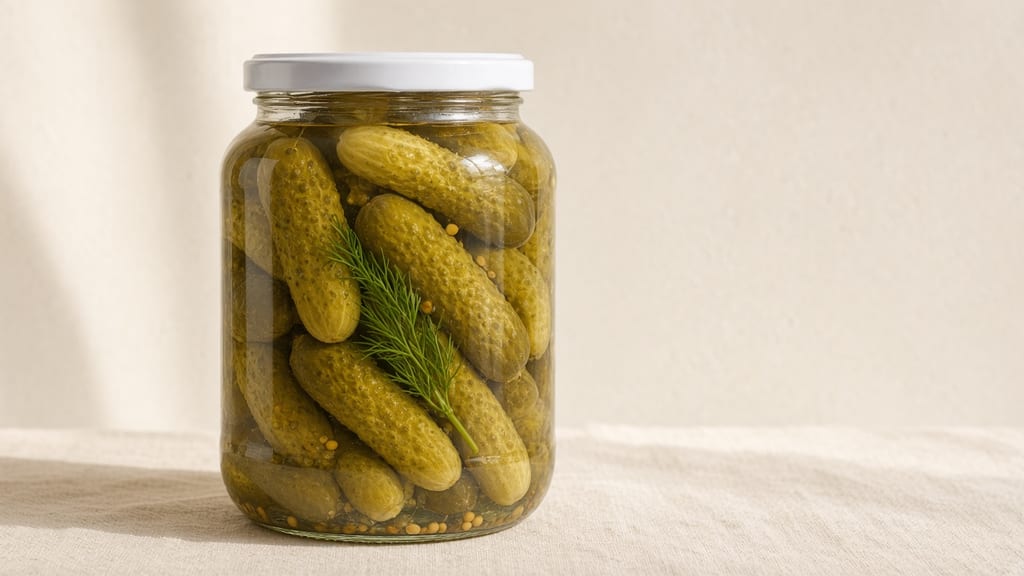
Gherkins are small cucumbers, picked young and firm. In Georgian England they were the commonest vinegar pickle in the store cupboard, eaten with cold meat, cheese and bread. The vinegar does the preserving. There is no long lactic ferment.
The method here is the tested Quick fresh-pack dill pickle from the US National Center for Home Food Preservation, with metric equivalents added. Fermentea already carries that batch as Quick fresh-pack dill pickles. This page adds the history of the English gherkin, and the reason it no longer comes out of the jar bright green.
If you want a salt-brine pickle that sours by fermentation, use Fermented dill pickles instead. The note further down explains how the two differ. For small whole gherkins in a sweet spiced vinegar syrup, Sweet gherkin pickles is a separate tested method that takes four days.
About 8 lb (3.6 kg) of 3- to 5-inch (7.5–12.5 cm) pickling cucumbers makes 7 to 9 pint jars. A US pint is about 475 ml and a quart about 950 ml.
The salt and spice are measured by US volume, as the recipe was tested. Use 3/4 cup (180 ml) of canning salt for the overnight soak and 1/2 cup (120 ml) for the brine. Pickling salt varies in density between brands, so stick with these measures and avoid flake salt.
The brine is 1½ quarts (1.4 litres) of 5% vinegar, 2 quarts (1.9 litres) of water, the salt and 1/4 cup (60 ml) of sugar, boiled with 2 tbsp of whole pickling spice in a cloth bag. Each pint jar gets 1 tsp mustard seed and 1½ heads of dill.
Time: 12 hours for the soak, about an hour and a half of work, then a day for the jars to cool and seal.
For a smaller batch, halve every quantity: 4 lb (1.8 kg) of cucumbers fills about 4 pints. Keep the ratios exact and the process times the same, because the times depend on jar size and elevation, not on how many jars are in the canner.
Use firm pickling cucumbers or true gherkins, picked as recently as you can get them. Slicing cucumbers go soft. Trim 1/16 inch (1.5 mm) from the blossom end of each one. The blossom end can carry an enzyme that softens pickles in the jar.
Use canning or pickling salt. Table salt with anti-caking agents clouds the brine and can leave a white sediment, and iodised salt can darken the pickles.
Use vinegar labelled 5% acidity, white distilled or cider. Do not dilute it or use homemade vinegar of unknown strength. For context, the vinegar Hassall found in London shop pickles in the 1850s was between 1.48 and 2.91 per cent acetic acid.
Every surface the vinegar touches should be glass, stainless steel, unchipped enamelware, stoneware or food-grade plastic. NCHFP lists brass, iron, copper and zinc utensils as a cause of dark pickles and says that pickles made with brass, copper or zinc should not be used. The FDA Food Code bars copper and copper alloys from contact with foods below pH 6, and gives vinegar as its example.
That excludes the old copper preserving pan, a brass jam pan, bronze or bell-metal, and galvanised buckets for the soak. Use a stainless or enamelled pan for the brine.
You also need canning jars with new lids, a boiling-water canner or a deep pot with a rack, a jar lifter and a thermometer if you use the low-temperature treatment. Accum warned in 1820 against storing pickles in cream-coloured glazed earthenware, whose lead glaze the vinegar dissolved. Modern canning jars avoid the problem.
The 12-hour soak in salt water comes first, as tested, and seasons the cucumbers before the vinegar goes on. Drain it off; it is not used again.
The brine goes on boiling. Hot liquid drives air out of the jar and starts the heating that the canner finishes. The 1/2 inch (1.25 cm) of headspace leaves room for the seal to form.
Dill heads and dill seed are interchangeable in this recipe: 1½ heads or 1½ tsp of seed per pint. Whole spices keep the brine clear. Ground spices can darken the pickles.
Process time rises with elevation because water boils at a lower temperature higher up. Find your kitchen's elevation before you start.
The low-temperature option gives a firmer pickle but needs care. Start the jars in water at 120–140 °F (49–60 °C), top up with hot water to 1 inch above the lids, and hold 180–185 °F (82–85 °C) for 30 minutes. Above 185 °F (85 °C) the pickles soften for no gain in safety. Below 180 °F (82 °C) they are not adequately treated.
The jars will turn olive within days, sometimes yellow at the ends. That is what a safe vinegar pickle looks like.
Chlorophyll holds a magnesium ion at its centre. Acid and heat push the magnesium out, and the pigment becomes pheophytin, which is olive-brown. Copper can take the empty place and make a bright green that survives acid and heat. Georgian cooks knew the bright result without knowing the chemistry, and boiled their vinegar in copper to get it.
The pickle trade described the copper method plainly. In 1855 Thomas Blackwell, of Crosse & Blackwell, told a parliamentary committee that for thirty-five years his firm had boiled pickle vinegar in copper and poured it back over the vegetables several times. "The first time that was done it turned yellow, the next time green." After The Lancet published Hassall's analyses, the firm moved to glass-lined iron pans and boiled the vinegar only once in its remaining copper vessels. Its pickles came out brown.
Arthur Hill Hassall stated the rule in 1876. Pickles that housekeepers made at home were "usually of a yellow colour rather than green". Whenever shop pickles were "of a decided green, they will almost always be found to contain copper; but when they are yellowish or brownish-green, copper is never present."
Do not add alum, copper salts or anything else to keep the colour. White distilled vinegar keeps the jar a little paler than cider vinegar. Store sealed jars in the dark, because light fades them further.
This section is history. Read it; do not cook from it.
Hannah Glasse's 1758 gherkins went into a brine with "as much Salt as will make it bear an Egg", then into a stone jar. Her pickle was three quarts of vinegar to one of spring water, with nutmeg, cloves, mace, pepper and ginger, boiled "in a Bell-metal or Copper Pot" and poured over boiling hot, then drained, reboiled and poured over again on later days. Each boiling took up more copper.
Elizabeth Raffald, writing in 1769, called greening in brass "poison to a great degree". Her pickled cucumbers sat in strong salt and water for nine or ten days "till they are quite yellow", stirred twice a day "or they will scum over and grow soft". She then poured boiling water over them under vine leaves, four or five times, until they looked green again. They finished in white wine vinegar boiled for five minutes with mace, cloves, ginger, black pepper and salt, and were tied down with a bladder.
Eliza Acton in 1845 poured boiling brine over gherkins in a stone jar, laid them under bay leaves the next day, and covered them with boiling vinegar spiced with ginger, peppercorns and mace. She noted the "brilliant and poisonous green" a brass skillet gave and chose the duller colour. Isabella Beeton's pickled gherkins of 1861 followed the same plan, with vine leaves, a night by the fire and "in a month or two, they will be fit for use."
Shop pickles kept the copper. When Hassall bought pickles from London grocers, oilmen and pickle makers in the early 1850s, every one of the sixteen he tested for copper contained it, and the green gherkins and beans held the most. He told shoppers to stand a polished iron wire in the vinegar for a few hours: copper would plate out on the iron.
None of these is a tested shelf-stable process, and the vinegar strength in any of them is unknown. Their spice mixes are worth borrowing for flavour. Tie a little sliced ginger, black peppercorns and a blade of mace into the spice bag in place of part of the pickling spice, keeping the total about the same. Do not change the vinegar, salt or water.
Raffald's nine-day brine began the change a salt ferment makes. The cucumbers turned yellow, and a scum formed on the surface unless she stirred them, the same surface growth anyone who ferments in brine will recognise. She then switched to vinegar for keeping.
A fully fermented cucumber is a different recipe with its own salt, temperature and timing. Fermentea's Fermented dill pickles follows the NCHFP method, which cures for about three weeks. NCHFP also describes refrigerator dills, fermented for about a week. As fermented pickles cure, their colour and flavour change and their acidity rises, so a short ferment stays greener than a long one.
Do not combine the two methods. A part-fermented cucumber packed with this page's brine and process times has not been tested. Choose one recipe and follow it all the way through.
Soft or slippery pickles: weak vinegar, cucumbers not covered by brine, a skipped process, mouldy spices or blossom ends left on. If there is any sign of spoilage, do not eat them.
Shrivelled pickles: brine or vinegar stronger than the recipe, or over-processing. Bitter pickles: spices boiled too long, or a salt substitute.
Dark pickles: hard water, ground spices, spices left in the jar, iodised salt, or brass, iron, copper or zinc utensils. If a reactive metal was used, discard the batch.
Faded pickles: too much light in storage, or poor cucumbers. Bulging lids, spurting liquid, mould inside the jar or an off smell mean the jar goes in the bin without tasting.
Store sealed jars cool, dark and dry. Once a jar is open, keep it in the fridge with the cucumbers under the brine.
Serve with cold meat, a ploughman's plate of cheese and bread, chopped into tartare sauce or potato salad, or sliced on a sandwich.
Hannah Glasse's 1758 gherkins were brined until the salt would float an egg, then scalded three times with spiced vinegar boiled "in a Bell-metal or Copper Pot". Elizabeth Raffald's 1769 book warned that greening in brass is "poison to a great degree", soaked cucumbers in brine until yellow and greened them with boiling water and vine leaves. Eliza Acton in 1845 and Isabella Beeton in 1861 used stone jars and boiling spiced vinegar with no metal pan. Fredrick Accum in 1820 and Arthur Hill Hassall in the 1850s documented copper-greened shop pickles. The modern method is the separate NCHFP tested fresh-pack.
Yield 8 pints · Scaling: do not change the vinegar to water ratio or the process times when scaling; follow nchfp elevation bands.
Vinegar dissolves copper from copper and copper-alloy pans. Eighteenth- and nineteenth-century pickles were greened this way, and Hassall found copper in every shop pickle he tested in the 1850s. The FDA Food Code bars copper and copper alloys from contact with foods below pH 6, and NCHFP says not to use pickles made with brass, copper or zinc utensils.
Hazard sourceCucumbers are a low-acid vegetable made safe on the shelf by the tested vinegar ratio and the canner process. Weak vinegar, changed proportions or a shortened process can leave the jar under-acidified or under-processed.
Hazard sourcePowdered verdigris and copper sulphate were used to force a bright green. They are poisons, not ingredients.
Hazard sourceUse glass, stainless steel, unchipped enamelware, stoneware or food-grade plastic for every step; never copper, brass, bronze, zinc or iron.
Control sourceUse the NCHFP formula exactly, with vinegar labelled 5% acidity and the process time for your jar size and elevation.
Control sourceIf using low-temperature pasteurisation, keep the water at 180–185 °F (82–85 °C) for the full 30 minutes, checked with a thermometer.
Control sourceNever add copper salts, verdigris, coins or any metal greening agent.
Control sourceNever green pickles with copper. A bright emerald pickle from a copper or brass pan is contaminated; discard it untasted.
Colour, smell and firmness do not prove a home-canned pickle is safe. Follow the tested formula and check the seals.
Attested in English cookery books from Glasse (1758) to Beeton (1861) and in Accum's and Hassall's adulteration reports.
Canning and pickling salt is fine, pure sodium chloride with no iodine or anti-caking agent. Tested pickle recipes are measured with it, so it keeps brines clear and salt levels right.
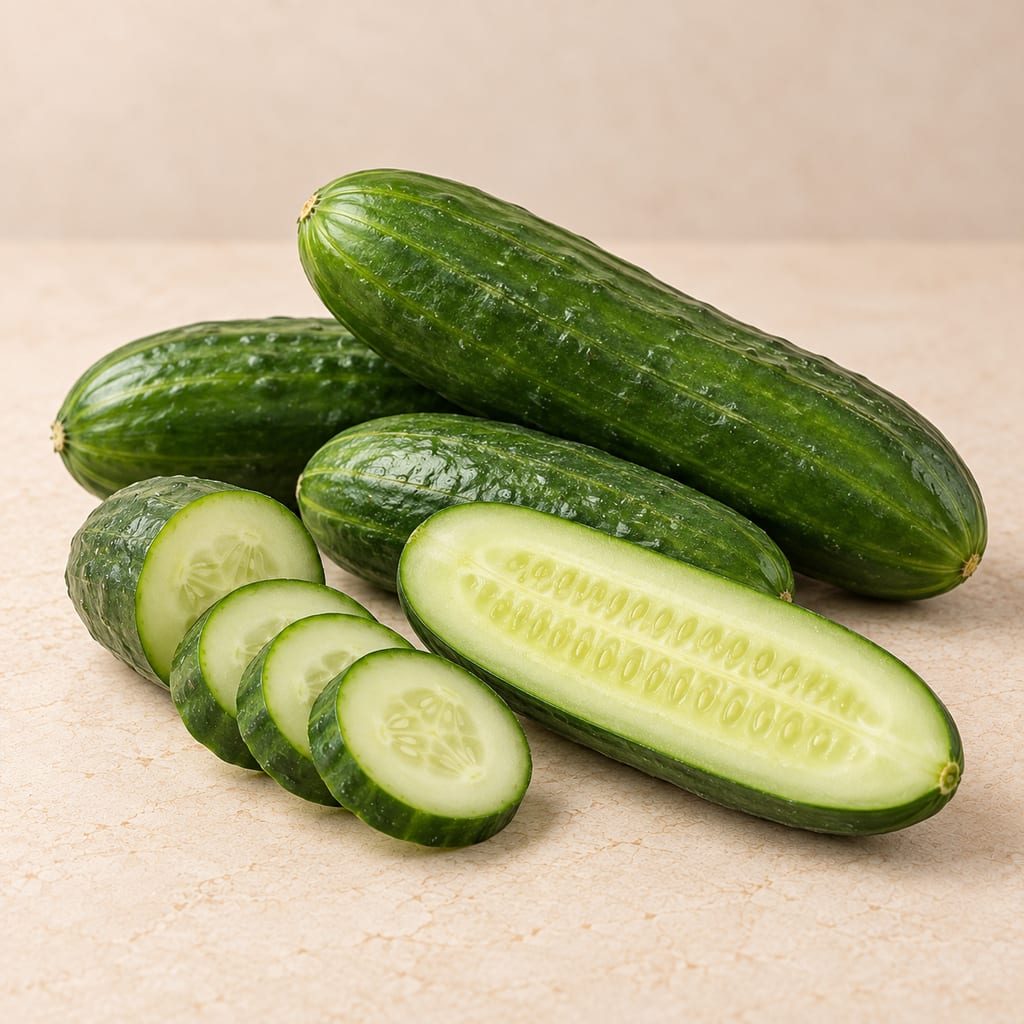
Cucumber is the watery fruit of Cucumis sativus, domesticated in India, and the classic raw material of brine pickles from New York dills to Nepali khalpi and Korean oi-sobagi.
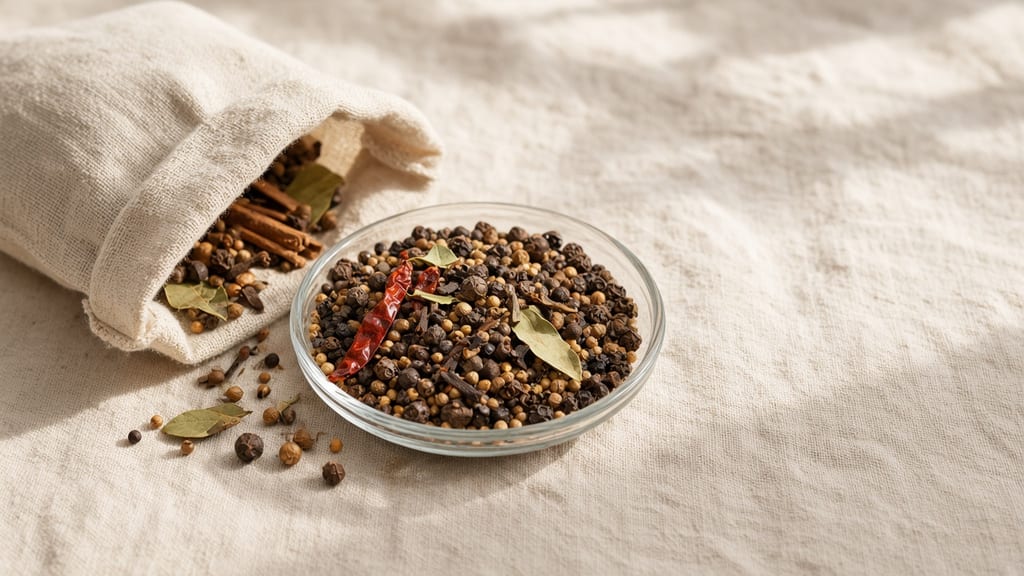
Pickling spice is a blend of whole dried spices, usually mustard seed, peppercorns, allspice, coriander, bay and cloves, boiled in a bag in pickle vinegar or brine and lifted out before the jars are filled.
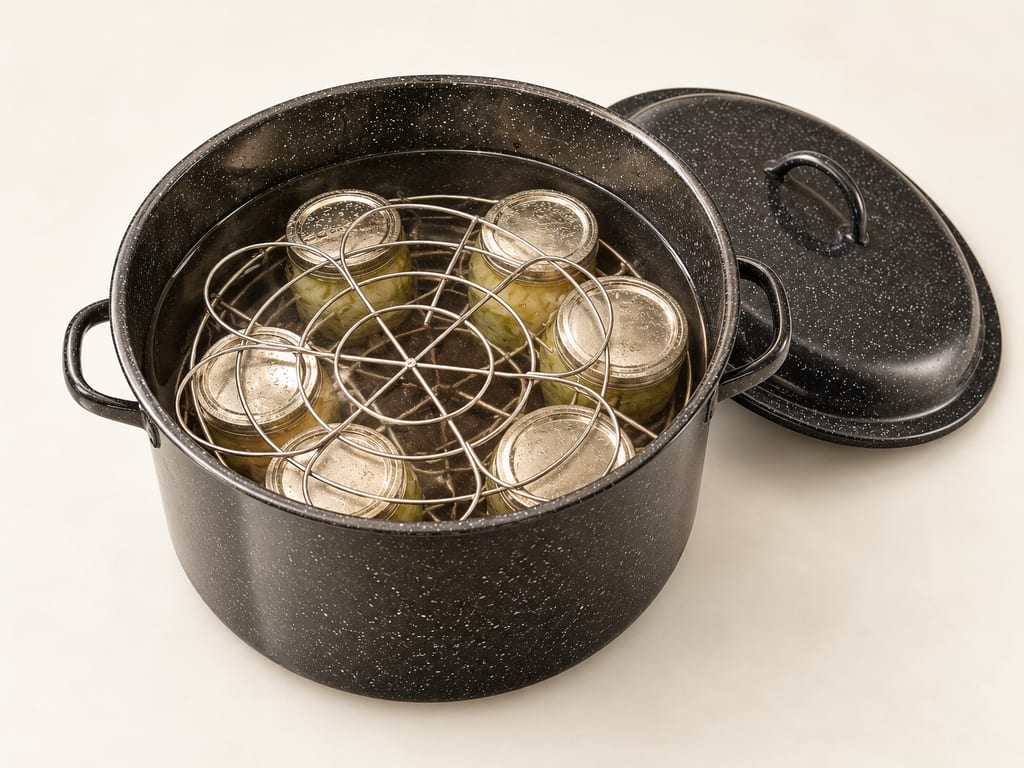
A deep, lidded pot with a removable rack processes jars beneath boiling water. It is intended for foods with tested boiling-water processes; low-acid foods require pressure canning.
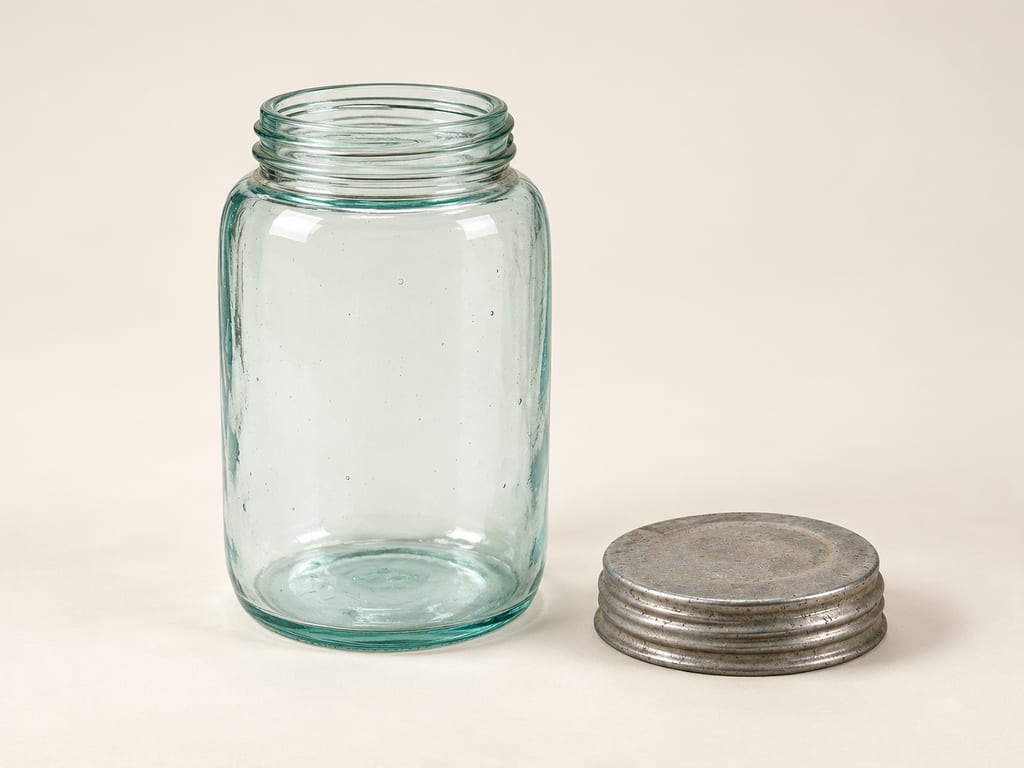
Threaded, heat-processing jars hold food and a fitted lid during a tested canning process; jar size and process belong to the specific recipe.
A modern, portable stovetop pan with a stainless-steel cooking surface for sauces and other small simmering jobs. Size, cladding, lid, compatibility and care vary by model.
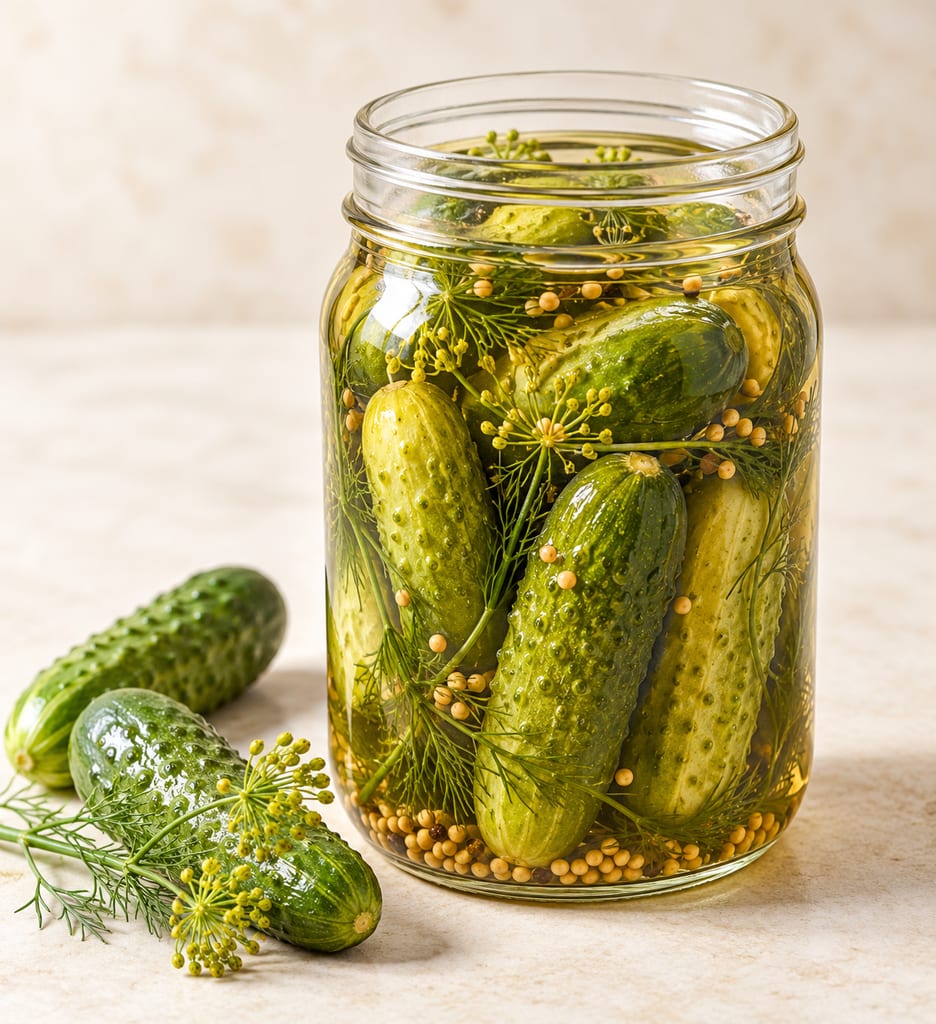
Whole small cucumbers are soaked in a measured salt solution, packed with dill and mustard seed, then covered with a boiling 5% vinegar brine and processed in a boiling-water canner.
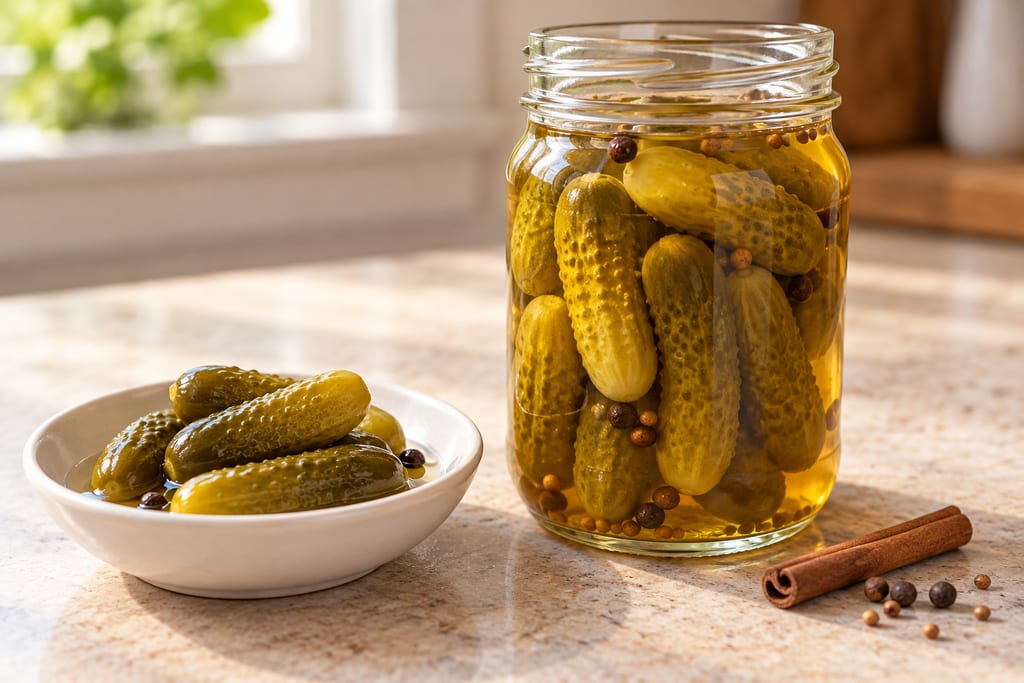
Sweet gherkin pickles are small whole cucumbers preserved in a spiced, sweet vinegar syrup. This four-day U.S. canning method uses repeated hot-water soaks, staged syrup additions, and a boiling-water process.
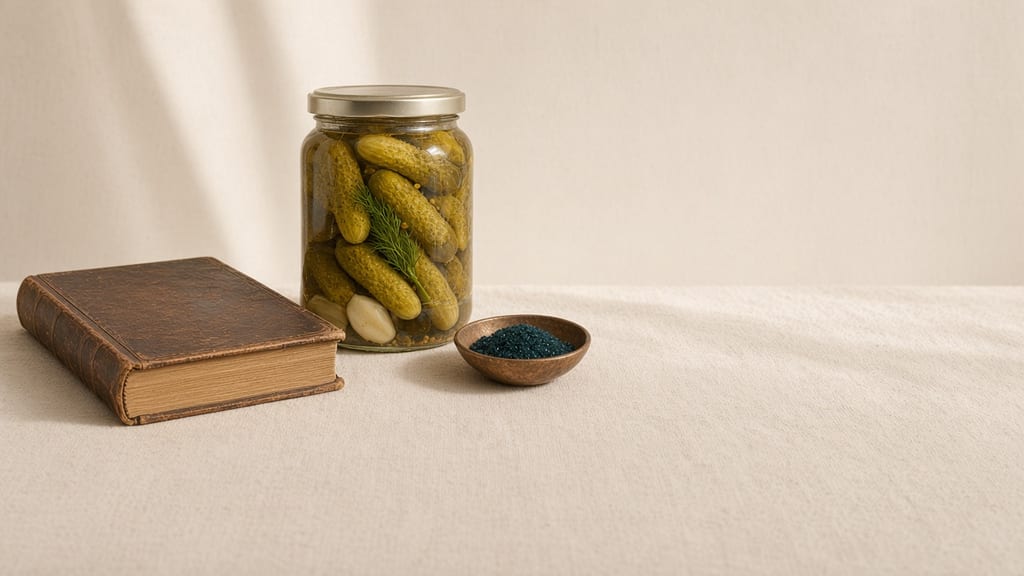
For a century English gherkins were greened by boiling their vinegar in copper. Cookbooks taught it, Accum named it in 1820, Hassall found copper in every shop pickle he tested, and the firm that stopped sold brown pickles and grew.
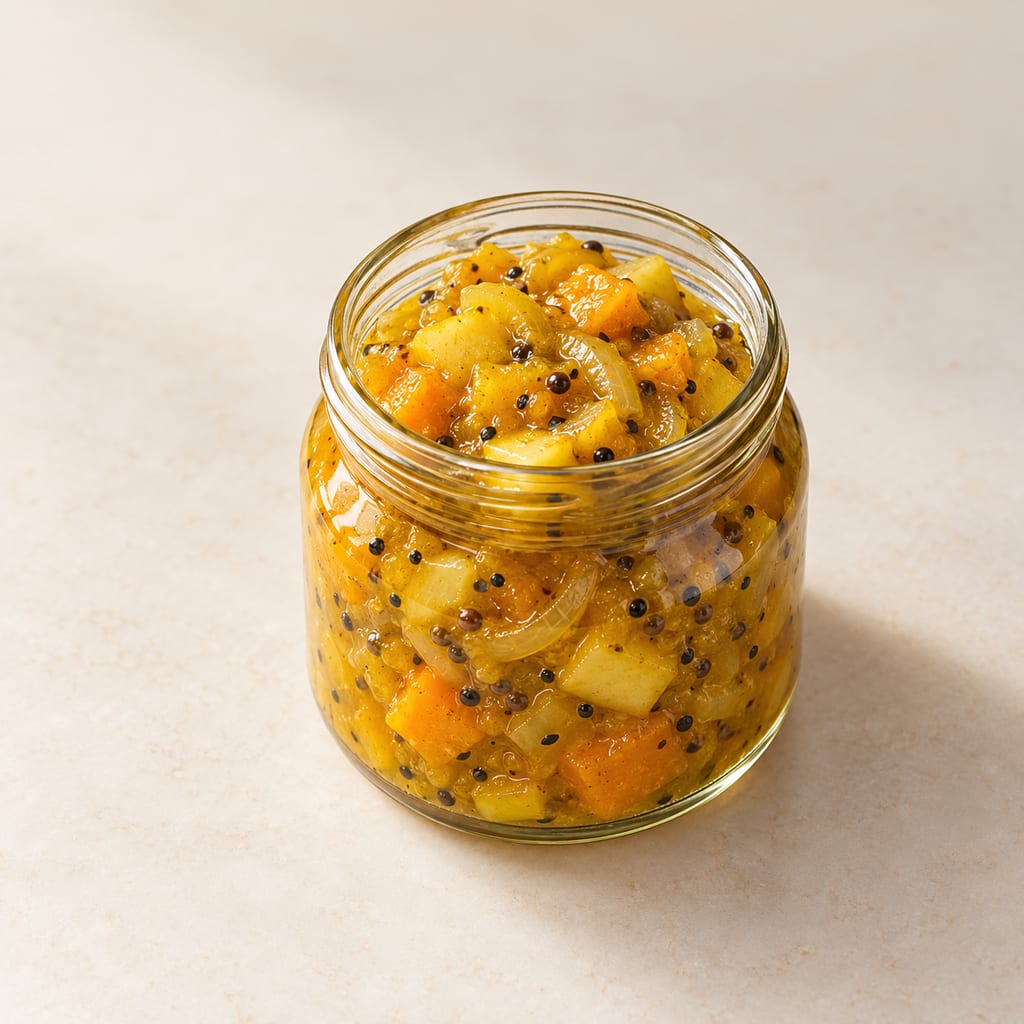
British pumpkin, apple and mustard pickle: Freeze for winter; small fresh portion refrigerated up to 48 hours.
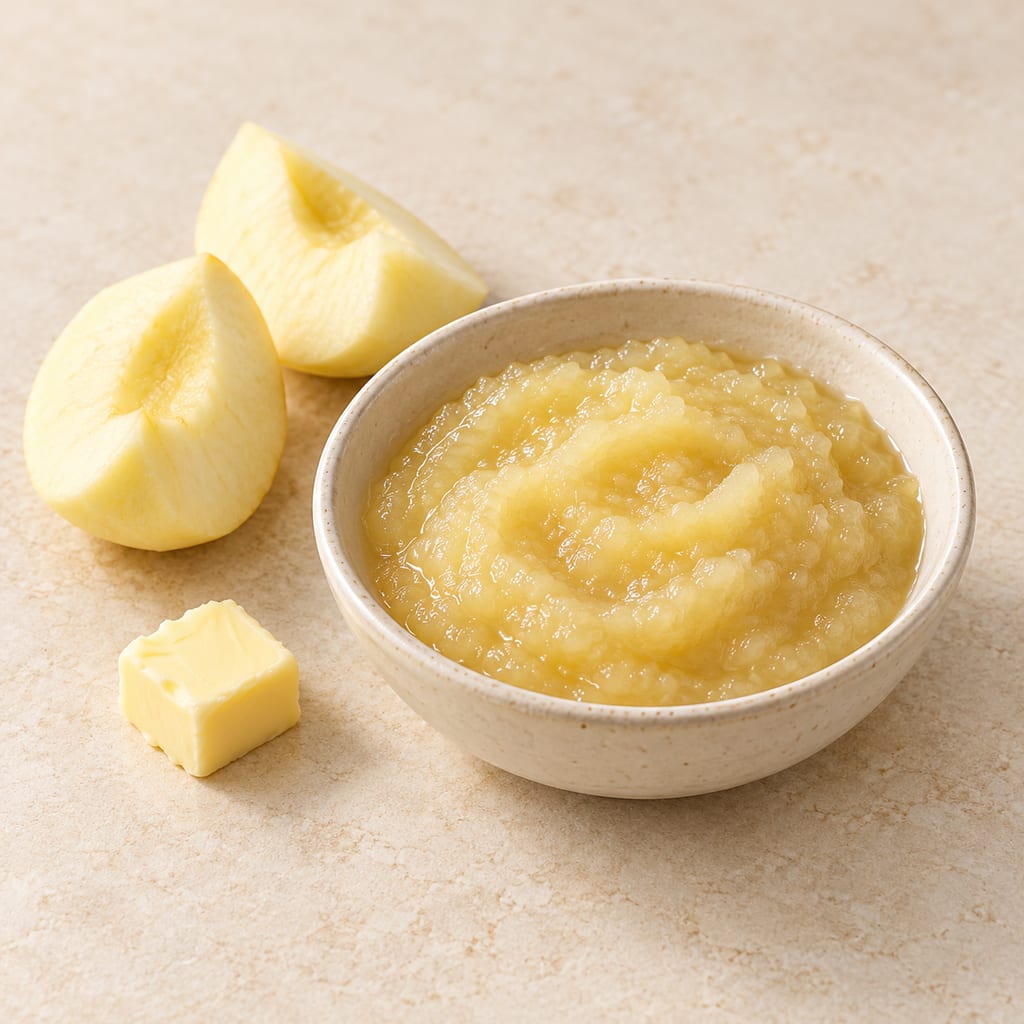
Apple sauce for goose and pork is a plain English accompaniment: cooked apples pulped with water, then sweetened with sugar and finished with a little butter.
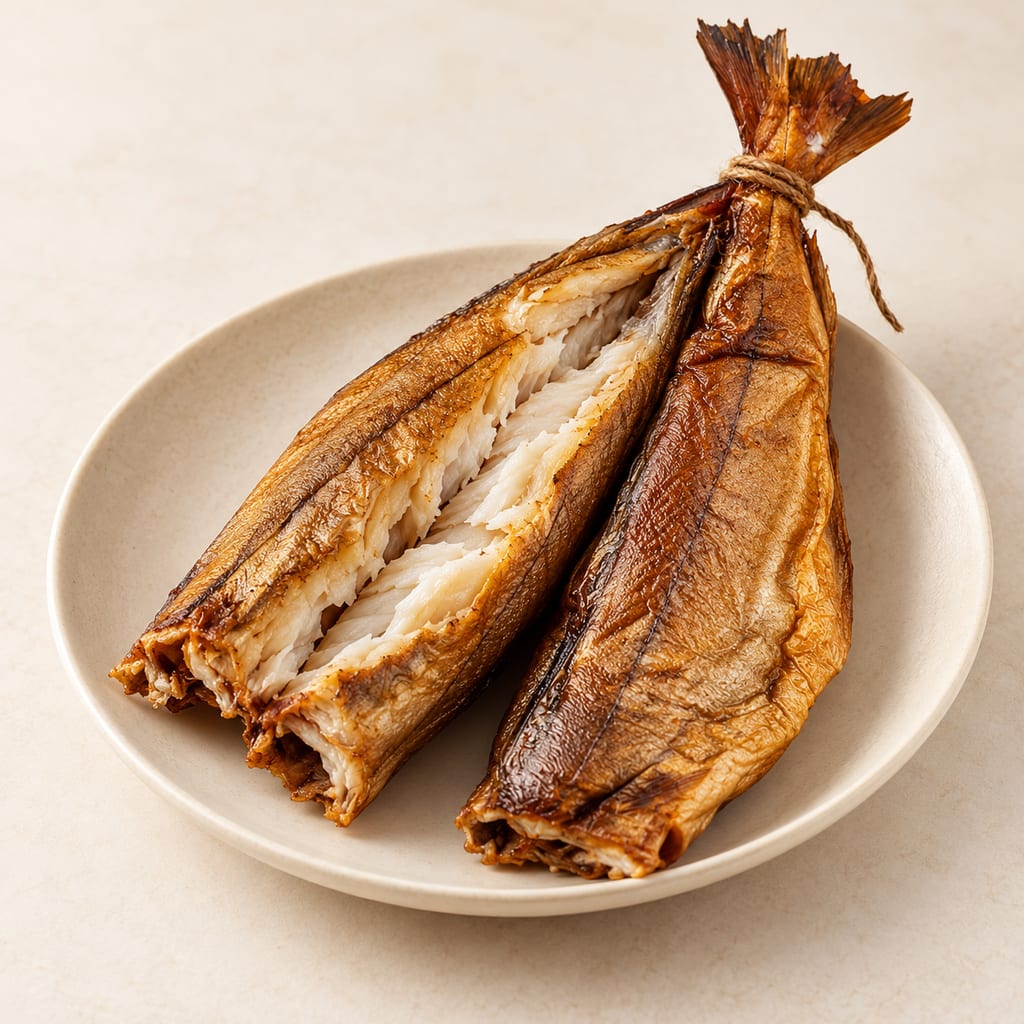
Arbroath smokies are whole haddock dry-salted, paired by the tail and hot-smoked in a protected coastal area. Their recorded history links Auchmithie and Arbroath, though the exact origin is unsettled.
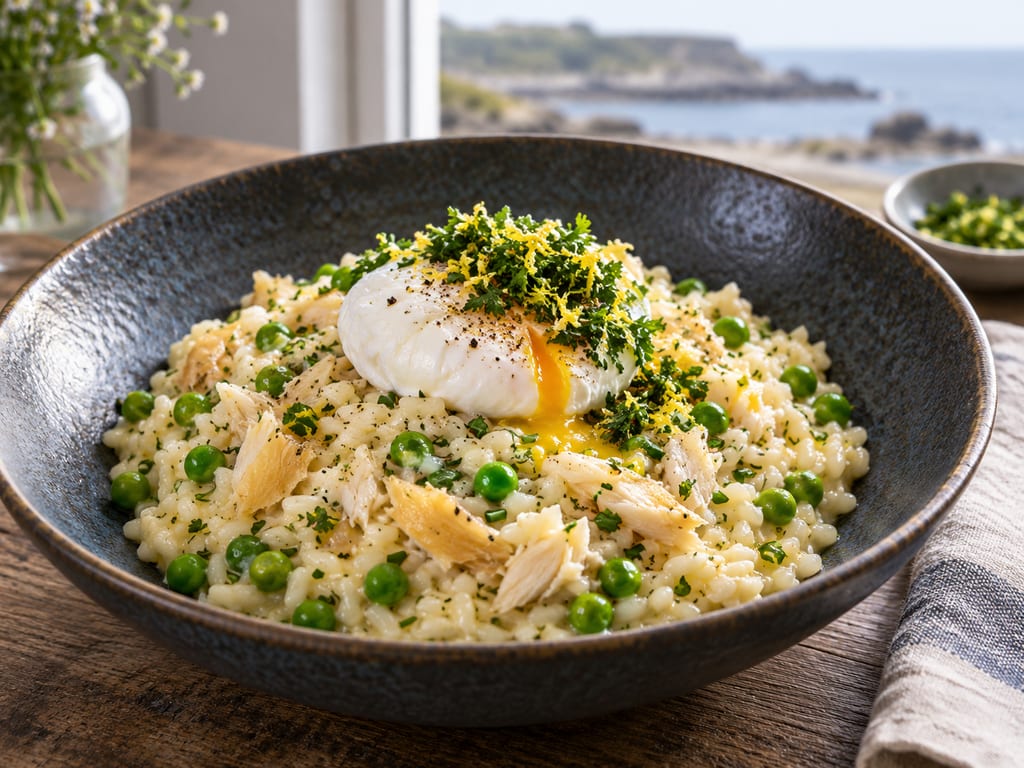
A four-serving risotto published in the 2014 Arbroath Smokie Trail booklet and credited to Hayley Wilkes. It cooks with finished Arbroath smokies; it does not describe smoking fish.
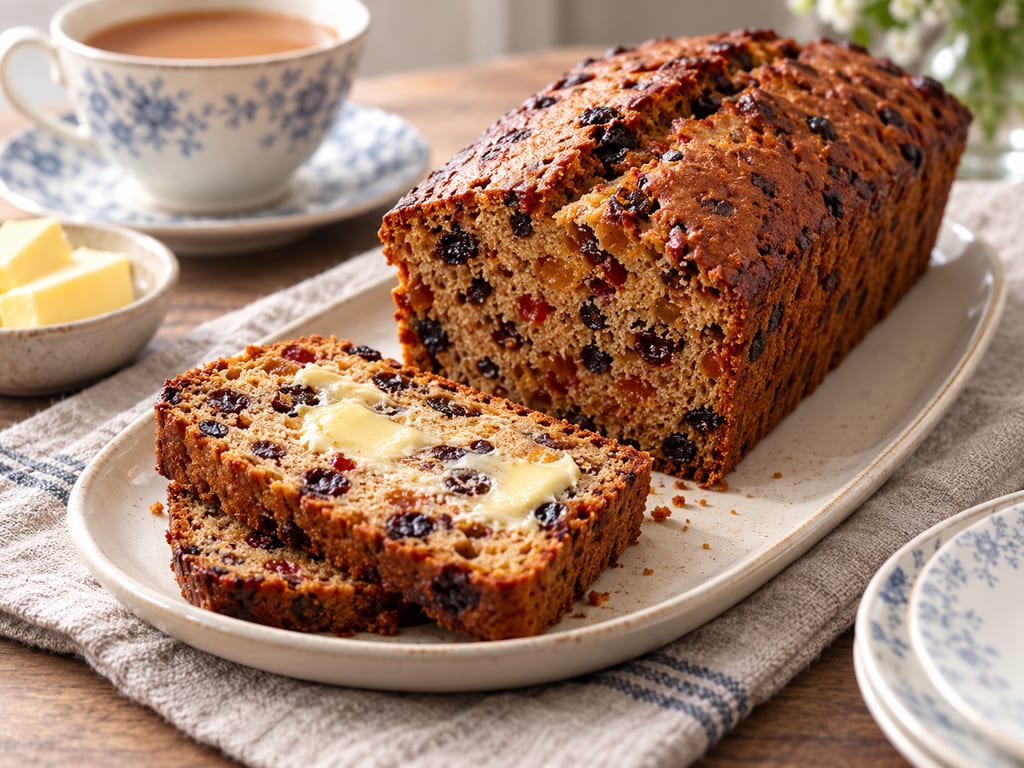
Bara brith is Wales’s speckled fruit loaf, made in both yeasted bread forms and the widely served modern tea-loaf style. This version soaks dried fruit in strong tea before mixing it with self-raising flour, spice, sugar and egg.
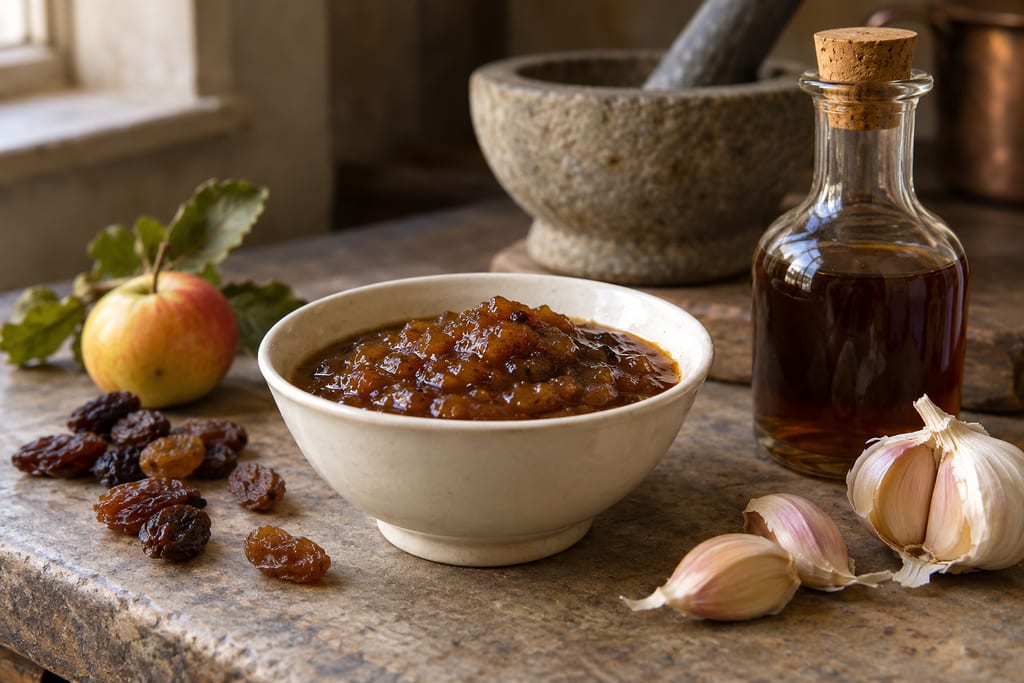
Eliza Acton's Bengal receipt for chetney sauce: stoned raisins and a hard acid fruit pounded with brown sugar, ginger, salt, cayenne and garlic, then thinned with vinegar to the consistence of thick cream.
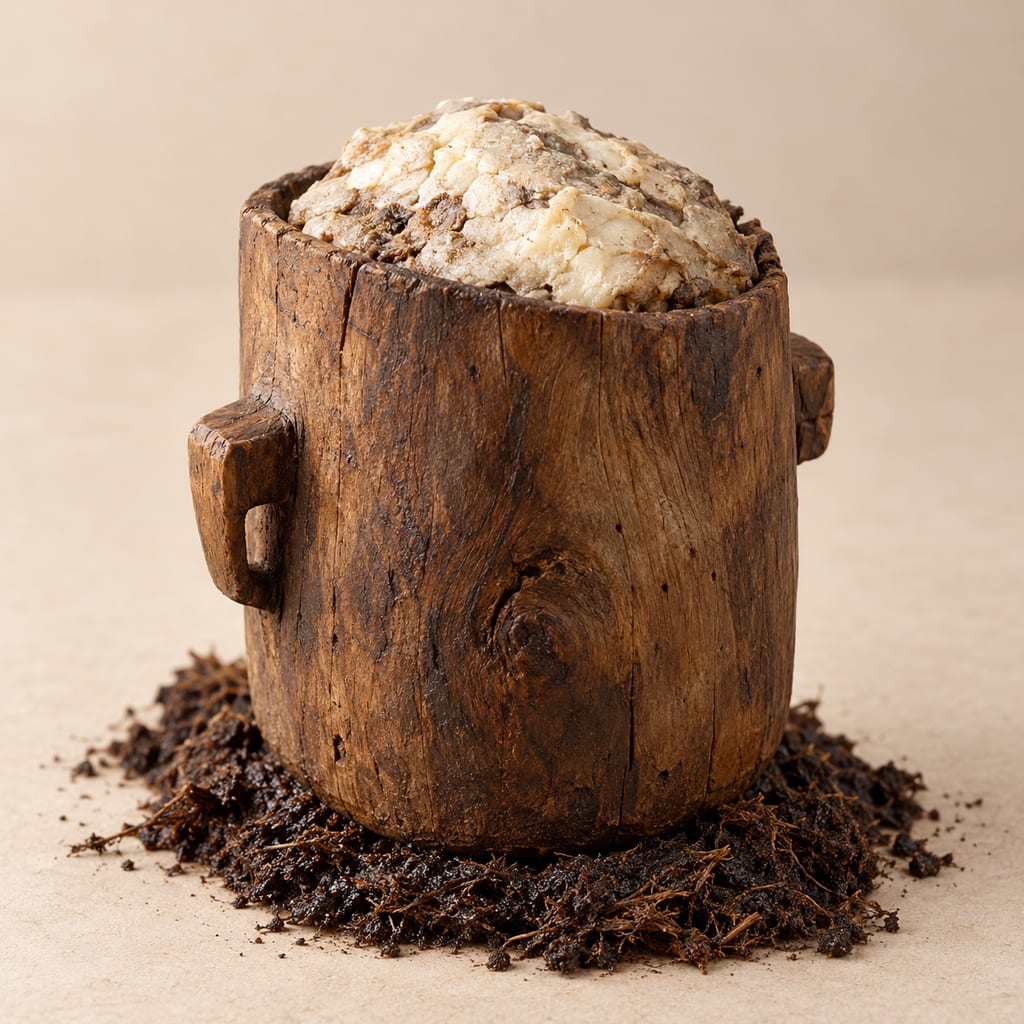
Butter packed into wooden containers and buried in cool, wet peat in Ireland and Scotland, a practice known from finds that may reflect storage, concealment or ritual.
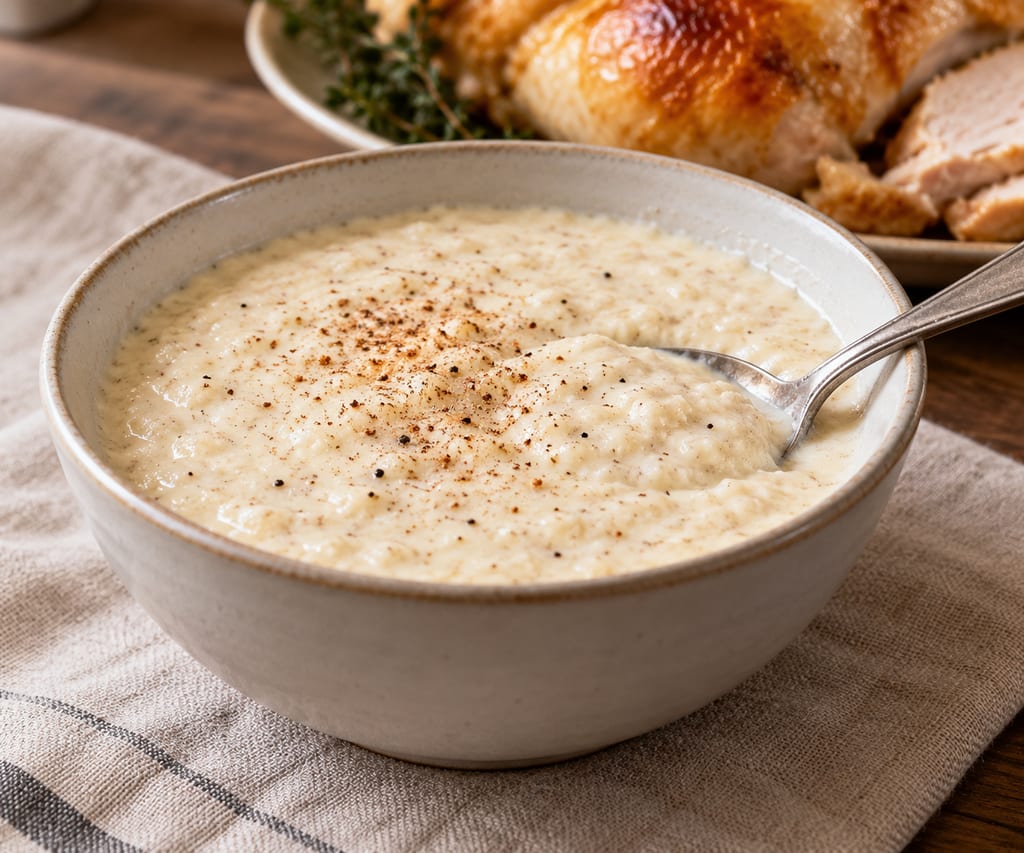
Bread sauce is a British sauce of milk infused with onion, clove and bay, thickened with stale breadcrumbs and finished with butter, served with roast chicken or turkey.
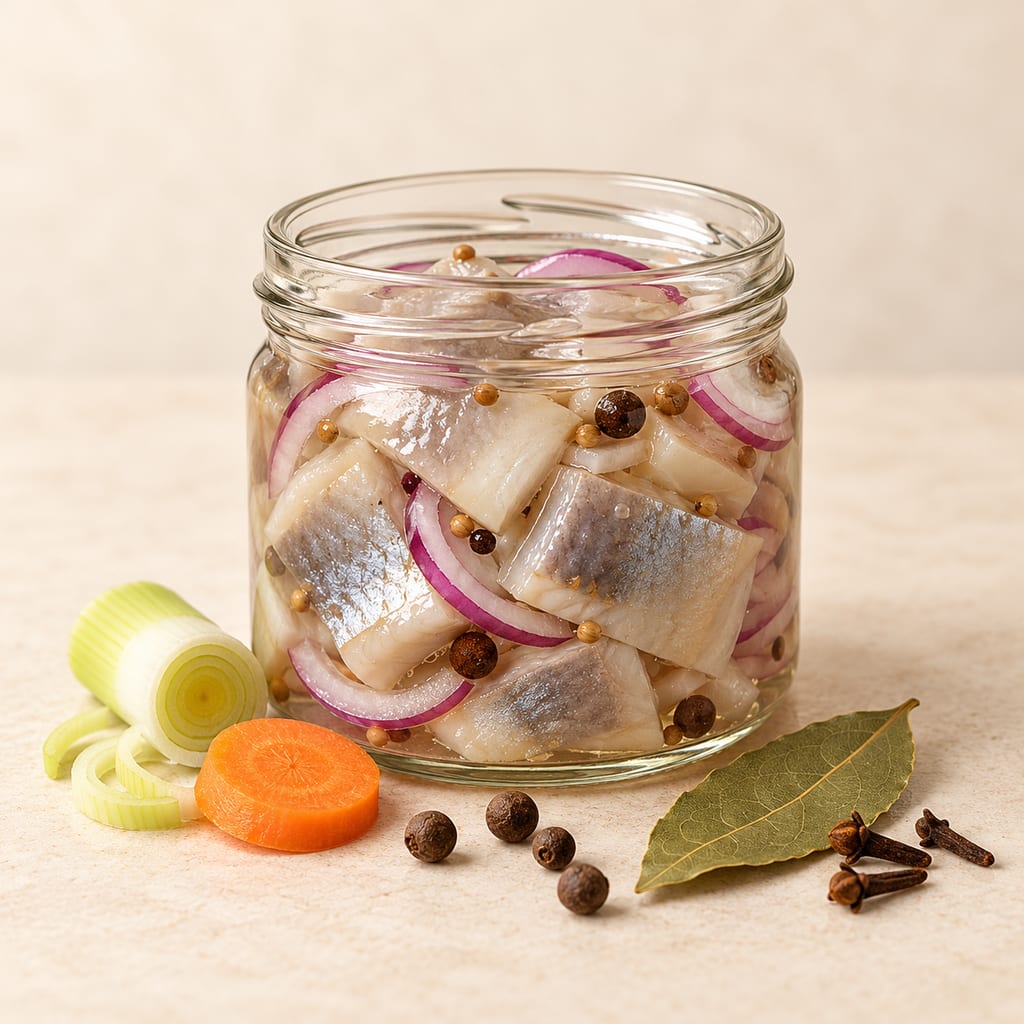
A Swedish ready-to-dress herring preparation: add the classic sliced aromatics and spices to already prepared herring, then serve or chill for fuller flavour.

Achcharu is a family of Sri Lankan vinegar pickles made with mixed vegetables or seasonal fruit and a piquant spice dressing. This version is a quick, refrigerated, non-fermented mixed-vegetable pickle.
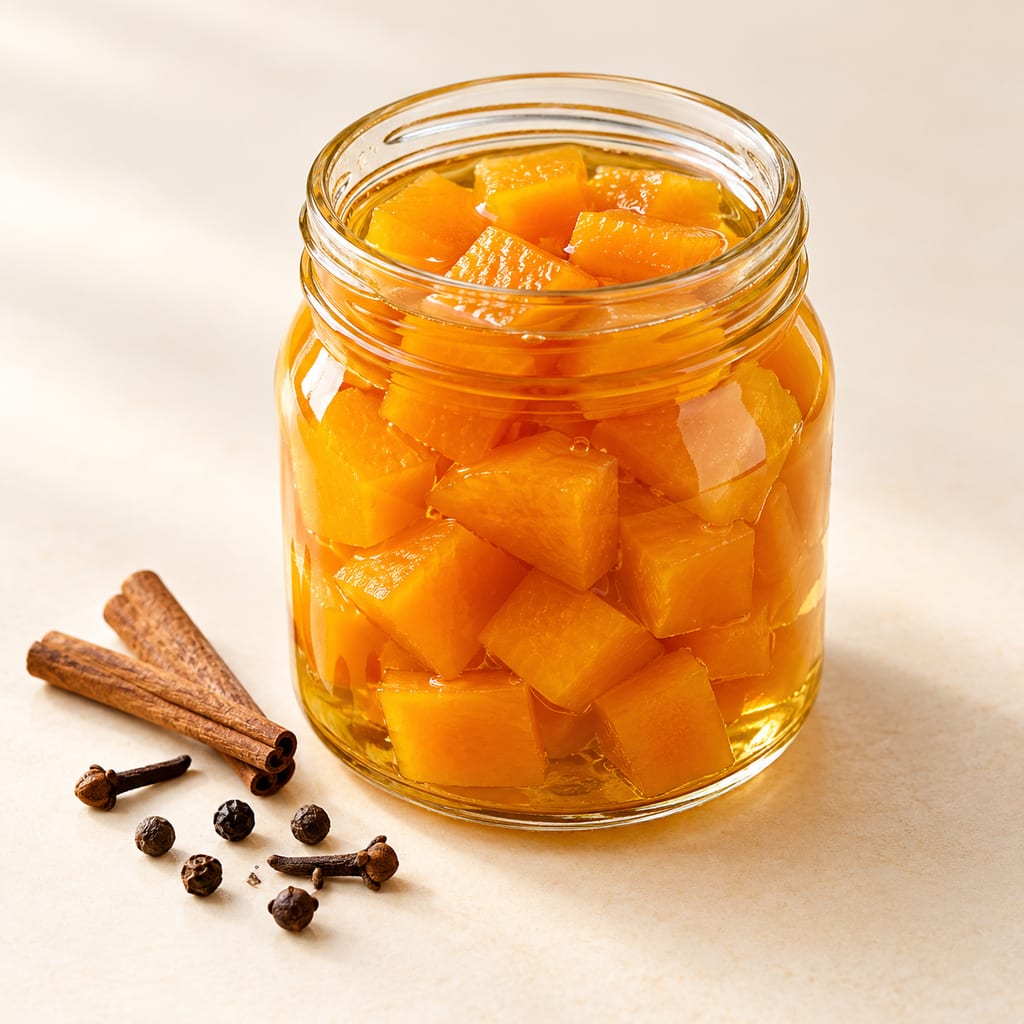
Ball sweet pumpkin pickles: Cupboard: exact published Ball formulation and water-bath process.
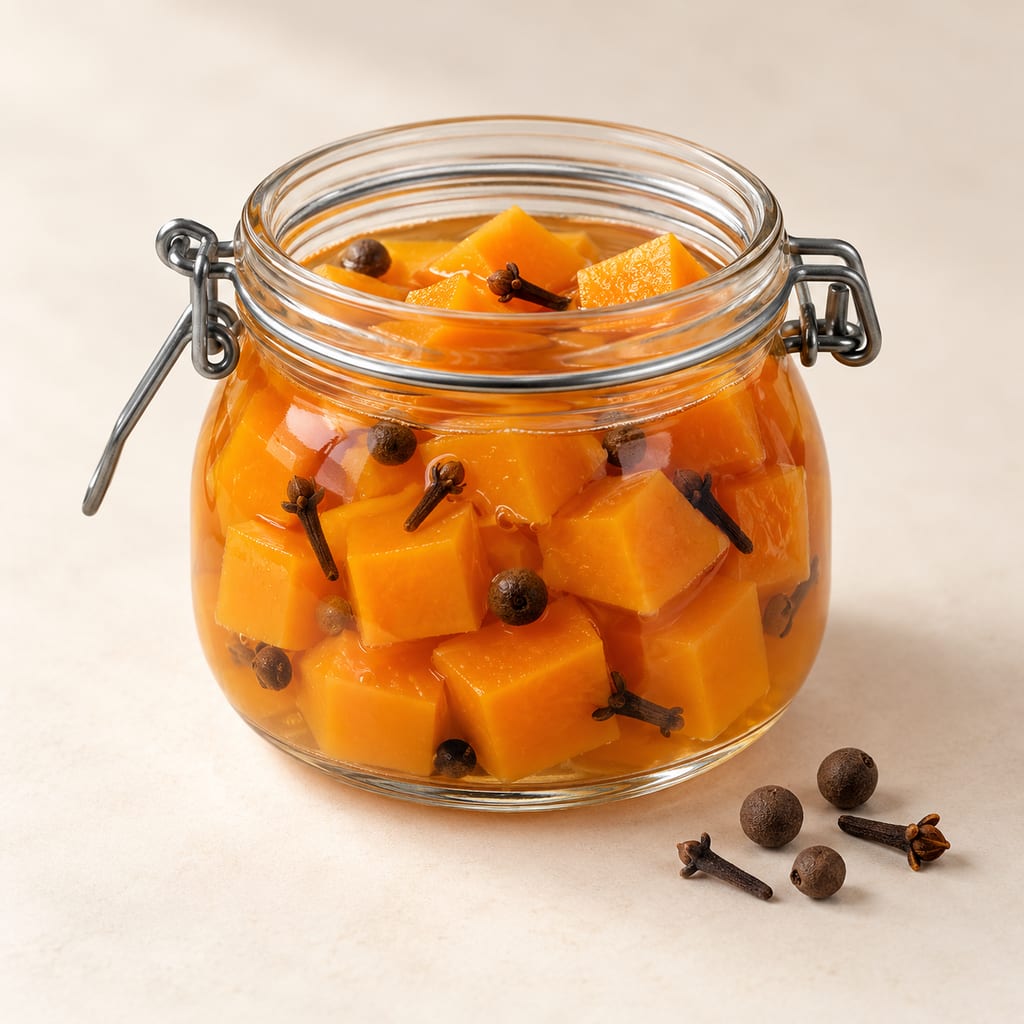
Dynia marynowana: Freeze for winter; small fresh portion refrigerated up to 48 hours.
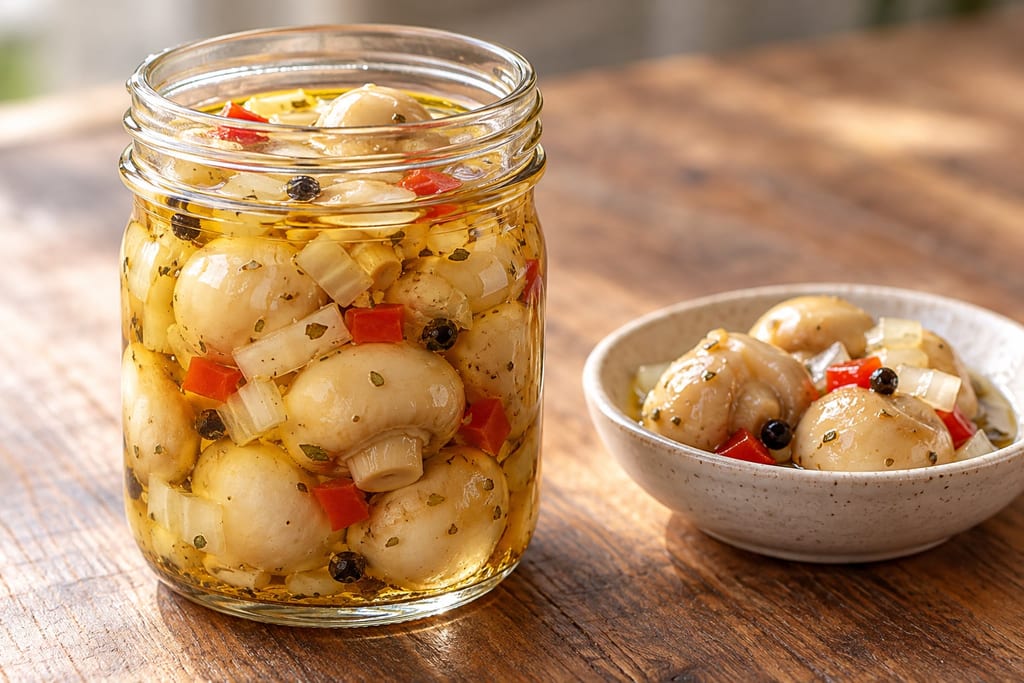
Small edible mushrooms are briefly cooked and packed in a seasoned vinegar marinade, a sweet-sour preserve served cold in Poland and neighbouring cuisines.

Fried or cooked food covered in a vinegar-based preparation, the heat and the externally supplied acid working together; a family of methods whose early form is a Roman instruction for treating fried fish with hot vinegar.
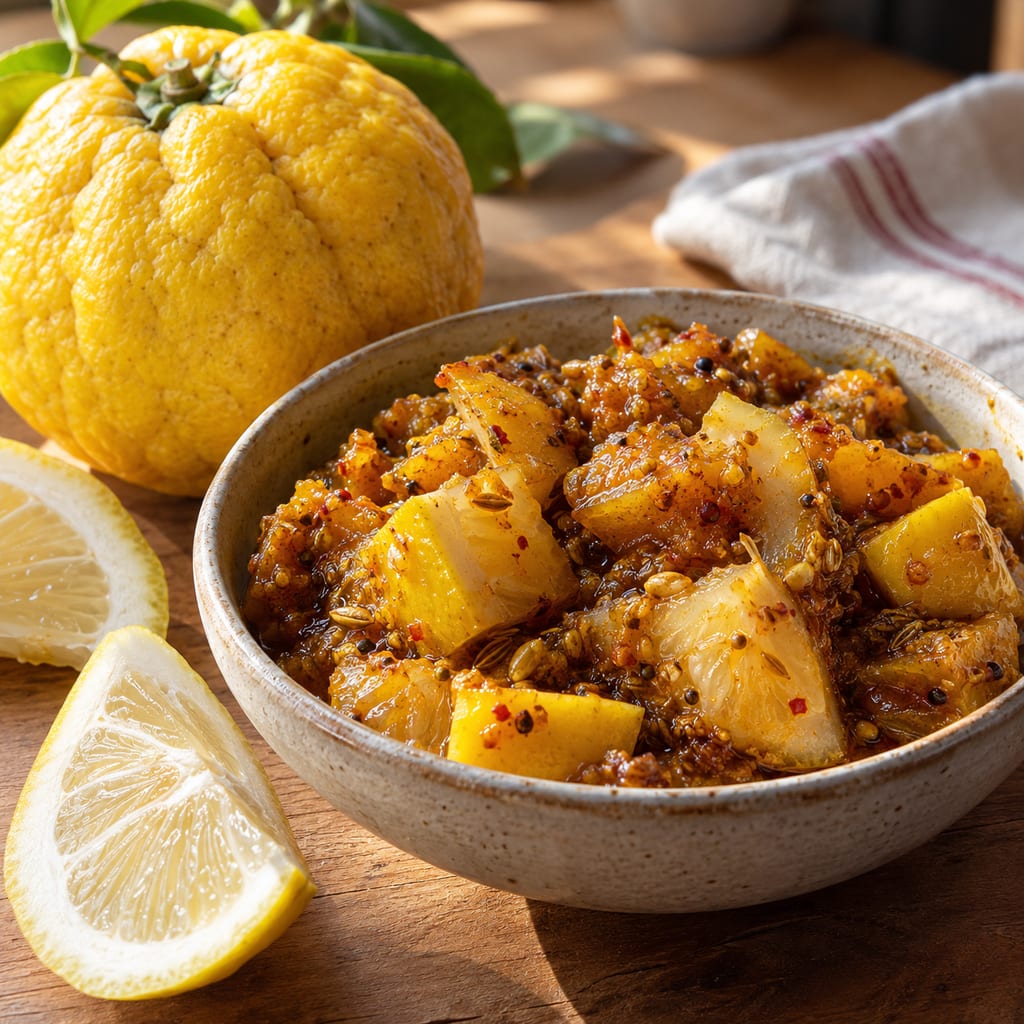
Ripe Himalayan galgal is boiled, sun-dried and cooked with mustard oil, spices and jaggery before a further rest in a ceramic jar.
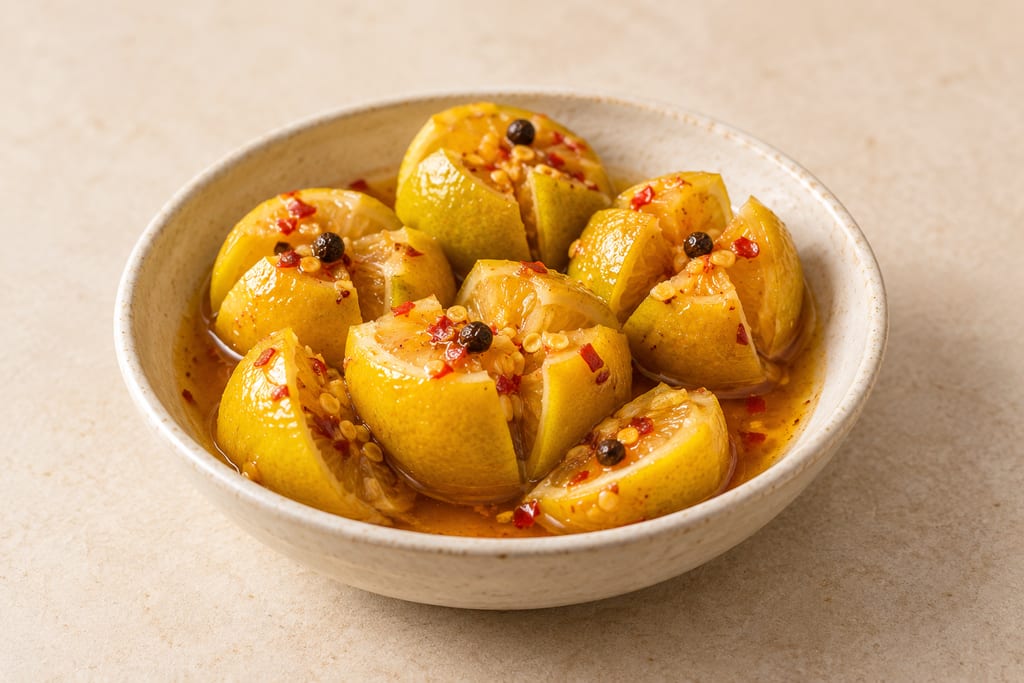
Peter Kuruvita’s published lime pickle stuffs 20 limes with rock salt, then simmers them in vinegar, sugar and chilli before a two-week rest.

Soft, spreadable Calabrian pork sausage made with a great deal of red chilli and fatty pork, stuffed into natural casings, sometimes smoked and matured while staying soft.

A way to add independent temperature logging to an existing food dehydrator without changing its built-in controls or protections. It is a monitoring method, not a rewiring plan.

Pleurotus cystidiosus is the abalone mushroom, a cultivated oyster-type fungus with dark brown caps that grows more slowly and is more demanding than other Pleurotus species.

A dark, balanced vinegar from Emilia-Romagna made by combining cooked or concentrated grape must with wine vinegar, then acetifying and refining it in wood under a protected specification.

A living dairy inoculum that starts controlled cream fermentation, developing acidity and aroma before sour cream or cultured butter is finished.

A small electric incubator holds jars at a selected temperature for yogurt and other documented warm food preparations. Controls, capacity and vessel arrangement vary by model.

Adygean salt is a seasoned table salt associated with Adygea and the wider North Caucasian culinary tradition. Salt is blended with garlic and a variable selection of herbs and spices; the exact mix depends on the named style and maker.

The African Caesar-group mushroom, Amanita masasiensis, is a wild ectomycorrhizal species of central and southern African woodlands, eaten locally. The genus contains deadly poisonous species, so identification needs care.
No community contributions have been published for this entry yet.
Sign in to contribute. Published comments and photos are free to read.
National Center for Home Food Preservation, University of GeorgiaMethod · Safety
Quick Fresh-Pack Dill PicklesBatch amounts for 7–9 pints
12-hour salt soak
5% vinegar brine
Elevation process times for pints and quarts
Cited in: What this pickle is; The batch at a glance; Why the steps run in this order; Serving and storage
National Center for Home Food Preservation, University of GeorgiaSafety · Technique
General Information on PicklingDo not alter vinegar, food or water proportions
5% (50 grain) vinegar
Fresh-pack versus fermented and refrigerator dills
Alum unnecessary for quick-process pickles
Cited in: What this pickle is; The batch at a glance; Choosing cucumbers, salt and vinegar; What colour to expect; If you want a fermented gherkin
National Center for Home Food Preservation, University of GeorgiaSafety · Troubleshooting
Causes and Possible Solutions for Problems with Pickled FoodsDo not use pickles made with brass, copper or zinc utensils
Safe utensil materials
Causes of soft, shrivelled, dark and faded pickles
Cited in: Choosing cucumbers, salt and vinegar; Pans and jars; Why the steps run in this order; What colour to expect; When it goes wrong; Serving and storage
National Center for Home Food Preservation, University of GeorgiaMethod · Safety
Low-Temperature Pasteurization Treatment180–185 °F for 30 minutes
Above 185 °F can soften pickles
Use only when recipe indicates
Cited in: Why the steps run in this order
U.S. Food and Drug AdministrationSafety
Food Code 2022Copper and copper alloys not to contact foods with pH below 6, such as vinegar
Cited in: Pans and jars
Fredrick Accum; Philadelphia: Abraham Small, 1820 (Project Gutenberg HTML)History · Safety
A Treatise on Adulterations of Food, and Culinary PoisonsPoisonous Pickles chapter
Bell-metal or copper pot gherkin instruction
Ammonia test for copper
Lead-glazed earthenware warning
Cited in: Pans and jars
Fredrick Accum; Internet ArchiveHistory
A Treatise on Adulterations of Food, and Culinary Poisons (scan)Scan of the 1820 Treatise
Hannah Glasse; London, 1758 edition (Internet Archive)History
The Art of Cookery Made Plain and EasyTo pickle Gerkins: egg-float brine, stone jar, spiced vinegar boiled in bell-metal or copper
Brined cucumbers look yellow
Cited in: How the Georgian kitchen did it
Elizabeth Raffald; Manchester, 1769 (Internet Archive)History
The Experienced English House-keeperWarning against greening in brass
Pickle Cucumbers: brine till yellow, vine-leaf greening, spiced white wine vinegar
Cited in: How the Georgian kitchen did it
Elizabeth Raffald; Derby: Henry Mozley, 1825 (Internet Archive)History
The Experienced English Housekeeper, a new editionPickle Cucumbers quantities and wording
Stir twice a day or they will scum over
Cited in: How the Georgian kitchen did it; If you want a fermented gherkin
Eliza Acton; London: Longman, 1845 (Internet Archive)History
Modern Cookery, in All Its BranchesTo pickle gherkins: boiling brine, bay leaves, spiced vinegar, 2–3 minute simmer
Brass skillet experiment
Cited in: How the Georgian kitchen did it
Isabella Beeton; London, 1861 (Project Gutenberg)History
The Book of Household ManagementPickled gherkins no. 428: salt and water, stone jar, spiced vinegar, vine leaves
Cited in: How the Georgian kitchen did it
Arthur Hill Hassall; London: Longman, 1855 (Internet Archive)History · Safety
Food and its AdulterationsCopper in all sixteen shop pickles tested
Shop pickle vinegar 1.48–2.91% acetic acid
Polished iron wire test
Cited in: Choosing cucumbers, salt and vinegar; How the Georgian kitchen did it
Arthur Hill Hassall; London: Longmans, 1876 (Internet Archive)History
Food: its Adulterations, and the Methods for their DetectionHome-made pickles yellowish; decided green means copper
Cited in: What colour to expect
Ambra R., Pastore G., Natella F., Molecules 28(18):6673, 2023Science
The Fate of Chlorophylls in Alkali-Treated Green Table Olives: A ReviewAcid and heat replace chlorophyll magnesium (pheophytin)
Copper replaces it to form bright green complexes
Cited in: What colour to expect
London: David Bryce, 1855 (Internet Archive)History
Adulteration of Food, Drink, and Drugs: the evidence taken before the parliamentary committeeThomas Blackwell on boiling pickle vinegar in copper: yellow first, then green
Cited in: What colour to expect