What pickling spice is
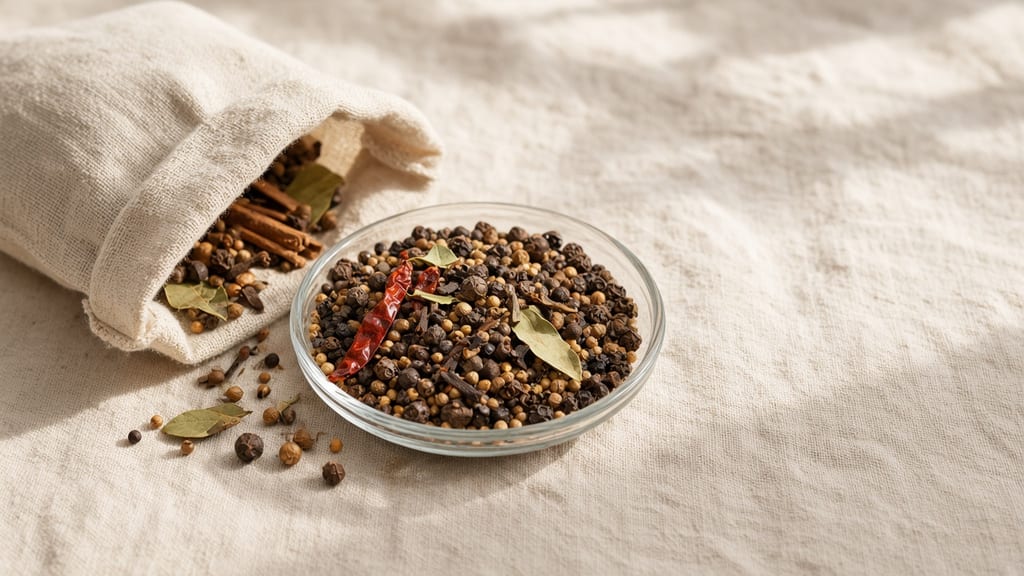
Pickling spice is a mix of whole dried spices that is boiled in the vinegar or brine of a pickle and then taken out. It is sold ready mixed, and it is easy to blend at home from spices most kitchens already keep.
There is no fixed formula. A University of California extension blend that makes about half a cup is typical of the modern style: one cinnamon stick broken up, six small dried bay leaves torn into pieces, 2 tbsp mustard seed, 2 tbsp peppercorns, 1 tbsp coriander seed, 1 tsp cardamom seed, 2 tsp whole allspice and 1 tsp whole cloves. The same leaflet suggests adding dill seed, ground ginger, nutmeg, fennel seed, celery seed or chilli flakes for traditional pickles, and juniper, thyme or ground mace for savoury pickles and cures.
Every one of those spices is an ordinary kitchen spice. The US Food and Drug Administration lists allspice, bay, cardamom, celery seed, cinnamon, coriander, fennel, ginger, mace, mustard, nutmeg, black pepper and turmeric among spices generally recognised as safe.
Sources for this section
How tested recipes use it
Tested recipes give the spice by volume and tell you to tie it up. The NCHFP Quick fresh-pack dill pickle batch, about 8 lb (3.6 kg) of cucumbers, boils 2 tbsp of whole mixed pickling spice in its brine in a clean white cloth. Colorado State University's pickle relish ties 4 tsp each of mustard seed, turmeric, whole allspice and whole cloves in a spice bag, and its sweet green tomato pickle does the same with 1 tbsp each of mustard seed, allspice, celery seed and cloves.
The bag matters. Spices left in the jars are one of the causes NCHFP gives for dark pickles. Put them loosely in a cheesecloth bag so the liquid can circulate, and lift the bag out before you fill the jars.
Use the amount the recipe gives and boil it for the time it gives. Spices cooked too long in the vinegar, or too many of them, make the pickles bitter.
Sources for this section
Whole, fresh and dry
Use whole spices. Ground spices darken pickles and cloud the liquid. Some home blends add ground ginger; leave it out of a pickle where you want the brine clear.
Use fresh spices. A jar bought for last summer's pickles will have lost much of its flavour. Mouldy spices are also on NCHFP's list of causes of soft pickles, so throw out any spice that has gone mouldy.
Store a home blend airtight, somewhere cool and dark, and stir or shake the jar before you measure so that every spoonful holds some of each spice.
Sources for this section
Pickling spices in Georgian and Victorian England
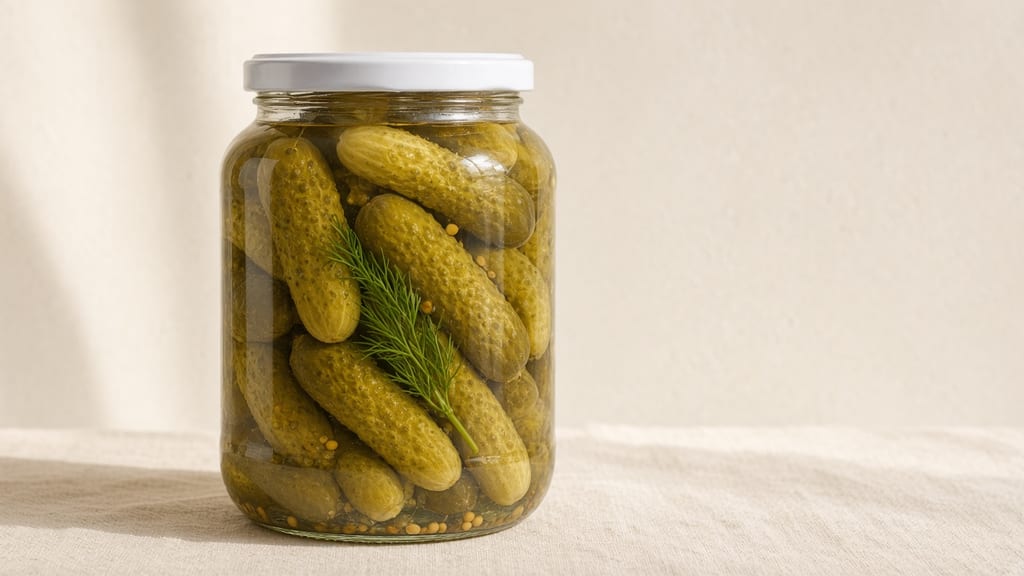
Georgian cookbooks wrote the spices out in full, by weight or by count, for each pickle. Hannah Glasse's gherkins of 1758 took, for every gallon of pickle, one nutmeg cut in quarters, a quarter of an ounce each of cloves, mace and whole pepper, and "a large Race of Ginger sliced", boiled with the vinegar. She also put "a little Dill and Fennel, a very small Quantity" into the jar with the cucumbers.
Elizabeth Raffald's pickled cucumbers took, for every two quarts of white wine vinegar, half an ounce of mace, ten or twelve cloves, an ounce of sliced ginger, an ounce of black pepper and a handful of salt, boiled together for five minutes. Eliza Acton's gherkin pickle of 1845 used black peppercorns, an ounce and a half of sliced or bruised ginger and two small blades of mace to the quart, with bay leaves laid over the gherkins. Isabella Beeton's of 1861 used, to the quart, an ounce of bruised ginger, half an ounce of black pepper, a quarter of an ounce of whole allspice, four cloves, two blades of mace and a little horseradish, boiled for ten minutes.
Set beside a modern blend, the difference is plain. Ginger, mace, pepper and cloves carry all four of these English pickles, and nutmeg appears in Glasse. Mustard seed, coriander and cinnamon, the backbone of a modern mix, do not appear in any of these four gherkin recipes, and allspice turns up only in Beeton. Bay comes in with Acton.
Sources for this section
Making a blend for vinegar gherkins
The University of California leaflet treats its own quantities as suggestions to adjust to taste. For a pickle with an English Georgian flavour, build the 2 tbsp the NCHFP fresh-pack batch calls for from the spices the old books used: blade mace, black peppercorns, a few cloves, and a little dried ginger root broken into pieces, with a bay leaf if you like Acton's version.
Keep the total to the recipe's measure. NCHFP's rule for tested pickles is not to alter the vinegar, food or water proportions, and to use only recipes with tested proportions of ingredients.
Sources for this section
Allergens
The blends described here all contain mustard seed, and some add celery seed. Mustard and celery are both on the UK and EU list of allergens that must be declared on food labels. Check the label of a bought blend, and leave both seeds out of a home blend for anyone who reacts to them.
Sources for this section
Places
England
Historical attestation · Country evidenceEnglish cookbooks give spice mixtures for gherkin and cucumber pickles; the row does not claim the mixture began in England.
United States
Documented use · Country evidenceUS extension recipes call for whole mixed pickling spice or a named blend in a spice bag.