
Vegetables
Accum's poisoned pickles: copper, cookbooks and Death in the Pot
For a century English gherkins were greened by boiling their vinegar in copper. Cookbooks taught it, Accum named it in 1820, Hassall found copper in every shop pickle he tested, and the firm that stopped sold brown pickles and grew.
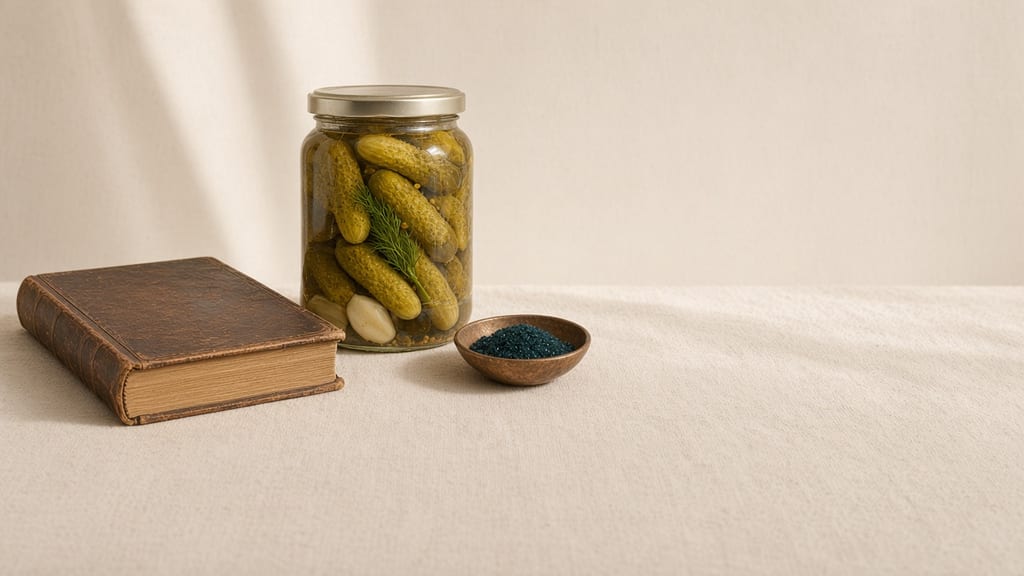
Editorial still life: pickle jar, plain antique book and copper acetate crystals. Modern reconstruction of historical adulteration materials, not a cooking method.
Gherkins in a brass pan
In 1845 Eliza Acton published a gherkin pickle that came out of the jar a muted colour, and she was pleased with it. Her method in Modern Cookery was plain. Boiling brine, six ounces of salt to the quart of water, went over the gherkins in a stone jar for a day. Then they were wiped, laid under a dozen bay leaves and covered with boiling vinegar spiced with ginger, black peppercorns and mace. Two days later the vinegar was boiled again and the gherkins simmered in it for two or three minutes. She called the result "very crisp, and excellent in flavour". The colour, she wrote, was "sufficiently good to satisfy the prudent housekeeper, to whom the brilliant and poisonous green produced by boiling the vinegar in a brass skillet (a process constantly recommended in books of cookery) is anything but attractive."
Then she tested the other way, "to satisfy ourselves of the effect produced by the action of the acid on the metal". "We had a few gherkins thrown into some vinegar which was boiling in a brass pan, and nothing could be more beautiful than the colour which they almost immediately exhibited." Her next sentence turned from her own kitchen to the shops: "We fear this dangerous method is too often resorted to in preparing pickles for sale."
She had reason to fear it. Six years later a London physician started buying pickles from grocers, oilmen and the best-known pickle makers in the city. He burned the green vegetables to ash and tested the ash for copper. Every jar he tested had it.
The colour that sold
For about a century, English cooks and English pickle makers knew how to make a gherkin green. The cookery books told them, the trade did it on a large scale, and buyers expected the result. A green pickle looked fresh. A yellow or olive one looked old.
The record runs through a short line of printed witnesses. Hannah Glasse's cookery book told readers to boil the pickling vinegar in a bell-metal or copper pot. Fredrick Accum, a German-born chemist working in London, printed that instruction in 1820 as an example of a recipe that ought to be suppressed. Arthur Hill Hassall measured copper in shop pickles for The Lancet in the early 1850s. In 1855 a partner in Crosse & Blackwell told a parliamentary committee exactly how his firm had greened its pickles for thirty-five years, and why it had stopped.
The chemistry behind all of it was simple enough to show on a knife blade, and the remedy was simpler still: keep copper away from vinegar and accept the colour that comes out.
Why a cucumber turns olive in vinegar
The green of a fresh cucumber skin is chlorophyll. At the centre of each chlorophyll molecule sits a magnesium ion. Acid and heat push that magnesium out and put hydrogen in its place, which turns chlorophyll into pheophytin. Pheophytin is olive to brownish. Any green vegetable kept long enough in vinegar or a souring brine goes the same way.
The old cookbooks describe this change without naming it. Elizabeth Raffald told her readers to keep small cucumbers in strong salt and water "for nine or ten days, or till they are quite yellow", stirring them twice a day "or they will scum over and grow soft". In another recipe Glasse warned that the cucumbers "will look quite yellow, and stink, but you must not mind that." Both books then tried to bring the green back with heat and vine leaves.
Copper changes the result. When copper ions are present, they can take the place the magnesium left. The copper-chlorophyll complex that forms is bright green and holds that colour through acid and cooking. Food chemists in 2011 traced the colour of unusually bright green olives to copper-chlorophyll complexes. A 2023 review of the same chemistry notes that some of these complexes are identical to the copper-chlorophyll colourants that are forbidden in table olives.
Hassall gave the rule in plain terms in 1876. Pickles a housekeeper made at home were "usually of a yellow colour rather than green", while those in shop windows often showed "a vivid bluish-green colour, more intense than that of the fresh vegetables". His conclusion: "Whenever these articles are of a decided green, they will almost always be found to contain copper; but when they are yellowish or brownish-green, copper is never present."
Bell-metal or a copper pot
Glasse's recipe "To pickle Gerkins" appears in the 1758 edition of The Art of Cookery Made Plain and Easy. The gherkins went into a brine with "as much Salt as will make it bear an Egg", then into a stone jar covered with a woollen cloth and a pewter dish. The pickle was three quarts of vinegar to one of spring water, with nutmeg, cloves, mace, pepper and ginger. The instruction that matters comes next: "boil all these together in a Bell-metal or Copper Pot, pour it boiling hot on your Cucumbers". The cook repeated the boiling over the following days.
Bell-metal is a bronze, mostly copper with tin. Each boiling in it, with acid and salt in the pot, took up more metal. Accum quoted the same instruction in 1820 and credited it to a different book, The Ladies' Library. The wording passed from book to book, and so did the method.
A second recipe Accum quoted, from a book called Modern Cookery, or the English Housewife, made the copper an ingredient. "Take a bit of verdigris, the bigness of a hazel-nut, finely powdered; half-a-pint of distilled vinegar, and a bit of alum powder, with a little bay salt. Put all in a bottle, shake it, and let it stand till clear. Put a small tea-spoonful into codlings, or whatever you wish to green." Verdigris is copper acetate, the green crust that forms on copper exposed to acid. This recipe made it on purpose and kept it in a bottle.
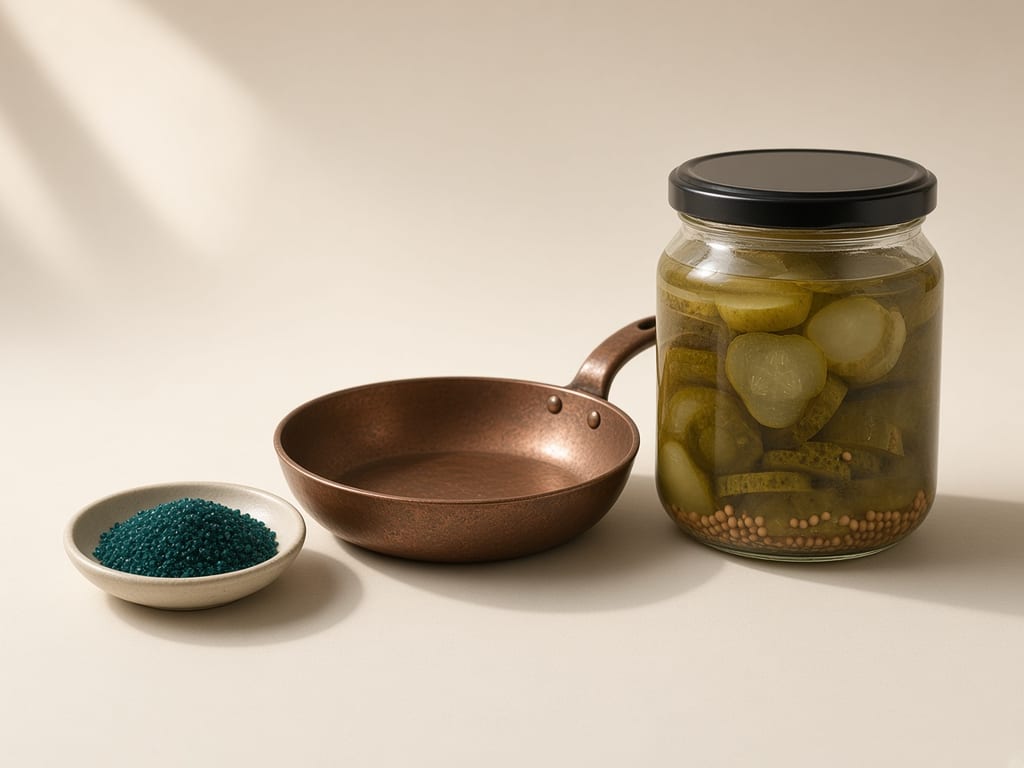
These were household books, written for the women who ran kitchens and stillrooms. The green they taught was the green the trade sold.
What Raffald wrote, and what changed
Raffald's The Experienced English House-keeper, first printed in Manchester in 1769, opens its pickling chapter with a warning. "Nothing is more common than to green pickles in a brass pan for the sake of having them a good green, when, at the same time they green as well by heating liquor, and keeping them in a proper heat upon the hearth without the help of brass, or verdigris of any kind, for it is poison to a great degree." She told readers to avoid brass or copper "that is not well tinned" and to follow her recipes strictly.
Accum still put her on his list. He quoted "Mrs. E. Raffald" as directing cooks "to render pickles green, boil them with halfpence, or allow them to stand for twenty-four hours in copper or brass pans", citing pages 352 and 354 of The English Housekeeper. No such line appears in the 1807 London edition or the 1825 Derby edition of her book. In both, the only halfpenny in the pickling and cookery chapters is "the crumb of a halfpenny loaf". Hassall reprinted Accum's line in 1855 and added that the book had run through eighteen editions.
Her own recipes were not as clean as her warning, though. In "To pickle Mangoes", large cucumbers were seeded, soaked in strong brine until "very yellow", and then put "into a Brass Pan, with a large Quantity of Vine Leaves both under and over them" with powdered roach alum, over a very slow fire for four or five hours "till they are a pretty green". That is how the recipe reads in 1769 and in the 1807 London edition.
The 1825 edition, printed in Derby by Henry Mozley as "a new edition" with receipts added from other authors, gives the same recipe word for word except for one change: the cucumbers go "into a pan". The brass is gone. The same edition still preserves codlings in "a clean brass pan", so the edit touched one recipe. The book does not say who made it or why. Five years earlier Accum had asked for exactly this kind of edit, writing that he hoped the worst recipes "will be suppressed in future editions of the works".
Death in the pot
Accum's A Treatise on Adulterations of Food, and Culinary Poisons appeared in London in 1820, with a skull on the title page and the words "There is Death in the Pot" from the second book of Kings. Its chapter on pickles is two pages long. It opens with the trade: pickles "whose sale frequently depends greatly upon a fine lively green colour; and the consumption of which, by sea-faring people in particular, is prodigious, are sometimes intentionally coloured by means of copper." Gherkins, French beans, samphire and green capsicum pods, he wrote, were met with "impregnated with this metal" oftener than people expected.
He gave one case in detail, taken from Dr Percival's report in Medical Transactions: "a young lady who amused herself, while her hair was dressing, with eating samphire pickles impregnated with copper." She had stomach pain, then two days of constant vomiting from the fifth day, then a swollen stomach, "and, in nine days after eating the pickles, death relieved her from her suffering."
His test needed one chemical. Mince the pickles, cover them with liquid ammonia diluted with an equal amount of water in a stoppered phial, and watch. "If the pickles contain the minutest quantity of copper, the ammonia assumes a blue colour." Copper ions and ammonia form a deep blue compound, the same reaction a school chemistry class sees today.
Elsewhere in the book Accum dealt with the pans themselves. He quoted Mr Thiery, author of a thesis on the noxious quality of copper: "the oilman boils his pickles in copper or brass vessels, and verdigris is plentifully formed." He recorded that three men died and thirty-three fell ill on the frigate Cyclops after food was prepared in an unclean copper vessel, and that the Swedish senate had banned copper vessels from its fleet and armies in 1753. He quoted the cookery writer William Kitchiner on keeping copper pans tinned: "the cook may be sure her employer had rather pay the tin-man's bill than the doctor's." His own advice went further: "banish copper utensils from the kitchen altogether."
He also warned about the jar. "Pickles should in no case be deposited in cream-coloured glazed earthenware," because the glaze contained lead and vinegar dissolved it. Commercial pickle makers came to the same answer: stoneware or glass, which is why a whole pottery trade grew up making one-pound and two-pound pickle jars.
The tavern keeper's walnut catsup
The most vivid copper story in the Treatise came from a tavern keeper, Mr Lewis, first printed in the Literary Chronicle. He bought pickles and sauces in bulk for his tavern and for export, and became suspicious of a walnut catsup that looked excellent. He asked how it was made and learned that it was boiled in a copper.
Lewis then tested it himself. He reduced a quart of the catsup to ash, dissolved the ash in aqua fortis, which is nitric acid, and got "a bright grass-green solution". When he dipped the blade of a knife into it, the blade "became instantly covered with a bright coat of copper". The maker told him he had prepared it the same way "for upwards of twenty years".
This is the test Hassall later made public: iron placed in a copper solution comes out with a pink-red skin of copper metal. It needs no laboratory. Lewis used a kitchen knife.
The chemist who left
Accum did not stay to see what came of his book. He read in the library of the Royal Institution, where he had once worked, and in November 1820 its assistant librarian, Mr Sturt, reported that books Accum used had leaves missing. Holes were bored in a cupboard next to the reading room. On the evening of 20 December Sturt watched Accum for nearly two hours and saw him tear leaves from a volume of Nicholson's Journal. Officers searched his house in Compton Street and found pages. The magistrate discharged him, observing that the leaves, once separated, "were only waste paper". The Institution brought a second indictment, for paper valued at fourteen pence. Bail was set at £200 and the trial at 5 April 1821. By then Accum had left England.
He became a professor in Berlin in 1822 and died there on 28 June 1838. In Britain, Noel Coley wrote, "his analytical work on food adulteration was forgotten and during the next 30 years unsafe culinary practices continued to thrive." Acton's brass pan of 1845 sits inside those thirty years.
Twenty jars from London shops
The man who took up the question was Arthur Hill Hassall, a London physician. From January 1851 to the end of 1854 he bought some 2,500 samples of food and drink for The Lancet's Analytical Sanitary Commission, a scheme devised by the journal's editor, Thomas Wakley. He recorded every seller's name, address and the date of purchase, and published them with the results. In 1855 he reprinted the reports under his own name as Food and its Adulterations.
His pickle report began by reprinting Accum's chapter in full, then set out to see "how far the statements made apply to their present condition." He bought twenty samples from pickle makers and other traders in London. For each one he sliced about three ounces of the green vegetables with a glass knife, so that no metal touched them, burned them to ash, dissolved the ash in nitric acid and added ammonia. Blue meant copper. A second test confirmed each result.
Gherkins from Crosse & Blackwell, bought at 11 King Street, Soho, contained "rather much copper". Beside this result Hassall printed a passage from the supplement to Ure's Dictionary of Arts, praising the firm's Soho Square works as arranged "on the principles most conducive to economy, cleanliness, and salubrity". Pickles from J. Oulds, an oilman of Henry Street, Hampstead Road, turned the test solution deep blue and threw down a metallic crust at once. Vinegar from Lazenby's pickles, another well-known name, failed his iron test as clearly.
The summary was blunt. Copper turned up in all sixteen pickles he tested for it: two with small amounts, eight with "rather much", one with a considerable amount, three with a very considerable amount, one in a "highly deleterious" amount and two at levels he called poisonous. The worst were the all-green ones, "girkins and beans". He admitted he had expected otherwise. "We felt convinced that so poisonous a metal as copper was now rarely, if ever, employed for the mere purpose of heightening and preserving the colour of green pickles; we are therefore both surprised and grieved at the really fearful character of the results."
The vinegar was poor as well. Its acetic acid ran from 1.48 to 2.91 per cent, when, in Hassall's words, good vinegar "ought to contain from four to five per cent". Nineteen of the twenty samples also contained sulphuric acid, the cheap way to make a weak vinegar taste sharp. Accum had warned about that in 1820 and given a test for it.
A test anyone could run
Hassall wanted shoppers to check for themselves. Put half an ounce of the vinegar from the jar in a glass with "a piece of thick iron wire, having a smooth and polished surface", and leave it a few hours. "This test is of such ready applicability that we recommend the public to make use of it." Any copper would plate out on the iron. He ran it on the worst vinegars and found a coating within three or four hours, and on the two cleanest he still got a crust after a few hours.
He gave a quicker version too: three or four drops of the vinegar on a knife blade, one drop of sulphuric acid, and the underside of the blade warmed over a candle. As the vinegar dried, copper would show on the steel.
He also pointed out that none of it was needed. "The employment of copper is wholly unnecessary, as the colour of green vegetables may be very well preserved by other means, as by the use of pure vinegar, and the addition of a proper quantity of salt." What pure vinegar and salt preserve is the olive green of a cucumber that has met acid. Hassall was asking buyers to accept that colour.
The first time yellow, the next time green
In July 1855 a select committee of the House of Commons took evidence on food adulteration. One witness was Thomas Blackwell, of Crosse & Blackwell. His account of how the firm had made green pickles is the clearest description of the method on record.
"The practice with respect to pickles for the last thirty-five years has been to use copper vessels in boiling the vinegar." The vegetables were scalded and left in the vinegar for two or three days, "so that the vinegar takes up a portion of the copper", and the vinegar was boiled again and poured back, several times over. "The first time that was done it turned yellow, the next time green; and if you wished it to be of an extra good colour you had to repeat the process till you got that bright colour. The object of the process was to take up a sufficient quantity of copper to colour the vegetables."
Blackwell's yellow-then-green fits the chemistry. The first boiling drove the magnesium out of the chlorophyll, and the later boilings supplied the copper that took its place.
After the Lancet reports, he said, the firm "abandoned the practice as far as possible". It had iron vessels made with a glass enamel lining and tried a silver one, but "the acid and the salt together turned everything black". Where it still had to use large copper vessels, it boiled the vinegar in them only once, "and therefore the pickles are of a brown colour". Customers abroad complained about the change at first. He told the committee that they were now satisfied.
Hassall appeared before the same committee on 18 July 1855 with bottled fruits and vegetables, some put up without copper and some greened with it. The members could see the difference "by the eye alone": those without copper were "of a pale yellowish green colour, while those with copper are of a deep blue colour." The copper-free bottles came from Crosse & Blackwell. Before the Lancet reports, he said, colouring green pickles with copper "prevailed almost universally". The firm had now entirely given it up, and although the change "occasioned inconvenience at first", it had "begun to reap the benefit of it in increased custom".
The business grew. The firm bought enamelled iron pans holding twelve to fifteen gallons, then 325-gallon vessels heated by steam through a platinum-coated coil. By 1864 it was using 140,000 gallons of vinegar a year and making 200,000 gallons of pickles, about 1.6 million bottles.
What the law did
Parliament passed its first general food adulteration law on 6 August 1860, An Act for preventing the Adulteration of Articles of Food or Drink. Many of Hassall's recommendations, including those on food inspectors and the treatment of convicted adulterators, were left out, and the Act had little effect. A further Act followed in 1872, and the Sale of Food and Drugs Act of 1875 gave the law real force.
Copper in pickles still had defenders. In the 1870s a later select committee asked an analyst, Dr McAdam, whether colouring pickles with copper should count as adulteration only if done with fraudulent intent. He replied that adding sulphate of copper on purpose would be adulteration in any quantity, "but as the pickles are commonly prepared in a copper pan, the acetic acid or vinegar employed in compounding them will take up a slight trace of copper from the pan, and I do not think that that, if present in pickles, ought to be considered an adulteration."
Hassall printed the answer in 1876 with a reply. "But, most learned Doctor, the acetic acid will not cease to act on the copper pan when it has taken up 'a slight trace' of copper only, but will continue to act upon the metal as long as the two are in contact. Besides, there is no necessity whatever for the employment of copper vessels in the preparation of pickles." McAdam's phrase "commonly prepared in a copper pan" shows that the pans were still in use twenty years after the Lancet reports.
Copper and green food now
Modern food codes settle the pan question directly. The US Food Code bars copper and copper alloys such as brass from contact with foods with a pH below 6, and gives vinegar as its example. Raffald's "not well tinned" and Kitchiner's tin-man's bill were the same rule in older words.
Deliberate greening has not disappeared. In Operation Opson V, the INTERPOL-Europol food fraud operation run over the winter of 2015 to 2016, Italian officers seized more than 85 tonnes of olives "painted" with copper sulphate solutions to brighten their colour. It is the same chemistry the London pickle makers used, for the same reason: buyers trust a green that the fruit cannot keep on its own.
At home the protection is plain: a pan that is not copper, brass, bronze or zinc, a vinegar of stated strength, and a glass jar. US home-preservation guidance says that pickles made with brass, copper or zinc utensils should not be used at all. Tested modern recipes call for vinegar of 5 per cent acidity and tell cooks not to change the proportions. That is the top of Hassall's four to five per cent, and roughly double what he found in London's shop pickles.
The colour of a safe jar
A cucumber pickled in vinegar loses its fresh green within days. It turns olive, sometimes with yellow at the ends. Nothing has gone wrong. The chlorophyll has met acid, and the colour Hassall called yellowish or brownish green is the colour of a jar with no copper in it.
Household books had already moved. Isabella Beeton's pickled gherkins of 1861 sat in salt and water for three or four days, then went into a stone jar under vinegar boiled for ten minutes with ginger, black pepper, allspice, cloves, mace and horseradish. The jar was covered with vine leaves and a plate and left near the fire all night, the vinegar was boiled up and poured over again the next day, and the jar was tied down with bladder. "In a month or two, they will be fit for use." No metal pan is named, and none is needed.
Fermented pickles follow the same rule. As a salt-brine ferment cures, its acidity rises and its colour changes. A cucumber taken out early is greener than one left for the full three weeks, and both are made without any metal at all.
Acton's gherkins went back into their stone jar under a plate, and when the vinegar was cold she tied a skin or two folds of thick brown paper over the top. She had seen how beautiful a gherkin looked after a minute in a brass pan. She chose the colour of the prudent housekeeper instead, and the shop analyses of the next ten years proved her right.
Related
Pairs with
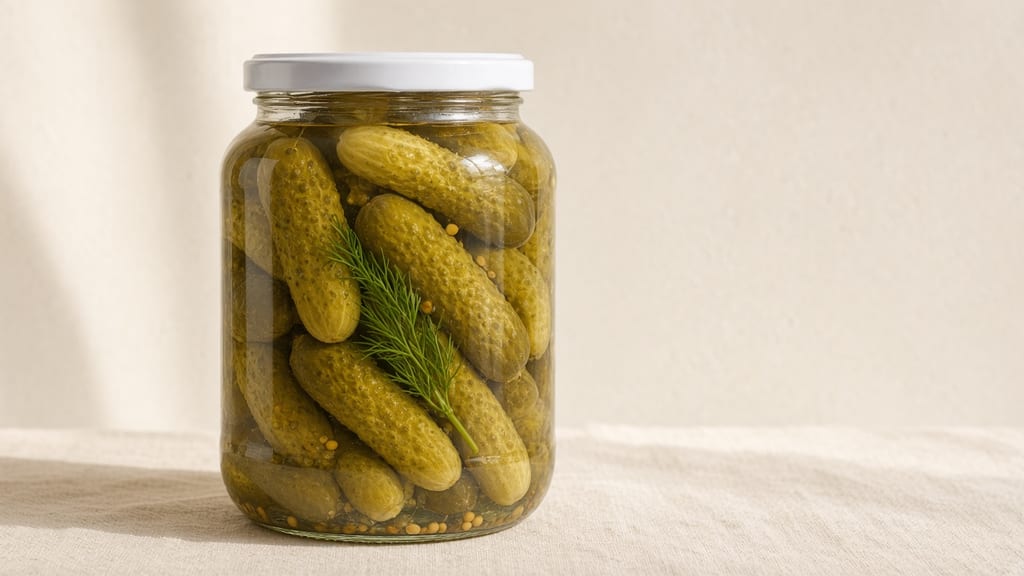
Georgian England vinegar gherkins
Small cucumbers under hot spiced vinegar, the pickle Georgian cooks greened in copper pans. This version uses the tested NCHFP fresh-pack dill method, glass and stainless steel, and accepts the olive colour a safe jar turns.
Read more
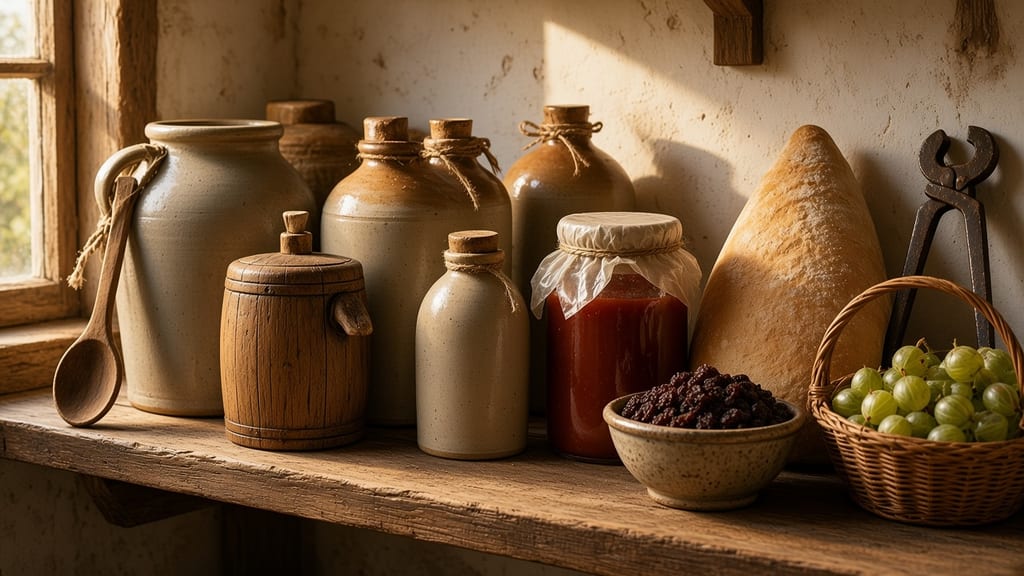
Mrs Beeton's still room
What Isabella Beeton's 1861 Household Management fermented, brewed and pickled, from nine-gallon casks of elder wine to gooseberry vinegar, and how much of it she took from Eliza Acton and older books.
Discussed in this article
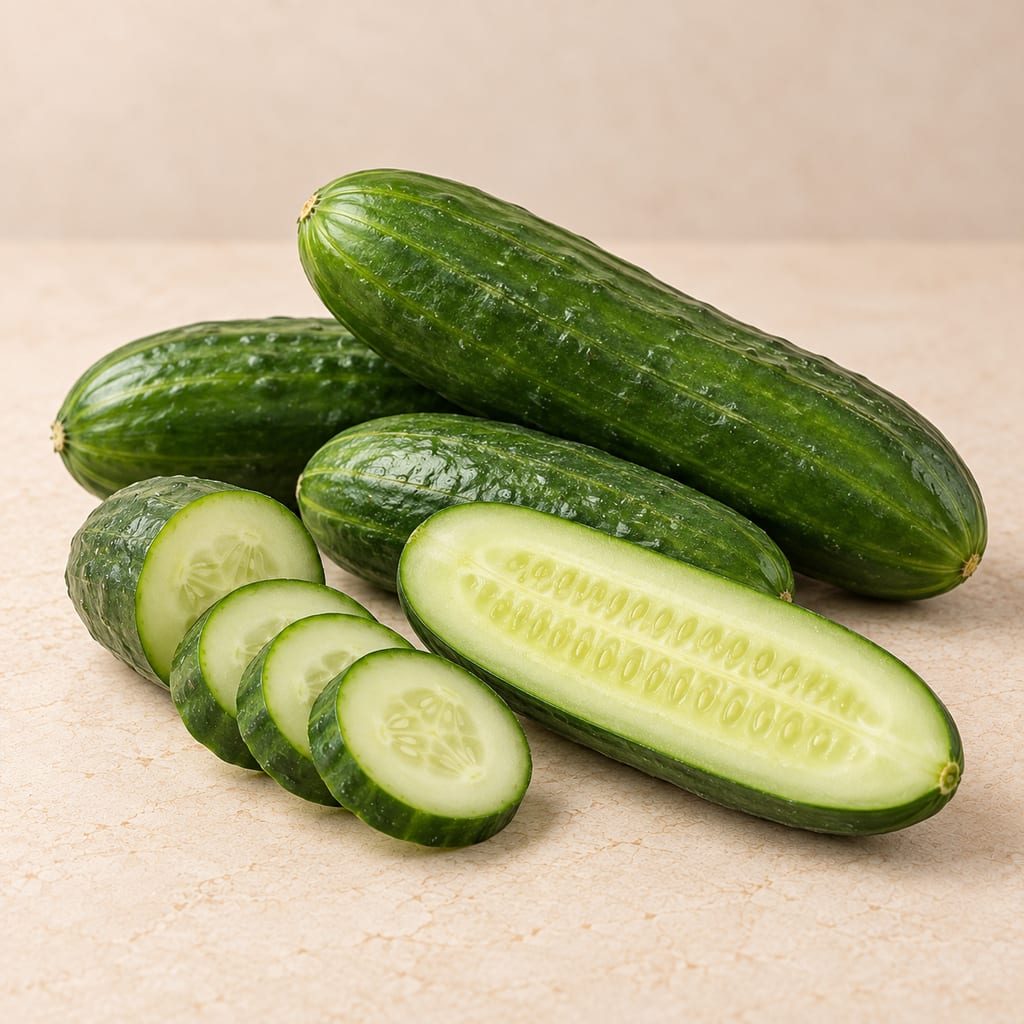
Cucumber
Cucumber is the watery fruit of Cucumis sativus, domesticated in India, and the classic raw material of brine pickles from New York dills to Nepali khalpi and Korean oi-sobagi.
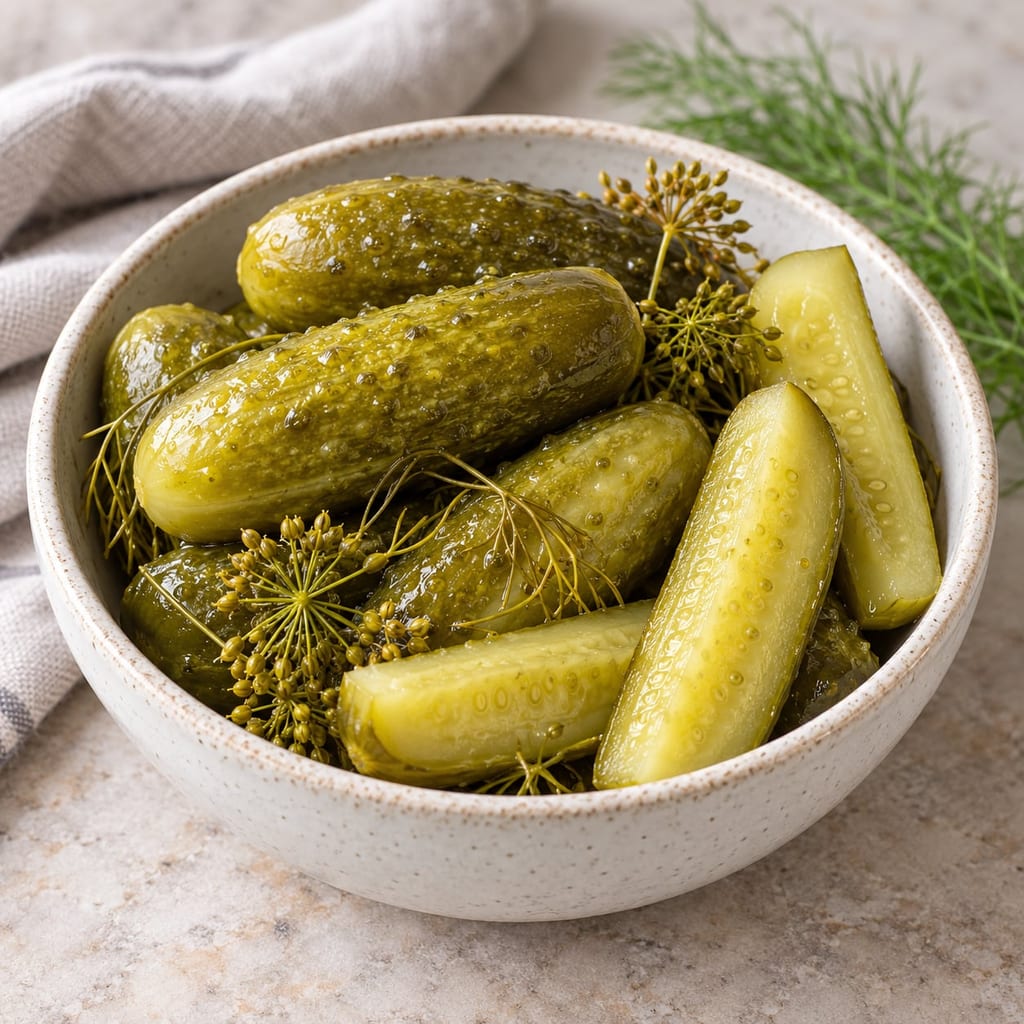
Fermented dill pickles
Trimmed cucumbers layered with dill and covered with a salt brine containing 5% vinegar, weighted and fermented three to six weeks.
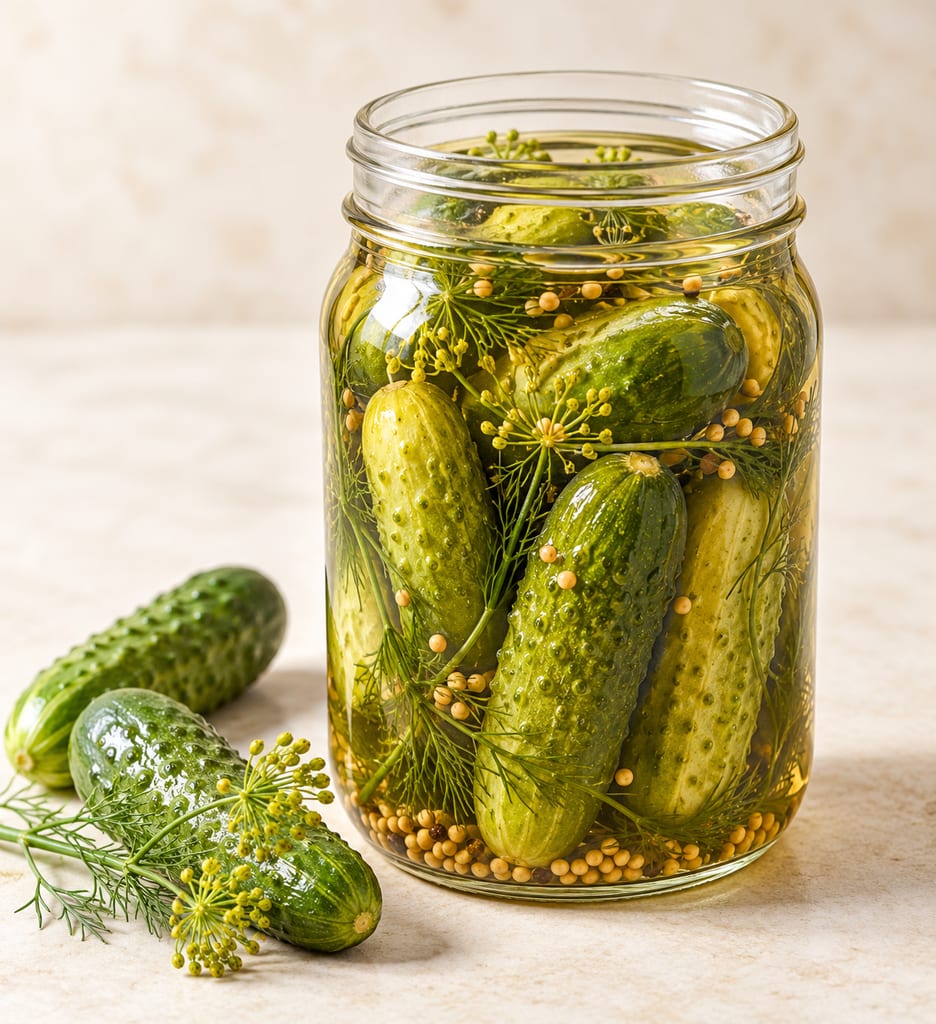
Quick fresh-pack dill pickles
Whole small cucumbers are soaked in a measured salt solution, packed with dill and mustard seed, then covered with a boiling 5% vinegar brine and processed in a boiling-water canner.
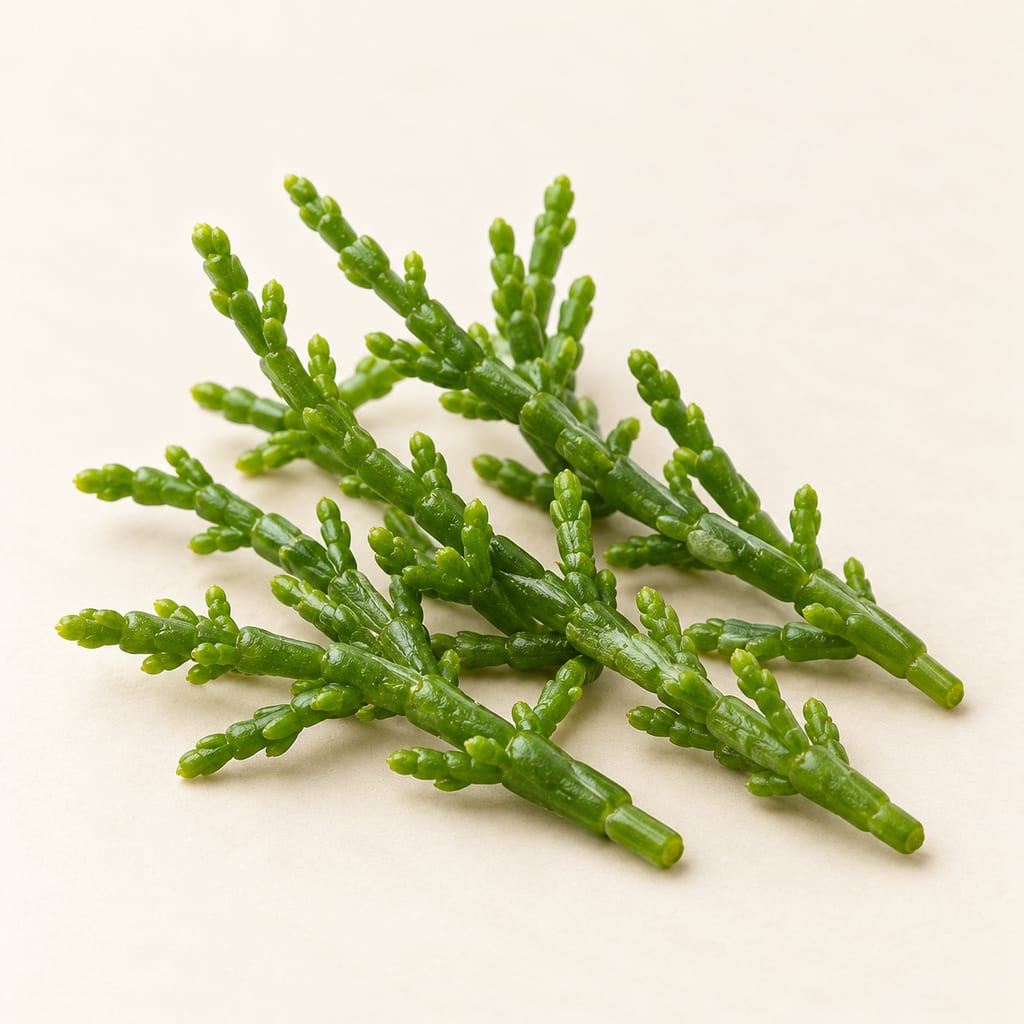
Samphire
Kew accepts Salicornia europaea, while older glasswort names can cover broader groups. French sources report food uses; one study tested S. europaea var. aprica under controlled salt treatments.
Community
No community contributions have been published for this entry yet.
Share what you made
Sign in to contribute. Published comments and photos are free to read.
Sources
Fredrick Accum; Philadelphia: Abraham Small, 1820 (Project Gutenberg HTML)
A Treatise on Adulterations of Food, and Culinary PoisonsCited in: The colour that sold; Bell-metal or a copper pot; What Raffald wrote, and what changed; Death in the pot; The tavern keeper's walnut catsup; Twenty jars from London shops
Fredrick Accum; Internet Archive
A Treatise on Adulterations of Food, and Culinary Poisons (scan)Cited in: Death in the pot
Coultate T. & Blackburn R.S., Coloration Technology 134(3), 2018
Food colorants: their past, present and futureCited in: Why a cucumber turns olive in vinegar
Elizabeth Raffald; Manchester, 1769 (Internet Archive)
The Experienced English House-keeperCited in: What Raffald wrote, and what changed
National Center for Home Food Preservation, University of Georgia
Quick Fresh-Pack Dill PicklesCited in: Copper and green food now
National Center for Home Food Preservation, University of Georgia
General Information on PicklingCited in: Copper and green food now; The colour of a safe jar
Hannah Glasse; London, 1758 edition (Internet Archive)
The Art of Cookery Made Plain and EasyCited in: The colour that sold; Why a cucumber turns olive in vinegar; Bell-metal or a copper pot
Elizabeth Raffald; London, 1807 edition (Internet Archive / Wellcome Collection)
The Experienced English HousekeeperCited in: What Raffald wrote, and what changed
Elizabeth Raffald; Derby: Henry Mozley, 1825 (Internet Archive / Wellcome Collection)
The Experienced English Housekeeper, a new editionCited in: Why a cucumber turns olive in vinegar; What Raffald wrote, and what changed
Eliza Acton; London: Longman, 1845 (Internet Archive)
Modern Cookery, in All Its BranchesCited in: Gherkins in a brass pan; The colour of a safe jar
Isabella Beeton; London, 1861 (Project Gutenberg)
The Book of Household ManagementCited in: The colour of a safe jar
Arthur Hill Hassall; London: Longman, 1855 (Internet Archive)
Food and its Adulterations: comprising the reports of the Analytical Sanitary Commission of The LancetCited in: Gherkins in a brass pan; The colour that sold; What Raffald wrote, and what changed; The tavern keeper's walnut catsup; Twenty jars from London shops; A test anyone could run; Copper and green food now
Arthur Hill Hassall; London: Longmans, 1876 (Internet Archive)
Food: its Adulterations, and the Methods for their DetectionCited in: Why a cucumber turns olive in vinegar; What the law did; The colour of a safe jar
London: David Bryce, 1855 (Internet Archive)
Adulteration of Food, Drink, and Drugs: the evidence taken before the parliamentary committeeCited in: The colour that sold; The first time yellow, the next time green
legislation.gov.uk (The National Archives)
An Act for preventing the Adulteration of Articles of Food or Drink, 1860 (23 & 24 Vict. c. 84)Cited in: What the law did
Peter J. Atkins, in Oddy & Drouard (eds), The Food Industries of Europe, Ashgate, 2013 (author PDF)
Vinegar and Sugar: the Early History of Factory-made Jams, Pickles and Sauces in BritainCited in: Death in the pot; The first time yellow, the next time green
Noel G. Coley, Education in Chemistry, Royal Society of Chemistry, 2005
The fight against food adulterationCited in: Gherkins in a brass pan; The chemist who left; Twenty jars from London shops; What the law did
Klaus Roth, ChemistryViews, 2024
Death in a Pot: From England's Famous Chemist to Exiled and Forgotten, Part 3Cited in: The chemist who left; What the law did
Bulletin for the History of Chemistry 43 (2018)
Fredrick Accum (1769-1838)Cited in: The chemist who left
Aparicio-Ruiz R., Riedl K.M., Schwartz S.J., Journal of Agricultural and Food Chemistry, 2011
Identification and quantification of metallo-chlorophyll complexes in bright green table olivesCited in: Why a cucumber turns olive in vinegar; Copper and green food now
Ambra R., Pastore G., Natella F., Molecules 28(18):6673, 2023
The Fate of Chlorophylls in Alkali-Treated Green Table Olives: A ReviewCited in: Why a cucumber turns olive in vinegar; The first time yellow, the next time green; The colour of a safe jar
INTERPOL, 30 March 2016
Largest-ever seizures of fake food and drink in INTERPOL-Europol operationCited in: Copper and green food now
National Center for Home Food Preservation, University of Georgia
Causes and Possible Solutions for Problems with Pickled FoodsCited in: Copper and green food now
Gaps
- The Ladies' Library, Modern Cookery, or the English Housewife and Percival's Medical Transactions case were not opened in their own editions; they are quoted as Accum printed them.
- The 1855 committee evidence was read in an OCR scan with garbled passages; only legible lines are quoted.
- The date and name of the 1870s select committee at which Dr McAdam spoke are not confirmed; Hassall 1876 is the only source used.
- The 1825 Raffald edit from brass pan to pan is shown by comparing three editions; the editions between 1807 and 1825 were not checked, so the date and author of the change are unknown.
- The date of Hassall's Lancet pickle report is given as early 1850s from Atkins and Blackwell's testimony, not from the Lancet issue itself.
Updated 2026-11-09