
Beverages
Mrs Beeton's still room
What Isabella Beeton's 1861 Household Management fermented, brewed and pickled, from nine-gallon casks of elder wine to gooseberry vinegar, and how much of it she took from Eliza Acton and older books.
A wooden spoon tied to the jar
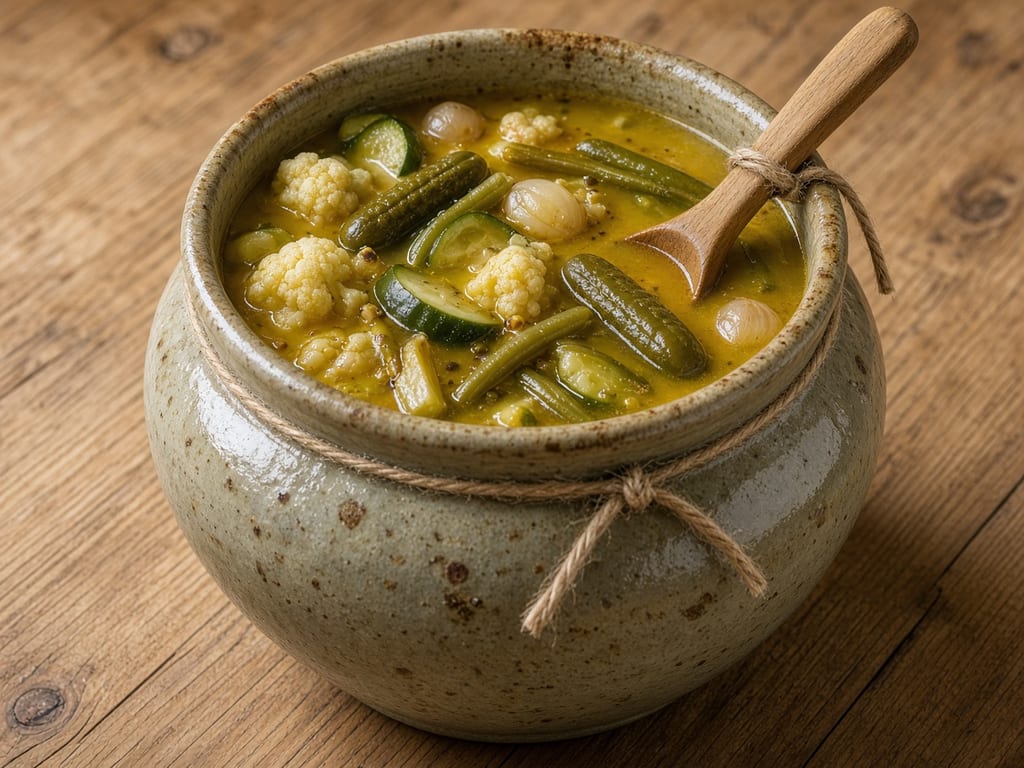
Recipe 471 in Isabella Beeton's Book of Household Management is a mixed pickle, marked "Very good." It starts in May or June with a large jar of vinegar and a paste of bruised ginger, mustard, salt, mustard-seed, turmeric, black pepper and cayenne. The liquor is kept in a warm place and stirred every morning for a month with a wooden spoon. Then the vegetables go in raw, one kind at a time as each comes into season: cauliflower broken into small bunches, onions, celery, sliced cucumbers, gherkins, French beans, nasturtiums and capsicums. Each is gathered on a dry day and only wiped with a cloth before it goes into the jar.
Beeton wants the spoon left where it is. "Whilst the pickle is being made, keep a wooden spoon tied to the jar; and its contents, it may be repeated, must be stirred every morning." When the season ends the pickle is stored away in jars and tied over with bladder. Then it waits. "As none of the ingredients are boiled, this pickle will not be fit to eat till 12 months have elapsed."
The book came out in London in 1861, more than a thousand pages with some two thousand recipes. In its chapters on sauces and pickles, on bread and on drinks is a household that still fermented a good deal of what it ate and drank. It made wine by the nine-gallon cask and vinegar from its own gooseberries. It bottled ginger beer and kept home-made yeast in corked bottles for the week's bread. Very little of this was new in 1861. Beeton took her recipes from earlier books, Eliza Acton's among them, and the elder wine she printed is close to one Acton had published sixteen years before.
A room going out of fashion
Beeton's chapter on the housekeeper opens the subject with a regret. "The still-room was formerly much more in vogue than at present; for in days of 'auld lang syne,' the still was in constant requisition for the supply of sweet-flavoured waters for the purposes of cookery, scents and aromatic substances used in the preparation of the toilet, and cordials in cases of accidents and illness."
Some houses, she allows, still distil, "and in these, the still-room maid has her old duties to perform." Everywhere else the maid has become the housekeeper's helper. She lights the housekeeper's fire, dusts her room, lays the breakfast table and waits at the meals taken in the housekeeper's room. Beeton thinks the job a good school all the same. A still-room maid "may learn a very great deal of useful knowledge from her intimate connection with the housekeeper," and a bright one may soon rise to a better place.
The housekeeper's own evenings are full of small jobs for the next day. Beeton lists the breaking of lump-sugar and the stoning of raisins among them. Both turn up again in the drinks recipes, where sugar is weighed by the dozen pounds and raisins go into wine.
Beer and bought wine belong to someone else. "Brewing, racking, and bottling malt liquors, belong to his office, as well as their distribution," Beeton writes of the butler. He brings the day's drink up from the cellar himself, enters every bottle in the cellar-book, fines wine in the wood and bottles it off. The historian Kathryn Hughes points out that many of Beeton's readers did their own housework and still liked reading about homes run by a dozen servants.
Nine gallons at a time
The home-made wines sit together near the end of the book, in the chapter on beverages. Cowslip wine is recipe 1817, elder wine 1818 and ginger wine 1819. Gooseberry vinegar, effervescing gooseberry wine, lemon wine, malt wine, orange wine and rhubarb wine follow within a dozen numbers.
Their unit is the cask, and the cask usually holds nine gallons. Cowslip wine takes 3 tablespoonfuls of brewer's yeast to every 9 gallons. Elder wine takes 3 or 4. Ginger wine starts with 9 gallons of water and 27 lbs of loaf sugar. Orange wine goes into a dry, sweet 9-gallon cask, and so does gooseberry vinegar.
Each recipe ends with the month to make it. Cowslip wine is for April or May, rhubarb wine for about the middle of May, effervescing gooseberry wine for the end of May or the beginning of June, before the berries ripen. Elder wine is made in September. Lemon wine is best made in January or February, "when lemons are best and cheapest." Ginger wine can be made in March or September, and Beeton notes that "Wine made early in March will be fit to bottle in June."
Each also gives a price. Cowslip wine costs 2s. 9d. a gallon when made at home, orange wine 2s. 6d., ginger wine 2s. Elder wine is the dearest at 3s. 6d.
Orange wine is Beeton's labour-saver. Ninety Seville oranges and 32 lbs of lump sugar go into a cask that has already been put where it will stay, in a cellar or storehouse. The juice is strained in with the sugar. For a week, cold spring water is poured over the peels and pulp each day, left 24 hours and strained into the cask until it is full. "There is no troublesome boiling, and all fermentation takes place in the cask." It is bottled after 8 or 9 months and drunk after a year.
Elder wine is the opposite. A peck of elderberries, picked from the stalks, is steeped in 3 gallons of boiling water for 24 hours, then strained and squeezed. Every gallon of juice gets 3 lbs of sugar, ground ginger, 6 cloves and a pound of Turkey raisins, and the whole is boiled for an hour and skimmed. When it is milk-warm the yeast goes in. A fortnight later comes brandy, ¼ pint to the gallon, and the cask is bunged up for some months. "A bunch of hops suspended to a string from the bung, some persons say, will preserve the wine good for several years."
Beside it Beeton prints a small engraving of elderberries and a note of real affection. Elder wine "is one of the very best of the genuine old English wines; and a cup of it mulled, just previous to retiring to bed on a winter night, is a thing to be 'run for,' as Cobbett would say." She adds a fair warning: "it is not, however, agreeable to every taste." The recipe itself says elder wine "is usually mulled, and served with sippets of toasted bread and a little grated nutmeg."
Her general directions for mulled wine, recipe 1838, are short on quantities and long on clean pans. Spice is boiled in water, the wine and sugar added and the whole brought to the boil. "Any kind of wine may be mulled, but port and claret are those usually selected for the purpose." The vessel must be kept for nothing else, and Beeton recommends small tin warmers, cheap to buy, over saucepans that might taint the wine.
The brewer down the road
Malt wine, recipe 1824, takes its ferment ready-made from a brewery. Five gallons of water and 28 lbs of sugar are boiled for ten minutes and cooled, then mixed with 6 quarts of sweet-wort and 6 quarts of tun. After three days in a pan and three more in a barrel the cask is bunged for two or three months. Raisins, candy and brandy go in after that, and the wine is bottled six months later.
Beeton expects some readers to lack the ingredients. "Those who do not brew, may procure the sweet-wort and tun from any brewer." She defines both. Sweet-wort is "the liquor that leaves the mash of malt before it is boiled with the hops"; tun is "the new beer after the whole of the brewing operation has been completed."
The same link to beer runs through the bread chapter. "Yeast from home-brewed beer is generally preferred to any other," Beeton writes, but it is very bitter and has to be washed and left to settle, more than once if needed. In the next sentence she notes a change: "German yeast is now very much used."
For houses without a brewing, she gives yeast to make at home. Recipe 1716 boils hops in water for 20 minutes and pours the liquor over a pound of bruised malt "prepared as for brewing." When it is about lukewarm, yeast goes in, and after three or four hours of working it is put into small bottles, "ginger-beer bottles are the best for the purpose," corked well and tied down. It keeps for a few weeks, and one bottle raises 18 lbs of flour.
In a side note elsewhere in the book Beeton explains why the drinks recipes wait for the liquor to cool. "The fermenting property of yeast is weakened by boiling for ten minutes, and is entirely destroyed by continuing the boiling. Alcohol poured upon it likewise renders it inert." That is the reason behind every "milk-warm" and "just warm" in the wine and beer recipes, and behind adding the brandy only after the elder wine has fermented.
Fizz in a stone bottle
Ginger beer, recipe 1833, is quick. Lemon peel and juice, bruised ginger, cream of tartar and loaf sugar go into a large earthen pan with 3 gallons of boiling water. When it is just warm, brewer's yeast goes in, "thick and perfectly fresh." The pan stands covered near the fire all night. Next morning the yeast is skimmed off, the clear liquor is bottled at once and the corks are tied down. "In 3 days the ginger beer will be fit for use."
The batch fills 4 dozen ginger-beer bottles and costs 2s., or ½d. a bottle. Beeton allows that the sugar may be too much for some tastes and can be cut, "but the beer will not keep so long good." It is a drink for the summer months.
Effervescing gooseberry wine takes a year and a great deal more judgement. It is made from green gooseberries at the end of May, before they ripen, to keep the taste of ripe fruit out of it. Beeton says the sparkle comes from the timing: "Its briskness depends more upon the time of bottling than upon the unripe state of the fruit."
The bruised fruit is steeped in warm water for 24 hours, pressed hard, sugared and left to ferment in a warm place for a day or two. Then it goes into casks kept topped up with spare must. When the ferment slows, "which may be known by the hissing noise ceasing," the bungs are driven home. In November or December, on a clear fine day, the wine is racked into fresh casks rinsed with brandy. It is bottled "in March or April, or when the gooseberry bushes begin to blossom," so that it will sparkle.
Welsh nectar, recipe 1830, is the quickest of all: lemon peel steeped in 2 gallons of boiling water, then lemon juice, sugar and a pound of chopped raisins, stirred daily for 4 or 5 days, strained through a jelly-bag and bottled "for present use." Beeton adds no yeast and does not say whether it works.
Vinegar from the garden
Gooseberry vinegar, recipe 1820, is marked "An Excellent Recipe." Two pecks of ripe gooseberries are mashed with a mallet in a tub and covered with 6 gallons of nearly milk-warm water. After 24 hours the liquor is strained, 12 lbs of the coarsest brown foots sugar is stirred in, and it goes into a 9-gallon cask. It is stirred from the bottom two or three times a day for three or four days. Then a piece of linen is pasted over the bunghole and the cask is left somewhere warm but out of the sun. "Any corner of a warm kitchen is the best situation for it."
The next spring it is drawn off into stone bottles, and it is ready a year after it was made. Beeton thinks it "greatly superior to much that is sold under the name of the best white wine vinegar," and she has a practical reason. "Many years' experience has proved that pickle made with this vinegar will keep, when bought vinegar will not preserve the ingredients." It costs 1s. a gallon with bought gooseberries and 6d. with your own.
Raspberry vinegar, recipe 1828, is a cordial and does not ferment at all. Fresh raspberries are steeped in the best vinegar three times over, a day each time, then the liquor is sugared, boiled for an hour and given a glass of brandy to the pint. Beeton calls it "an excellent drink in cases of fevers and colds," diluted with cold water.
When fermentation is a fault
In the ketchups a ferment means trouble. Mushroom ketchup, recipe 472, needs full-grown mushrooms gathered fresh in dry weather, because if they are picked during very heavy rain the ketchup "is liable to get musty, and will not keep long." They are layered with salt, broken up by hand after a few hours, mashed and stirred in a cool place for three days, then spiced and heated in a covered stone jar standing in boiling water for three hours.
The second walnut ketchup, recipe 536, starts with walnut shells left in strong salt water for 10 days. The liquor is pressed out, skimmed, simmered with shallots, cloves, mace, pepper and garlic and bottled. "It should stand 6 months before using: should it ferment during that time, it must be again boiled and skimmed." The first version, recipe 535, uses a hundred green walnuts, picked in early July "at the time you can run a pin through them," and left eight days in salt and vinegar, stirred every day.
Indian chetney sauce, recipe 452, is closer to the mixed pickle. Apples, tomatoes, salt, brown sugar, raisins, cayenne, ginger, garlic and shallots sit in a covered jar with 3 quarts of vinegar and a quart of lemon juice. The jar is kept warm and stirred every day for a month, then strained, and the liquor "will serve as an excellent sauce for meat or fish." It is made in September or October, when tomatoes are in full season.
Pickles worth making at home
Beeton is frank that home pickling was a choice. "Although Pickles may be purchased at shops at as low a rate as they can usually be made for at home, or perhaps even for less, yet we would advise all housewives, who have sufficient time and convenience, to prepare their own." Her rules are few: vegetables and fruit sound and not over-ripe, and "the very best vinegar."
One recipe keeps vegetables with salt alone. Her German method of keeping cucumbers for winter use, recipe 402, salts sliced cucumbers for 24 hours, drains them and packs them into jars in thick layers with more salt. The jars are tied down, and when cucumbers are wanted they are washed well in fresh water and dressed with pepper, vinegar and oil.
Her kitchen notes carry a warning about metal. Copper pans must never be used untinned, and soup or gravy should not stand in them, because "any fat or acid that is in them, may affect the metal, so as to impregnate with poison what is intended to be eaten." Vegetables that turn sour corrode glazed red-ware and even metals, she writes, and "the vinegar also in pickles, by its acidity, does the same."
Readers of the time had reason to listen. In 1820 the chemist Fredrick Accum published A Treatise on Adulterations of Food, with a section headed "Poisonous Pickles." Pickles, he wrote, were sometimes coloured a lively green with copper, by recipes in "some modern cookery books" that called for "boiling the pickles with half-pence, or suffering them to stand for a considerable period in brazen vessels." He quoted Dr. Percival's account of a young lady who ate samphire pickles impregnated with copper while her hair was being dressed, and died nine days later. Hughes notes that food adulteration scandals in the towns are one reason Beeton's book is full of rural nostalgia.
Borrowed receipts
Hughes spent five years tracing where the recipes came from, and her finding is blunt. Beeton, she wrote for the British Library, "lifted all of them from classic cookery books," some dating back to the mid seventeenth century, along with more recent writers such as Elizabeth Raffald and Eliza Acton. Copyright law was weak, and originality in a recipe was hard to prove. At the Hay festival in 2006 she put it more shortly: "The answer is she copied everything."
She does not leave it there. "Although she was a plagiarist, she was adding value. She was an extraordinary innovator." Beeton listed all the ingredients at the start of each recipe, so a cook could check her stores before she began, and she was, Hughes writes, "more accurate about timings and temperatures than any of her predecessors." The book also had a detailed analytical index, running, in Hughes's example, "from 'Anchovies, fried' to 'Wine, cowslip'."
Acton was one source Beeton used heavily. Hughes, reviewing Sheila Hardy's 2011 book about Acton, says Beeton lifted "scores of 'receipts'" from Acton's Modern Cookery. The title page of Acton's 1845 edition promises receipts "which have been strictly tested, and are given with the most minute exactness." She was careful to say when one had not been. Her raisin wine comes with the note "We have not ourselves had this receipt tried," though she had tasted wine made by it after five years' keeping. Acton often closed a recipe with a summary of its quantities. Beeton moved the list to the top.
Beeton names Acton now and then. Recipe 992, for boning a turkey or fowl without opening it, is headed "Miss Acton's Recipe," and so is the home-made bread that follows the yeasts. A footnote credits "The English Bread-Book" by Eliza Acton for the long passage of observations on bread-making. The elder wine carries no such credit.
Set the two elder wines side by side and the debt is plain. Acton's "Excellent Elderberry Wine" strips the berries clean from the stalks and pours on boiling water, two gallons to three of berries. The fruit stands until the next day and is strained and squeezed. Every gallon of juice gets three pounds of sugar, three quarters of an ounce of cloves and an ounce of ginger, and boils for twenty minutes with careful skimming. It goes into the cask "something more than milk-warm," and a large spoonful of new yeast is dropped into the bung-hole, or a small toasted crust thickly spread with yeast. Beeton keeps the order of work and the sugar. She boils for an hour instead of twenty minutes, and adds the raisins, the brandy and the hops.
Raisin wine with elder in it
Further back, elder was a colouring and flavouring for raisin wine. Hannah Glasse's Art of Cookery, in its 1748 edition, heats ripe elderberries in a stone jar set in the oven or in a kettle of boiling water until the jar is hot through. The juice is wrung out, boiled with a pound of Lisbon sugar to the quart and skimmed, then kept in a jar until the raisin wine is made. "When you tun your Wine, to every Gallon of Wine put Half a Pint of the Elder Syrup."
Elizabeth Raffald, writing in Manchester in 1769, has an Elder Raisin Wine with six pounds of Malaga raisins to each gallon of boiling water and a quart of oven-baked elderberry juice to each gallon of liquor, started on a slice of toast spread with yeast. She also has an Elder Rob. Ripe berries are picked clean from the stalks, baked in stew pots for two hours in a moderate oven and squeezed, and eight quarts of juice are boiled down to one in a well-tinned copper. Glasse, for her part, pickles young elder shoots in hot spiced vinegar, "in Imitation of Bamboo."
Beeton keeps one pound of raisins to the gallon in her elder wine. It is a small remnant of the older raisin wines, and her elder wine, like Acton's, makes the berries the main fruit.
Elder wine sold as port
Elder wine also turned up in the wine trade's fakes. Accum's 1820 treatise prints a trade recipe for "Southampton Port": "Take cyder, 36 gallons; elder wine, 11 gallons; brandy, 5 gallons; damson wine, 11 gallons; mix." Beeton praises elder wine for the same quality, its "beautiful colour," which "communicates a rich tint to the wine made from it." She also notes that the juice is "deficient in sweetness, and therefore demands an addition of sugar," and every recipe here, from Glasse to Beeton, adds plenty of it.
Back to the spoon
Beeton's household fermented on a calendar. Cowslip wine in spring, gooseberry wine before the berries ripened, gooseberry vinegar in high summer, walnut ketchup in July, elder wine and chetney in September. Some of it took three days and some of it took a year.
By September the elder wine was going into its cask, and in the pickle jar the wooden spoon was still tied on.
Related
Discussed in this article
Accum's poisoned pickles: copper, cookbooks and Death in the Pot
For a century English gherkins were greened by boiling their vinegar in copper. Cookbooks taught it, Accum named it in 1820, Hassall found copper in every shop pickle he tested, and the firm that stopped sold brown pickles and grew.
Barm: the bread leaven that was never one thing
British cooks called their leaven barm, but it was bitter brewery froth in one kitchen, a malt-and-flour ferment in a Scottish bakery and a washed paste in a Victorian larder. A history of one word and three leavens.
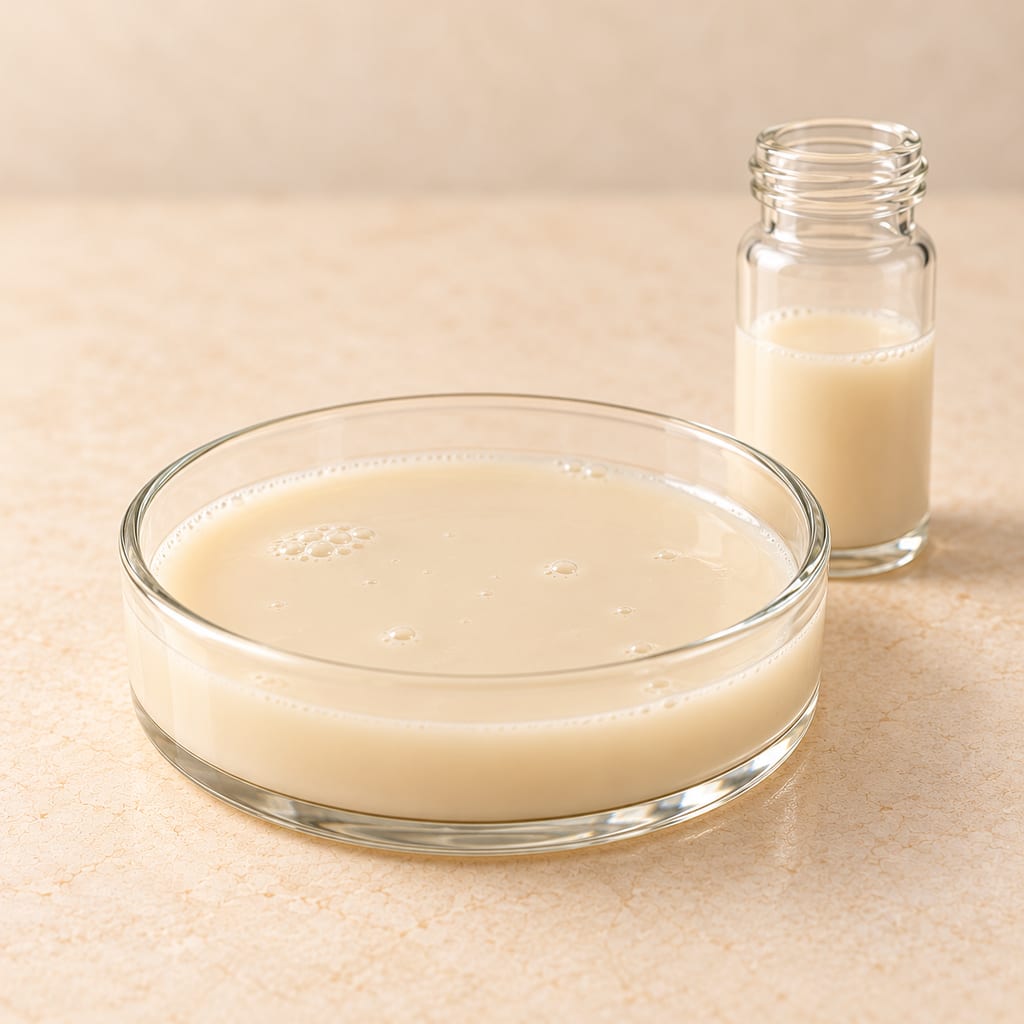
Brewer’s yeast
Brewer’s yeast is a working name for living cultures selected for brewing, not one strain or always one species. Ale and lager cultures differ, and older household books may use the term for foam or sediment from brewery beer.
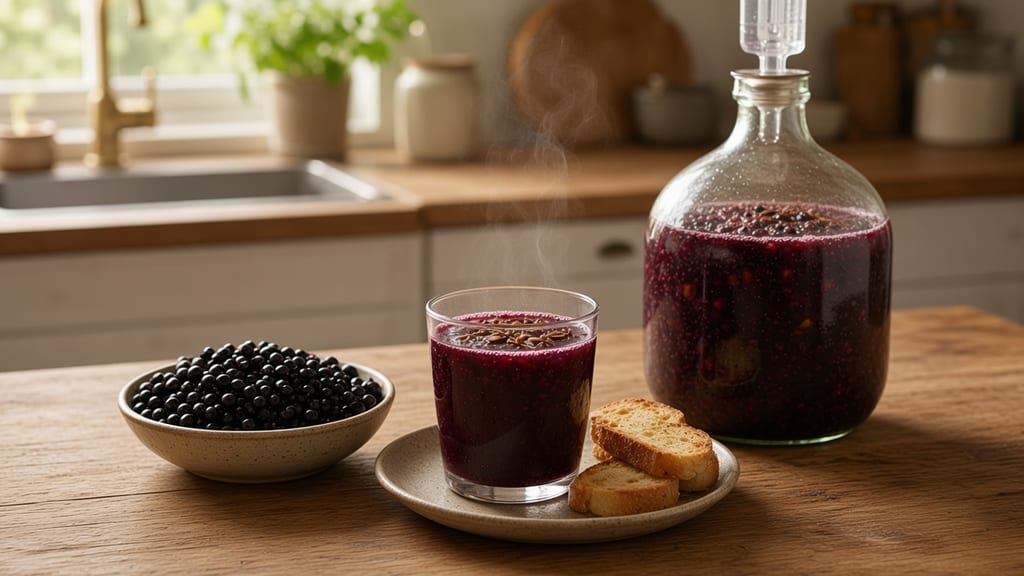
Elder wine from Mrs Beeton's 1861 Household Management
Mrs Beeton's 1861 elder wine in full, a peck of berries steeped in boiling water, spiced and boiled for an hour, then a safe modern version with ripe black elderberries simmered before fermenting.
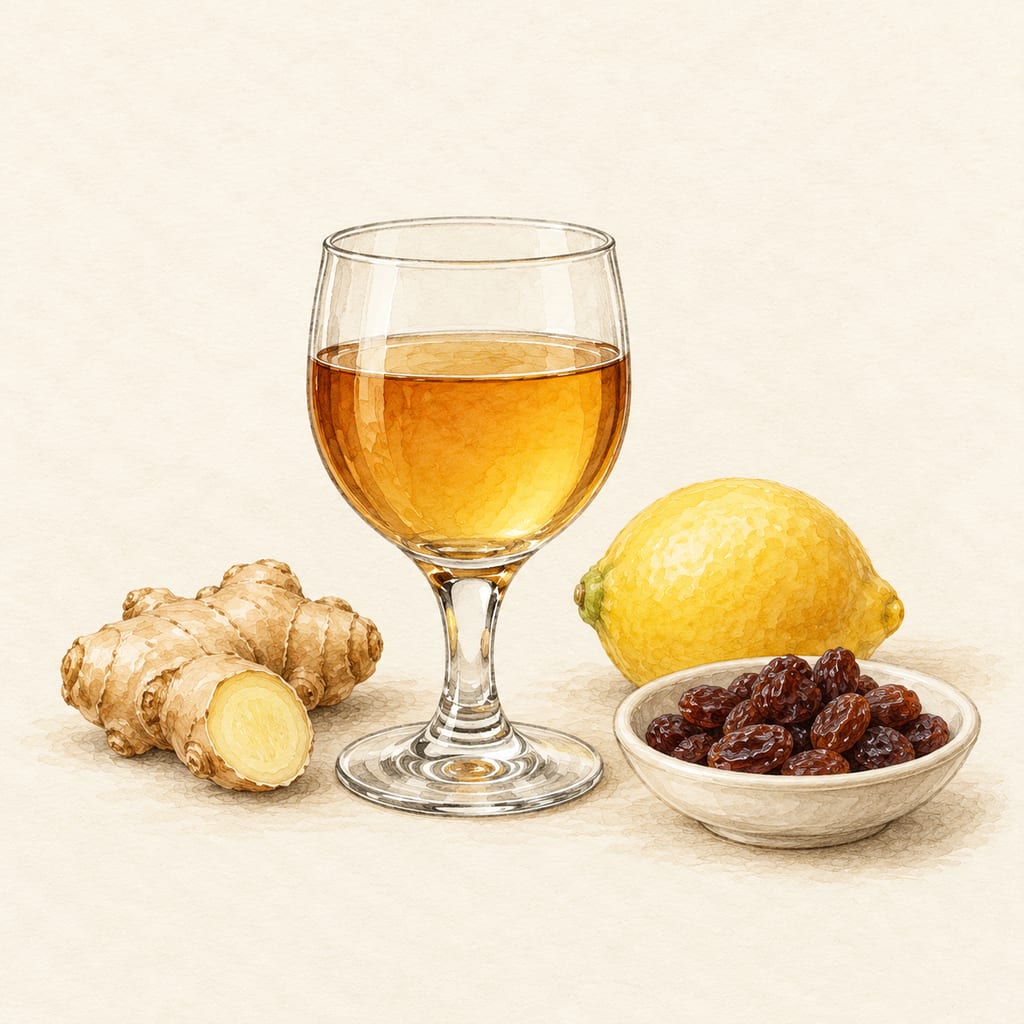
Ginger wine, cask-matured on raisins
A Victorian household wine of boiled sugar, lemon and bruised ginger, worked on raisins in a cask for a fortnight and finished with brandy, made nine gallons at a time.
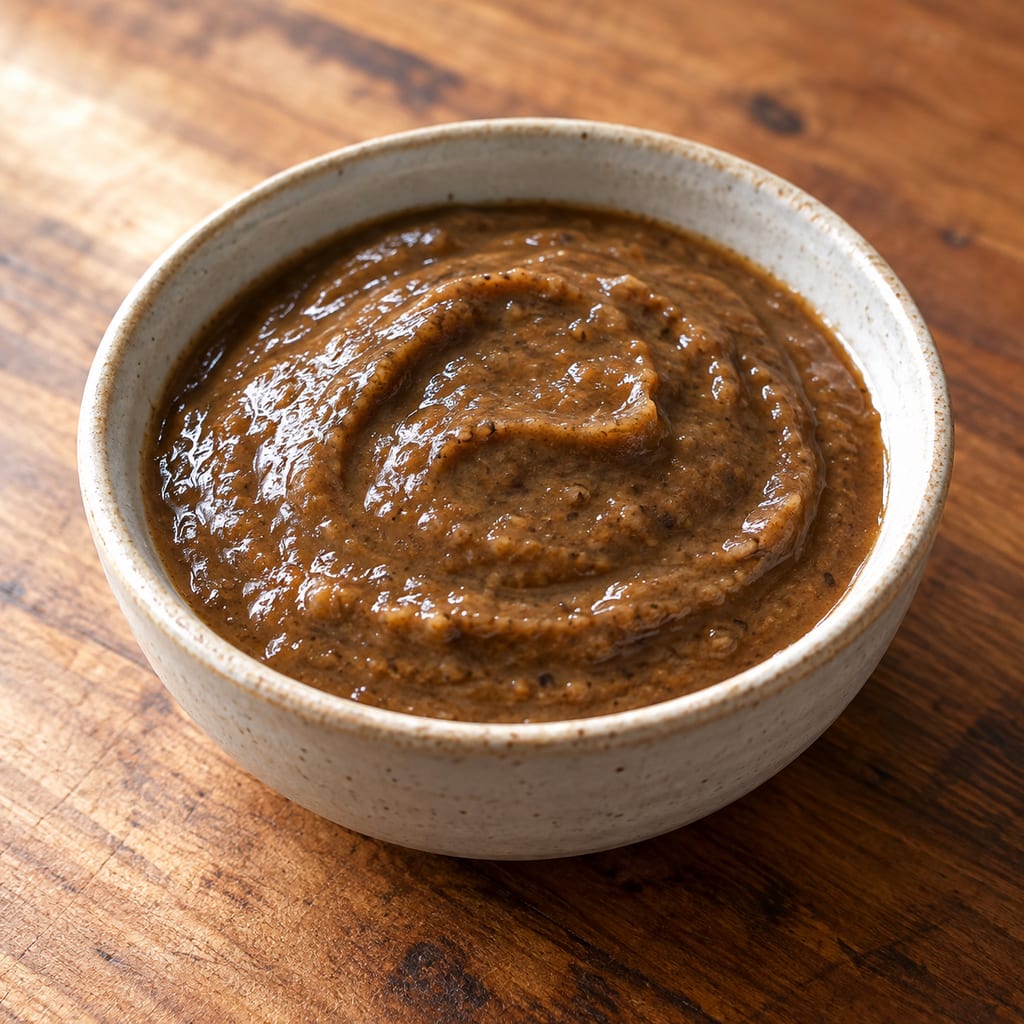
Mushroom catsup, modern refrigerated interpretation
A modern, non-fermented mushroom catsup: mushrooms simmer with cider vinegar, shallot and spices, then become either a thin seasoning or a thicker sauce.
Raisins
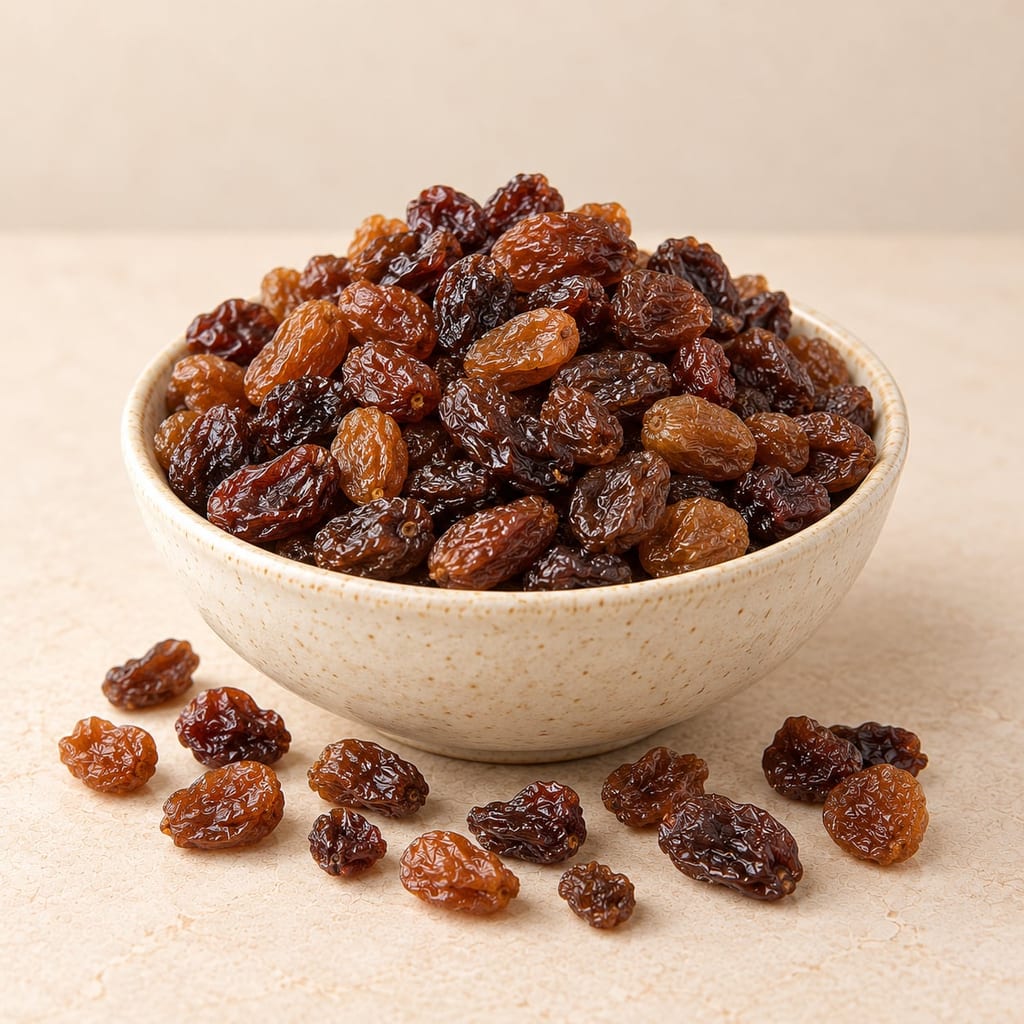
Raisins are dried grapes whose variety and drying method shape their size, colour and flavour. In a documented 1861 ginger wine they are stoned, chopped and added to the cask after yeast.
Rhubarb wine
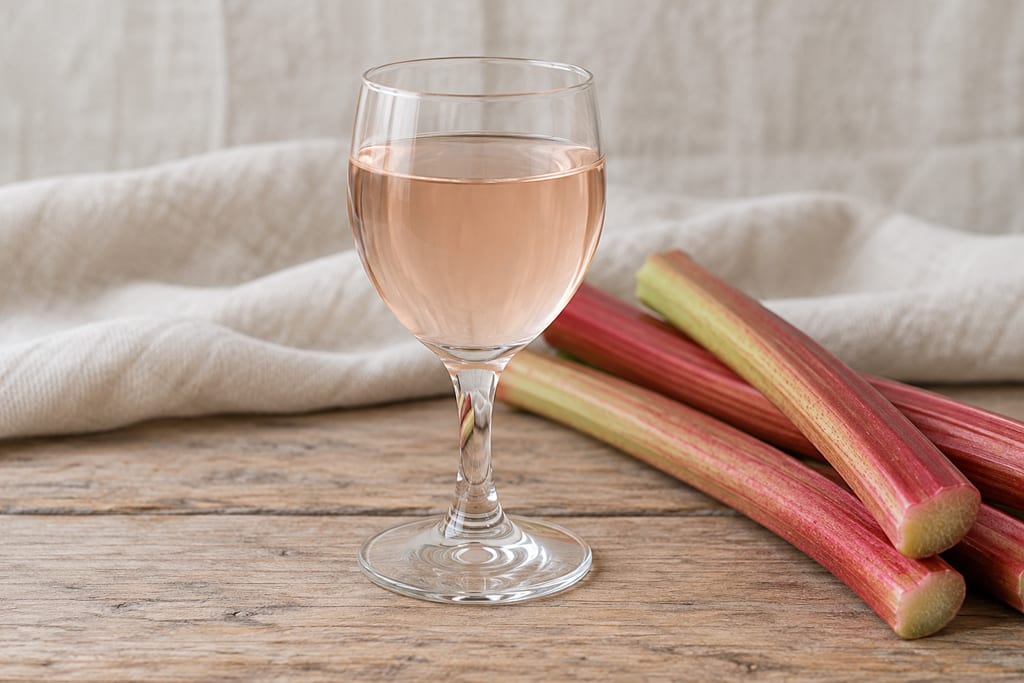
S. O. Beeton’s 1861 household book records rhubarb wine made with rhubarb pulp, water, loaf sugar, lemon rind and isinglass; its historical directions do not establish a safe modern fermentation endpoint.
Community
No community contributions have been published for this entry yet.
Share what you made
Sign in to contribute. Published comments and photos are free to read.
Sources
Isabella Beeton; London: S.O. Beeton, 1861; Wellcome Collection copy, Internet Archive
The Book of Household ManagementCited in: A wooden spoon tied to the jar; A room going out of fashion; Nine gallons at a time; The brewer down the road; Fizz in a stone bottle; Vinegar from the garden; When fermentation is a fault; Pickles worth making at home; Borrowed receipts; Raisin wine with elder in it; Elder wine sold as port; Back to the spoon
Eliza Acton; London: Longman, Brown, Green and Longmans, 1845; Internet Archive
Modern Cookery, in all its branches (second edition)Cited in: Borrowed receipts
Hannah Glasse; London, 1748; Wellcome Collection copy, Internet Archive
The Art of Cookery, Made Plain and EasyCited in: Raisin wine with elder in it; Elder wine sold as port
Elizabeth Raffald; Manchester, 1769; Wellcome Collection copy, Internet Archive
The Experienced English HousekeeperCited in: Raisin wine with elder in it
Fredrick Accum; London: Longman, Hurst, Rees, Orme and Brown, 1820; Internet Archive
A Treatise on Adulterations of Food, and Culinary PoisonsCited in: Pickles worth making at home; Elder wine sold as port
Kathryn Hughes, British Library, Discovering Literature: Romantics and Victorians, 2014 (Wayback Machine copy)
Mrs Beeton and the art of household managementCited in: A wooden spoon tied to the jar; A room going out of fashion; Pickles worth making at home; Borrowed receipts
Mark Brown, The Guardian, 2 June 2006
Mrs Beeton couldn't cook but she could copy, reveals historianCited in: Borrowed receipts
Kathryn Hughes, The Guardian, 30 December 2011
The Real Mrs Beeton by Sheila Hardy, reviewCited in: Borrowed receipts
Gaps
- The source of Beeton's ginger beer, gooseberry and orange wine recipes has not been traced; only the elder wine comparison with Acton is made here.
- Kathryn Hughes's book The Short Life and Long Times of Mrs Beeton (2005) was not consulted directly.
- Beeton does not say what 'Turkey raisins' were; the term is left unexplained.
- Whether Welsh nectar fermented in the 4 or 5 days Beeton allows is not stated in the book.
Updated 2026-11-21