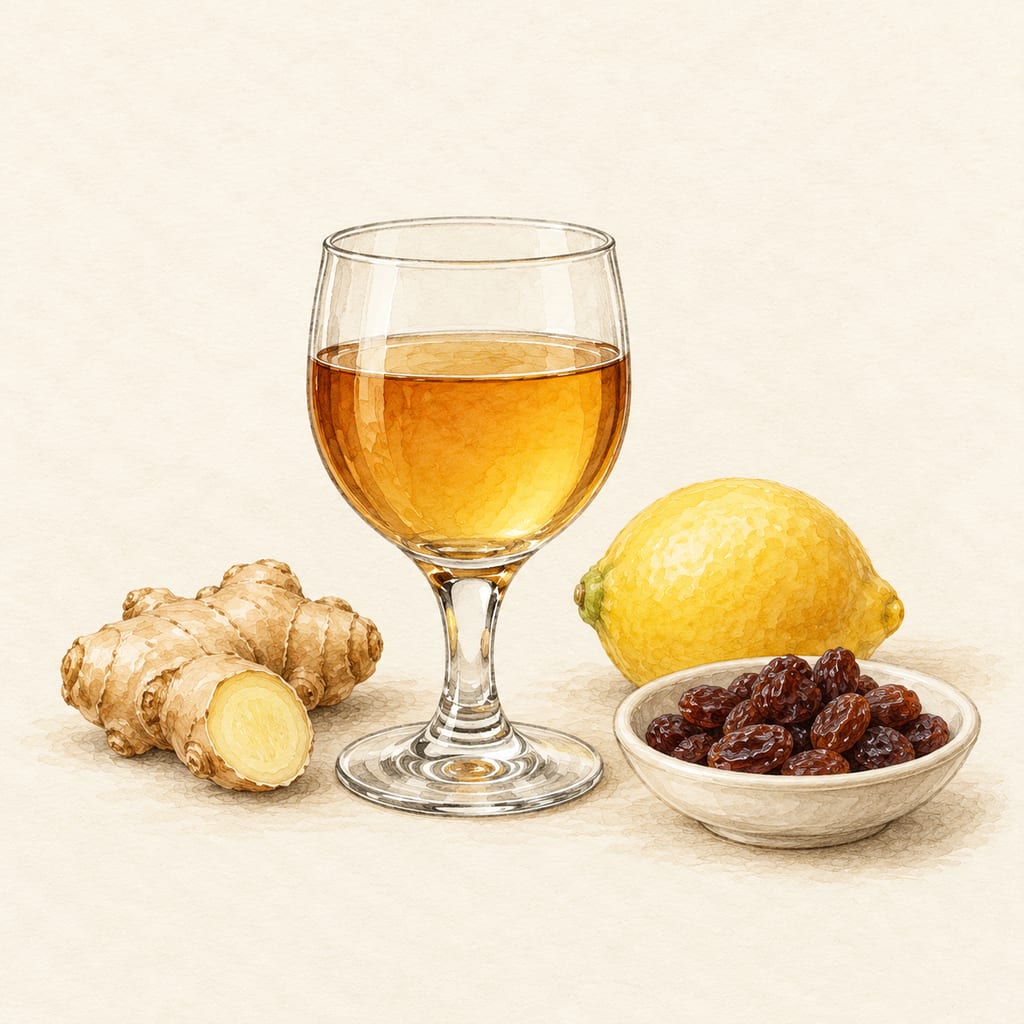
Ginger wine, cask-matured on raisins
A Victorian household wine of boiled sugar, lemon and bruised ginger, worked on raisins in a cask for a fortnight and finished with brandy, made nine gallons at a time.
 FermenteaWhere food goes to change
Elder Wine · Elder-berry wine · Elderberry wine
Mrs Beeton's 1861 elder wine in full, a peck of berries steeped in boiling water, spiced and boiled for an hour, then a safe modern version with ripe black elderberries simmered before fermenting.
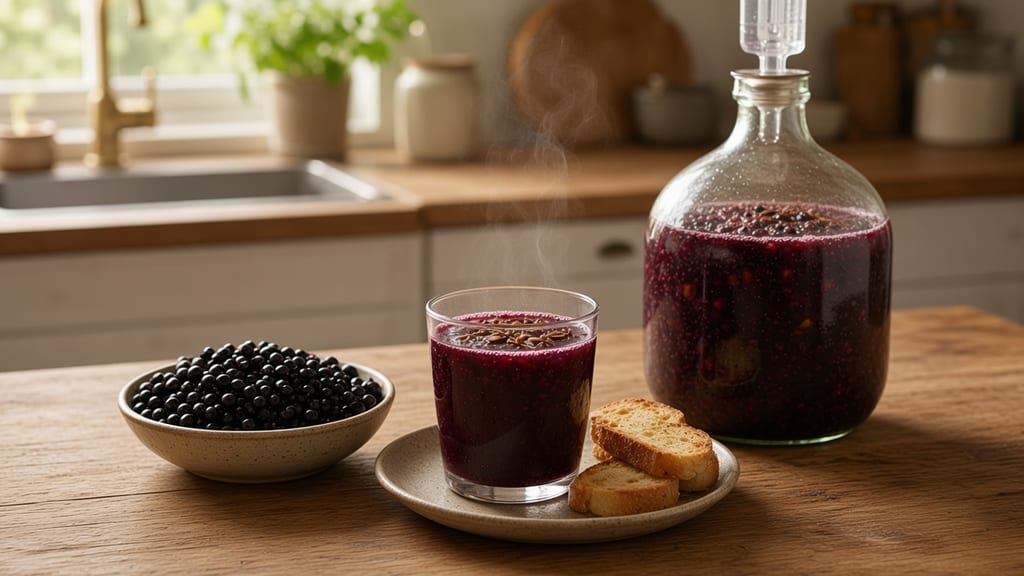
Raw elderberries, green berries, stalks and leaves can make people ill. Use only fully ripe black elderberries, strip off every stalk and green berry, and heat the fruit before it ferments.
Part 1 below is Beeton's 1861 recipe as she printed it. It is a historical record, not a set of instructions. The method to follow today is Part 2.
Recipe 1818 in Isabella Beeton's Book of Household Management begins on page 881 and ends at the top of page 882. It sits between cowslip wine and ginger wine in the chapter of drink recipes. The full text follows as printed in the first edition.
Ingredients. "To every 3 gallons of water allow 1 peck of elderberries; to every gallon of juice allow 3 lbs. of sugar, ½ oz. of ground ginger, 6 cloves, 1 lb. of good Turkey raisins; ¼ pint of brandy to every gallon of wine. To every 9 gallons of wine 3 or 4 tablespoonfuls of fresh brewer's yeast."
Mode. "Pour the water, quite boiling, on the elderberries, which should be picked from the stalks, and let these stand covered for 24 hours; then strain the whole through a sieve or bag, breaking the fruit to express all the juice from it. Measure the liquor, and to every gallon allow the above proportion of sugar. Boil the juice and sugar with the ginger, cloves, and raisins for 1 hour, skimming the liquor the whole time; let it stand until milk-warm, then put it into a clean dry cask, with 3 or 4 tablespoonfuls of good fresh yeast to every 9 gallons of wine. Let it ferment for about a fortnight; then add the brandy, bung up the cask, and let it stand some months before it is bottled, when it will be found excellent. A bunch of hops suspended to a string from the bung, some persons say, will preserve the wine good for several years. Elder wine is usually mulled, and served with sippets of toasted bread and a little grated nutmeg."
Time. "To stand covered 24 hours; to be boiled 1 hour." Average cost. "When made at home, 3s. 6d. per gallon." Seasonable. "Make this in September."
Beside the recipe Beeton prints a small engraving captioned "Elder-berries" and a note headed "Elder-berry wine": "The elder-berry is well adapted for the production of wine; its juice contains a considerable portion of the principle necessary for a vigorous fermentation, and its beautiful colour communicates a rich tint to the wine made from it. It is, however, deficient in sweetness, and therefore demands an addition of sugar. It is one of the very best of the genuine old English wines; and a cup of it mulled, just previous to retiring to bed on a winter night, is a thing to be 'run for,' as Cobbett would say: it is not, however, agreeable to every taste."
A peck is a dry measure of two gallons. Beeton's recipe therefore steeps two gallons of berries, by volume, in three gallons of boiling water. Her gallon is the imperial gallon fixed by the Weights and Measures Act of 1824.
Beeton does not explain "Turkey raisins". In her pudding chapter she writes that the finest Sultana raisins come from Smyrna.
Milk-warm has no figure in the book. The reason for the wait is in Beeton's own note on yeast: boiling for ten minutes weakens it, and longer boiling destroys it. The hot liquor had to cool before the yeast went in.
Fresh brewer's yeast is the live froth from a brewing of beer. Beeton writes that yeast from home-brewed beer is preferred to any other, and that it is very bitter and should be washed and left to settle before use.
Sippets are small pieces of bread. Beeton's own list of French cookery terms glosses croutons as "sippets of bread".
The scale is a 9-gallon cask. The yeast is reckoned per 9 gallons, as it is for her cowslip wine. On the same pages cowslip wine costs 2s. 9d. a gallon and ginger wine 2s., so elder wine at 3s. 6d. was the dearest of the three.
Eliza Acton's Modern Cookery of 1845 has an "Excellent Elderberry Wine". She strips the berries clean from the stalks and pours on boiling water at two gallons to three of berries. The fruit stands until the next day and is then strained and squeezed. To every gallon of juice she adds three pounds of sugar, three quarters of an ounce of cloves and one ounce of ginger, and boils it for twenty minutes. The wine goes into the cask "something more than milk-warm", with a spoonful of new yeast dropped into the bung-hole or a small toasted crust spread thickly with yeast. A footnote says it ferments for fourteen to twenty days and is ready to drink in three months.
Beeton keeps Acton's order of work, the boiling-water steep, the overnight stand and the three pounds of sugar to the gallon. She lengthens the boil from twenty minutes to an hour. She adds Turkey raisins, brandy and the hops on a string.
Earlier English elder wines were raisin wines coloured with elder. Hannah Glasse, in the 1748 Art of Cookery, heats the ripe berries in a stone jar set in the oven or in a kettle of boiling water, boils the juice with Lisbon sugar to a syrup, and adds half a pint of this syrup to each gallon of raisin wine. Elizabeth Raffald's Elder Raisin Wine of 1769 steeps six pounds of Malaga raisins in each gallon of boiling water for nine days, adds a quart of oven-baked elderberry juice to every gallon, and starts the ferment with a slice of toast spread with yeast.
A manuscript receipt "To Make Elder Wine" in the Fairfax-Spencer family recipe book, catalogued by George Mason University Libraries with the date field 1694/1795, uses twenty pounds of "Malegoe Rasins" in twenty quarts of water and adds six pints of elderberry juice. Beeton's pound of raisins to the gallon looks like what was left of that older raisin base.
Every one of these recipes heats the fruit. Glasse uses the oven or a kettle, Raffald a moderate oven, Acton boiling water and a twenty-minute boil, and Beeton boiling water and an hour's boil of the juice with its sugar. They did it to draw out the juice and colour, and none of them mentions poison.
Beeton strips the berries from the stalks. She does not name a species or say how ripe the berries must be, and she gives no temperature for the ferment. Modern guidance adds those controls. Part 2 uses them.
Warning. This method is agreed safe practice drawn from extension, public-health and winemaking guidance. It is not a laboratory-tested process, and no source cited here measures cyanogenic compounds in finished elderberry wine.
Warning. Use only black elder berries you can identify with certainty. Oregon State University Extension advises against making any food from red elderberries, Sambucus racemosa, which may hold more toxin.
Warning. Use only fully ripe berries. Remove every stalk, leaf and green berry. Stems and leaves hold more of the toxic compounds, and all green berries are considered toxic.
Warning. Heat the fruit before fermenting. German federal food advice says heating above 80 °C destroys the sambunigrin in elderberries. Do not taste raw elderberry juice or the raw must.
Warning. In 1983 eleven of twenty-five people at a gathering in Monterey County, California, fell ill within fifteen minutes of drinking juice pressed from wild elderberries crushed with their leaves and branches. Eight were flown to hospital. All recovered.
The recipe below makes about 3.8 litres, one US gallon, following Jack Keller's basic elderberry wine with his optional cooking step made compulsory.
For the wine you need 1.6 kg of fully ripe elderberries, stripped and cleaned, about 3 litres of water, 910 g of granulated sugar, a 355 ml can of red grape juice concentrate, the juice of 1 medium lemon and 2 small oranges, 1 teaspoon of yeast nutrient, 2 Campden tablets, ½ teaspoon of potassium sorbate and 1 sachet of red wine yeast. Keller names Pasteur Red, Lalvin R2 and Gervin No. 1.
Beeton's spices are optional. Her proportion of ½ oz of ground ginger and 6 cloves to the imperial gallon comes to about 12 g of ground ginger and 5 cloves for this batch. Leave out her raisins, which would add sugar the recipe has not allowed for.
Equipment: rubber gloves, a sieve or frame of 6 mm wire mesh, a washing-up bowl, a nylon straining bag, a stainless steel pan of at least 5 litres with a lid, a covered food-grade fermenting bucket, a 4.5-litre glass demijohn with an airlock, a siphon tube, a thermometer and wine bottles.
Pick heads in which every berry is dark and ripe. Keller notes that the heads droop as they ripen and hang upside down when ready. Wear gloves, because the juice stains.
Leave any plant you cannot name with certainty, and leave every red-berried elder.
Comb the berries off the stalks with a fork or a wide-toothed comb over a bucket. Rub them through a 6 mm mesh to catch more stalk. Oregon State suggests rubbing the heads over a wire cooling rack, and freezing them first makes this easier.
Pour the berries slowly into 15 cm of water. Ripe berries sink. Skim off everything that floats, which will be stalks, unripe berries, leaves and insects, then drain. Weigh out 1.6 kg.
Tie the berries in the nylon bag and crush them lightly with the flat base of a bottle, without breaking the seeds. Put the bag in the pan with the 3 litres of water and the spices if you use them.
Bring to the boil, then simmer gently with the lid on for 20 minutes. Keller gives 20 minutes over low heat. The German federal advice asks for more than 80 °C, and the Bavarian consumer centre suggests at least 80 °C and ideally about half an hour of boiling. A longer simmer does no harm.
Put the sugar, grape concentrate, citrus juice and yeast nutrient in the fermenting bucket. Pour in the hot liquid and lower in the bag of fruit. Stir until the sugar has dissolved, then cover.
Let it cool below 32 °C. Meanwhile rehydrate the yeast as its packet directs.
Add the yeast and cover again. Stir every day for three days and press down the bag when it floats.
On the fourth day lift out the bag, squeeze it lightly and discard the pulp. Cover and leave for one more day, then siphon the liquid into the demijohn and fit the airlock. It will not yet fill the jar.
When the vigorous ferment calms, add one finely crushed Campden tablet dissolved in a little of the wine. Top up with water and leave for three weeks.
Rack the wine off its sediment into a clean jar. When it has fallen clear, wait one more month and rack again. Stir in the potassium sorbate and the second crushed Campden tablet, sweeten to taste if you wish and refit the airlock.
Wait 30 days. If there is no new fermentation or sediment, bottle it.
Keep the bottles at least 6 months before drinking. Keller writes that the wine goes on improving for several years.
Beeton adds ¼ pint of brandy to every gallon of wine after the ferment. For this batch that is about 120 ml, stirred in before bottling if you want her stronger wine. Her bunch of hops hung from the bung is something "some persons say" works. No source here tests it.
Beeton says elder wine "is usually mulled" and served with sippets of toasted bread and a little grated nutmeg. Her note recommends a cup of it mulled on a winter night just before bed.
Keller treats cooking as optional for black elderberries and says it is for those who want to be absolutely sure. Oregon State says elderberries always need to be cooked before they are eaten. This page follows the stricter rule.
The heating time also varies. Keller cooks for 20 minutes over low heat. The German federal advice gives only a temperature, above 80 °C. The Bavarian consumer centre suggests ideally about half an hour of boiling. Beeton boiled the juice for an hour and Acton for twenty minutes. Neither says why.
Beeton printed Elder Wine as recipe 1818 in the 1861 Book of Household Management. Acton printed a closely similar Excellent Elderberry Wine in 1845; Glasse (1748) and Raffald (1769) used elder juice in raisin wines.
Yield 3.8 l · Scaling: scale all ingredients in proportion; keep the 20 minute simmer for any batch size.
Raw elderberries or raw juice can cause nausea and serious illness; stems and leaves hold higher levels of toxins.
Hazard sourceThe 1983 Monterey County poisoning followed juice pressed from berries crushed with their leaves and branches.
Hazard sourceRed elderberries may contain more toxin and should not be used for food products.
Hazard sourceUse only fully ripe black elderberries identified with certainty.
Control sourceStrip, sieve and float the berries; discard every stalk, leaf and green berry.
Control sourceSimmer the crushed berries in the water before fermenting.
Control sourceAgreed safe practice, not a laboratory-tested process.
Never taste raw elderberry juice or the raw must.
Beeton's 1861 text is a historical record, not instructions.
English household books from Glasse (London, 1748) and Raffald (Manchester, 1769) to Acton (London, 1845) and Beeton (London, 1861) record elder wine. Publication places, not the origin of the drink.
The modern method is Jack Keller's, published in an American magazine; it is not tied to a place.
A Victorian household wine of boiled sugar, lemon and bruised ginger, worked on raisins in a cask for a fortnight and finished with brandy, made nine gallons at a time.
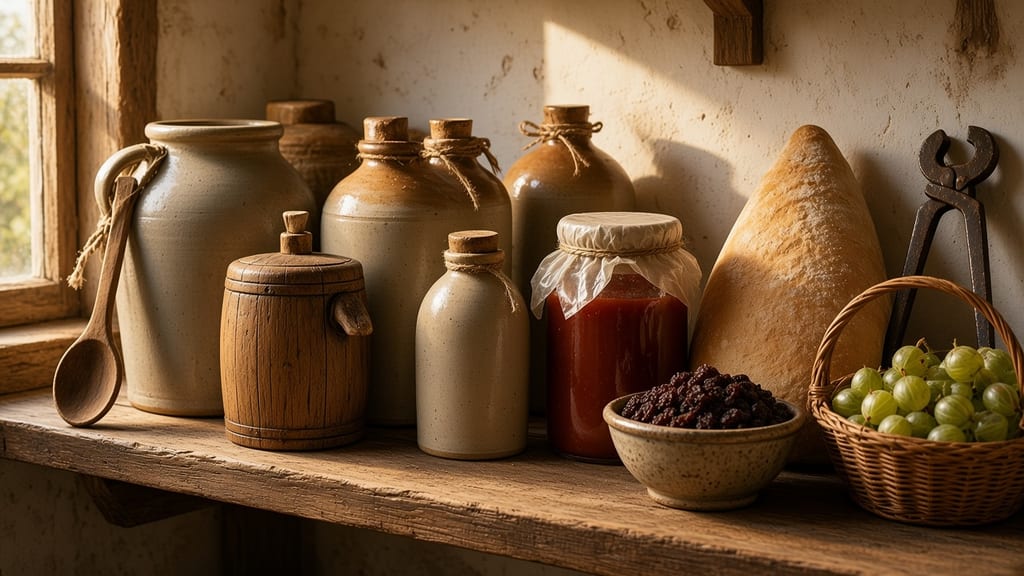
What Isabella Beeton's 1861 Household Management fermented, brewed and pickled, from nine-gallon casks of elder wine to gooseberry vinegar, and how much of it she took from Eliza Acton and older books.
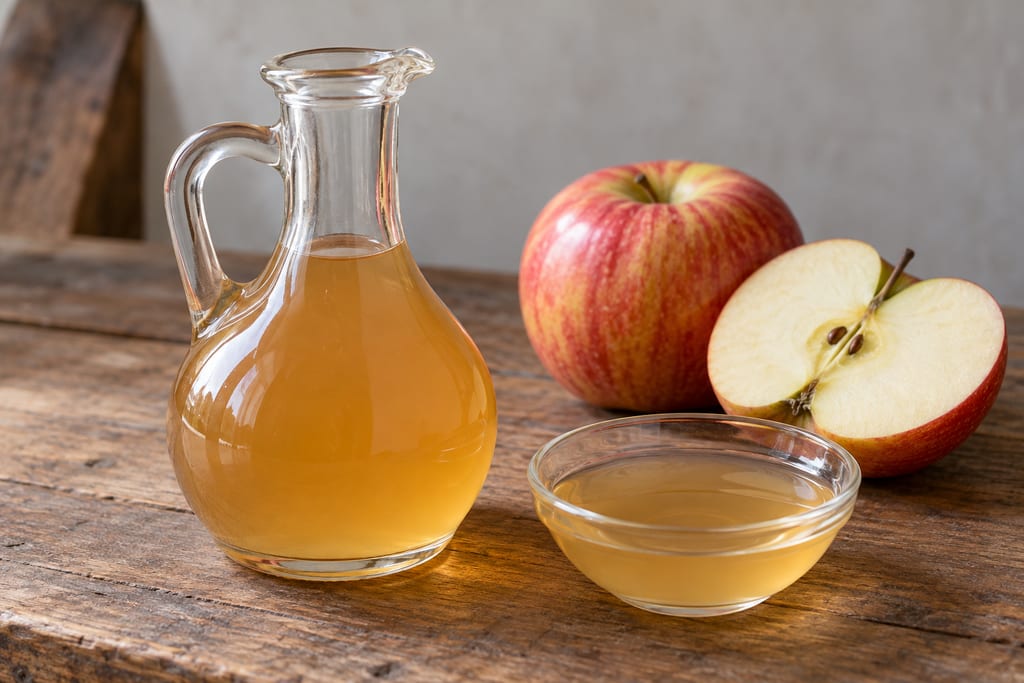
Cider vinegar is made when acetic-acid bacteria use oxygen to turn the alcohol in dry apple cider into acetic acid. This historical cask method begins with fermented cider and differs from apple-scrap vinegar made with sugar and water.
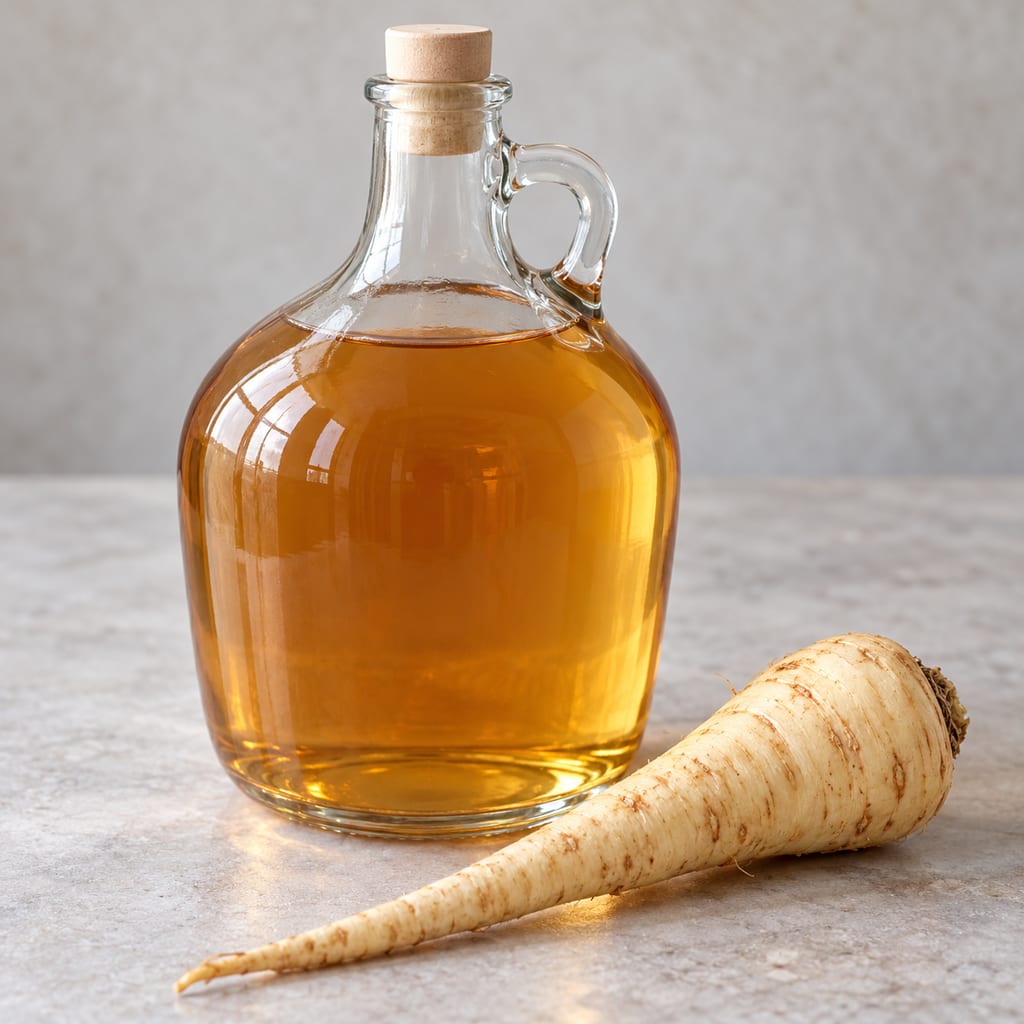
A root wine made from boiled parsnip liquor and lump sugar, fermented with yeast and finished with brandy before bottling.
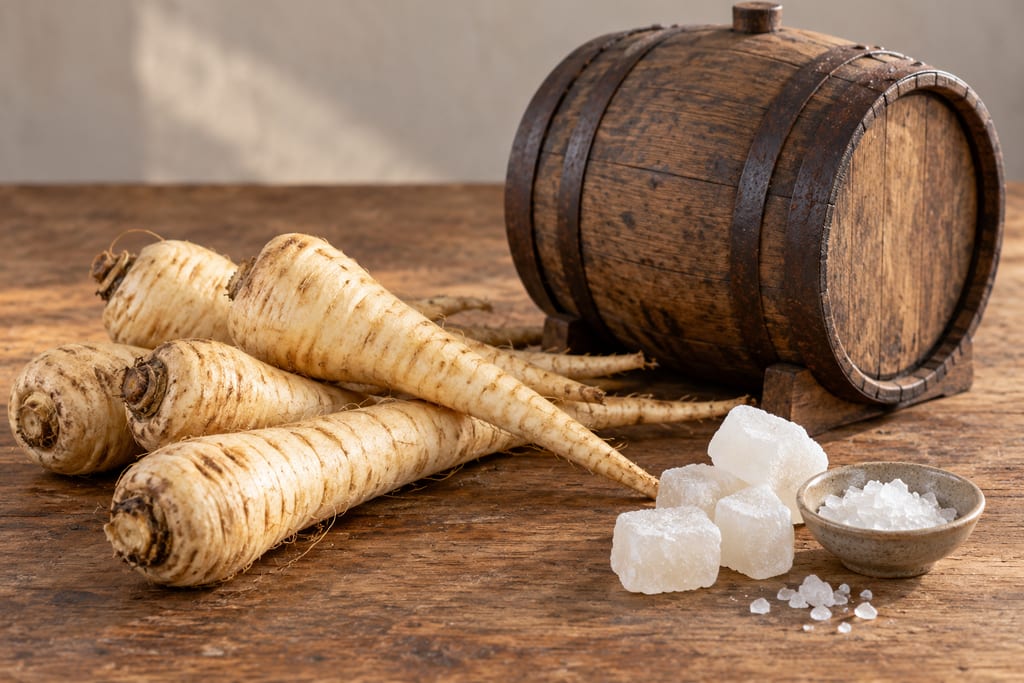
Parsnip liquor ferments with loaf sugar, crude tartar and fresh yeast, then matures in a cask for twelve months before bottling.
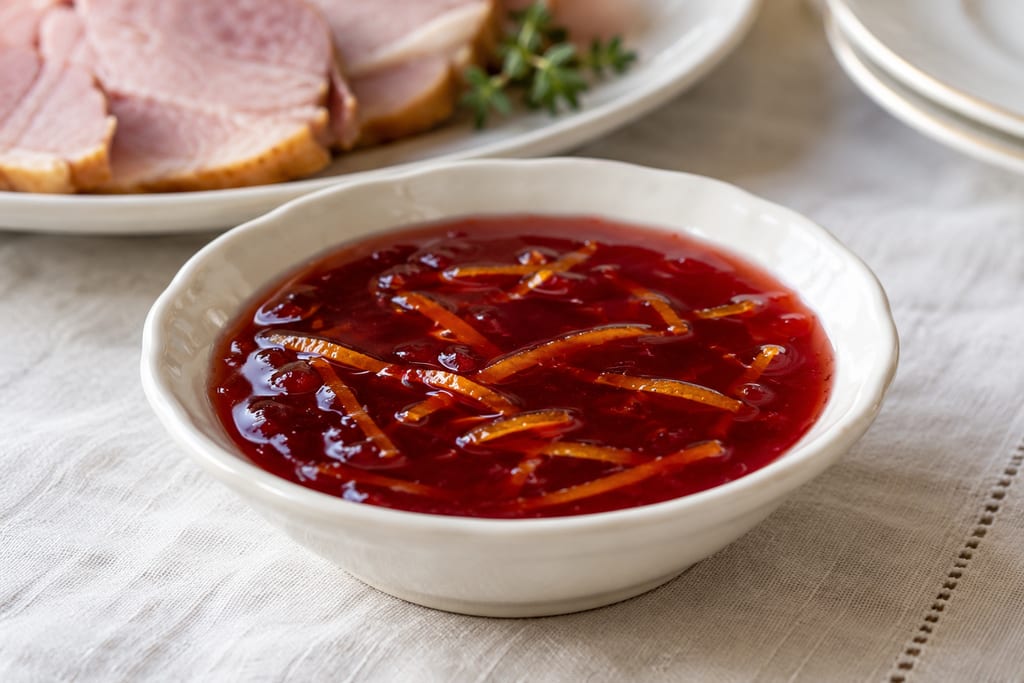
Cumberland sauce is a British condiment of redcurrant jelly, mustard, blanched orange peel and port, traditionally served cold with ham, game and cold meats.
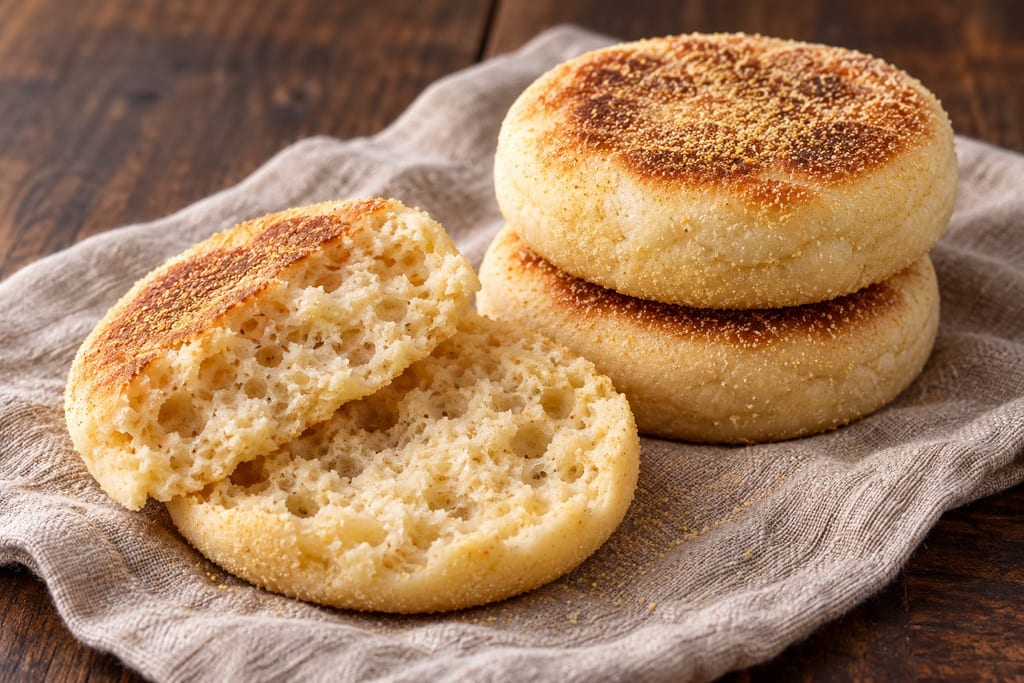
King Arthur’s six-piece English muffin batch uses a yeast preferment, two folds and a skillet or electric griddle; it is distinct from the sourdough-and-yeast version already catalogued.
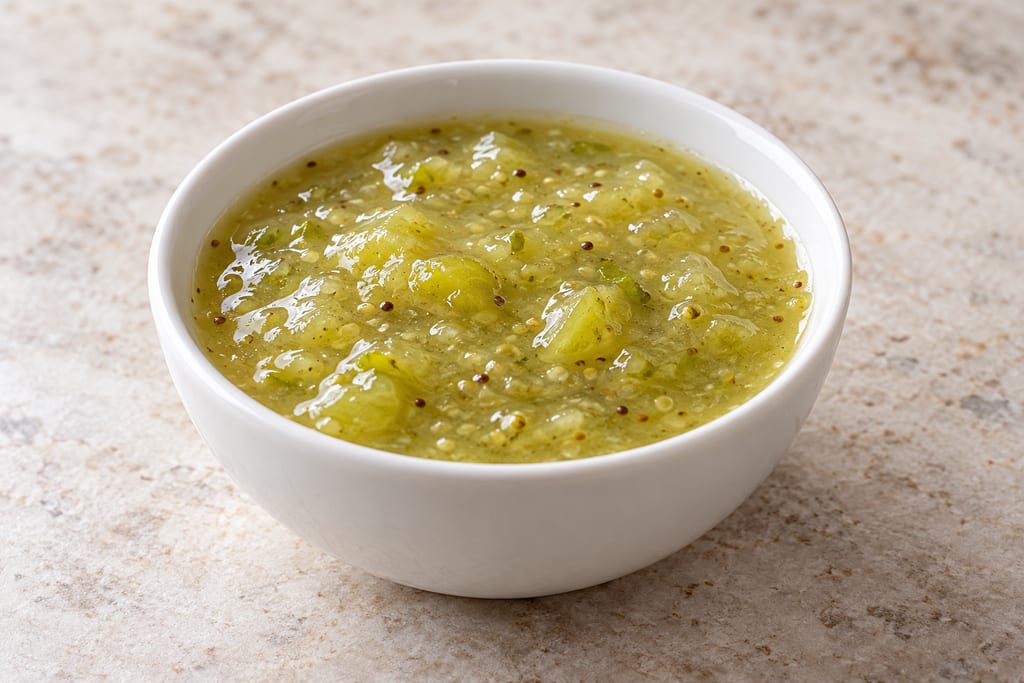
Gooseberry sauce is a soft, tart sauce of cooked green gooseberries, sharpened with wine or vinegar and lightly sweetened, traditionally served with mackerel.
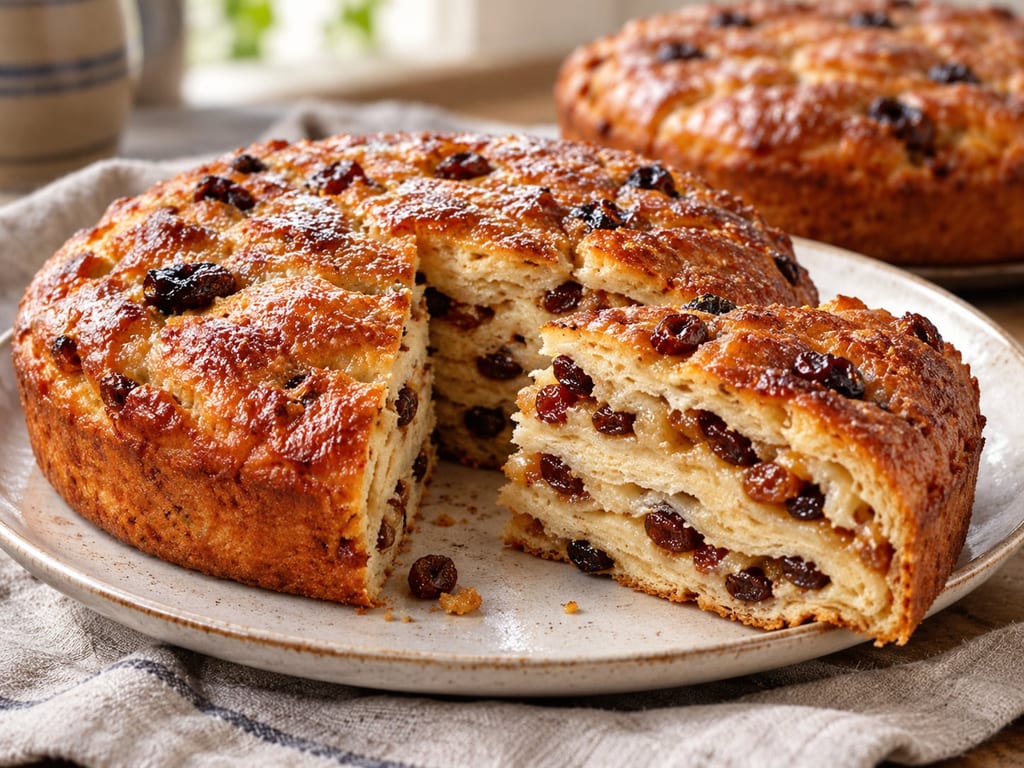
A yeast dough is folded around sweetened lard and dried fruit, then baked in tins until the bottom caramelizes.
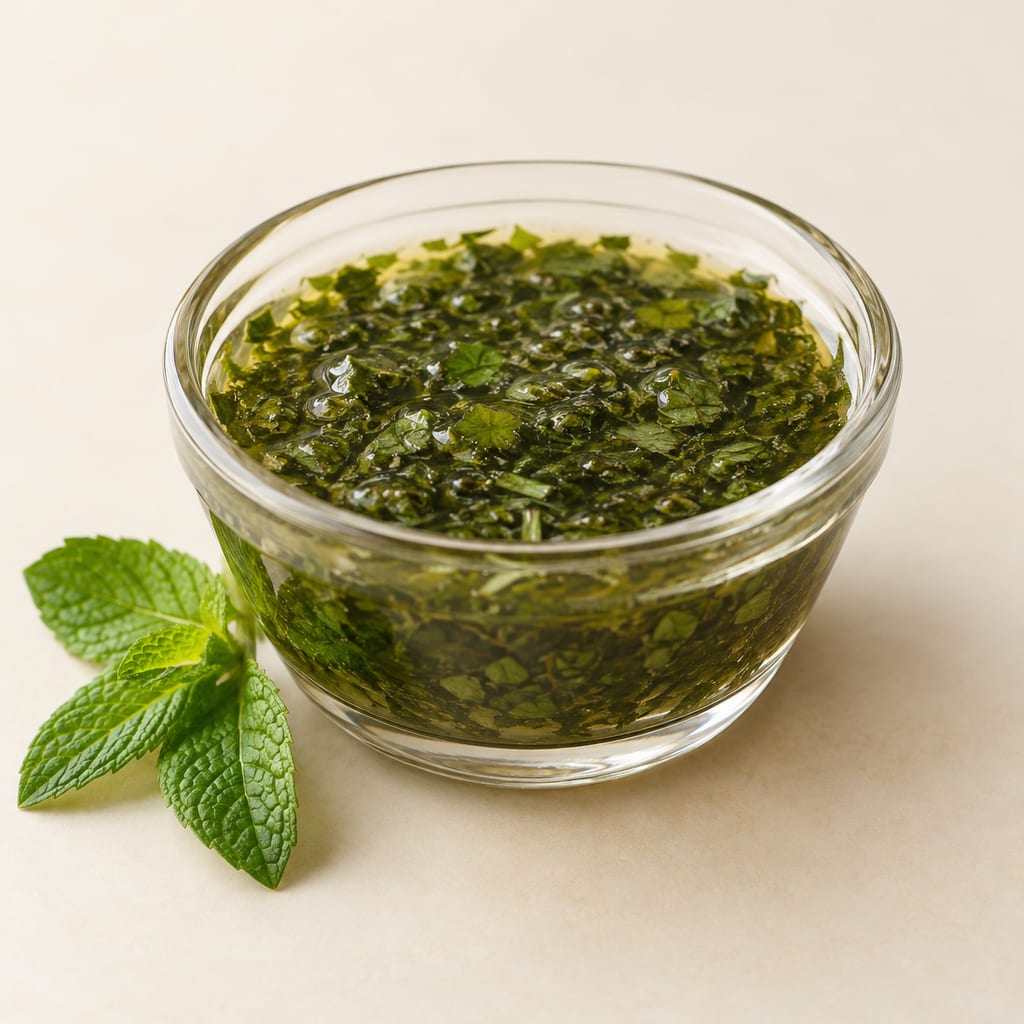
Finely chopped fresh mint steeped in a sweet and sharp liquid of white wine vinegar, sugar and water, the sauce traditionally served with roast lamb in Britain.
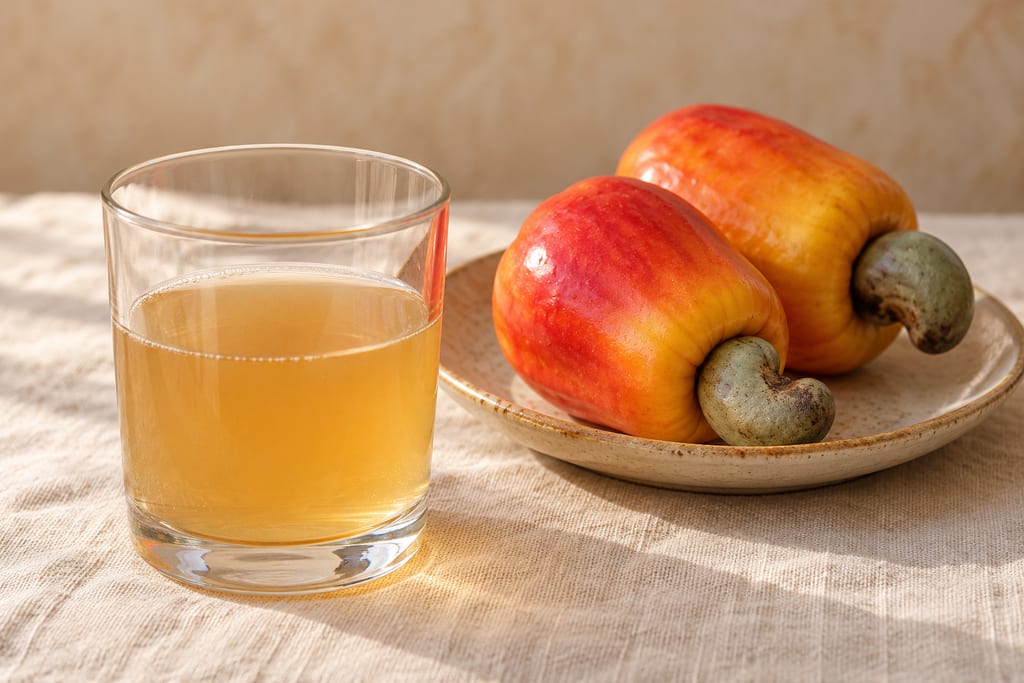
Vinho de caju is a seasonal alcoholic drink made from expressed cashew-apple juice. In southern Guinea-Bissau, an ethnographic account records a simple press-and-strain method, while harvest timing and local trade shape its place.
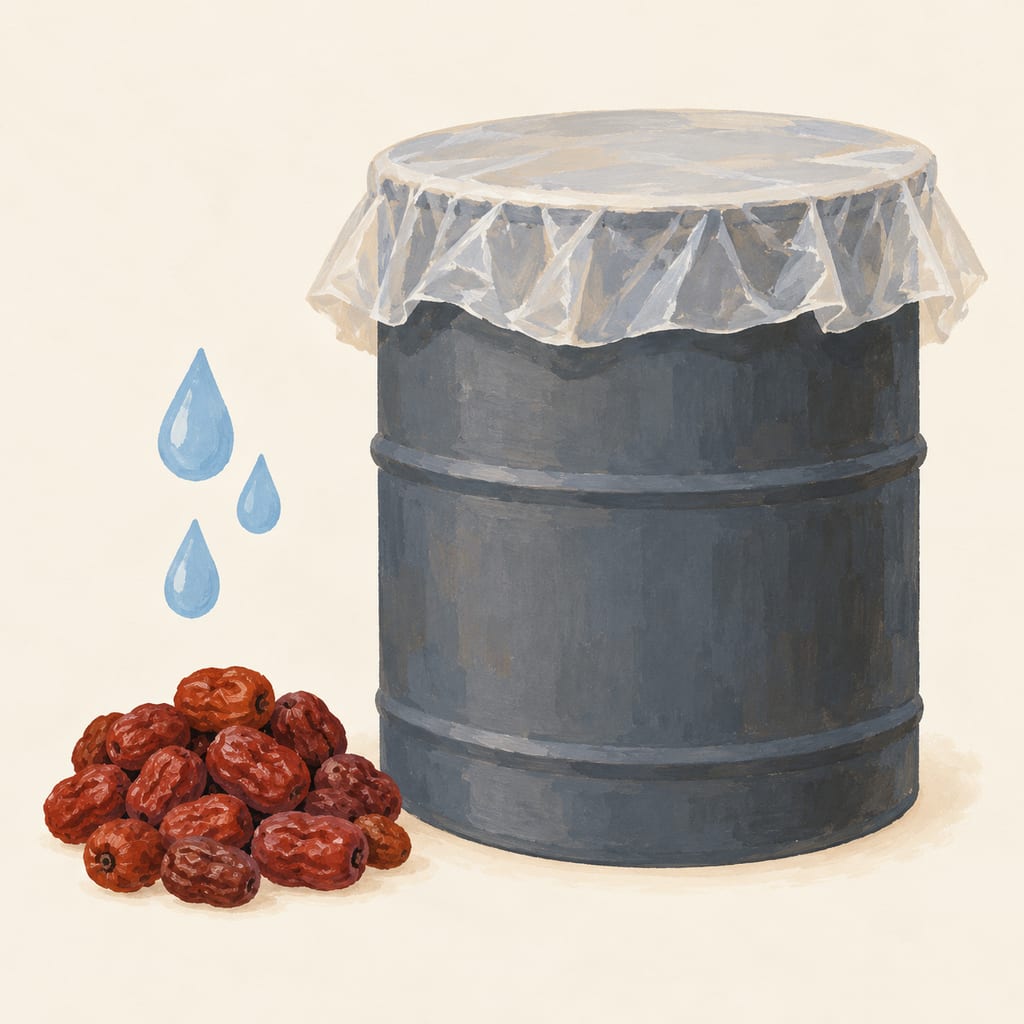
A Zimbabwean spontaneous ferment of dried masau fruit pulp used as a kachasu distillation base; the fermented pulp itself is not consumed.
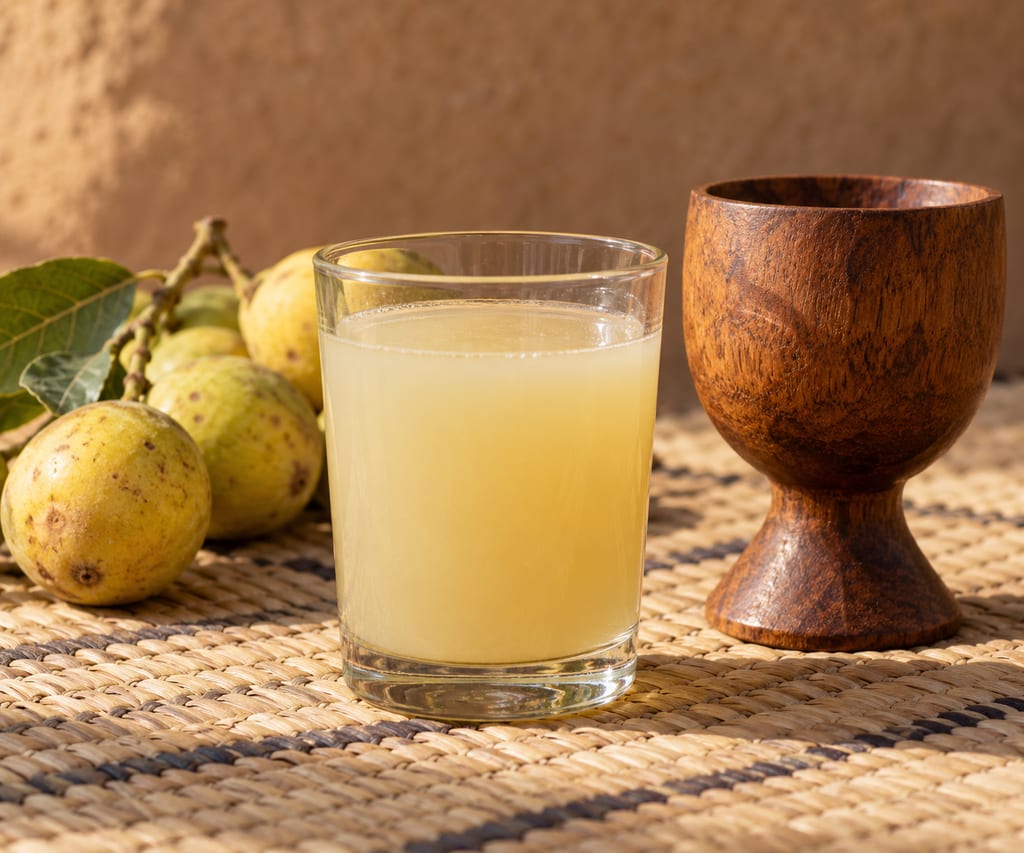
The fermented marula drink of northern Namibia's Aawambo communities, pressed from ripe Sclerocarya birrea fruit and left to the yeasts already on it, and drunk at the Oshituthi shomagongo festival.

A Cap-Pelé boucanière is an Acadian herring-smoking building. The documented Willie Niles example is a one-storey wood-frame structure with a ridge smoke vent and interior bays for hanging fish-bearing cannes.

Achcharu is a family of Sri Lankan vinegar pickles made with mixed vegetables or seasonal fruit and a piquant spice dressing. This version is a quick, refrigerated, non-fermented mixed-vegetable pickle.

The acocote is a long, hollowed and dried gourd used to draw aguamiel from a mature maguey. It is a harvesting tool: the sap is transferred to a separate vessel before it ferments into pulque.

Adrak murabba preserves young ginger in sugar syrup, a sweet South Asian preparation recorded in Indian cookery and food-processing sources.

Parkia biglobosa seeds are fermented into regional West African seasonings, including nététou, iru, dawadawa and soumbala. The yellow fruit pulp is a separate food, and names and methods vary by place.

Japanese reddish-brown vinegar from sake lees matured about three years, turned to vinegar by acetic bacteria; the vinegar of Handa and Edomae sushi rice.

A refined common-wheat flour blended for a broad range of baking; its protein and behavior vary with wheat, milling and market.

The almond mushroom, Agaricus subrufescens, was cultivated in eastern North America in the 1800s, lost its market, and returned as a cultivated mushroom from Brazil, where it is grown under several names.
No community contributions have been published for this entry yet.
Sign in to contribute. Published comments and photos are free to read.
Isabella Beeton; London: S.O. Beeton, 1861; Wellcome Collection copy, Internet Archive b20392758History · Inspiration
The Book of Household ManagementRecipe 1818 Elder Wine, pp. 881–882, full text checked against the page scans, including ½ oz ginger, ¼ pint brandy, 3s. 6d. per gallon and the Elder-berry wine note.
Cowslip wine 2s. 9d. and ginger wine 2s. per gallon; yeast per 9 gallons.
Yeast from home-brewed beer preferred, bitter, to be washed (para. 1691); boiling ten minutes weakens yeast (p. 694); croutons glossed as sippets of bread; Smyrna sultanas.
Cited in: Part 1: Beeton's elder wine, 1861; Notes on the period terms; Before Beeton; What the old method did and did not control; Ingredients and equipment; Stage 7: Age, and Beeton's brandy; Serving it the 1861 way; Where the sources disagree
Eliza Acton; London: Longman, Brown, Green and Longmans, 1845; Internet ArchiveHistory
Modern Cookery, in all its branchesExcellent Elderberry Wine, pp. 541–542: two gallons boiling water to three of berries, overnight stand, 3 lb sugar, ¾ oz cloves and 1 oz ginger per gallon, boiled 20 minutes, casked something more than milk-warm, yeast on the bung or on a toasted crust; footnote 14–20 days, drinkable in three months.
Cited in: Before Beeton; What the old method did and did not control; Where the sources disagree
Hannah Glasse; London: printed for the author, 1748; Wellcome Collection copy, Internet ArchiveHistory
The Art of Cookery, Made Plain and EasyTo make Elder Wine: berries heated in a stone jar in the oven or a kettle of boiling water, juice boiled with Lisbon sugar, half a pint of elder syrup per gallon of raisin wine.
Cited in: Before Beeton; What the old method did and did not control
Elizabeth Raffald; Manchester, 1769; Wellcome Collection copy, Internet ArchiveHistory
The Experienced English HousekeeperTo make Elder Raisin Wine: six pounds Malaga raisins per gallon of boiling water for nine days, a quart of oven-baked elder juice per gallon, toast spread with yeast.
Cited in: Before Beeton; What the old method did and did not control
George Mason University LibrariesHistory
To Make Elder Wine, Fairfax-Spencer Family Recipe Book, item 258Date field 1694/1795; twenty pounds of Malegoe raisins, twenty quarts of water, six pints of elderberry juice.
Cited in: Before Beeton
Oregon State University Extension Service, November 2024Safety · Method
Play it safe when preserving elderberries (EM 9446)Always cook elderberries before eating; raw berries or juice can cause nausea and serious illness.
Stems and leaves contain higher levels of toxins; harvest fully ripe fruit; screening over a wire rack, easier when frozen.
Avoid creating food products from red elderberry, Sambucus racemosa.
Cited in: Safety first; What the old method did and did not control; Part 2: elder wine for today (agreed safe practice); Stage 1: Identify and pick; Stage 2: Strip, sieve and float; Where the sources disagree
Centers for Disease Control, MMWR 33(13), 1984Safety
Poisoning from Elderberry Juice, California26 August 1983, Monterey County: 11 of 25 ill within 15 minutes, 8 flown to hospital, all recovered; berries crushed with leaves and branches; leaves and stems should not be crushed in; berries may be safe particularly if cooked.
Cited in: Safety first; Part 2: elder wine for today (agreed safe practice)
Jack Keller, WineMaker magazine, April–May 2009Method · Safety
Elderberry Wine: Taming the Wild ElderberryBasic one-gallon recipe: 3.5 lb (1.6 kg) berries, 3 quarts water, 2 lb sugar, 12-oz red grape concentrate, lemon, 2 small oranges, nutrient, 2 Campden tablets, ½ tsp sorbate, named red wine yeasts; steps and timings; at least 6 months ageing.
Stems, leaves and green berries toxic; cook berries 20 minutes over low heat to be absolutely sure; 1/4-inch mesh and float test; cool below 32 °C before yeast.
Cited in: Part 2: elder wine for today (agreed safe practice); Ingredients and equipment; Stage 1: Identify and pick; Stage 2: Strip, sieve and float; Stage 3: Simmer the fruit; Stage 4: Make the must; Stage 5: Ferment on the fruit; Stage 6: Clear and stabilise; Stage 7: Age, and Beeton's brandy; Where the sources disagree
Bundeszentrum für Ernährung (BZfE), 21 August 2024Safety
Erntezeit für HolunderbeerenPick only fully ripe dark heads; never eat raw; sambunigrin in seeds of ripe fruit and in unripe fruit; destroyed by heating above 80 °C.
Cited in: Safety first; Part 2: elder wine for today (agreed safe practice); Stage 1: Identify and pick; Stage 3: Simmer the fruit; Where the sources disagree
Verbraucherzentrale Bayern, 5 September 2024Safety
Ist schwarzer Holunder gesund?Heat the berries to at least 80 °C and ideally boil about half an hour.
Cited in: Stage 3: Simmer the fruit; Where the sources disagree
Diss MuseumHistory
Corn MeasuresA peck is two gallons; the 1824 Weights and Measures Act established the imperial gallon.
Cited in: Notes on the period terms; Ingredients and equipment