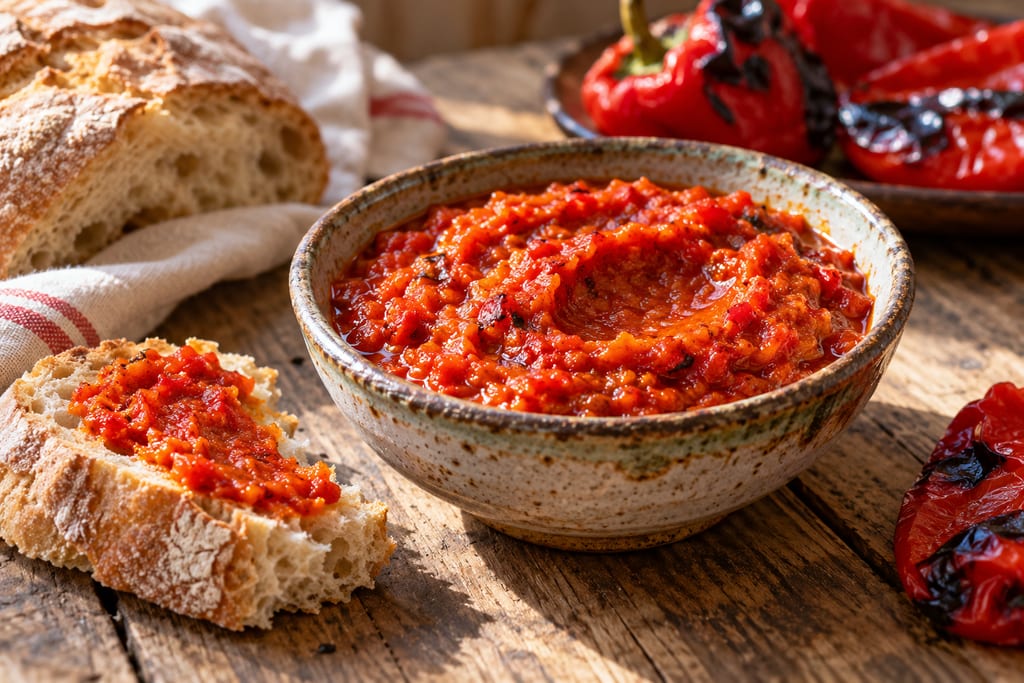
Ajvar
Ajvar is a cooked Balkan pepper preserve built around roasted red peppers, peeled, drained, ground and slowly fried with oil and seasoning. Leskovac’s protected version is a pepper specialty; regional versions vary.
 FermenteaWhere food goes to change
Mushroom ketchup · Mushroom catsup
A modern, non-fermented mushroom catsup: mushrooms simmer with cider vinegar, shallot and spices, then become either a thin seasoning or a thicker sauce.
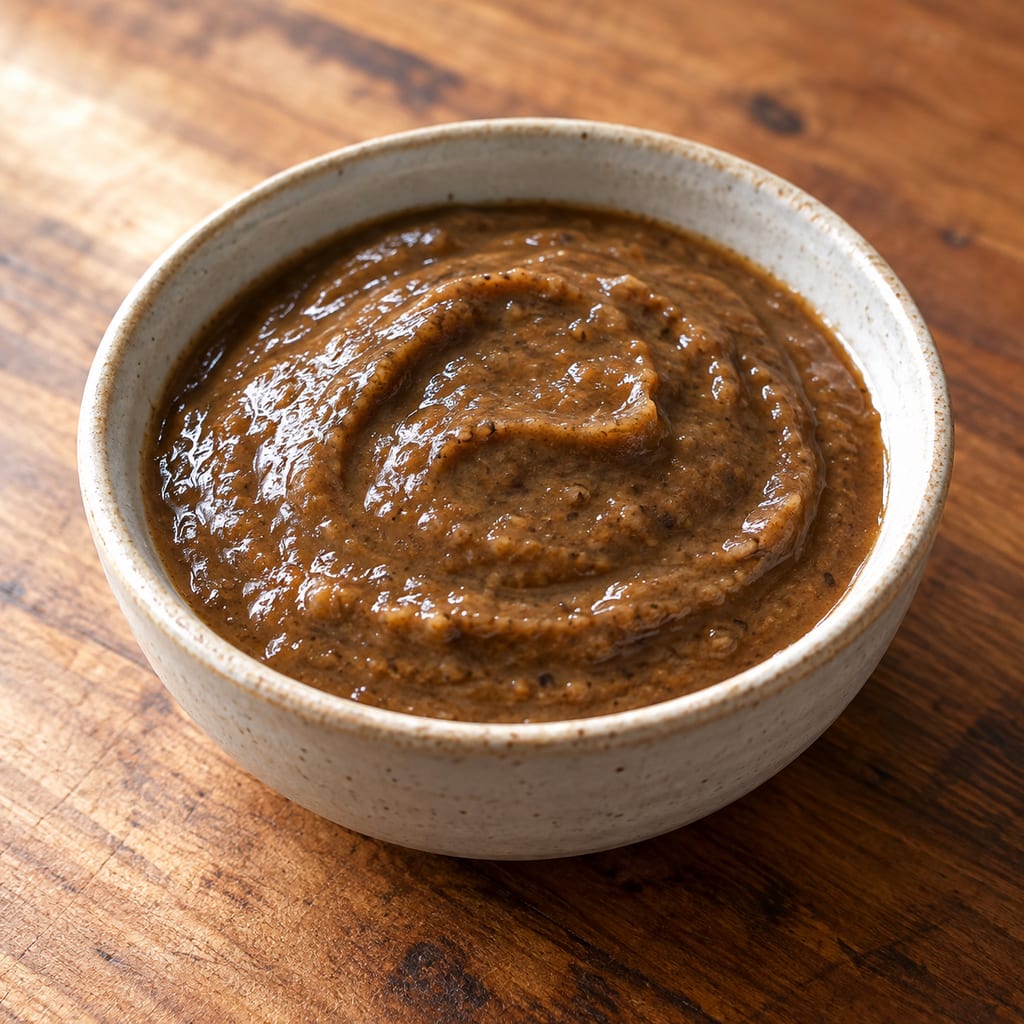
Before it meant a sweet red tomato sauce, ketchup, or catsup, named a much broader class of seasoning. Friedrich Accum's Culinary Chemistry, published in London in 1821, gives the name to 'several kinds of liquid pickles' made from savoury vegetable substances such as mushrooms and walnuts, and prints recipes for three kinds: mushroom, tomata and walnut. His walnut catsup pulps 28 lb of tender unripe walnuts in a marble mortar and steeps them for three or four days in two gallons of vinegar before the liquor is seasoned with shallots, cloves, mace, black pepper, cayenne and salt, boiled and strained. Neither of his two tomato versions contains sugar; the first is seasoned with anchovies, shallots, black pepper, mace, allspice, ginger and nutmeg and coloured with cochineal.
The mushroom catsup, which Accum says he copied from the Cook's Oracle, shows how salt did the work. Full-grown mushrooms were layered with salt in a deep earthen pan, and within two or three hours the salt had penetrated them and made them easy to break. They were mashed, left for a couple of days and mashed again each day, then sealed in a stone jar with black pepper and simmered in a pan of boiling water for at least two hours. The juice was poured off without squeezing the mushrooms, boiled, skimmed, left overnight, decanted through flannel and bottled in pints or half pints with peppercorns, allspice and a spoonful of brandy in each. Accum advised small bottles, since the catsup was best kept in quantities soon used. It is a record of how the sauce was made, not a method to follow: days at kitchen temperature and corked bottles have no place in a modern recipe.
This version keeps the flavour logic of the old catsup and drops its handling. Where Accum's salt took hours and days to break the mushrooms down, a covered pan does it in minutes: as 500 g of sliced mushrooms heat with 100 g of water and 60 g of cider vinegar, their cells collapse and give up their liquid. About 20 minutes of uncovered simmering then concentrates it. Salt, 8 g, is the main seasoning, as it was in the historical sauce. The 30 g of shallot echoes the eshallots of the old recipes, and black pepper with mace or allspice, at 0.5 g and 0.15 g, are spices Accum used. The optional 10 g of sugar is a modern touch, there to round the sauce for a palate used to sweeter ketchups.
The sauce then goes one of two ways. Strained, pressed and gently reduced to taste, it becomes a thin savoury seasoning in the spirit of the old liquid pickles, roughly 250 to 350 g of it. Blended with all its liquid instead, it becomes a thick modern ketchup of around 450 to 550 g. Evaporation, not the clock, sets the final amount. Either way it is an untested modern interpretation rather than an old preserving recipe: cool it promptly in small portions, keep it in the fridge at 4 °C or colder for no more than 48 hours, or freeze it.
Freeze the sauce in small portions so that one meal does not mean thawing the whole batch, leave room for expansion, and label each container with the version and the date. A domestic freezer should run at about −18 °C. Freezing is a pause, not a cure: it stops spoilage while the sauce stays frozen, but it does not kill bacteria and does not make food that was mishandled before it went in safe. Thaw a portion in the fridge and use it within 24 hours of thawing completely. A smooth sauce may separate or change in thickness and need a stir. Freezing also helps anyone developing the recipe. A few small containers frozen from the same batch straight away make steadier comparison samples later than a jar opened again and again, provided the thawing and any change in texture are noted.
This is a cooked condiment, not a fermentation. No starter culture is added and no microbial fermentation is intended. The mushrooms soften in a small amount of water and vinegar; the covered first stage traps steam and helps the slices release liquid without scorching. Once uncovered, the simmer lets water evaporate and concentrates the mushroom flavour. The final texture depends on evaporation and on whether the solids are retained.
The 60 g of cider vinegar is part of the flavour formula. Its labelled 5% acidity does not make this untested sauce shelf-stable, establish a finished equilibrium pH or validate canning. Salt seasons the sauce and draws out moisture as the mushrooms heat, but it is not being used as a measured preservation hurdle. Shallot contributes a mild allium note; black pepper and a small pinch of mace or allspice give warmth. Sugar is optional and rounds the sharpness, not a preservation control.
Use fresh, sound cultivated mushrooms and slice them to a reasonably even thickness. The formula does not call for a particular cultivar; note the type used if you want to compare batches. The 100 g of water gives the pan liquid to start the covered cook, while the mushrooms themselves release more as they soften. If the pan catches before that happens, lower the heat and stir rather than increasing it.
Cider vinegar labelled 5% acidity is specified. Salt is weighed because crystal size changes volume. The very small quantity of mace or allspice should remain restrained: extra spice can dominate this small batch. Omit the optional 10 g sugar for a sharper seasoning; keep it for a rounder sauce. These adjustments change the taste, not the storage guidance.
The yields are ranges because the recipe has two finishes. A blended batch retains the cooked mushroom mass and is naturally thicker; a strained batch removes solids and needs more evaporation for concentrated body. Weigh the finished sauce if you want repeatable strength. A lower final weight concentrates the same seasoning into less sauce, so taste before adding more salt or vinegar.
For a thin seasoning, strain the cooked mixture and press the mushrooms to recover liquid, then return that liquid to a gentle simmer and reduce until it tastes and pours as you like. The approximate yield is 250–350 g. A wide pan evaporates faster than a narrow pan, so weigh the contents as they reduce if you want to compare batches. Stop before the liquid becomes sticky or scorches; the goal is concentrated savouriness, not a guessed boiling time.
For a thicker blended ketchup, blend the softened mushrooms with their cooking liquid, following the blender manufacturer's instructions for hot liquids. This makes a sauce with an approximate yield of 450–550 g. The retained mushroom solids give it body, so it is not simply a reduced strained sauce. If it is thinner than you want, simmer gently and weigh as it reduces; if it is too concentrated, loosen it with a small measured addition of water and record the change.
Pan geometry, heat, mushroom moisture and the degree of pressing all affect the yield. A scale and a note of the finish chosen make the next batch easier to compare than a timer alone.
Use the strained version a spoonful at a time in gravy, soups, stews or pan sauces, where a concentrated savoury liquid can season a larger dish. Serve the blended version as a table condiment or alongside roasted vegetables and savoury pies. These are flexible uses for this modern formula, not claims about one fixed regional custom. The existing tomato ketchup family is a different sauce, with a different base and typically a sweeter profile.
The documented choices in this recipe are the thin strained seasoning or the thicker blended sauce, with sugar optional. For a future kitchen experiment, change one variable at a time: compare mace with allspice or omit sugar, while keeping the mushroom mass, vinegar, salt and finish method steady. Record the mushroom type, starting mass, final mass and whether you pressed or blended.
Walnuts belong to the historical context, not this ingredient list. Accum describes walnut catsup as a separate sauce with its own method. Do not add walnuts here and continue to call it the same recipe; a walnut-containing version would need a separate formulation and clear description.
This is an untested modern development formula. It has not been kitchen-tested, sensory-validated, measured for shelf life or evaluated as a canning process. Cool it promptly in shallow, clean portions and refrigerate at 4°C or colder. The conservative working window is 48 hours; that is a house convention, not a measured keeping time for this exact mixture. Freeze suitable portions promptly if you will not use them within that window. Thaw in the refrigerator and use promptly; freezing preserves food while frozen but does not sterilize it or undo unsafe handling.
Do not bottle this sauce for a cupboard. A vinegar percentage in an ingredient list does not establish a safe finished acidity, and salt or reduction has not been validated here as a preservation hurdle. Accum's multi-day resting, water-bath heating and corked-bottle instructions document nineteenth-century practice and are not a modern process recommendation.
For contrast, the National Center for Home Food Preservation publishes a tested tomato ketchup formula with its own ingredient proportions, jar size and altitude-adjusted processing schedule. That safety guidance applies to that exact recipe; it cannot be transferred to this mushroom sauce. A shelf-stable mushroom ketchup would need its own tested formulation and process.
The geographic claim this page makes is deliberately narrow. Accum published Culinary Chemistry in London in 1821, and its contents list mushroom, tomata and walnut catsup as separate entries. That places this written account in a British print context at that date; it does not establish that the preparations originated in London, were unique to Britain, or were used uniformly across the country. Nor does a cookbook recipe establish how common a sauce was in everyday households. The modern preparation is not presented as a national or regional tradition.
Catsup and ketchup appear as alternate spellings in the historical title and in later product names. Here “catsup” is retained in the recipe name to signal the older usage, while “ketchup” remains an alias readers may search. The terms do not turn the old mushroom liquid into modern tomato ketchup. Accum's separate entries show that ingredient base and method mattered: mushroom, tomato and walnut were distinct recipes within a broader seasoning family.
The historical account also reminds us that food preservation advice changes with evidence and equipment. Accum wrote for a household pantry and a different material culture; this page uses his text to explain a food's history, not as a current safety authority. Its own practical directions are those of a small, fresh cooked sauce: serve it chilled or freeze portions, and keep it out of the cupboard.
Scaling: weigh every ingredient; scale by mass
Untested modern formulation; no measured shelf life or process validation.
Not for room-temperature storage or home canning. Do not use historical resting, bottling or corking practices as a current safety process.
No source in this record establishes a place.
Ajvar is a cooked Balkan pepper preserve built around roasted red peppers, peeled, drained, ground and slowly fried with oil and seasoning. Leskovac’s protected version is a pepper specialty; regional versions vary.
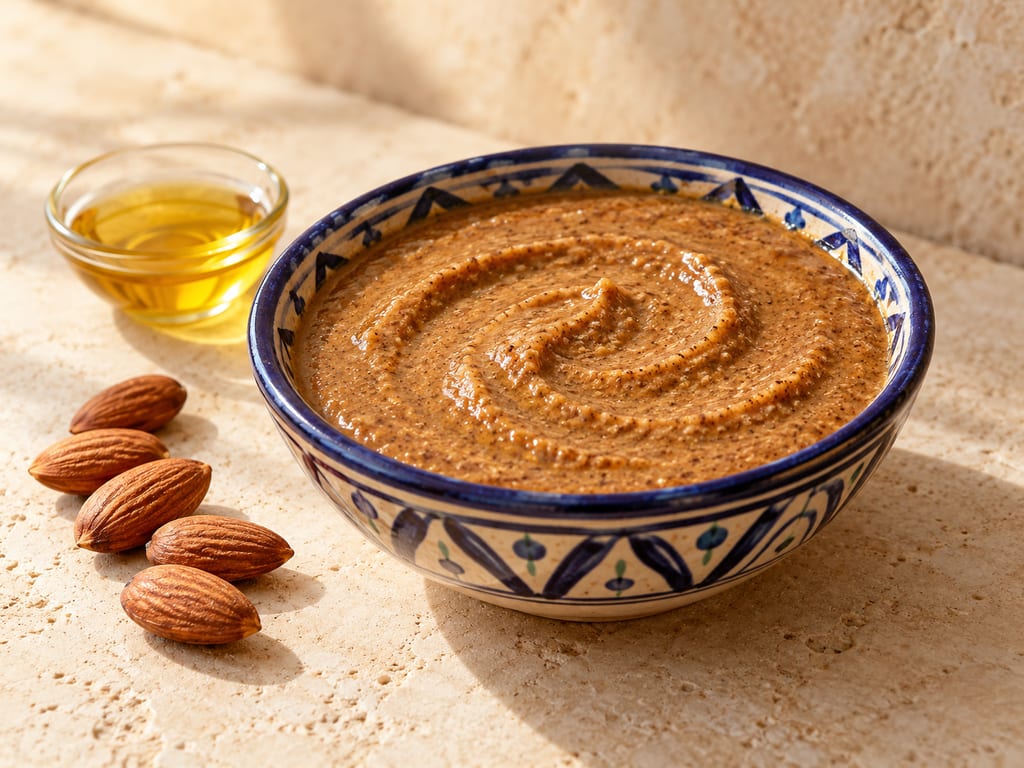
Amlou is a nutty, lightly sweet Moroccan spread of roasted almonds, culinary argan oil and honey. The almonds are ground first, then loosened with oil and sweetened; the balance can range from a thick spread to a dip.
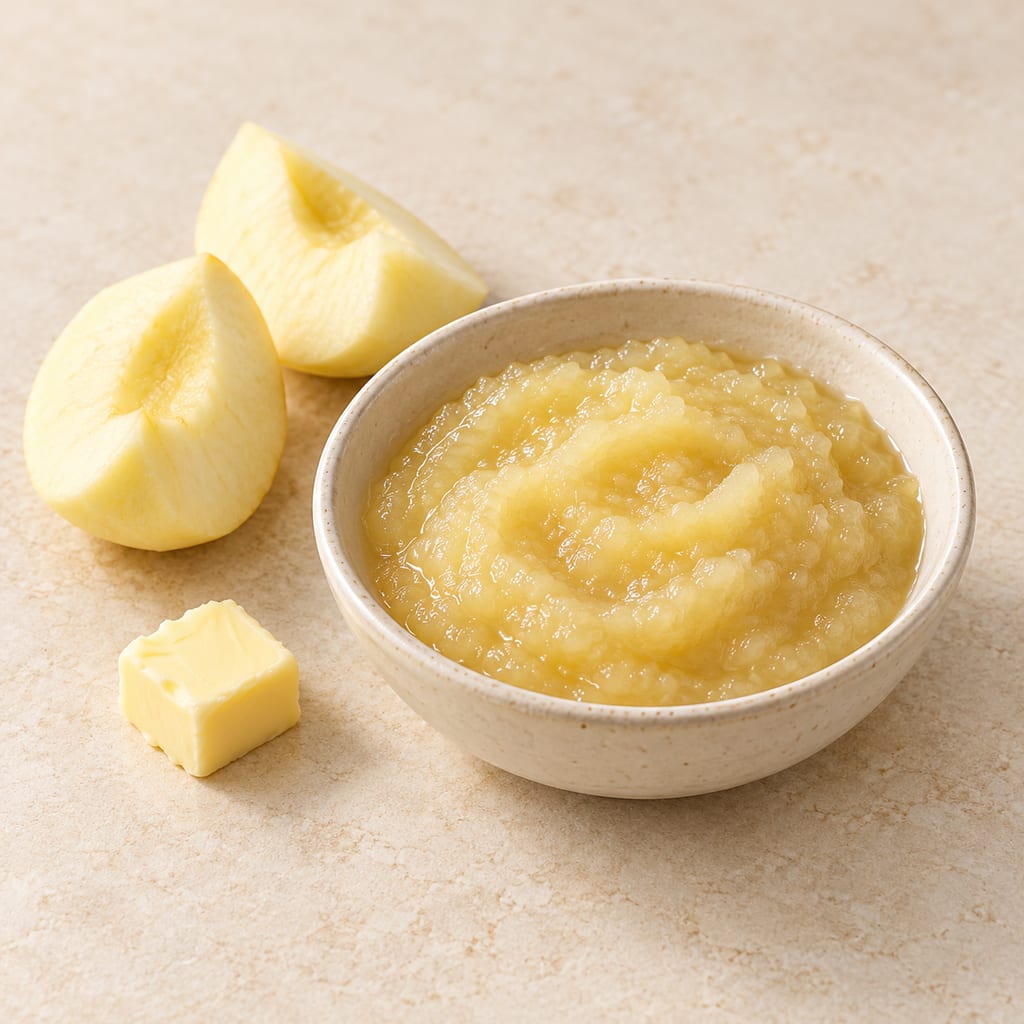
Apple sauce for goose and pork is a plain English accompaniment: cooked apples pulped with water, then sweetened with sugar and finished with a little butter.

A warm dip of garlic, anchovy and olive oil, often enriched with butter, that Piedmont serves over a flame with raw and cooked vegetables and bread.
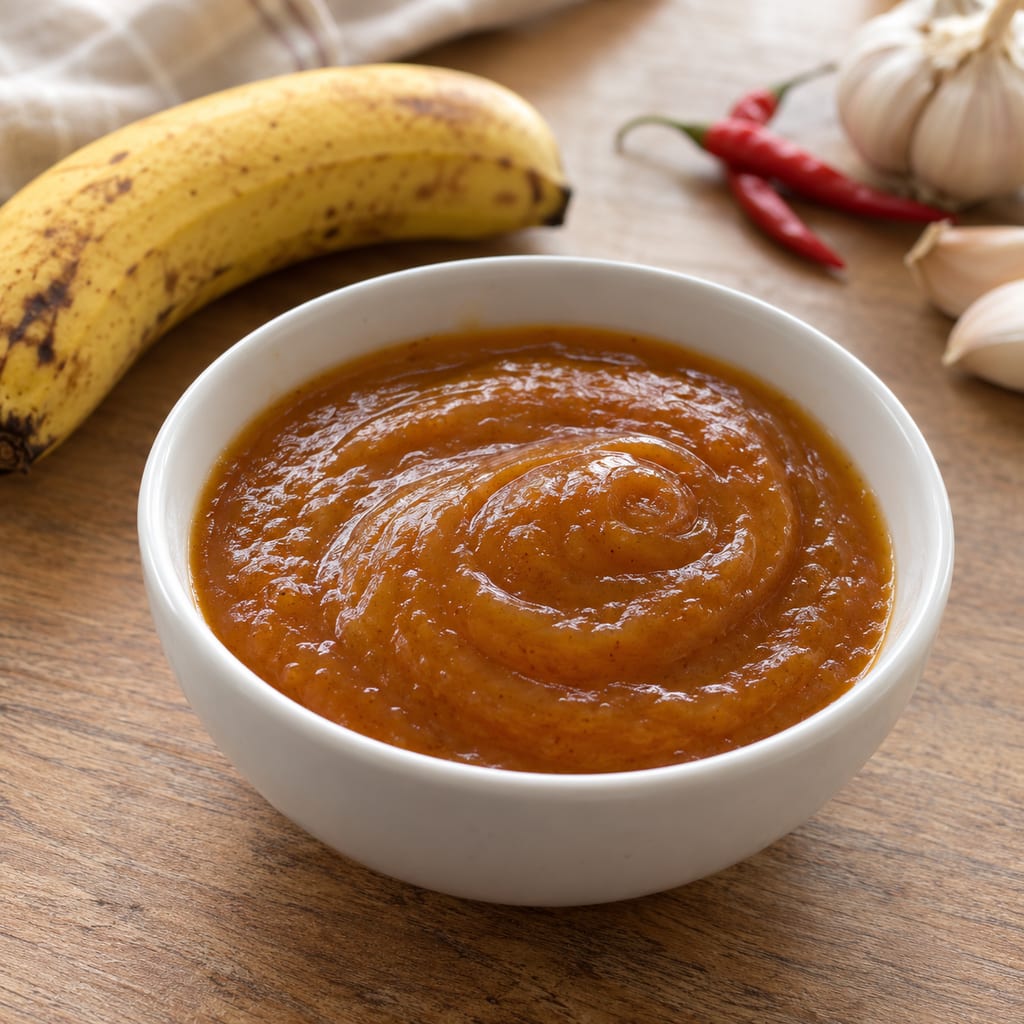
A sweet-hot table sauce of ripe banana simmered with vinegar, sugar, onion, garlic and fresh chilli, in the manner of Philippine banana ketchup. An untested development batch of about 500 g.
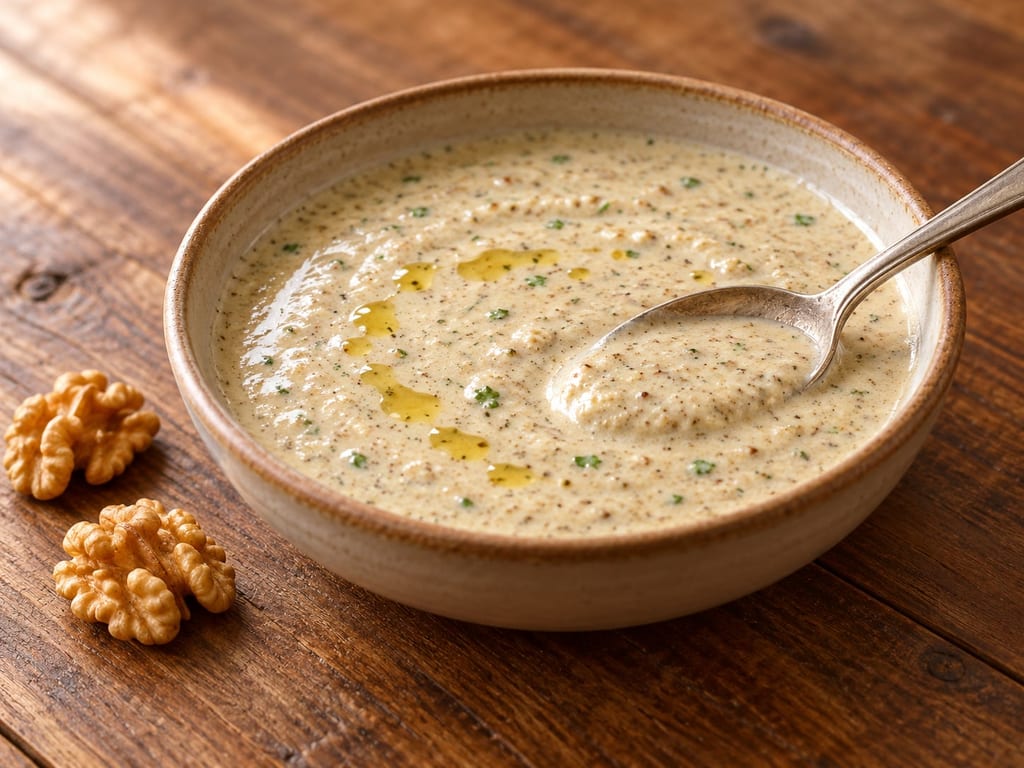
A Georgian walnut sauce of ground walnuts, garlic, vinegar and spices, thinned with water or broth. It is served with poultry, vegetables and bread, and is the sauce of the dish satsivi.
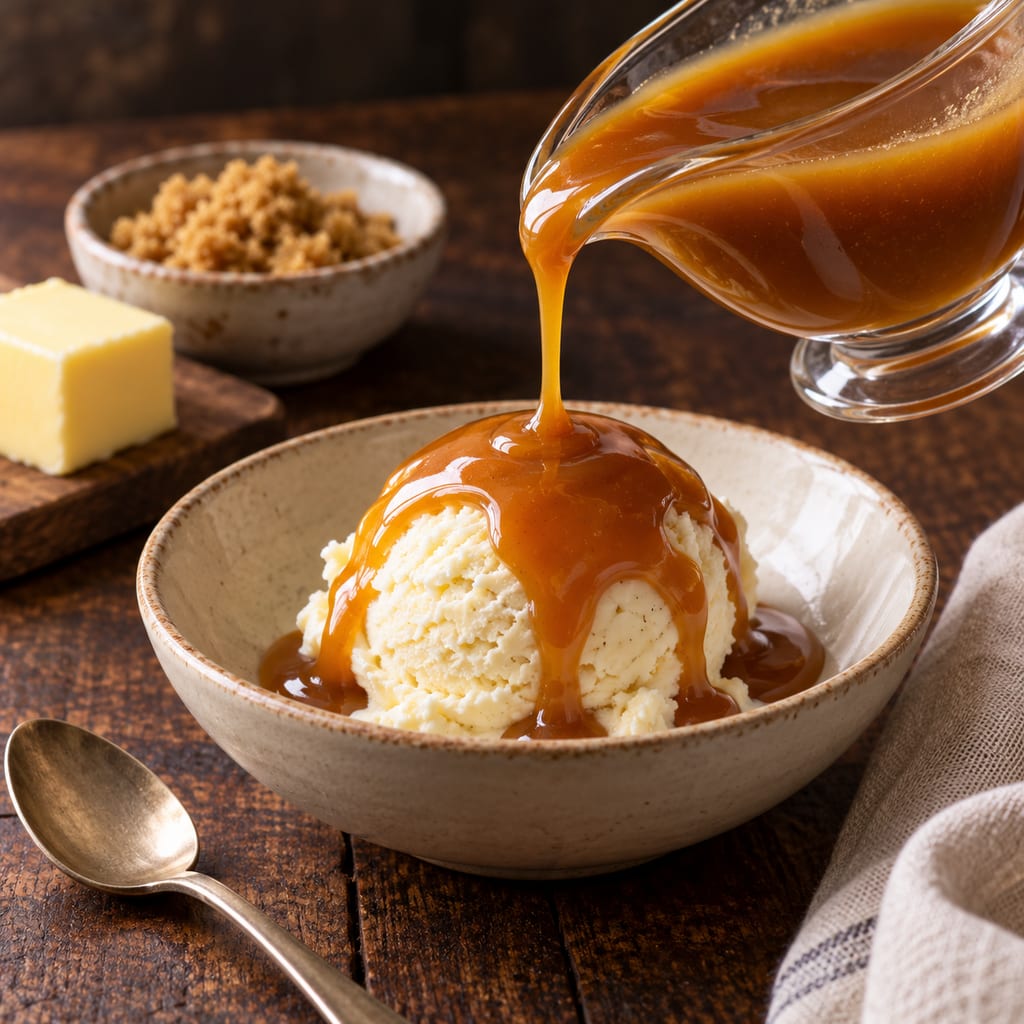
A pourable dessert sauce of brown sugar, butter and cream, with a little corn syrup and salt. It is the sauce form of the butterscotch confection and is made without water, unlike caramel.
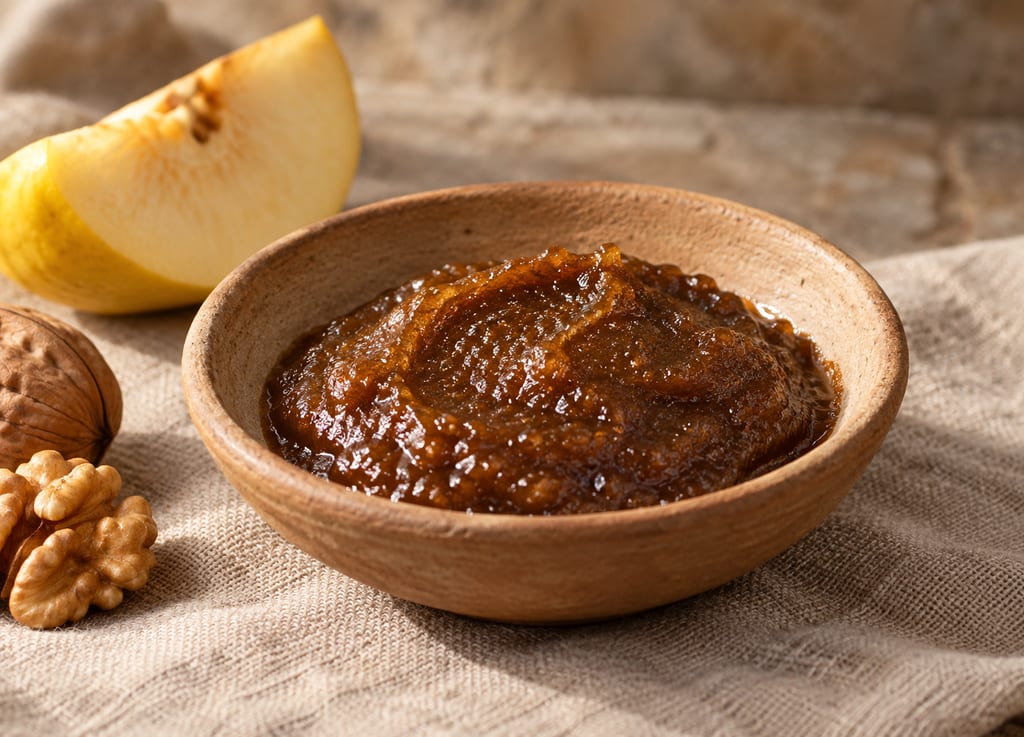
Byzantine murrī is a cooked imitation of murrī from the medieval Arabic repertoire, made from scorched honey, toasted bread, walnuts, quince, carob and spices rather than from a long grain fermentation.
No community contributions have been published for this entry yet.
Sign in to contribute. Published comments and photos are free to read.
Friedrich Accum; Project Gutenberg
Culinary Chemistry (1821), Project Gutenberg eBook #60163Cited in: When catsup meant a savoury pickle; A modern refrigerated version; What this sauce is and how it works; Choosing ingredients and reading the result; Two finishes from one saucepan; Serving and variations; A British printed record, with limits
Food Standards Agency (published on GOV.UK)
How to chill, freeze and defrost food safely (FSA guidance, HTML)Cited in: A modern refrigerated version; Freezing it well; Cold storage and the limits of this recipe
USDA Food Safety and Inspection Service
Freezing and Food Safety (FSIS Food Safety Basics)Cited in: Freezing it well; Cold storage and the limits of this recipe
FoodSafety.govSafety
4 Steps to Food SafetyUse shallow containers and refrigerate cooked food promptly; keep refrigerators at 4°C/40°F or below.
Cited in: Cold storage and the limits of this recipe
National Center for Home Food Preservation, University of Georgia; adapted from USDA Complete Guide to Home CanningMethod comparison · Safety
Tomato KetchupNCHFP publishes a separate tested tomato ketchup formulation with specified ingredients, pint jars and an altitude-adjusted process. This mushroom recipe is not that tested process and does not borrow its safety status.
Cited in: Cold storage and the limits of this recipe