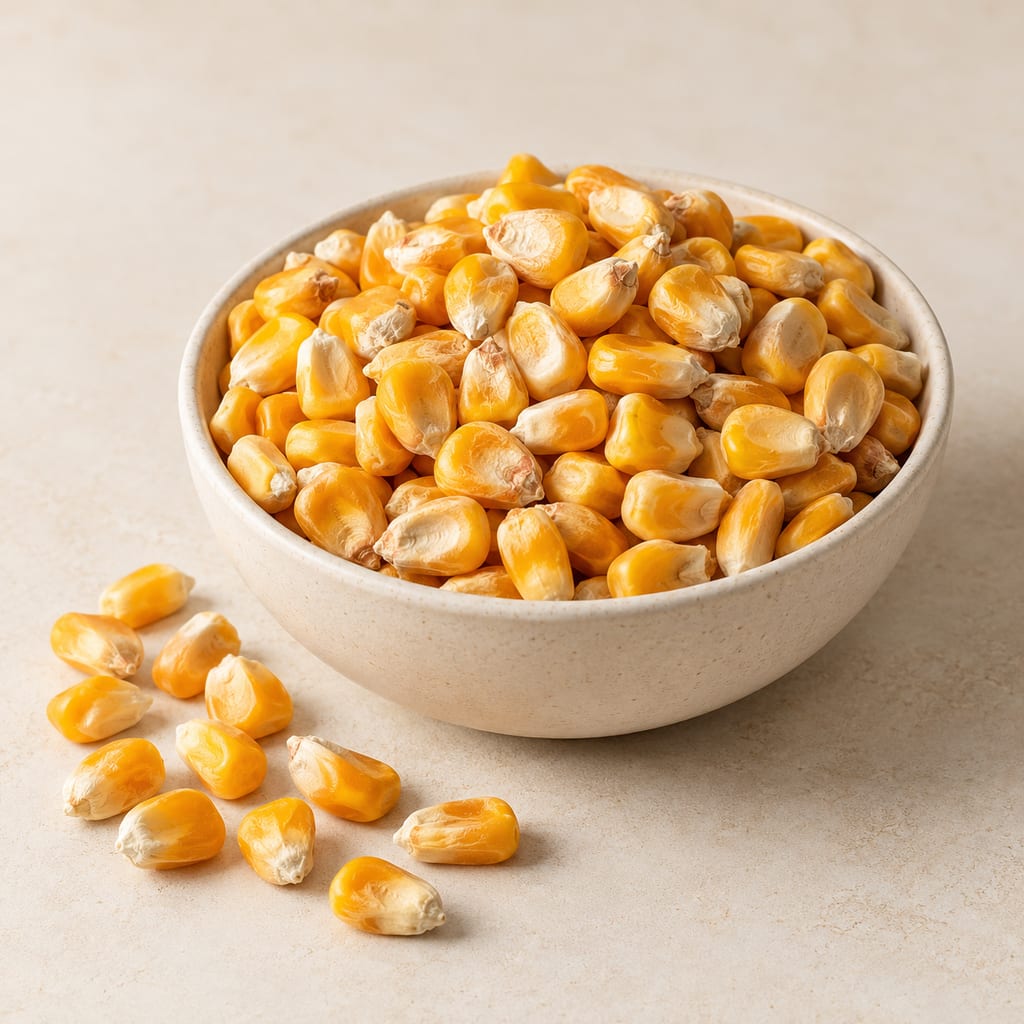
Maize
Maize is the foundational grain of Andean fermentation. Its role in brewing chicha de jora depends on germination into jora, a malted form generating enzymes and sugars necessary for alcoholic fermentation.
 FermenteaWhere food goes to change
Built structures · household-granaries
cuexcomatl · cuescomate · cuezcómate · coscomate
A cuexcomate is a fixed household granary of central Mexico: a hollow earthen body with a dry-grass roof, used chiefly to store maize. Its shape and construction vary by region.
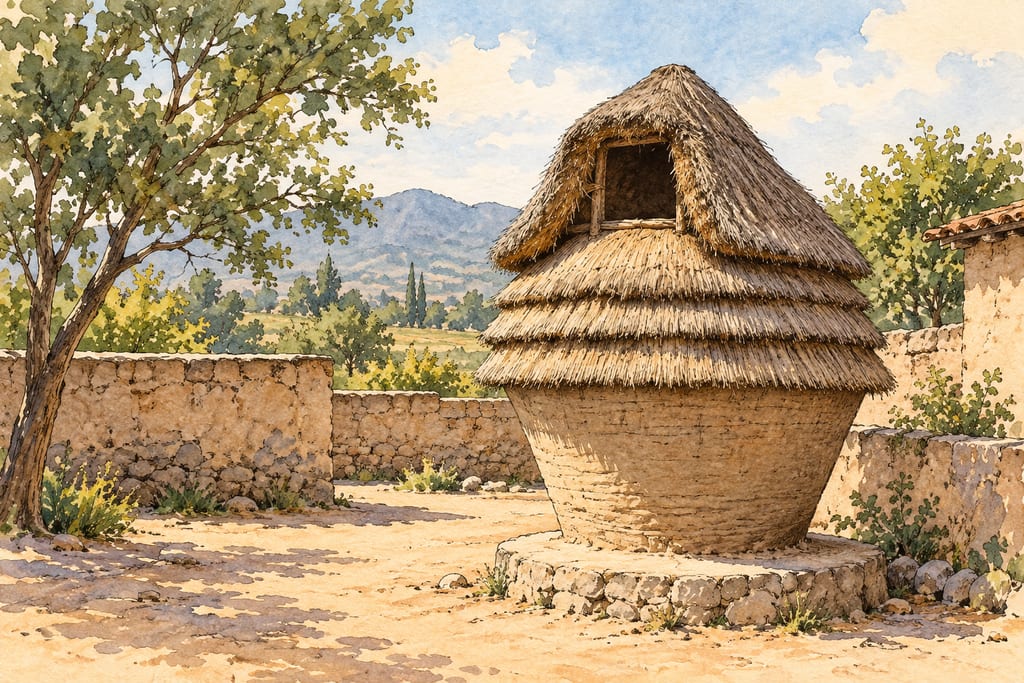
Cuexcomate, also written cuescomate or cuexcomatl, names a fixed granary associated with rural households in central Mexico. The structure is a large hollow body of earth or clay mixed with dry grass, crowned by a thatched roof. Its rounded silhouette gives it the outline of a jar or olla, although it is a building made where it stands rather than a portable storage vessel.
The Mexican education ministry's Chamakes account describes cuexcomates holding maize and beans and places surviving examples in the State of Mexico, Morelos, Puebla and Tlaxcala. It describes common forms with grass roofs, a straw covering around the upper body, a base that may be round or rectangular, and a small clay olla at the roof peak. These features belong to a family of regional forms, not a single standard blueprint.
Figueroa Viruega characterizes the body as semispherical and earthen, with a covering of dry grass known locally as zacate. The SEP account places stores beside houses or in the centre of a family plot. It describes grain being carried up a wooden ladder and poured through an opening above. That top entry makes the cuexcomate a store built for household harvests, rather than a masonry cellar or a freestanding market silo.
Materials and details differ. SEP describes clay and zacate and notes that current replicas made at Chalcatzingo use natural materials including clay, stone and straw. Its account also reports a broad two-to-four-metre height range; Figueroa Viruega stresses that the form and size vary geographically and have changed over time. The sources do not provide wall thickness, structural dimensions, a foundation plan, material proportions or a universal roof frame, so the outline here should not be treated as building instructions.
The cuexcomate's documented role is dry-grain storage, especially maize. SEP says the structure helped keep grain fresh and free of pests over long periods, but gives no measured storage trial, moisture condition or duration; this is a reported traditional benefit rather than a quantified performance guarantee. Figueroa Viruega connects the form with Mesoamerican maize culture and reports archaeological evidence at Cacaxtla in Tlaxcala, alongside later household use in Morelos.
Archaeological context and living architecture should be read together without assuming every present-day granary reproduces an ancient design unchanged. Forms vary across Morelos, Puebla and Tlaxcala and adapted over time; some stores were lost or replaced by larger granaries. In Morelos, cuexcomates were still being used when the 2017 study was published; other examples had disappeared or were replaced by larger stores. The evidence supports a regional building tradition with a long record, but does not date the beginning of the present form or establish uninterrupted continuity from a particular archaeological example.
Figueroa Viruega links the cuexcomate to Mesoamerican maize storage and notes archaeological evidence at Cacaxtla, Tlaxcala. The same study documents later regional adaptations and living uses, but does not establish that every current structure is unchanged from a pre-Hispanic form.
A build is made where it stands: moving it means building it again.
Forms and use vary within the state; the row does not claim a single Morelos design.
Presence is documented; this is not a claim of identical construction or continuous use at every locality.
Cacaxtla is a separate archaeological attestation; the wider state row does not make every form the same.
The source supports presence, not a detailed local construction variant.
This archaeological attestation does not establish uninterrupted continuity with the present household form.
Maize is the foundational grain of Andean fermentation. Its role in brewing chicha de jora depends on germination into jora, a malted form generating enzymes and sugars necessary for alcoholic fermentation.
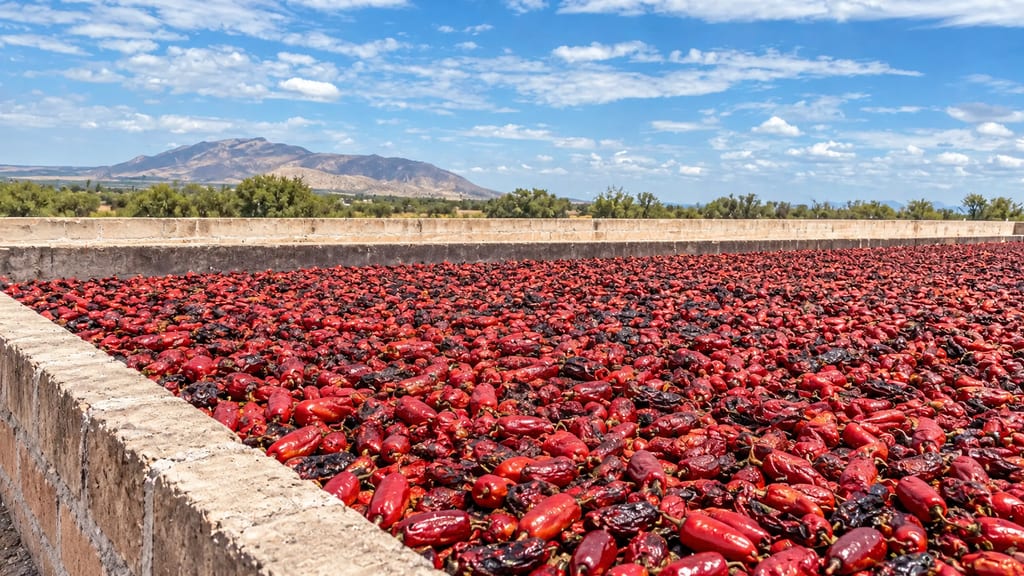
A fixed masonry-and-wood structure used in Camargo to smoke and dry ripe jalapeños into chipotle. Sources give regional dimensions and one separate experimental oven, not a safe construction plan.
A CIMAV industrial chipotle oven combines solar-heated water and recirculated air with auxiliary gas heat and a separate wood smoker. It differs from Camargo’s traditional open masonry cocedores; reports describe capacity differently.
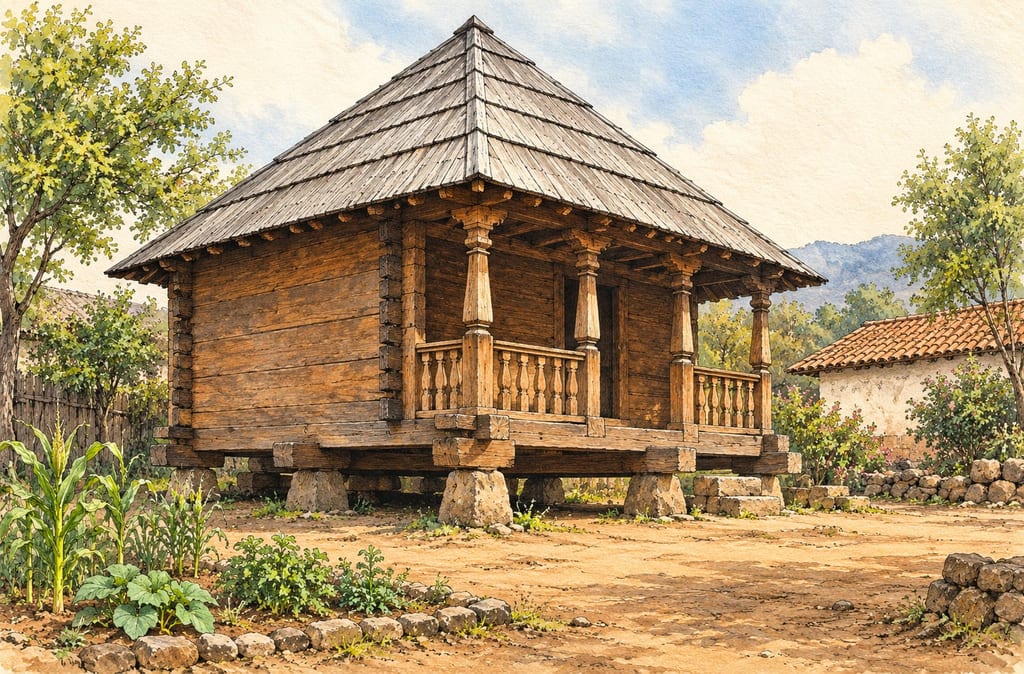
A Purépecha troje is a timber household dwelling with a raised loft for grain and seeds. Its portal, room and tapanco combine family life, food work and storage in a single structure.
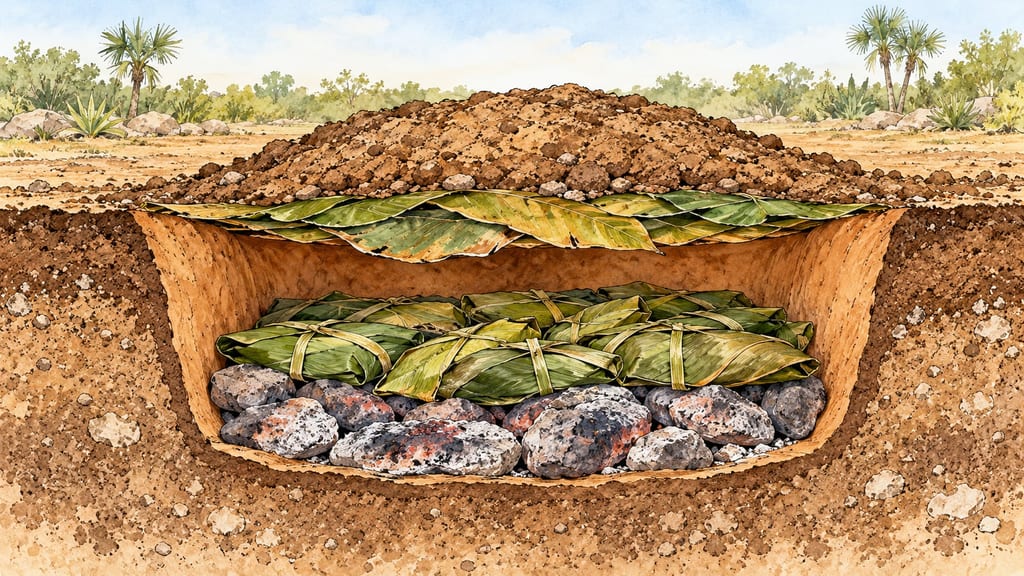
An in-ground Yucatecan Maya oven that uses fire-heated stones and a covered pit to cook food slowly. Documented pit depth, coverings and loading sequence vary; this page presents sourced examples rather than one standard design.
No community contributions have been published for this entry yet.
Sign in to contribute. Published comments and photos are free to read.
Secretaría de Educación Pública (SEP), ChamakesForm · Materials · Use · Geography · Modern construction
El Cuexcomate: El Granero Antiguo de MéxicoSEP describes the cuexcomate as a traditional central Mexican grain store used for maize and beans and identifies examples in the State of Mexico, Morelos, Puebla and Tlaxcala.
SEP describes clay and dry grass, a grass roof, a straw skirt, a round or rectangular base, a clay olla at the peak, and loading through an upper opening reached by a wooden ladder.
SEP reports a two-to-four-metre height range for the forms it describes and says current cuexcomate making is demonstrated at Chalcatzingo, Jantetelco, Morelos.
SEP attributes freshness and pest exclusion to the design but gives no measured storage trial or operating conditions.
Cited in: A household store shaped like an earthen pot; Structure, loading and household setting; Maize storage and a layered historical record
Memorias del Seminario Iberoamericano de Arquitectura y Construcción con Tierra (SIACOT), issue 17, pp. 650–657History · Form · Geography · Use
Cuexcomatl una reminiscencia mesoamericana en el altiplano central mexicano en extinciónThe paper describes a semispherical earthen grain store with a dry-grass roof, used especially for maize, and notes ritual significance in the account it reviews.
It documents cuexcomates in Puebla, Tlaxcala and Morelos, reports archaeological evidence at Cacaxtla, and states that form and size vary by place and have adapted over time.
The study reports that cuexcomates still existed and were used in Morelos at the time of publication, while some were lost or replaced by larger granaries.
Cited in: A household store shaped like an earthen pot; Structure, loading and household setting; Maize storage and a layered historical record