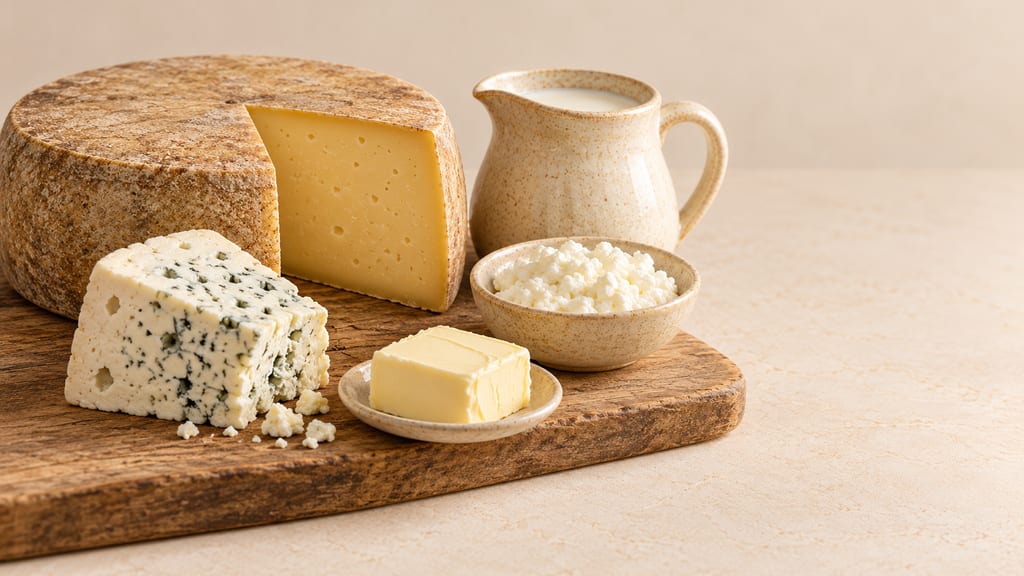
Milk, curd and the world's dairy stores
Follow milk into cheese, cultured drinks, butter, dried curds and sweets: a journey through the animals, seasons and household decisions behind the world's dairy foods.
 FermenteaWhere food goes to change
Equipment · Bags, sacks and casings
A Guda is the hide sack used to mature Tushetian cheese. The evidence supports its traditional material and role but leaves standard dimensions and detailed construction open.
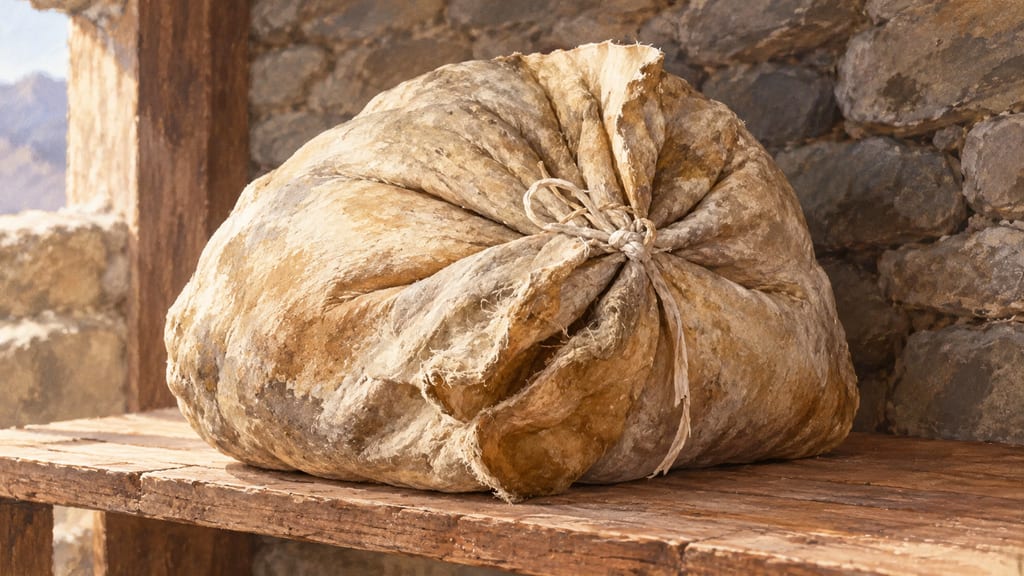
In Tusheti, Guda cheese matures in a sheepskin bag. Here the Guda is the equipment: a flexible hide vessel that contains cheese while it ripens, not an edible sausage casing or a generic leather pouch. This use belongs to the Tushetian cheese tradition in the Caucasus mountains. The cheese is made from sheep milk or a sheep-and-cow mixture. The name should not be used to generalize this sack to every cheese called Guda elsewhere in Georgia.
For the Tushetian form documented here, the material is sheepskin. Georgia’s registered Guda specification is broader: it allows a bag made from sheep, goat or calf skin, with the inside trimmed. That specification concerns the protected cheese name and its production area, which extends across several eastern Georgian regions; it does not establish that every place uses the same hide or sack. The inspected records provide no template, seam layout, standard volume or precise closure design. A Georgia Travel photograph pairs a cheese wheel with a hide sack, but it is not a technical drawing of the vessel.
Four or five cheese pieces are layered with salt inside the Tushetian bag. It is sealed, kept in a cheese room, turned repeatedly so salt settles evenly, and used for a 60-day ripening period. The registered Guda specification likewise sets at least 60 days for Guda. These details explain the sack’s role in a named cheese process; they are not a safe home cheesemaking procedure and do not show that the hide alone causes the cheese’s character.
Tusheti lies within Kakheti under Georgia’s current administrative divisions. The protected-name specification covers a wider eastern Georgian area, so this page keeps the specific Tushetian sheepskin example distinct. The inspected material does not date the first Guda sack, identify its maker, or document standard dimensions, capacity, hide-preparation steps beyond trimming the inside, or cleaning and reuse. The 2012 registration date applies to the geographical indication, not to the origin of the vessel.
The Tushetian preparation is described as a longstanding tradition, but no first attestation for the sack is given. The Georgian Guda geographical-indication record dates registration of the product name to 2012, not the invention or first use of the vessel.
No dimensions, capacity, seams, closure pattern, maker, source of finished sacks, reuse practice or cleaning method is established by the inspected material.
Source →The broader registered Guda specification and the specifically Tushetian sheepskin account are not treated as a single uniform practice.
Source →The specific sheepskin-sack association is documented for Tushetian Guda. It is not a claim that all Georgian Guda cheese or sacks are made only in Tusheti.
Follow milk into cheese, cultured drinks, butter, dried curds and sweets: a journey through the animals, seasons and household decisions behind the world's dairy foods.
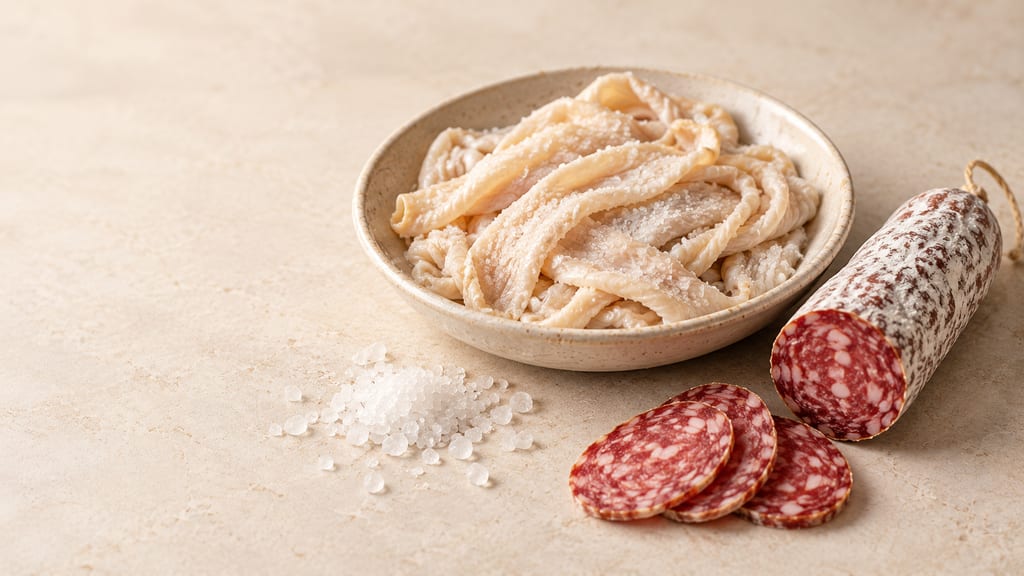
Gut, stomach, bladder, caul and skin have held food for as long as recipes have been written down. Which part of the animal a cook chose still decides a food's shape, how it dries and smokes, and how it is eaten.
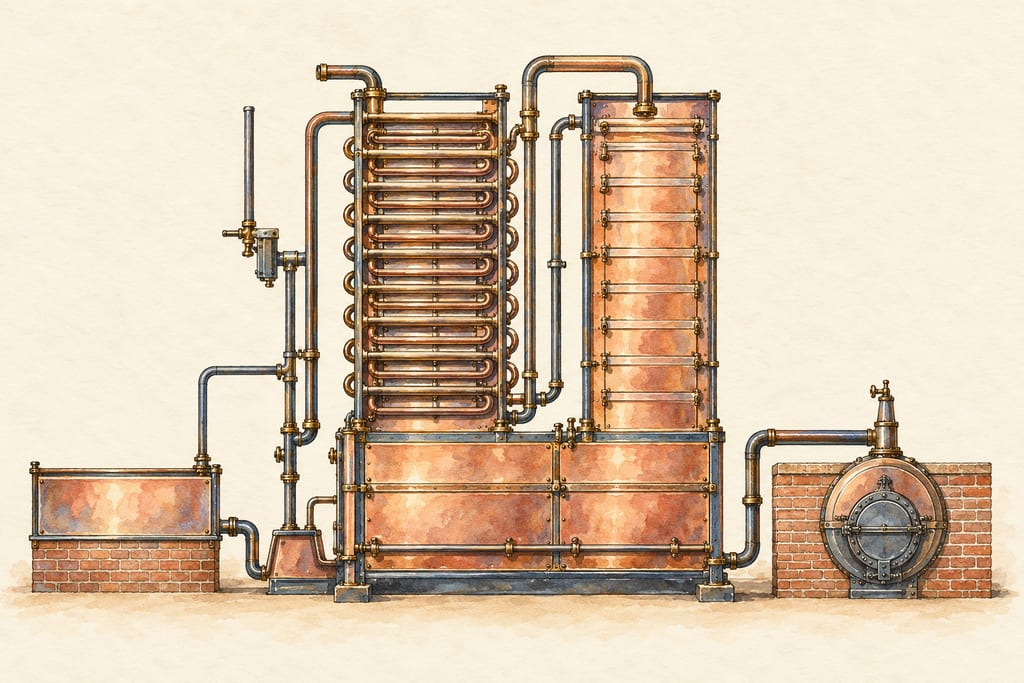
A column still is a distillation apparatus built around one or more vertical columns. Its continuous and rectifying designs appear in several spirits traditions, but materials and product character vary by installation.
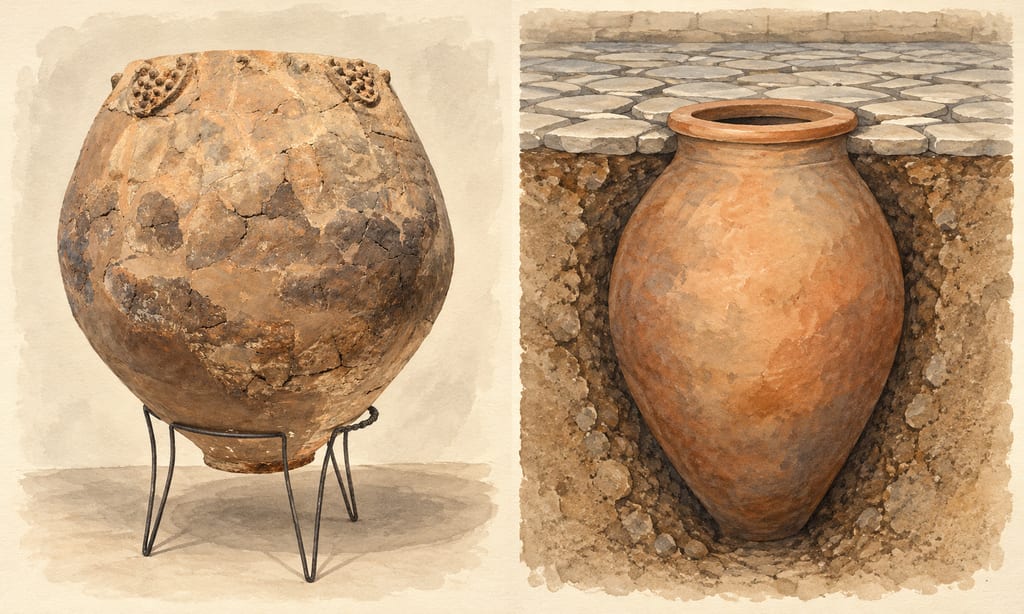
Very large early Neolithic pottery jars from Georgia carry the earliest biomolecular evidence for grape wine in the Near East. Their probable wine role is documented; their burial and exact relationship to modern qvevri are not.
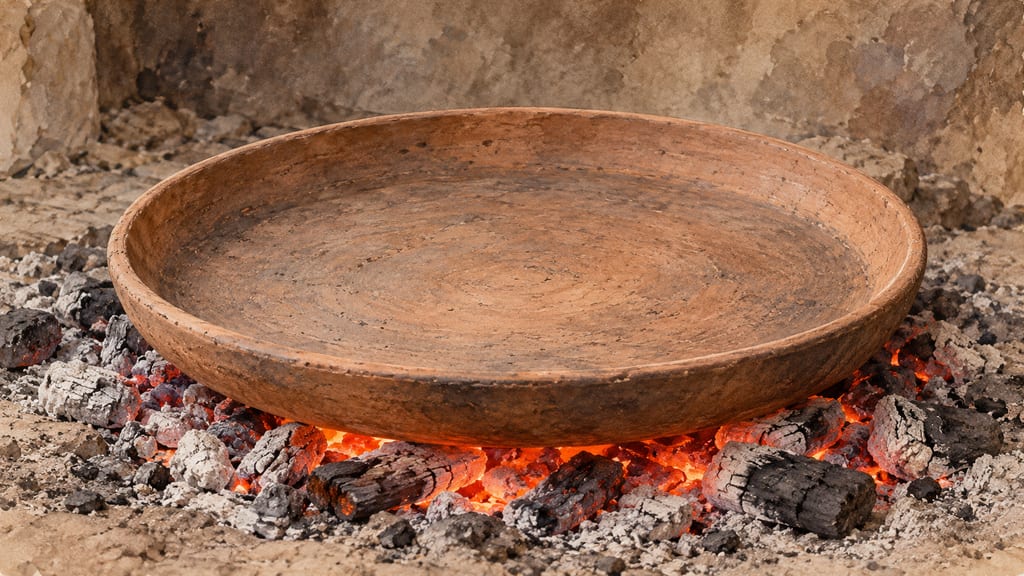
A ketsi is a Georgian cooking pan traditionally used over hearth embers. Sources document clay pans in Imereti and a Gurian maker of stone or clay examples; they do not describe one standardized design.
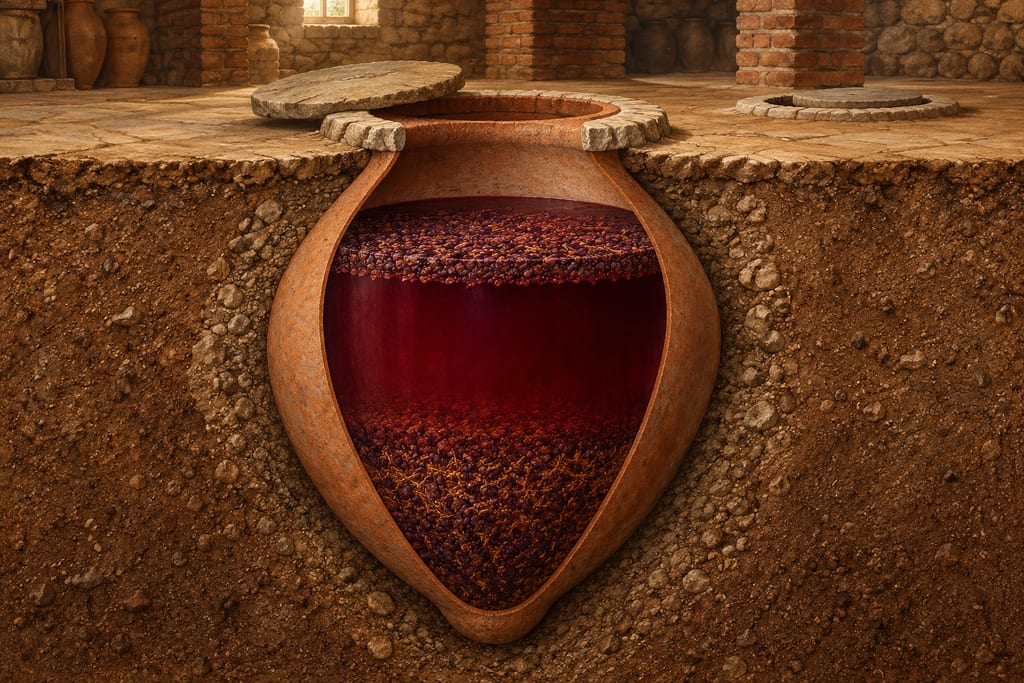
A qvevri (ქვევრი; kvevri), called churi (ჭური) in Imereti, is a large fired-clay Georgian wine vessel traditionally installed upright in the ground for fermentation, maturation and storage.
No community contributions have been published for this entry yet.
Sign in to contribute. Published comments and photos are free to read.
Georgian National Tourism Administration (Georgia Travel)Vessel · Method · Geography
Tushetian GudaTushetian Guda is made from sheep milk or a sheep-and-cow mixture and ripened in a sheepskin bag.
The page places the tradition in the mountains of Tusheti and describes the cheese as made in summer.
It describes layered salt, a sealed bag, regular turning and 60 days of ripening.
Cited in: A hide sack for Tushetian Guda; Hide material and documented variation; A maturation vessel, not a recipe; Geography and evidence limits
National Intellectual Property Center of Georgia (Sakpatenti)Material · Form · Geography · History
Geographical Indication: GudaThe registered Guda specification permits sheep, goat or calf skin, trimmed from the inside, as the ripening bag.
It records a minimum ripening period of 60 days.
The registered cheese production area spans Kakheti, Kvemo Kartli, Samtskhe-Javakheti and Mtskheta-Mtianeti in eastern Georgia; this is broader than the specifically Tushetian vessel context.
The document gives 24 January 2012 as the geographical-indication registration date.
Cited in: Hide material and documented variation; A maturation vessel, not a recipe; Geography and evidence limits
Georgian National Tourism Administration (Georgia Travel)Geography
TushetiThe tourism authority describes Tusheti as part of Kakheti region and Akhmeta Municipality under current administrative divisions.
Cited in: Geography and evidence limits