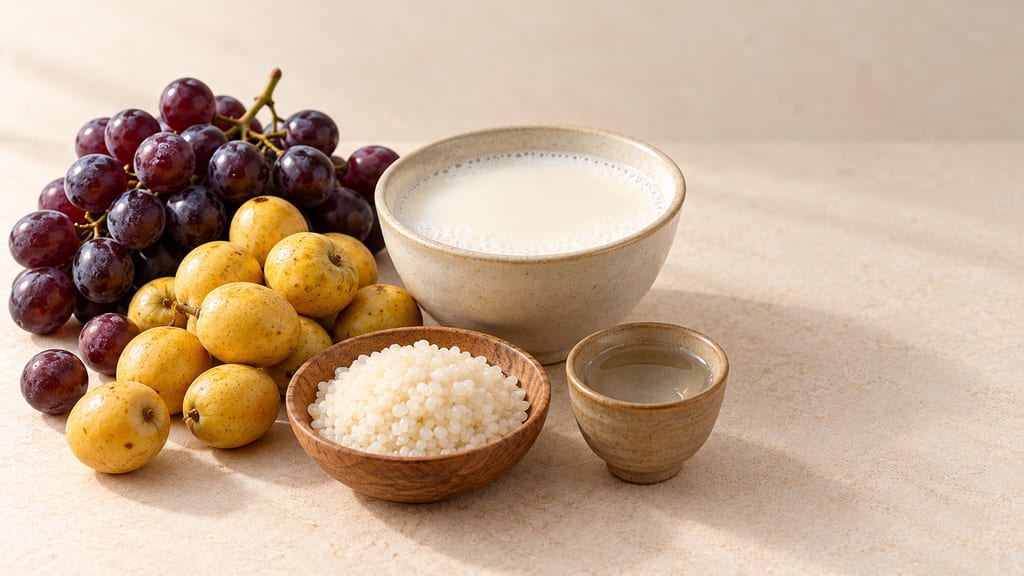
Harvests into drinks: fruit, grain and milk
A marula harvest, a rice mash and a bowl of fermented mare’s milk reveal different ways to make alcohol, and different kinds of knowledge behind the drink.
 FermenteaWhere food goes to change
Equipment · Historical object · Jars, pots and crocks
Very large early Neolithic pottery jars from Georgia carry the earliest biomolecular evidence for grape wine in the Near East. Their probable wine role is documented; their burial and exact relationship to modern qvevri are not.
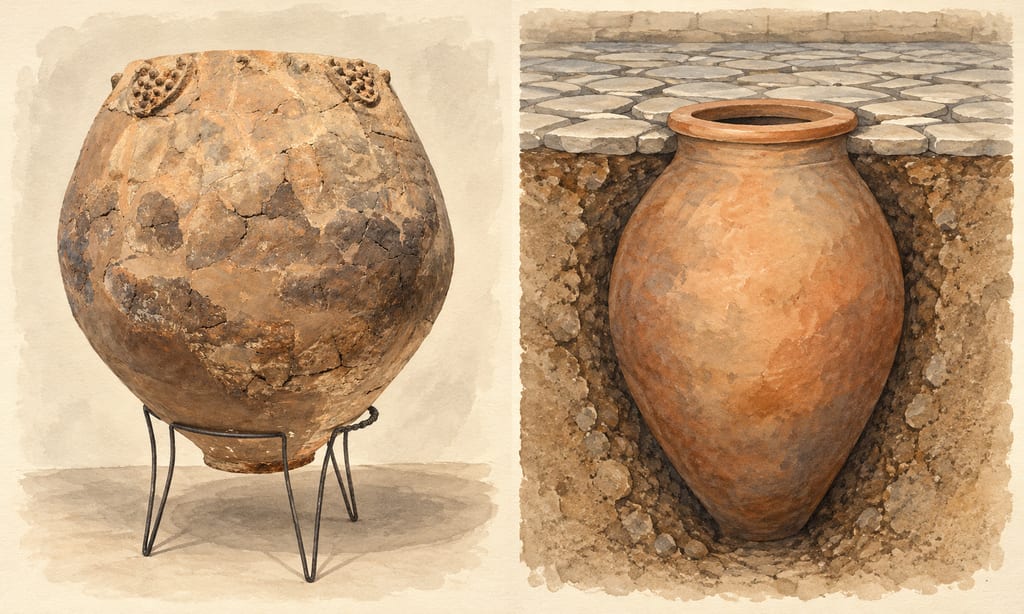
Chemical residue analyses from pottery at Shulaveris Gora and Gadachrili Gora in present-day Georgia provide biomolecular evidence for grape wine around 6000–5800 BCE. The PNAS study combines that evidence with environmental and botanical findings; it calls the early jars probable combined fermentation, ageing and serving vessels. This is a reasoned functional interpretation for a common jar type, not proof of the contents or use of every individual pot.
The same study describes a large jar from nearby Khramis Didi-Gora as a useful example of the period’s pottery profile. It is nearly a metre high and wide, with estimated volume above 300 litres and a small flattened or low pedestal base. Some very large jars carry clay globules set within curved strips near the rim, interpreted as a schematic grape-cluster motif. The museum jar is a visual comparison, not one of the pottery sherds whose residue established the wine evidence.
The PNAS authors explicitly say that the position of the Shulaveri and Gadachrili jars is unknown: the finds do not show whether they stood above ground or were partly or fully buried. Their small bases may invite a burial hypothesis, but that possibility is not a documented installation. The authors place the earliest archaeological evidence for qvevri winemaking in Georgia much later, in the eighth–seventh centuries BCE; the long interval prevents a claim that the Neolithic jars were modern qvevri unchanged.
A different, living Georgian practice is well documented. UNESCO describes the qvevri as an egg-shaped earthenware vessel, sealed and buried for fermentation; the National Wine Agency records regional differences, including qvevri buried in Kakhetian cellar floors and a distinct outdoor practice in western Georgia. The cutaway illustration pairs these two records for comparison: the exposed Neolithic jar is not shown underground, while the buried vessel represents the documented modern qvevri tradition.
Pottery is durable, but residue, shape, decoration and find position answer different questions. Chemical traces can support what a vessel held; a common jar form and botanical remains help interpret likely use; neither alone reveals its exact routine. A broad body and small base are not proof of burial, and a grape-like ornament is not itself proof of wine. The page keeps those observations separate from the present-day qvevri tradition.
This entry describes an archaeological jar class and the grape-wine evidence associated with it, rather than a complete ancient recipe or a reconstruction of a Neolithic cellar. No firing schedule, seal, lid, capacity standard, wall thickness or care instructions are reported for the class. Modern qvevri are a useful Georgian comparison, but their specific shape, burial and fermentation practice should not be projected back onto every early sixth-millennium vessel.
McGovern et al. report chemical evidence for grape wine in pottery from Shulaveris Gora and Gadachrili Gora dated about 6000–5800 BCE. The study treats very large jars as probable combined fermentation, ageing and serving vessels, while distinguishing this evidence from later qvevri winemaking.
The PNAS study reports grape-wine evidence in pottery from Shulaveris Gora and Gadachrili Gora in present-day Georgia. This country-level row does not claim every Georgian jar was used for wine.
The two sampled settlements lie in the province of Kvemo (Lower) Kartli, roughly 50 km south of Tbilisi; the source does not locate every jar in this region.
One of the two Neolithic settlements whose pottery sherds were chemically analyzed in the PNAS study.
One of the two Neolithic settlements whose pottery sherds were chemically analyzed in the PNAS study.
A marula harvest, a rice mash and a bowl of fermented mare’s milk reveal different ways to make alcohol, and different kinds of knowledge behind the drink.
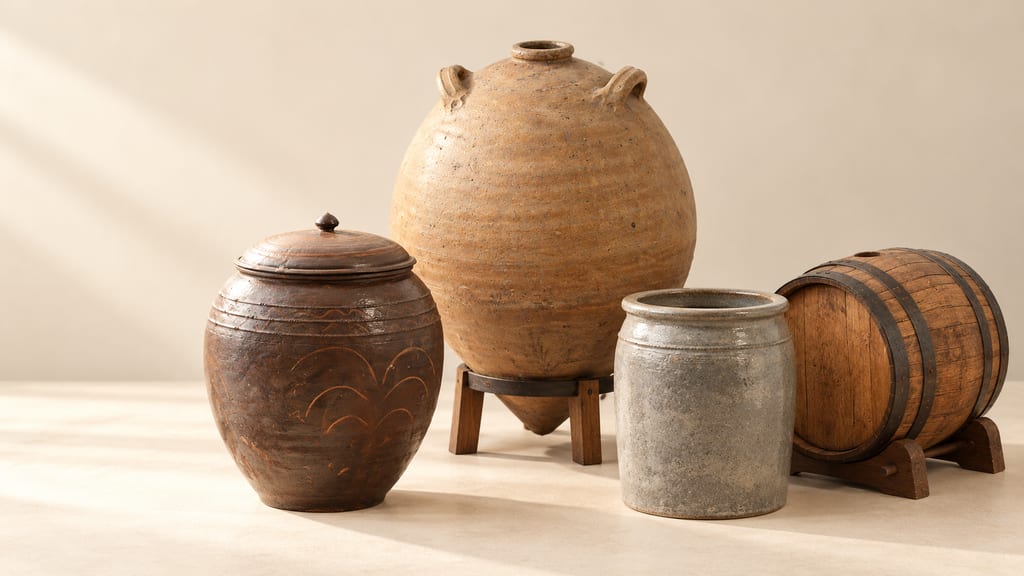
Jars, barrels, skins, leaves, pits and whole rooms decide much of what happens to fermented and cured food. This is how a container works on its contents, and how people in different places chose theirs.
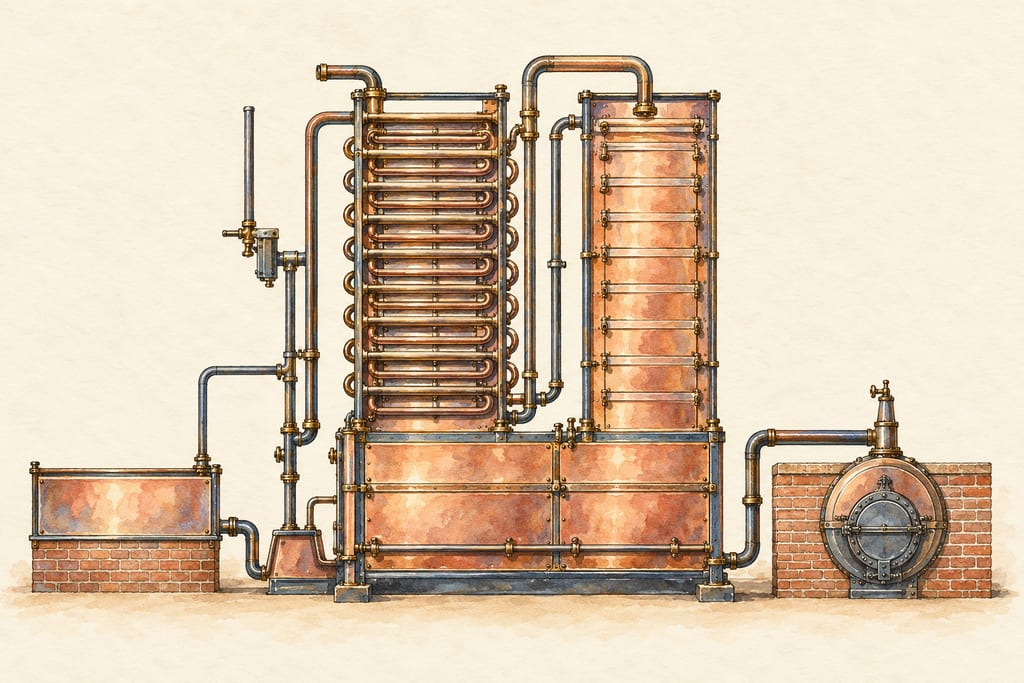
A column still is a distillation apparatus built around one or more vertical columns. Its continuous and rectifying designs appear in several spirits traditions, but materials and product character vary by installation.
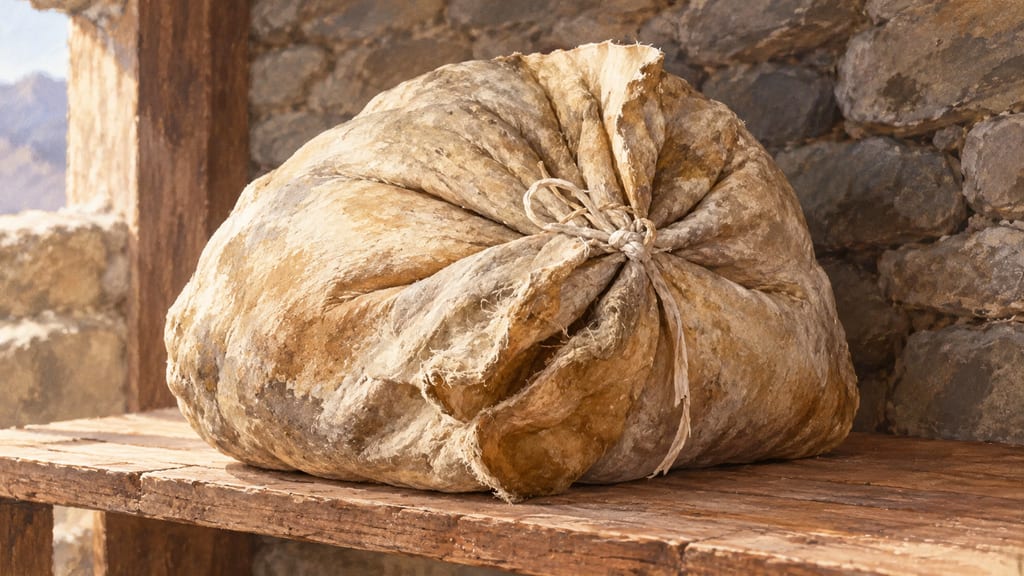
A Guda is the hide sack used to mature Tushetian cheese. The evidence supports its traditional material and role but leaves standard dimensions and detailed construction open.
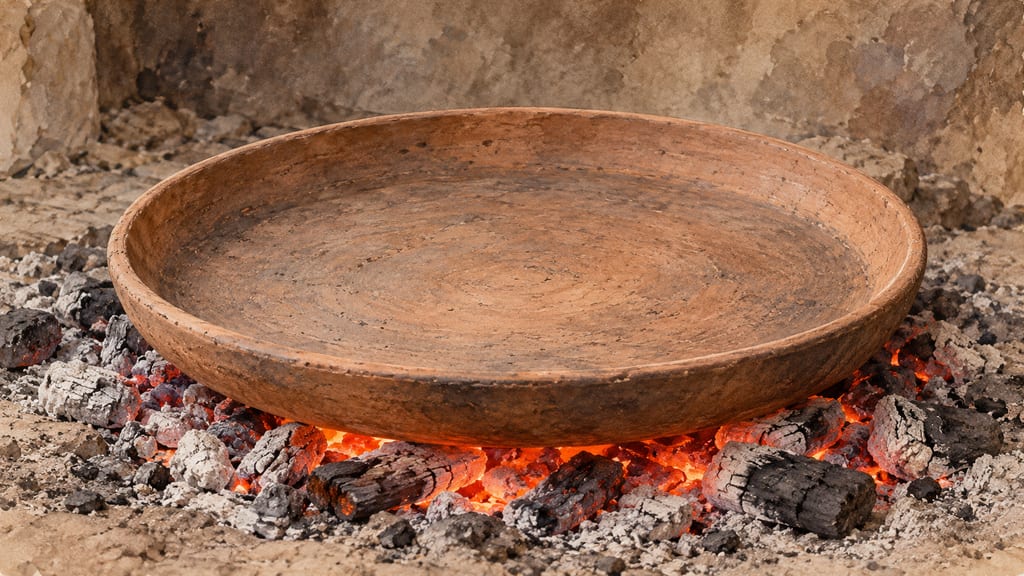
A ketsi is a Georgian cooking pan traditionally used over hearth embers. Sources document clay pans in Imereti and a Gurian maker of stone or clay examples; they do not describe one standardized design.
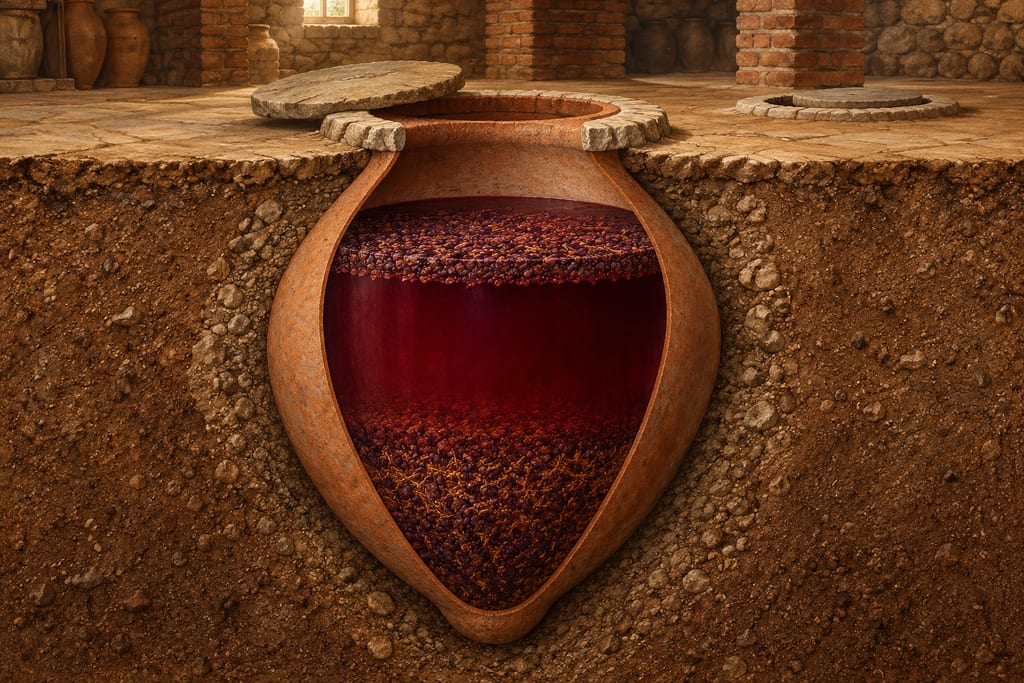
A qvevri (ქვევრი; kvevri), called churi (ჭური) in Imereti, is a large fired-clay Georgian wine vessel traditionally installed upright in the ground for fermentation, maturation and storage.

At North Abydos in Egypt, a fixed early Dynastic brewery comprised parallel semi-subterranean installations with rows of ceramic mash vats; excavation reports revise their number, scale and estimated batch capacity.

Ají amarillo is the orange-yellow Peruvian chilli cultivar group of Capsicum baccatum, used to colour and season huancaína sauce and ají de gallina. Published heat estimates do not establish one range for the named cultivar.

Toasted almonds are whole sweet almond kernels dry-roasted until golden to brown. Heat replaces their marzipan note with a roasted, nutty one; they thicken and flavour romesco.

Kodiak salmon, halibut and cod cut as seg'aq and hung on an initaq rack to become tamuuq, with kac'amaasaq and kupcuunaq named as different results.

Aniseed is the dried ripe fruit of Pimpinella anisum, an aromatic Apiaceae spice commonly called a seed. It adds a sweet, warm aroma to breads such as Moroccan krachel and South African mosbolletjies, and is distinct from star anise.

A fixed Late Chalcolithic installation in Areni-1 cave combined a shallow clay pressing basin with a large jar set into the cave floor and storage vessels nearby.

Ripe avocado flesh is the soft, buttery, fat-rich pulp of Persea americana, eaten raw. It is low in acid, so it is a fresh ingredient that needs care in chilled dishes.

A portable dome and pan used over a hearth, with embers on the lid and heat from below. Regional peka and saç forms share this principle while differing in materials, pan shape and how the food is cooked.
No community contributions have been published for this entry yet.
Sign in to contribute. Published comments and photos are free to read.
Proceedings of the National Academy of SciencesArchaeology · Form · Function · Geography · History
Early Neolithic wine of Georgia in the South CaucasusChemical evidence from pottery at Shulaveris Gora and Gadachrili Gora supports grape wine around 6000–5800 BCE.
The authors say very large jars probably served combined fermentation, ageing and serving functions; a Khramis Didi-Gora example is nearly 1 m high and wide and estimated above 300 L.
Some jars have clay globules inside semicircular strips near their mouths, interpreted as schematic grape clusters.
The authors say the Neolithic jars' placement is unknown and that evidence for Georgian qvevri winemaking itself is later, in the eighth–seventh centuries BCE.
Cited in: Pottery and early grape wine; Burial is not established for the Neolithic jars; Reading the vessel evidence
UNESCO Intangible Cultural HeritageModern tradition · Material · Installation · Geography
Ancient Georgian traditional Qvevri wine-making methodUNESCO describes the Georgian qvevri as an egg-shaped earthenware vessel used for wine-making and storage in a living Georgian tradition.
In the described present-day method the filled qvevri is sealed and buried during fermentation; this is a documented comparison and not evidence that the Neolithic jars were buried.
Cited in: Burial is not established for the Neolithic jars; Reading the vessel evidence
National Wine Agency of GeorgiaModern form · Regional use · Installation
Qvevri WineThe agency describes the egg-shaped qvevri as the most common current Georgian form and distinguishes regional wine-making practices.
It documents qvevri buried in cellar floors in Kakheti while describing a different outdoor storage practice in western Georgia.
Cited in: Burial is not established for the Neolithic jars