
Kocho
Ethiopia's fermented enset staple: the scraped leaf sheaths and pounded corm of Ensete ventricosum packed into a leaf-lined pit, where lactic fermentation turns them into a sour mass that keeps and is later baked as flatbread.
 FermenteaWhere food goes to change
Built structures · Pits and cavities
A fixed earthen pit used to ferment and store kocho, lined and covered with broad leaves of enset. Published accounts document the form in Ethiopia but do not establish one universal shape or size.
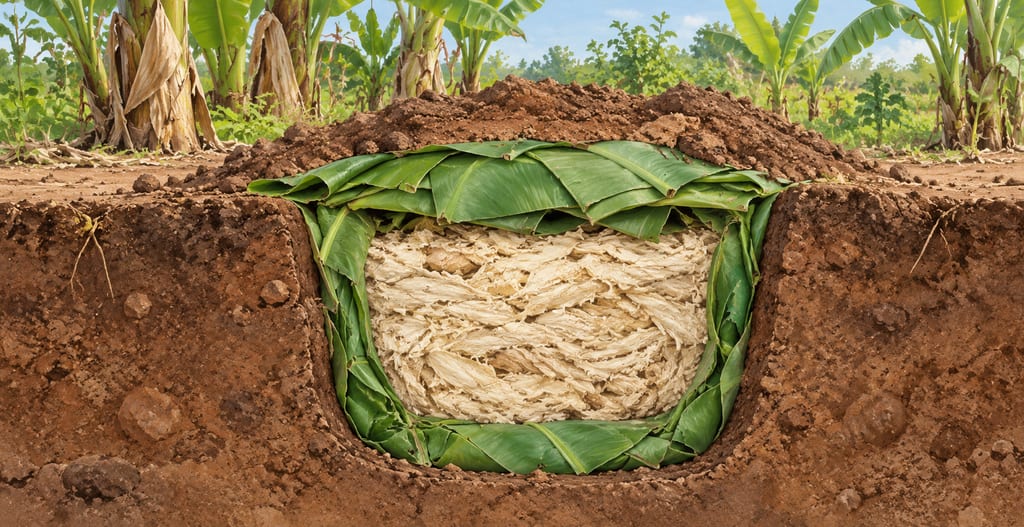
Kocho is a fermented enset food, and a ground pit is one documented way to hold it. In the 2023 experiment, the authors compared a traditional underground pit with a Purdue Improved Crop Storage (PICS) bag. Those are distinct systems: the research bag is an alternative tested against the pit, not a modern component of the traditional build.
An ethnobotanical study in Aleta Chuko District, Sidama Zone, records enset leaves being used as liners for kocho storage pits. Its Figure 4 shows the leaves used for lining, not a section through the cavity. The illustration on this page is therefore an unscaled reconstruction from the written descriptions, rather than a measured household design.
The documented arrangement places broad enset leaves between the ground and the kocho mash, then covers the packed material with more leaves and soil. The leaves are the traditional plant material named in these accounts; the sources do not show that they sterilize the food, exclude every contaminant, or define a food-safety procedure.
Kocho is made from processed enset pseudostem and corm. The 2019 microbiology study describes spontaneous fermentation and reports that the mash is transferred into a pit, often underground, with leaf and soil cover. Those observations describe a food-processing context, not a universal cavity profile or required batch schedule.
The evidence places this pit practice in Ethiopia, where enset is grown and kocho is prepared. The Aleta Chuko study gives a more specific local example from Sidama Zone and credits its liner photograph to Amare Seifu. That evidence supports the local use of enset leaves, but it should not be stretched into a claim that every Ethiopian household uses the same pit.
The 2023 trial used an underground pit as one arm of a controlled comparison with PICS bags. Its results apply to that study's crop, sites, times and methods; they do not settle whether a pit is preferable in every context. The available accounts do not date the origin of the structure, prescribe dimensions, or establish that earth contact itself is necessary.
Kocho preparation and leaf-lined storage pits are documented in Ethiopian food research and in an ethnobotanical study of Aleta Chuko District. The consulted sources do not date the origin of the pit form.
A build is made where it stands: moving it means building it again.
The sources document kocho fermentation and leaf-lined pits in Ethiopia. The 2016 ethnobotanical study is based in Aleta Chuko District, Sidama Zone; the entry does not claim one pit design across the country.
Ethiopia's fermented enset staple: the scraped leaf sheaths and pounded corm of Ensete ventricosum packed into a leaf-lined pit, where lactic fermentation turns them into a sour mass that keeps and is later baked as flatbread.

From sour breads and milk to savoury seeds, cassava staples and living beers, African fermentation follows the crop, the community and the work of transformation.
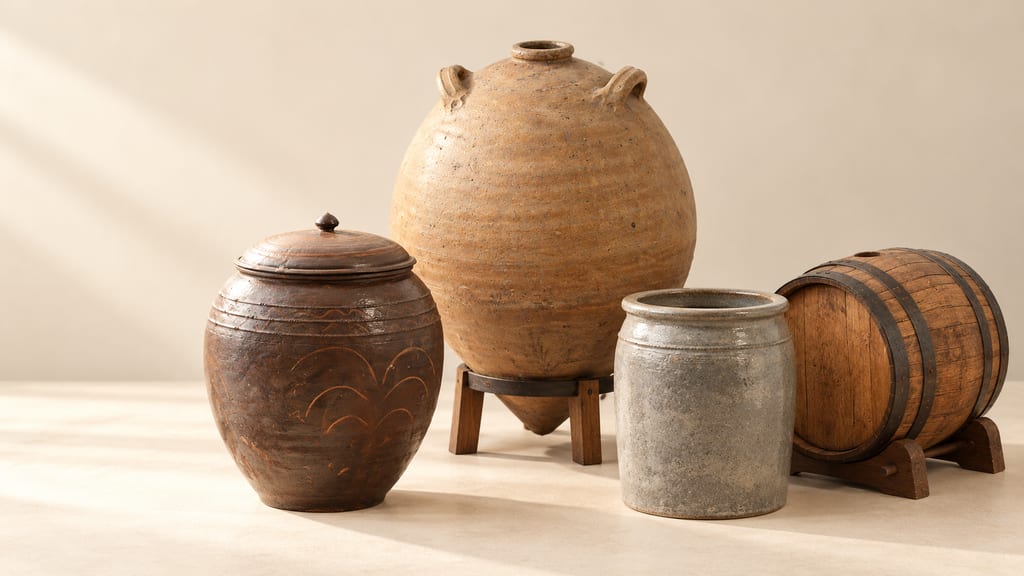
Jars, barrels, skins, leaves, pits and whole rooms decide much of what happens to fermented and cured food. This is how a container works on its contents, and how people in different places chose theirs.
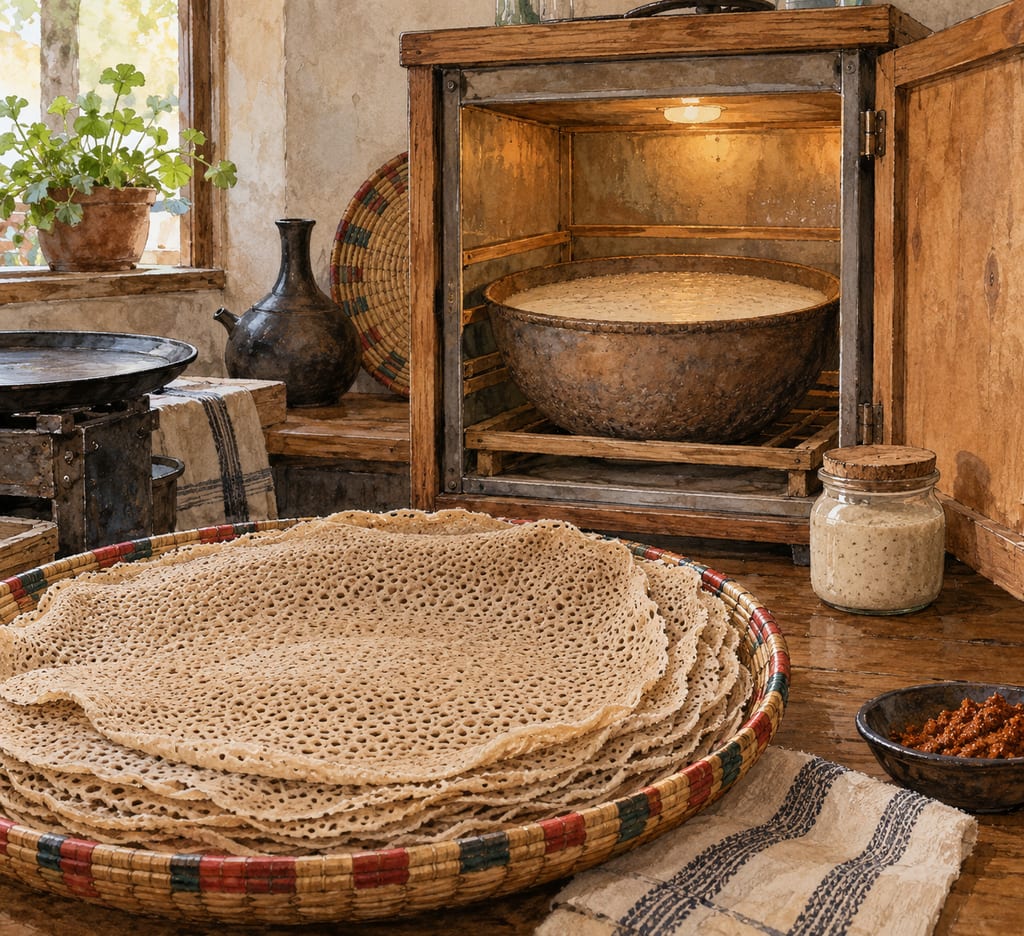
An enclosed, warm cabinet for fermenting teff batter for injera, started with saved ersho from the previous batch.
No community contributions have been published for this entry yet.
Sign in to contribute. Published comments and photos are free to read.
HeliyonMethod · Comparison · Form
Purdue improved crop storage bag for kocho fermentation; Ethiopian traditional fermented food from Enset (Ensete ventricosum)The study compared an underground pit with a PICS bag as separate kocho-fermentation systems at 30, 45, and 60 days, using five farmer replicates.
Figure 1 captions an underground pit lined with enset leaf.
The paper describes a research comparison and does not establish a universal pit design or prove that soil contact is necessary.
Cited in: A below-ground kocho build; A specific place, not a universal plan
Research & Reviews: Research Journal of BiologyGeography · Form · Image rights
The Ethno Botanical Study and Distribution Patterns of Enset Landraces (Ensete ventricosum (Welw) Cheesman) in Aleta Chuko District, Sidama Zone, EthiopiaThe field study covers enset landraces and household use in Aleta Chuko District, Sidama Zone, Ethiopia.
The article states that enset leaves are used to line the ground and as pit liners for kocho storage; its Figure 4 caption identifies enset leaves used as a kocho-pit liner and credits the photograph to Amare Seifu.
The page states that published work is licensed CC BY 4.0.
Cited in: A below-ground kocho build; Leaves, mash and earth; A specific place, not a universal plan
Antonie van LeeuwenhoekMethod · Context
Yeasts and bacteria associated with kocho, an Ethiopian fermented food produced from enset (Ensete ventricosum)Describes kocho as spontaneous fermentation of processed enset pseudostem and corm mash.
Describes the mash being transferred to a pit, often underground, covered by enset leaves and then covered with soil; it also notes that portions can be removed during use.
The article reports microbial isolates from kocho samples at different fermentation stages; it does not describe one universal pit design.
Cited in: Leaves, mash and earth; A specific place, not a universal plan