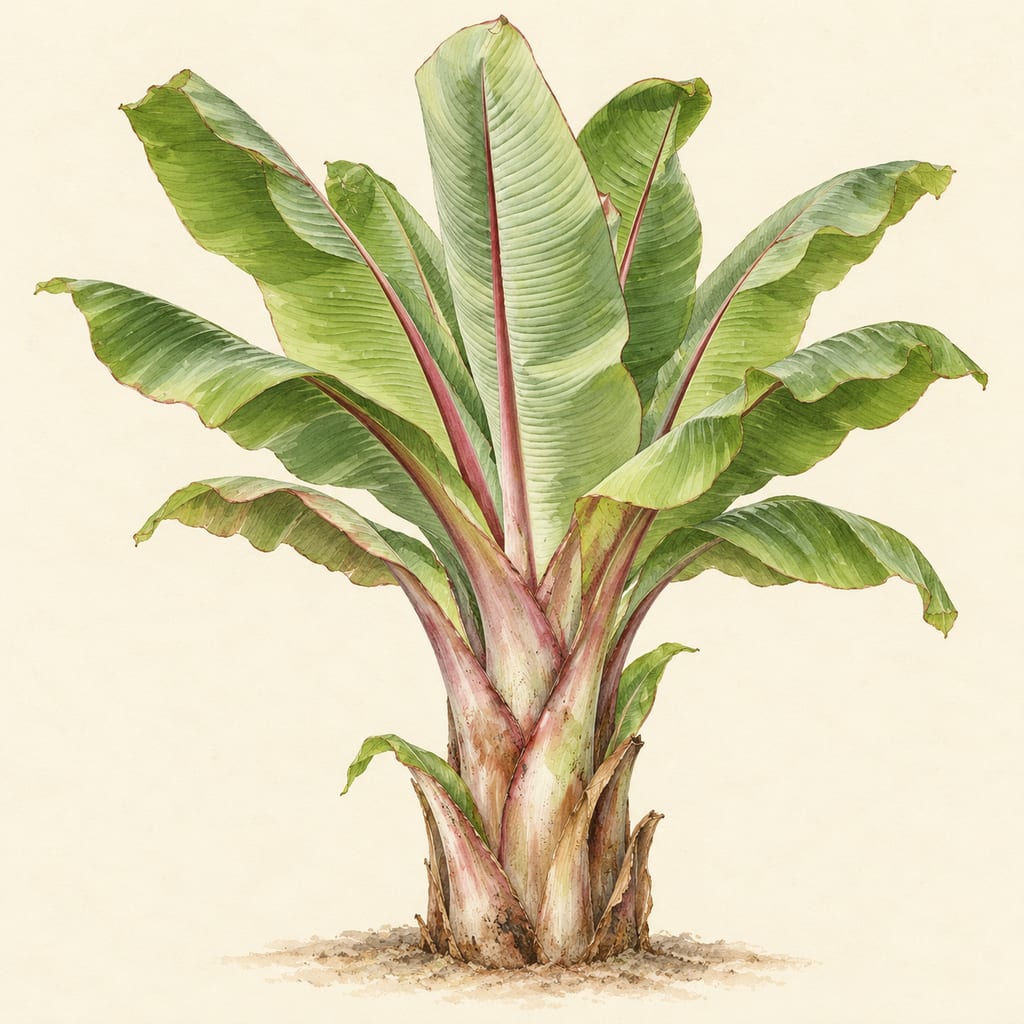
Enset (Ensete ventricosum)
Enset is an Ethiopian staple crop grown for its starchy corm and pseudostem. Fermented kocho, extracted bulla and boiled amicho are distinct foods from the plant.
 FermenteaWhere food goes to change
Traditional method
Wassa · Qocho
Ethiopia's fermented enset staple: the scraped leaf sheaths and pounded corm of Ensete ventricosum packed into a leaf-lined pit, where lactic fermentation turns them into a sour mass that keeps and is later baked as flatbread.

Kocho is a fermented staple food made from the pseudostem and underground corm of enset, Ensete ventricosum, a large perennial plant resembling a banana.
Although enset is commonly called the Ethiopian or false banana, its fruit is not the principal food. The edible material used for kocho comes from the plant's thick leaf sheaths and the swollen underground stem.
These tissues are scraped, shredded or pulverised into a fibrous, starch-rich mass. The prepared material is then fermented, traditionally in a leaf-lined underground pit or, in some communities, in a basket or another suitable container.
The fermented material can be stored and later cooked, particularly as flatbread. It provides an important carbohydrate source in southern and southwestern Ethiopia.
Names vary between communities. Kocho is widely recognised in Amharic and Ethiopian English; wassa is associated with Sidama enset products. Local names can also distinguish fresh material, partly fermented material, matured material and particular foods prepared from it. Those distinctions should not be reduced to one universal vocabulary.
Two other enset foods are closely related but technologically different.
Bulla is a fine starch recovered from liquid released during enset processing. The starch is allowed to settle, then separated from the liquid. Its extraction is fundamentally a physical separation, even when it occurs within a broader fermentation operation.
Amicho is made from suitable enset corms cooked directly. It is not necessarily fermented.
Kocho, bulla and amicho therefore represent different ways of turning the same cultivated plant into food.
Enset is indigenous to parts of eastern and northeastern Africa, but its intensive cultivation as a staple is particularly associated with Ethiopia.
Its agricultural system differs from annual cereal farming.
An enset plant can remain in the field for several years, accumulating biomass before harvesting. The farmer has considerable flexibility over when a sufficiently mature plant is processed.
This makes enset important in areas where household food security depends on managing uncertain rainfall and seasonal shortages.
The plant also supplies materials beyond food. Its fibres can be used for ropes and other objects, while leaves and plant residues have domestic and agricultural applications.
Enset cultivation has been practised for centuries. However, the specific earliest date of kocho pit fermentation is not securely established.
There is no justification for assigning a precise prehistoric invention date to the modern process solely because enset is indigenous or because pit fermentation seems technologically simple.
The most reliable historical account is one of regional continuity combined with variation. Cultivation, processing tools, fermentation techniques and the distribution of labour differ between communities.
In many enset-growing households, women possess extensive expertise in harvesting and processing. Scraping the leaf sheaths, pulverising the corm and preparing fermentation material are highly skilled operations.
These activities can be physically demanding. Improved scraping tools and cooperative processing arrangements are now being investigated and adopted in some areas.
Kocho is consequently both a product of agricultural knowledge and a food-preservation system.
The pseudostem of enset is formed from overlapping leaf sheaths. It is not a woody trunk.
Within these tissues are starch-containing cells, fibrous material and water.
The underground corm also contains substantial carbohydrate reserves.
Simply cutting and boiling the entire plant would not efficiently separate the useful starch from its structural fibres.
Scraping and pulverisation release the starch-rich tissue and reduce the size of the plant material.
Fermentation then modifies the resulting mass.
The process develops acidity, changes aroma, alters physical properties and produces a material that can be stored and cooked.
However, fermentation does not transform every component of enset into digestible carbohydrate.
Substantial fibre can remain, and the nutritional value still depends on the plant material, the way it was processed and what the finished food is eaten with.
Kocho is primarily an energy food; it should not automatically be portrayed as a nutritionally complete meal.
The producer selects an enset plant suitable for food processing.
Maturity matters because starch accumulation changes during growth.
Different landraces can yield different amounts of usable material and produce different fermentation characteristics.
A 2024 study in the Dawro Zone compared kocho prepared from the local varieties Maziya, Genna and Arkiya, finding measurable differences as fermentation proceeded.
A single ideal harvest age cannot be applied to every landrace and growing environment.
The leaves and older outer sheaths are cut away.
This exposes the younger inner sheaths that contain the tissue intended for scraping.
The discarded material may have other practical uses, including protecting or lining the fermentation mass.
It should not be assumed that all outer material is suitable for incorporation into the food.
The inner sheaths are separated and worked against a firm support.
A scraping implement removes the softer starch-containing tissue from the structural fibres.
The resulting pulp is collected.
This is one of the most labour-intensive parts of the process.
Too little scraping leaves recoverable starch in the fibres. Excessive incorporation of coarse material can alter the finished texture.
Traditional tools vary by community.
The underground corm is dug out, cleaned and separated from attached roots and unwanted material.
It is chopped and pounded, grated or otherwise reduced to a smaller particle size.
This exposes the starch-rich interior and allows the material to mix more thoroughly with the scraped pseudostem.
A Dawro field study identifies the grated corm as Godiya and the scraped leaf-sheath mass as Qashincha. Their mixed mass was described as Shucuwa.
These are local process terms recorded in that study, not universal Ethiopian names.
The prepared corm and sheath pulp are mixed.
The ratio varies with the plant, regional practice and intended product.
The available research does not establish one universally applicable corm-to-pseudostem ratio.
Some preparations introduce a previously fermented starter or selected plant material.
Others rely more heavily on microorganisms already associated with the crop, the processing environment and the fermentation pit.
Traditional starter preparations are zone-specific. A 2017 survey across 18 districts in seven southern Ethiopian zones found that starter ingredients and preparation were generally similar within each zone but differed between zones. Enterobacteriaceae were also detected in starter samples from some districts; those sample findings do not establish a safety criterion or describe every household process.
A traditional kocho fermentation pit is excavated in suitable ground.
Its shape and dimensions depend on household scale, soil conditions and the expected volume of material.
The walls may be lined with enset leaves.
The lining helps separate the edible mass from the surrounding soil, while also forming part of the traditional microbial environment.
The prepared enset material is packed inside, often in portions or layers, then covered with leaves and additional protective material.
The cover helps protect the contents from animals, insects, rainwater and unwanted contamination.
The pit also provides a relatively buffered environment compared with material exposed on the ground surface.
However, underground storage is not automatically airtight, sterile or maintained at a uniform temperature.
The soil, lining and degree of compaction can all affect the process.
Some communities carry out an initial stage of fermentation on or near the surface before transferring the material to the pit. A documented version describes approximately 15 days of this initial stage.
Other systems begin pit fermentation sooner.
Those alternatives should remain distinct rather than being rewritten into a compulsory two-stage recipe.
Kocho has an unusually wide range of documented fermentation periods.
In warmer locations, some methods reach their desired condition after approximately 15 days to one month.
Other traditional systems keep the material in pits for three months to one year, while some descriptions record storage extending for years in cooler conditions.
These durations describe different production environments, degrees of fermentation and storage practices.
They are not interchangeable recipes or validated food-safety schedules.
A controlled 2023 experiment compared underground pits with Purdue Improved Crop Storage bags over 30, 45 and 60 days.
Quality characteristics differed between the two systems, and the results suggested that the bag system could be a practical alternative under the tested conditions.
It did not establish that every enset variety and every environment will produce safe kocho after 60 days.
Likewise, a study comparing pits, baskets and jars sampled material on days 1, 7, 15, 31, 60 and 90. Those were research sampling times, not mandatory household milestones.
Kocho is predominantly a mixed fermentation in which lactic acid bacteria play a major role.
The raw enset mass contains carbohydrate, water and microorganisms introduced from the plant and environment.
As fermentation develops, the microbial community changes.
Early phases have been associated with Leuconostoc and Lactococcus species.
Later phases can contain larger populations of organisms reported under Lactobacillus, Weissella and Bifidobacterium.
The exact dominant organisms vary between studies.
A traditional starter called Gamma, described in the Dawro study, contained bacteria identified as Lactobacillus plantarum and Lactobacillus manihotivorans using the taxonomy applied by the researchers.
As microbial metabolism proceeds, organic acids accumulate.
The decreasing pH affects microbial competition and contributes the characteristic sourness.
Fermentation may also alter soluble carbohydrates and some structural components of the plant mass.
The interactions are complex because kocho is not a uniform liquid. Moisture, available substrates and oxygen exposure can differ within the material.
This makes fermentation-vessel design important.
The pit, basket and jar comparison found that moisture and pH generally declined while titratable acidity increased.
Enterobacteriaceae fell below the study's detection threshold after day 1 in the tested pits and jars and after day 7 in the baskets.
This result provides evidence of acidification and microbial succession under those particular conditions.
It does not mean that every pit is free of pathogens after one day.
Other investigations have observed bacterial spores and complex microbial communities, including organisms not necessarily desirable in a finished food.
The distinction is important: successful lactic acid fermentation may reduce certain microbial hazards, but it does not prove the absence of every toxin or spore-forming organism.
A 2024 study of three enset varieties found a strong relationship between longer fermentation and increasing titratable acidity, alongside declining pH, moisture and several measured compositional fractions.
These findings demonstrate that fermentation changes the material continuously rather than producing an abrupt transformation at a predetermined date.
A 2024 report follows one household in Hambela Wamena. The family scrapes the leaf-sheath tissue and works the corm, then places the material in a small leaf-lined pit together with previously prepared mash. Later the fibres are washed out, the mash is pressed beneath a stone and the pressed mass is baked in an iron pan.
This is a reported household account, not a representative Ethiopian method or an evaluated recipe, and its steps are not combined here with the Dawro practice or with the pit-and-bag trial. It shows two stages that the studies above do not describe: pressing the matured mash under a stone, and baking it on an iron pan once the fibres have been taken out.
Kocho is especially important among Sidama, Gurage, Gamo, Dawro and other southern Ethiopian communities.
Variation begins with enset landraces.
Some are valued for their yield, others for texture, processing characteristics or suitability for particular foods.
The proportion of corm and pseudostem, the use of starters, the processing tools and the method of wrapping or burying the mass also vary.
Pit fermentation remains widely documented, but baskets and enclosed containers have been studied as alternatives.
A basket permits a different pattern of drainage and air exchange from a buried, tightly packed mass.
A sealed or partially sealed container changes the relationship between the food and its surroundings.
These differences can produce different microbial communities, acidity and moisture content.
Commercial or institutional attempts to standardise kocho must therefore account for regional techniques rather than treating the food as a single industrial commodity with one fixed process.
Kocho is commonly cooked as a flatbread.
Fermented material is taken from storage, worked into a suitable consistency and spread or shaped for cooking.
It may be wrapped or placed on leaves during preparation.
The result is typically denser and more fibrous than a wheat flatbread.
One well-known accompaniment is kitfo, a finely minced, seasoned Ethiopian beef dish. Kocho may also be eaten with vegetables, sauces, cheese or other foods, according to local practice.
Its mildly sour character complements rich, fatty or strongly seasoned dishes.
The finished bread should be distinguished from the fermented raw mass. Fermentation produces the preserved intermediate food; cooking completes the preparation intended for consumption.
Bulla is often prepared differently, including as porridge, and should not be presented as merely a finer grade of finished kocho bread.
A successfully fermented kocho mass develops a recognisable acidic aroma and changes in texture.
Its colour, fibre content and firmness vary with the plant and processing system.
Acidity and moisture measurements are more informative than appearance alone.
Abnormal discoloration, visible mould, infestation, sewage-like odours or contamination with soil and foreign material are reasons to reject the material.
A small portion that smells sour does not establish that an entire large pit has fermented uniformly.
Because the material is heterogeneous, samples taken from different depths or positions can differ.
For commercial production, representative sampling and process verification are essential.
Traditional fermentation should not be equated with sterilisation.
Soil contact, contaminated water, damaged plant material and dirty processing equipment can introduce undesirable microorganisms.
A pit lining reduces direct soil contact but does not eliminate the possibility of contamination.
Laboratory findings showing falling Enterobacteriaceae counts are encouraging, but cannot serve as universal safety criteria.
The presence of spore-forming bacteria in some enset-fermentation studies is another reason to avoid assuming that low pH alone fully characterises the hazards.
Safe production depends on sound raw materials, hygienic equipment, protection from contamination, suitable fermentation performance and appropriate cooking.
The source studies do not establish one universal safe final pH, pit temperature or storage duration across the many regional methods.
The traditional possibility of prolonged storage should be understood as a property of well-managed local systems, not as permission to bury any plant mash for an arbitrary period.
Enset is indigenous to parts of eastern and northeastern Africa, and its intensive cultivation as a staple is particularly associated with Ethiopia. Its agricultural system is unlike annual cereal farming: a plant can stand in the field for several years accumulating biomass, which gives the farmer considerable flexibility over when a mature plant is processed and makes enset important where household food security depends on managing uncertain rainfall and seasonal shortage. The plant supplies more than food, with fibres used for ropes and other objects and leaves and residues put to domestic and agricultural use. The most reliable historical account is one of regional continuity combined with variation, since cultivation, tools, fermentation technique and the division of labour all differ between communities. In many enset-growing households women hold extensive expertise in harvesting and processing, and scraping the sheaths and pulverising the corm are skilled and physically demanding operations; improved scraping tools and cooperative processing arrangements are now being investigated and adopted in some areas.
Scaling: source batch only
Soil contact, contaminated water, damaged plant material and dirty processing equipment can introduce undesirable microorganisms, and a pit lining reduces direct soil contact without eliminating contamination.
Hazard sourceSome enset-fermentation studies have observed bacterial spores and complex microbial communities including organisms not necessarily desirable in a finished food, so low pH alone does not characterise the hazards.
Hazard sourceMoisture, available substrates and oxygen exposure differ within the material, so samples from different depths or positions can differ and a small sour-smelling portion does not establish that a whole pit has fermented uniformly.
Hazard sourceLine the pit and cover the packed mass to keep it from the soil, animals, insects and rainwater
Control sourceJudge the fermentation by acidity and moisture measurement rather than appearance, with representative sampling for commercial production
Control sourceCook the fermented mass before eating it; fermentation produces the preserved intermediate, not the finished food
Control sourceTraditional fermentation is not sterilisation: the falling Enterobacteriaceae counts measured in particular pits, baskets and jars cannot serve as universal safety criteria, and they do not mean every pit is free of pathogens after a day.
The documented durations are not interchangeable recipes: 60 days in a storage-bag trial does not establish that every enset variety and environment produces safe kocho in that time.
The traditional possibility of prolonged storage is a property of well-managed local systems, not permission to bury any plant mash for an arbitrary period.
Abnormal discoloration, visible mould, infestation, sewage-like odours or contamination with soil or foreign material are reasons to reject the material.
Kocho is primarily an energy food and substantial fibre remains after fermentation; it should not be portrayed as a nutritionally complete meal.
A regional association with the Sidama, Gurage, Gamo, Dawro and other enset-growing communities, as the research names them. Local names, landraces, tools and fermentation vessels differ between those communities, and wassa is associated specifically with Sidama enset products.
The zone whose processing the 2024 study recorded, including the Godiya, Qashincha and Shucuwa process terms and the Gamma starter. Those terms belong to that study's communities rather than to Ethiopia generally.
Enset is an Ethiopian staple crop grown for its starchy corm and pseudostem. Fermented kocho, extracted bulla and boiled amicho are distinct foods from the plant.
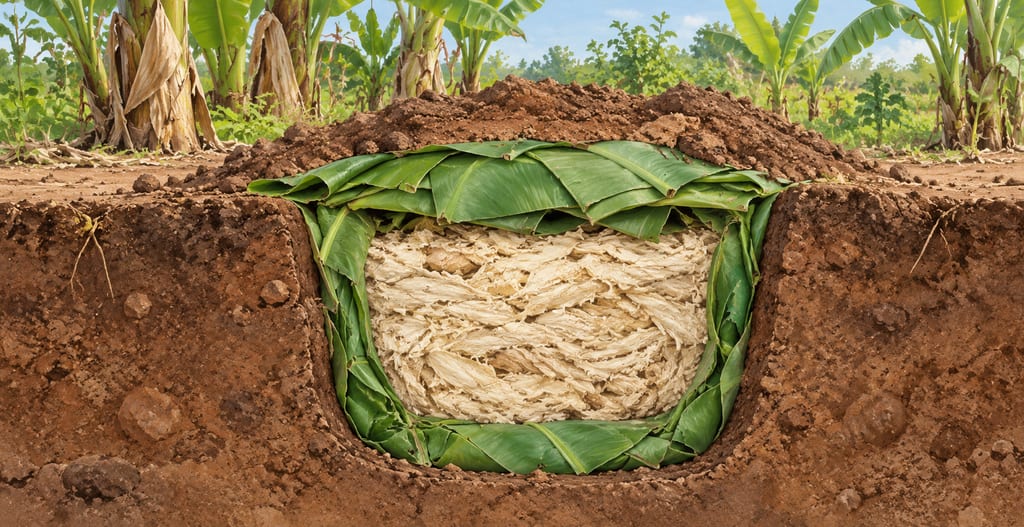
A fixed earthen pit used to ferment and store kocho, lined and covered with broad leaves of enset. Published accounts document the form in Ethiopia but do not establish one universal shape or size.
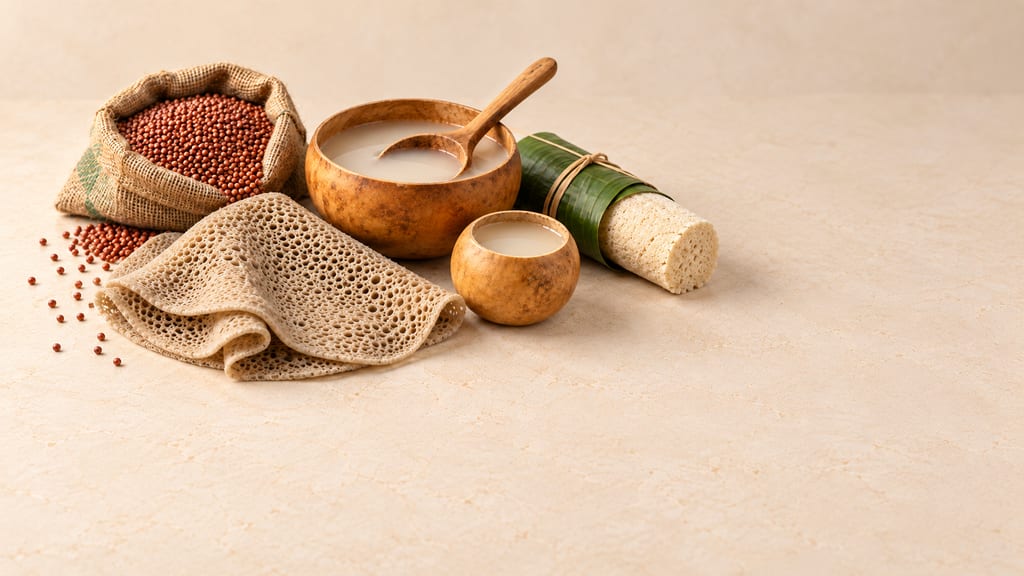
From sour breads and milk to savoury seeds, cassava staples and living beers, African fermentation follows the crop, the community and the work of transformation.
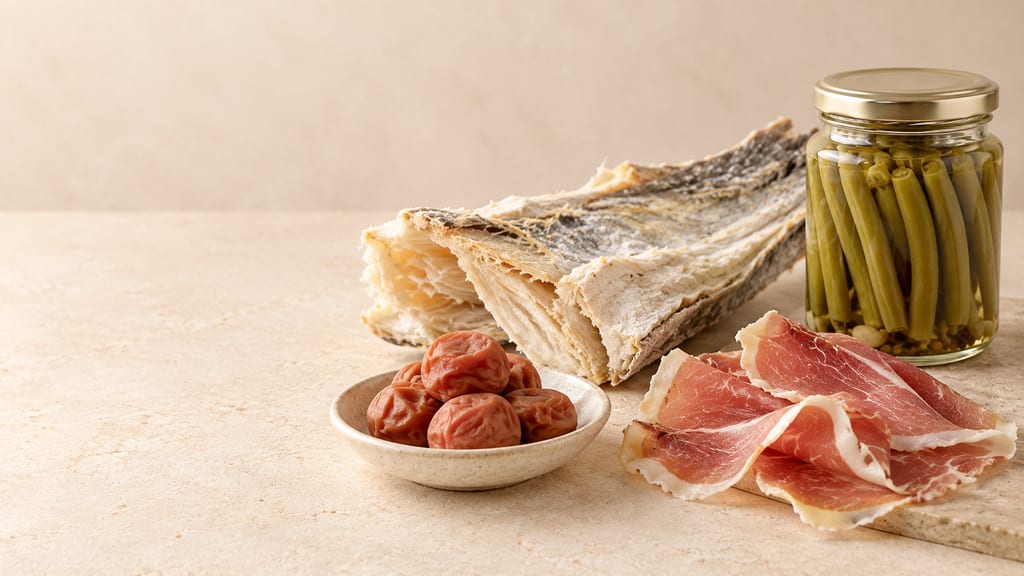
Every preserved food is a stack of barriers against microbes, enzymes, air and time. This is how they work, what a recipe's numbers measure, and how cooks worldwide build them.
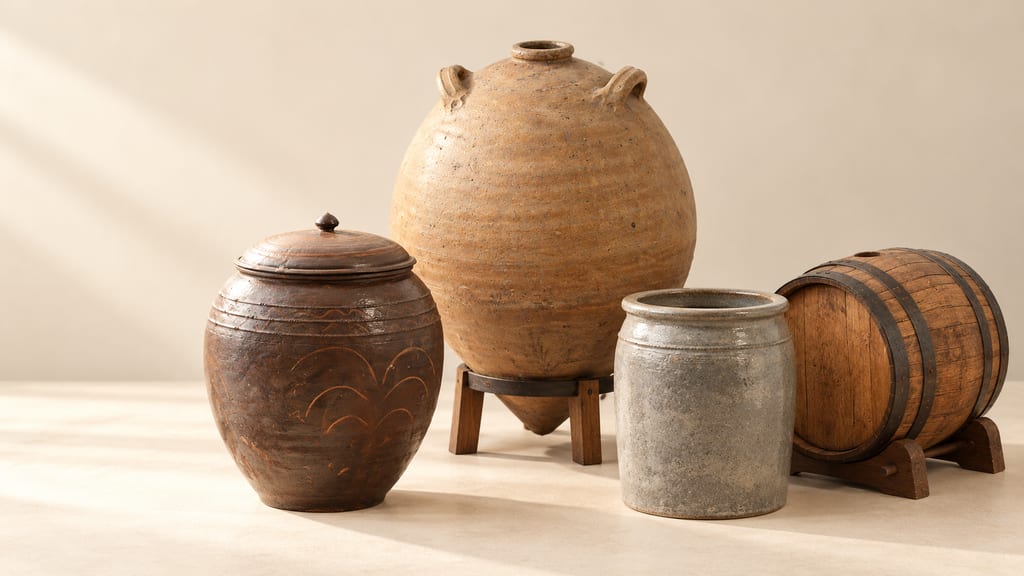
Jars, barrels, skins, leaves, pits and whole rooms decide much of what happens to fermented and cured food. This is how a container works on its contents, and how people in different places chose theirs.

A round, mildly sweet wheat bread leavened with baker’s yeast and marked with a wheel pattern. This source batch uses raisins, black sesame and cardamom.
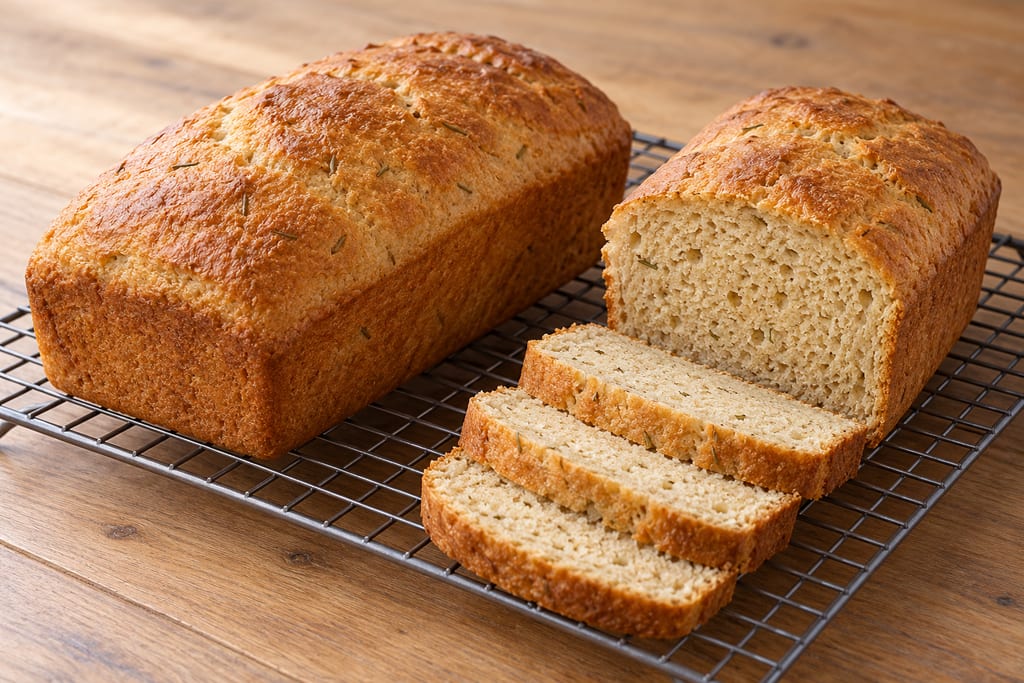
Ethiopian breakfast honey bread: two rosemary-scented yeast loaves shaped in pans and baked at 400°F.
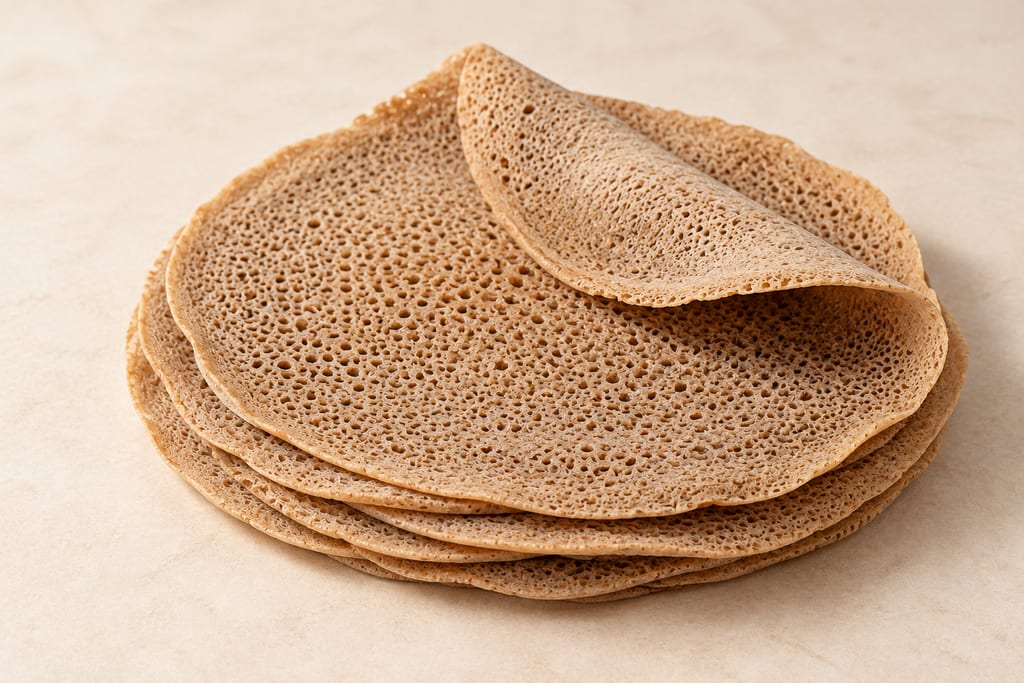
A two-stage Ethiopian teff injera method begins with saved ersho, ferments the main batter beneath refreshed surface water, then adds cooked absit before a final warm rest and griddle baking.
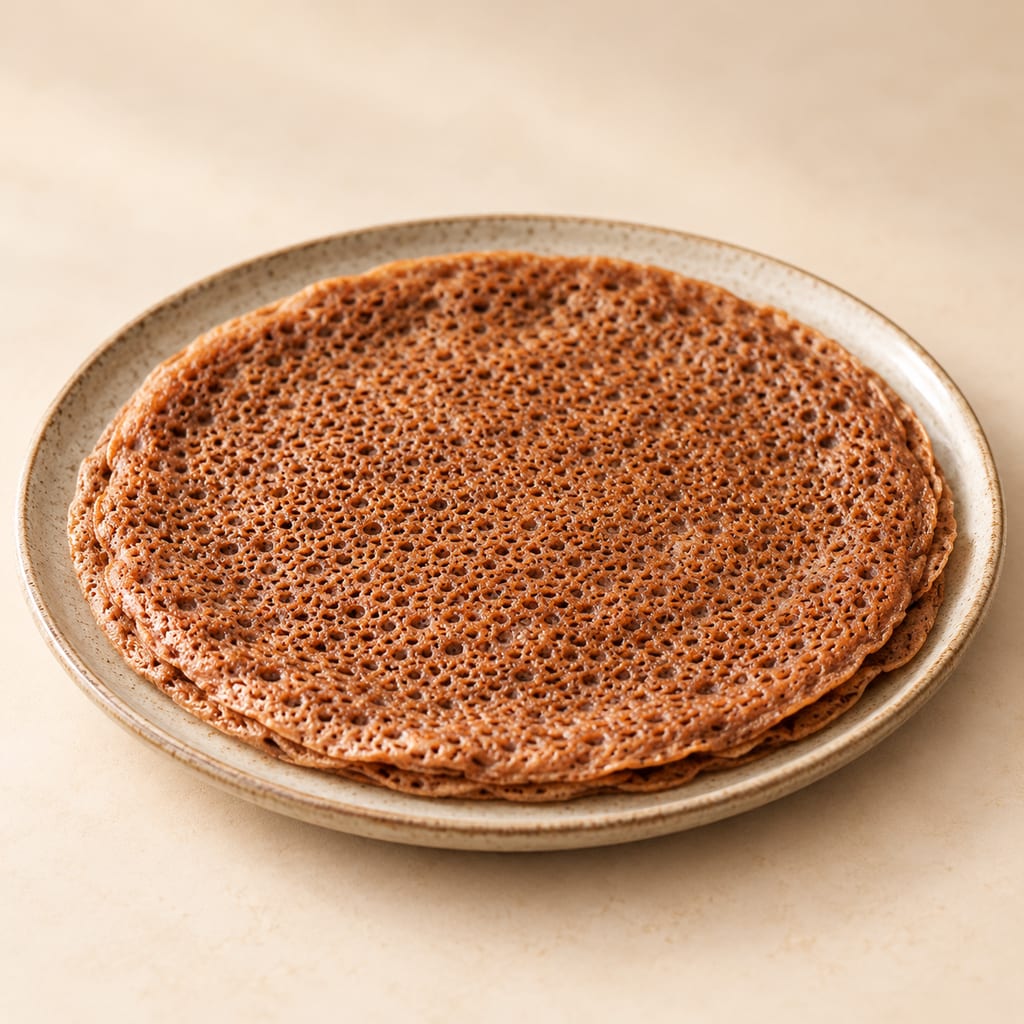
A modern home adaptation of Ethiopian injera using a 24-hour fermentation window. This method balances traditional souring with accessible ingredients like baking powder or starter cultures to achieve the characteristic porous texture.
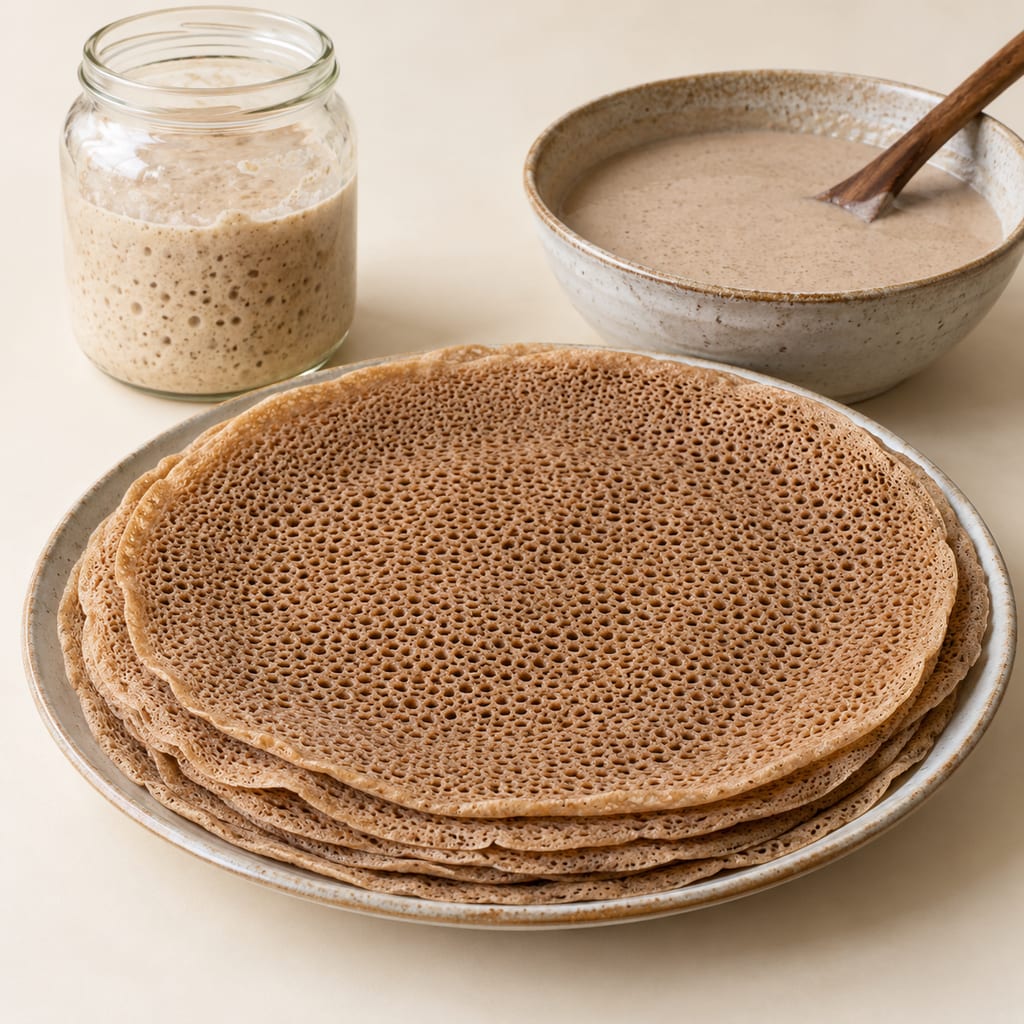
Teff injera made from a three-day teff starter, a three-day main dough fermented under water, and a cooked tempering of part of the batter before griddling.

A thick, faintly fizzy Ethiopian cereal drink in which a wheat dough is fermented, roasted dark, then fermented a second time with barley malt into a drinkable slurry.
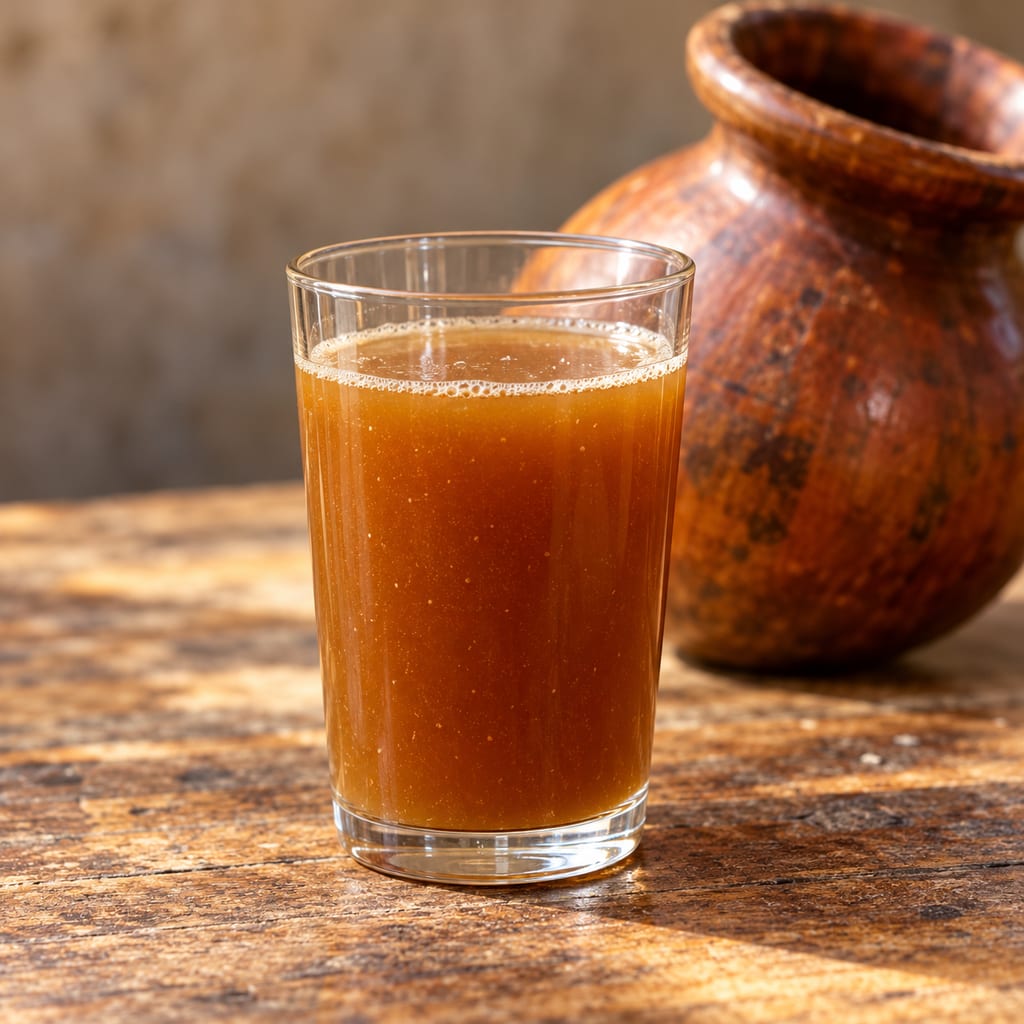
A darker Ethiopian maize tella, brewed from maize baked into a hot, dry kita pancake and then fermented in three stages with barley malt, gesho and water.

An unleavened Ethiopian and Eritrean wheat flatbread, rolled thin and cooked in clarified butter.
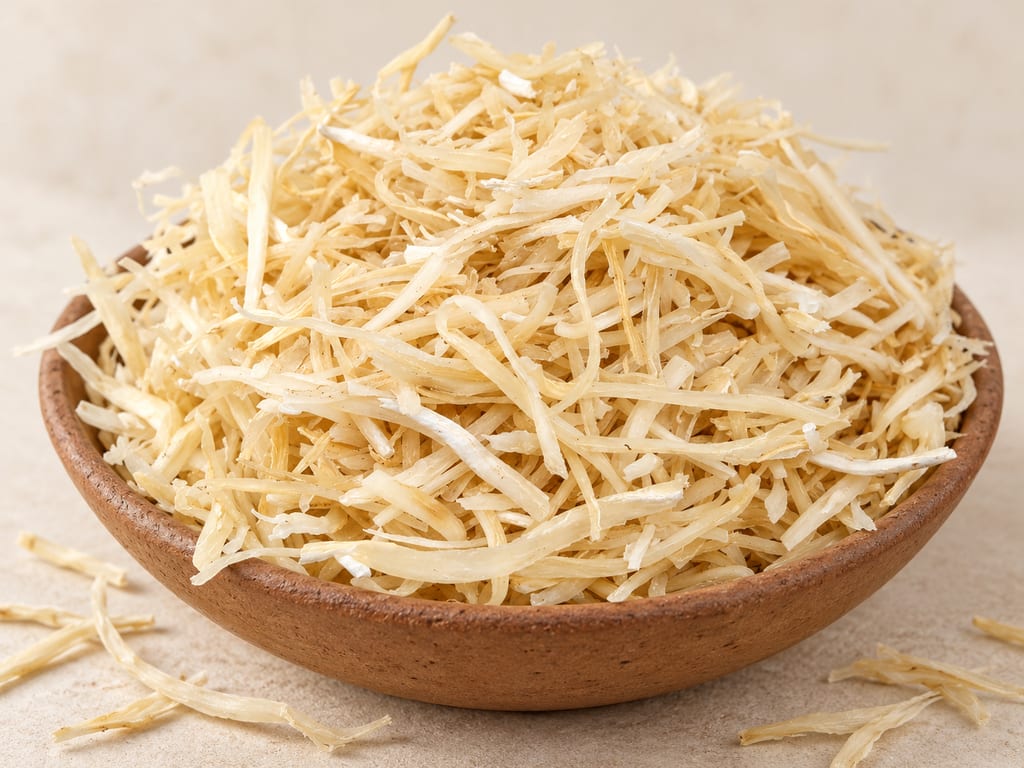
Abacha is a fermented cassava-strip preparation from southeastern Nigeria, sold wet or dried and later rehydrated for meals such as African salad.
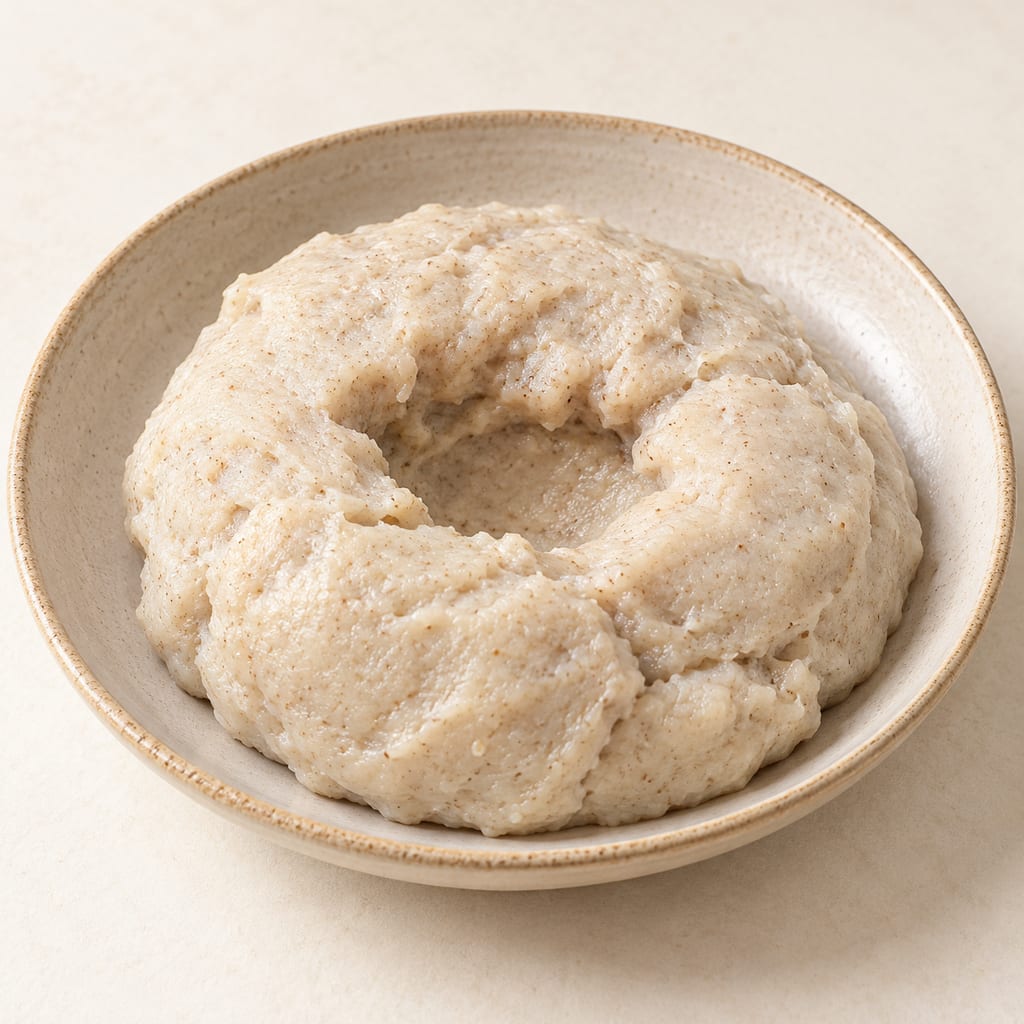
Aceda is Sudan’s firm cereal porridge, commonly made from sorghum and shaped into a smooth mound. Some versions use fermented dough; fermentation is not universal.
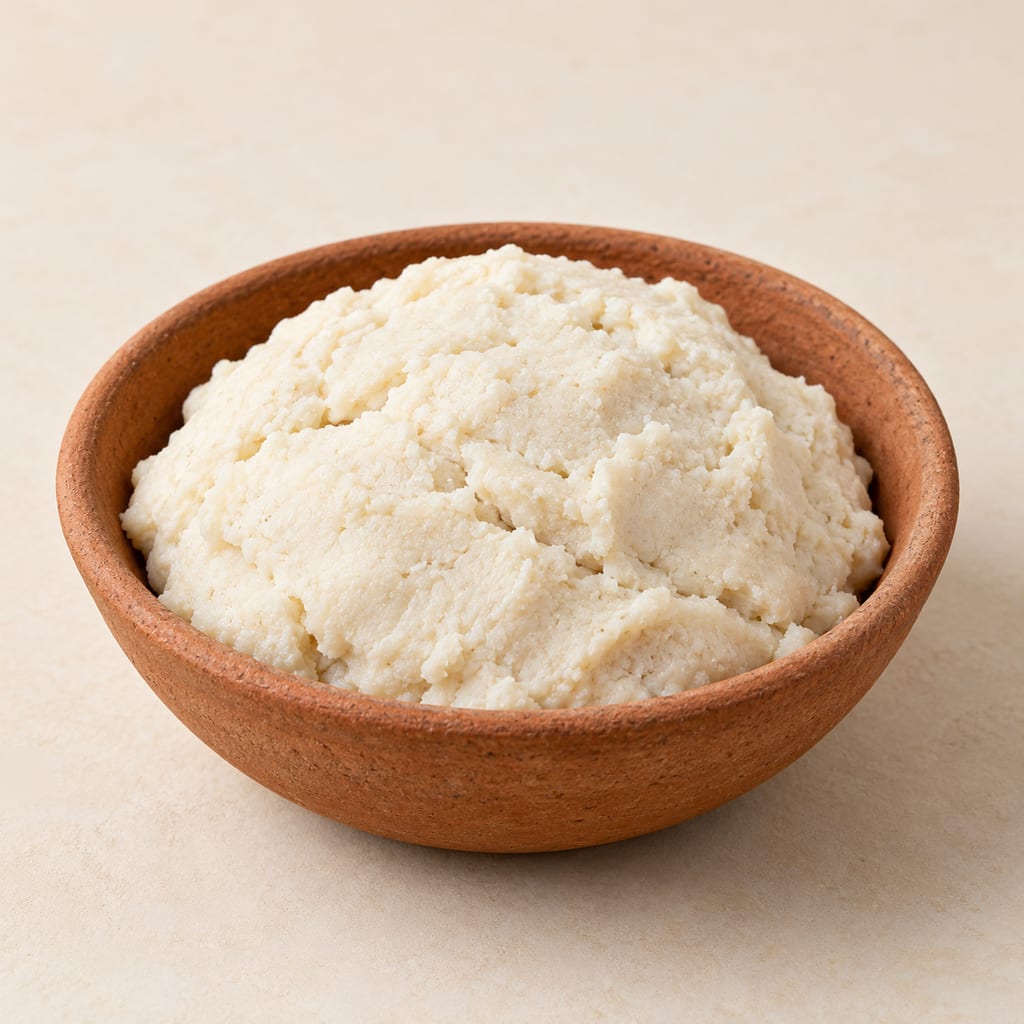
Ghanaian sour cassava dough fermented with traditional inoculum and drained during fermentation. It is used as a base for cooked foods such as banku and akple; process variants and safety outcomes differ.

Appam, or hoppers, are South Indian and Sri Lankan rice pancakes made from a fermented coconut-and-rice batter and cooked in a curved pan to a crisp lacy rim and a soft, spongy centre.
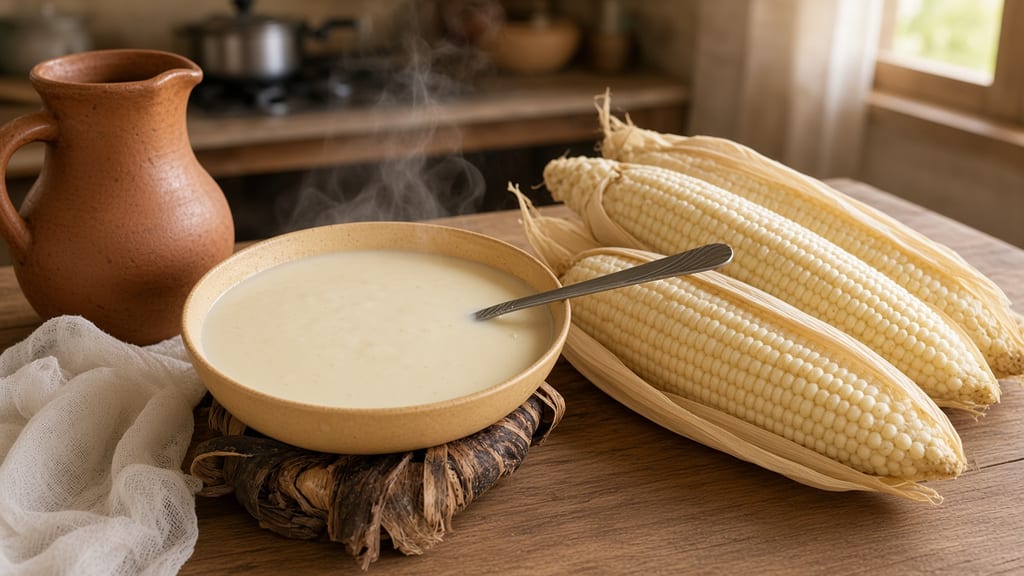
A hot, sour maize drink from Tabasco made from maize that is not lime-cooked. The ground grain sours for half a day, then makers strain it and boil it until thick.
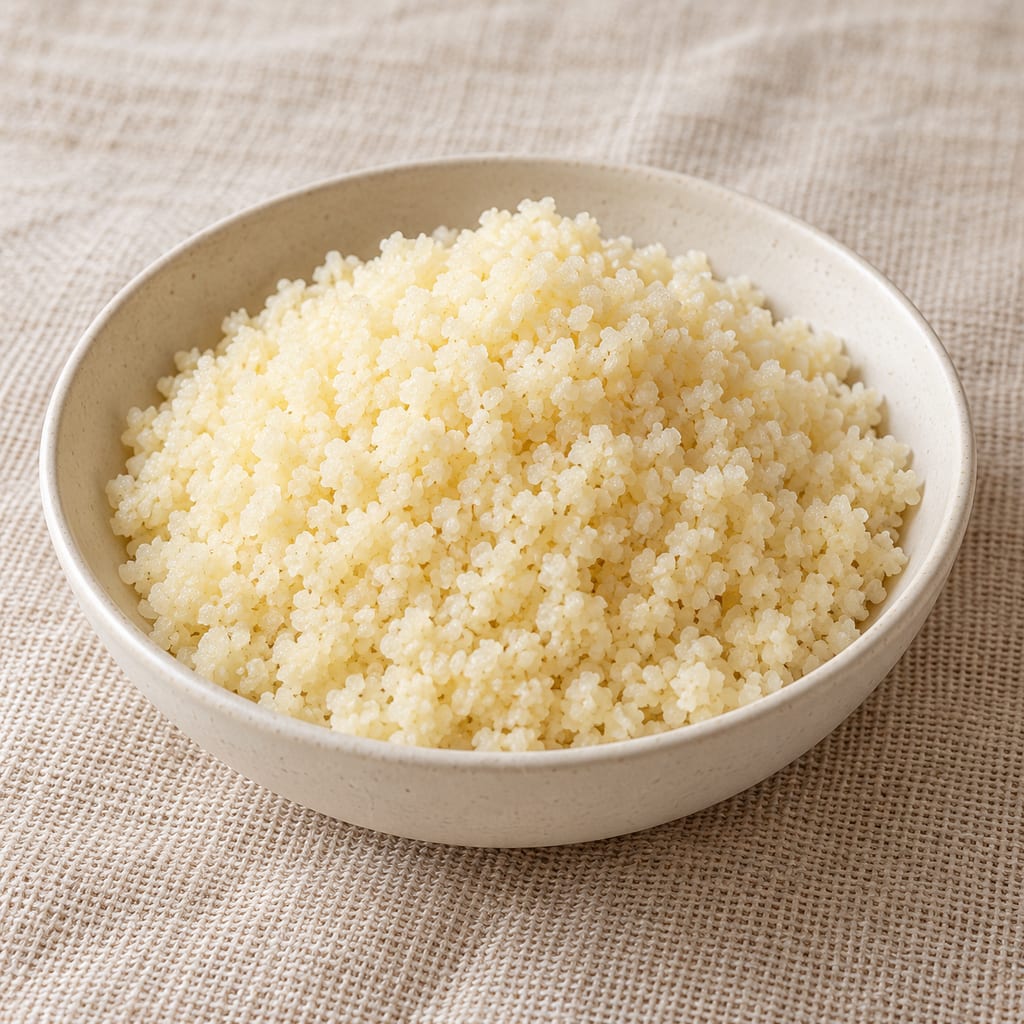
Ivorian cassava semolina: grated cassava is fermented overnight with a traditional inoculum, pressed, sieved into granules, dried and steamed. Documented in a 2006 field study; no sole original process is established.
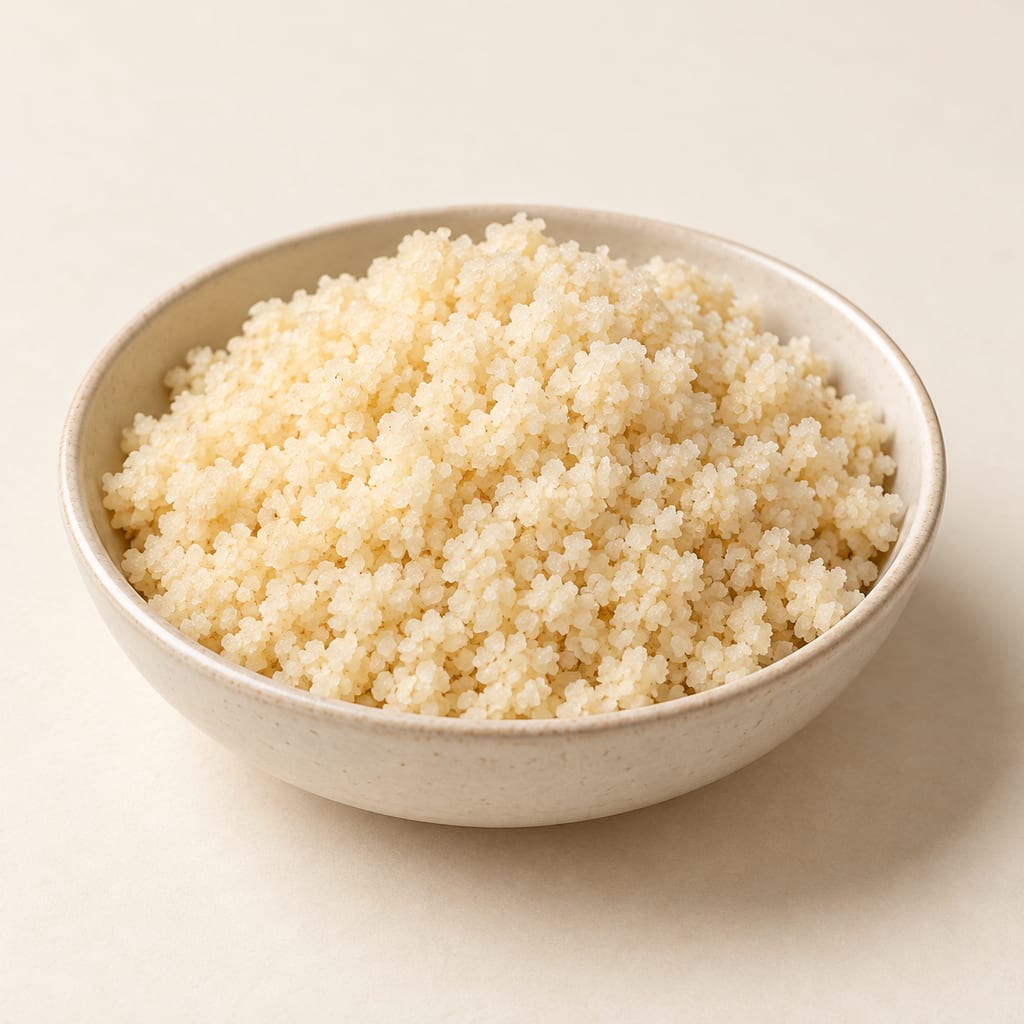
Attiéké is an Ivorian staple of grated cassava fermented with a traditional inoculum, then pressed, sieved, granulated, dried and steamed into fine couscous-like grains.

Crushed or milled barley cooked in water until the starch softens and the mixture thickens, the plainest way a northern household turned stored grain into a meal, here with apple and hazelnut.
No community contributions have been published for this entry yet.
Sign in to contribute. Published comments and photos are free to read.
Cited in: What is kocho?; Enset cultivation and historical context; Why enset needs processing; Removing the outer leaf sheaths; Scraping the pseudostem; Combining the materials; Preparing the fermentation pit; How long fermentation takes; The microbiology of kocho; Regional variations; Recognising quality and spoilage; Safety and preservation
Cited in: How long fermentation takes; What controlled studies found; Regional variations; Safety and preservation
Cited in: How long fermentation takes
Cited in: Selecting a mature plant; Preparing the corm; The microbiology of kocho; What controlled studies found
Cited in: Enset cultivation and historical context; How kocho is eaten
Cited in: A household in Hambela Wamena
Cited in: Combining the materials