Injera, starter method · Teff injera with a three-day starter
Loading ratings…
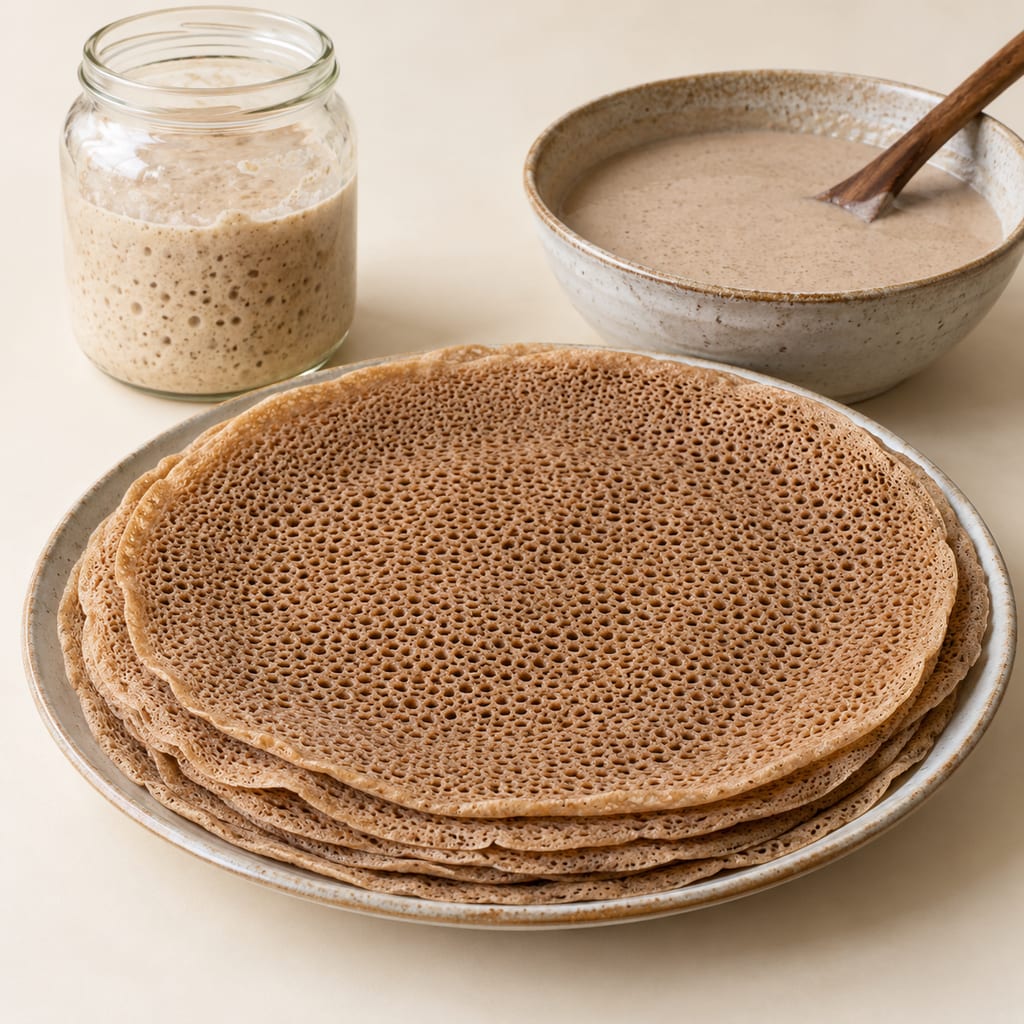
Teff injera made from a three-day teff starter, a three-day main dough fermented under water, and a cooked tempering of part of the batter before griddling.
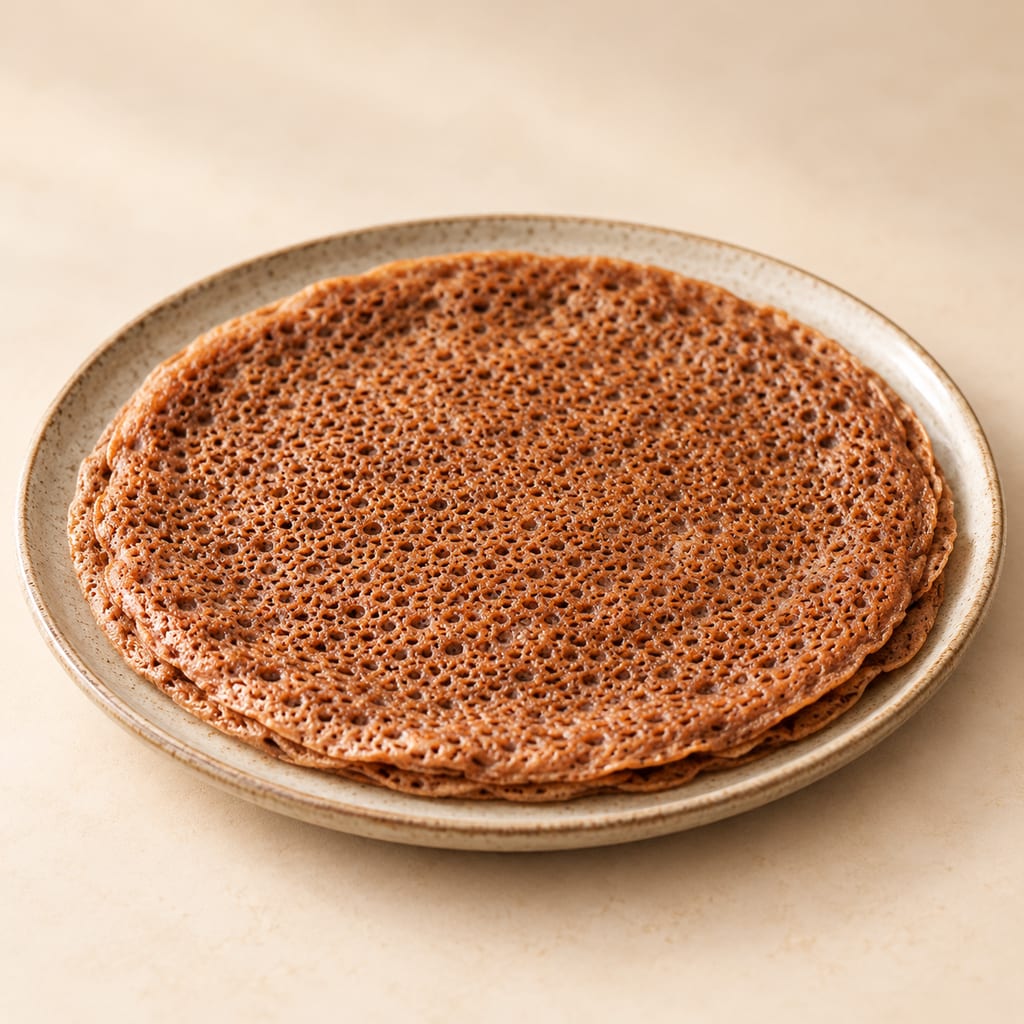
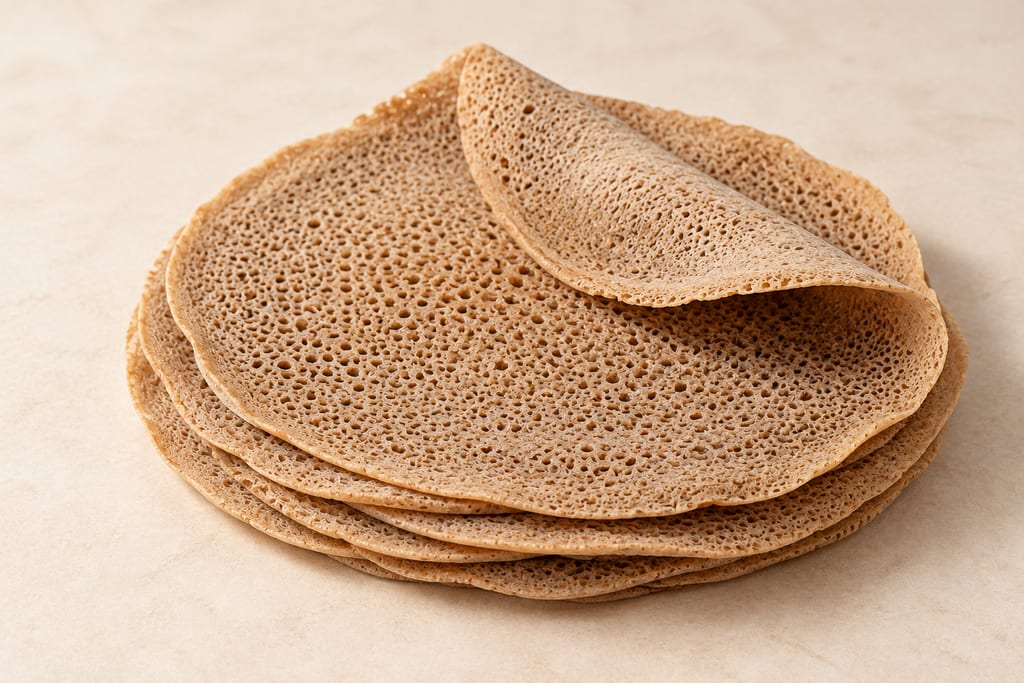
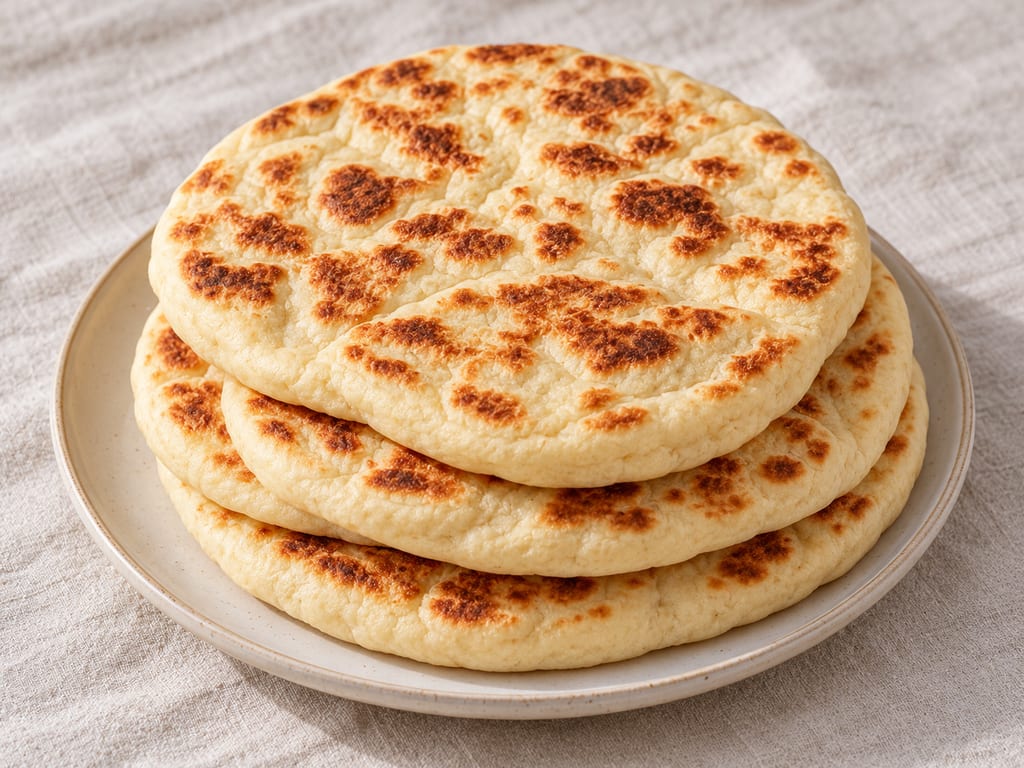
Injera is a fermented flatbread made mostly from teff, the small grain that is the staple of Ethiopia. Its surface is covered in small holes that catch the stew it is served with, and it is torn and used to scoop food. The review cited here describes it as an Ethiopian staple that is also common in Eritrea and parts of Somalia.
This batch starts with a teff starter. A little teff flour and room-temperature water are held in the dark for three to five days. The creator checks it daily for foam and bubbles. On the third day the separated liquid is poured off and the rest of the starter is added to a larger quantity of teff flour, which is the step that turns the starter into the main dough.
Two fermentations and a tempering
The main dough is mixed to a stiff consistency with water added gradually, then left to ferment under surface water for three days. The water on top is topped up on day two and poured off on day three. The creator's choice of how long to leave that water changes the sourness, and the two waters decanted at different points are not the same.
Part of the fermented batter is then cooked: two cups of water are boiled, one cup of the batter is whisked in, and the mixture is brought back to a boil until it thickens. It is folded into the batter and rested for two to four hours. This tempering is what gives injera its open structure on the griddle.
Griddling and doneness
The batter is poured on the griddle in a circle, covered, and cooked without turning for about three minutes. The captions give the griddle as "about 350°" with no unit, so the heat cannot be converted safely. The creator says the centre may look undone and finish on cooling, while white spots are uncooked. Those cues conflict, so this page does not state a doneness endpoint.
The seven pieces the video makes are smaller than the customary size. They are cooled before stacking, as the video says.
Other injera methods
A second home video starts from a saved starter and records only its first day. This page does not use that video, because its starter, absit and cooking stages are not reviewed. Separate injera methods on this site use a 24-hour formula and a saved-starter and absit batch. Those are not blended into this one.
History
A 2024 historical study dates a shift in the pouring method in the Shoa region to 1879 to 1898. That is a change in cooking method, not the origin of injera, and the video does not establish a regional standard.
Ingredients
Yield 7 each · Scaling: source batch only
Teff flourFor the starter, with water at room temperature, held in the dark for three to five days.
118 mL½ cup as recorded
Starter quantity. The main dough uses 3 cups of teff flour.
A modern home adaptation of Ethiopian injera using a 24-hour fermentation window. This method balances traditional souring with accessible ingredients like baking powder or starter cultures to achieve the characteristic porous texture.
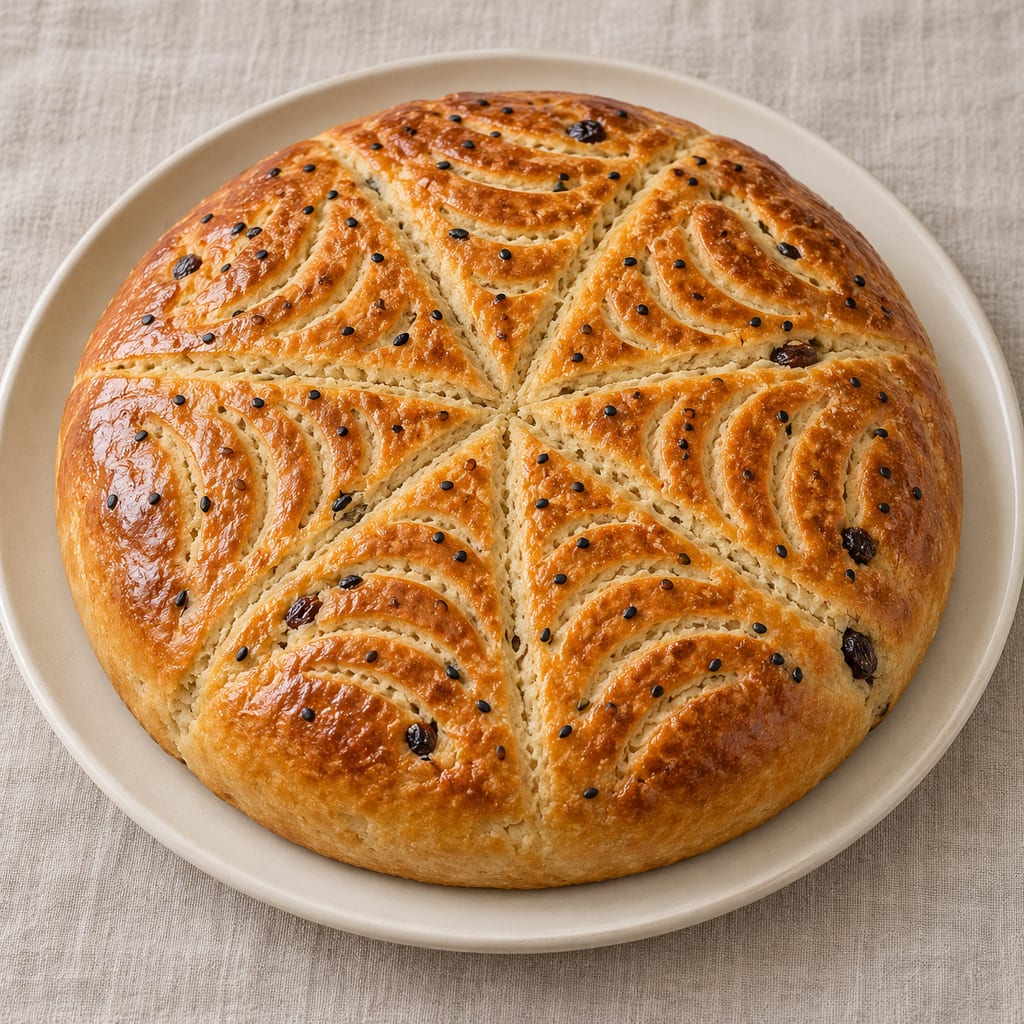
A round, mildly sweet wheat bread leavened with baker’s yeast and marked with a wheel pattern. This source batch uses raisins, black sesame and cardamom.
Ethiopia's fermented enset staple: the scraped leaf sheaths and pounded corm of Ensete ventricosum packed into a leaf-lined pit, where lactic fermentation turns them into a sour mass that keeps and is later baked as flatbread.
A two-stage Ethiopian teff injera method begins with saved ersho, ferments the main batter beneath refreshed surface water, then adds cooked absit before a final warm rest and griddle baking.
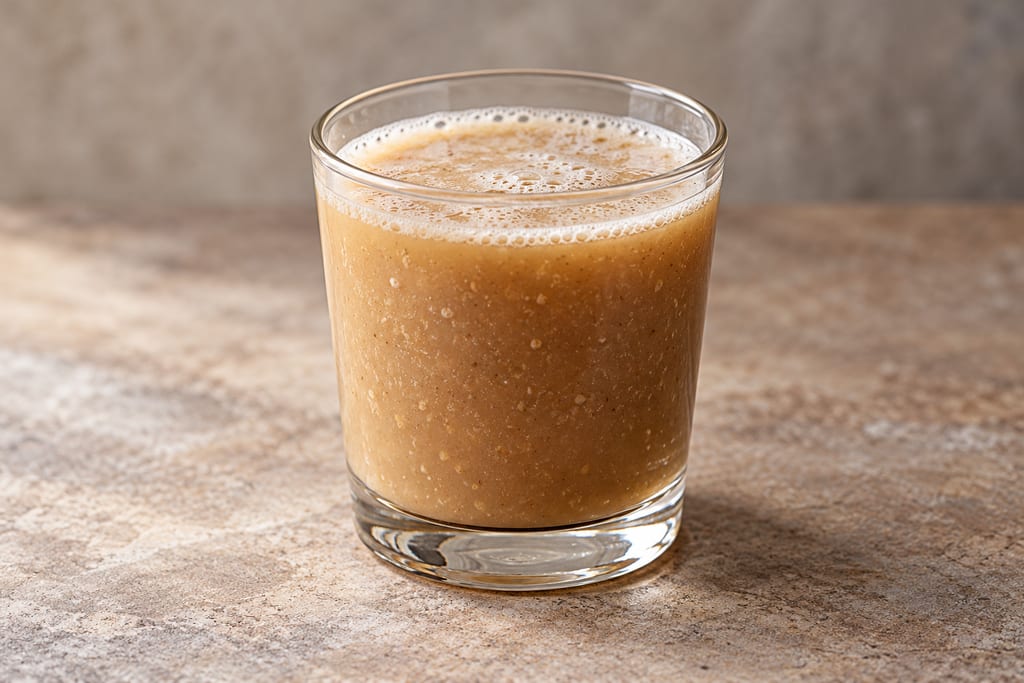
A thick, faintly fizzy Ethiopian cereal drink in which a wheat dough is fermented, roasted dark, then fermented a second time with barley malt into a drinkable slurry.
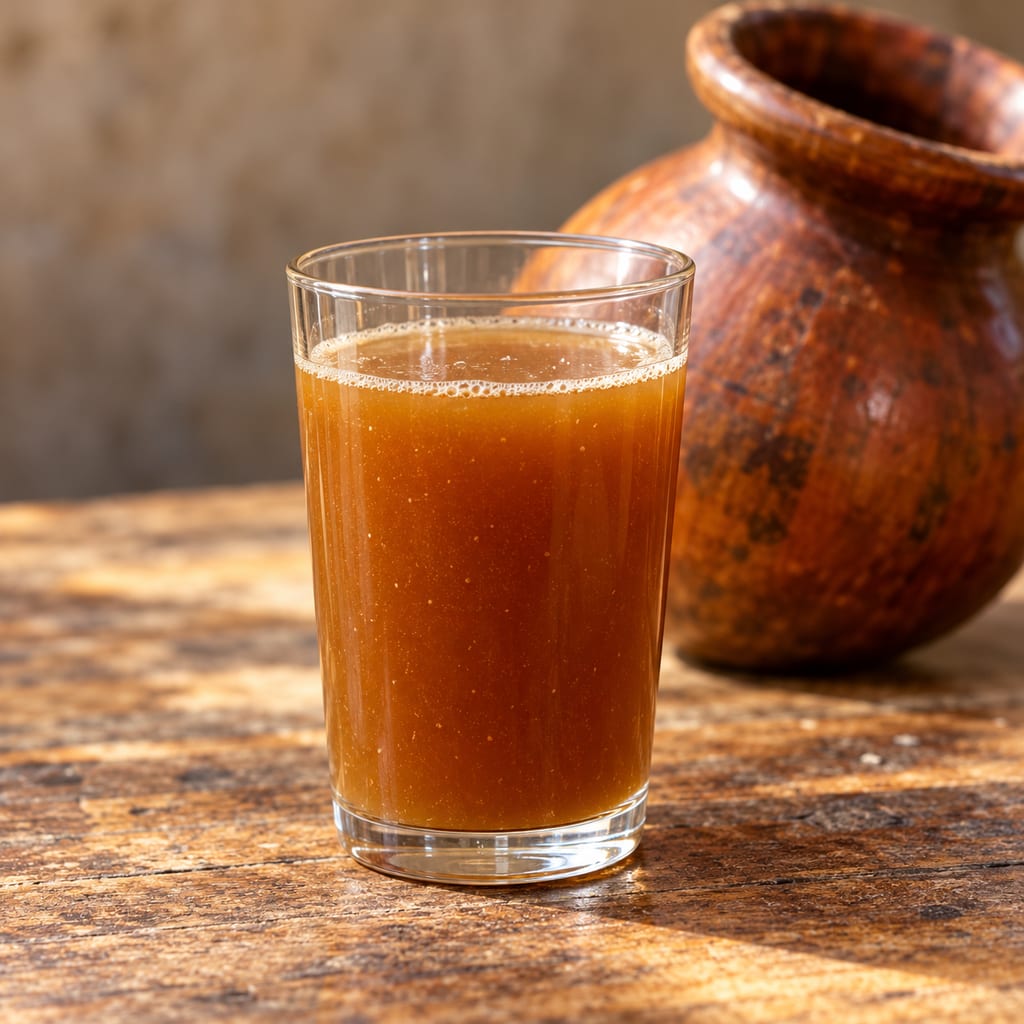
A darker Ethiopian maize tella, brewed from maize baked into a hot, dry kita pancake and then fermented in three stages with barley malt, gesho and water.
A pale Ethiopian maize tella, brewed from maize baked into a kita pancake at a gentler heat and then fermented in three stages with barley malt, gesho and water.
This home adaptation of Egyptian aish baladi uses a refrigerated yeast biga, whole-wheat dough, bran dusting and a very hot baking surface to make 16 pocketed rounds.
A measured, yeast-raised Ayacucho chapla home method shared by Thermomix Peru presenter Roxanna Salaverry. It makes thin, anise-scented rounds baked at 240°C; the historic qunchu-leavened form is documented separately.
This Shaanxi-associated yeast flatbread uses a simple water dough, coiled shaping and a skillet bake. It is the bread used in roujiamo, not the filled meat dish.
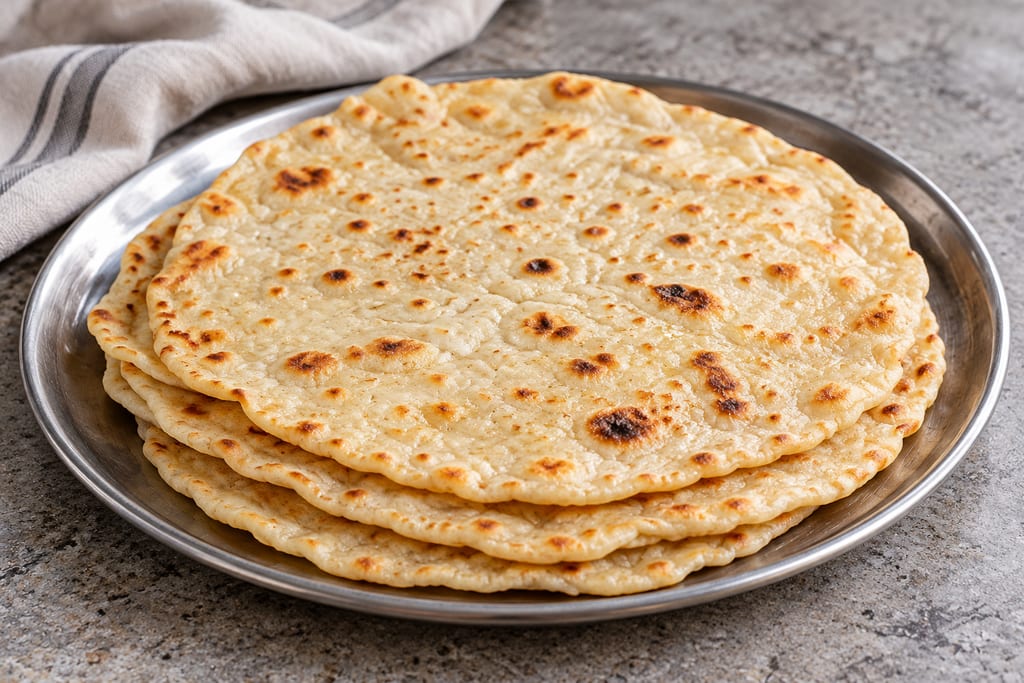
This Turkish bazlama uses yeast, plain yogurt and olive oil for a soft dough cooked in a skillet. Shape it into twelve small or six larger rounds, flip as bubbles appear, and wrap the breads to keep them soft.