A grass with exceptionally small grain
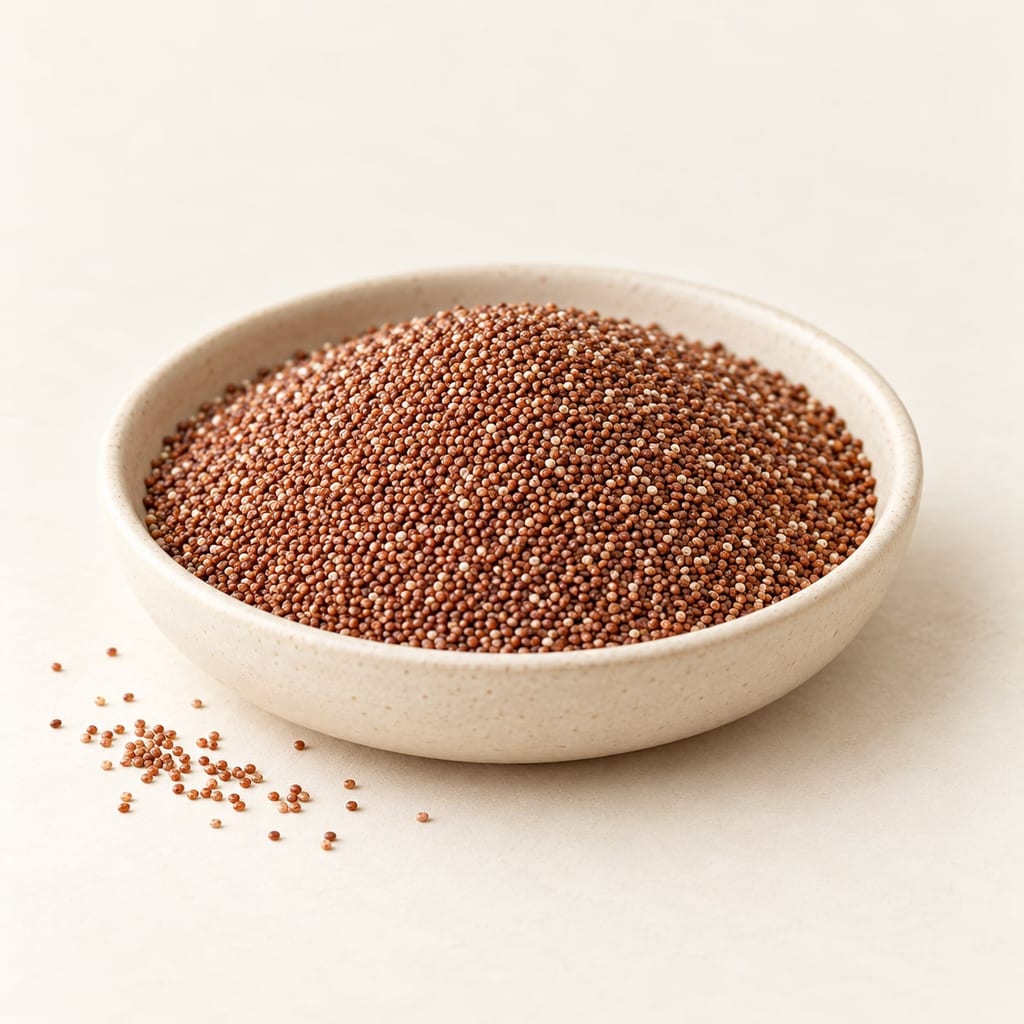
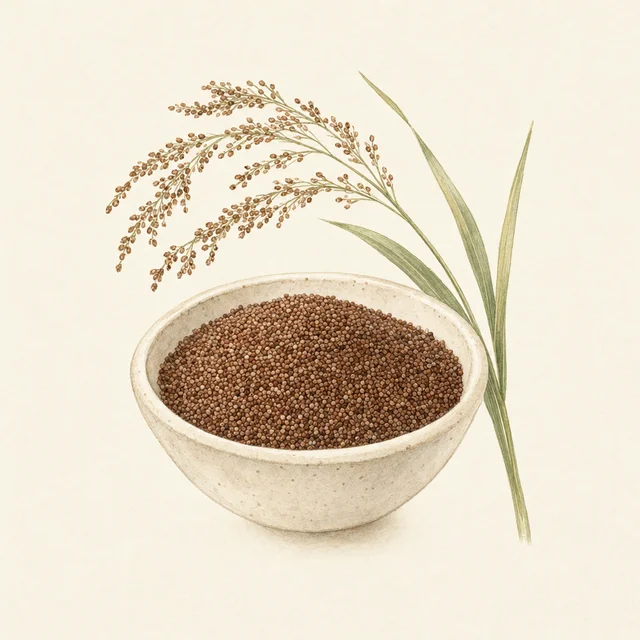
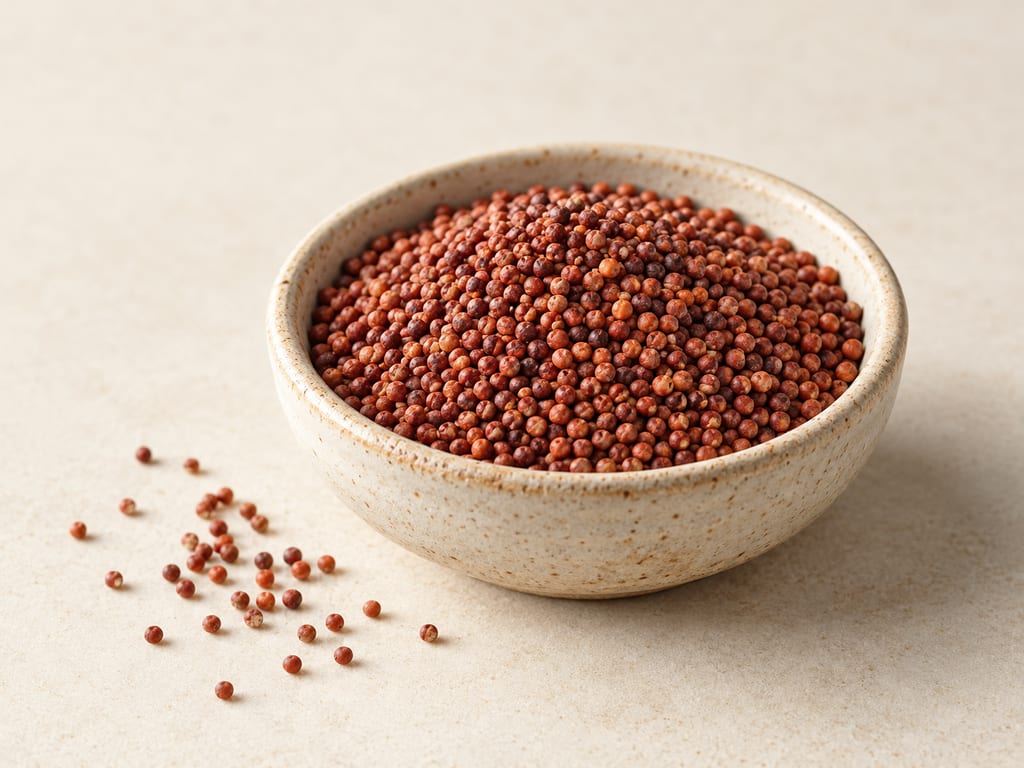
Teff, also written tef, is the cereal species Eragrostis tef in the grass family Poaceae. The seed is notably small. The plant is an annual grass, and the harvested grain is milled into a fine flour for foods including injera. Straw is also useful: in Ethiopia it serves as livestock fodder and has been mixed with mud for building.
Teff is neither wheat nor one of the small millets sometimes grouped with it in modern food marketing. It belongs to Eragrostis, a large genus of grasses. Botanical names found in older literature include Eragrostis abyssinica and Eragrostis pilosa subsp. abyssinica; the name used here is Eragrostis tef (Zucc.) Trotter. Grain colour ranges from pale or white through ivory and mixed to brown or reddish-brown. Colour names and market categories do not always identify a distinct cultivar: a visible colour alone cannot identify the variety or its growing place.
Sources for this section
Domestication and an incomplete archaeological record
Ethiopia is the recognized centre of teff origin and diversity, but the crop’s exact domestication date and location remain unsettled. Agricultural and historical accounts have proposed a very old Ethiopian history, sometimes placing cultivation in the fourth to first millennia BCE. Archaeobotany gives a narrower kind of evidence: teff remains have been identified at Pre-Aksumite and related northern Horn of Africa sites, with direct macrobotanical evidence reported around the first millennium BCE. Newer work examining residues on grinding stones describes cereal use across a longer span, but such evidence does not automatically identify each starch or phytolith as domesticated teff. The dates of cultivation, domestication and a particular archaeological find are different claims.
For that reason, a precise birthplace or a single inventor should not be attached to teff. Sources describe long cultivation and great diversity in Ethiopia, and report cultivation in the highlands of Eritrea and neighbouring parts of northern Kenya as well. These are documented growing and use regions; they do not establish that every teff preparation began in one of them. Teff later spread beyond the Horn of Africa through agricultural research, migration, commerce and specialist food markets. Modern cultivation elsewhere is evidence of the crop’s wider reach, not a revision of the evidence for its domestication.
Sources for this section
A crop shaped by place and farmer selection
Teff is grown across varied Ethiopian environments, from lowlands to mid-highlands. Studies of farmer varieties document substantial genetic and named diversity across regions and agroecological zones. Farmers and grain markets often distinguish white, brown or red, and mixed grain. Local names, maturity, plant form and adaptation vary; a broad colour label is not a complete cultivar description. White grains may command preference in some markets, while brown and mixed grains remain important food grains. These preferences are specific to communities and markets, not a universal ranking of flavour or quality.
The crop is adapted to warm growing conditions and can be grown for grain or forage. Field performance depends on rainfall, altitude, soil and cultivar; figures reported by one agronomic study describe its tested sites rather than universal requirements for every teff crop. Teff is small-seeded and can be difficult to harvest without losses. At harvest the grain is separated from the plant, cleaned and stored before milling. The stalks retain value after threshing as fodder and, in documented Ethiopian practice, as a material mixed with mud for walls and grain stores.
Food grain is sold whole and as flour. Milling the whole small kernel produces a flour that carries the grain’s bran and germ along with the starchy endosperm; the precise extraction and particle size depend on the mill and product. Flour colour can therefore reflect grain type and processing, and should not be used by itself to infer nutritional composition or place of origin. Teff flour also appears in commercial blends and in recipes adapted outside Ethiopia, where other cereal flours or binders may be added. Those mixtures are not interchangeable with a teff-only batter.
Sources for this section
Teff in food and fermentation
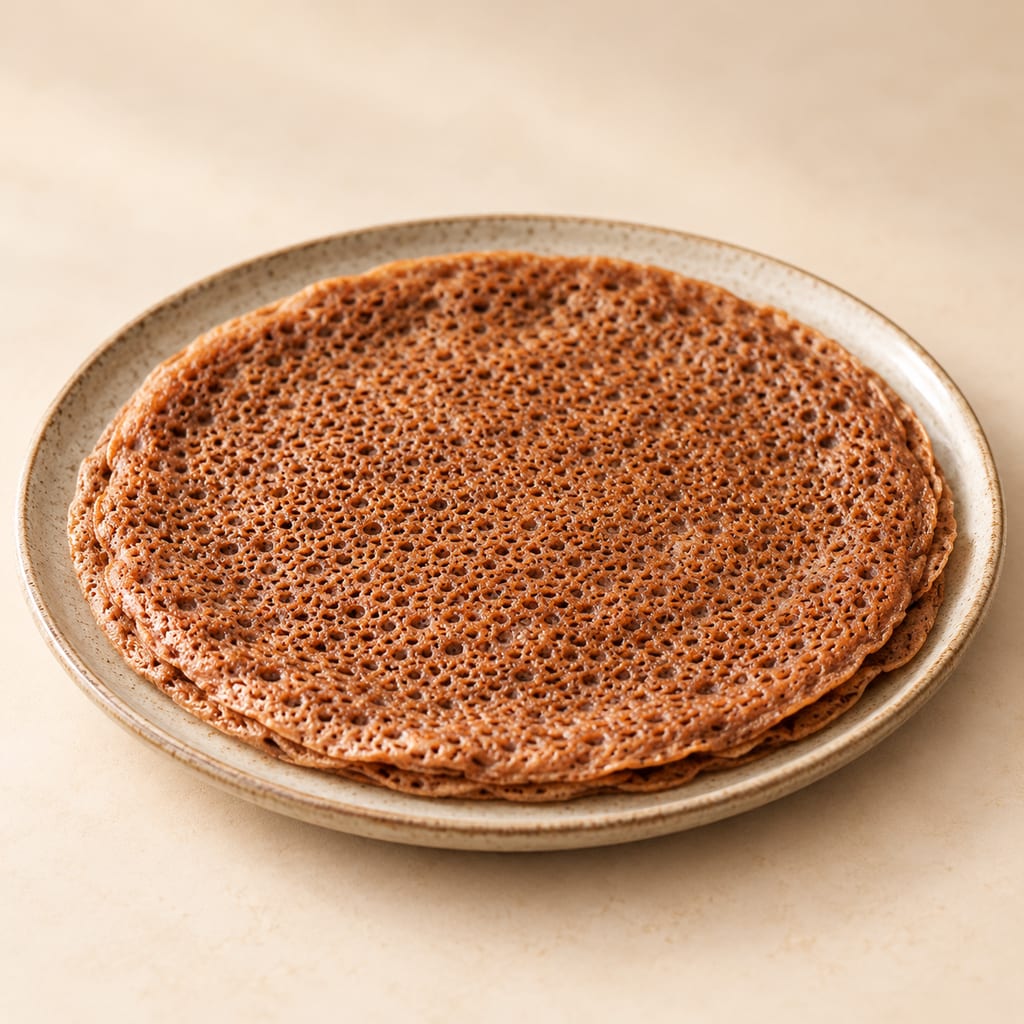
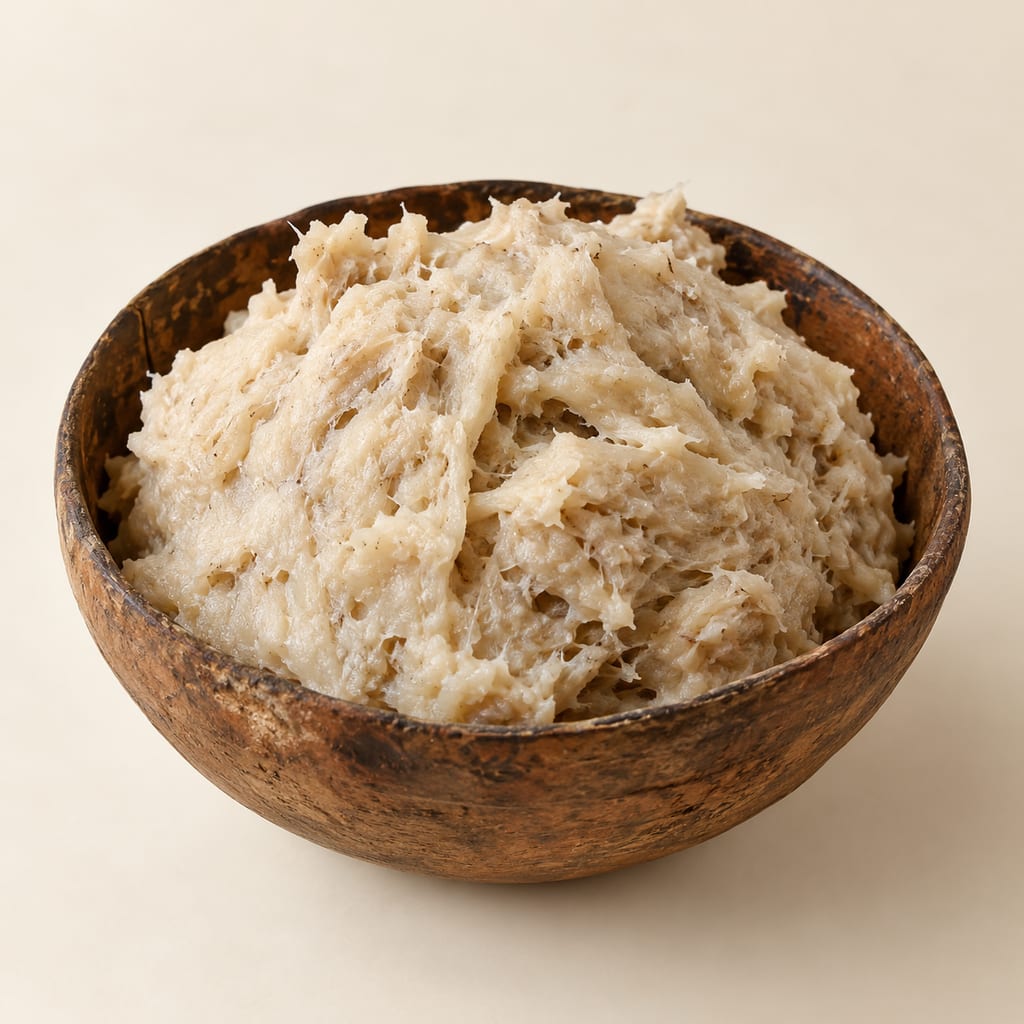
In Ethiopia, teff is especially associated with injera, a thin, flexible, porous flatbread that is both food and a utensil for scooping stews and other dishes. Teff flour and water form a batter whose fermentation is often spontaneous or maintained through backslopping with ersho, a portion of previously fermented batter. The flour supplies starch, sugars, proteins and minerals to the batter; the resident and carried-over microorganisms acidify it and produce gas and flavour compounds. The grain itself is not a starter culture, and flour from a different source does not guarantee the same microbial community or result.
Injera methods vary by household and region. Some describe a first souring stage followed by absit: part of the batter is mixed with water, cooked, cooled and returned to the main batter. That cooked portion changes the batter’s body and contributes to the characteristic structure when it is spread and cooked on a mitad, a broad griddle. Other methods omit or alter this stage, use a different fermentation schedule, or combine teff with another grain. These are meaningful recipe distinctions. They should not be collapsed into a single formula or assumed from the ingredient alone.
Teff also appears in porridge and gruels, in breads that are cooked without fermentation, and in beverages made from grain or flour. In Ethiopian food culture, injera commonly accompanies stews and pulses; the bread is torn and used to gather food rather than treated only as a side. Eritrean communities also make and eat injera, with local differences in grain blend and preparation. Outside the Horn, teff flour is used in modern baking and breakfast foods, sometimes alone and sometimes blended. Such adaptations have their own texture and handling characteristics and should be named as adaptations when documented.
Sources for this section
What flour contributes to a ferment
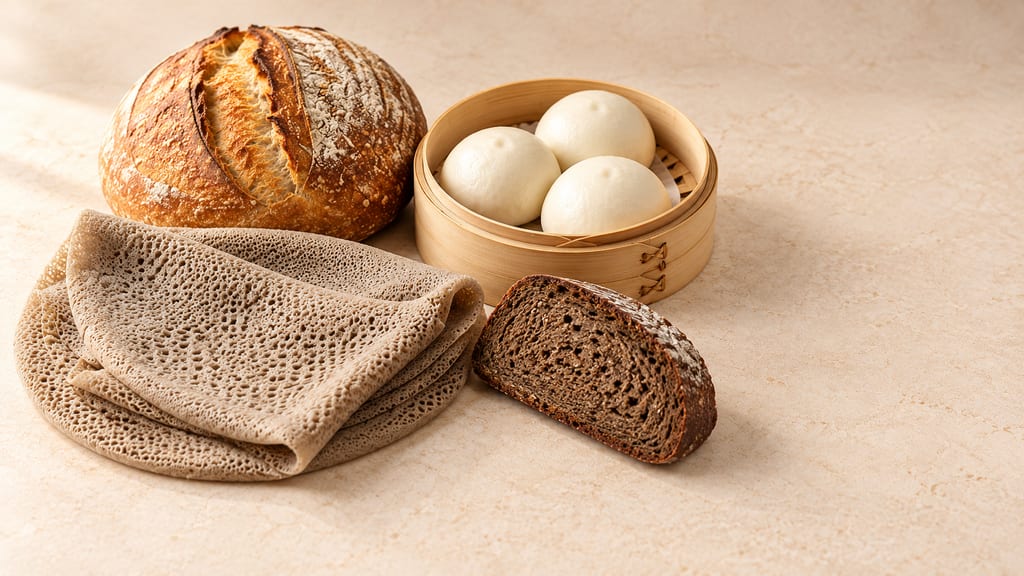
Teff has no wheat-style gluten-forming network. Its fermented batter therefore relies on starch gelatinization during cooking, gas cells formed during fermentation, batter consistency and the cooking surface rather than gluten development to hold its porous structure. This helps explain why teff injera feels tender and flexible while a simple teff-only loaf baked like wheat bread does not behave like wheat dough. Flour fineness and the amount of water affect flow across the griddle, but a recipe must give its own quantities; a general ingredient profile cannot supply them.
Fermentation changes the batter through microbial acid production and gas formation. Research on injera describes mixed communities of lactic acid bacteria and yeasts, but the organisms and their proportions vary across studies, batches and methods. A named species in one experimental batter should not be assumed to dominate every household ferment. Acid and gas affect sourness, aroma and the holes visible on the cooked surface; the subsequent heat sets the bread. These quality changes do not establish that a batch is safe.
A cooked absit portion is a process choice, not an inherent property of teff. The flour is not pre-gelatinized by default, and whether a method uses an absit, how it is prepared and how much is returned belong to the linked recipe. Fermentation schedules and endpoints likewise belong to the source-specific preparation. This ingredient page does not prescribe a time, temperature, acidity, storage duration or sensory test.
Sources for this section
Choosing, milling and handling
Choose whole grain or flour according to the recipe. Whole grain must be milled before it can make a smooth injera batter; packaged teff flour is already milled and may differ in particle size, freshness and colour. A blend should be identified on its ingredient list, since sorghum, barley, wheat or other grains change both the batter and its dietary suitability. A pale colour is not proof that a flour is pure teff.
Keep dry grain and flour protected from moisture, insects and contamination, using the supplier’s storage guidance. Milling exposes more surface area to air, so whole grain and flour can change differently in storage; the inspected sources do not establish a universal household shelf life for all products. Discarding or using flour should follow package instructions and the actual condition of the product, not a generic date supplied here. Once flour has been mixed with water, use the handling and storage directions of the specific recipe.
Teff grain is naturally free of wheat gluten proteins, but that does not make every bag or dish suitable for someone with coeliac disease. Milling, packing, shared containers and a mixed recipe can introduce wheat or barley. People who need a gluten-free diet should follow their clinician’s advice and select products and preparations whose gluten-free status is supported by appropriate labelling or testing. A teff-based injera made with barley or wheat is not gluten-free.
Sources for this section
Nutrition without a health promise
Analyses report protein, fibre, iron, calcium and other nutrients in teff, but published values vary with sample, cultivar, growing environment and analytical method. Cooking and fermentation also change the food being measured. A composition table for dry grain is not a value for cooked injera, and no single number describes every flour. Teff is a useful cereal in varied diets; it should not be presented as a treatment or as a guaranteed source of a nutrient in a particular serving.
Its lack of gluten-forming proteins makes teff useful in recipes intended to avoid wheat, but flour behaviour is different from wheat flour and recipes need to account for that difference. A flour blend may improve handling but can change the grain’s flavour, texture and allergen profile. Substitution is therefore a recipe-level decision rather than a property that can be settled by the ingredient name.
Sources for this section
Places
Ethiopia
Traditional preparation · Region evidenceA broad association with cultivation and injera traditions; the sources do not establish a single birthplace.
Eritrea
Documented preparation · Region evidenceFAO describes cultivation of teff in Eritrea; this is a cultivation association, not an origin claim.