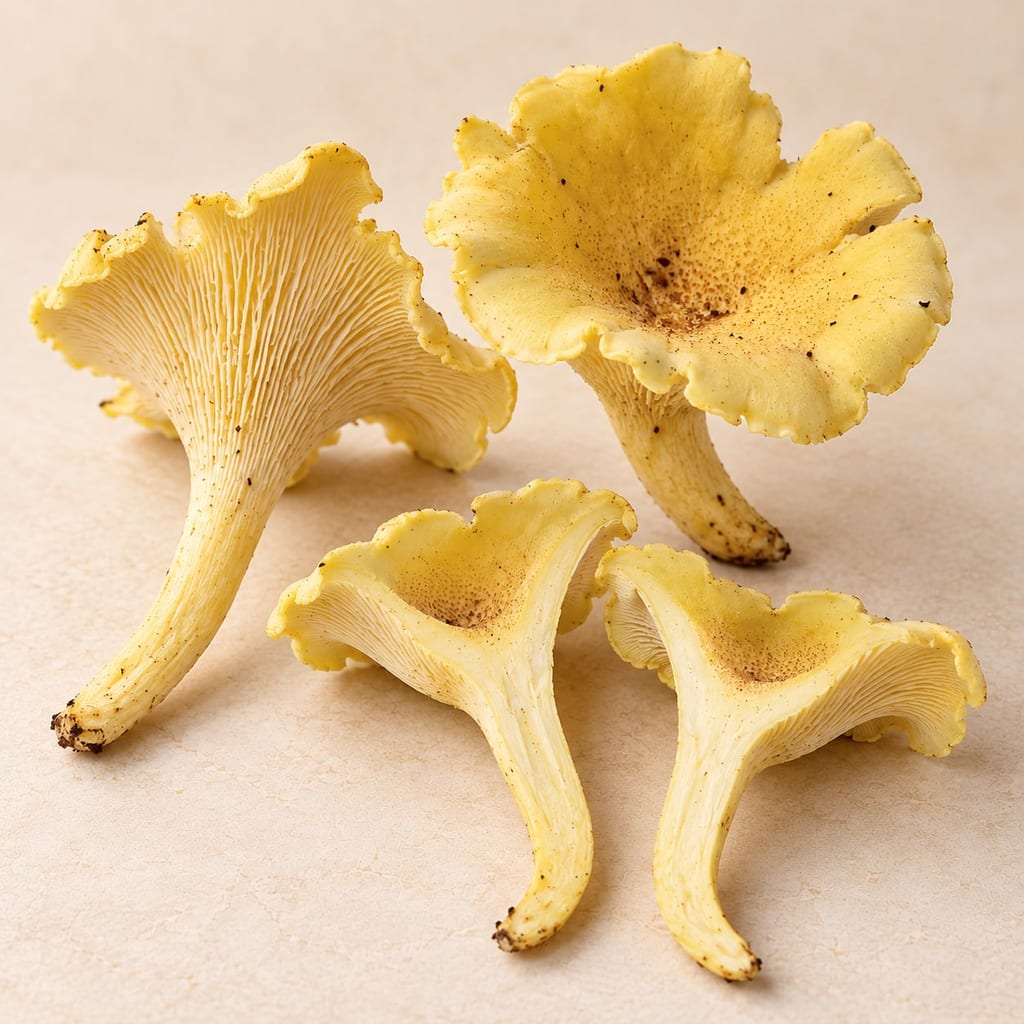
Cantharellus luteopunctatus
Cantharellus luteopunctatus is a wild ectomycorrhizal chanterelle of central African rainforest, recorded as eaten locally in Tshopo province, DR Congo. Its preparation is not documented.
 FermenteaWhere food goes to change
Mushrooms
A forest mushroom of the genus Agaricus, recorded as a wild food in the Tshopo province of the Democratic Republic of the Congo in a voucher-backed ethnomycological survey.
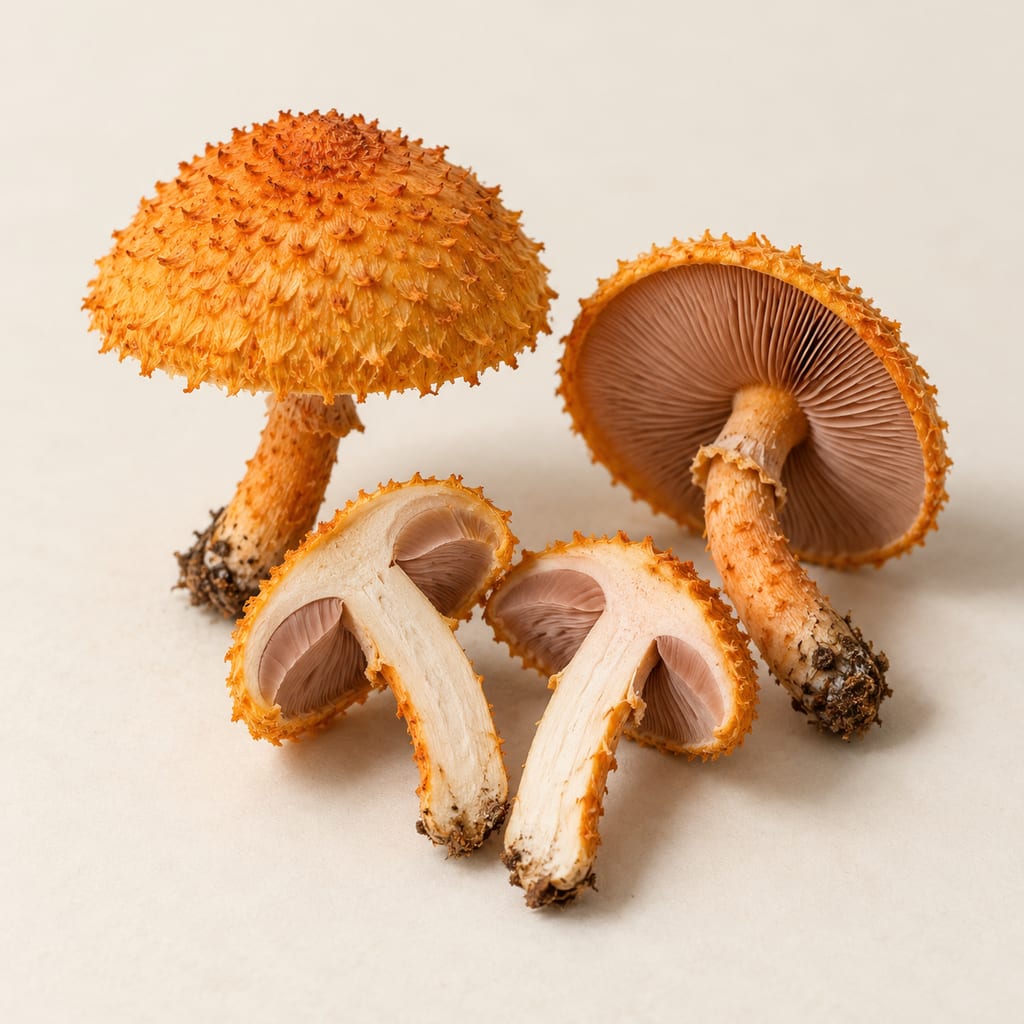
Agaricus crocopeplus is a wild gilled mushroom of the genus Agaricus. The name was published by Berkeley and Broome, and the supplied catalogue records it as a research name, not a checked current name. The supplied record gives no common name, and no alias was recorded in the catalogue.
Agaricus is a large genus of mushrooms with many cultivated and wild members. Its species are not all edible, and some are poisonous, so a food record for one species does not establish the edibility of any other. The record for this species is therefore specific to the specimens and the communities named in the survey.
The catalogue describes the species as a forest saprotroph, a fungus that lives on dead organic matter rather than in partnership with tree roots, and it is recorded as a wild mushroom. The survey region is the rainforest of the Tshopo province, around Yangambi and Yoko in the north-east of the Democratic Republic of the Congo.
The sources read for this entry do not describe the fruiting body in detail, and they do not record a seasonal pattern or a microhabitat for the species.
The species appears in a survey of wild mushroom use among six ethnic communities near Yangambi and Yoko, which recorded 160 informants. The survey lists Agaricus crocopeplus under food use, with voucher specimens deposited for the record. Its cultural-significance score in that study is low, and the same survey shows that the Tshopo communities used a wider set of wild mushrooms, mostly for food.
A companion study of edible ectomycorrhizal fungi in the same province reports the species as eaten by several of the groups it surveyed. The table in that study is hard to read with certainty, so the list of groups is not recorded here. Both studies note that the local people mainly use saprotrophic species such as this one, although the forests also hold many edible ectomycorrhizal fungi.
The catalogue states that the species-specific preparation was not established. The survey records use as food, but the sources read for this entry do not describe how the mushroom is cooked, dried or combined with other foods, and they give no quantity or yield.
The entry therefore records only that the mushroom is eaten in the named communities. A method for preparing it cannot be taken from the species name, from the genus, or from the food practices of other Agaricus species.
The source that records food use is an ethnomycological survey. It is not an independent toxicological assessment, and the catalogue states that it does not establish the safety of the species. The sources read for this entry give no toxicity data, no chemical composition and no statement about the edibility of the species outside the named survey.
This page is not an identification guide and gives no verdict on whether the species can be eaten. Agaricus contains look-alike species that are dangerous, and any wild specimen needs a qualified identification before anyone eats it.
Three points remain open. The taxonomic status of the name needs checking against current authorities. The preparations used by the Tshopo communities need to be recorded in detail. The safety of the species has not been assessed by a toxicological study.
Food use recorded in a voucher-backed survey near Yangambi and Yoko; the record does not establish use elsewhere.
Cantharellus luteopunctatus is a wild ectomycorrhizal chanterelle of central African rainforest, recorded as eaten locally in Tshopo province, DR Congo. Its preparation is not documented.
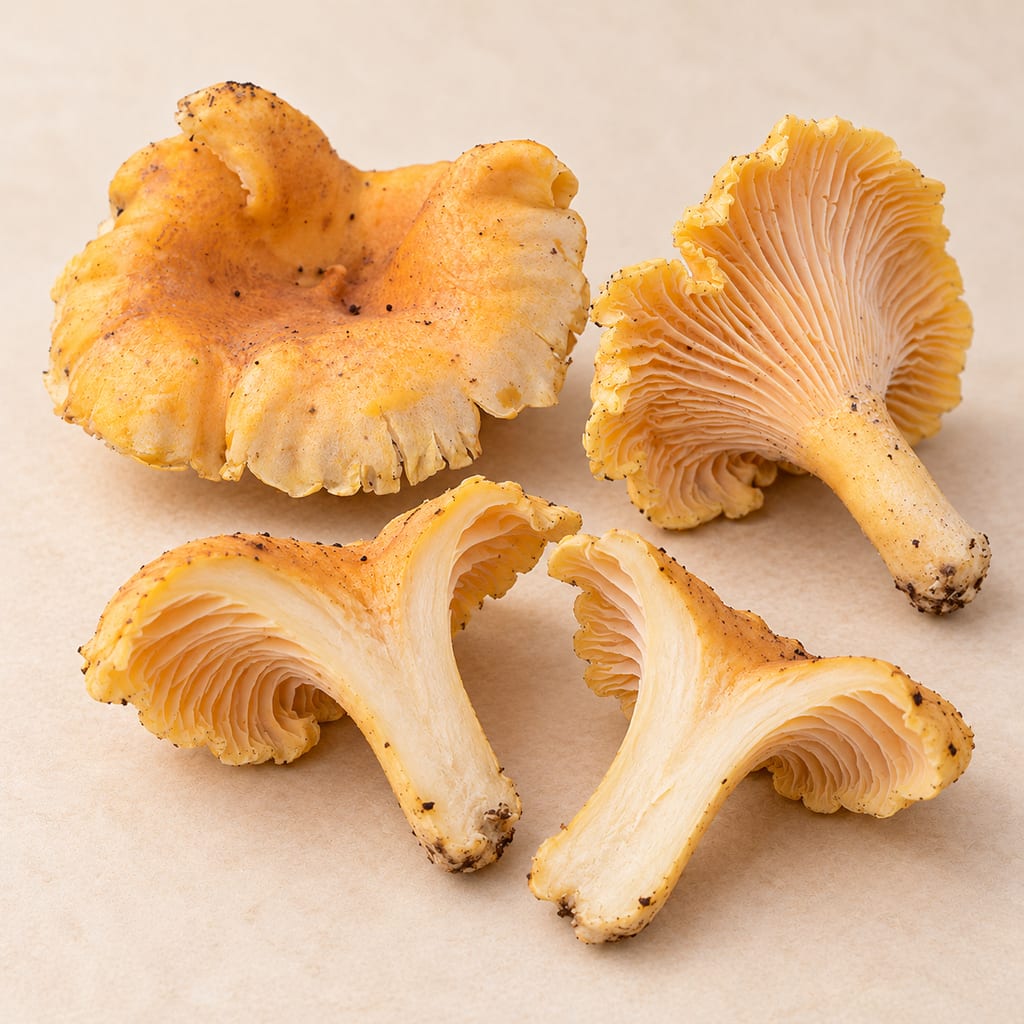
Cantharellus rufopunctatus is a rainforest chanterelle-group fungus that the catalogue records as eaten locally in Tshopo province, DR Congo, where no species-specific preparation has been established.
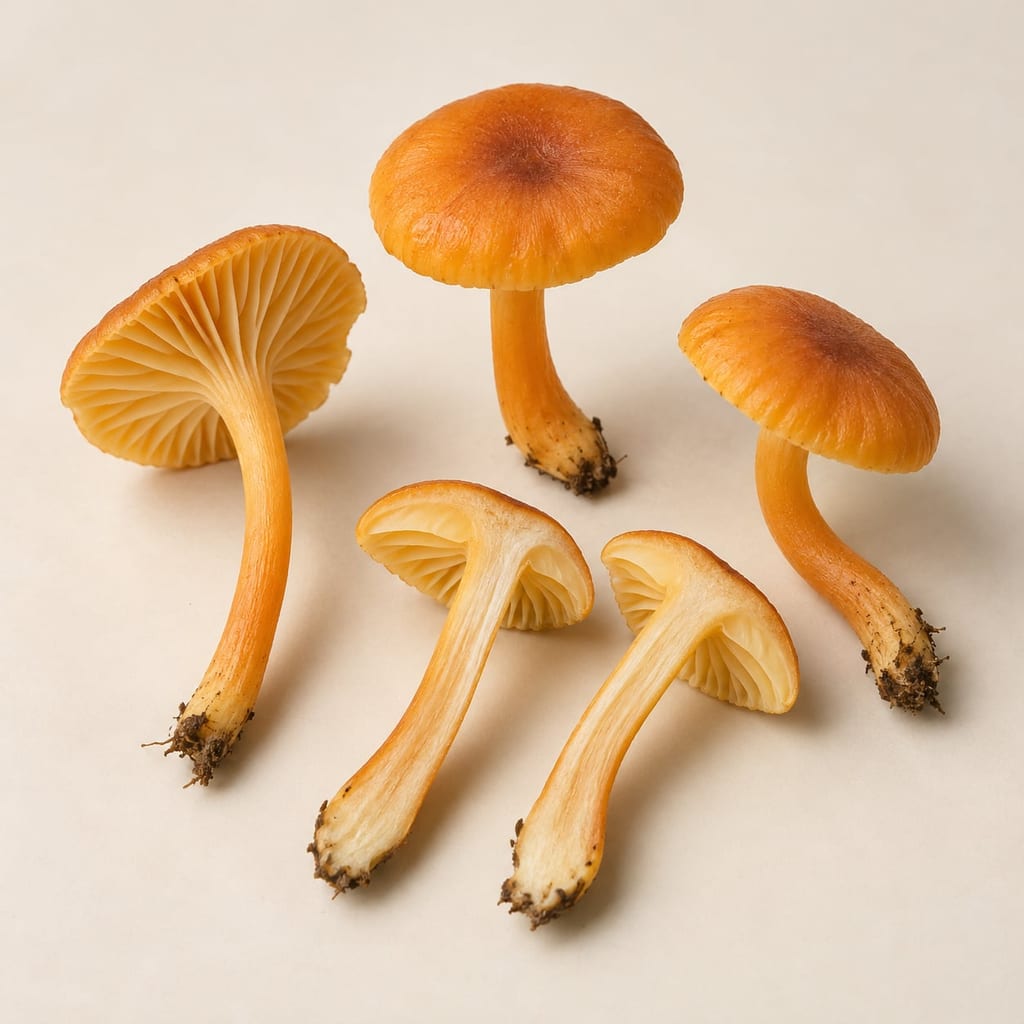
Hygrocybe cantharellus is a small orange waxy-cap agaric with a catalogued food record from Tshopo province, DR Congo, and a taxonomy that the sources read do not settle for that region.
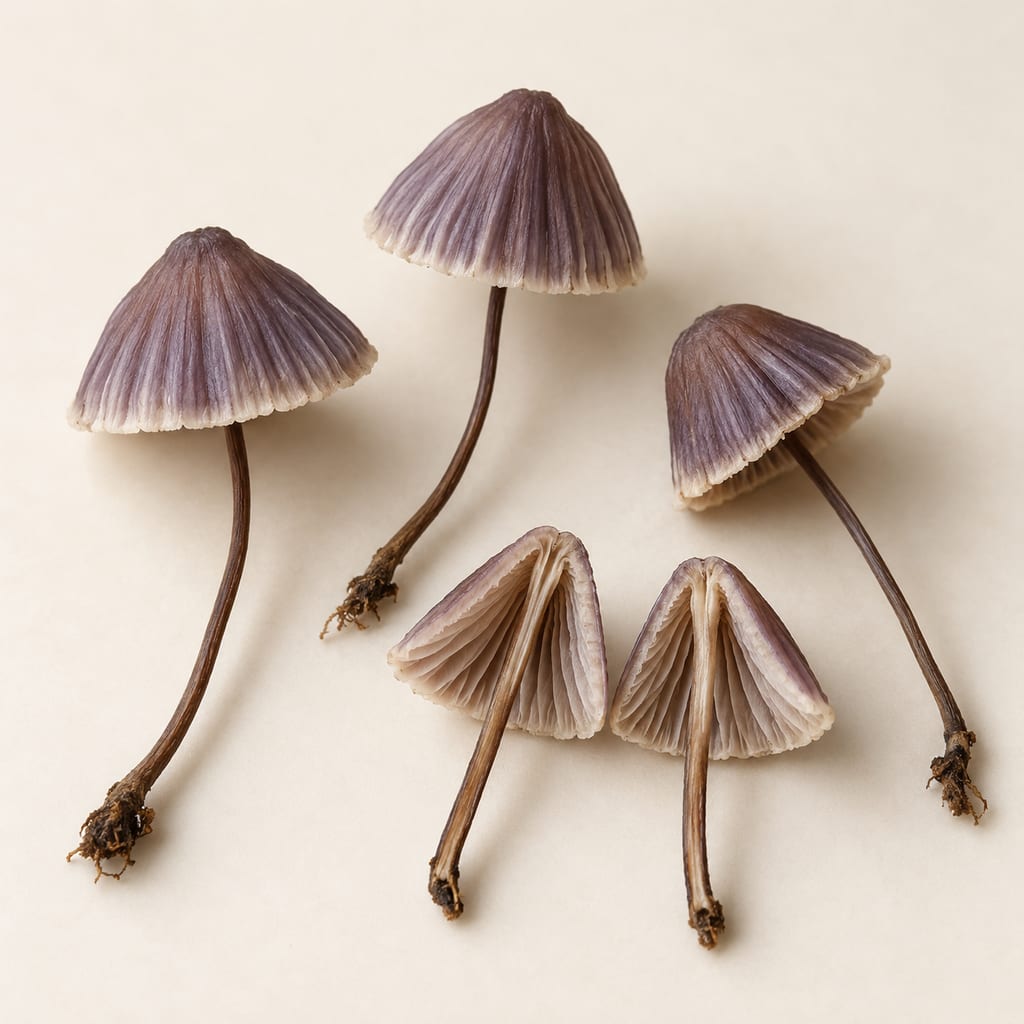
Marasmius bekolacongoli is a wild mushroom of Central African rainforest that field surveys in Cameroon, Gabon and the Democratic Republic of the Congo record as eaten by local people.
Pleurotus flabellatus is a wild forest oyster-type mushroom that grows on dead wood in the Congo Basin, recorded as eaten locally in Tshopo. Its name is entangled with P. djamor, so the record needs taxonomic care.
Russula sesemoindu is a wild ectomycorrhizal mushroom with a local name in Tshopo province, DR Congo. It is recorded as eaten by several informant groups, with no preparation or safety assessment.
Russula striatoviridis is a wild ectomycorrhizal mushroom recorded as locally eaten in Tshopo province, DR Congo. No preparation method or safety assessment is established for it.
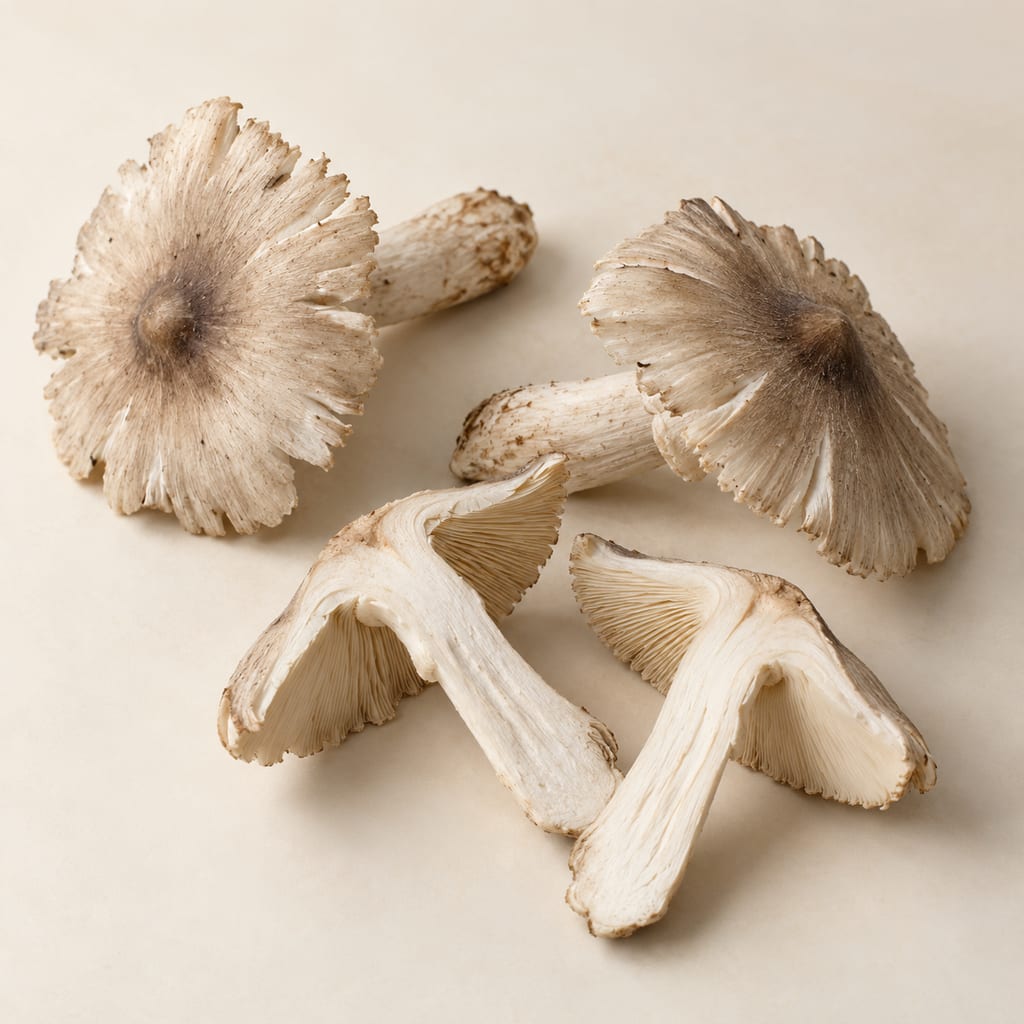
Termitomyces striatus is a wild termite mushroom that grows with fungus-growing termites in tropical Africa and Asia. Local food use is recorded, but its species-level preparation is not established.
No community contributions have been published for this entry yet.
Sign in to contribute. Published comments and photos are free to read.
PubMed CentralFood · Identity
Wild edible ectomycorrhizal fungi: an underutilized food resource from the rainforests of Tshopo province (Democratic Republic of the Congo)Food use of Agaricus crocopeplus recorded in Tshopo communities
Several groups report use in a companion ectomycorrhizal fungi study
Local people mainly use saprotrophic species
PubMed CentralFood · Background
Uses and importance of wild fungi: traditional knowledge from the Tshopo province in the Democratic Republic of the CongoSurvey of 160 informants from six ethnic communities near Yangambi and Yoko
The Tshopo residents use 73 wild mushroom species, most for food