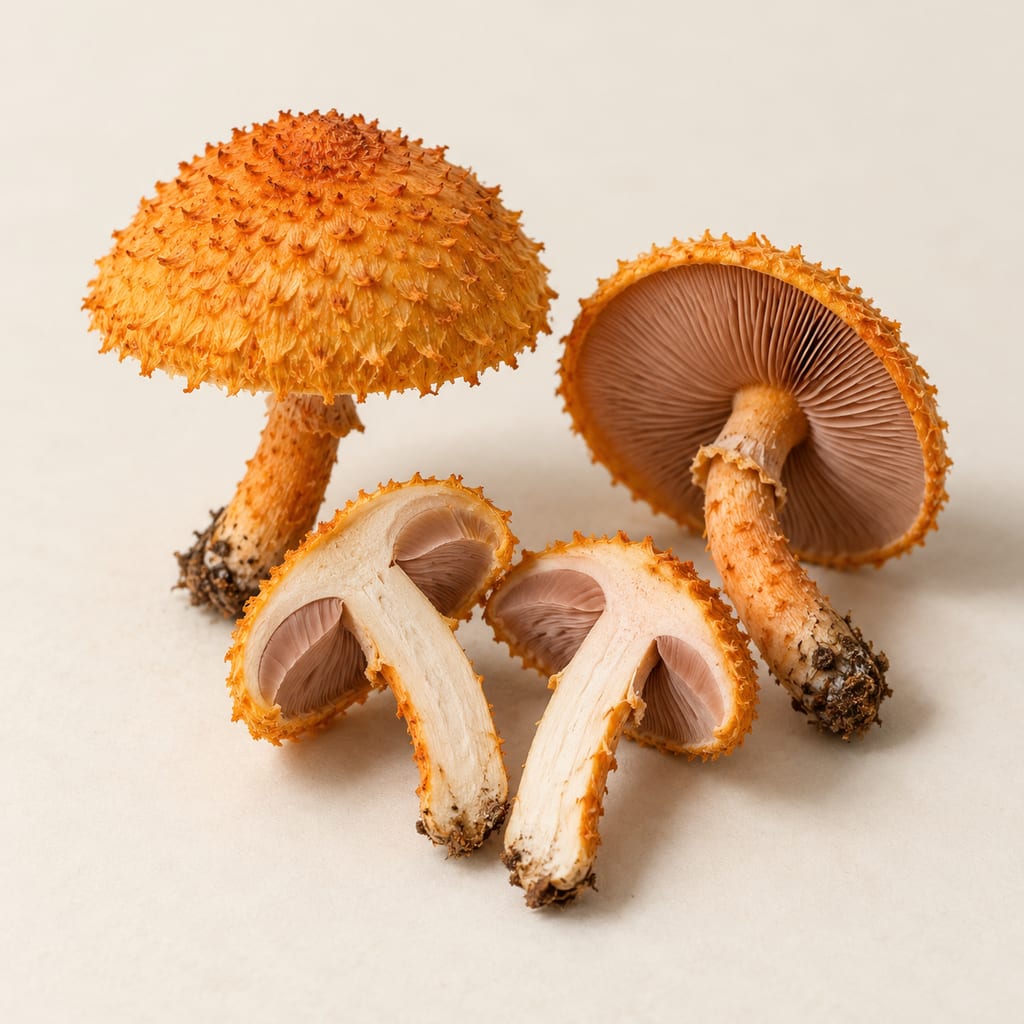
Agaricus crocopeplus
A forest mushroom of the genus Agaricus, recorded as a wild food in the Tshopo province of the Democratic Republic of the Congo in a voucher-backed ethnomycological survey.
 FermenteaWhere food goes to change
Mushrooms
Cantharellus luteopunctatus is a wild ectomycorrhizal chanterelle of central African rainforest, recorded as eaten locally in Tshopo province, DR Congo. Its preparation is not documented.
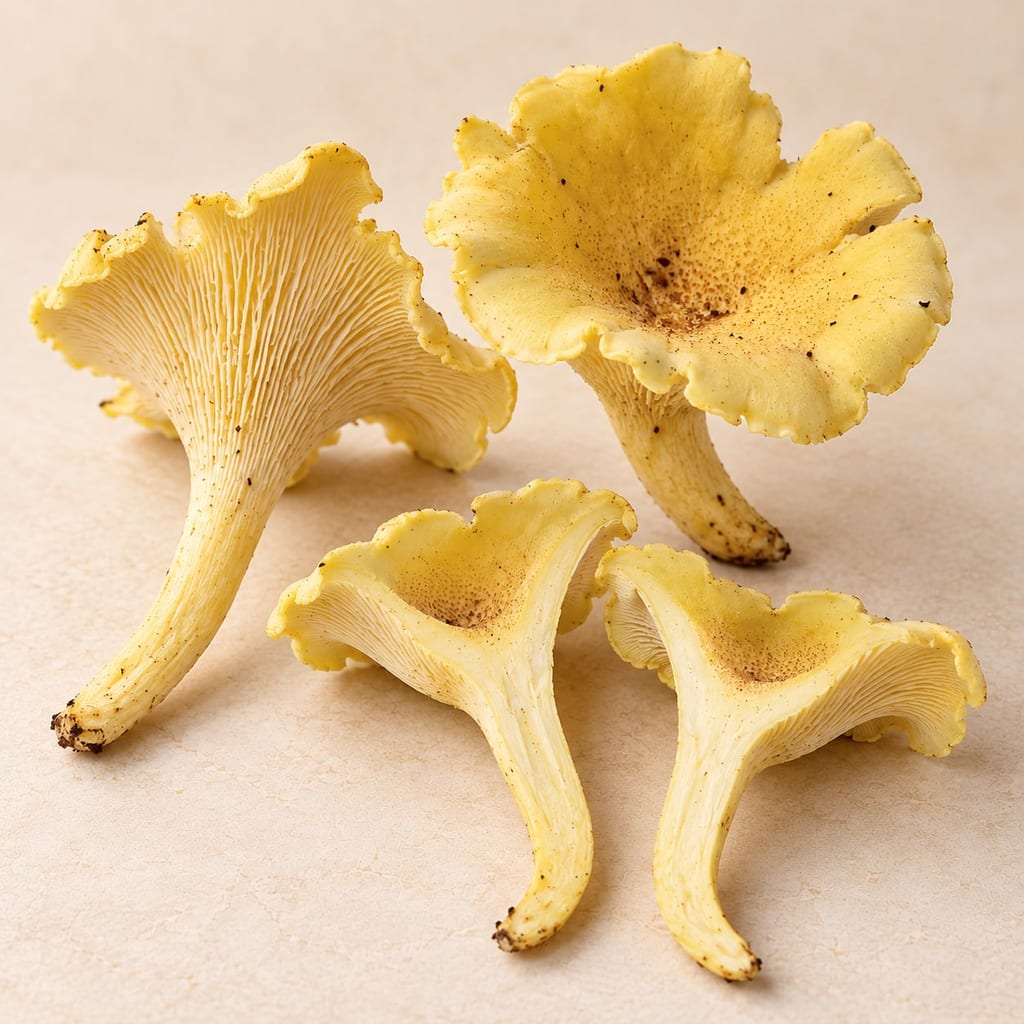
Cantharellus luteopunctatus is a wild fungus known from dense equatorial forest in central Africa. Field and interview records place it among the mushrooms that people in Tshopo province, in the north-east of the Democratic Republic of the Congo, collect and eat. The record is one of food use. It does not describe how the mushroom is cooked, preserved or sold, and it does not give a species-specific culinary role.
The name is a research label in the supplied catalogue, which lists no common name and no alias. The catalogue treats the entry as a food-use record, not as an independent toxicological assessment.
The species is placed in the genus Cantharellus, the chanterelles. A 2019 taxonomic paper gave the species an epitype from specimens collected in the Central African Republic, which fixes the name to a reference collection. The supplied catalogue still asks for the name to be checked against current authorities, and it does not record a reconciled accepted name for every local specimen. Records from Tshopo are therefore tied to the name the collector used, and a field identification has not been confirmed by sequence data in the sources read here.
Cantharellus luteopunctatus is ectomycorrhizal: it lives in a mutual root partnership with trees rather than on dead wood. The IUCN assessment associates it with Gilbertiodendron dewevrei in dense equatorial forest. The catalogue records its supply as wild only. No cultivation method is recorded, and mycorrhizal fungi of this kind are not generally grown in the way that saprotrophic mushrooms are.
The supplied record states that the species was recorded as locally consumed in voucher-backed interviews in Tshopo. The same record says species-specific preparation was not established. Locally, a chanterelle of this kind would usually be cooked before eating, as is common for wild Cantharellus, but the sources read here do not say how the people of Tshopo prepared this species, and this page does not supply a method.
The IUCN Red List assessment, published in 2021 and rated Least Concern, lists the species as edible and cites Ndong and colleagues (2011, 2014). That is a conservation-literature note, not a culinary or safety guide.
The IUCN assessment records the species from the Democratic Republic of the Congo, Cameroon, Gabon and Burundi, and notes that it probably occurs in neighbouring countries too. The Tshopo record places it in one province of the DR Congo. These are distribution notes, not a claim about a single point of origin, and the page makes no claim about where people first ate it.
Chanterelles are often confused with toxic or unpleasant lookalikes, and Cantharellus identification depends on microscopic and colour features that a photograph may not show. The supplied catalogue does not give a safe-eating procedure for this species. A food record from an interview does not establish that a particular collection is safe.
Do not use this page to identify or eat wild fungi. Confirm any identification with a qualified mycologist or a reliable regional authority before eating.
The next research question is whether Cantharellus luteopunctatus appears by name in the full text of the 2018 Tshopo ethnomycology study, and how that record describes its preparation and sale. Until a voucher-backed preparation method is found in the sources, the page records food use only.
Interview-based food-use record; species-specific preparation not established. Not an origin claim.
Distribution note from the IUCN assessment; not a claim about where the food tradition began.
A forest mushroom of the genus Agaricus, recorded as a wild food in the Tshopo province of the Democratic Republic of the Congo in a voucher-backed ethnomycological survey.
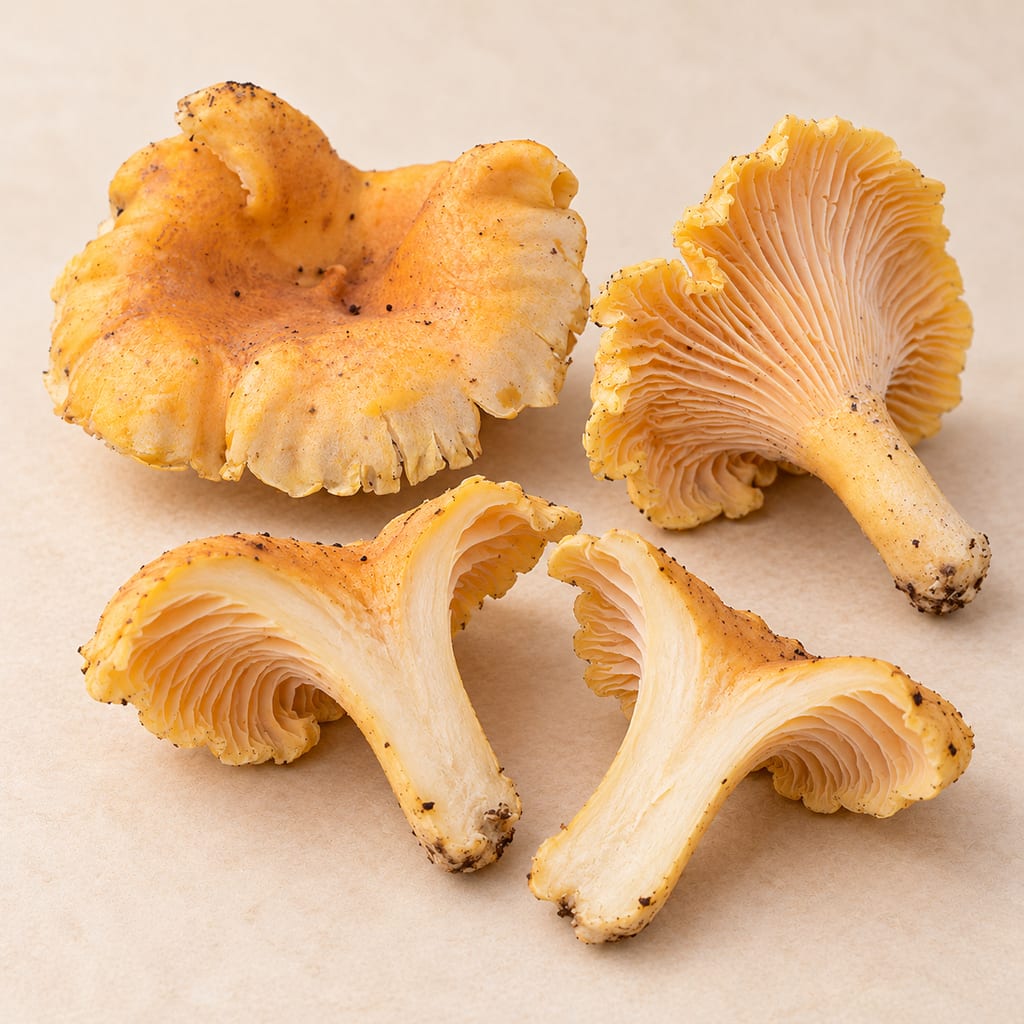
Cantharellus rufopunctatus is a rainforest chanterelle-group fungus that the catalogue records as eaten locally in Tshopo province, DR Congo, where no species-specific preparation has been established.
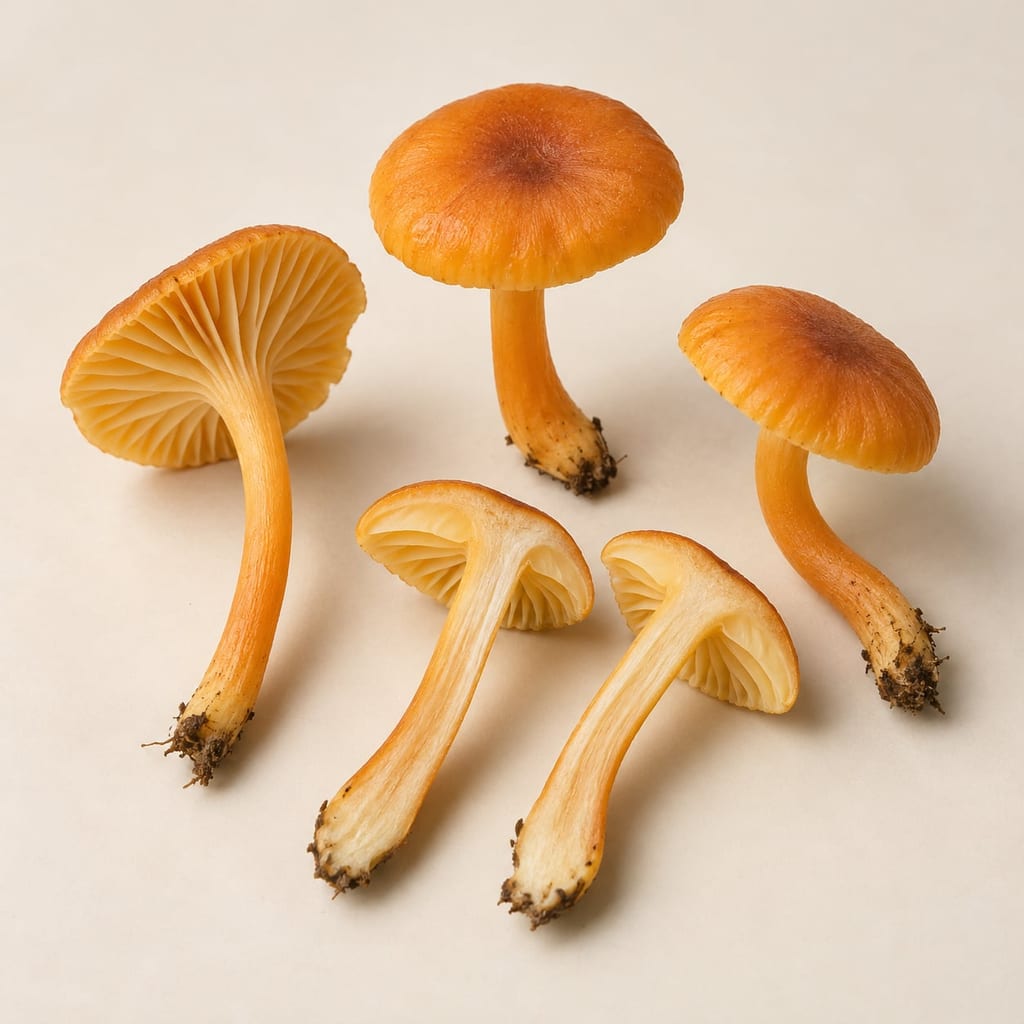
Hygrocybe cantharellus is a small orange waxy-cap agaric with a catalogued food record from Tshopo province, DR Congo, and a taxonomy that the sources read do not settle for that region.
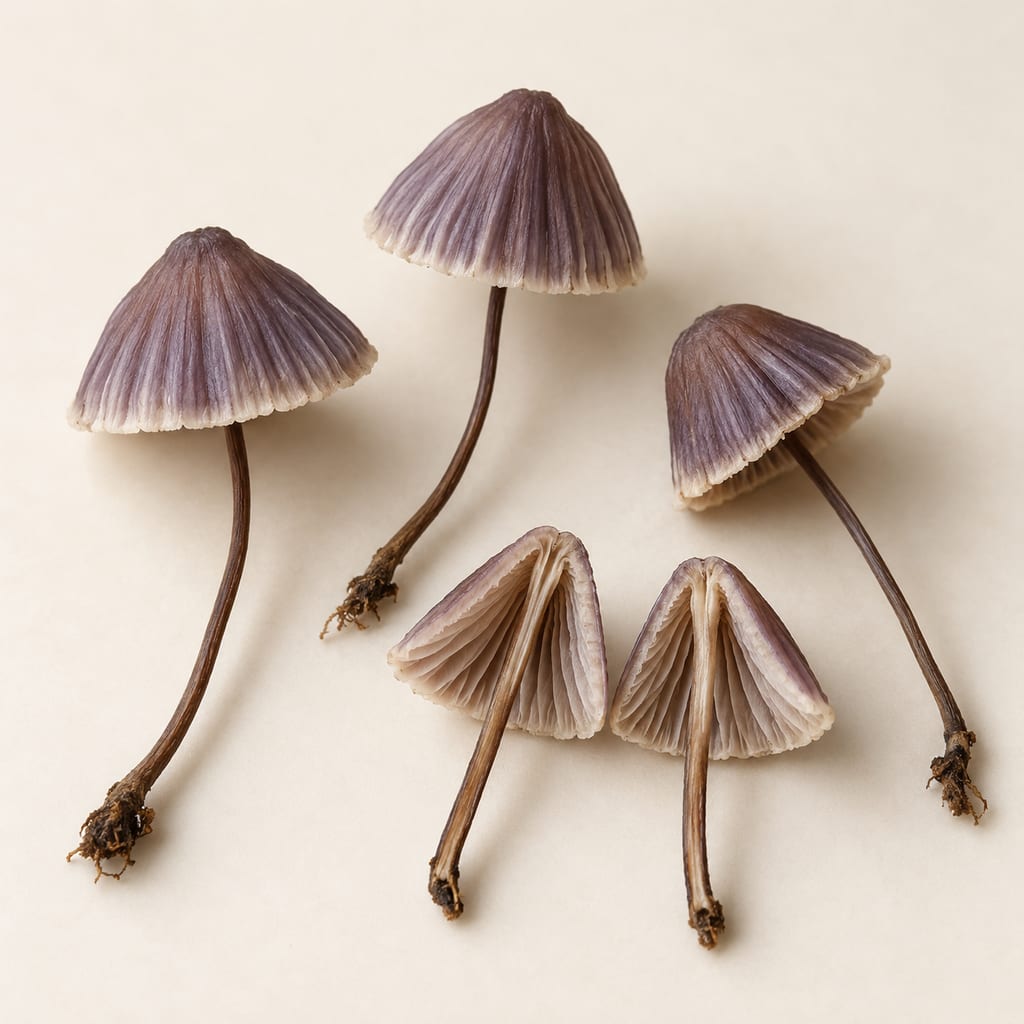
Marasmius bekolacongoli is a wild mushroom of Central African rainforest that field surveys in Cameroon, Gabon and the Democratic Republic of the Congo record as eaten by local people.
Pleurotus flabellatus is a wild forest oyster-type mushroom that grows on dead wood in the Congo Basin, recorded as eaten locally in Tshopo. Its name is entangled with P. djamor, so the record needs taxonomic care.
Russula sesemoindu is a wild ectomycorrhizal mushroom with a local name in Tshopo province, DR Congo. It is recorded as eaten by several informant groups, with no preparation or safety assessment.
Russula striatoviridis is a wild ectomycorrhizal mushroom recorded as locally eaten in Tshopo province, DR Congo. No preparation method or safety assessment is established for it.
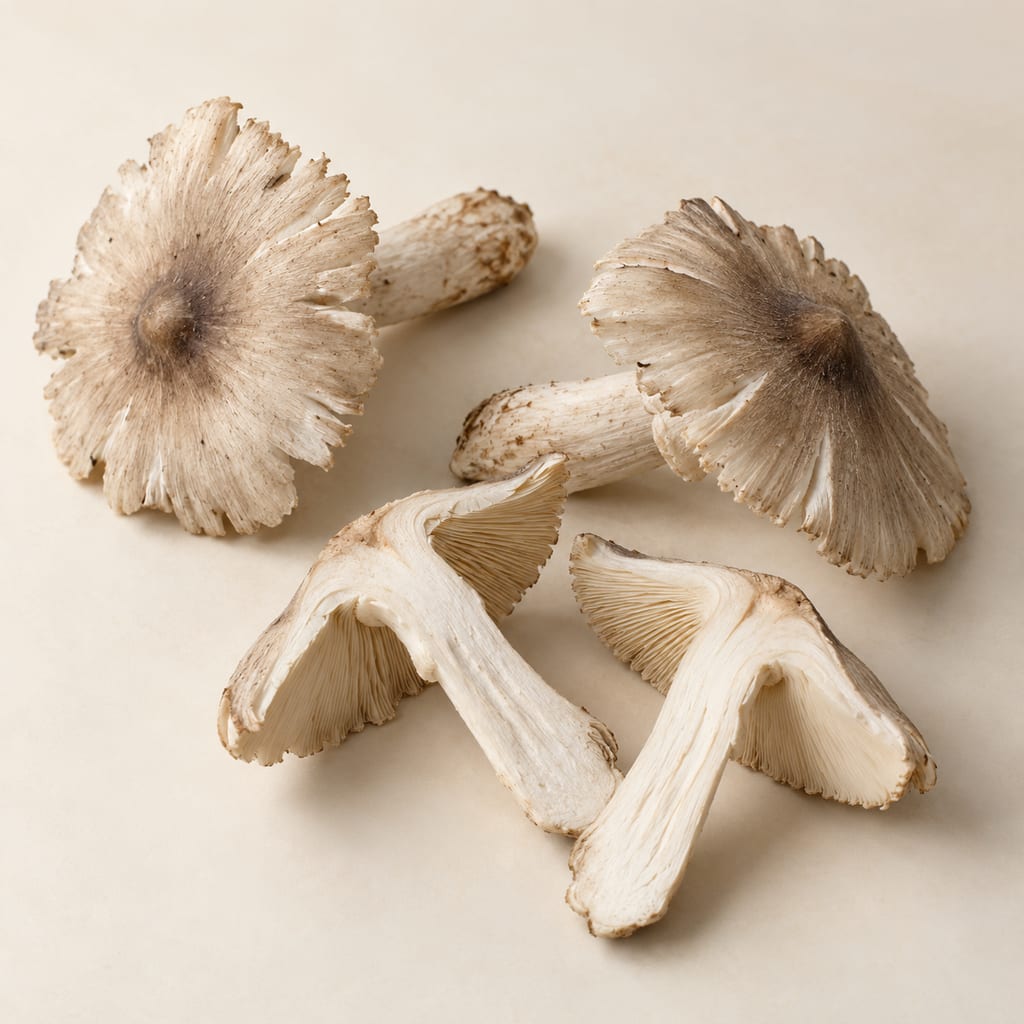
Termitomyces striatus is a wild termite mushroom that grows with fungus-growing termites in tropical Africa and Asia. Local food use is recorded, but its species-level preparation is not established.
No community contributions have been published for this entry yet.
Sign in to contribute. Published comments and photos are free to read.
PubMed CentralFood use · Ecology · Regional record
Supplied fungi catalogue entry S056 (PMC7011311)Recorded as locally consumed in voucher-backed Tshopo interviews; species-specific preparation not established.
Ectomycorrhizal rainforest fungus; supply wild.
Cited in: Overview; Ecology and habitat; Food use; Identification and safety; Open questions
IUCNConservation status · Range · Ecology · Edibility note
Cantharellus luteopunctatus, IUCN Red List assessmentLeast Concern (2021), listed as edible citing Ndong et al. 2011 and 2014.
Records from DRC, Cameroon, Gabon and Burundi; associated with Gilbertiodendron dewevrei.
Cited in: Overview; Ecology and habitat; Food use; Range
PubMed CentralTaxonomy
Epitypification of Cantharellus luteopunctatus (MycoKeys, 2019)Epitype designated from Central African rainforest specimens collected in the Central African Republic.
Cited in: Taxonomy and identity