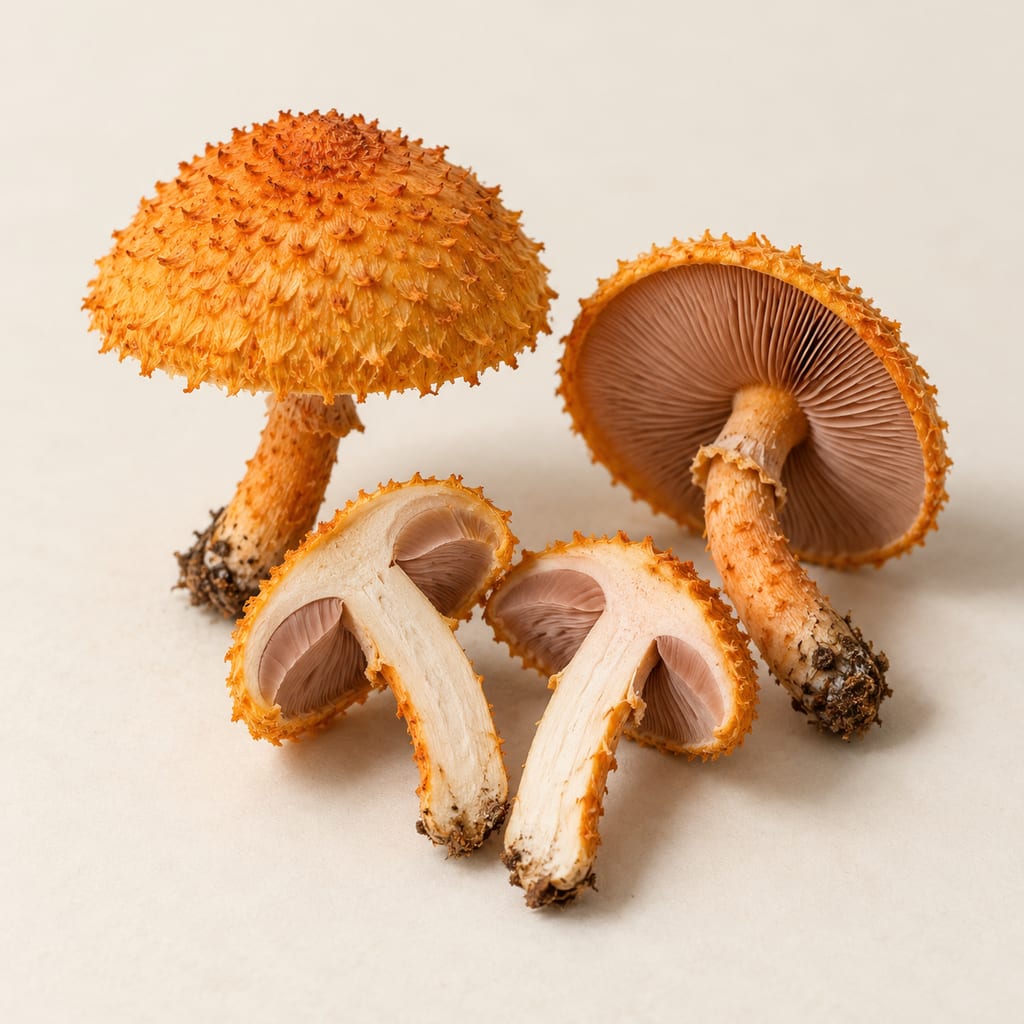
Agaricus crocopeplus
A forest mushroom of the genus Agaricus, recorded as a wild food in the Tshopo province of the Democratic Republic of the Congo in a voucher-backed ethnomycological survey.
 FermenteaWhere food goes to change
Mushrooms
Termitomyces striatus is a wild termite mushroom that grows with fungus-growing termites in tropical Africa and Asia. Local food use is recorded, but its species-level preparation is not established.
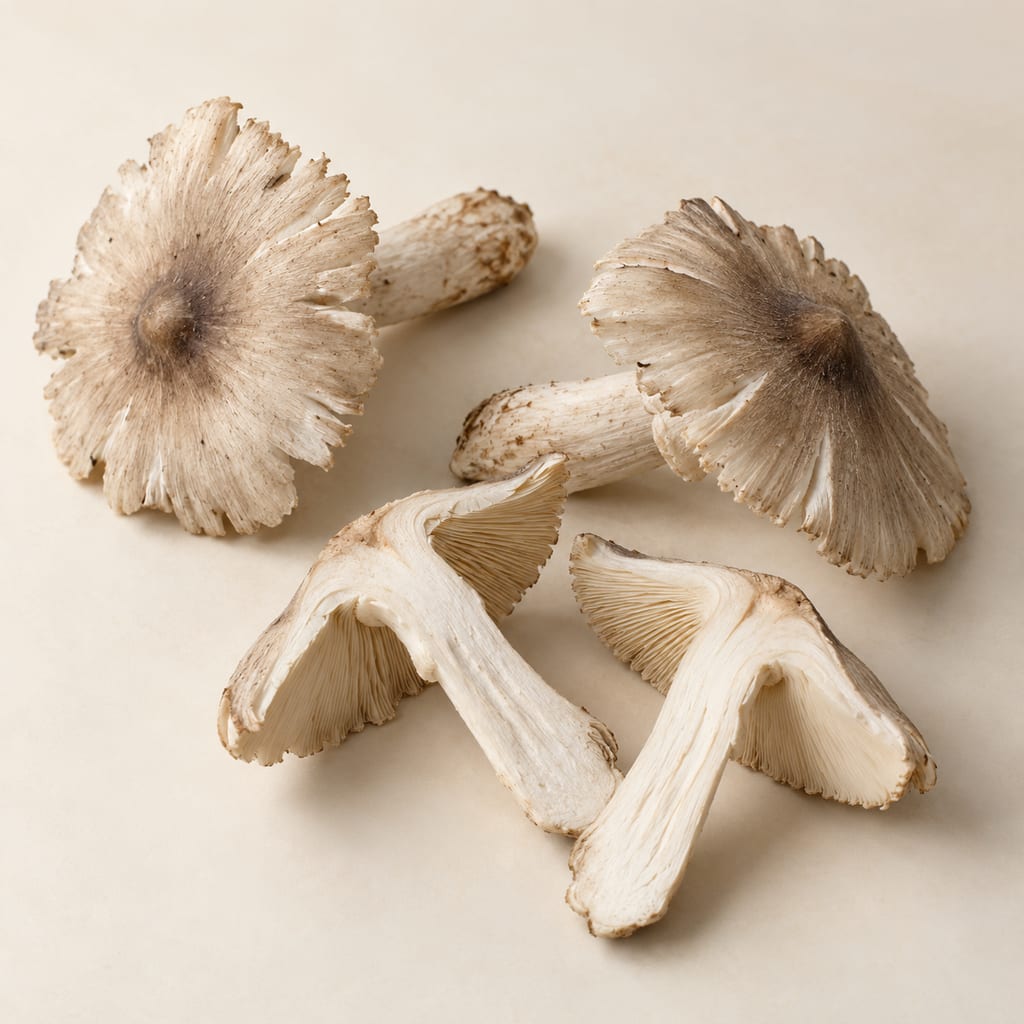
Termitomyces striatus is one of several wild termite mushrooms, a group of fungi that grow from the mounds and nests of fungus-growing termites. The catalogue records it as a termite mushroom with a regional food record in DR Congo (Tshopo) and a broader record across Yunnan in China and South and Southeast Asia.
Termitomyces in general are described in the sources as edible wild food mushrooms, eaten in soups and fried dishes. The catalogue states, however, that species-specific preparation for T. striatus was not established, and that the name is used in a broad sense in EFTA. A genus-level food use does not make a species-level preparation.
The fruit bodies emerge from termite-associated substrate. The species is symbiotic with fungus-growing termites, which cultivate the fungus in their nests. The catalogue records the supply as wild, and the wild supply predominates for the genus.
The catalogue says the regional names and older broad species concepts for Termitomyces need molecular verification, and it asks that the name be treated as a research label rather than a reconciled accepted name. The African name is used in a broad sense in EFTA, and species boundaries in the genus still need revision. Records assigned to T. striatus should be read with that uncertainty.
The supplied record notes local consumption in voucher-backed Tshopo interviews, without a preparation. The genus-level record adds that Termitomyces are used in soups and fried dishes in several regions, and that some are preserved by frying in oil. A 2023 review of the genus, cited in the catalogue's source list, treats Termitomyces as edible and nutritionally valued, but it does not isolate this species.
A mushroom sold in a market is not evidence that it is safe for every person or every collection. The catalogue states that the food-use record is not an independent toxicological assessment.
Termitomyces identification needs microscopic and habitat evidence, and the name T. striatus is not yet resolved against current taxonomy. The catalogue gives no safe-eating procedure for this species. Do not use this page to identify or eat wild fungi. Confirm any identification with a qualified mycologist or a reliable regional authority before eating.
Interview-based food-use record; species-specific preparation not established.
Regional distribution record from the catalogue; not an origin claim.
Broad regional record; not a single country.
A forest mushroom of the genus Agaricus, recorded as a wild food in the Tshopo province of the Democratic Republic of the Congo in a voucher-backed ethnomycological survey.
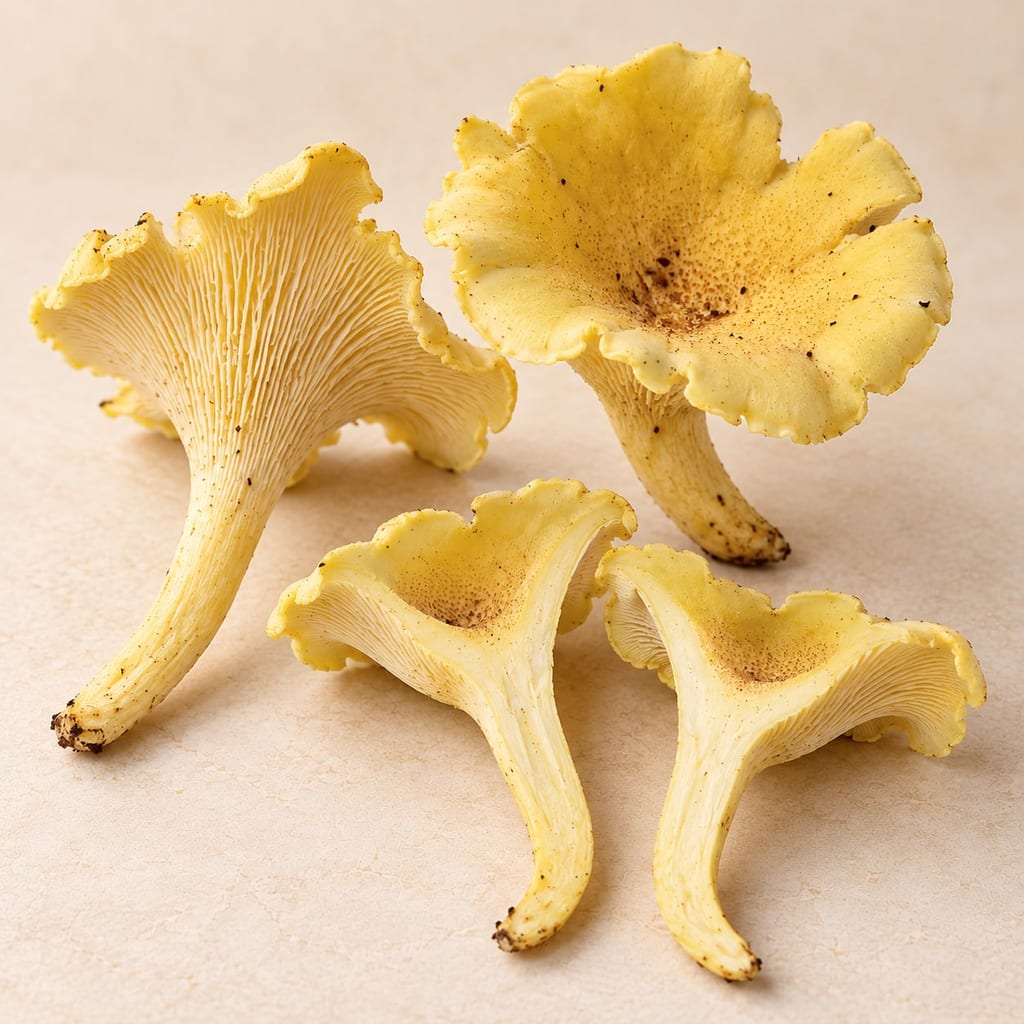
Cantharellus luteopunctatus is a wild ectomycorrhizal chanterelle of central African rainforest, recorded as eaten locally in Tshopo province, DR Congo. Its preparation is not documented.
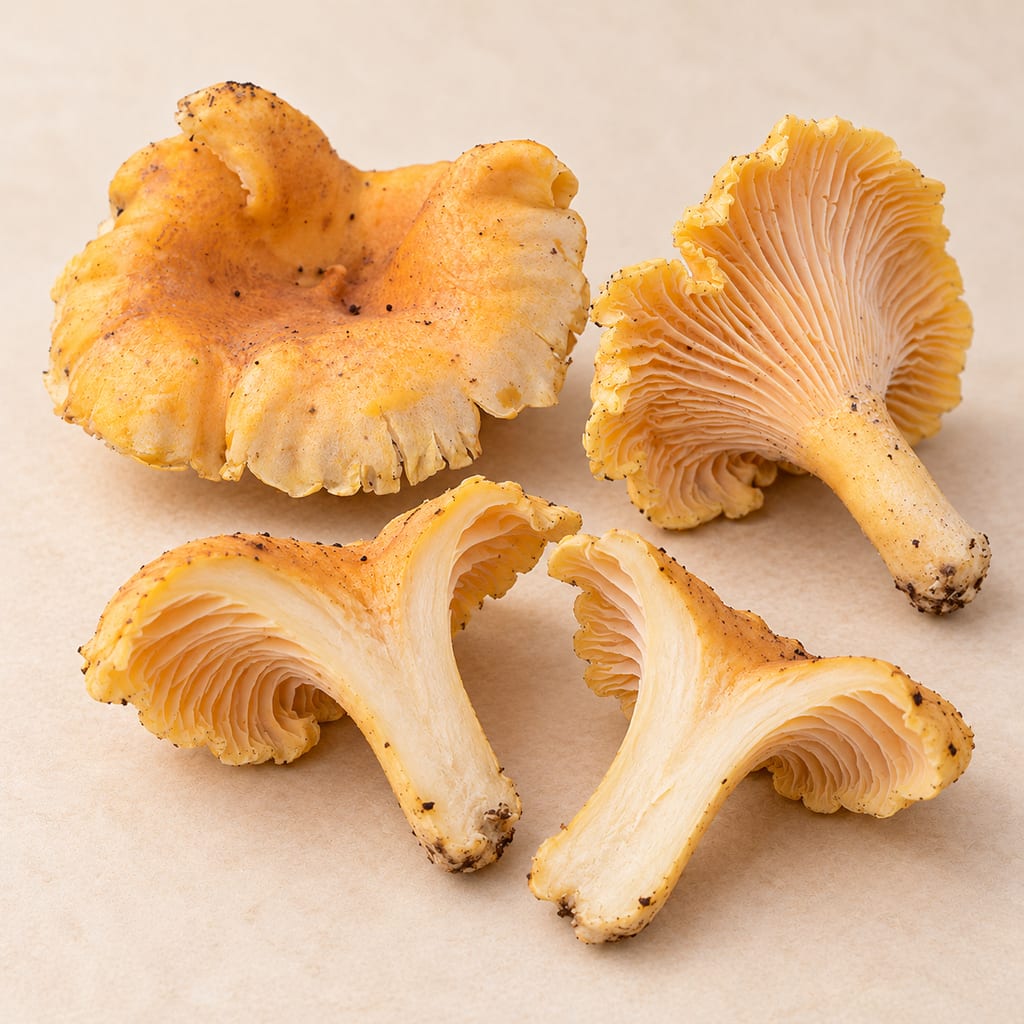
Cantharellus rufopunctatus is a rainforest chanterelle-group fungus that the catalogue records as eaten locally in Tshopo province, DR Congo, where no species-specific preparation has been established.
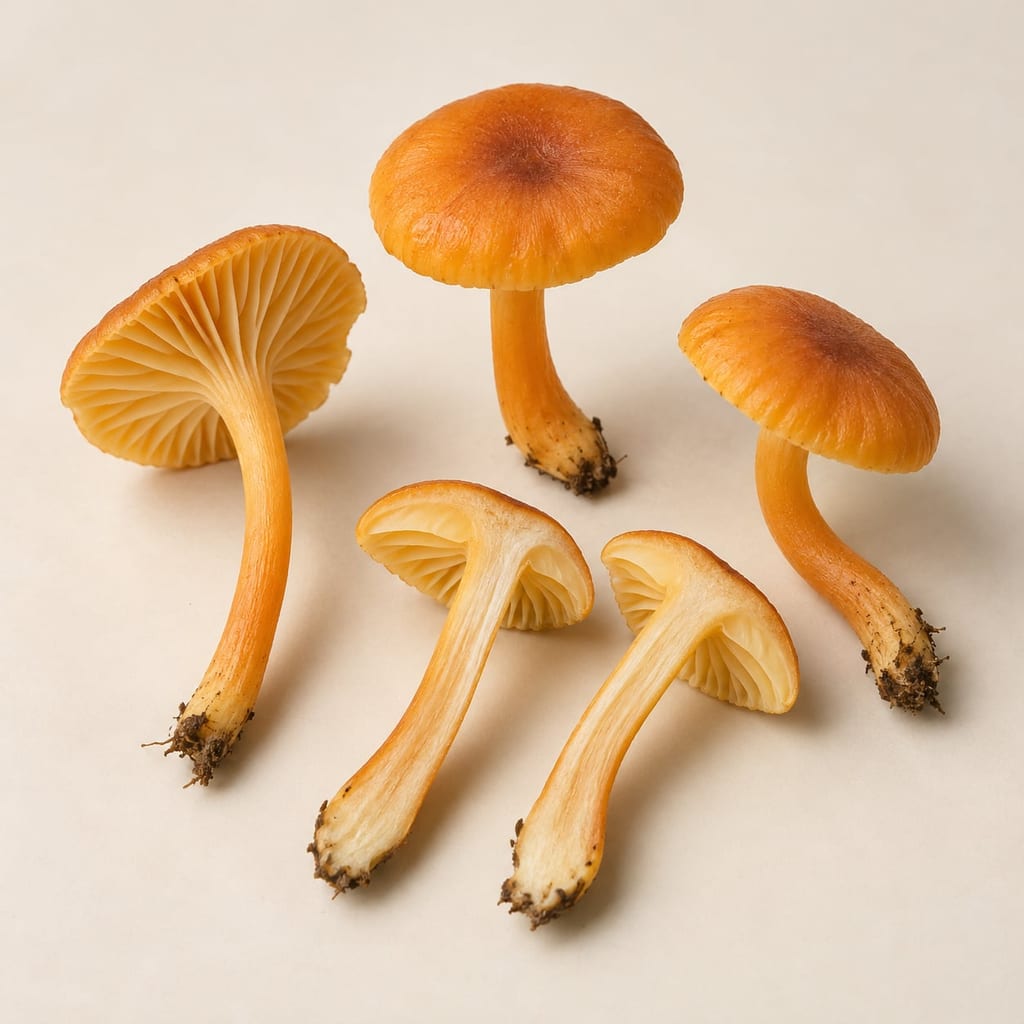
Hygrocybe cantharellus is a small orange waxy-cap agaric with a catalogued food record from Tshopo province, DR Congo, and a taxonomy that the sources read do not settle for that region.
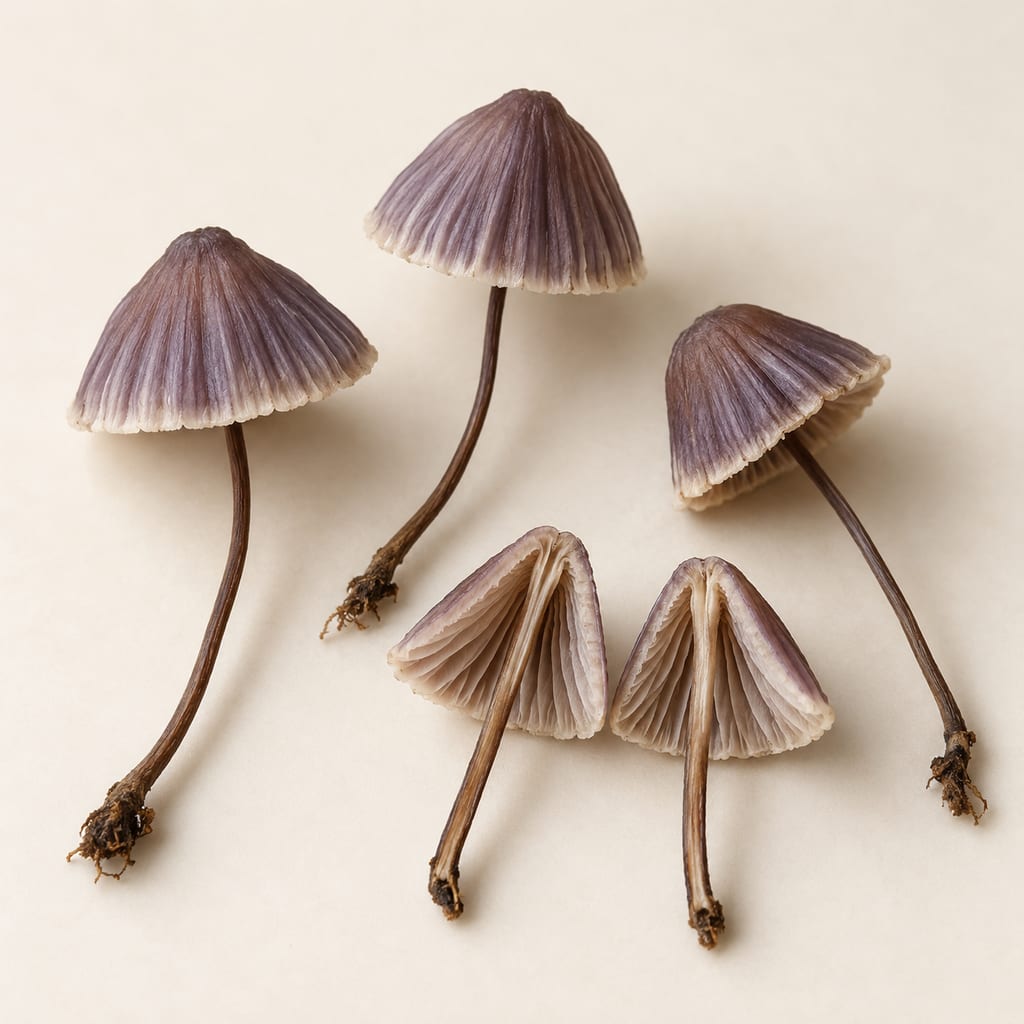
Marasmius bekolacongoli is a wild mushroom of Central African rainforest that field surveys in Cameroon, Gabon and the Democratic Republic of the Congo record as eaten by local people.
Pleurotus flabellatus is a wild forest oyster-type mushroom that grows on dead wood in the Congo Basin, recorded as eaten locally in Tshopo. Its name is entangled with P. djamor, so the record needs taxonomic care.
Russula sesemoindu is a wild ectomycorrhizal mushroom with a local name in Tshopo province, DR Congo. It is recorded as eaten by several informant groups, with no preparation or safety assessment.
Russula striatoviridis is a wild ectomycorrhizal mushroom recorded as locally eaten in Tshopo province, DR Congo. No preparation method or safety assessment is established for it.
No community contributions have been published for this entry yet.
Sign in to contribute. Published comments and photos are free to read.
PubMed CentralFood use · Ecology · Regional record
Supplied fungi catalogue entry S056 (PMC7011311)Recorded as locally consumed in voucher-backed Tshopo interviews; species-specific preparation not established.
Associated with fungus-growing termites; supply wild.
Cited in: Overview; Ecology; Taxonomy and names; Food use; Identification and safety
SpringerEcology · Food use · Regional record
Supplied fungi catalogue entry S032 (Springer, ethnomycology of Termitomyces)Termitomyces food use in soups and fried dishes; some preserved by frying in oil (catalogue summary of the cited ethnomycological source).
Cited in: Overview; Ecology; Food use