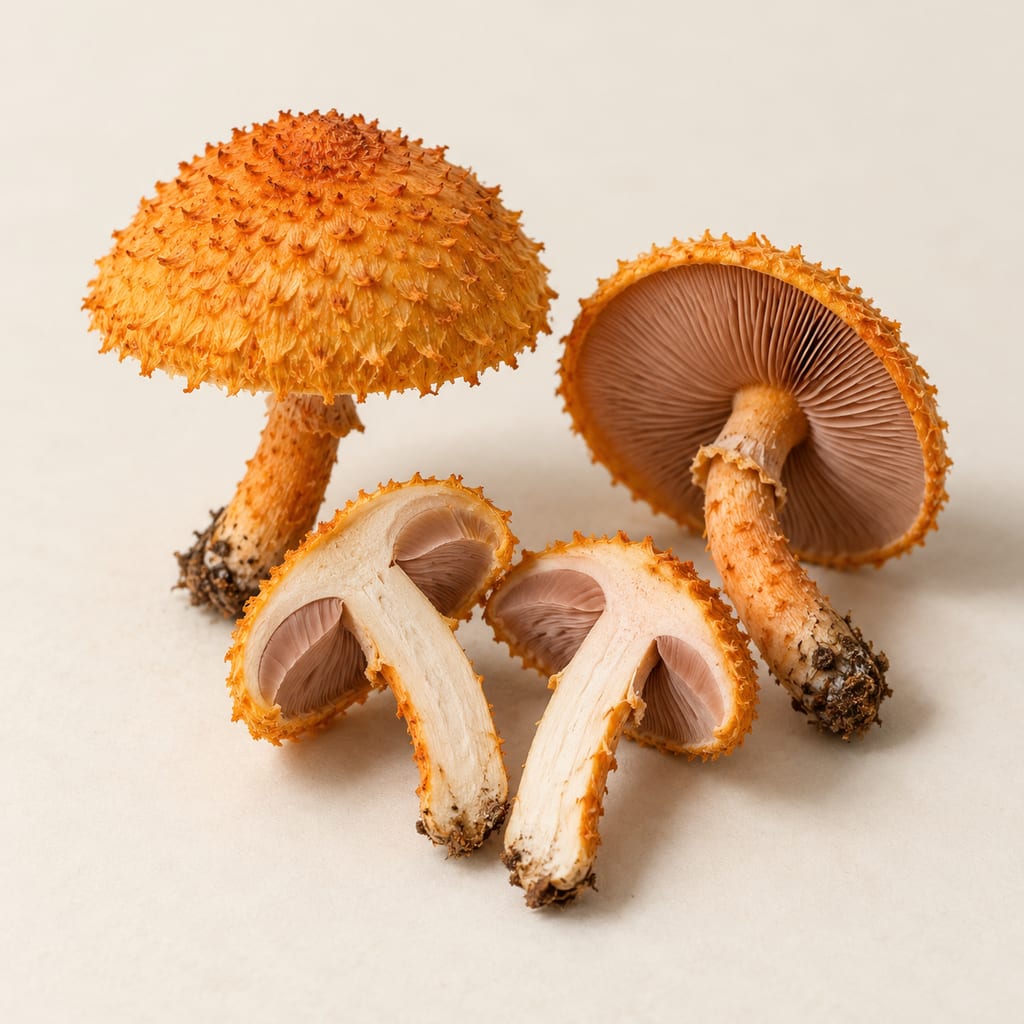
Agaricus crocopeplus
A forest mushroom of the genus Agaricus, recorded as a wild food in the Tshopo province of the Democratic Republic of the Congo in a voucher-backed ethnomycological survey.
 FermenteaWhere food goes to change
Mushrooms
Marasmius bekolacongoli is a wild mushroom of Central African rainforest that field surveys in Cameroon, Gabon and the Democratic Republic of the Congo record as eaten by local people.
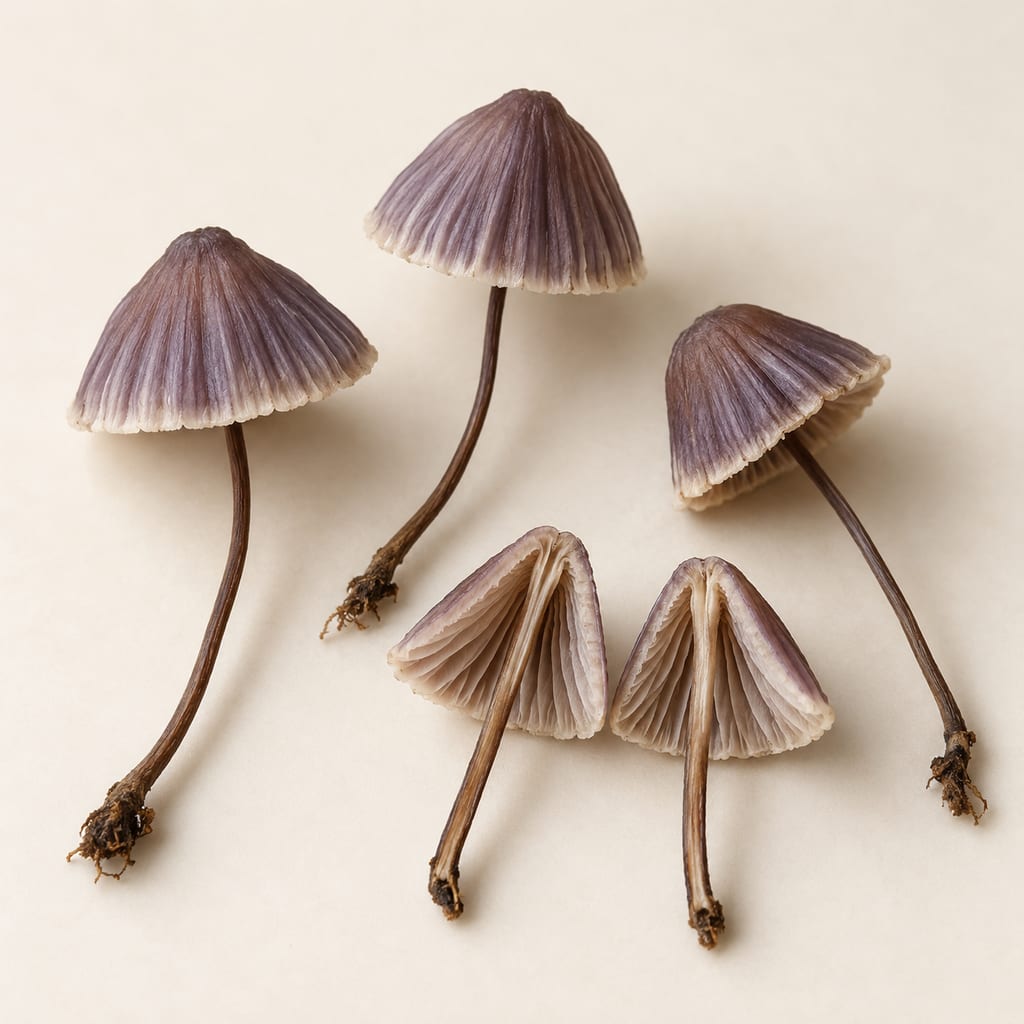
Marasmius bekolacongoli Beeli is a wild agaric named in African mushroom surveys. Sources treat it as a saprotrophic species, one that breaks down wood and leaf litter rather than living in partnership with a tree.
The species appears in checklists and food surveys under its binomial. Local names are recorded in the Baka and Koya languages of Gabon, so a surveyor's name for it can differ from the scientific one.
In Cameroon, a checklist of the macrofungi of Mount Cameroon ranks the species among the most consumed. It was reported from 12 of 27 surveyed localities, behind only Pleurotus tuberregium, which was reported from 14.
In northern Gabon, a study of mushroom use by Pygmy and Bantu communities lists the species among the mushrooms gathered. The same study reports that some local mushrooms keep for only one to four days after picking. A linguistic study of Baka and Koya mushroom names also records the species.
In Tshopo province in the Democratic Republic of the Congo, a survey of wild edible fungi treats the species as edible and as one commonly eaten locally. A 2025 review of edible fungi in sub-Saharan Africa lists it for Malawi, Cameroon and Gabon.
The sources reviewed here do not describe the chemistry of this species, its nutrient content, or the preparation that local cooks use. No cooking method, storage time or drying method is recorded for it in the material reviewed, and this page does not supply one.
The evidence for this species is ethnomycological: it is recorded as eaten by people who know it locally. The surveys reviewed contain no toxicity assessment and no statement on how the species differs from look-alike mushrooms. An edibility claim from these sources does not establish that the species is safe for every eater, and a wild mushroom should be identified by a qualified local expert before it is cooked.
The local use recorded in these surveys is not a validated preparation method.
Recorded among the most consumed species in a checklist of the mountain's macrofungi, reported from 12 of 27 surveyed localities.
Listed among mushrooms gathered by Pygmy and Bantu communities; per-species consumption figures are not given.
Recorded as an edible, commonly eaten species in a survey of Tshopo rainforests.
Country-level listing in a review of edible fungi in sub-Saharan Africa.
A forest mushroom of the genus Agaricus, recorded as a wild food in the Tshopo province of the Democratic Republic of the Congo in a voucher-backed ethnomycological survey.
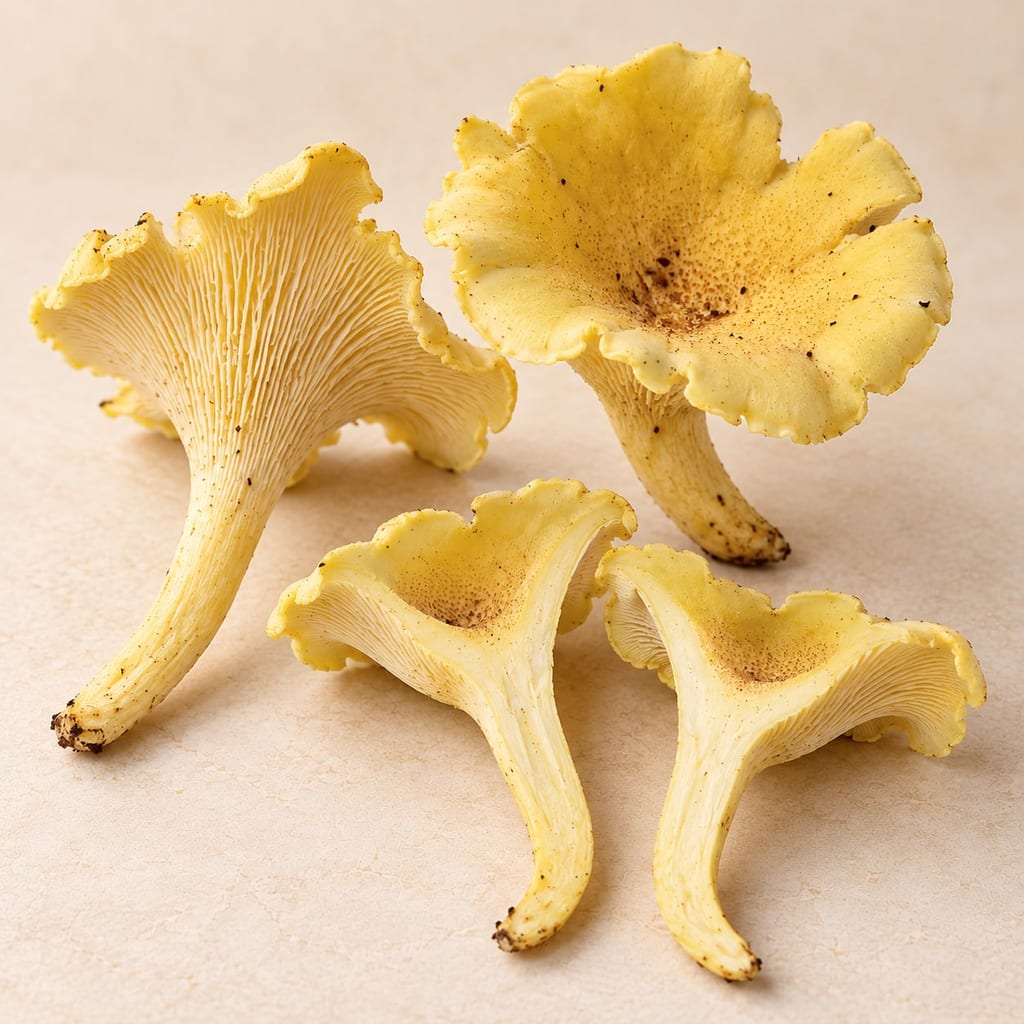
Cantharellus luteopunctatus is a wild ectomycorrhizal chanterelle of central African rainforest, recorded as eaten locally in Tshopo province, DR Congo. Its preparation is not documented.
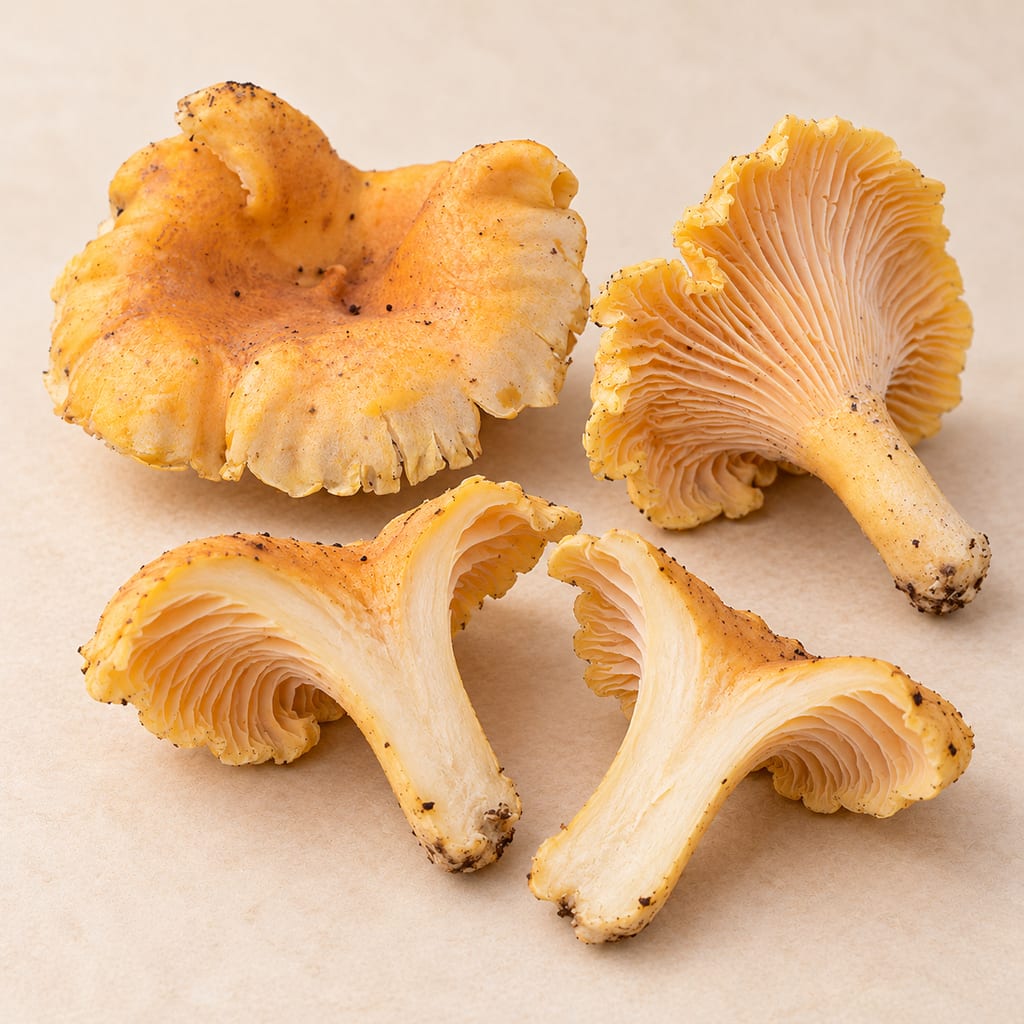
Cantharellus rufopunctatus is a rainforest chanterelle-group fungus that the catalogue records as eaten locally in Tshopo province, DR Congo, where no species-specific preparation has been established.
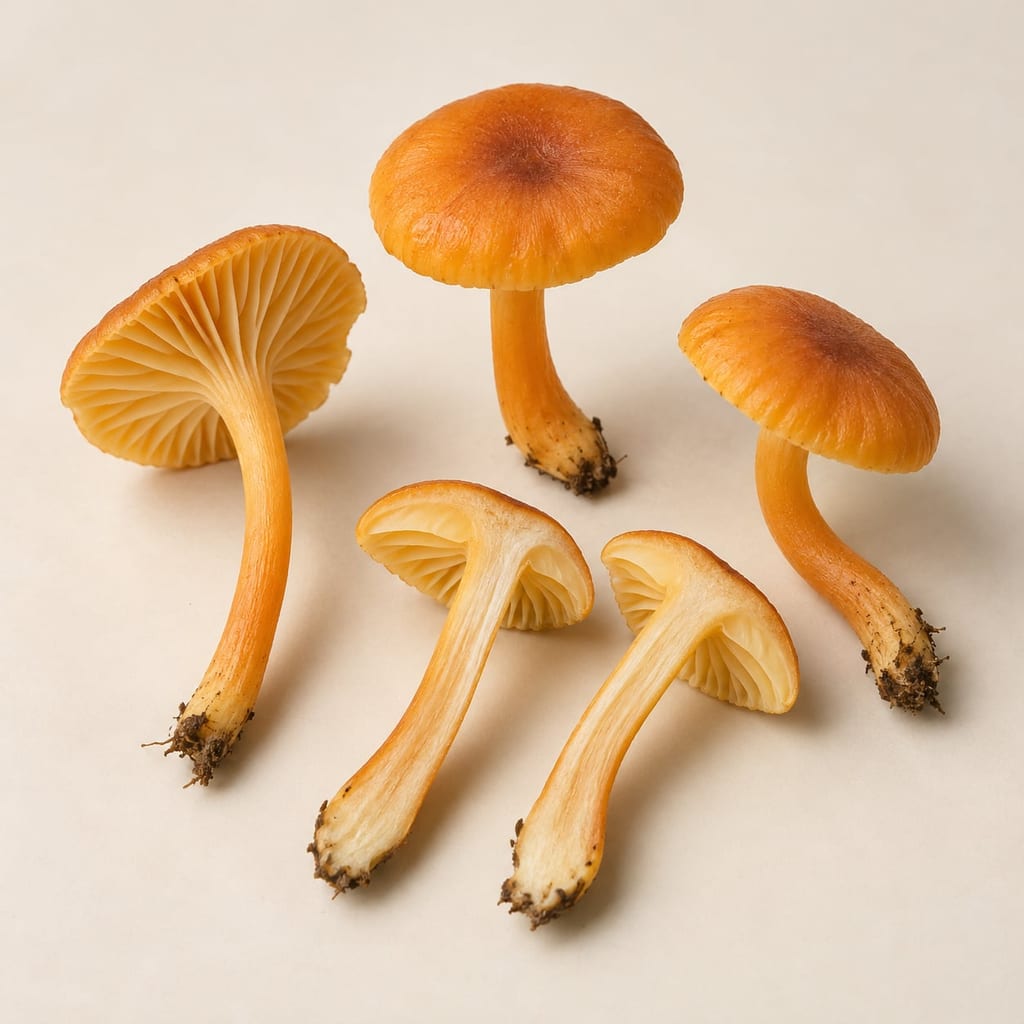
Hygrocybe cantharellus is a small orange waxy-cap agaric with a catalogued food record from Tshopo province, DR Congo, and a taxonomy that the sources read do not settle for that region.
Pleurotus flabellatus is a wild forest oyster-type mushroom that grows on dead wood in the Congo Basin, recorded as eaten locally in Tshopo. Its name is entangled with P. djamor, so the record needs taxonomic care.
Russula sesemoindu is a wild ectomycorrhizal mushroom with a local name in Tshopo province, DR Congo. It is recorded as eaten by several informant groups, with no preparation or safety assessment.
Russula striatoviridis is a wild ectomycorrhizal mushroom recorded as locally eaten in Tshopo province, DR Congo. No preparation method or safety assessment is established for it.
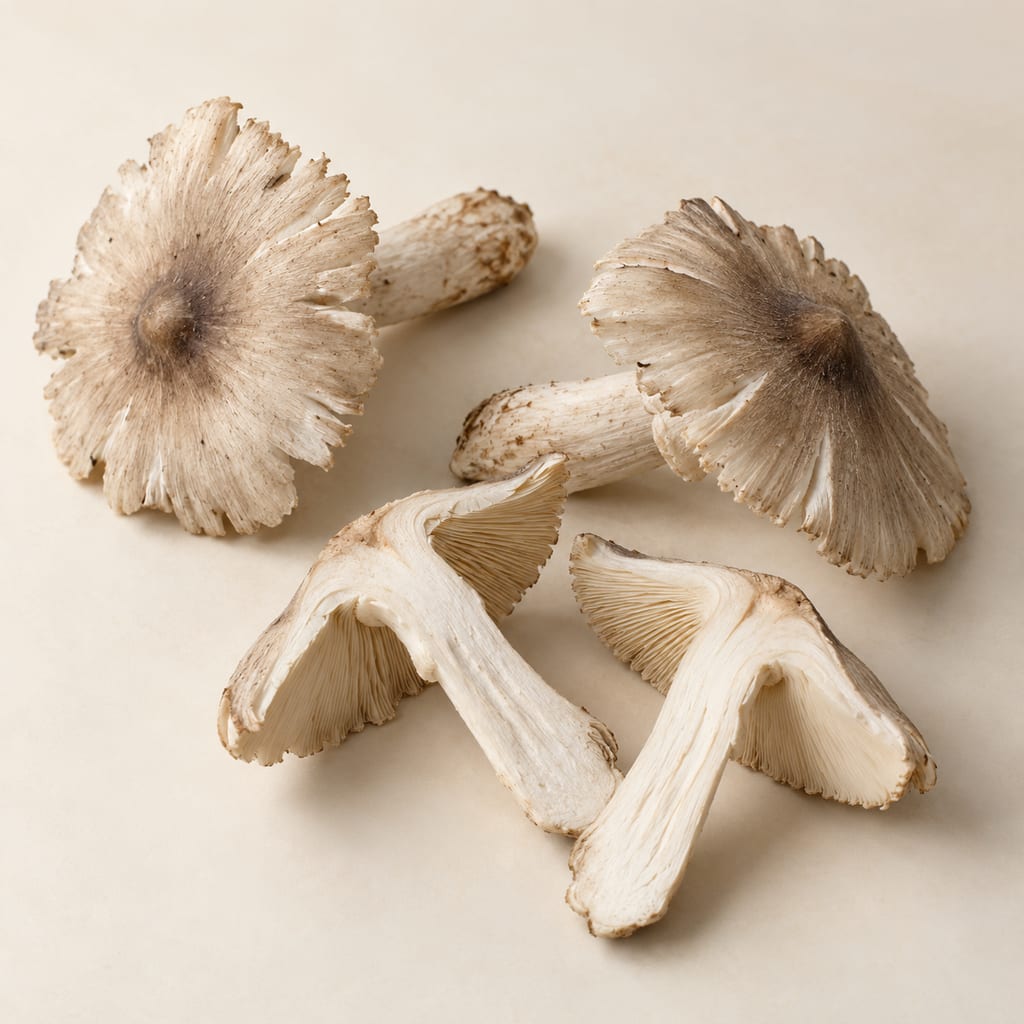
Termitomyces striatus is a wild termite mushroom that grows with fungus-growing termites in tropical Africa and Asia. Local food use is recorded, but its species-level preparation is not established.
No community contributions have been published for this entry yet.
Sign in to contribute. Published comments and photos are free to read.
ResearchGateMethod · History
The first checklists of macrofungi of mount CameroonMarasmius bekolacongoli ranked among the most consumed species; reported in 12 of 27 surveyed localities; Pleurotus tuberregium in 14.
ResearchGateHistory · Method
Variation of the Consumption of Mushrooms by Pygmies and Bantus in the North of GabonSpecies listed among mushrooms gathered in northern Gabon.
Some local mushrooms keep for one to four days.
ResearchGateHistory
Champignons consommes par les Pygmees du Gabon: analyse linguistique des myconymes baka et kóyaSpecies recorded with Baka and Koya local names in Gabon.
ResearchGateMethod · Safety
Wild edible ectomycorrhizal fungi: an underutilized food resource from the rainforests of Tshopo province (Democratic Republic of the Congo)Species treated as edible and commonly eaten in Tshopo province; classed as saprotrophic.
Ethnobiology and ConservationHistory
Fungal Resources for Human Well-being: Implications for Poverty and Gender Inequality in Sub-Saharan AfricaListed for Malawi, Cameroon and Gabon among edible fungi of sub-Saharan Africa.