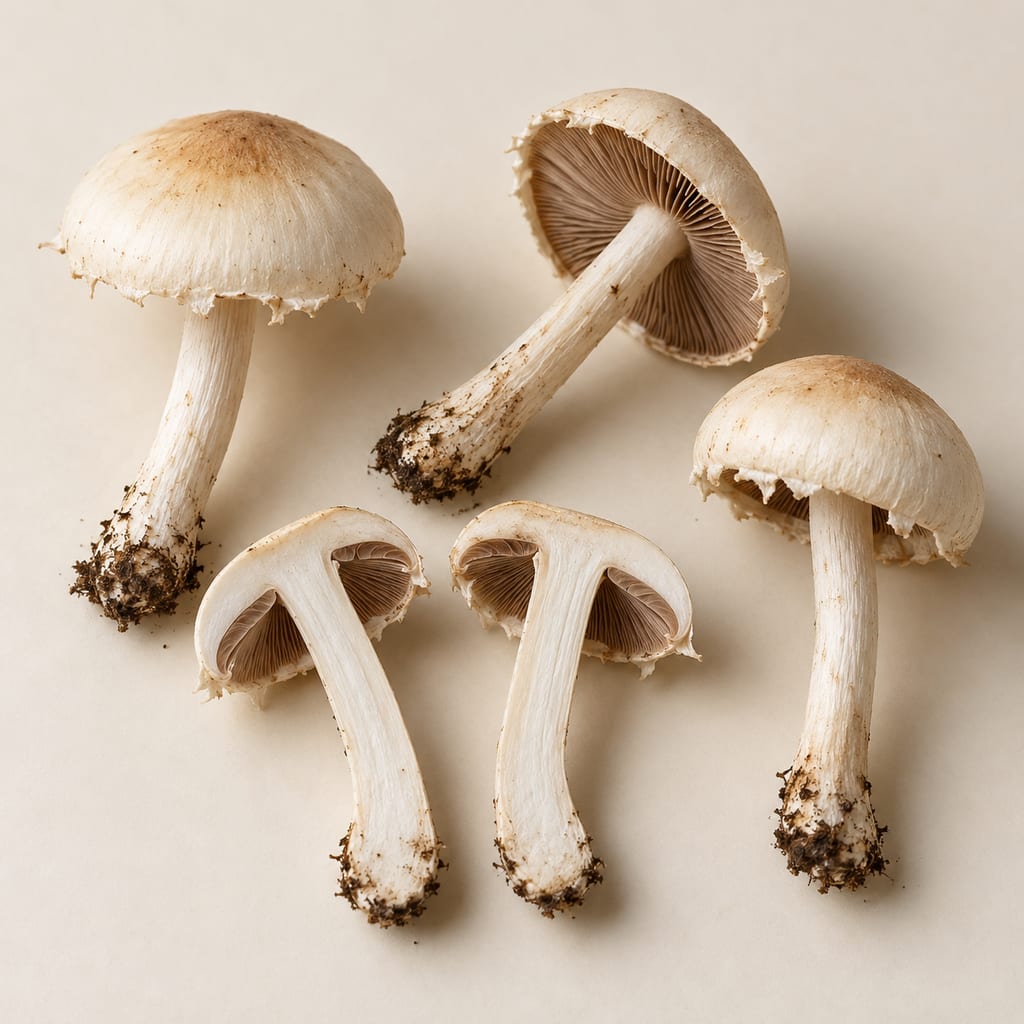
Agrocybe dura
A grassland agaric listed as edible in historical and scientific catalogues for Hong Kong and China. Taxonomic concepts and practical food value vary; the listings do not establish safe identification or culinary practice.
 FermenteaWhere food goes to change
Mushrooms
Hymenopellis raphanipes, the black termite mushroom or heipijizong, is a saprotrophic rooting fungus widely cultivated in China despite its market name, which refers to termites.
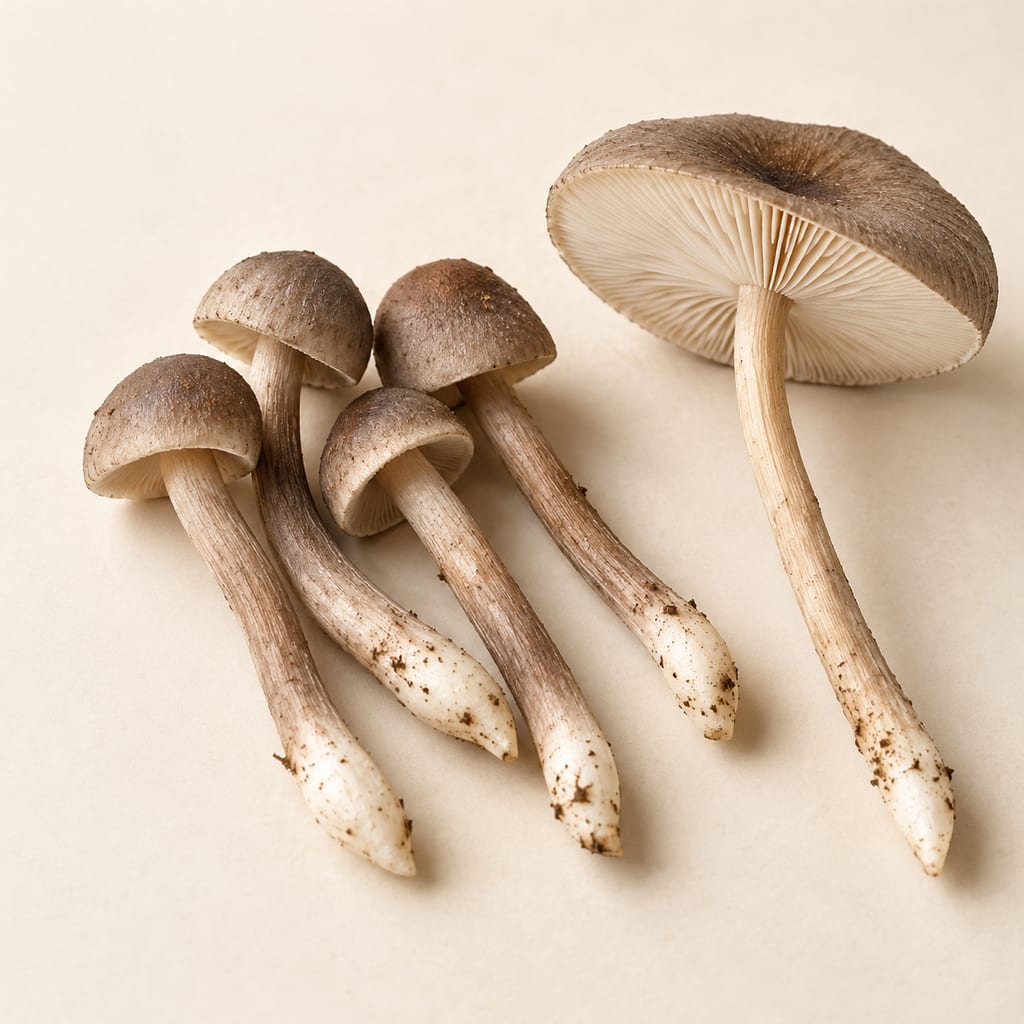
Hymenopellis raphanipes was formerly placed in Oudemansiella and in Xerula; its earlier names include Oudemansiella raphanipes and Xerula raphanipes. Petersen placed the species in Hymenopellis in 2010. A 2023 PeerJ paper treats the Chinese name heipijizong as H. raphanipes.
The market name "black termite mushroom" is a trade name. The fungus is not a Termitomyces and is not a termite symbiont. The catalogue records that old cultivation records include misidentifications.
The species is a saprotrophic rooting mushroom: it decomposes organic matter rather than living with termites. The catalogue records it as a regional cultivation.
A 2016 study describes it as a radicate Oudemansiella species that was widely cultivated in China, confirmed by morphology and molecular data.
A 2022 Frontiers paper reports that annual yield in China has exceeded 20,000 tons. Growers face disease: a 2022 study found that cobweb disease caused by Cladobotryum species is a major problem, and it reported a new green mould pathogen, Trichoderma hymenopellicola. The sources do not give detailed cultivation protocols, so none are set out here.
The descriptions give the species as edible and as a commercially cultivated food mushroom in China. No preservation method is validated in the sources reviewed.
Identification and safety: a name, a photograph or one regional guide does not confirm that a wild specimen is this species. This page is not a collection key. Edibility statements refer to the named species as understood by each source, not any particular specimen. Because the common name refers to termites, a market label is not an identification. Cultivated product is not a wild specimen, and the cultivation records include misidentifications.
Commercial cultivation in China; the sources do not date its first food use there.
A grassland agaric listed as edible in historical and scientific catalogues for Hong Kong and China. Taxonomic concepts and practical food value vary; the listings do not establish safe identification or culinary practice.
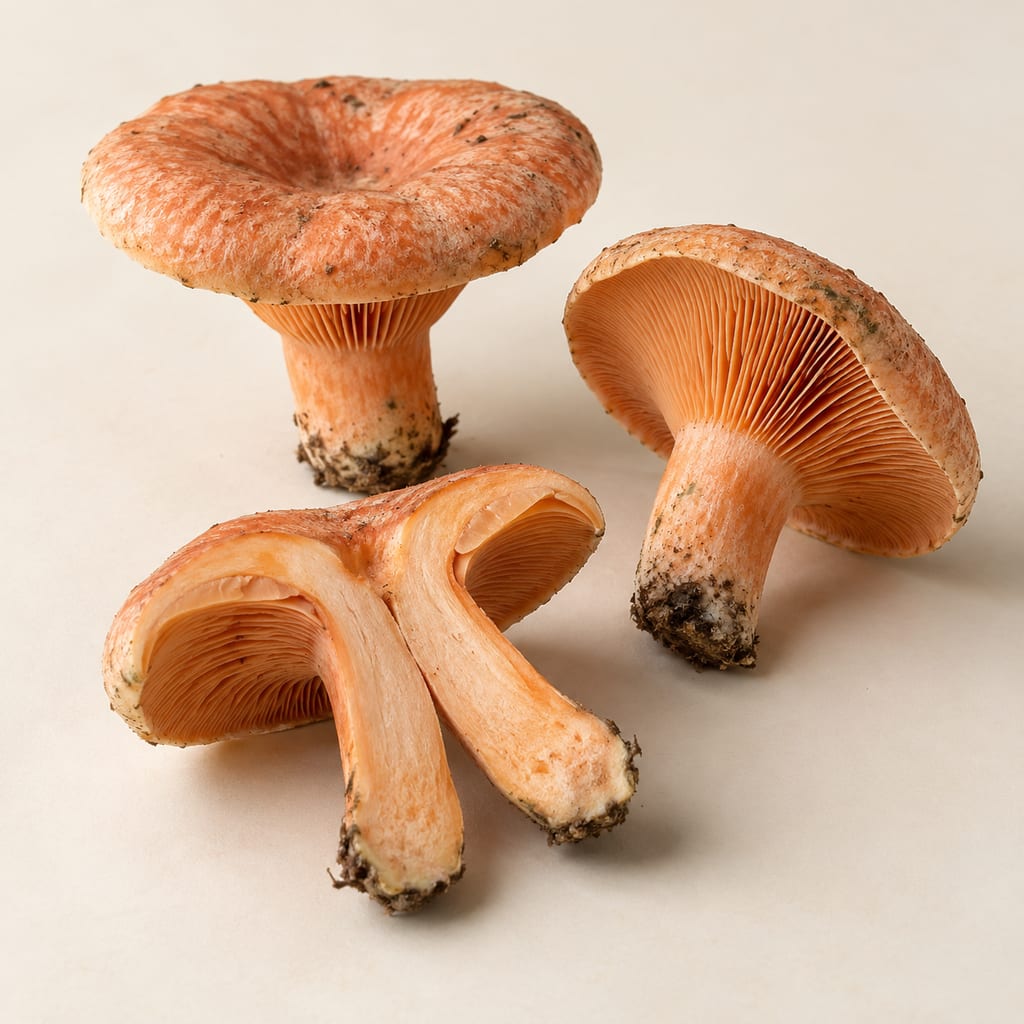
Akahatsu, Lactarius akahatsu, is a wild milkcap of East Asian pine and mixed forests that is sold in Yunnan markets, with its edibility and identity still needing species-level review.
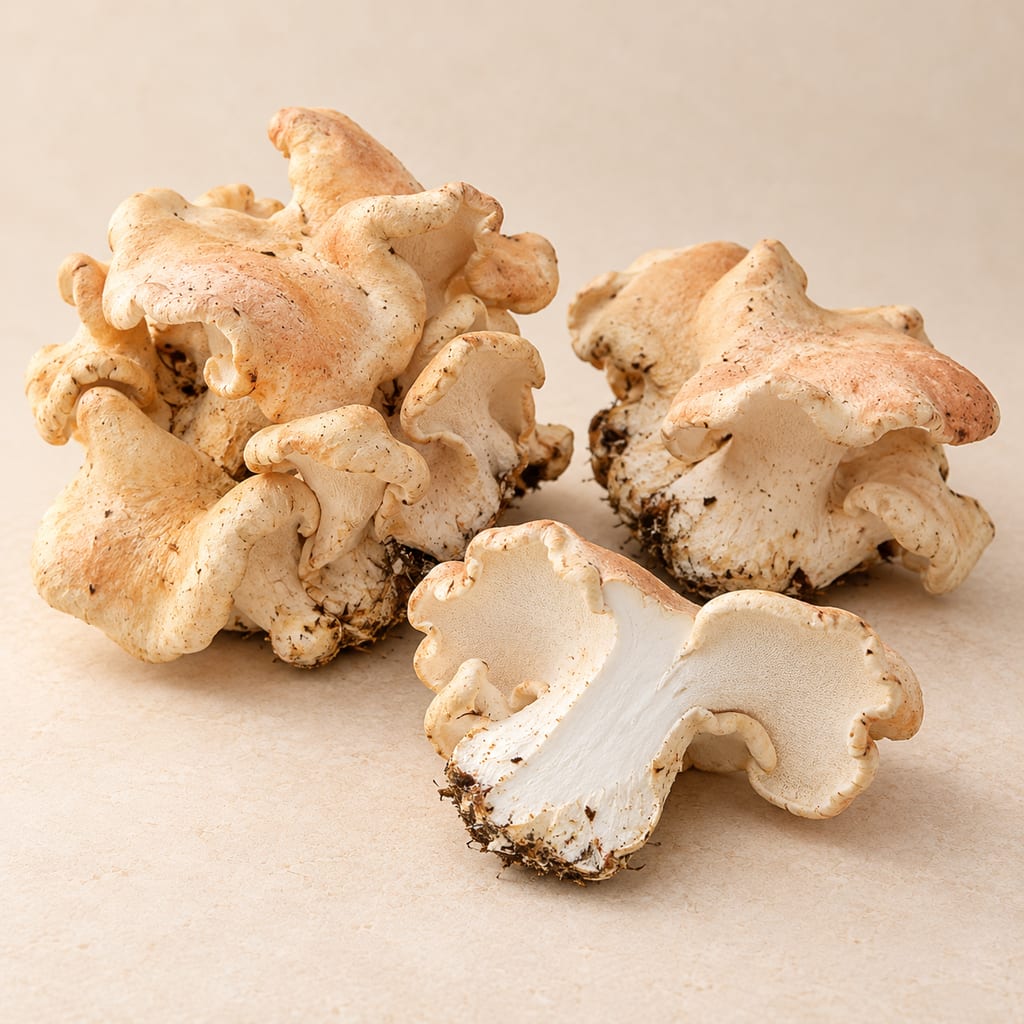
Albatrellus confluens is a ground-growing polypore with fused buff-orange caps. Sources document Chinese market use and regional edibility, but others reject it as too bitter; taxonomy also varies between Albatrellus and Albatrellopsis.
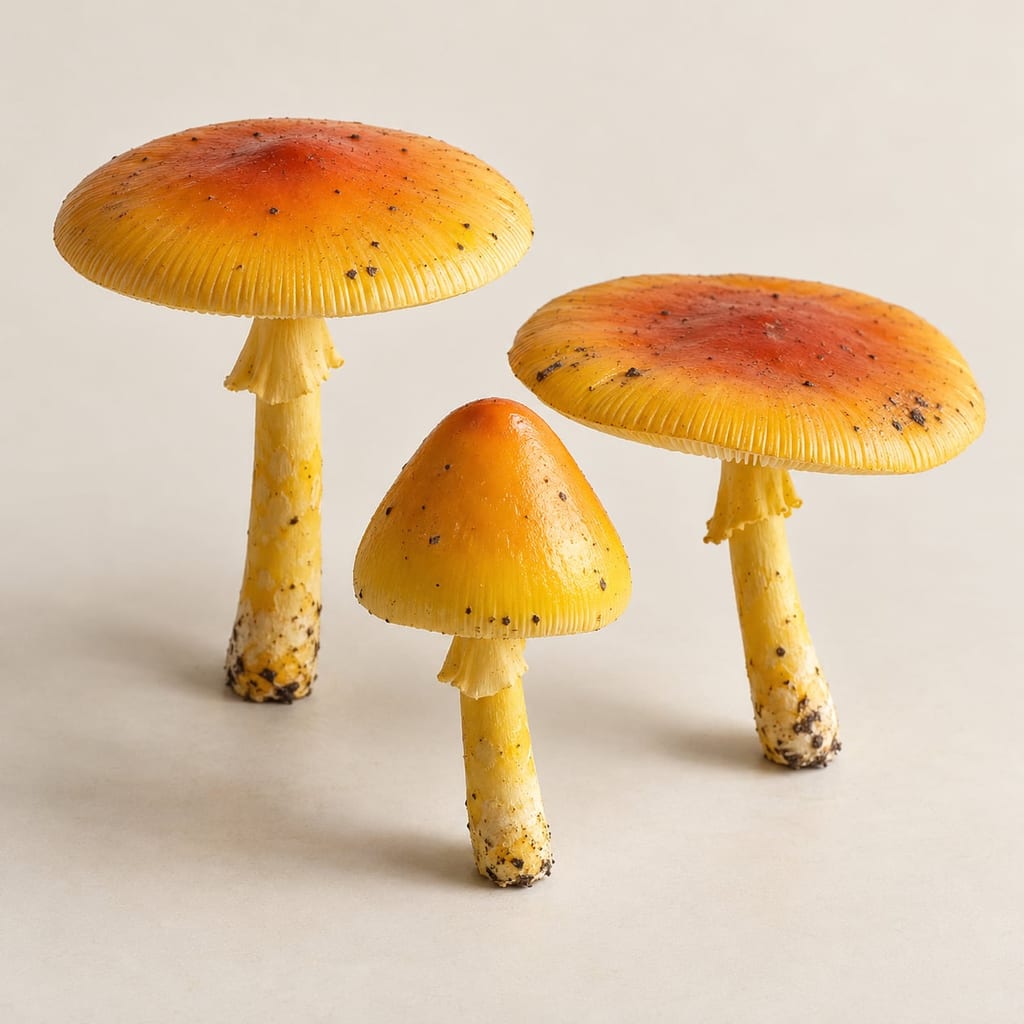
A wild Amanita recorded from China in a 2026 checklist of edible and medicinal fungi. The genus holds deadly species, so this page gives no identification or edibility verdict.
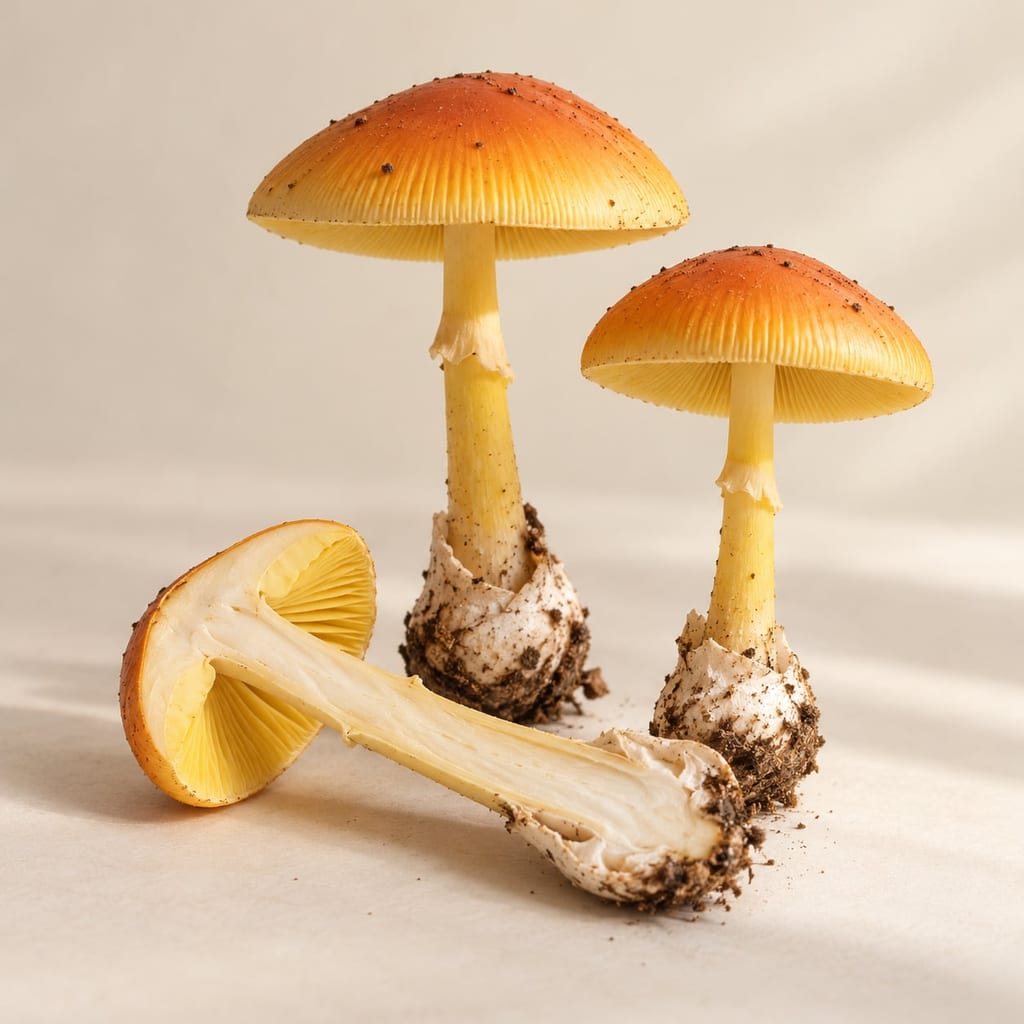
A wild Amanita of China, first reported there and listed as edible in a Yunnan ethnomycology study. The genus contains deadly species, so this page does not support identifying or eating it.
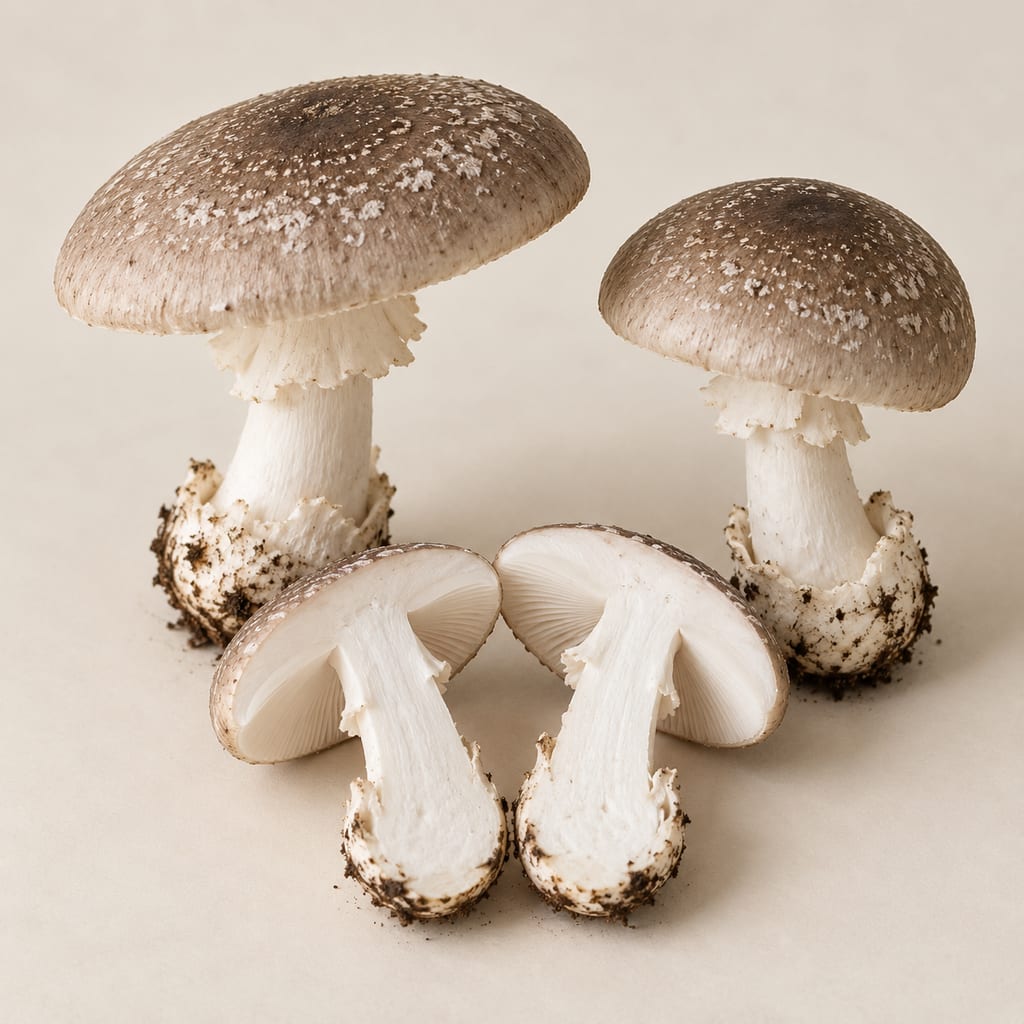
Amanita yuaniana is a Chinese Amanita that a 2023 Yanshan survey and a Yunnan ethnomycology survey list among edible species. No source tests it for safety, and the genus holds the most lethal mushrooms.
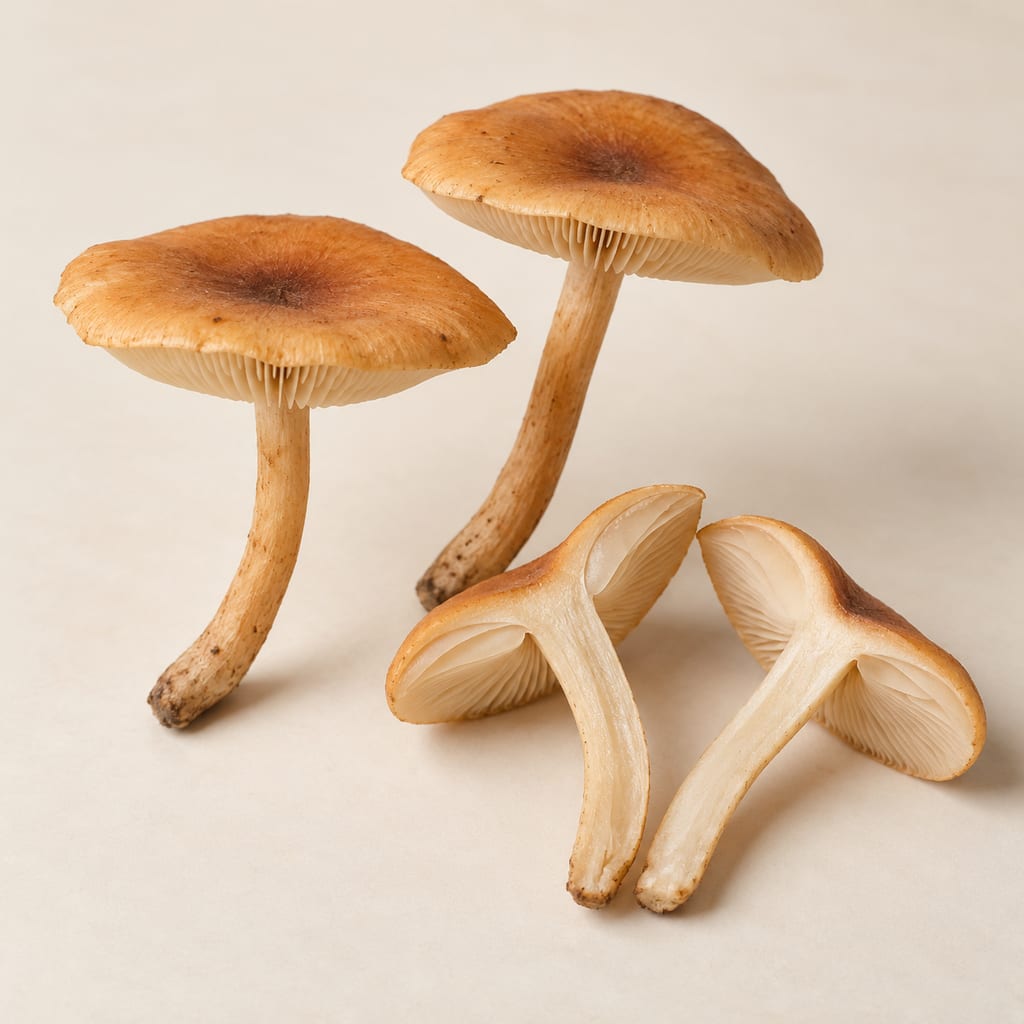
A wood-associated Armillaria recorded in Yunnan and Sichuan, China, and listed as edible in a 2026 Chinese catalogue.
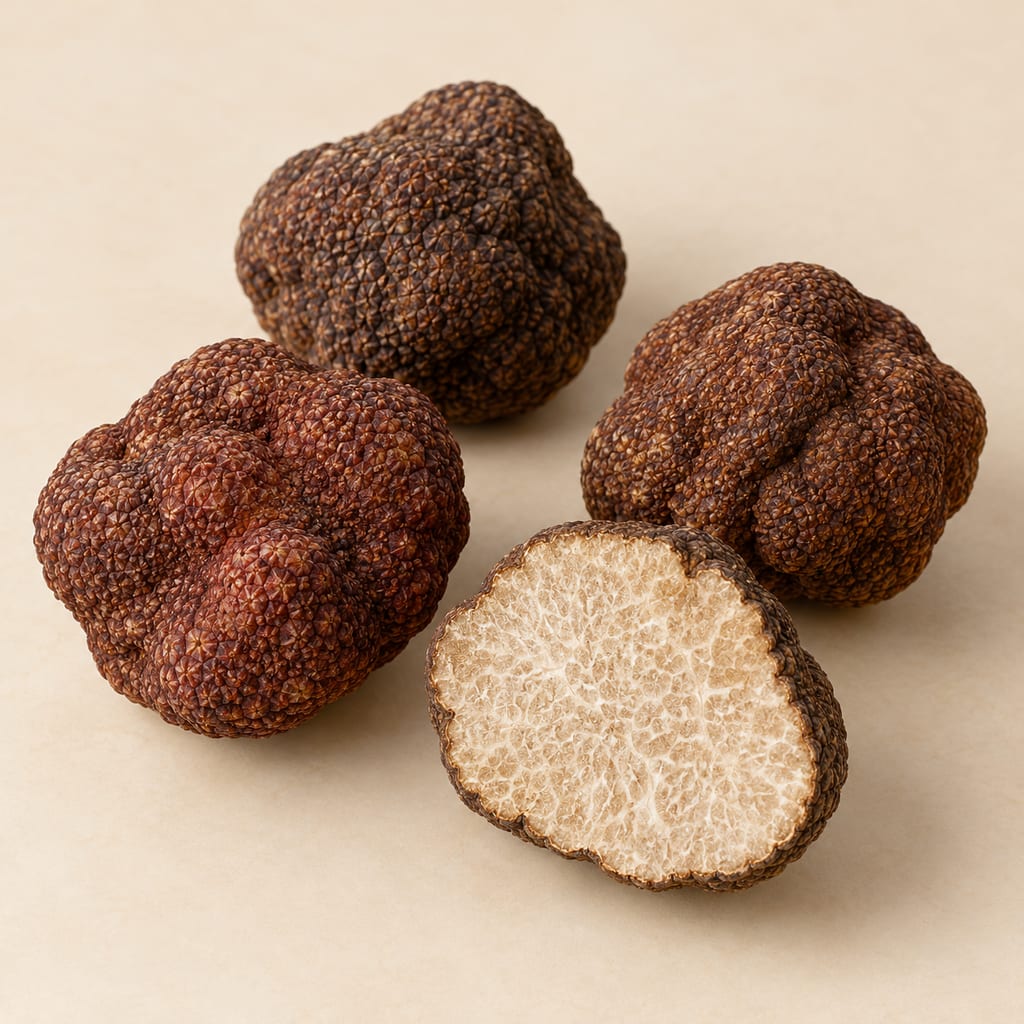
Tuber pseudohimalayense is a wild black truffle from Yunnan, China, listed as edible in a Chinese species catalogue. No independent assessment of its culinary use or safety is available.
No community contributions have been published for this entry yet.
Sign in to contribute. Published comments and photos are free to read.
WikipediaTaxonomy · Names
Oudemansiella raphanipesSynonyms and genus placement.
Cited in: Names and taxonomy; Food use and safety
PubMed CentralTaxonomy · Cultivation
Taxonomy, Diversity and Cultivation of the Oudemansielloid/Xeruloid Taxa (review)Review of Hymenopellis, Mucidula, Oudemansiella and Xerula taxonomy and cultivation.
Cited in: Names and taxonomy; Ecology and growth
PeerJTaxonomy
New species and new records of Hymenopellis and Xerula from China (2023)Treats heipijizong as Hymenopellis raphanipes.
Cited in: Names and taxonomy
Frontiers in MicrobiologyCultivation · Production · Disease
Hymenopellis raphanipes cultivation study (2022)Annual yield in China over 20,000 tons; cobweb disease by Cladobotryum; Trichoderma hymenopellicola.
Cited in: Ecology and growth; Cultivation and scale; Food use and safety