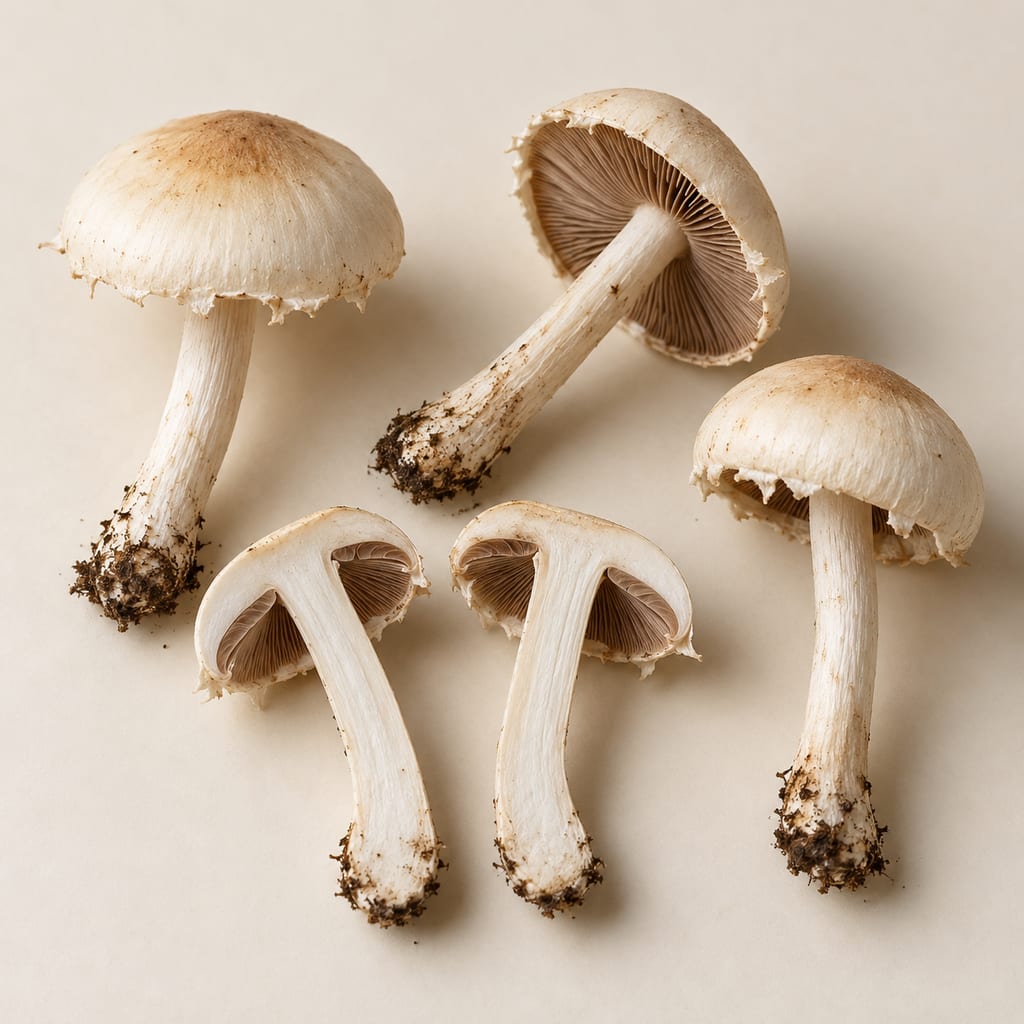
Agrocybe dura
A grassland agaric listed as edible in historical and scientific catalogues for Hong Kong and China. Taxonomic concepts and practical food value vary; the listings do not establish safe identification or culinary practice.
 FermenteaWhere food goes to change
Mushrooms
Auricularia heimuer is the black wood ear, a gelatinous wood fungus cultivated on a large scale in China and Southeast Asia and long sold under the European name A. auricula-judae.
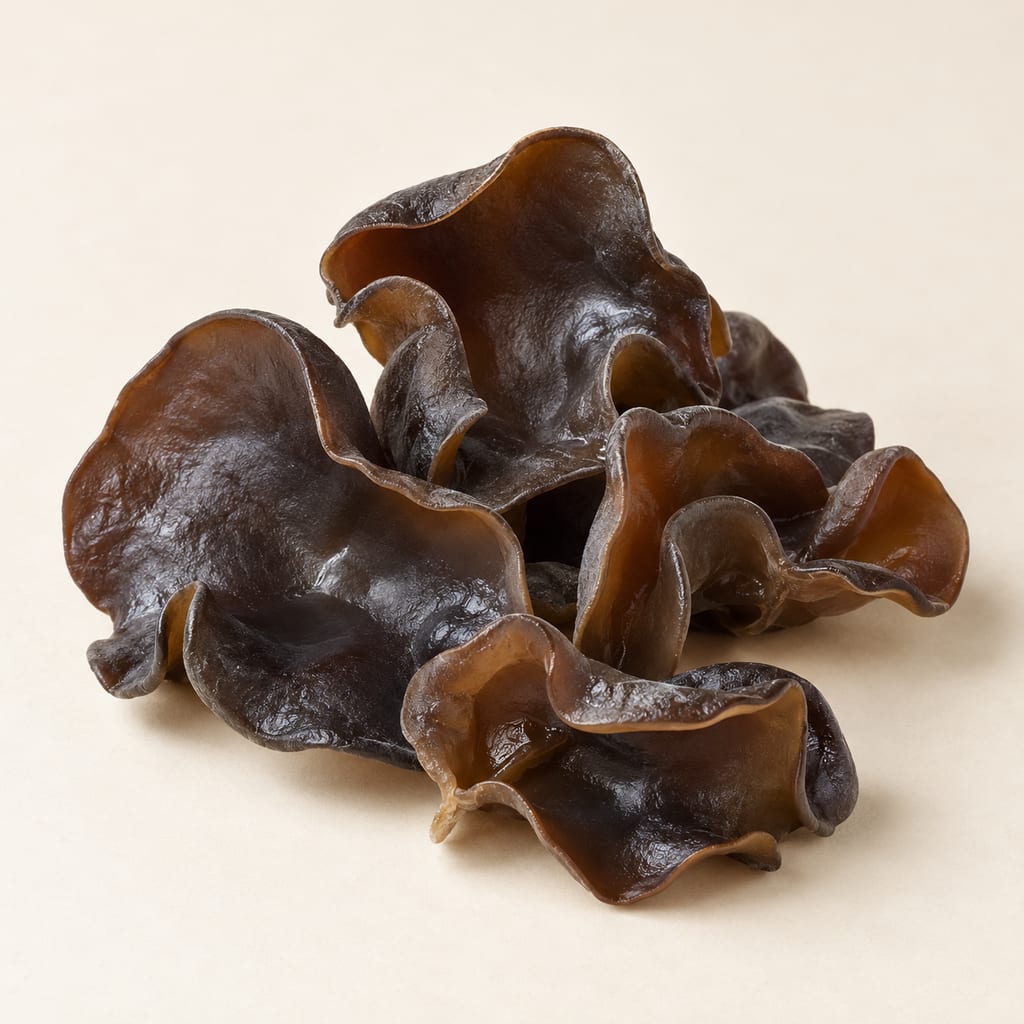
Auricularia heimuer was described as a new species by Wu and colleagues in 2014 in Phytotaxa, because no existing name applied to the most important Chinese Auricularia species. Before that, it was misdetermined as A. auricula-judae, a very similar species.
The name A. auricula-judae is now restricted to the European species. The Chinese and East Asian product still often sold under the name A. auricula-judae or A. auricula is A. heimuer. The catalogue lists the search alias "Auricularia auricula-judae sensu Asian cultivation literature" for this reason.
Wu and colleagues describe A. heimuer as having effused-reflexed or substipitate fruiting bodies with fawn to reddish-brown upper surfaces. Wikipedia contrasts this with the dark grey to almost black fruiting bodies of A. auricula-judae.
The fungus decays wood. Both A. heimuer and the related A. villosula grow on angiosperm (broadleaf) wood, while A. americana is found on conifer wood only.
A. heimuer is one of the most extensively cultivated mushrooms. Wikipedia records commercial-scale cultivation, particularly in China and Southeast Asia. Auricularia cornea is also cultivated at scale. The mushroom industry treats A. villosula as A. heimuer, so commercial product may combine these concepts.
The catalogue records the supply as widely cultivated and the use as fresh and dried, valued for its texture.
Fresh and dried black wood ear are used as a texture ingredient in cooked dishes, where its gelatinous, crisp-soft character is the point of use. The sources reviewed do not give a single standard method, so none is set out here.
The catalogue lists the use as a fresh and dried food fungus and records the supply as widely cultivated, with a food-market evidence category.
The sources reviewed do not give a validated storage method, shelf life or preservation process for the dried product. Dried black wood ear is sold commercially; any storage advice should come from the seller or a food-safety source for the product type, not from this page.
Identification and safety: a name, a photograph or one regional guide does not confirm that a wild specimen is this species. This page is not a collection key. Edibility statements refer to the named species as understood by each source, not any particular specimen. Because the cultivated product has long carried the wrong name, a label reading "A. auricula-judae" from an Asian source may refer to A. heimuer. The catalogue flags that older A. polytricha usage may be misapplied and that wood ears should not all be merged.
Cultivation and food use across China; the sources do not date the tradition.
Commercial cultivation is recorded in China and Southeast Asia.
A grassland agaric listed as edible in historical and scientific catalogues for Hong Kong and China. Taxonomic concepts and practical food value vary; the listings do not establish safe identification or culinary practice.

Akahatsu, Lactarius akahatsu, is a wild milkcap of East Asian pine and mixed forests that is sold in Yunnan markets, with its edibility and identity still needing species-level review.
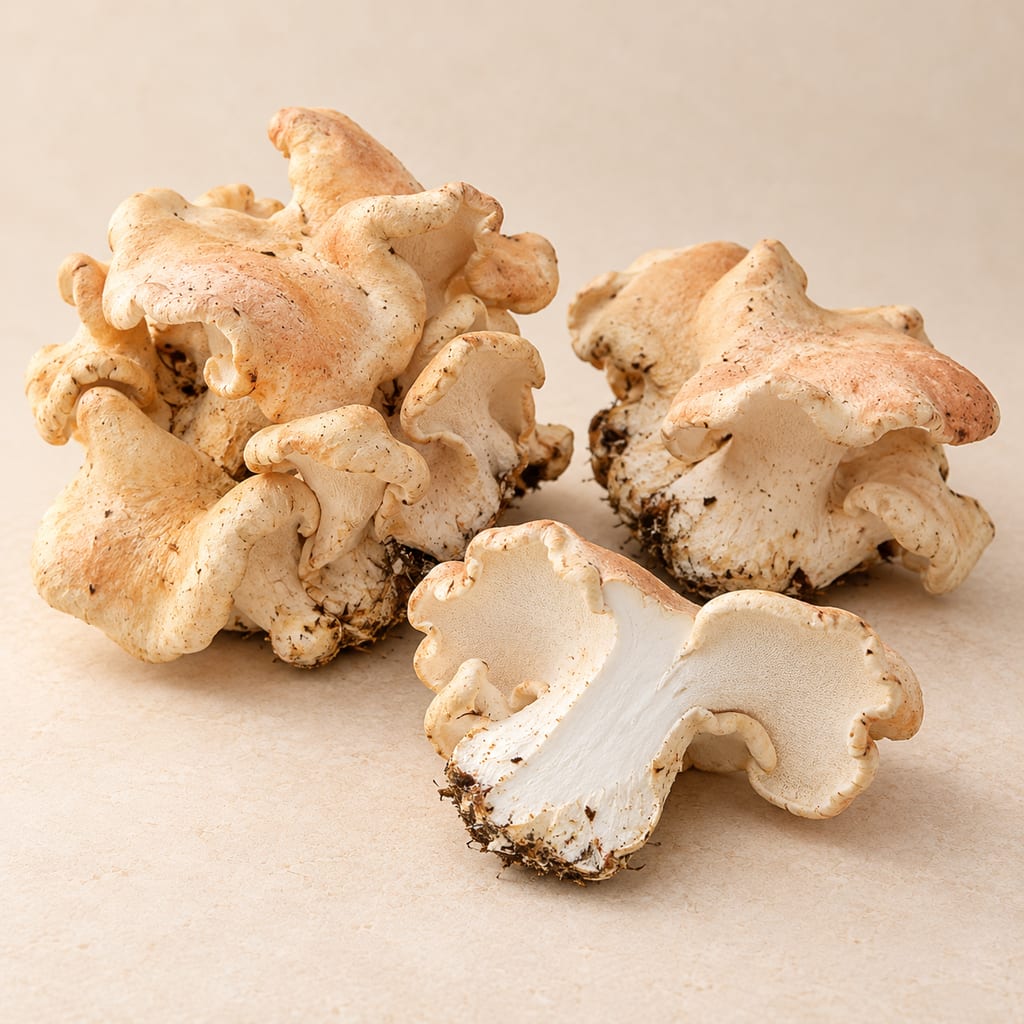
Albatrellus confluens is a ground-growing polypore with fused buff-orange caps. Sources document Chinese market use and regional edibility, but others reject it as too bitter; taxonomy also varies between Albatrellus and Albatrellopsis.
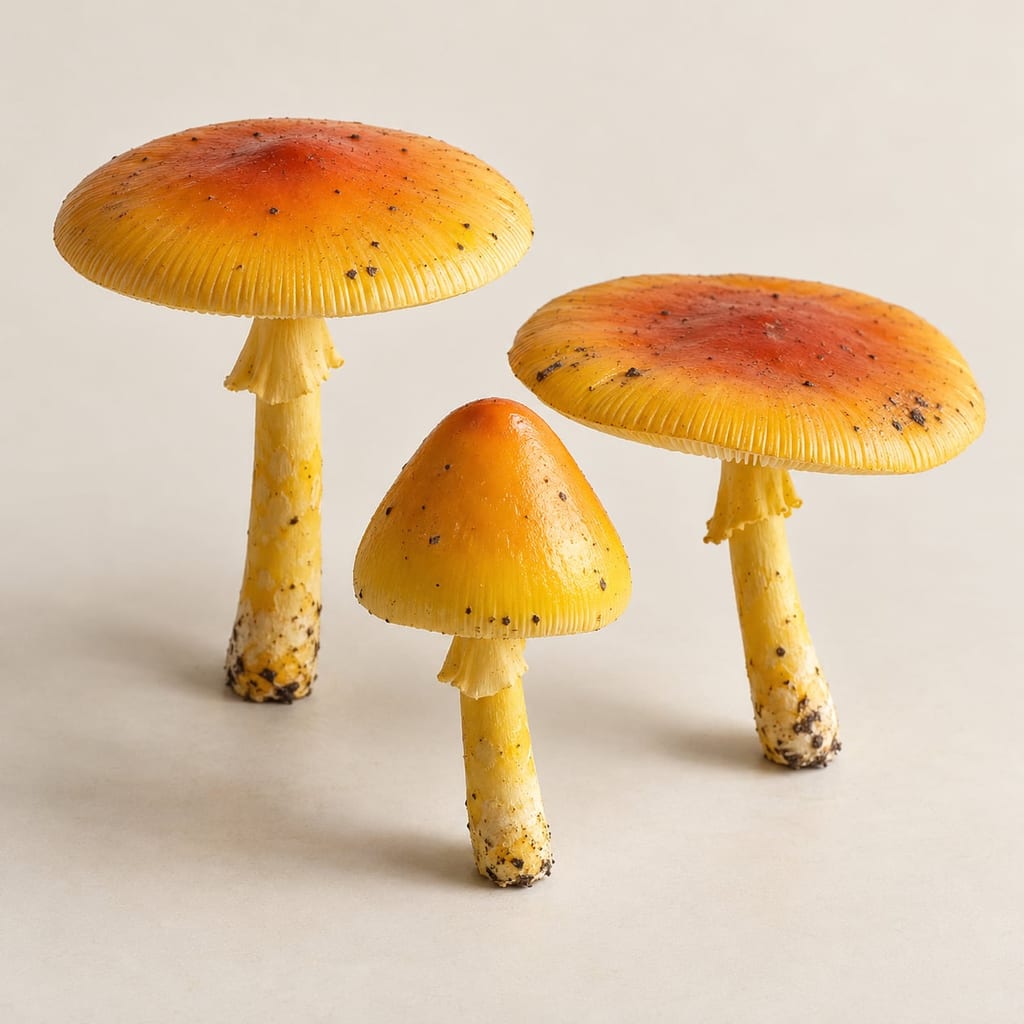
A wild Amanita recorded from China in a 2026 checklist of edible and medicinal fungi. The genus holds deadly species, so this page gives no identification or edibility verdict.
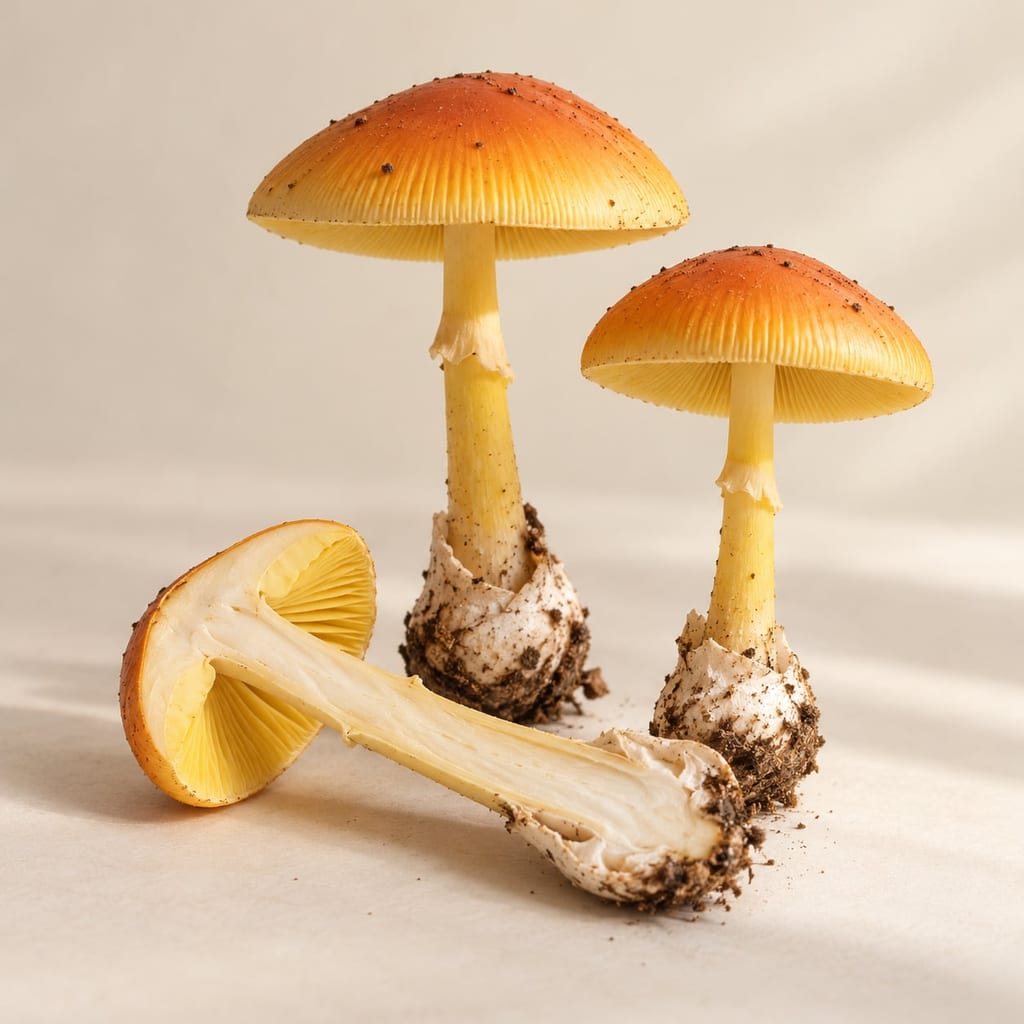
A wild Amanita of China, first reported there and listed as edible in a Yunnan ethnomycology study. The genus contains deadly species, so this page does not support identifying or eating it.
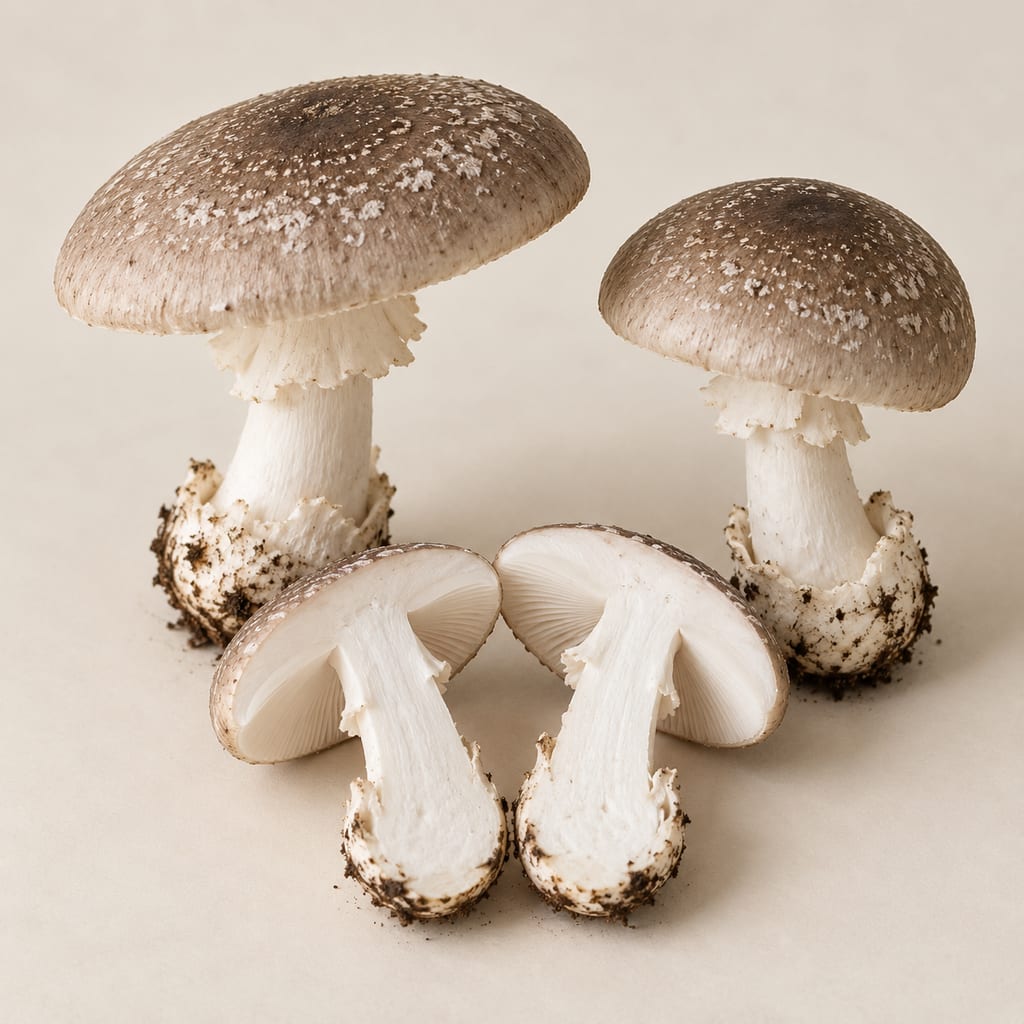
Amanita yuaniana is a Chinese Amanita that a 2023 Yanshan survey and a Yunnan ethnomycology survey list among edible species. No source tests it for safety, and the genus holds the most lethal mushrooms.
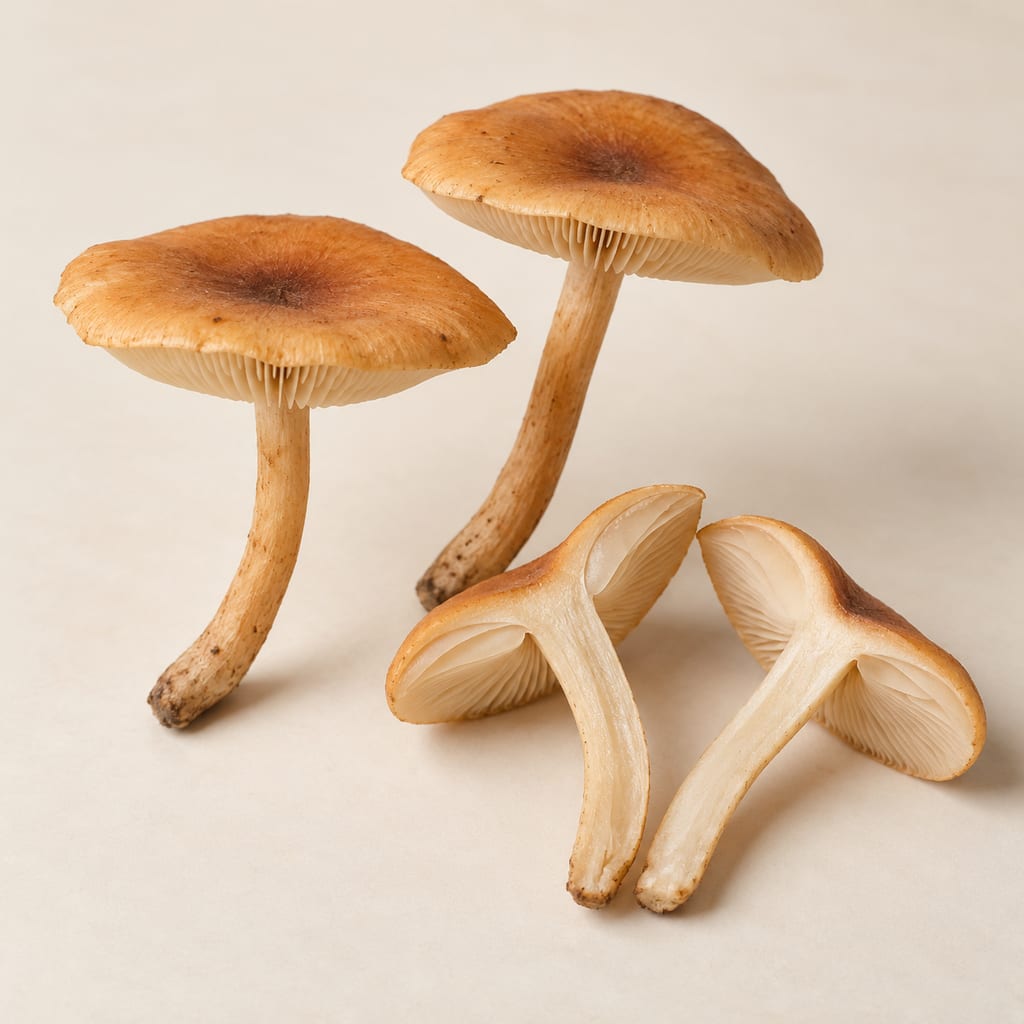
A wood-associated Armillaria recorded in Yunnan and Sichuan, China, and listed as edible in a 2026 Chinese catalogue.
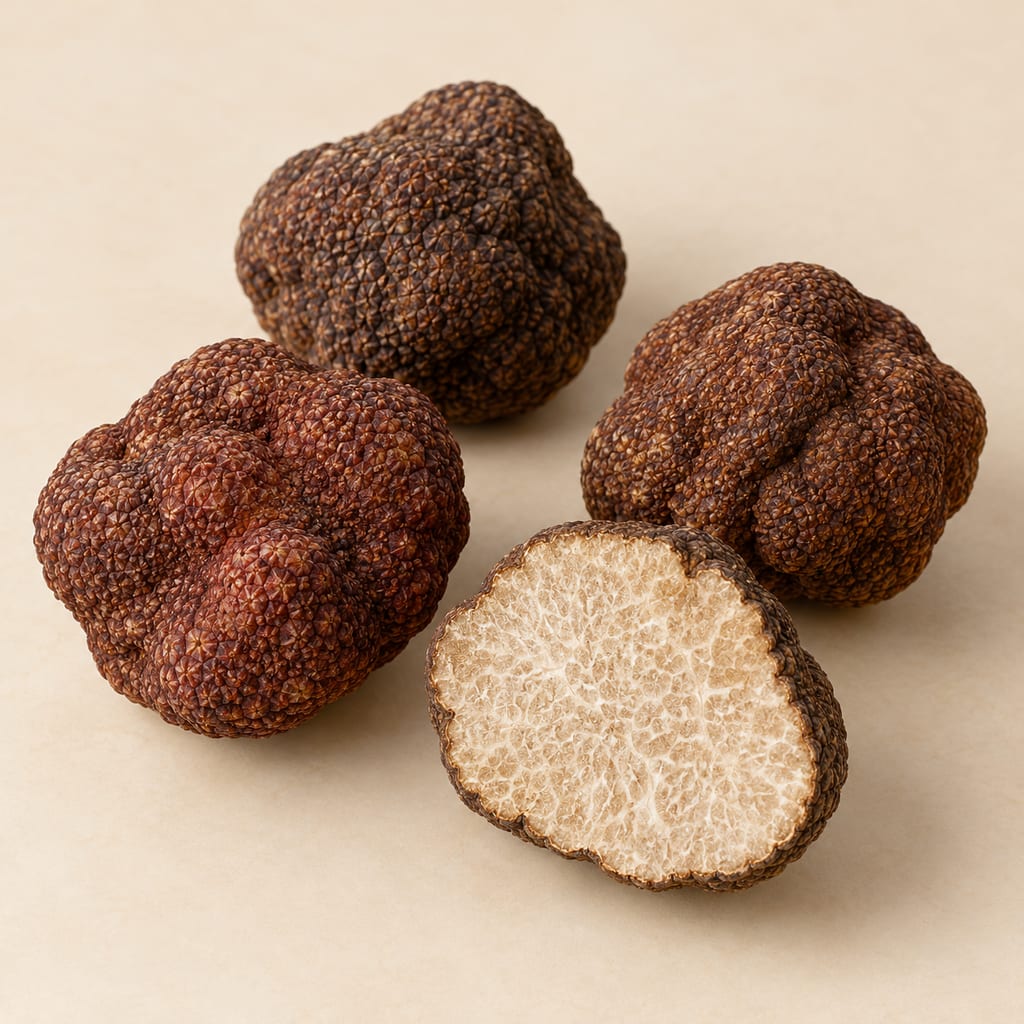
Tuber pseudohimalayense is a wild black truffle from Yunnan, China, listed as edible in a Chinese species catalogue. No independent assessment of its culinary use or safety is available.
No community contributions have been published for this entry yet.
Sign in to contribute. Published comments and photos are free to read.
WikipediaTaxonomy · Cultivation · Identification
Auricularia heimuerConfusion with A. auricula-judae; A. auricula-judae restricted to the European species; commercial cultivation in China and Southeast Asia; dark grey to almost black fruiting bodies in A. auricula-judae.
Cited in: Identity and naming; Appearance and habitat; Cultivation; Storage and handling; Safety and limits
PhytotaxaTaxonomy
Wu et al. 2014, Auricularia species description (Phytotaxa 186(5))Description of A. heimuer as a new species in 2014; fawn to reddish-brown upper surface.
Cited in: Identity and naming; Appearance and habitat
PubMed CentralFood use · Cultivation
Auricularia review (supplied catalogue source S057)Catalogue entry: fresh and dried food fungus; texture ingredient; widely cultivated; distinct from European A. auricula-judae.
Cited in: Identity and naming; Cultivation; Food use; Safety and limits