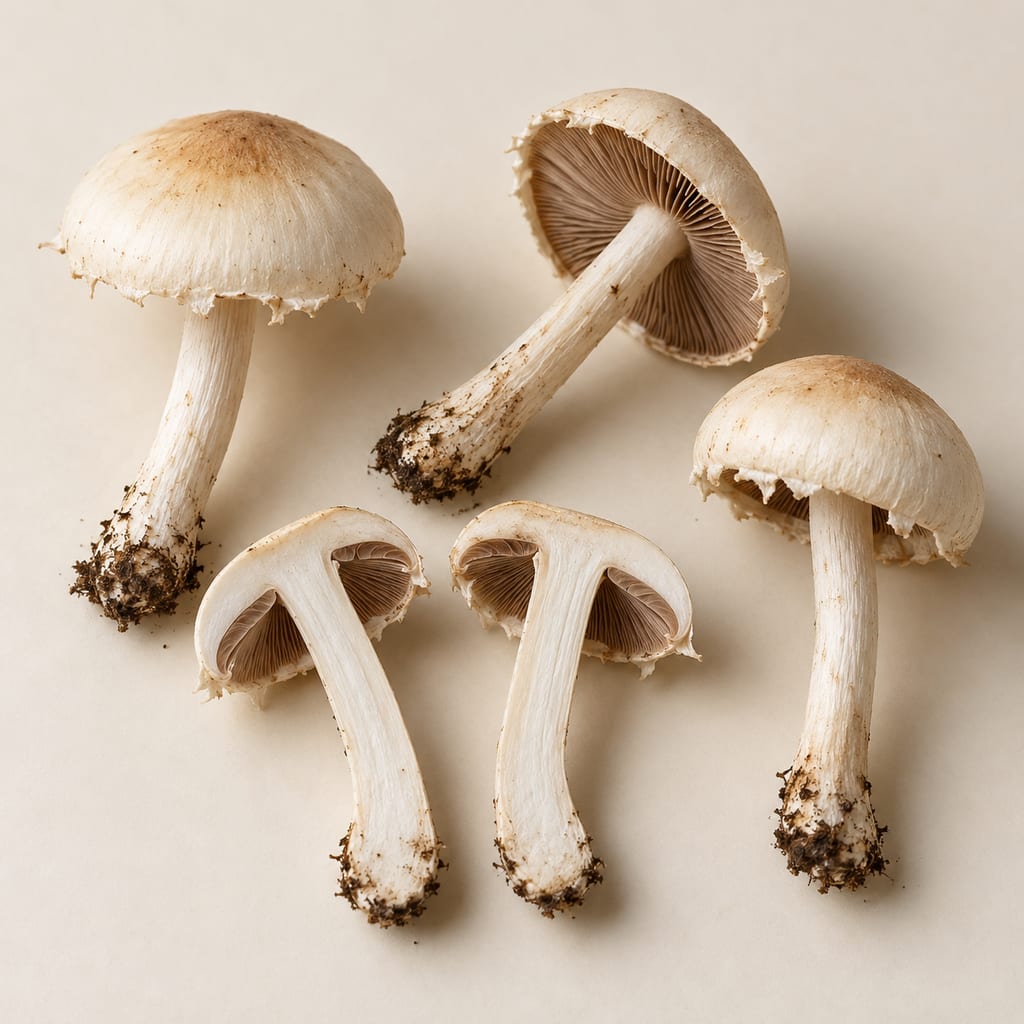
Agrocybe dura
A grassland agaric listed as edible in historical and scientific catalogues for Hong Kong and China. Taxonomic concepts and practical food value vary; the listings do not establish safe identification or culinary practice.
 FermenteaWhere food goes to change
Mushrooms
A Chinese bolete described as Boletus sinoedulis from subalpine spruce and fir forests in southwestern China. A 2026 Chinese catalogue lists it as edible or edible-and-medicinal; that listing is not a safety assessment.
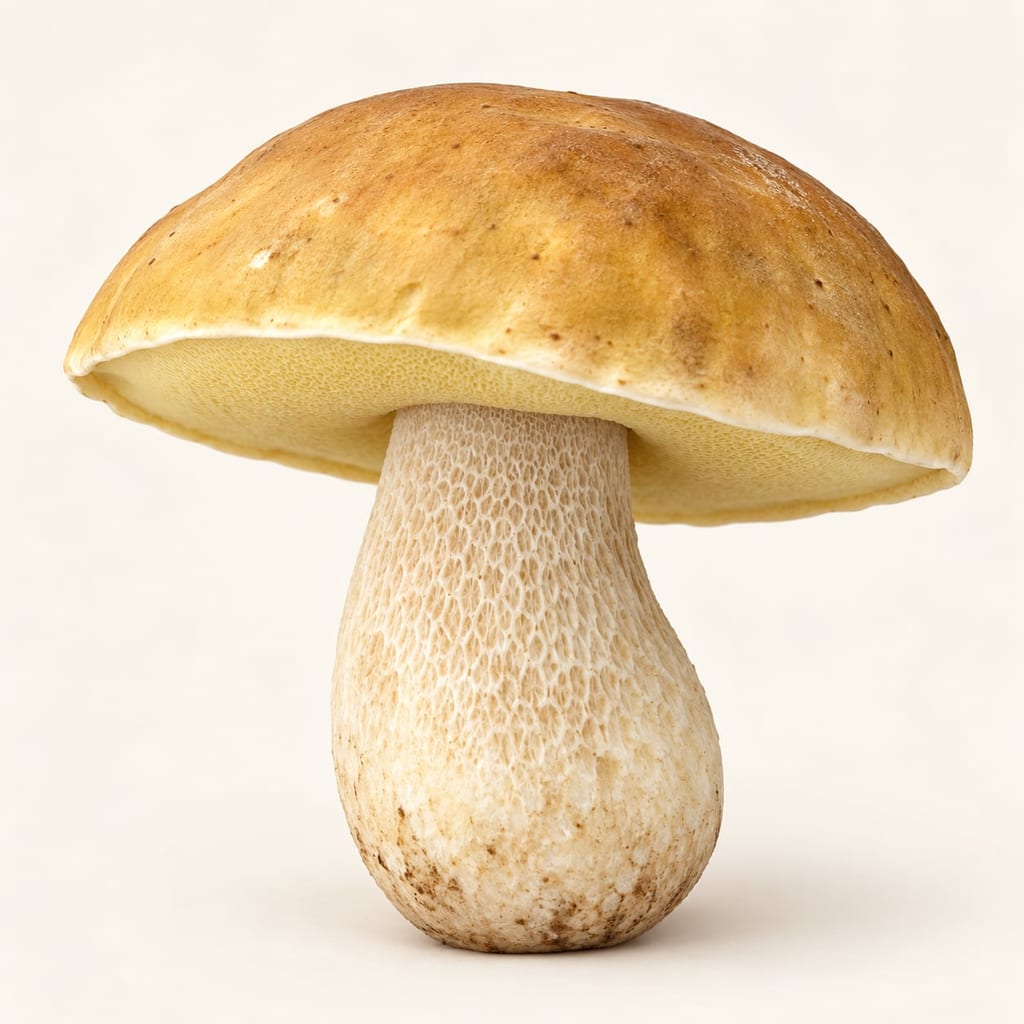
Boletus sinoedulis is a formally described Chinese porcini species, named by Bang Feng, Yang-Yang Cui, Jianping Xu and Zhu L. Yang. The published description and current Index Fungorum record recognize the name; it is not merely an unreconciled research label.
The description characterizes medium-to-large fruiting bodies with a dry, smooth cap that changes from hemispherical through convex to nearly flat. It reports a pale yellow-brown to brown cap, white flesh that does not change colour when cut, and a pale stipe marked with a net-like reticulation. These are source descriptions, not a field-identification key.
A 2026 species catalogue of edible and medicinal fungi in China lists this species as edible or as edible and medicinal. That is a catalogue entry, not an independent safety assessment or a documented preparation.
The catalogue covers 1,495 species, 1,013 of them listed as edible, and reports that 33.1 per cent of its names are new or taxonomically revised.
The taxonomic description records Boletus sinoedulis in subalpine forests of southwestern China dominated by spruce (Picea) or fir (Abies). It is reported from Sichuan and Yunnan, including collections at high elevations. Index Fungorum’s name record independently summarizes the association with Picea and Abies in Sichuan.
Like other forest boletes, it is ectomycorrhizal: its underground fungal network associates with tree roots. The listed tree genera and regional records describe the research collections; they are not a practical locator for safe foraging.
The 2026 catalogue entry does not establish a culinary tradition, a preparation, or a local food name for this species. The available sources support its taxonomic identity and forest ecology, but not instructions for preparing or eating a wild specimen.
Bolete identification is a specialist task. A photograph, habitat description, scientific name in a catalogue, or resemblance to another porcini cannot establish the identity or safety of a wild mushroom.
Do not gather or eat a wild fungus on the strength of this page or a photograph. The sources reviewed here do not validate a safe identification method or preparation for readers.
Listed as edible or edible-and-medicinal in the 2026 national catalogue; no locality recorded.
A grassland agaric listed as edible in historical and scientific catalogues for Hong Kong and China. Taxonomic concepts and practical food value vary; the listings do not establish safe identification or culinary practice.
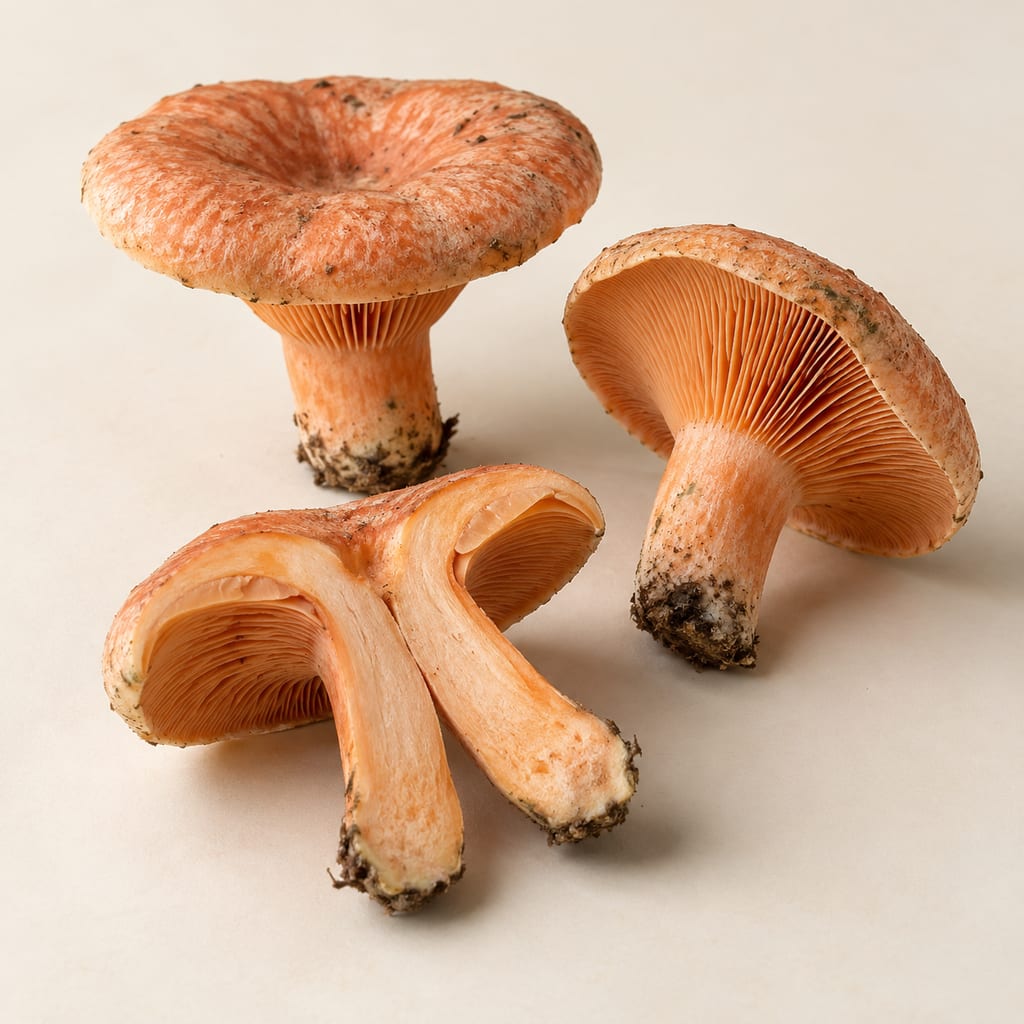
Akahatsu, Lactarius akahatsu, is a wild milkcap of East Asian pine and mixed forests that is sold in Yunnan markets, with its edibility and identity still needing species-level review.
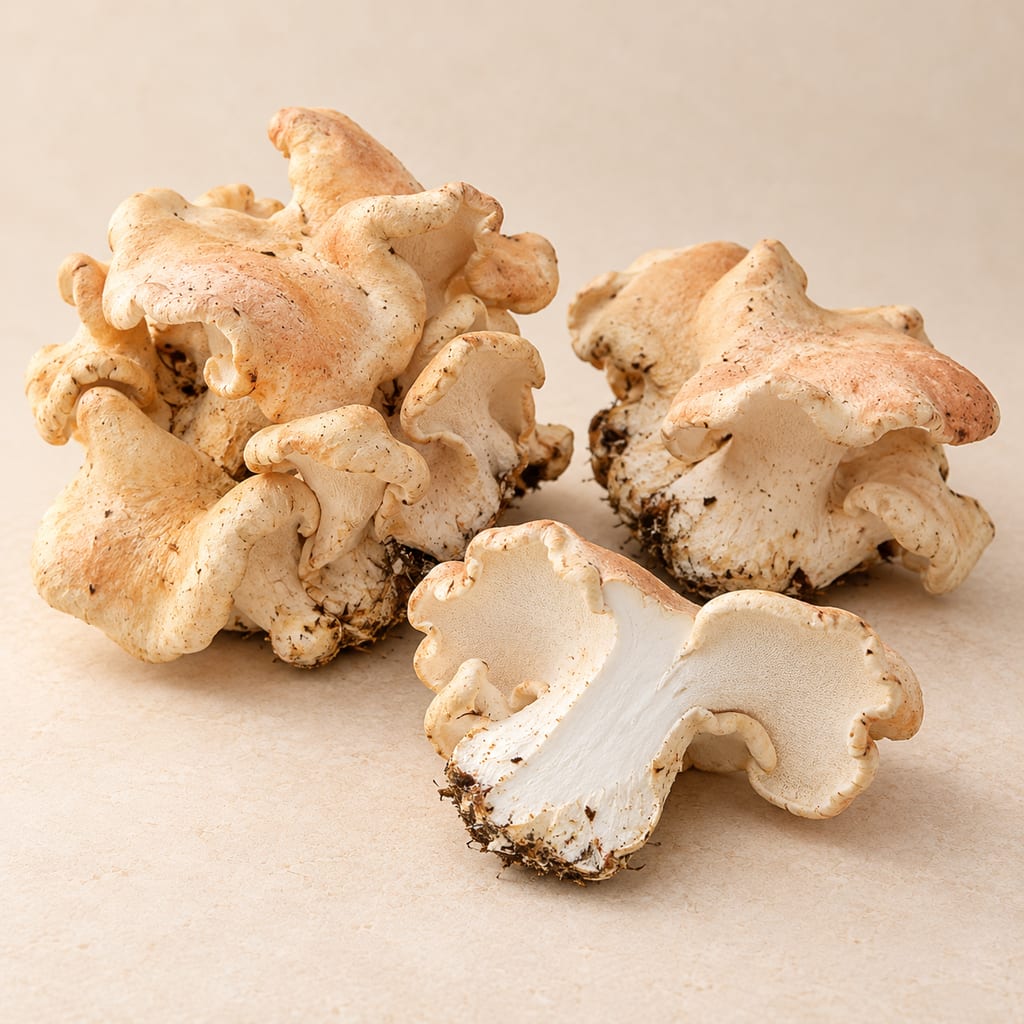
Albatrellus confluens is a ground-growing polypore with fused buff-orange caps. Sources document Chinese market use and regional edibility, but others reject it as too bitter; taxonomy also varies between Albatrellus and Albatrellopsis.
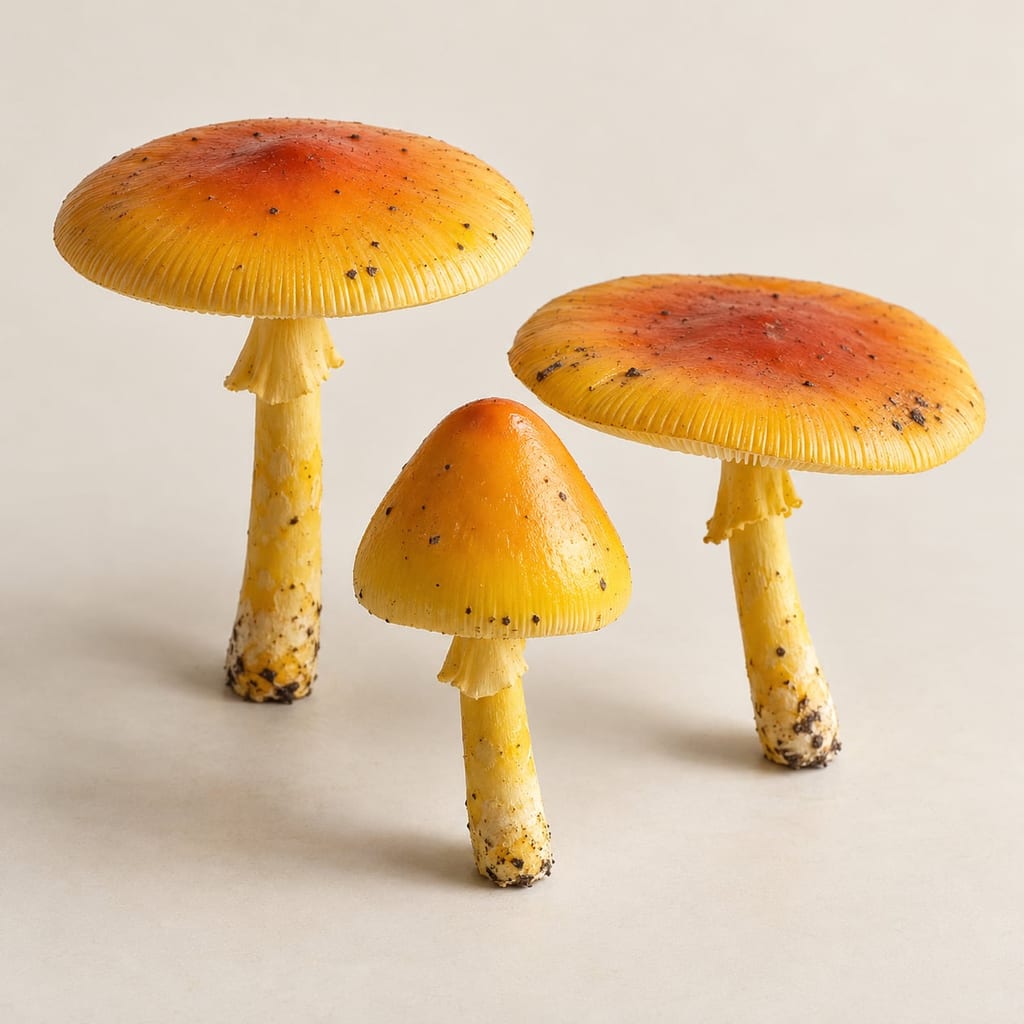
A wild Amanita recorded from China in a 2026 checklist of edible and medicinal fungi. The genus holds deadly species, so this page gives no identification or edibility verdict.
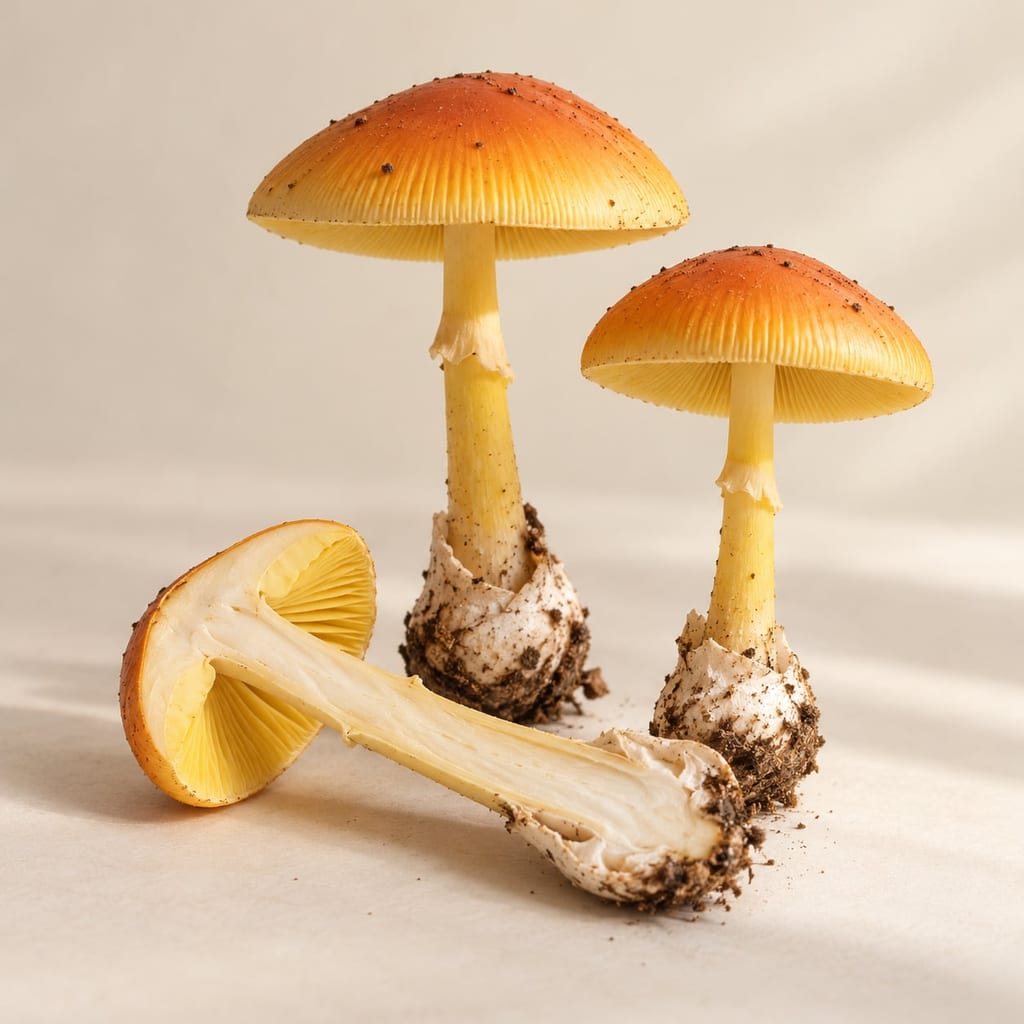
A wild Amanita of China, first reported there and listed as edible in a Yunnan ethnomycology study. The genus contains deadly species, so this page does not support identifying or eating it.
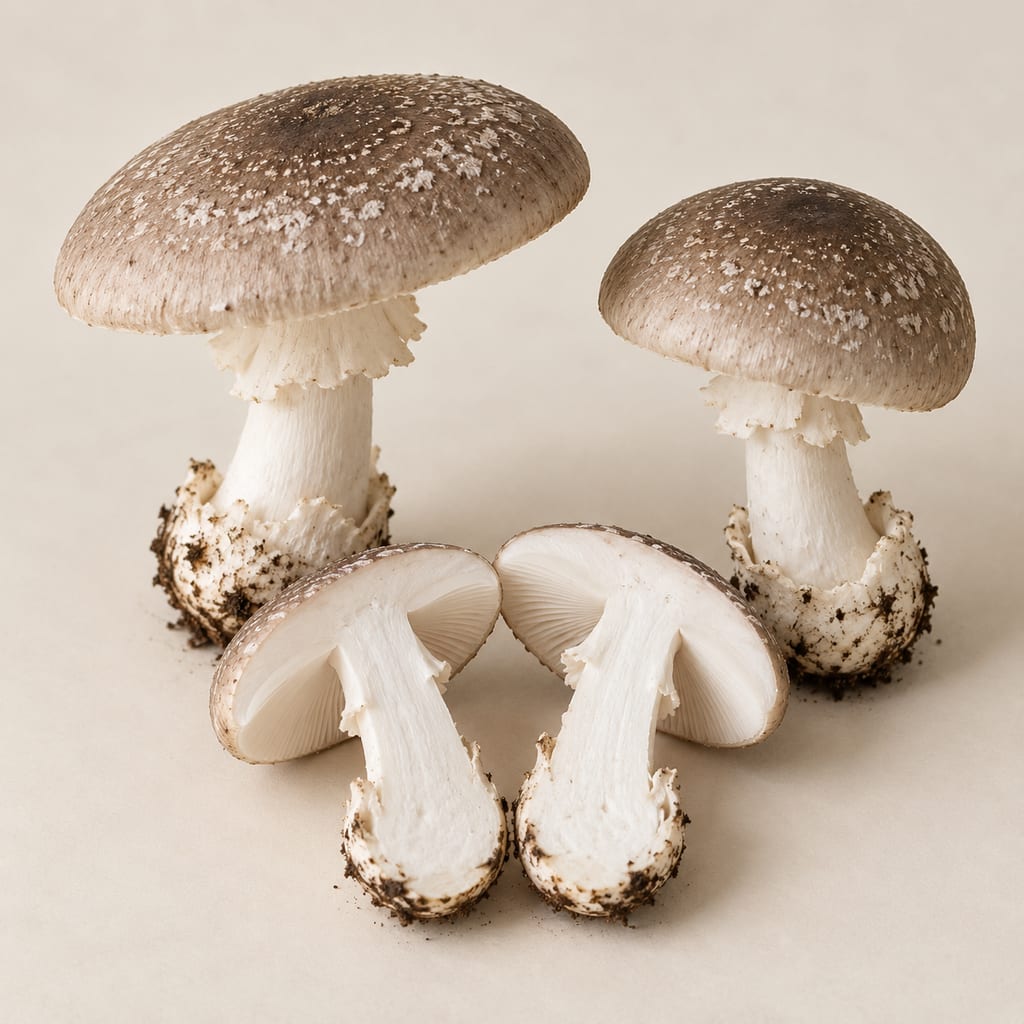
Amanita yuaniana is a Chinese Amanita that a 2023 Yanshan survey and a Yunnan ethnomycology survey list among edible species. No source tests it for safety, and the genus holds the most lethal mushrooms.
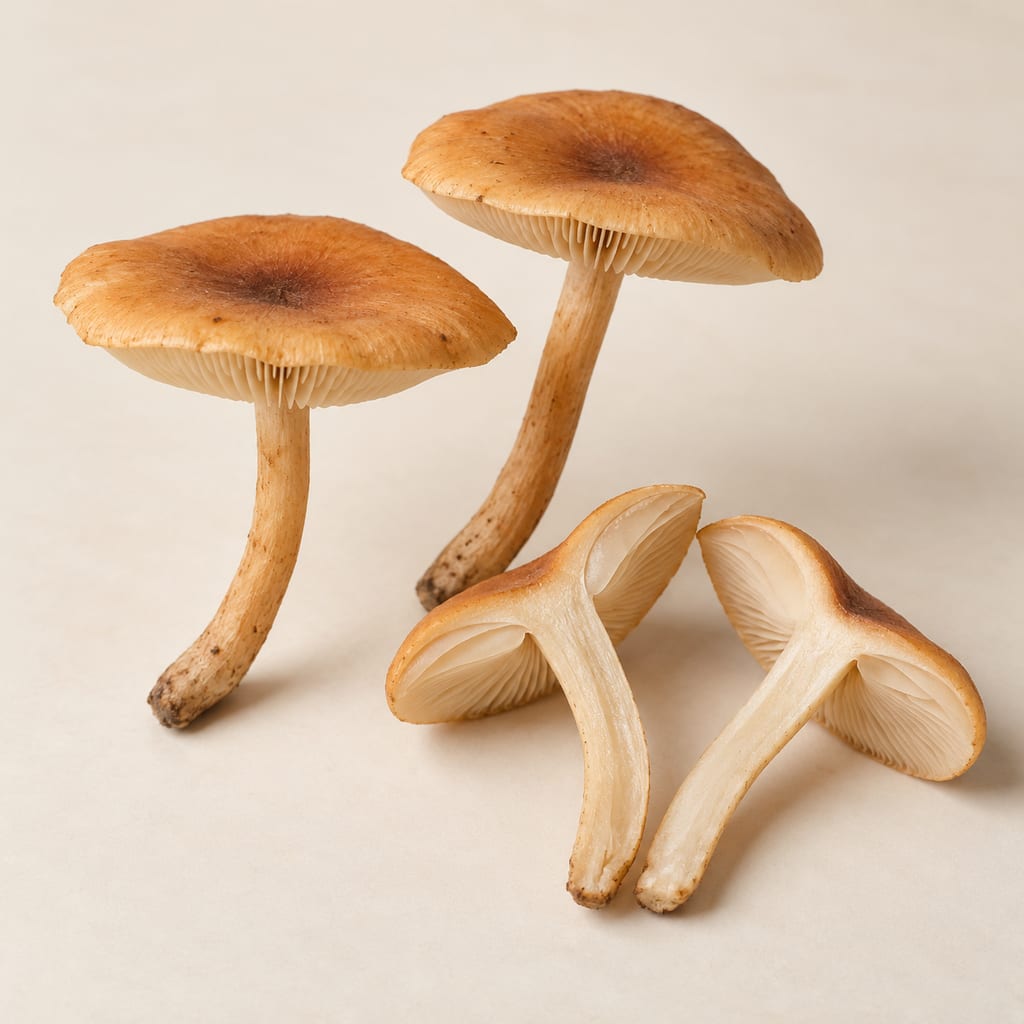
A wood-associated Armillaria recorded in Yunnan and Sichuan, China, and listed as edible in a 2026 Chinese catalogue.
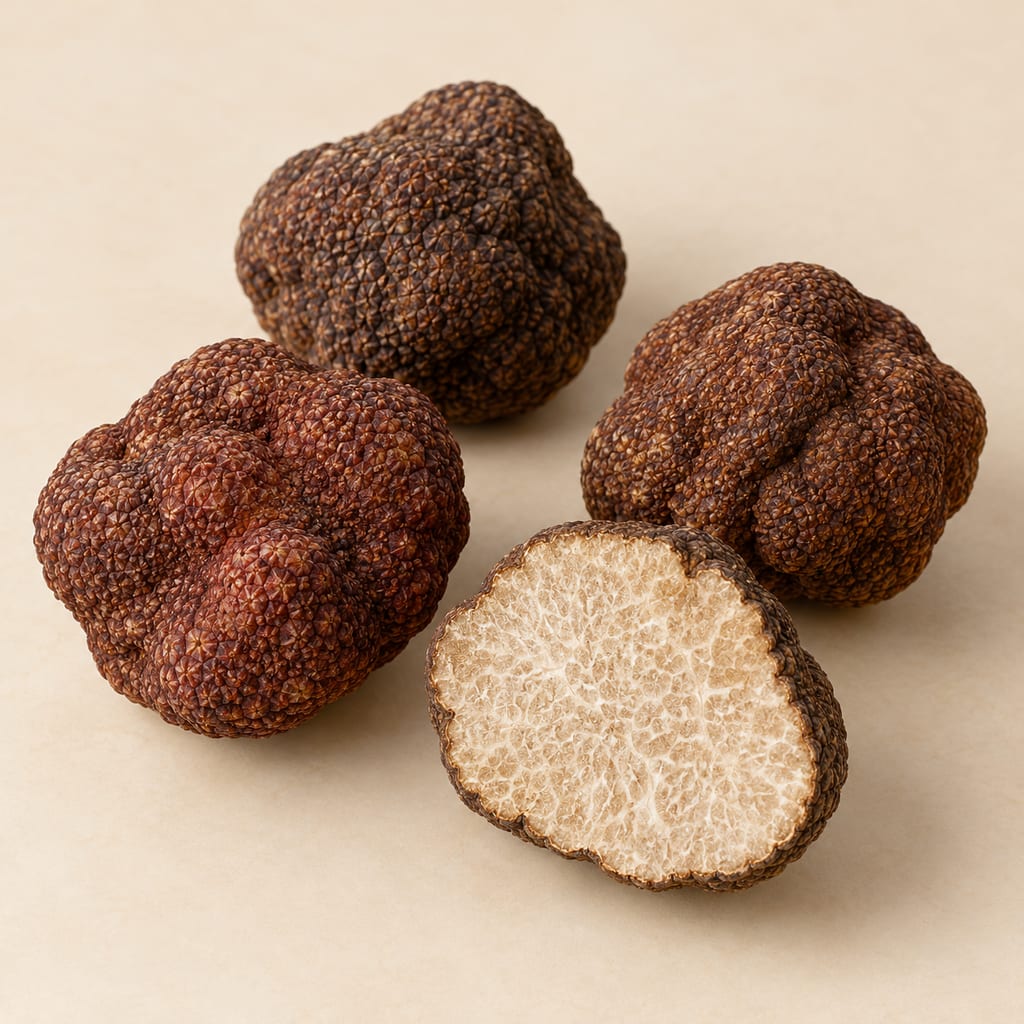
Tuber pseudohimalayense is a wild black truffle from Yunnan, China, listed as edible in a Chinese species catalogue. No independent assessment of its culinary use or safety is available.
No community contributions have been published for this entry yet.
Sign in to contribute. Published comments and photos are free to read.
Mycosystema (菌物学报)History · Safety
Species cataloging of edible and medicinal fungi in China (中国食药用菌物种编目)2026 catalogue of 1,495 species, including 1,013 listed as edible; lists Boletus sinoedulis as edible or edible-and-medicinal.
Cited in: Listing in China; Culinary use; Identification and safety
Fungal Diversity / Springer NatureIdentity · Morphology · Ecology
Porcini mushrooms (Boletus sect. Boletus) from ChinaDescribes Boletus sinoedulis as a new Chinese porcini species using morphological and molecular evidence; describes basidiomata, pale reticulate stipe, unchanging white context, and occurrence in forests dominated by Picea or Abies in southwestern China.
Cited in: Overview; Ecology; Culinary use; Identification and safety
Index Fungorum, Royal Botanic Gardens, KewIdentity · Taxonomy · Ecology
Boletus sinoedulis B. Feng, Y.Y. Cui, J.P. Xu & Zhu L. Yang: name record 810380Current name Boletus sinoedulis; record gives holotype HKAS 53613 and forest association with Picea and Abies in Sichuan.
Cited in: Overview; Ecology
China Agricultural Science and Technology Promotion Network, citing MycosystemaMorphology · Ecology · Image reference
青藏高原的珍稀牛肝菌——中华美味牛肝菌 (Rare bolete of the Qinghai–Tibet Plateau: Boletus sinoedulis)Describes cap, pore layer, context, stipe reticulation and southwestern China subalpine spruce/fir habitat; includes two photographs labelled Boletus sinoedulis.
Cited in: Ecology