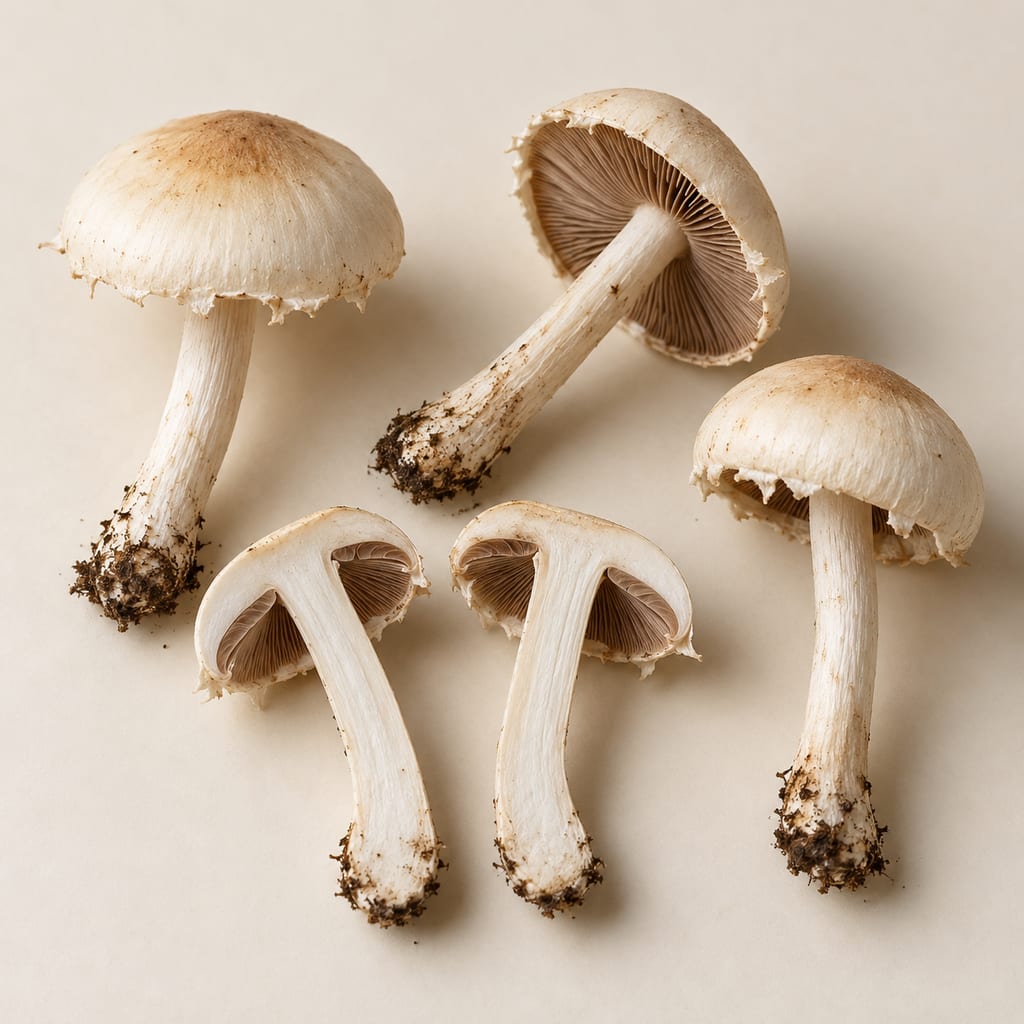
Agrocybe dura
A grassland agaric listed as edible in historical and scientific catalogues for Hong Kong and China. Taxonomic concepts and practical food value vary; the listings do not establish safe identification or culinary practice.
 FermenteaWhere food goes to change
Mushrooms
Cantharellus tuberculosporus is a rare chanterelle of high-elevation Xizang and Sichuan, China. Its name has been disputed, and no food-safety assessment of correctly identified specimens exists.
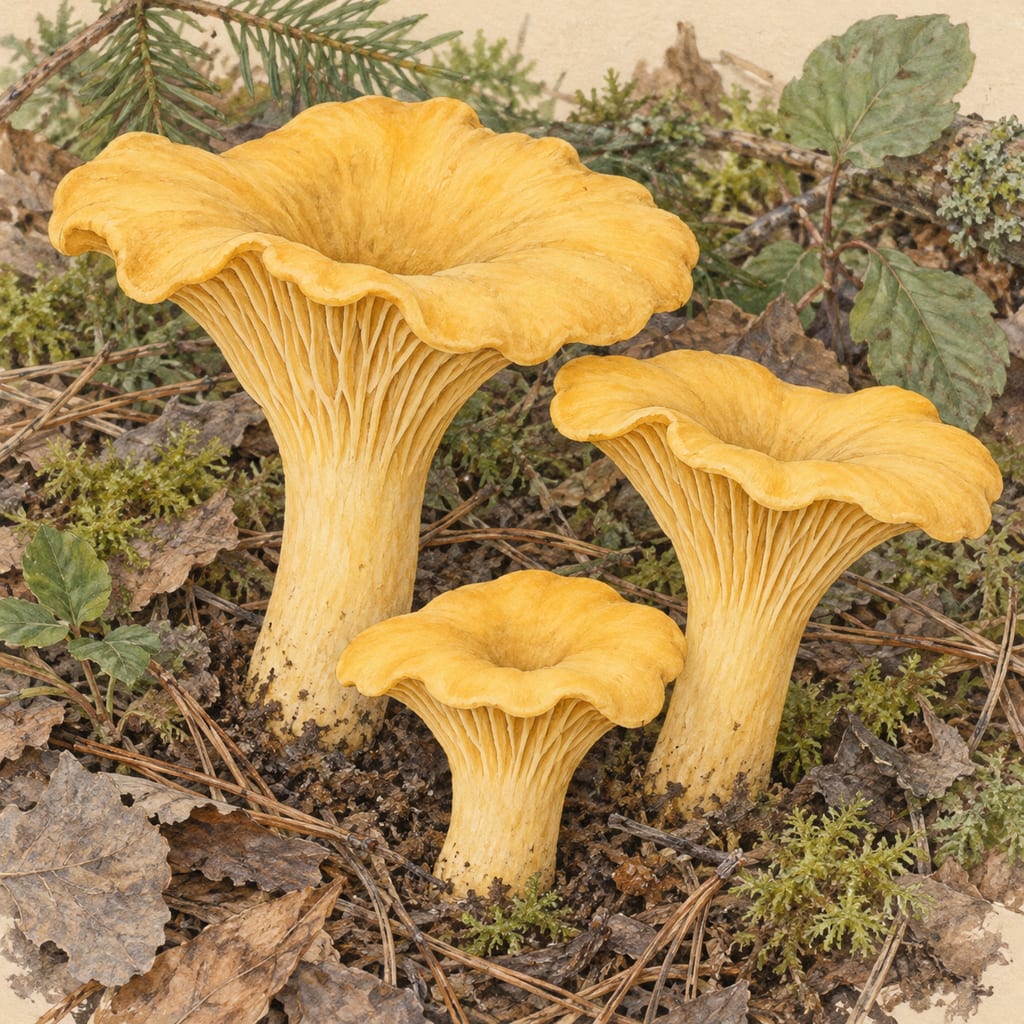
Cantharellus tuberculosporus is a rare chanterelle of high-elevation Xizang and Sichuan in southwestern China. Its fruiting bodies have a yellow to orange, funnel-shaped cap and decurrent folds that are branched and interconnected. A 2025 account gives a cap of 4 to 8 centimetres with pale-yellow to orange folds. The original description reported tuberculate spores, but the type spores were later found to be smooth, and the 2023 authors regarded the tuberculation as an artefact of drying.
Specialist taxonomy separates the species from the closely related C. cibarius, and the 2025 review separates it from the lookalike C. versicolor by larger fruiting bodies and spores and by its higher-elevation Abies habitat. These are specialist distinctions. They are not a consumer identification key.
Zang described the species in 1980 from a collection made at Baga, Xizang, in 1975. A 2021 phylogenetic paper treated the name as a synonym of C. yunnanensis. The 2023 type-focused study rejected that treatment. The 2025 Chinese survey accepts the species, so the name is not yet settled in general use.
The name has also been applied broadly to marketed yellow chanterelles, including ones called golden chanterelle. Observations and commercial sales under those names cannot be transferred to C. tuberculosporus.
The best-documented localities are in China: Baga in Milin County, Linzhi (Nyingchi) Prefecture, the type locality; a recollection about 15 kilometres away, made in 2014; and Basu Town, Changdu (Qamdo) City, where a specimen was collected in July 2024. The 2025 review adds a province-level distribution in Xizang and Sichuan. The sources give no site coordinates, so this page gives none.
The dated collections fall in late July at high-elevation sites. The 2023 study places the 2014 recollection in mixed forest of Pinus densata and oak. The 2025 review places the species in mixed or coniferous forest at about 3,500 to 3,700 metres. Three dated collections do not define a fruiting season, so the evidence supports late-July fruiting at high elevations and nothing wider.
A China edible-fungi checklist lists the name, and a 2025 checklist for southeast Xizang labels a Milin County voucher as edible. These are checklist entries. No named local culinary tradition, frequency of consumption, preparation method or safety assessment of correctly identified specimens is recorded in the sources read.
No poisonous lookalike is established in the sources. This is not evidence of safety, and a yellow chanterelle appearance is not evidence either. Do not identify or eat a wild chanterelle from a photograph or from this page. The page does not support eating advice or a recipe for this species.
The IUCN assessment (2023) lists the species as Data Deficient, and it describes its distribution and habitat knowledge as incomplete. The 2018 Chinese Red List lists it as Near Threatened. The two classifications conflict and both predate the later taxonomic and field work, so neither is a current estimate of how common the species is.
Type locality, given as Mi-Lin (now Milin) in Baga. No coordinates are given in the sources read.
A sequenced recollection reported without coordinates. A 2025 checklist labels this voucher as edible; that is limited checklist evidence, not a culinary study.
Voucher GDGM97266 in the 2025 chanterelle survey. No coordinates are given.
Province-level distribution from the 2025 review. The sources read give altitude ranges but no site coordinates.
A grassland agaric listed as edible in historical and scientific catalogues for Hong Kong and China. Taxonomic concepts and practical food value vary; the listings do not establish safe identification or culinary practice.
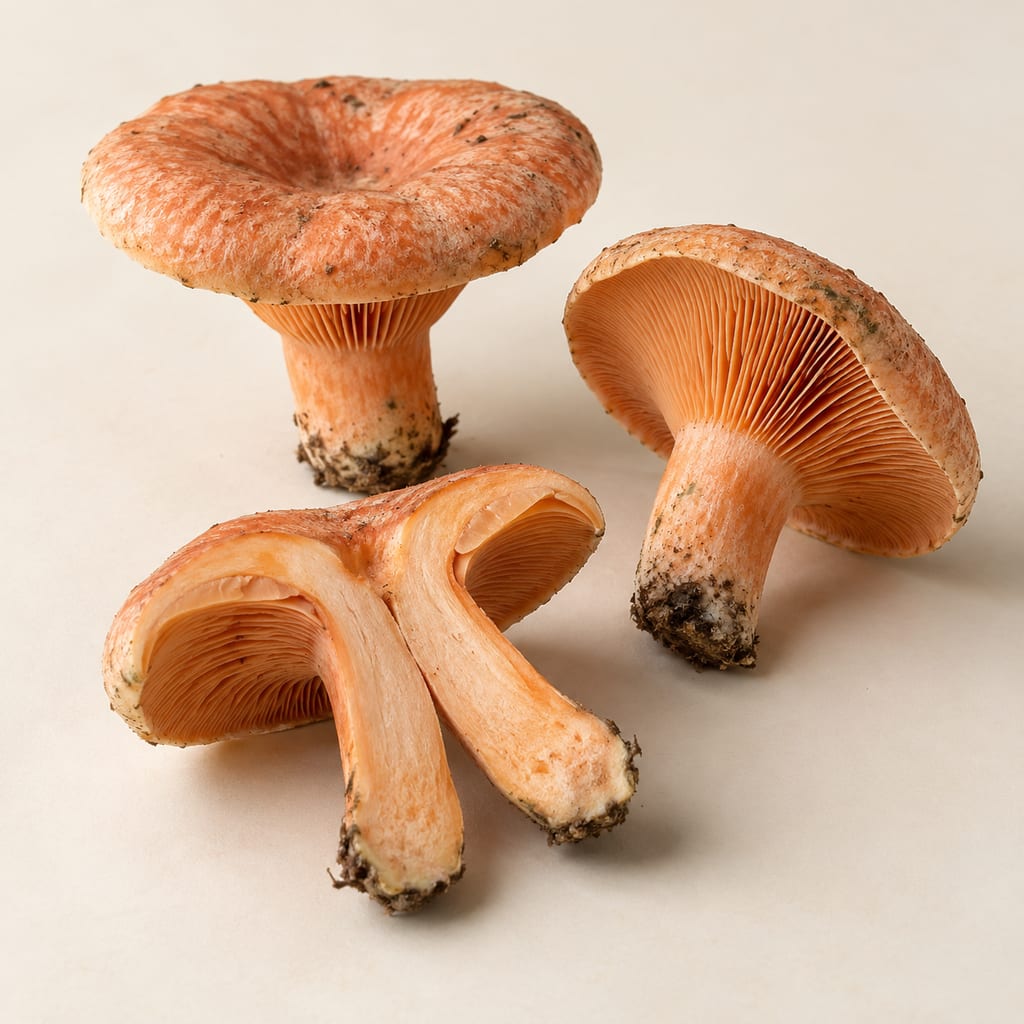
Akahatsu, Lactarius akahatsu, is a wild milkcap of East Asian pine and mixed forests that is sold in Yunnan markets, with its edibility and identity still needing species-level review.
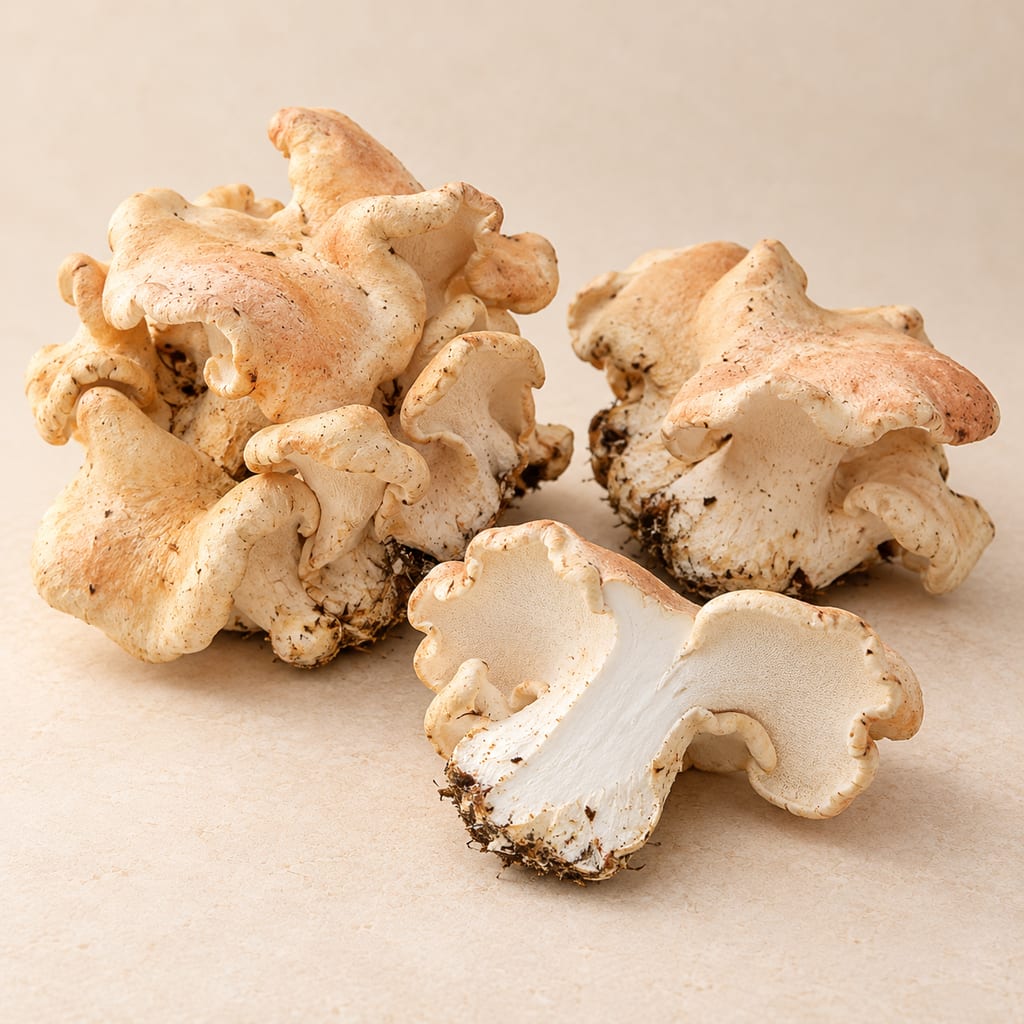
Albatrellus confluens is a ground-growing polypore with fused buff-orange caps. Sources document Chinese market use and regional edibility, but others reject it as too bitter; taxonomy also varies between Albatrellus and Albatrellopsis.
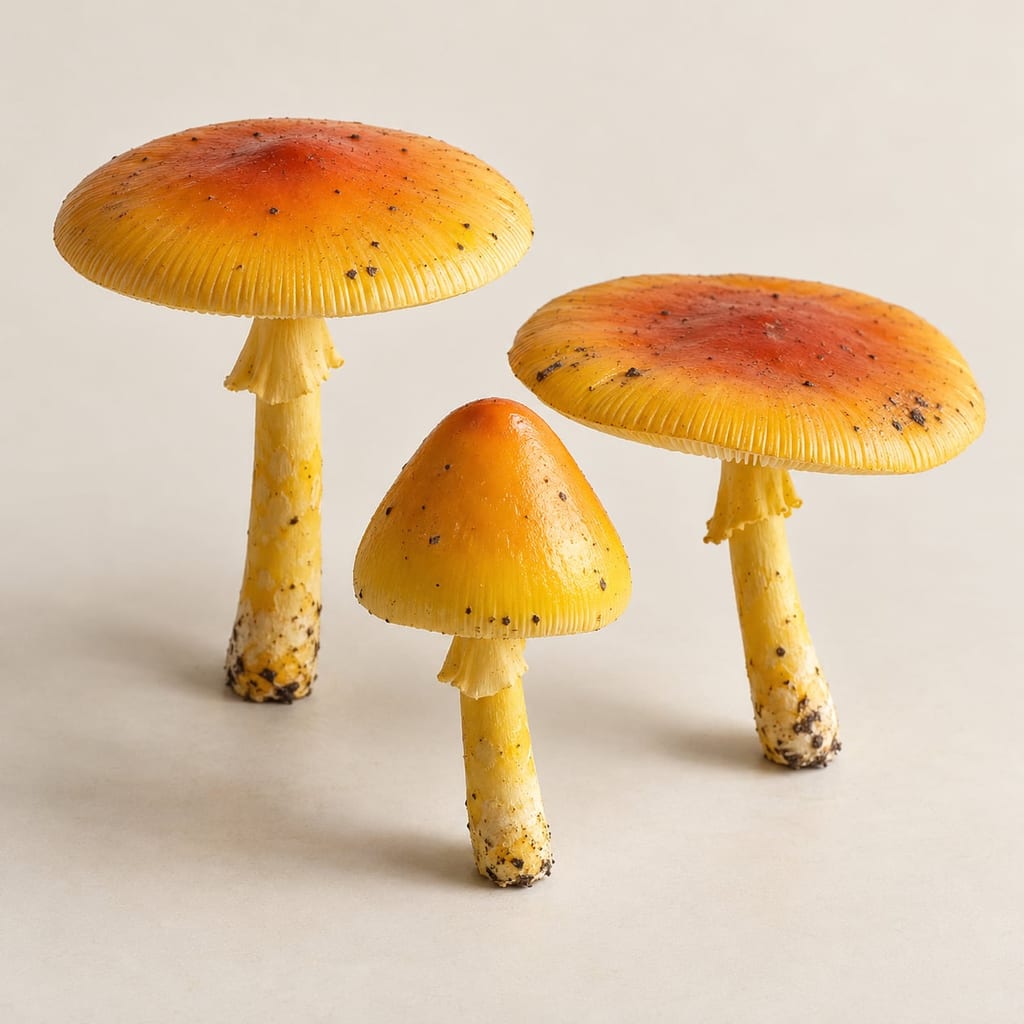
A wild Amanita recorded from China in a 2026 checklist of edible and medicinal fungi. The genus holds deadly species, so this page gives no identification or edibility verdict.
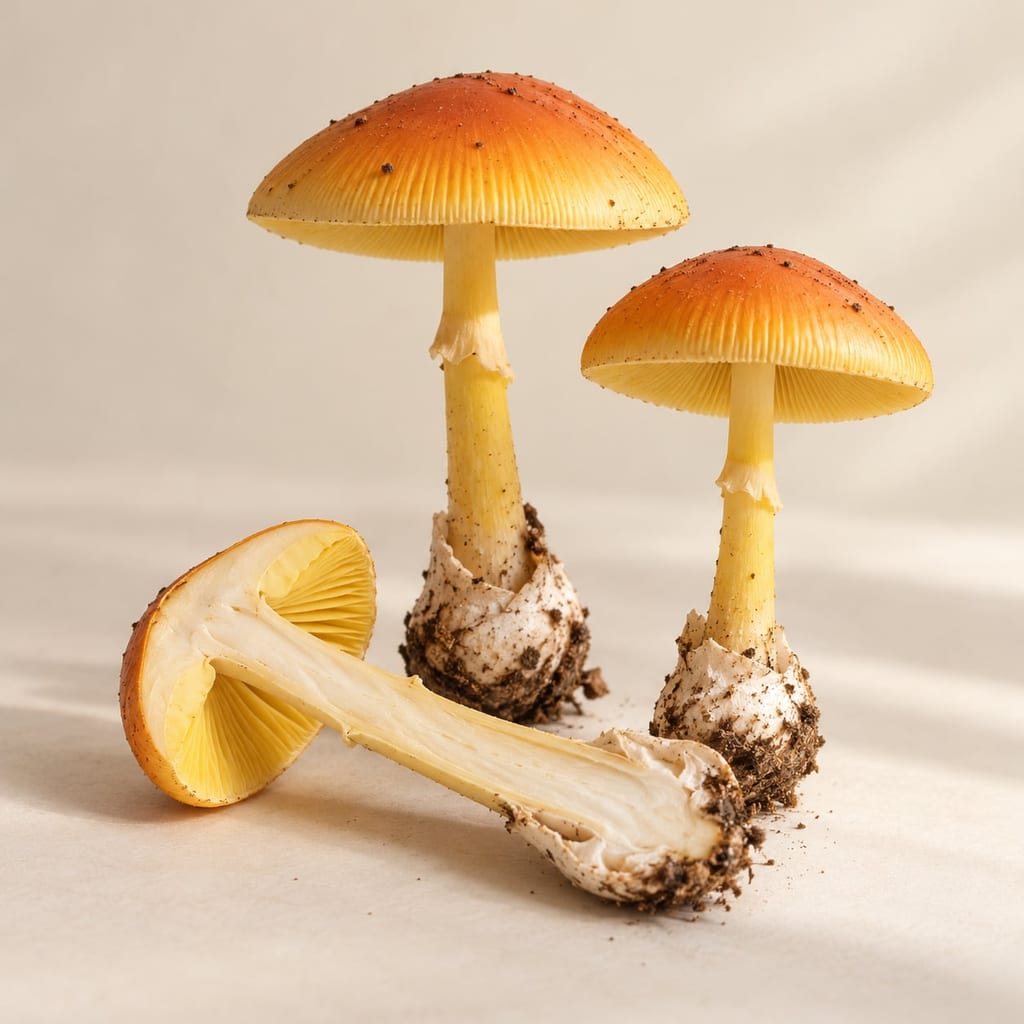
A wild Amanita of China, first reported there and listed as edible in a Yunnan ethnomycology study. The genus contains deadly species, so this page does not support identifying or eating it.
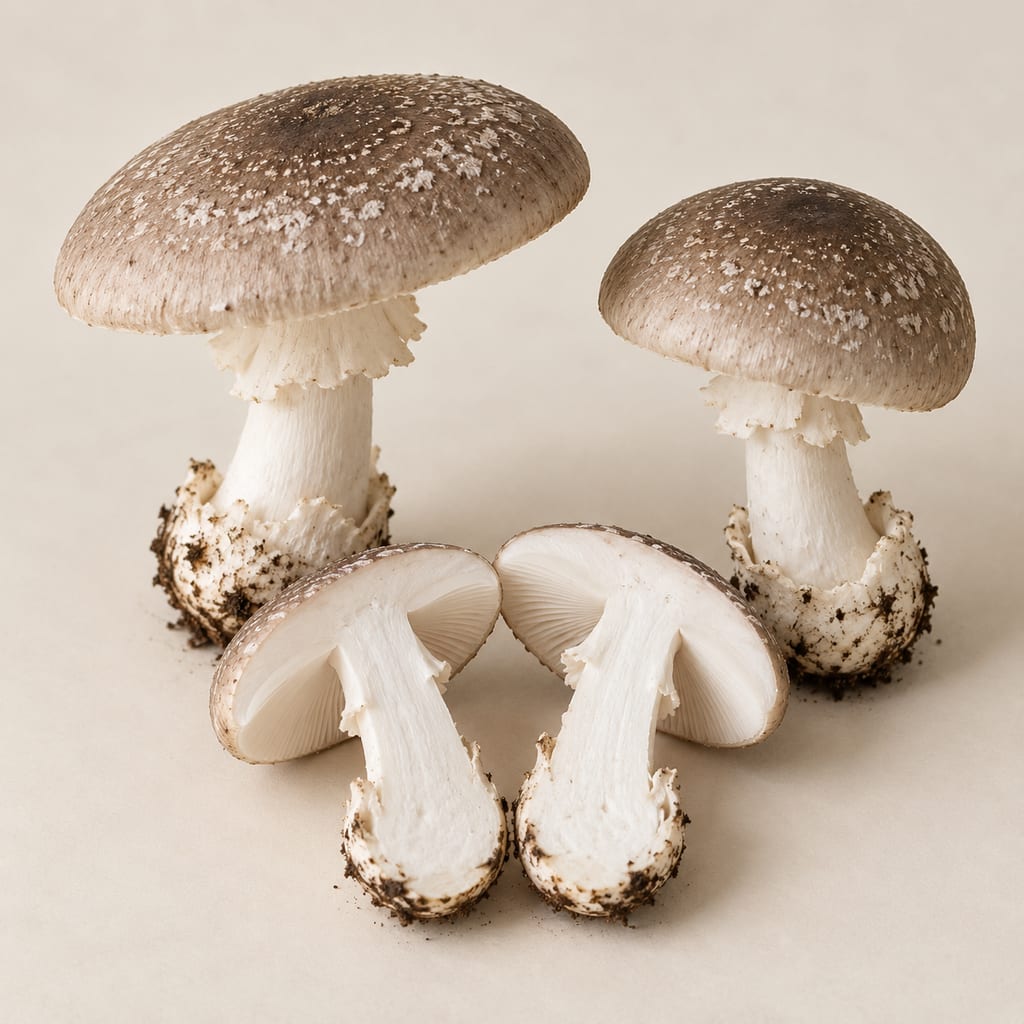
Amanita yuaniana is a Chinese Amanita that a 2023 Yanshan survey and a Yunnan ethnomycology survey list among edible species. No source tests it for safety, and the genus holds the most lethal mushrooms.
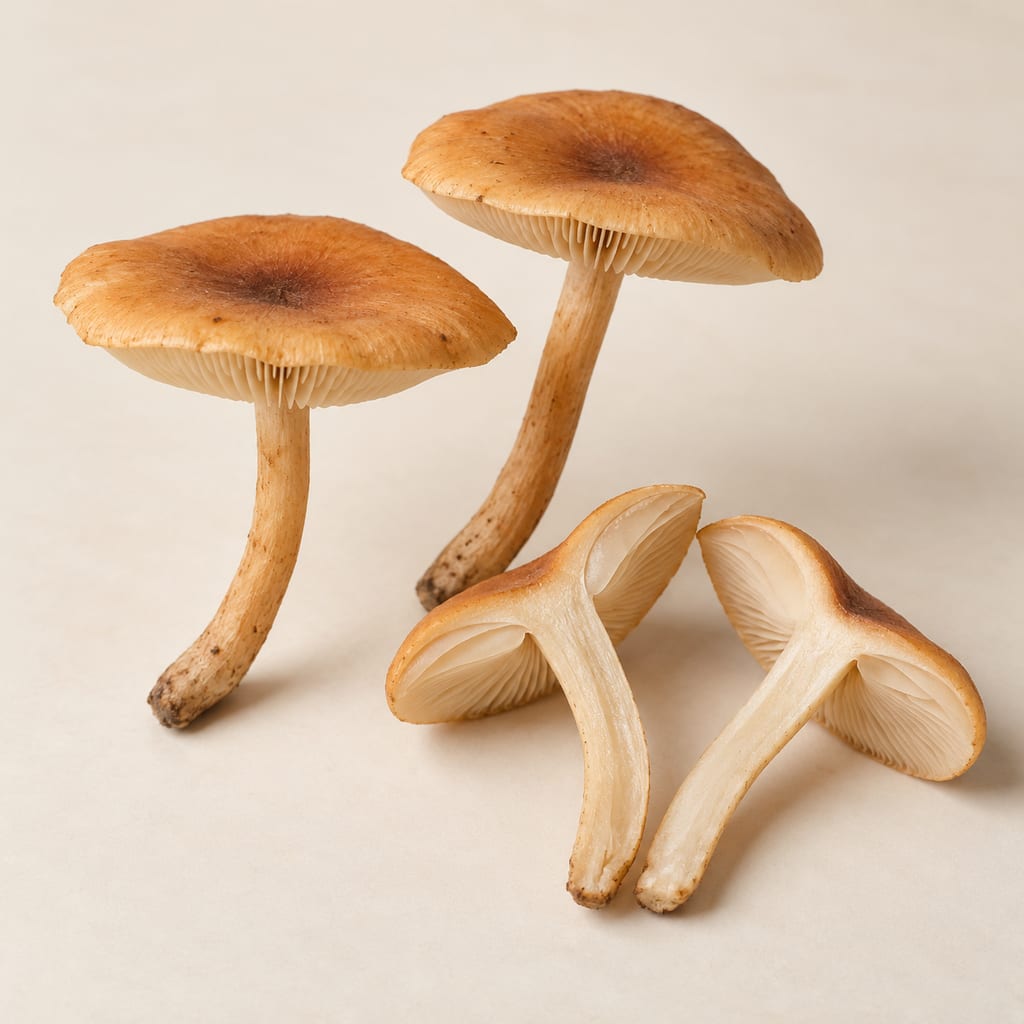
A wood-associated Armillaria recorded in Yunnan and Sichuan, China, and listed as edible in a 2026 Chinese catalogue.
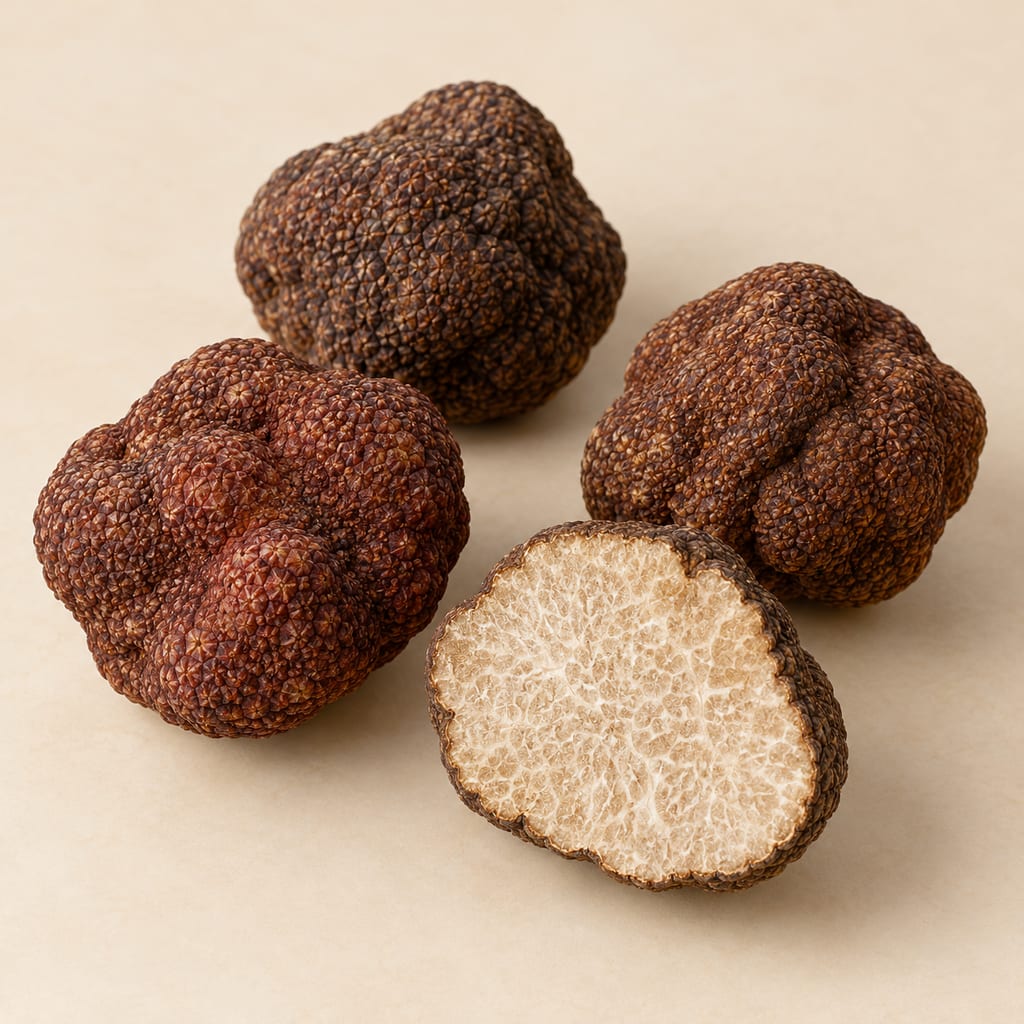
Tuber pseudohimalayense is a wild black truffle from Yunnan, China, listed as edible in a Chinese species catalogue. No independent assessment of its culinary use or safety is available.
No community contributions have been published for this entry yet.
Sign in to contribute. Published comments and photos are free to read.
MycosphereIdentity · History · Distribution
Finding correct names for economically important chanterelles (Cantharellus, Hydnaceae, Cantharellales) in southwestern ChinaType-focused multilocus study: C. tuberculosporus is a distinct, very rare Himalayan species close to C. cibarius.
Type from Baga, Xizang, collected 28 July 1975; recollection HKAS 94043 / BF1659 on 31 July 2014 in mixed Pinus densata and oak forest.
The original tuberculate spores were regarded as an artifact of dehydration; the type spores are smooth.
The name was applied broadly and incorrectly to marketed yellow chanterelles.
Cited in: A rare yellow chanterelle of the Himalayan highlands; A disputed name; Where and when it grows; Food status and safety
MycosphereIdentity · Distribution · Season
Species diversity, taxonomy, distribution and multi-gene phylogeny of chanterelles in ChinaAccepts C. tuberculosporus; describes a 4 to 8 cm cap and pale-yellow to orange decurrent folds.
Basu Town, Changdu, collection of 25 July 2024 (GDGM97266).
Mixed or coniferous forest of Sichuan and Xizang at about 3,500 to 3,700 m; distinguishes C. versicolor by larger fruitbodies and spores and by Abies habitat.
Cited in: A rare yellow chanterelle of the Himalayan highlands; A disputed name; Where and when it grows
MycologyFood · Distribution
Diversity of macrofungi in southeast Xizang, China 2Reports voucher KUN-HKAS 94043 from Milin County as edible; checklist evidence only.
Cited in: Food status and safety
IUCNConservation
IUCN Red List assessment of Cantharellus tuberculosporusData Deficient; distribution and habitat knowledge described as deficient.
Cited in: Conservation status
Ministry of Ecology and Environment of ChinaConservation
Redlist of China's Biodiversity: Large Fungi VolumeListed as Near Threatened in 2018, a classification that predates the later taxonomic and field work and conflicts with the IUCN assessment.
Cited in: Conservation status
National Museum of Natural Science, TaiwanImages
National Museum of Natural Science, Taiwan, catalogue item F0037381Specimen labelled C. tuberculosporus from Mt. Xue, Taiwan, 2019, with no DNA recorded; the identification is not confirmed by the multilocus evidence.