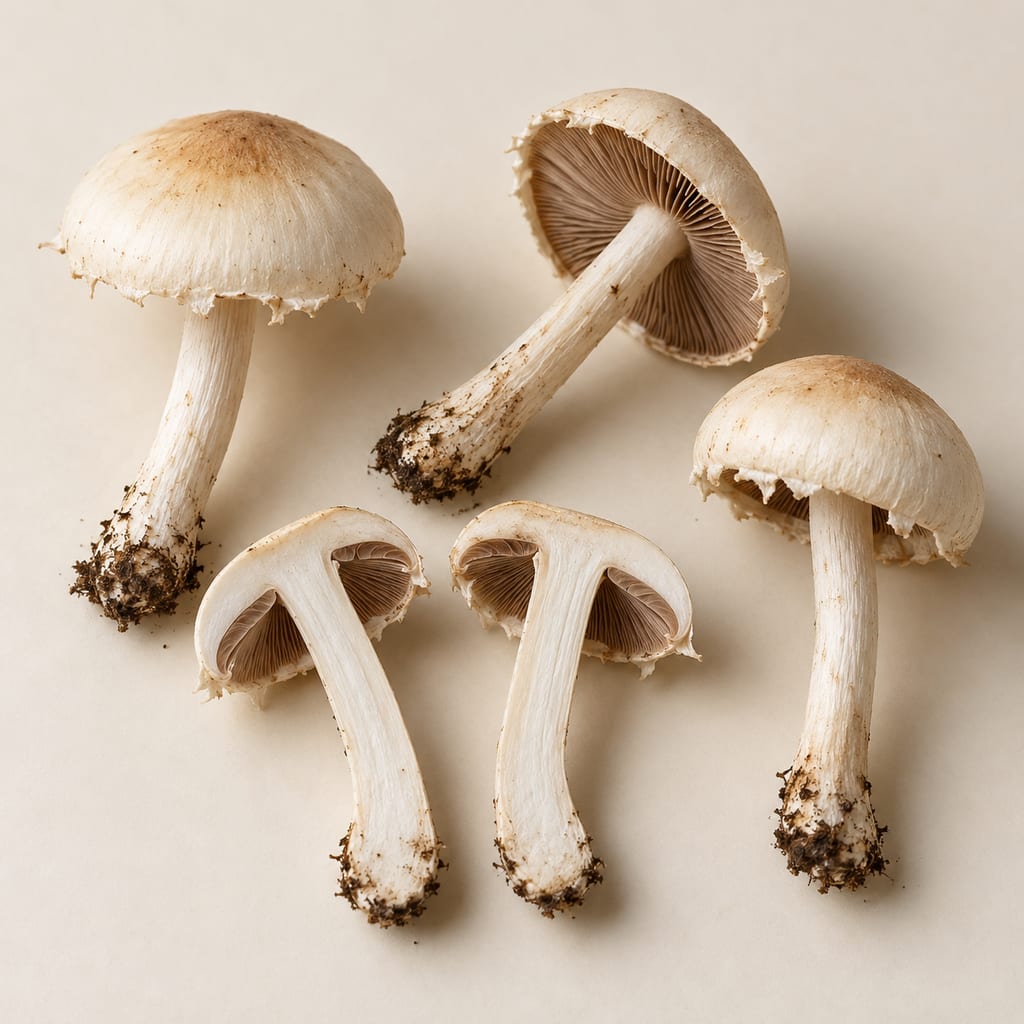
Agrocybe dura
A grassland agaric listed as edible in historical and scientific catalogues for Hong Kong and China. Taxonomic concepts and practical food value vary; the listings do not establish safe identification or culinary practice.
 FermenteaWhere food goes to change
Mushrooms
Caojizong, Amanita caojizong, is a wild mushroom traded in Pu'er markets in Yunnan, China, recorded as edible; it belongs to a genus with deadly species and is sold beside a poisonous look-alike.
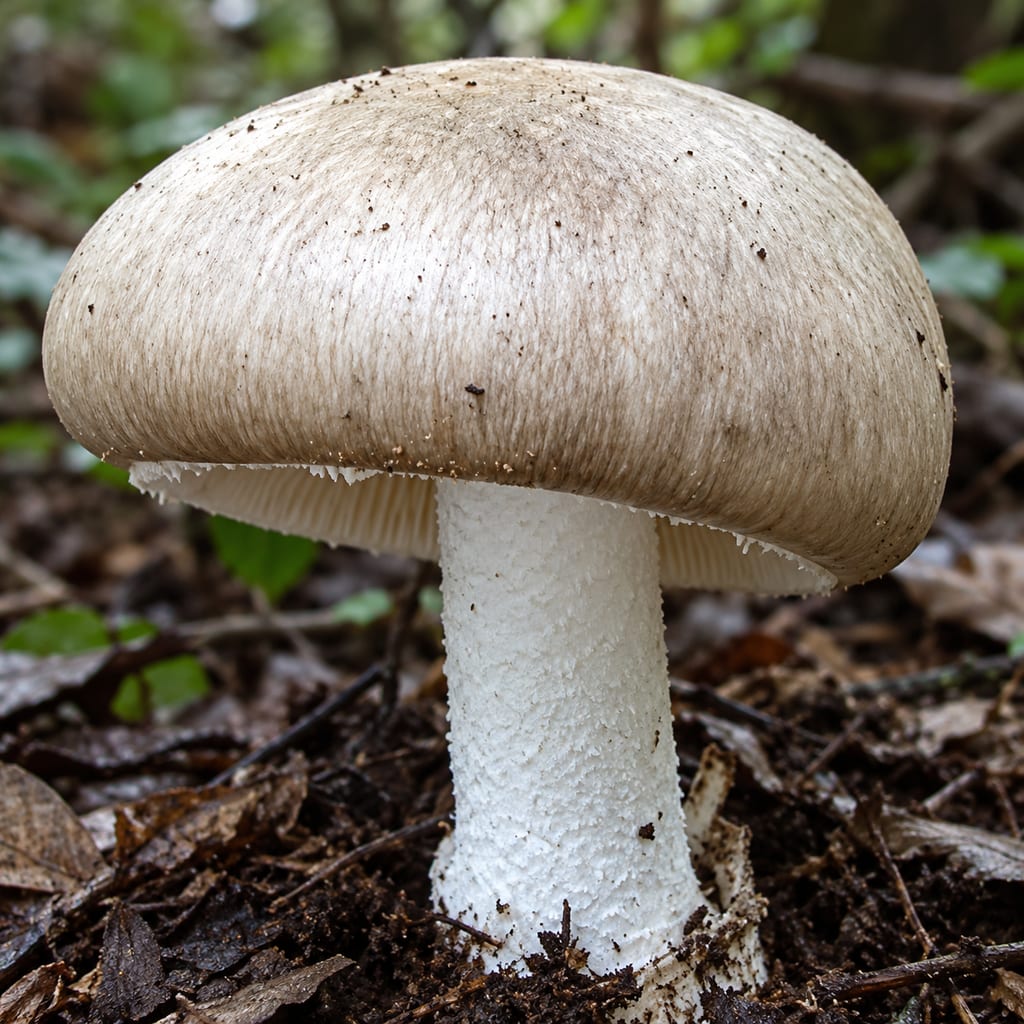
Caojizong is the common name of Amanita caojizong, a mushroom of the large genus Amanita. In Chinese markets it is among the wild fungi sold fresh from the forests of Yunnan. The name is a local name, and the species carries an English common name, Chiu's false death cap, that reflects its resemblance to the deadly species of the genus.
The catalogue lists the caojizong record as a food, market and specialist edible-fungi record from China, and a recent Chinese catalogue includes it.
The species was described under an older name, Amanita manginiana sensu W.F. Chiu. The current name, Amanita caojizong, was given in a 2018 revision by Cui and colleagues, according to the Wikipedia entry. The catalogue treats the name as a research name and does not validate it against current taxonomy, so the identity should be checked against the primary taxonomic work before use in a record of a specific specimen.
Pu'er is one of the great wild-mushroom regions of China. The ethnomycological survey of the prefecture recorded 283 species, varieties and undescribed taxa, most of them ectomycorrhizal. Vendors in Pu'er markets and collectors in the forest supplied the information on which the record of caojizong rests.
The survey lists caojizong as edible. Local cooks prepare it in several ways, but the sources reviewed do not give the methods, quantities or dishes. The survey also notes that large-scale commercial harvesting has been followed by declining mushroom production in parts of the prefecture.
Amanita contains some of the most dangerous mushrooms in the world, and caojizong is visually similar to species that are poisonous. The Wikipedia entry reports that a poisonous species, Amanita pseudoporphyria, is sold in Yunnan free markets mixed with caojizong, and that a 2000 case of delayed kidney injury followed eating the poisonous species.
Because of this, the Wikipedia entry advises against eating caojizong without expert identification, and that advice matches the warning in the catalogue: the genus contains deadly species, and inclusion in a catalogue must never be used to identify a specimen for eating.
This page is not an identification guide and gives no edibility verdict for any specimen. Mushrooms of this genus should not be gathered or eaten on the strength of a market, a catalogue or a page like this one. Market sellers are not a safety control, and mixed markets have sold poisonous species beside edible ones.
Any person who has eaten an Amanita and feels unwell should seek urgent medical care, and should keep a sample for identification.
The sources reviewed give no preparation, no quantity, and no ecological detail beyond the statement that the species is ectomycorrhizal and that its forest tree partner needs species-level checking. The full survey tables should be checked before the record is extended.
Recorded in market and collector interviews in Pu'er Prefecture; the catalogue also places it in a recent Chinese catalogue.
A grassland agaric listed as edible in historical and scientific catalogues for Hong Kong and China. Taxonomic concepts and practical food value vary; the listings do not establish safe identification or culinary practice.
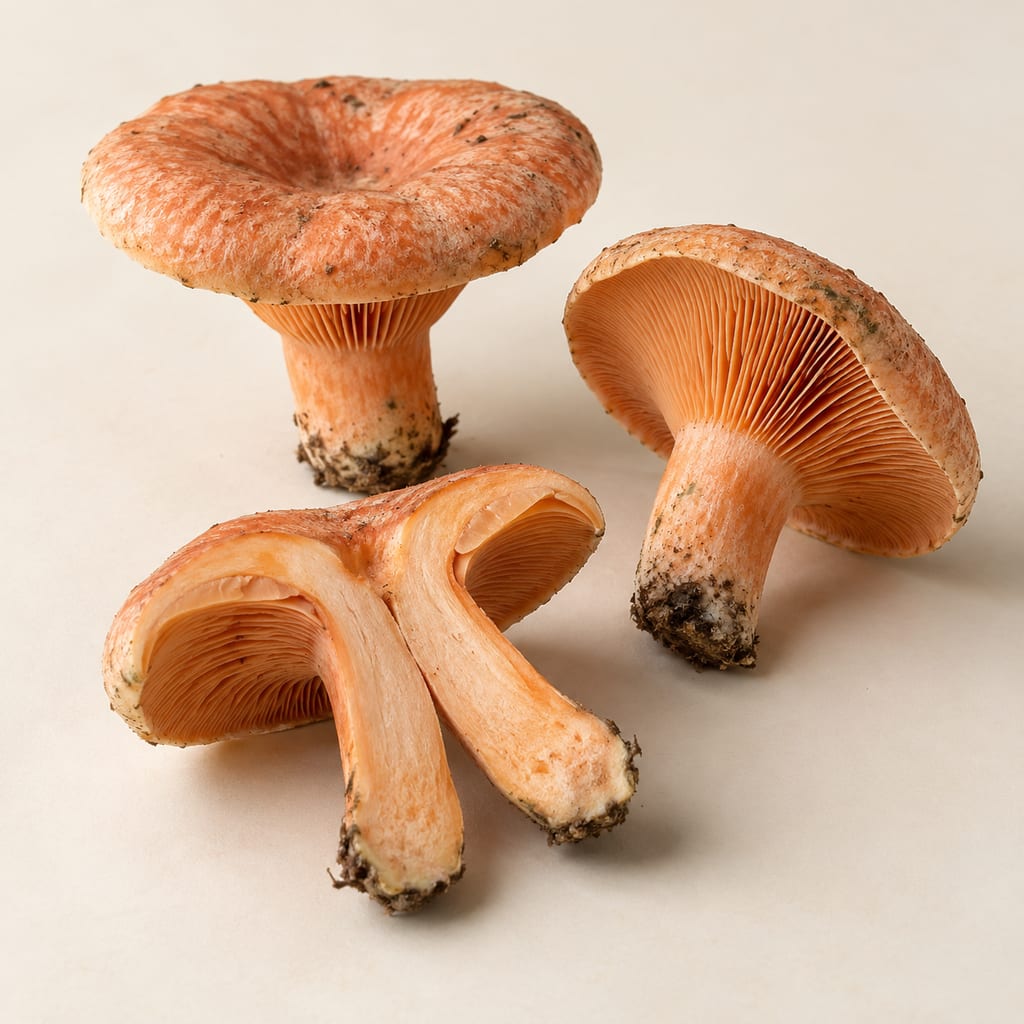
Akahatsu, Lactarius akahatsu, is a wild milkcap of East Asian pine and mixed forests that is sold in Yunnan markets, with its edibility and identity still needing species-level review.
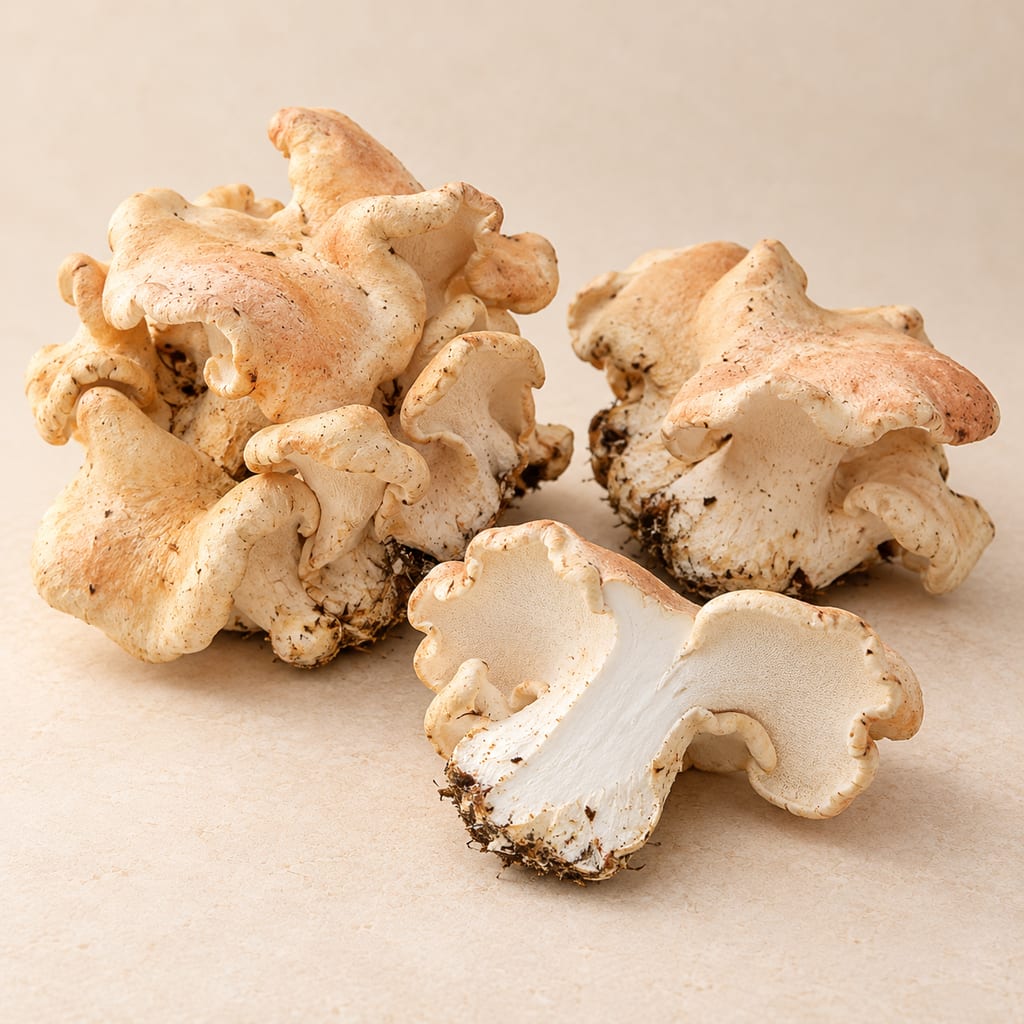
Albatrellus confluens is a ground-growing polypore with fused buff-orange caps. Sources document Chinese market use and regional edibility, but others reject it as too bitter; taxonomy also varies between Albatrellus and Albatrellopsis.
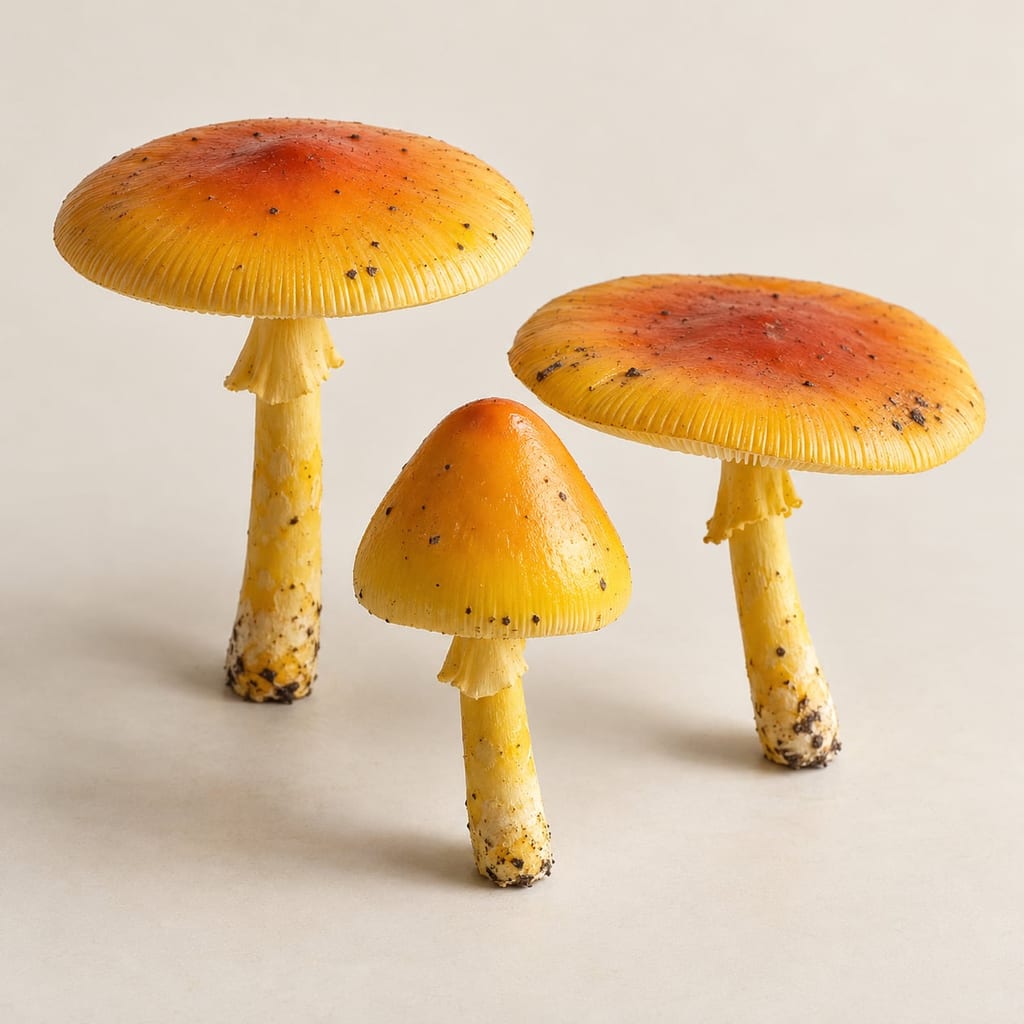
A wild Amanita recorded from China in a 2026 checklist of edible and medicinal fungi. The genus holds deadly species, so this page gives no identification or edibility verdict.
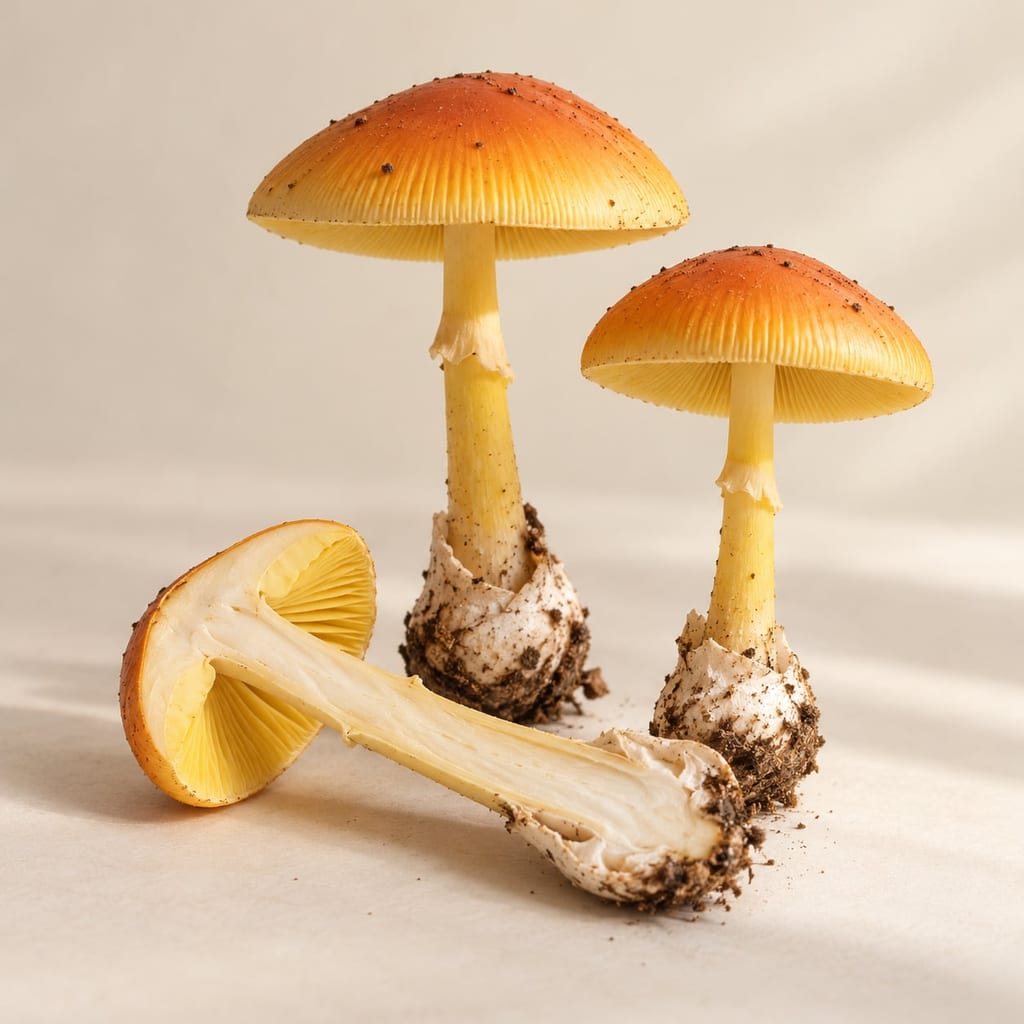
A wild Amanita of China, first reported there and listed as edible in a Yunnan ethnomycology study. The genus contains deadly species, so this page does not support identifying or eating it.
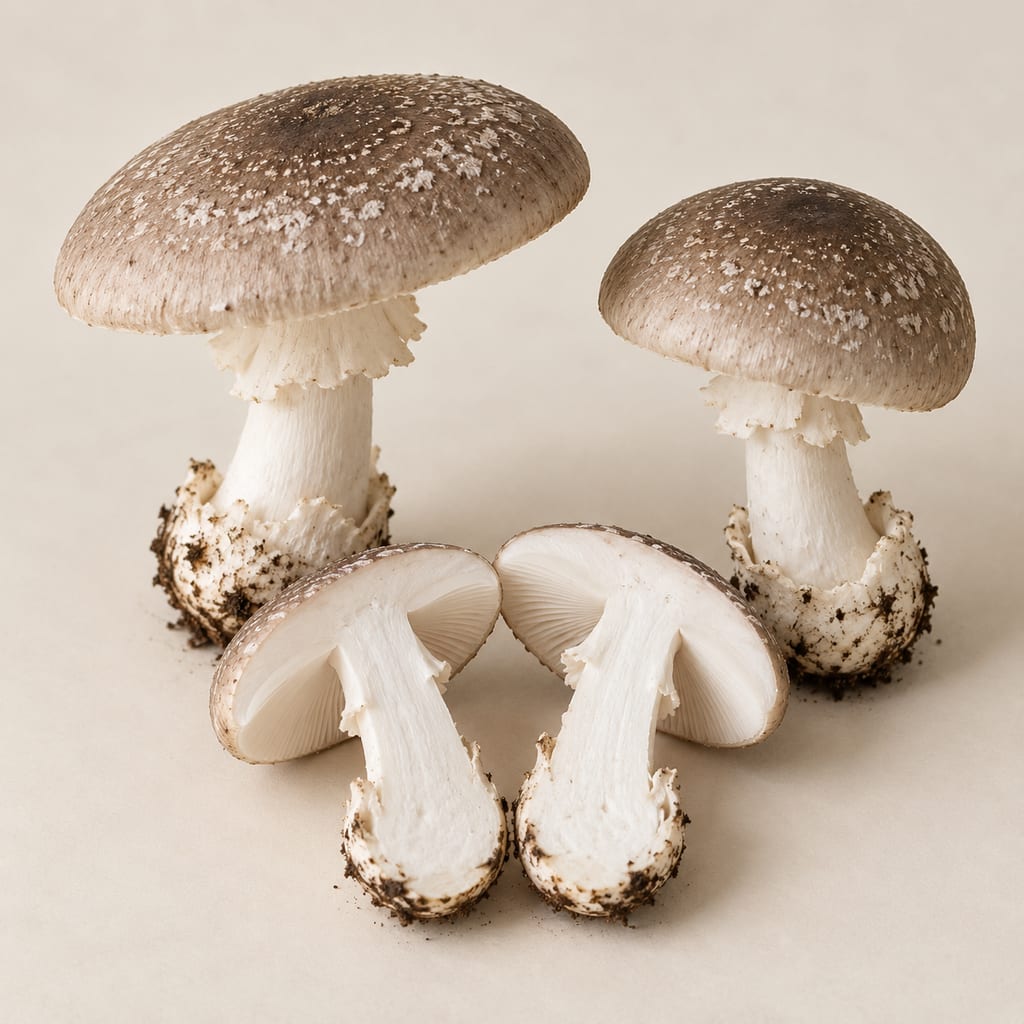
Amanita yuaniana is a Chinese Amanita that a 2023 Yanshan survey and a Yunnan ethnomycology survey list among edible species. No source tests it for safety, and the genus holds the most lethal mushrooms.
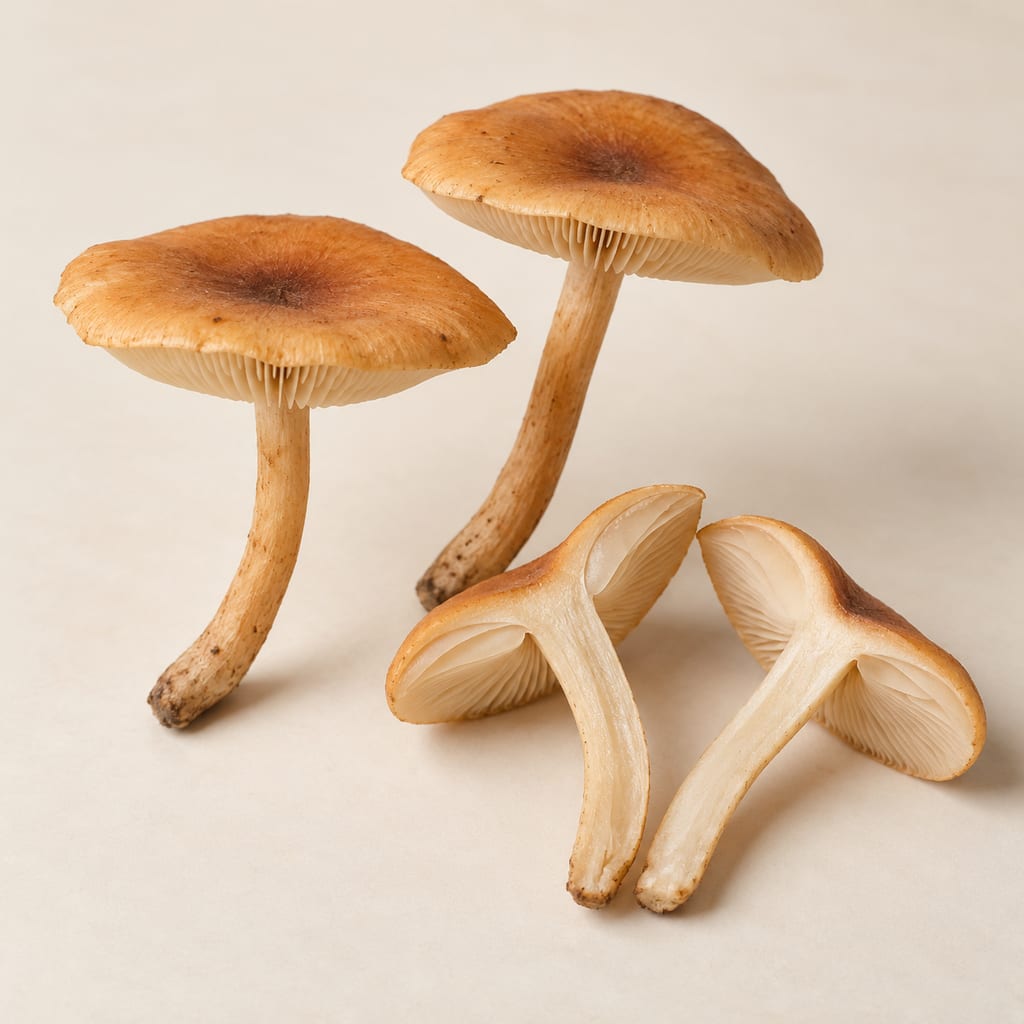
A wood-associated Armillaria recorded in Yunnan and Sichuan, China, and listed as edible in a 2026 Chinese catalogue.
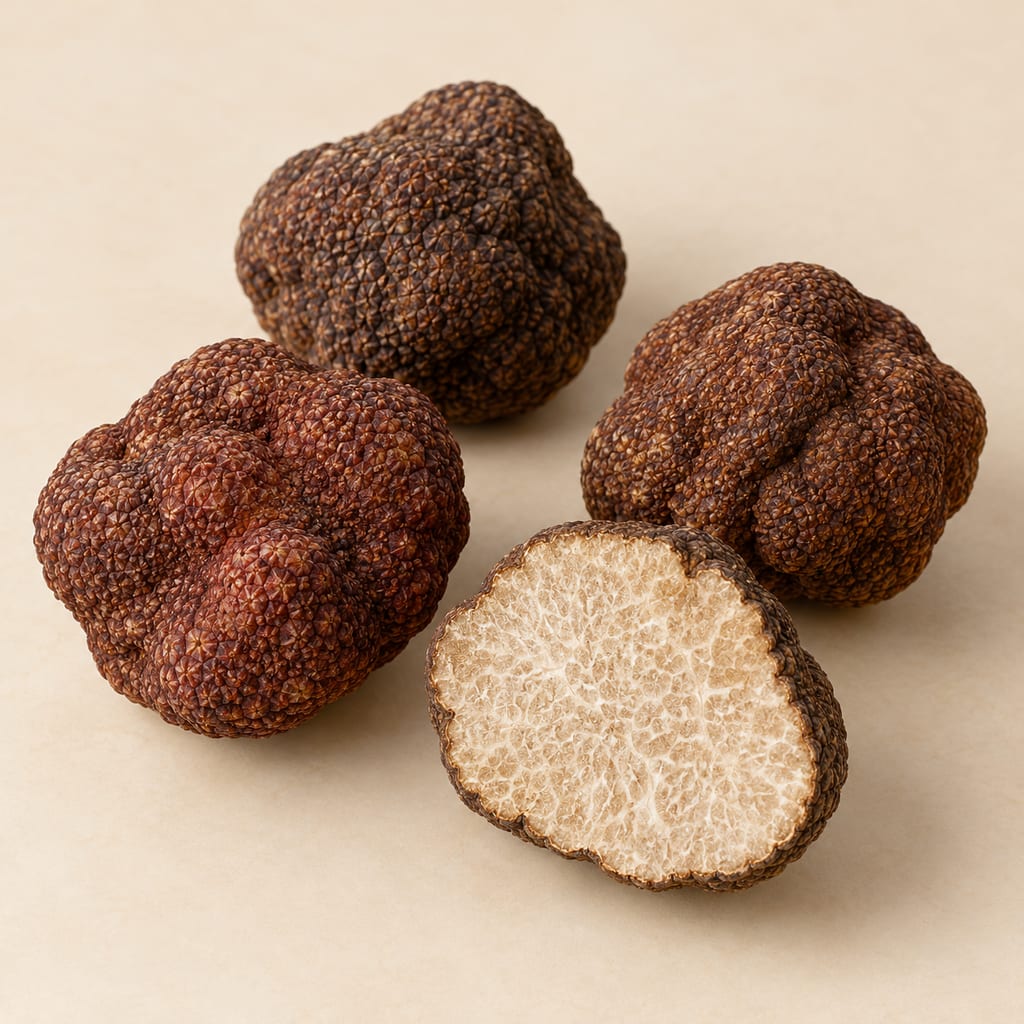
Tuber pseudohimalayense is a wild black truffle from Yunnan, China, listed as edible in a Chinese species catalogue. No independent assessment of its culinary use or safety is available.
No community contributions have been published for this entry yet.
Sign in to contribute. Published comments and photos are free to read.
Journal of Ethnobiology and Ethnomedicine (PMC)Food use · Market · Identity
Ethnomycological study on wild mushrooms in Pu'er Prefecture, Southwest Yunnan, ChinaSurvey of 283 species, varieties and undescribed taxa from wild Pu'er habitats, about 70 percent of them ectomycorrhizal.
Interviews with mushroom vendors in markets and with collectors in natural habitats.
Read from the search summary of the paper and its tables; not the full text.
Cited in: Market and use in Pu'er
Journal of Ethnobiology and EthnomedicineFood use · Edibility
Table from the Pu'er ethnomycological survey (Journal of Ethnobiology and Ethnomedicine, 2022, doi 10.1186/s13002-022-00551-7)Records Amanita caojizong as an edible mushroom sold in Pu'er markets.
Read from the search summary; the supplied article page redirected to a sign-in page.
Cited in: Overview; Market and use in Pu'er; Safety; Open points
WikipediaIdentity · Safety · History
Amanita caojizong (Wikipedia)Gives the former name Amanita manginiana sensu W.F. Chiu and the common name Chiu's false death cap; the name was assigned in Cui et al. (2018).
Reports that the species is sold in Yunnan markets mixed with Amanita pseudoporphyria, a poisonous species, and records a 2000 kidney-injury case after eating the poisonous species.
Used as a lead; the Wikipedia entry is secondary and was not checked against the cited papers.
Cited in: Overview; Names and taxonomy; Look-alikes and the market risk; Safety