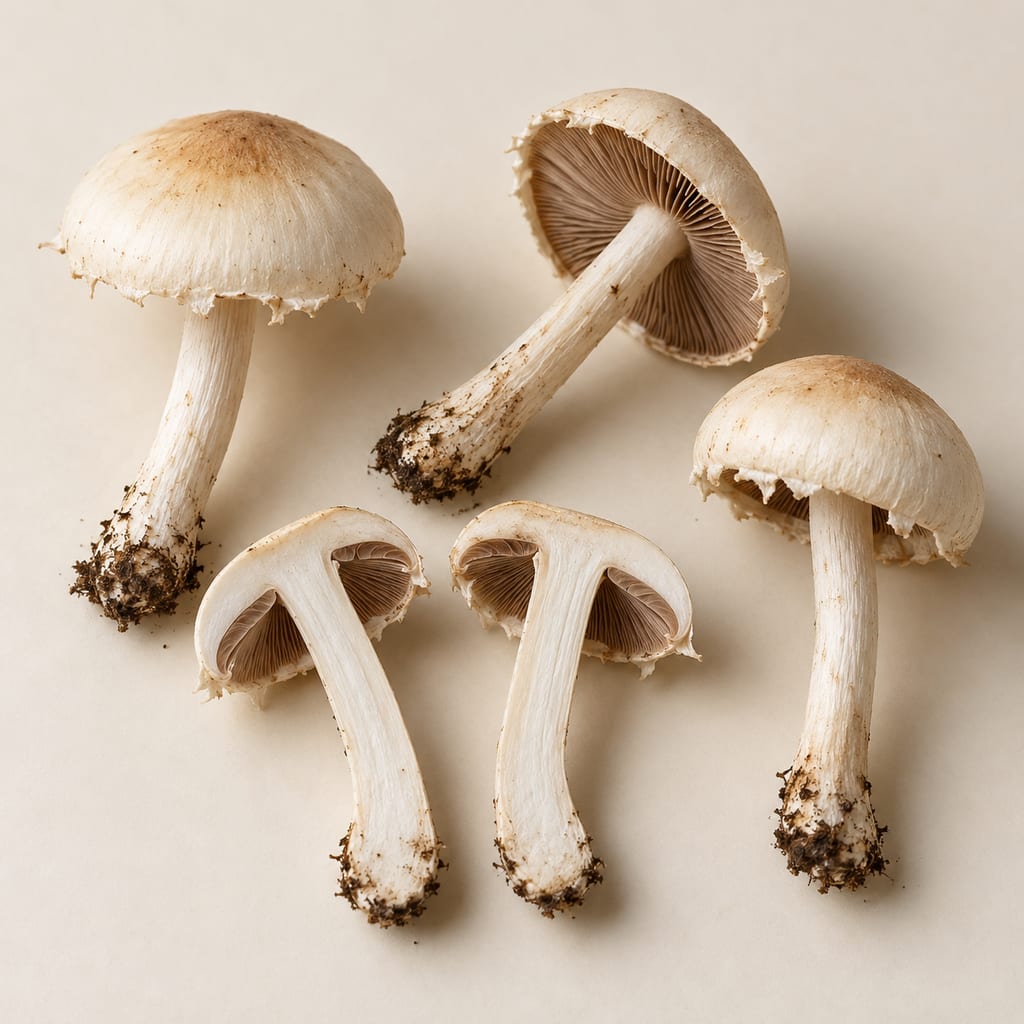
Agrocybe dura
A grassland agaric listed as edible in historical and scientific catalogues for Hong Kong and China. Taxonomic concepts and practical food value vary; the listings do not establish safe identification or culinary practice.
 FermenteaWhere food goes to change
Mushrooms
The Chinese black truffle, Tuber indicum, is a wild truffle of the Himalayas and southwest China. It is harvested in Yunnan and Sichuan, sold as a lower-priced relative of the Perigord truffle, and often sold fraudulently under its name.
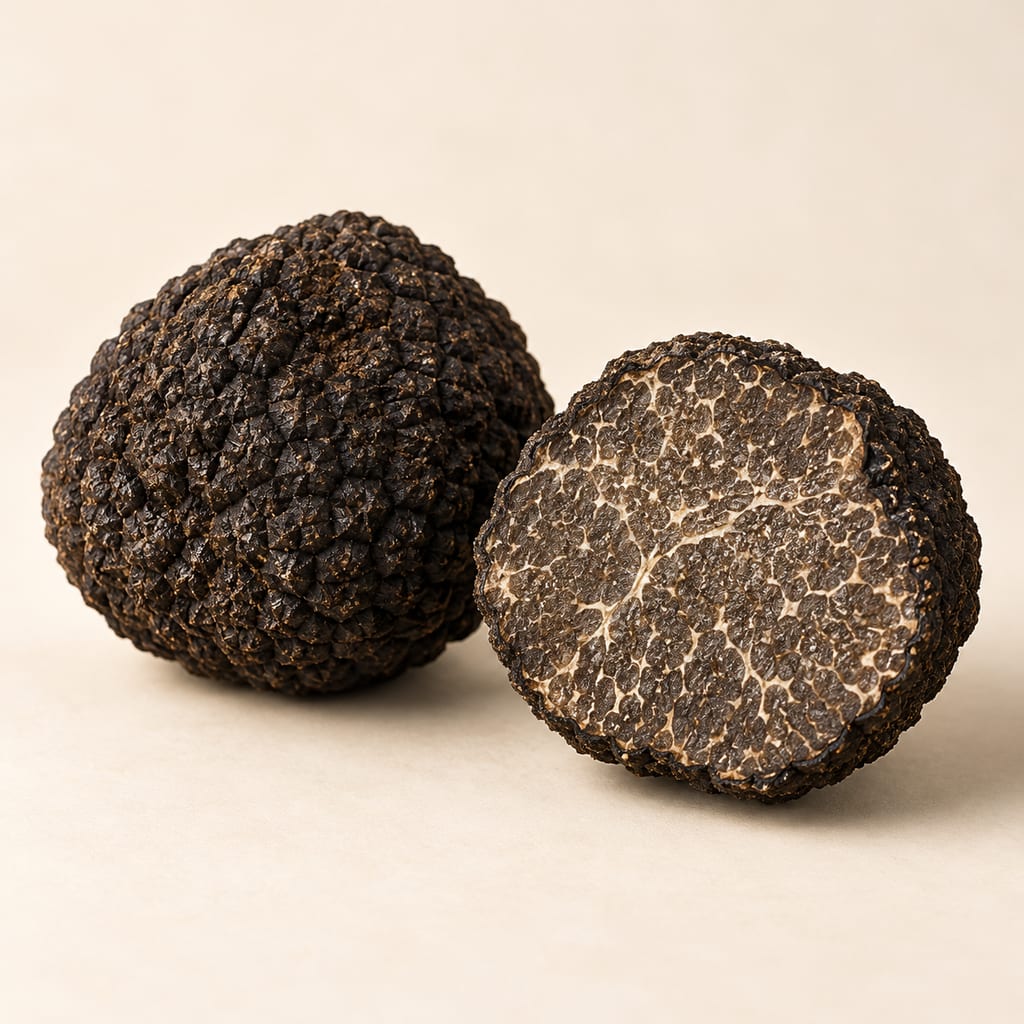
The Chinese black truffle, Tuber indicum, is an underground fungus that forms a mycorrhizal partnership with the roots of pines, oaks and chestnuts. It is native to the Himalayas and parts of China, and it is harvested wild. In China it is sold mainly from Yunnan and Sichuan, and it has become a major export.
The truffle has a dark brown, lumpy exterior and a reddish-purple to black interior with white veins. Its aroma is strong enough to attract animals, which spread its spores in their droppings.
The species was described by Cooke and Massee in 1892 from the Himalayas and is named for India. It is now treated as a species complex. Molecular work suggests that T. indicum and T. sinense may be one species, and the Yunnan export population is proposed to be T. sinense. Some researchers suggest the name T. indicum complex, because the species are hard to tell apart by appearance.
The Chinese name is zhugongjun, meaning pig-humped fungus, a reference to the fact that Yunnan locals once fed the truffle to pigs. The catalogue records the name Tuber indicum as a research label rather than a reconciled accepted name, so records should be checked against current taxonomy.
The fungus is hypogeous, so it grows and is collected below ground. It is ectomycorrhizal with pines such as Pinus armandii, oaks such as Quercus pubescens and chestnuts such as Castanea mollissima. In Yunnan it ripens from November to February, with the best harvest from November to January.
Local people in Sichuan and Yunnan gathered the truffle long before it had a market. Trade in it is now a large rural industry. China is the largest truffle exporter by mass and by value, and domestic consumption is rising.
Overharvesting, including the picking of immature specimens, has damaged wild stands. Yunnan authorities have issued woodland-maintenance guidelines, and the species was preliminarily assessed as Near Threatened in 2013. The sources do not describe commercial cultivation of this species.
The species is rated as choice for edibility in its infobox, and it is sold commercially as a truffle. It is sold commercially as a truffle that is distinct from the Perigord truffle.
The sources note that it is often sold fraudulently as Tuber melanosporum. One chemical study identified volatile compounds that separate the two species and proposed them as screening markers. This matters for buyers, because the product sold as T. indicum is not the same as the Perigord truffle.
The sources reviewed give no toxicity or safety statement for Tuber indicum, and no cooking method or safe quantity. Sources do not treat its edibility as a safety verdict, and this page does not add one.
Appearance, smell and taste do not establish that a truffle is safe to eat. Identify wild truffles with a qualified expert and follow official food safety advice before eating any wild fungus.
The sources do not give a regional cooking tradition for the Chinese black truffle, a peer-reviewed review covering use, cultivation and fraud together, or a list of Chinese local names beyond zhugongjun. These are unknown, not negative findings.
Main source provinces named in the sources. Local people have gathered the truffle for a long time, and it is now a commercial product.
Named for India and described from the Himalayas in 1892. The sources reviewed do not document food use there, so the relationship is unknown.
A grassland agaric listed as edible in historical and scientific catalogues for Hong Kong and China. Taxonomic concepts and practical food value vary; the listings do not establish safe identification or culinary practice.
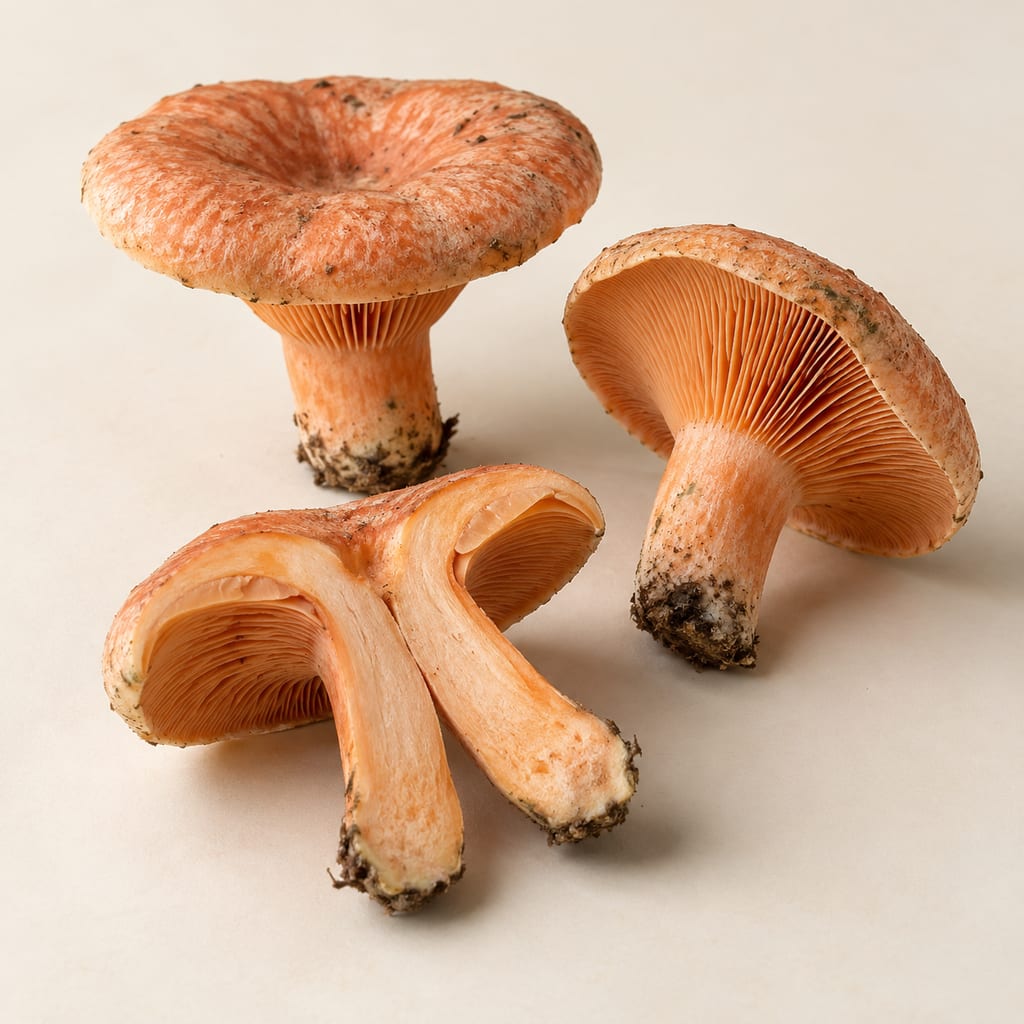
Akahatsu, Lactarius akahatsu, is a wild milkcap of East Asian pine and mixed forests that is sold in Yunnan markets, with its edibility and identity still needing species-level review.
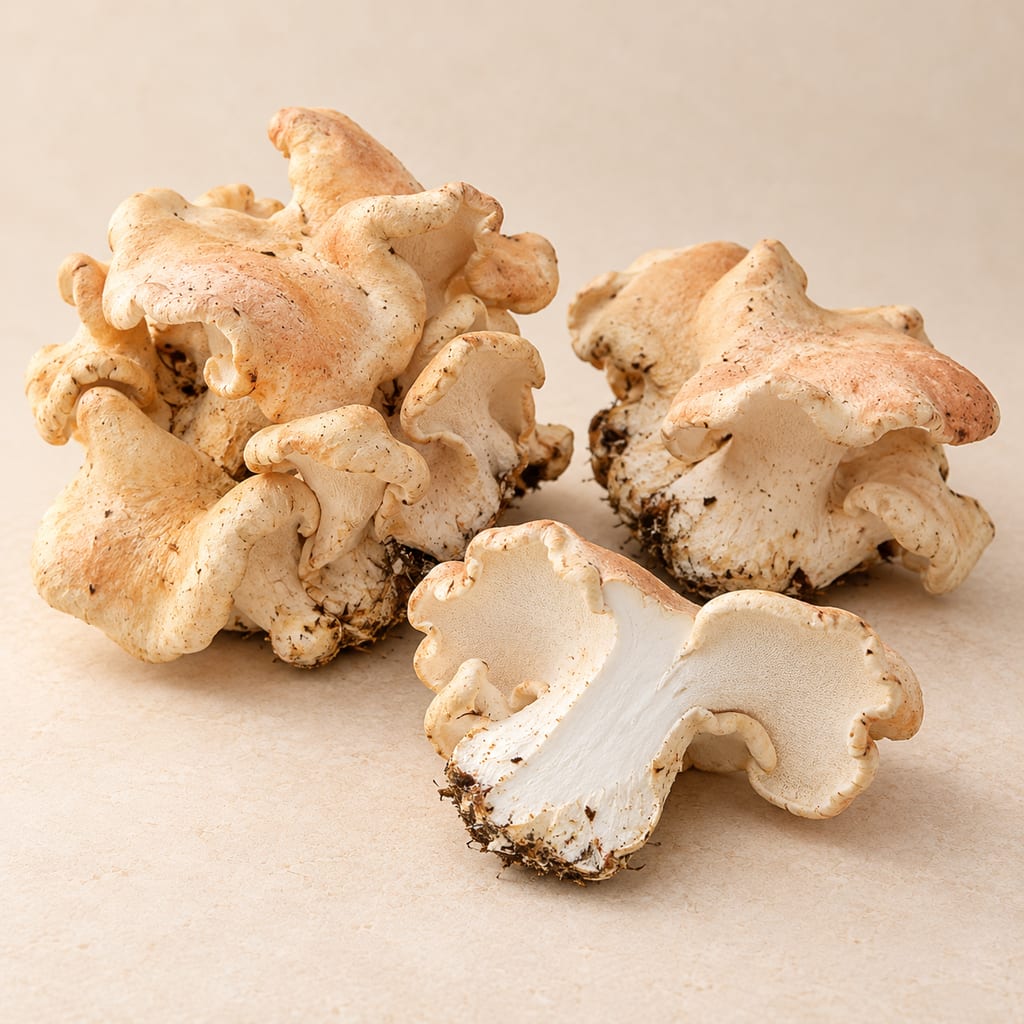
Albatrellus confluens is a ground-growing polypore with fused buff-orange caps. Sources document Chinese market use and regional edibility, but others reject it as too bitter; taxonomy also varies between Albatrellus and Albatrellopsis.
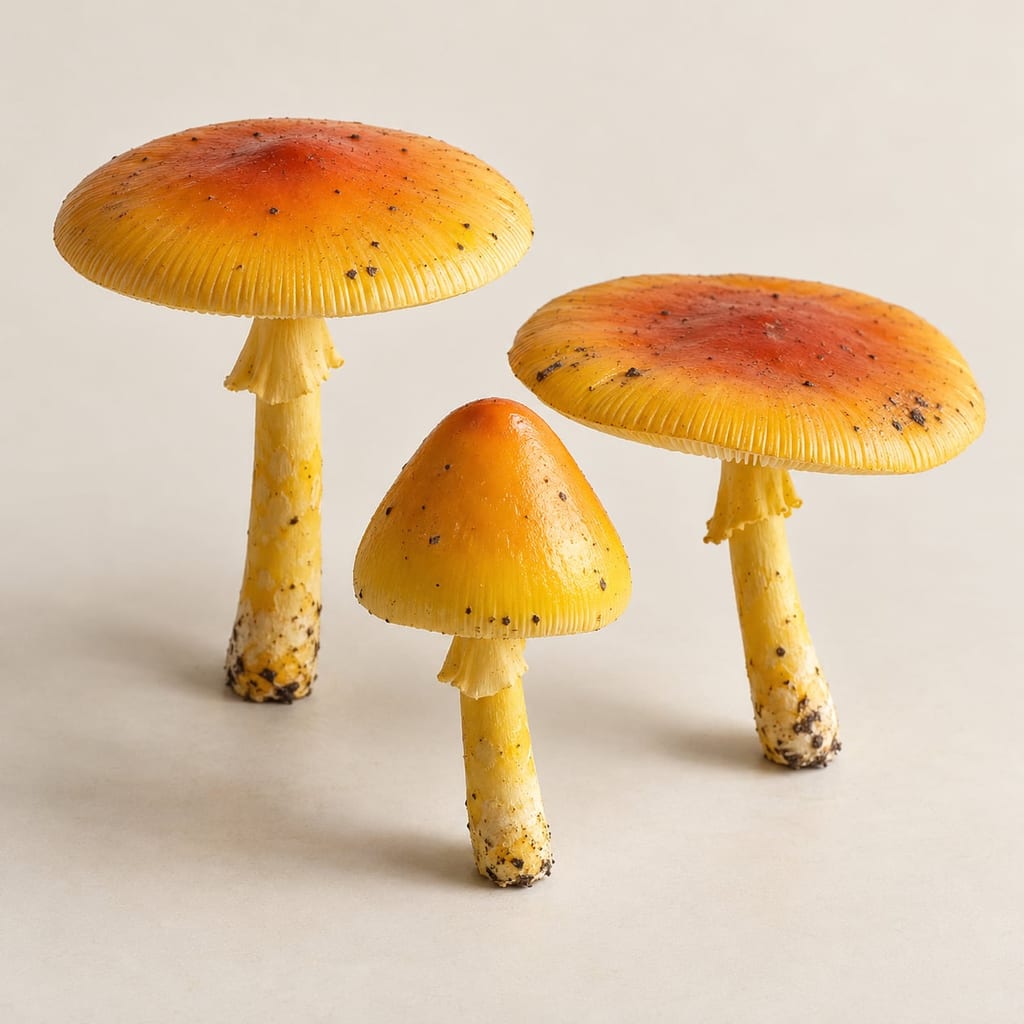
A wild Amanita recorded from China in a 2026 checklist of edible and medicinal fungi. The genus holds deadly species, so this page gives no identification or edibility verdict.
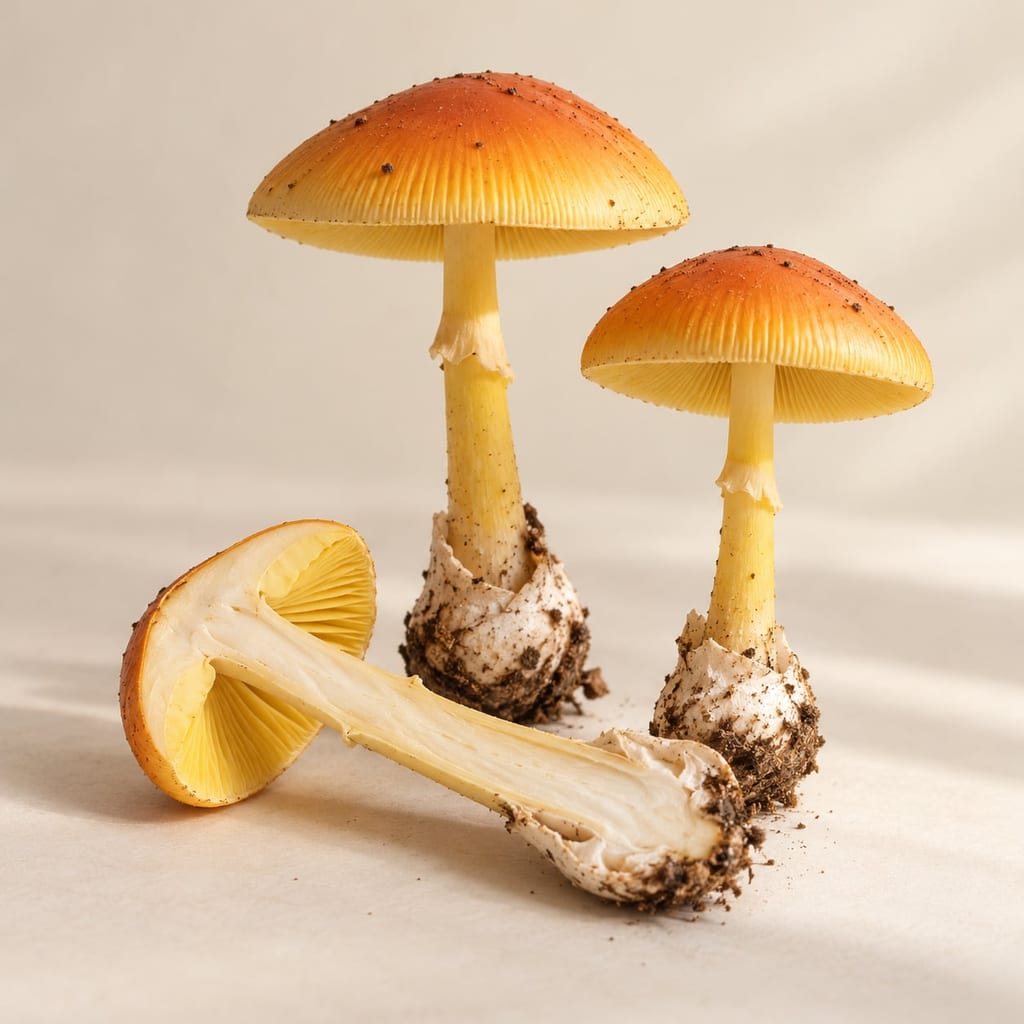
A wild Amanita of China, first reported there and listed as edible in a Yunnan ethnomycology study. The genus contains deadly species, so this page does not support identifying or eating it.
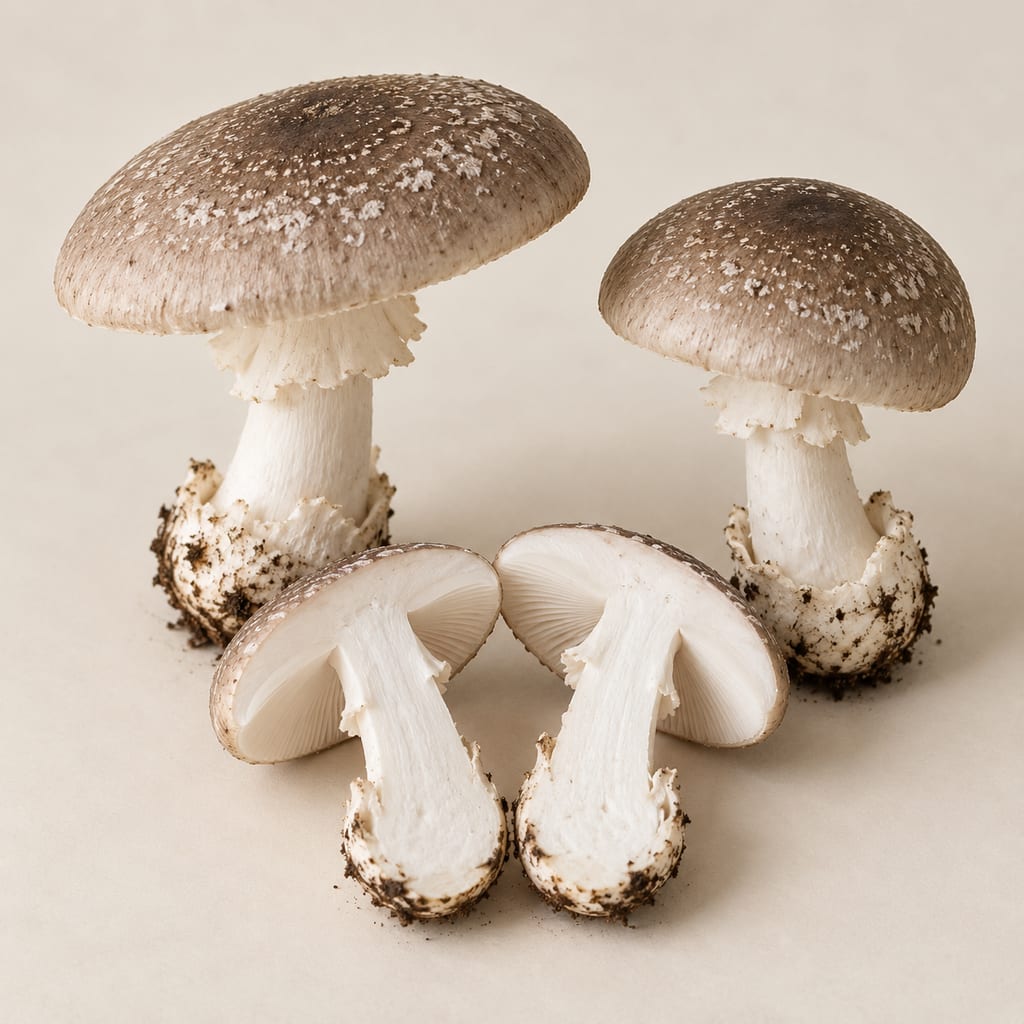
Amanita yuaniana is a Chinese Amanita that a 2023 Yanshan survey and a Yunnan ethnomycology survey list among edible species. No source tests it for safety, and the genus holds the most lethal mushrooms.
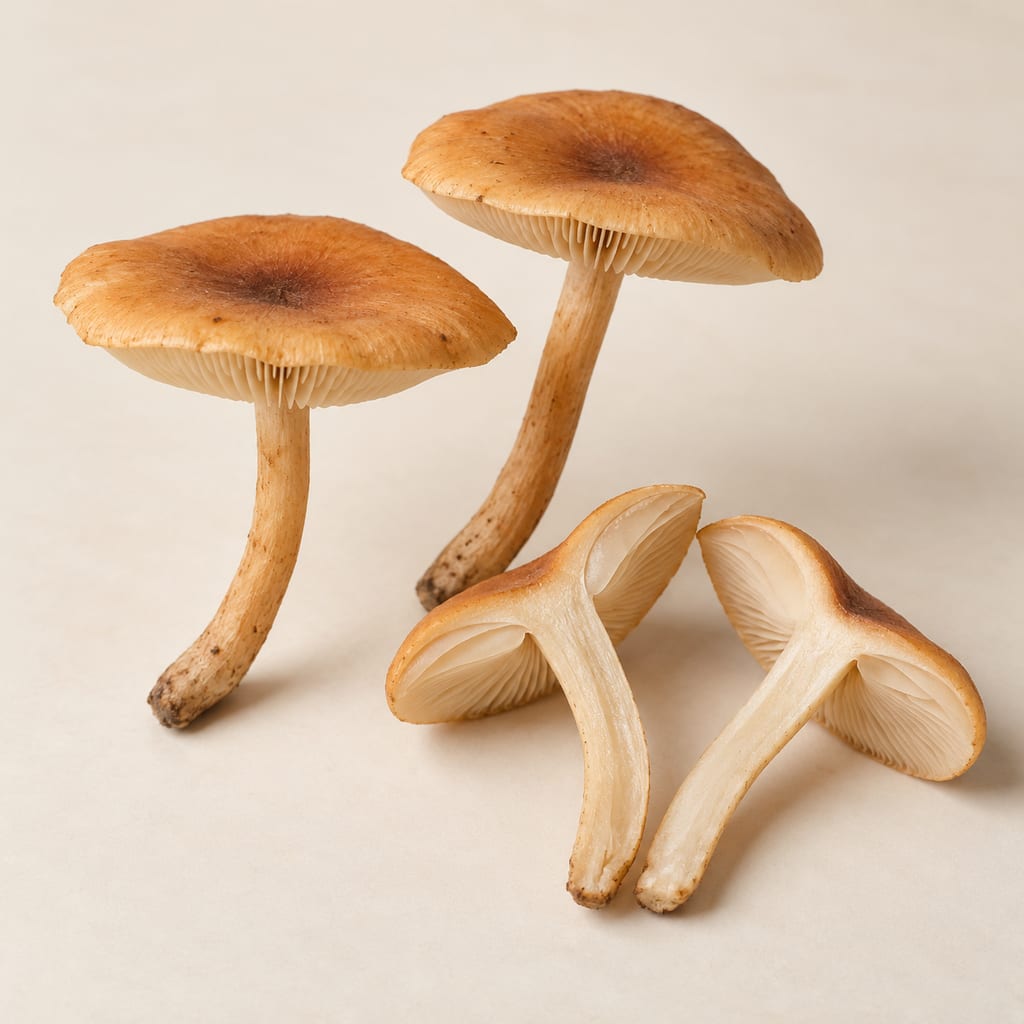
A wood-associated Armillaria recorded in Yunnan and Sichuan, China, and listed as edible in a 2026 Chinese catalogue.
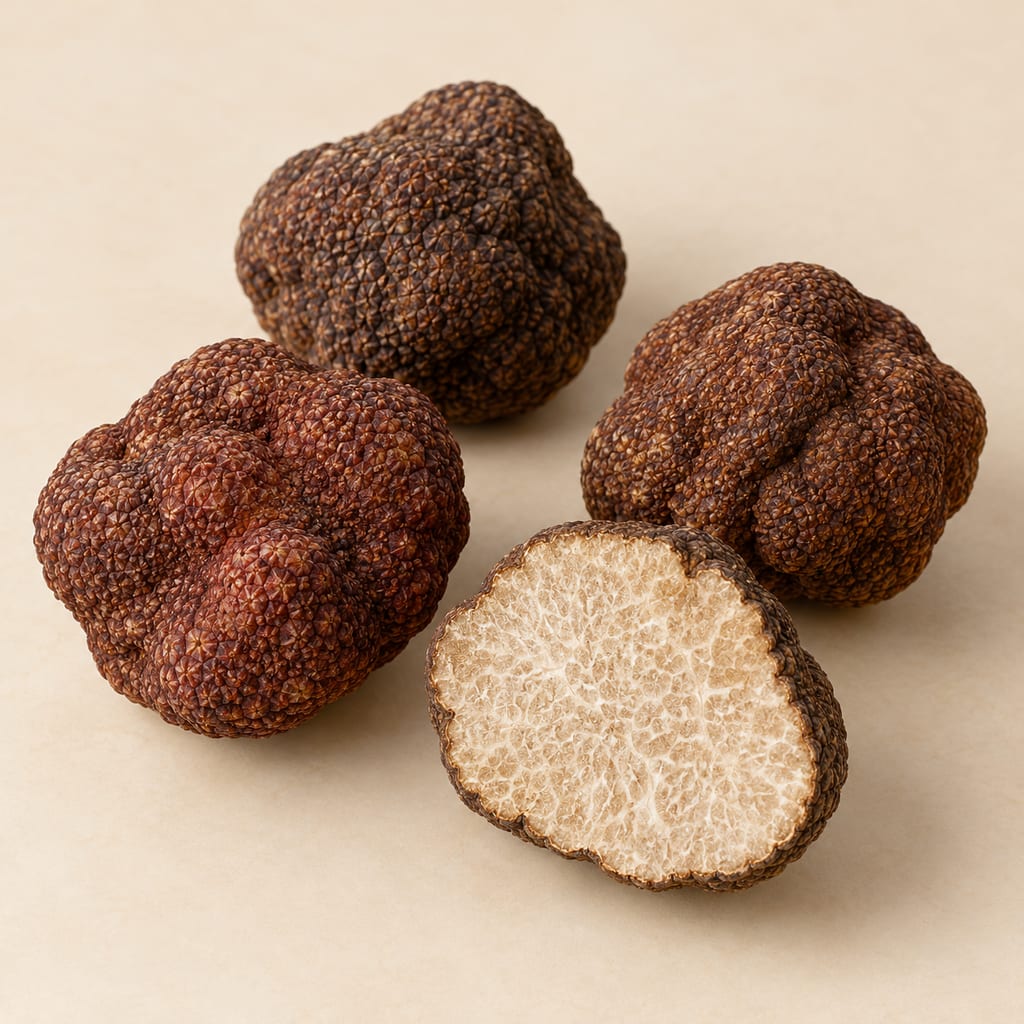
Tuber pseudohimalayense is a wild black truffle from Yunnan, China, listed as edible in a Chinese species catalogue. No independent assessment of its culinary use or safety is available.
No community contributions have been published for this entry yet.
Sign in to contribute. Published comments and photos are free to read.
WikipediaTaxonomy · Description · Habitat · Distribution · Edibility · Market · Conservation
Tuber indicumDescribed by Cooke and Massee in 1892 from the Himalayas; now treated as a species complex with T. sinense proposed for the Yunnan export population
Dark brown, lumpy fruiting bodies; gleba reddish to purplish black with white veins; spore print black; no stipe
Ectomycorrhizal with pines, oaks and chestnuts; ripens November to February in Yunnan
Infobox: Edibility is choice; sold commercially and often sold fraudulently as T. melanosporum
China is the largest truffle exporter by mass and value; domestic consumption is rising
Preliminarily assessed as Near Threatened on the Global Fungal Red List (2013); overharvesting and habitat loss
Cited in: Overview; Names and taxonomy; Habitat and season; Commercial history; Use and quality; Safety; Open questions