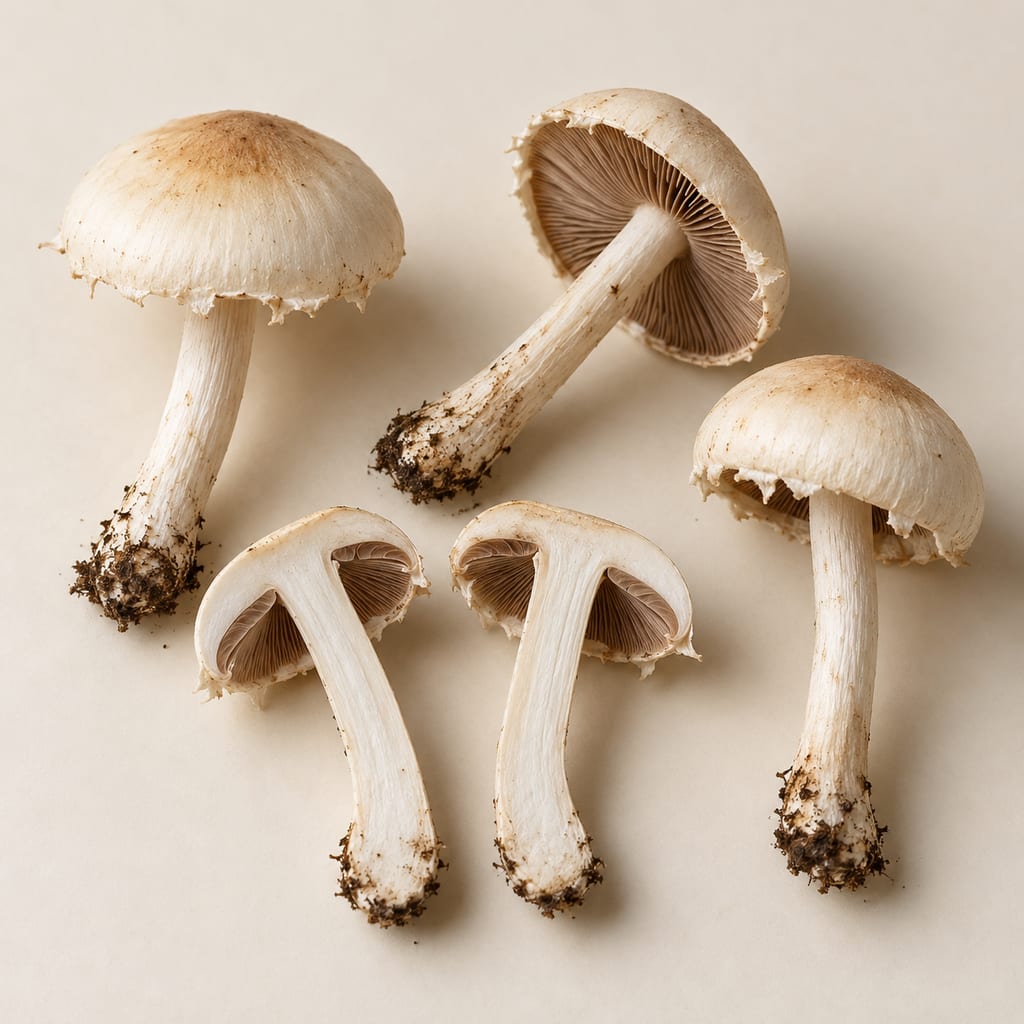
Agrocybe dura
A grassland agaric listed as edible in historical and scientific catalogues for Hong Kong and China. Taxonomic concepts and practical food value vary; the listings do not establish safe identification or culinary practice.
 FermenteaWhere food goes to change
Mushrooms
Dongsun, the Chinese name for Phallus dongsun, a stinkhorn described as a new species in 2020 and grown commercially in China as a food and medicinal mushroom.
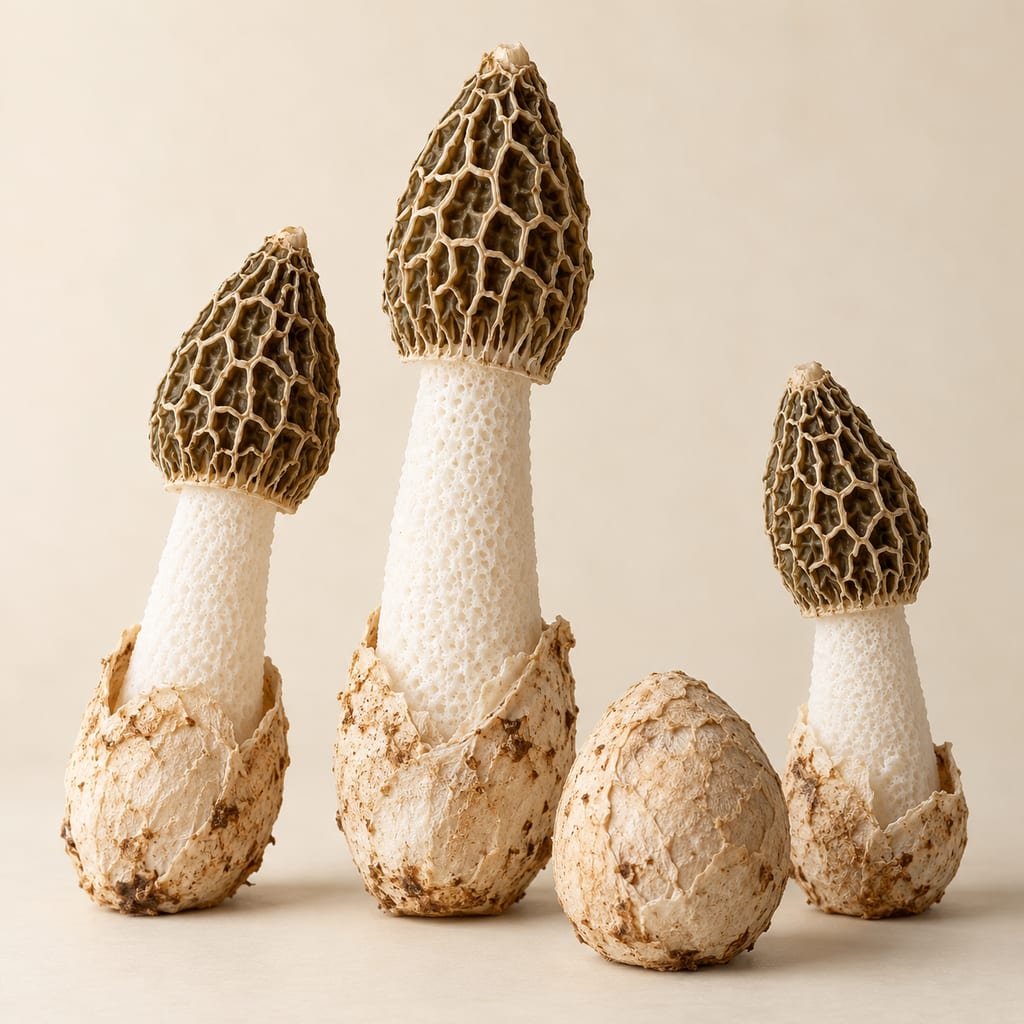
Dongsun is the local name in China for Phallus dongsun, a species of the stinkhorn family Phallaceae. It was described as a new species in 2020, together with Phallus lutescens, from specimens collected in China.
The species was long mistaken for the European Phallus impudicus, and the Chinese crop was once recorded under that name. The catalogue keeps this as a misapplied name: the search alias is Phallus impudicus sensu Chinese Dongsun. The catalogue treats Phallus dongsun as a research name, not a reconciled accepted name, so the page does not merge it with any other taxon.
Dongsun is recorded as a cultivated mushroom. The catalogue places its food use in Guizhou Province and other Chinese regions, and records its supply as regional cultivation rather than wild collection.
Chinese sources describe the mushroom as valued both as food and as medicine. A 2025 genome paper on the species calls it an edible and medicinal fungus in the Phallaceae. The sources read here do not give a cooking method, a dish or a market price, so this page records the use without a recipe.
The catalogue describes the fungus as a soil and plant-litter saprotroph, feeding on dead organic matter rather than forming a tree partnership. A 2025 study compared soil microbial communities in different Phallus dongsun habitats, which suggests that growing sites are a subject of current research.
Safety wording: this page describes what the sources record. It is not an identification guide, and it gives no verdict that any Phallus fungus, wild or cultivated, is safe to eat. The catalogue marks its food-use evidence as food, market and specialist evidence, which does not establish identity or a safe preparation by itself.
Stinkhorns have been confused with one another for a long time, as the history of the name shows. Fresh specimens should be identified by a qualified expert before anyone eats them. Eating the commercially cultivated product in China does not establish that a wild specimen gathered elsewhere is the same taxon or is safe.
Region named in the catalogue for food use and regional cultivation; no locality given.
The catalogue also records other Chinese regions; the sources do not name them.
A grassland agaric listed as edible in historical and scientific catalogues for Hong Kong and China. Taxonomic concepts and practical food value vary; the listings do not establish safe identification or culinary practice.

Akahatsu, Lactarius akahatsu, is a wild milkcap of East Asian pine and mixed forests that is sold in Yunnan markets, with its edibility and identity still needing species-level review.
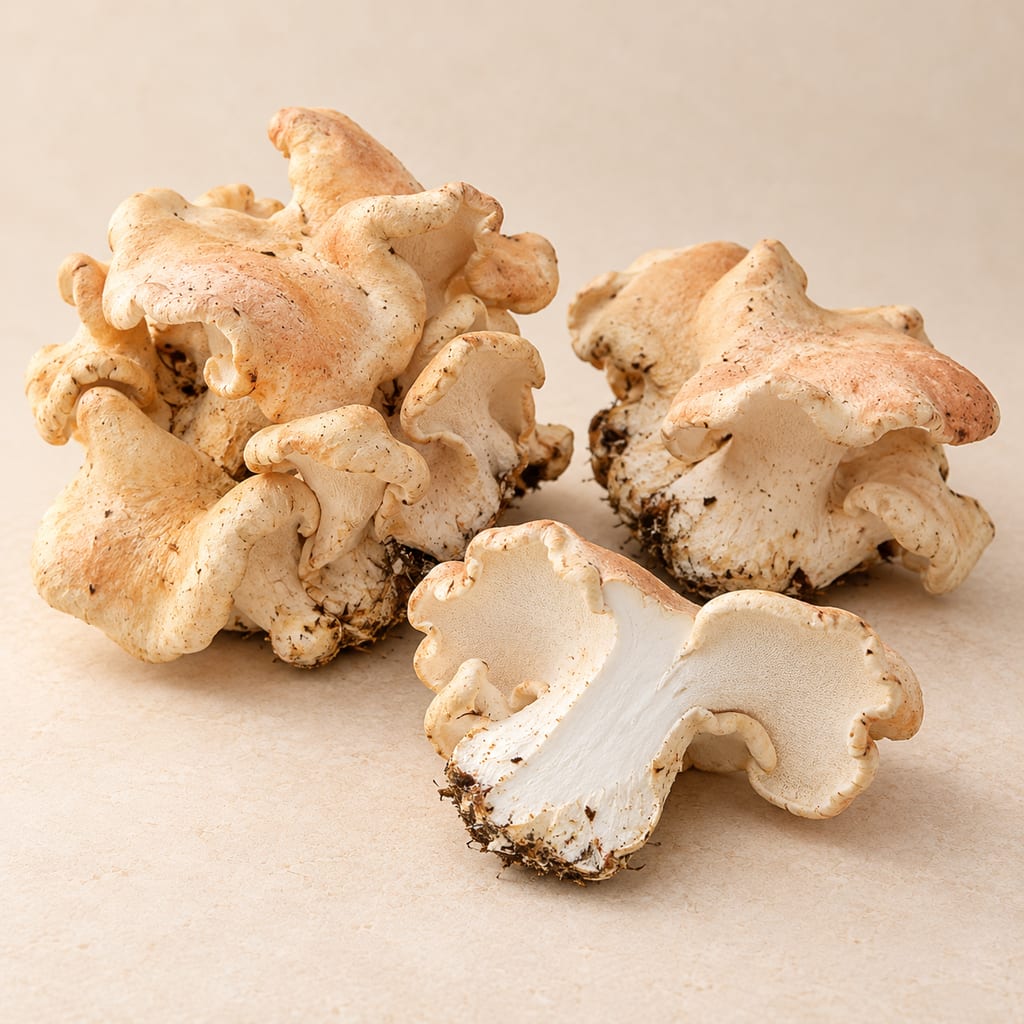
Albatrellus confluens is a ground-growing polypore with fused buff-orange caps. Sources document Chinese market use and regional edibility, but others reject it as too bitter; taxonomy also varies between Albatrellus and Albatrellopsis.
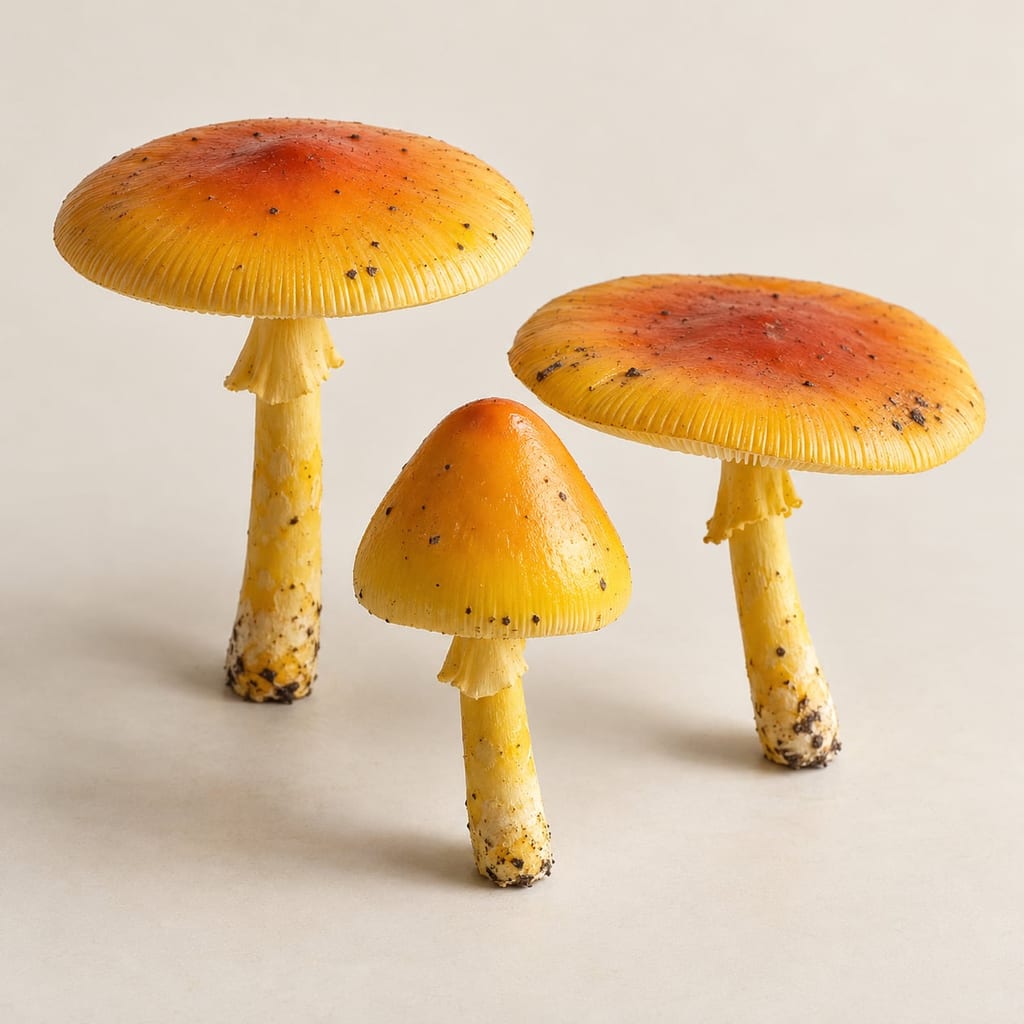
A wild Amanita recorded from China in a 2026 checklist of edible and medicinal fungi. The genus holds deadly species, so this page gives no identification or edibility verdict.
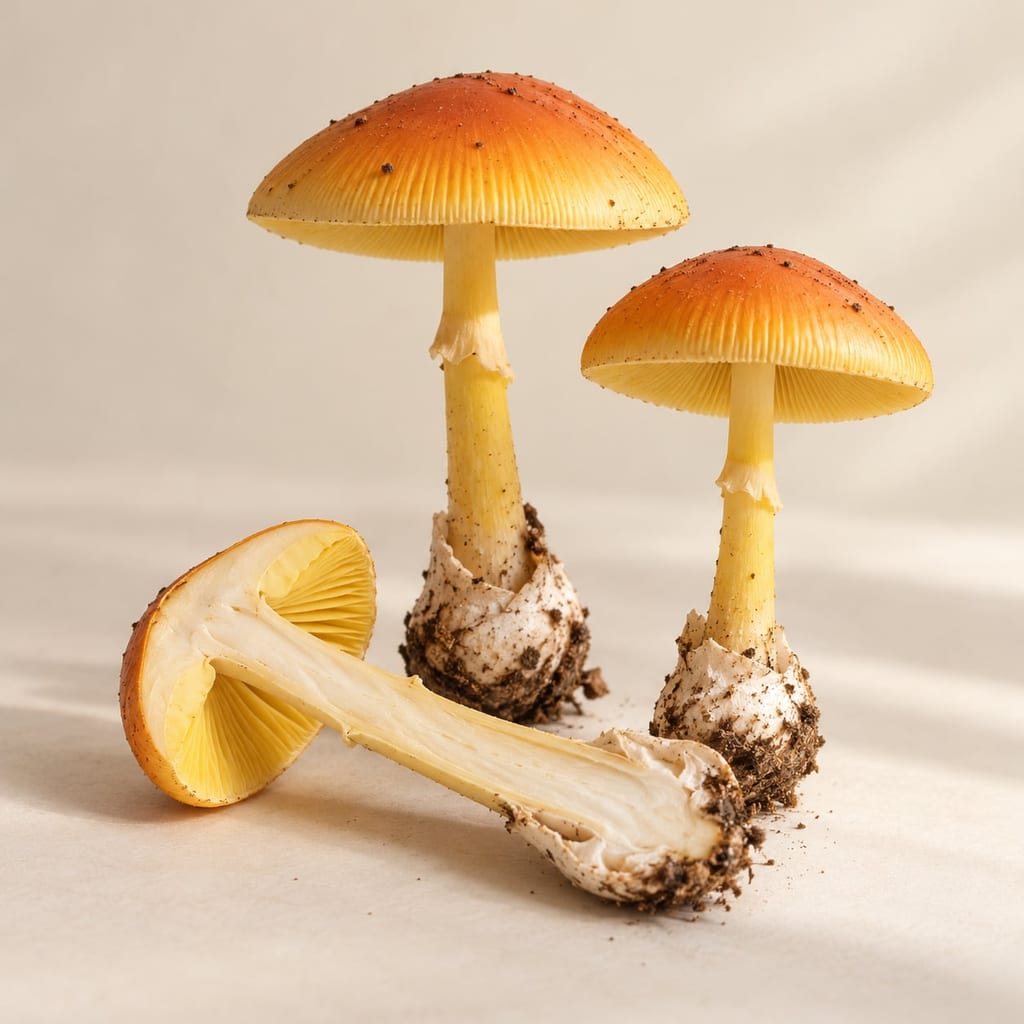
A wild Amanita of China, first reported there and listed as edible in a Yunnan ethnomycology study. The genus contains deadly species, so this page does not support identifying or eating it.
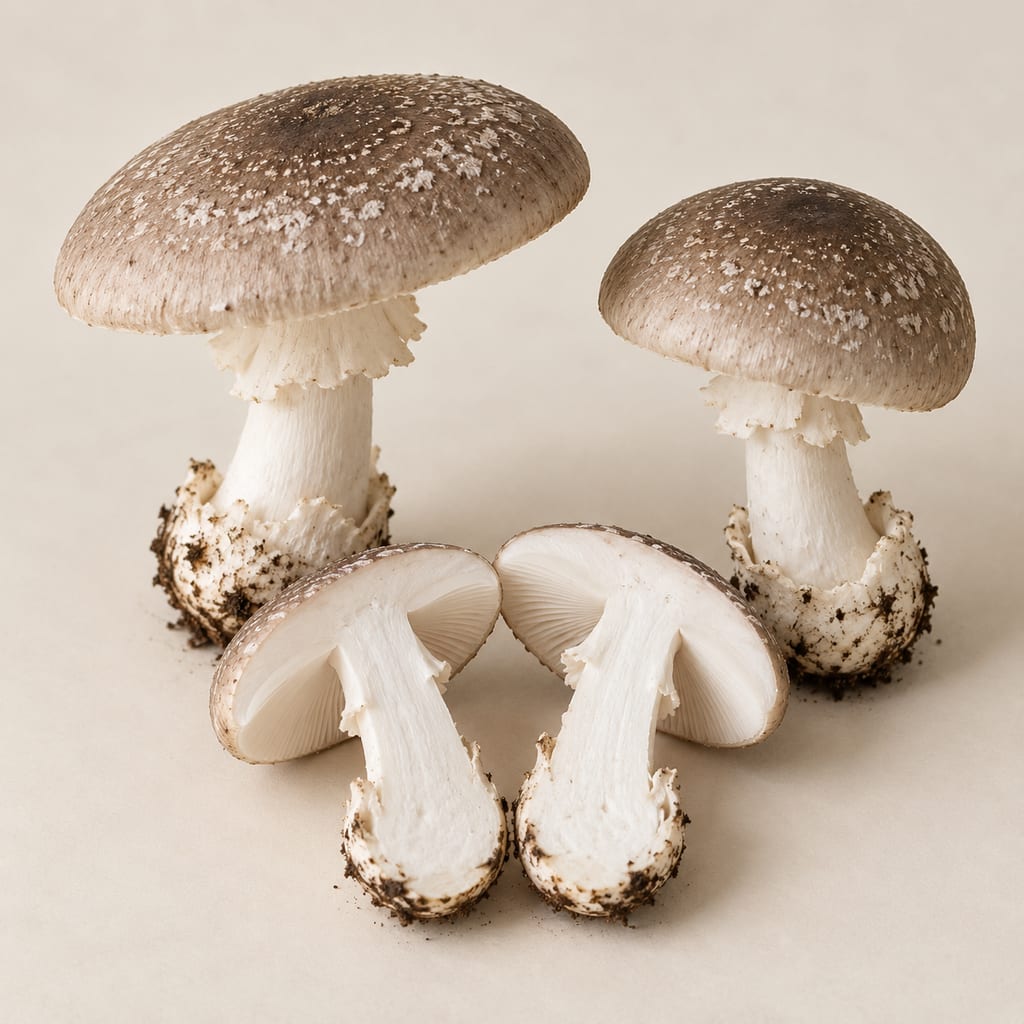
Amanita yuaniana is a Chinese Amanita that a 2023 Yanshan survey and a Yunnan ethnomycology survey list among edible species. No source tests it for safety, and the genus holds the most lethal mushrooms.
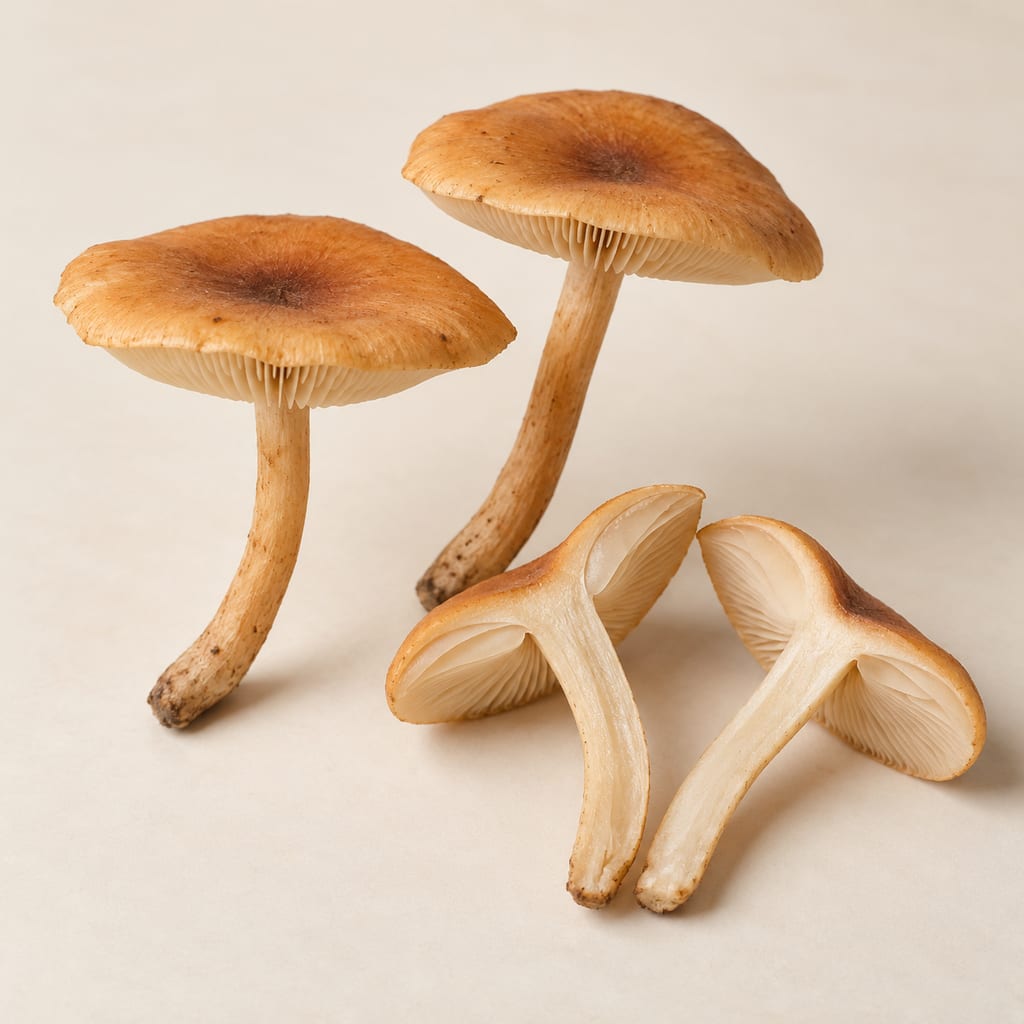
A wood-associated Armillaria recorded in Yunnan and Sichuan, China, and listed as edible in a 2026 Chinese catalogue.
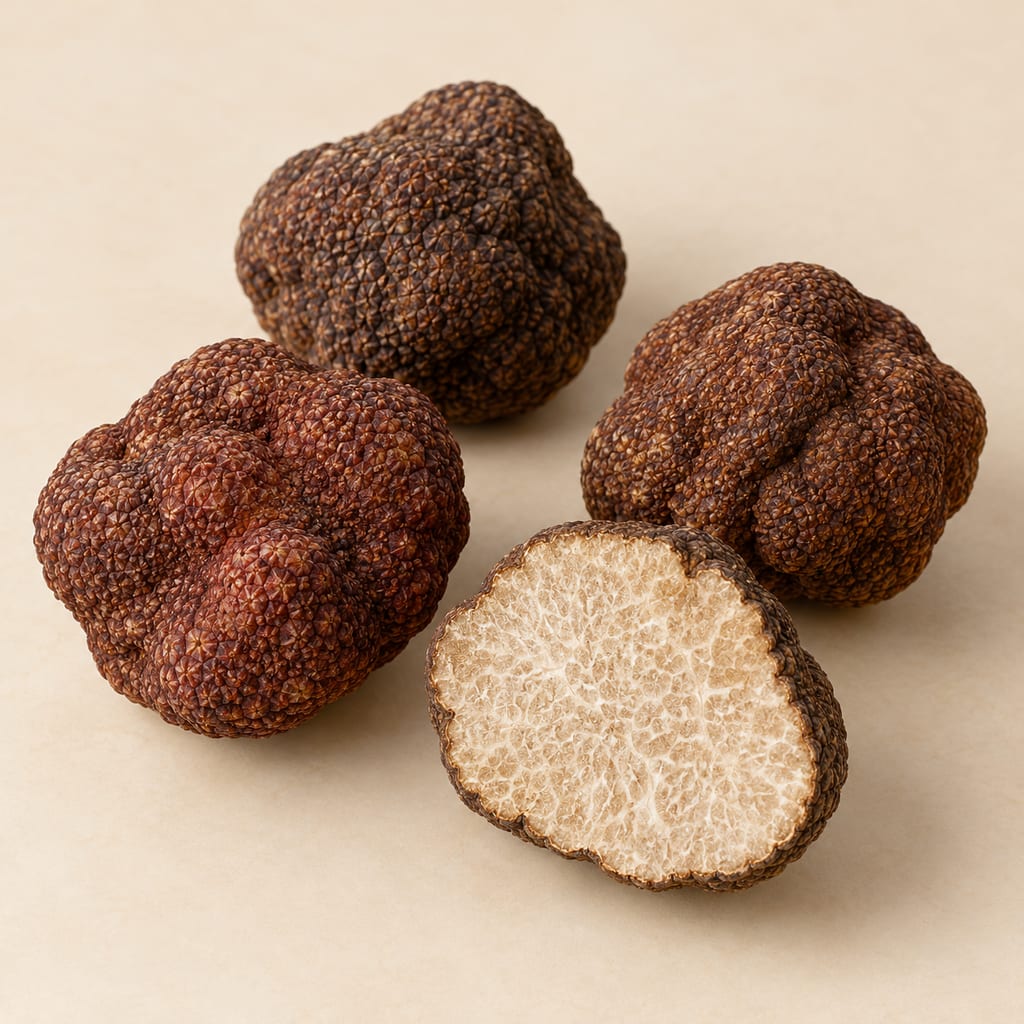
Tuber pseudohimalayense is a wild black truffle from Yunnan, China, listed as edible in a Chinese species catalogue. No independent assessment of its culinary use or safety is available.
No community contributions have been published for this entry yet.
Sign in to contribute. Published comments and photos are free to read.
PhytotaxaIdentification · History
Phallus dongsun and P. lutescens, two new species of Phallaceae (Basidiomycota) from ChinaDescription as new species in 2020 with P. lutescens
Historical misidentification with P. impudicus
Cited in: Identity and naming; Safety and identification
Mitochondrial DNA Part BUse
Mitogenome characterization and phylogenetic analysis of Phallus dongsun (Phallaceae): an edible and medicinal fungus in the Phallaceae familyDescribed as an edible and medicinal fungus
Cited in: Cultivation and use
MycosphereUse
Mycosphere article, DOI 10.5943/mycosphere/16/1/17 (supplied catalogue source; title not checked)Cultivated food use in Guizhou Province and other Chinese regions, as recorded in the catalogue
Cited in: Cultivation and use
PMCEcology
Comparative analysis of soil microbial diversity and chemical properties in different Phallus dongsun habitatsHabitat study of the species
Cited in: Ecology