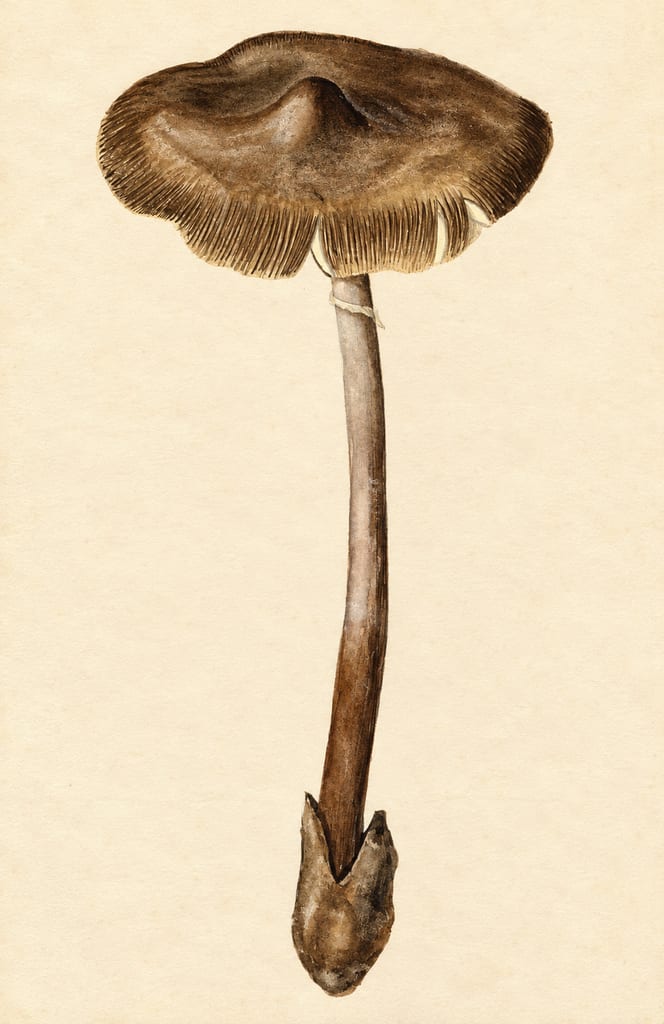
Amanita annulatovaginata
A wild ectomycorrhizal Amanita of the Congo rainforest, recorded as locally consumed in Tshopo province. Its preparation was not established, and the genus includes deadly species.
 FermenteaWhere food goes to change
Mushrooms
Favolus tenuiculus is a wild forest polypore recorded as locally eaten in Tshopo province, DR Congo. The record is an interview-based food-use note, and the preparation and toxicity of the species are not established.
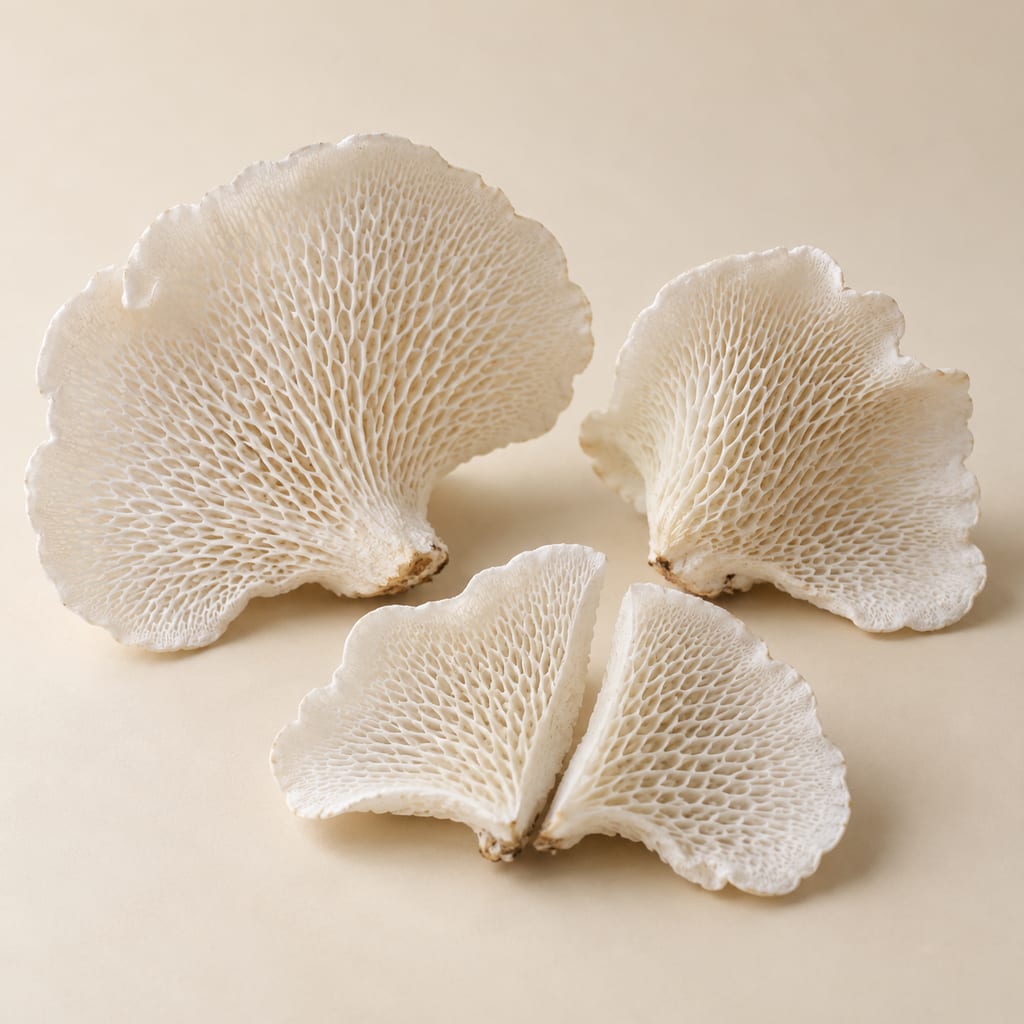
Favolus tenuiculus is a wild polypore, a bracket-forming fungus that grows on wood in forests. The catalogue places it among saprotrophs, fungi that break down dead wood.
It is recorded as eaten by local people in Tshopo province in the Democratic Republic of the Congo. The record comes from interviews in which the mushroom was named as food, and the catalogue does not describe a dish.
The catalogue records no common name and no alias for this species. The name is kept as a research label and has not been reconciled with an accepted name.
A Colombian checklist entry lists the same name as a food fungus, with records from the Upper Amazon and Mexico and a mention of tropical Africa. The match to the Tshopo record is not confirmed.
The Tshopo record establishes local consumption of the species but does not establish the way it is cooked, dried or combined with other foods. No recipe is given here.
Regional studies from Tshopo describe many wild edible fungi as an underused food resource. Those papers are context for the region, and this page does not treat them as evidence that this species is eaten widely.
The catalogue states that this is an ethnomycological food-use record, not an independent toxicological assessment. No toxicity or safety assessment for this species was found.
This page is not an identification guide. Documented local use does not show that a fungus is safe to eat in any preparation. Do not eat a wild polypore on the basis of this page. Confirm identity with an expert before eating any wild fungus.
The sources do not name the species' local names in Tshopo, do not give the preparation, and do not confirm whether the species appears in the regional edible lists. The Colombian match needs checking against the taxonomic authority.
Recorded in voucher-backed interviews in Tshopo, as summarised in the catalogue. The record does not give a village or a preparation for this species.
A wild ectomycorrhizal Amanita of the Congo rainforest, recorded as locally consumed in Tshopo province. Its preparation was not established, and the genus includes deadly species.
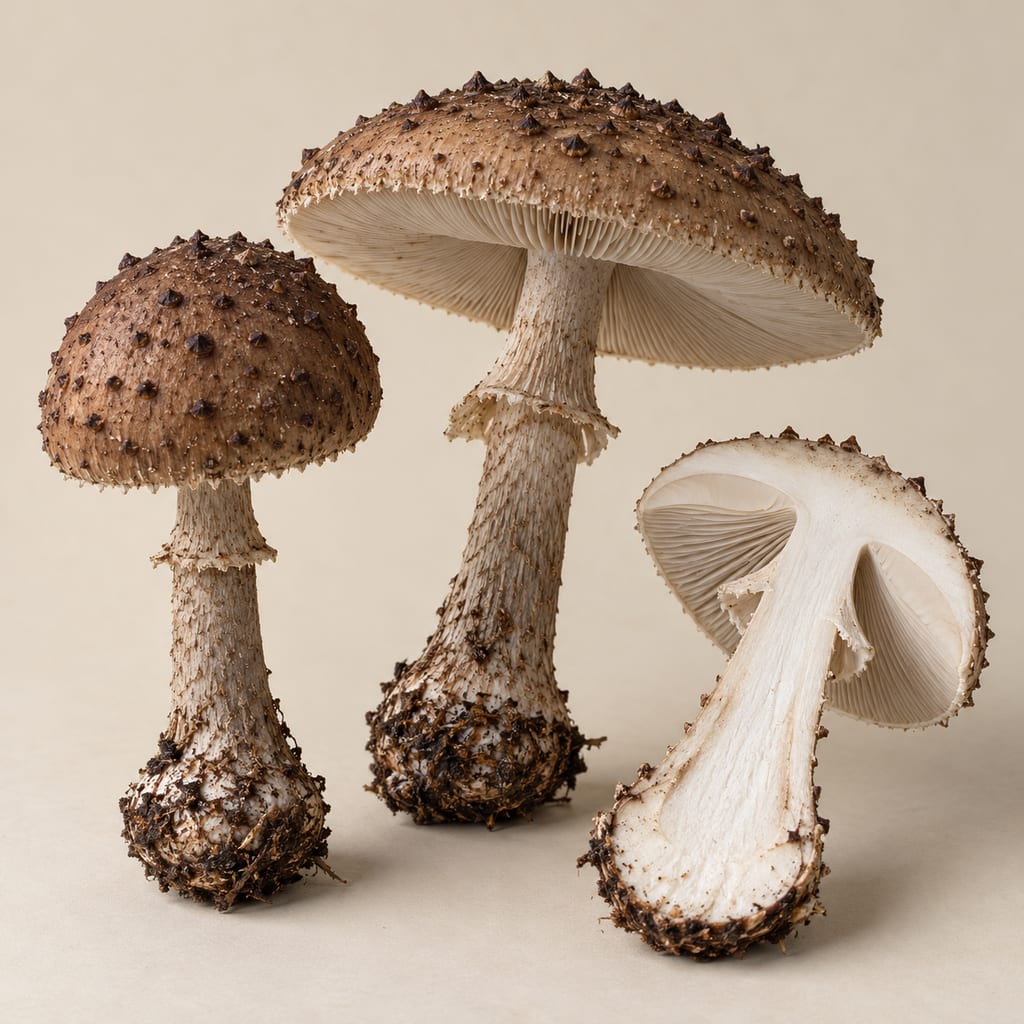
A wild ectomycorrhizal Amanita of the Congo rainforest, recorded as locally consumed in Tshopo province. Its preparation was not established, and the genus includes deadly species.
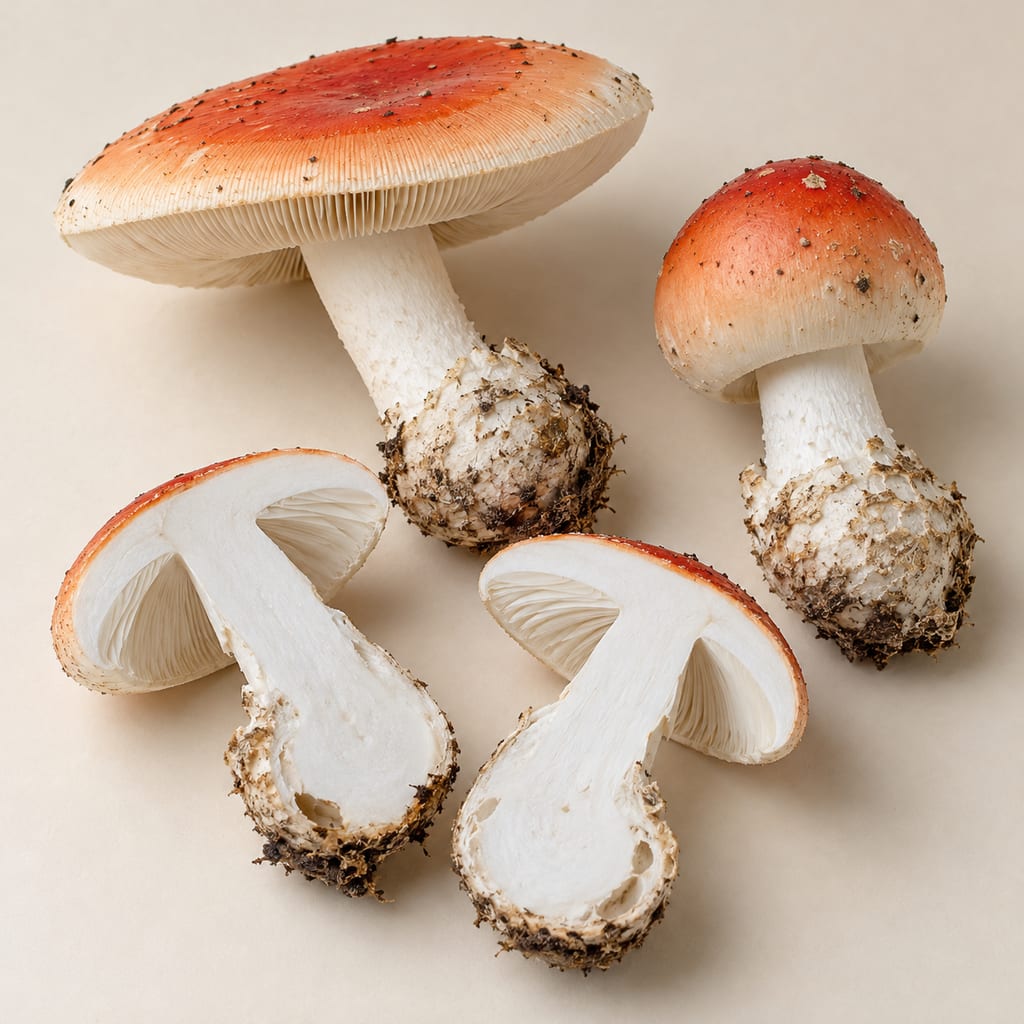
Amanita robusta Beeli is a poorly documented Central African Amanita known from voucher-backed rainforest collections in the Democratic Republic of the Congo and Cameroon. A Tshopo study reports local food use for a taxonomically supported voucher, but neither that record nor the name makes an unknown Amanita safe to identify or eat.
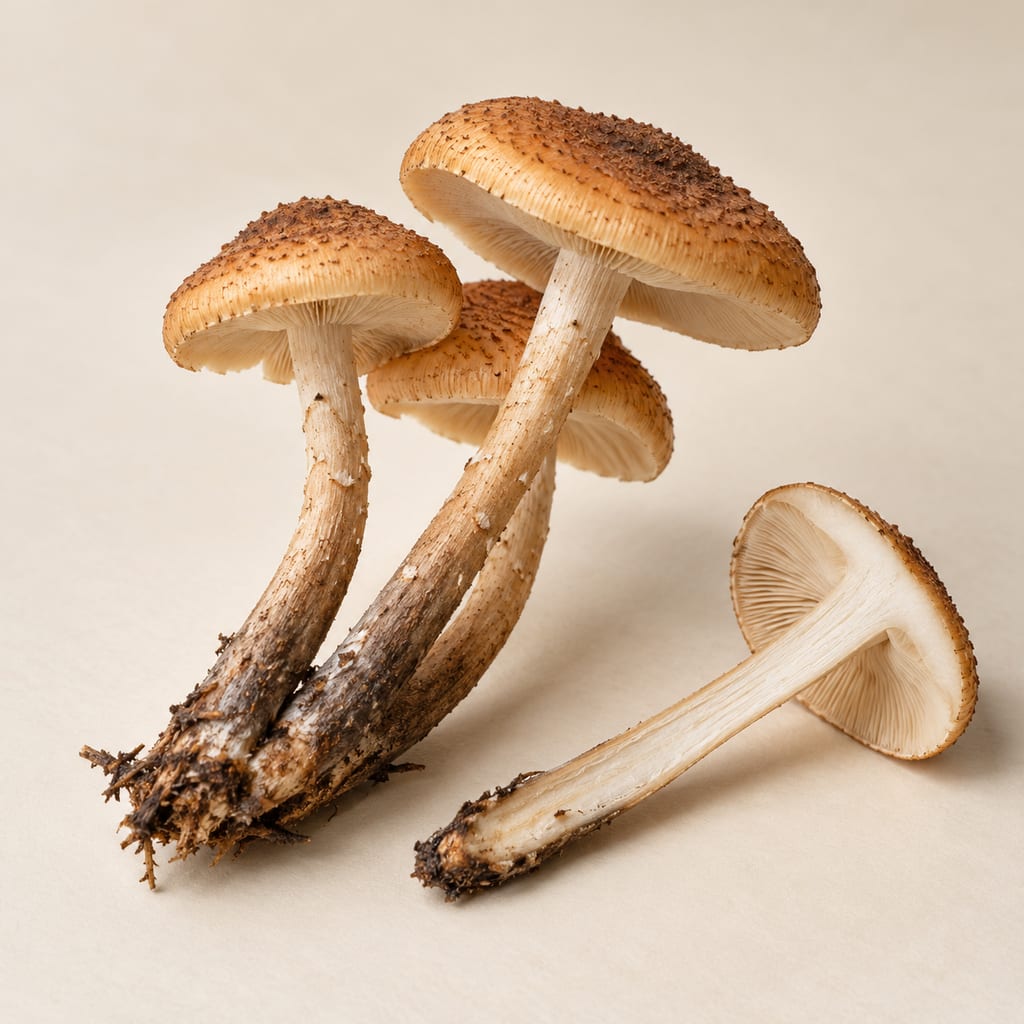
Armillaria heimii is a saprotrophic fungus of the honey-fungus genus, recorded as a wild food in Tshopo province, DR Congo. Its preparation and safety are not established in the sources.
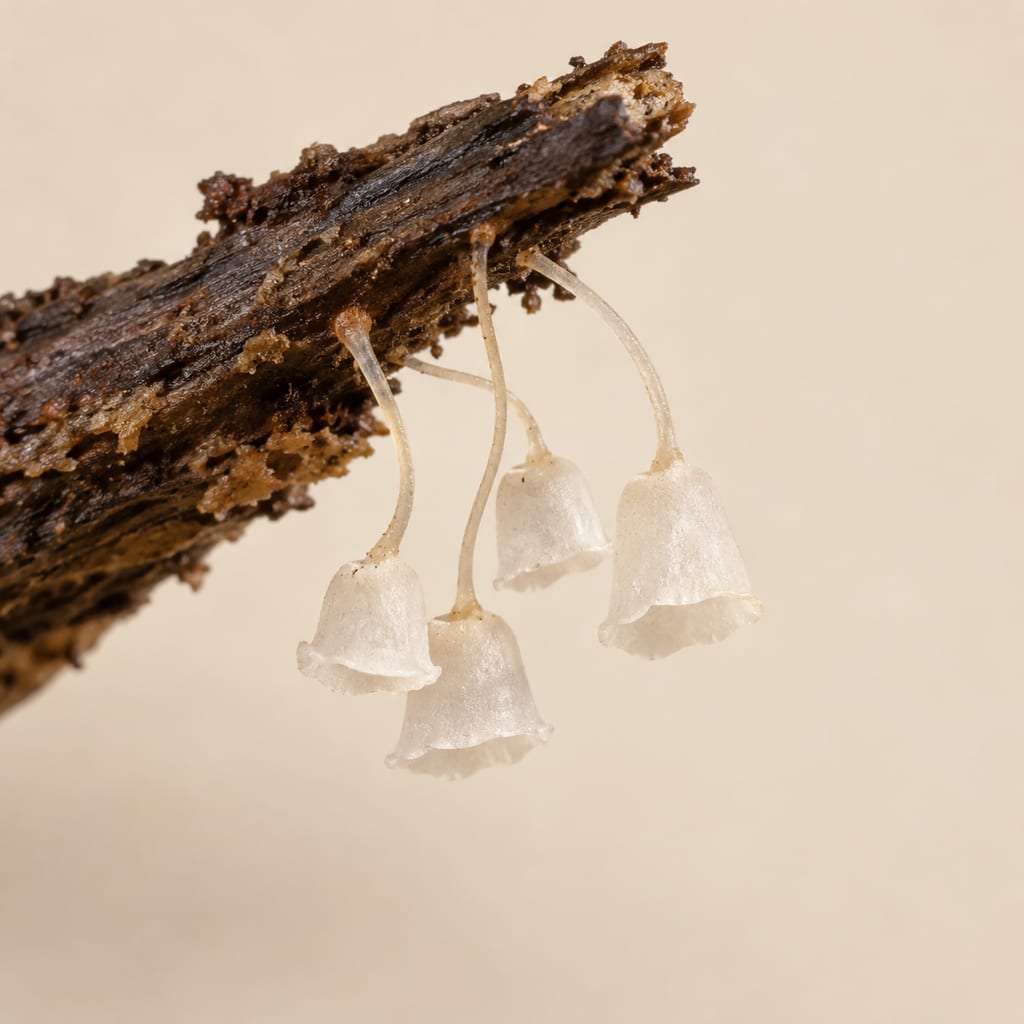
Calyptella longipes is a wood and litter decaying fungus of the rainforests of Tshopo province, DR Congo, where some ethnic groups in voucher-backed interviews eat it. Its preparation was not recorded.
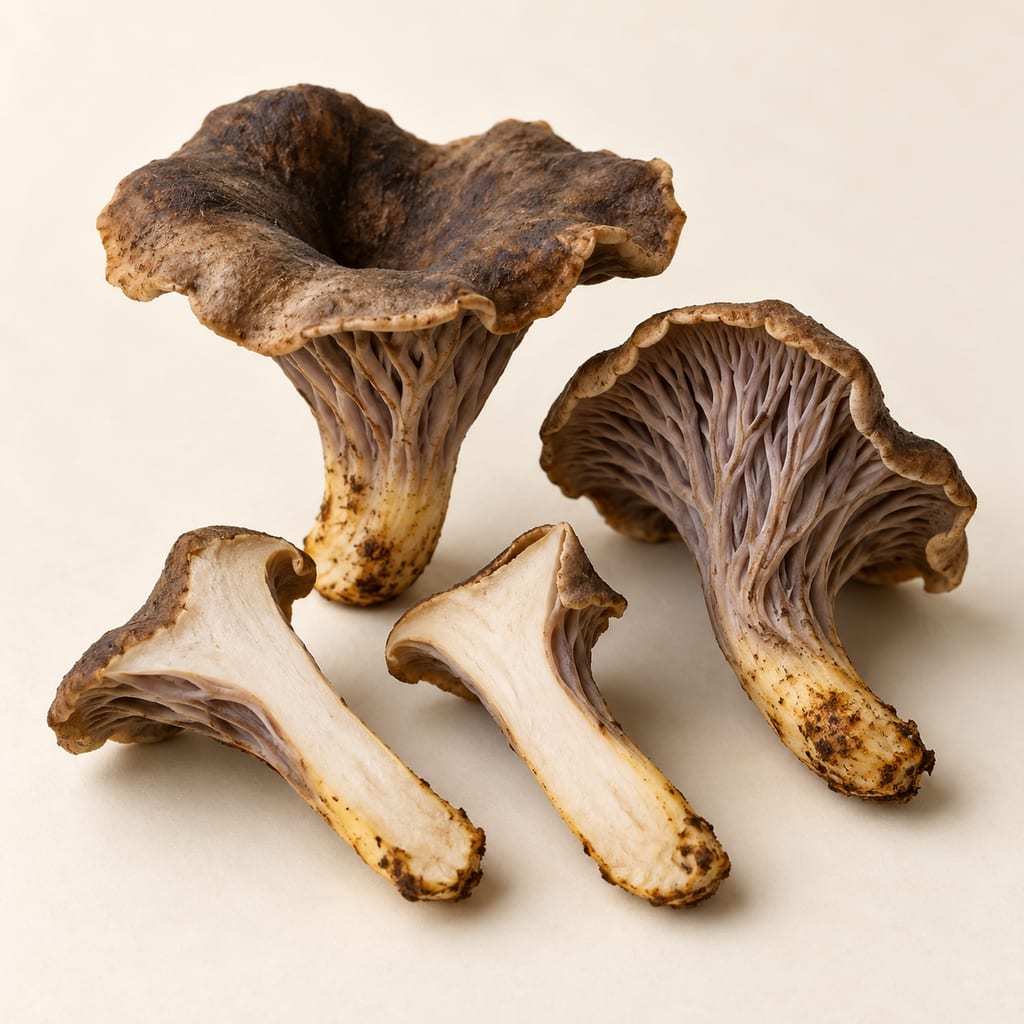
Cantharellus congolensis is an ectomycorrhizal chanterelle of sub-Saharan Africa, eaten in the Democratic Republic of the Congo under local names. Its edibility rests on food-use surveys, not on toxicity tests.
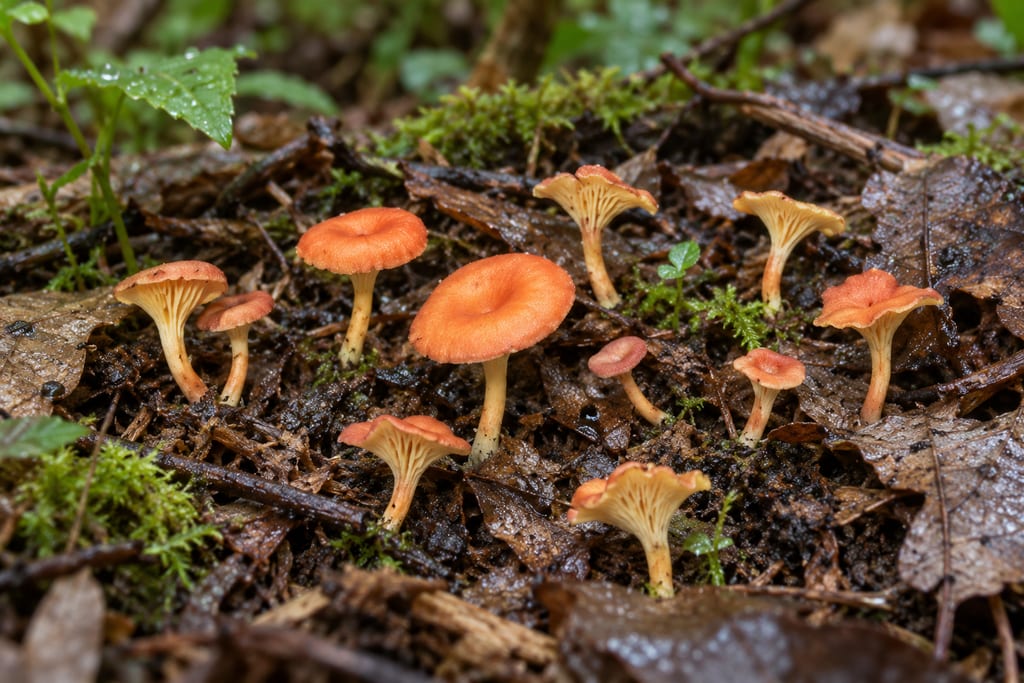
Cantharellus floridulus is an ectomycorrhizal rainforest fungus that informants in Tshopo province, DR Congo, eat in voucher-backed interviews. Its preparation is not recorded, and the source gives no toxicity statement.
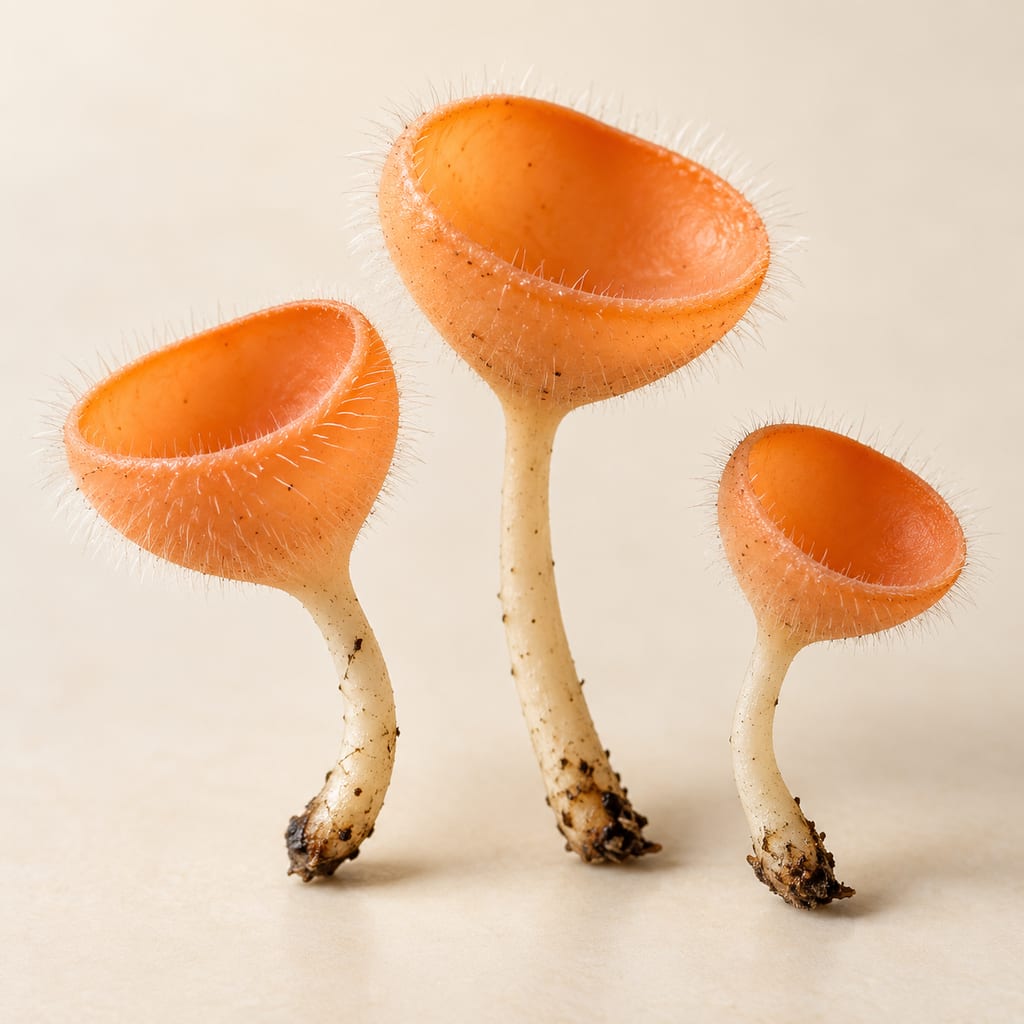
A forest cup fungus of the Tshopo province in the Democratic Republic of the Congo, recorded in local interviews as eaten. The species-level preparation is not established.
No community contributions have been published for this entry yet.
Sign in to contribute. Published comments and photos are free to read.
PubMed CentralFood · Ecology
Ethnomycological study, Tshopo province, DR Congo (catalogue source S056)Catalogue record: the species is recorded as locally consumed in voucher-backed Tshopo interviews; species-specific preparation was not established; forest saprotroph reported in the source. The full text could not be opened in this research pass, so the record is taken from the catalogue.
Cited in: Overview; Food use and preparation; Identification and safety
ColfungiFood · Distribution
General information (Colombian fungal checklist entry)Recorded as used for food in parts of the Upper Amazon and in Mexico, and as found in tropical Africa; the name match to the taxonomic authority is to be confirmed
Cited in: Names and taxonomy; Open questions
Springer (Journal of Ethnobiology and Ethnomedicine)Context
Edible ectomycorrhizal and wild mushrooms in Yangambi and Yoko, DR Congo (Journal of Ethnobiology and Ethnomedicine, 2020)Context only: Tshopo-region studies describe many wild edible fungi as an underused food resource; this paper's species list was not checked for Favolus tenuiculus
Cited in: Food use and preparation