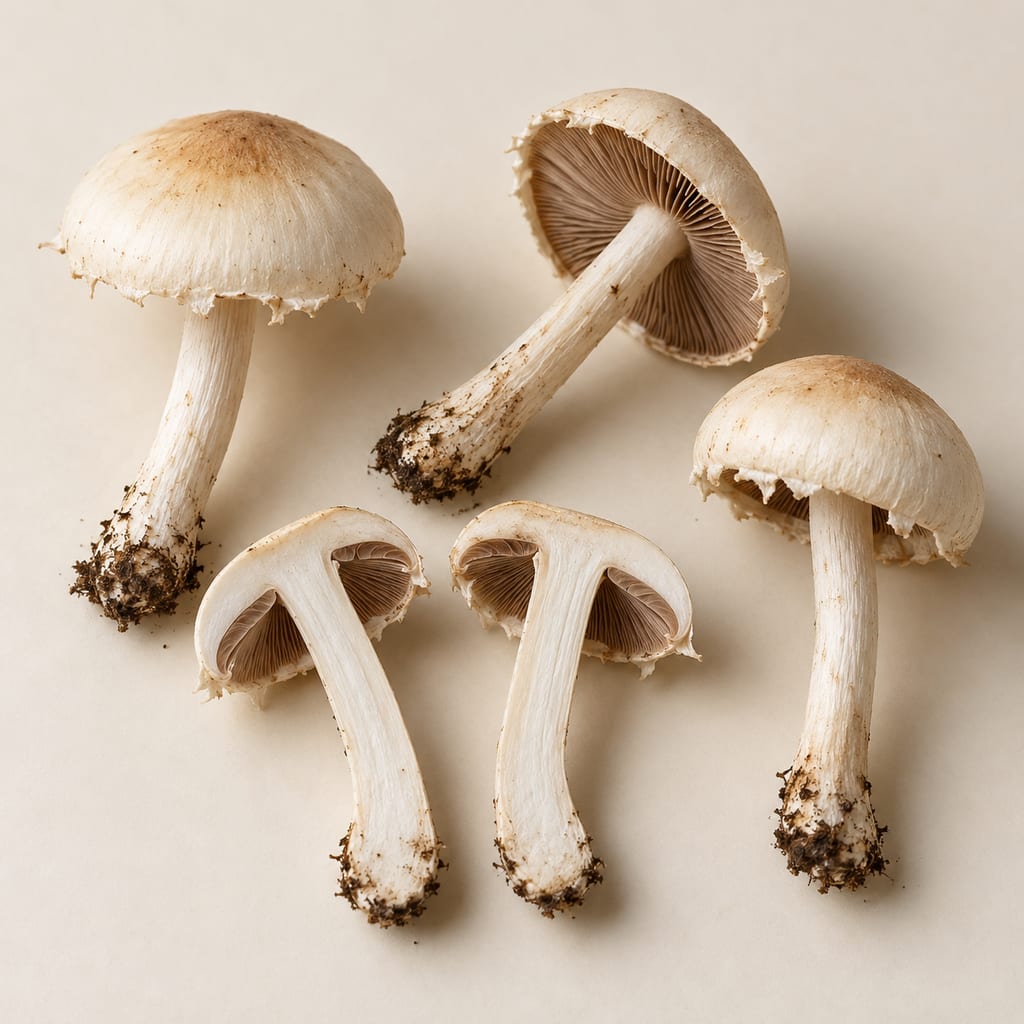
Agrocybe dura
A grassland agaric listed as edible in historical and scientific catalogues for Hong Kong and China. Taxonomic concepts and practical food value vary; the listings do not establish safe identification or culinary practice.
 FermenteaWhere food goes to change
Mushrooms
Naematelia aurantialba, golden ear, is a yellow gelatinous fungus that parasitises Stereum fruit bodies on broadleaf trees and is recorded as a wild edible relative of cultivated golden ear in southwestern China.
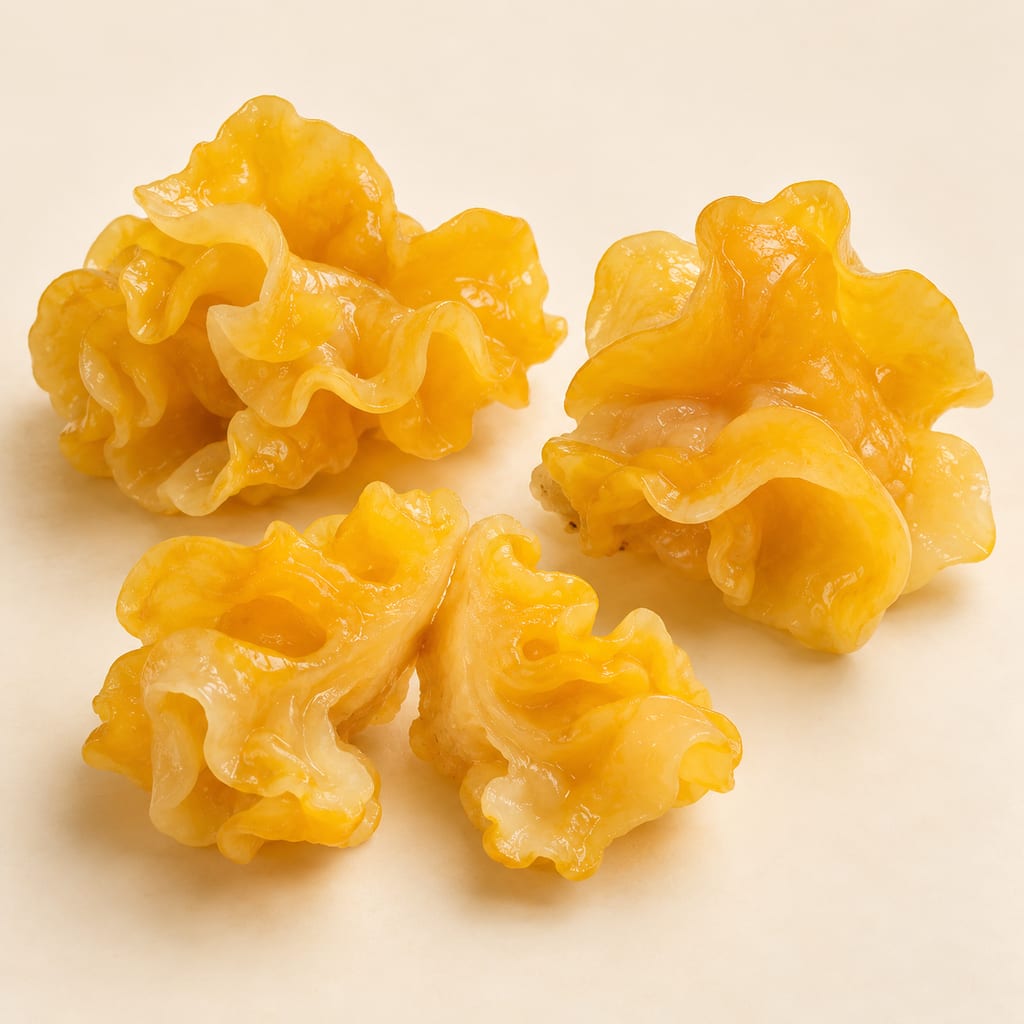
Golden ear is a yellow, frondose, gelatinous fungus. Its fruit bodies are soft and jelly-like rather than firm, which is the basis of its Chinese name, jin'er, meaning golden ear.
The fungus is parasitic on fruit bodies of another fungus, Stereum hirsutum, which grows on dead broadleaf wood. It grows on the fruit bodies of that host rather than directly on the wood.
The species was first described as Tremella aurantialba by Bandoni and Zang in 1990 and later placed in the genus Naematelia by Millanes and Wedin in 2015. Its scientific name in the catalogue is Naematelia aurantialba; the catalogue treats it as a research label and does not validate the current name.
Later studies of specimens called N. aurantialba in China found that they represent a species complex with several distinct taxa. One of these was described as Naematelia sinensis, which is the name most associated with the golden ear cultivated for food. Any cultivation or experimental result reported under the name N. aurantialba may therefore concern N. sinensis, and it should not be read as a result for the wild species.
The Wikipedia article records that the golden ear group is cultivated in China for both food and medicinal purposes, and it does not describe a culinary preparation. The catalogue records the wild relative as an edible golden-ear recognised separately from the cultivated N. sinensis, collected in high-altitude southwestern China.
The wild material is described as occurring in subalpine habitats, where it is associated with its Stereum host. The catalogue lists the supply as wild. It gives no quantities, seasons or methods of preparation for this relative.
This record is not a guide to identifying wild fungi. The catalogue's food-use entry for the wild relative is a supplied record, not an independent safety assessment, and its review label is kept as supplied. No edibility conclusion, toxicology result or safe preparation method is established here.
Golden ear and its relatives are separated from one another by specialist taxonomy. Identify any specimen with an expert before eating it, and do not rely on the appearance, smell or taste of a fungus to confirm its identity or safety.
Region-level record from the catalogue. The wild habitat is high altitude and subalpine; no locality is given.
A grassland agaric listed as edible in historical and scientific catalogues for Hong Kong and China. Taxonomic concepts and practical food value vary; the listings do not establish safe identification or culinary practice.

Akahatsu, Lactarius akahatsu, is a wild milkcap of East Asian pine and mixed forests that is sold in Yunnan markets, with its edibility and identity still needing species-level review.
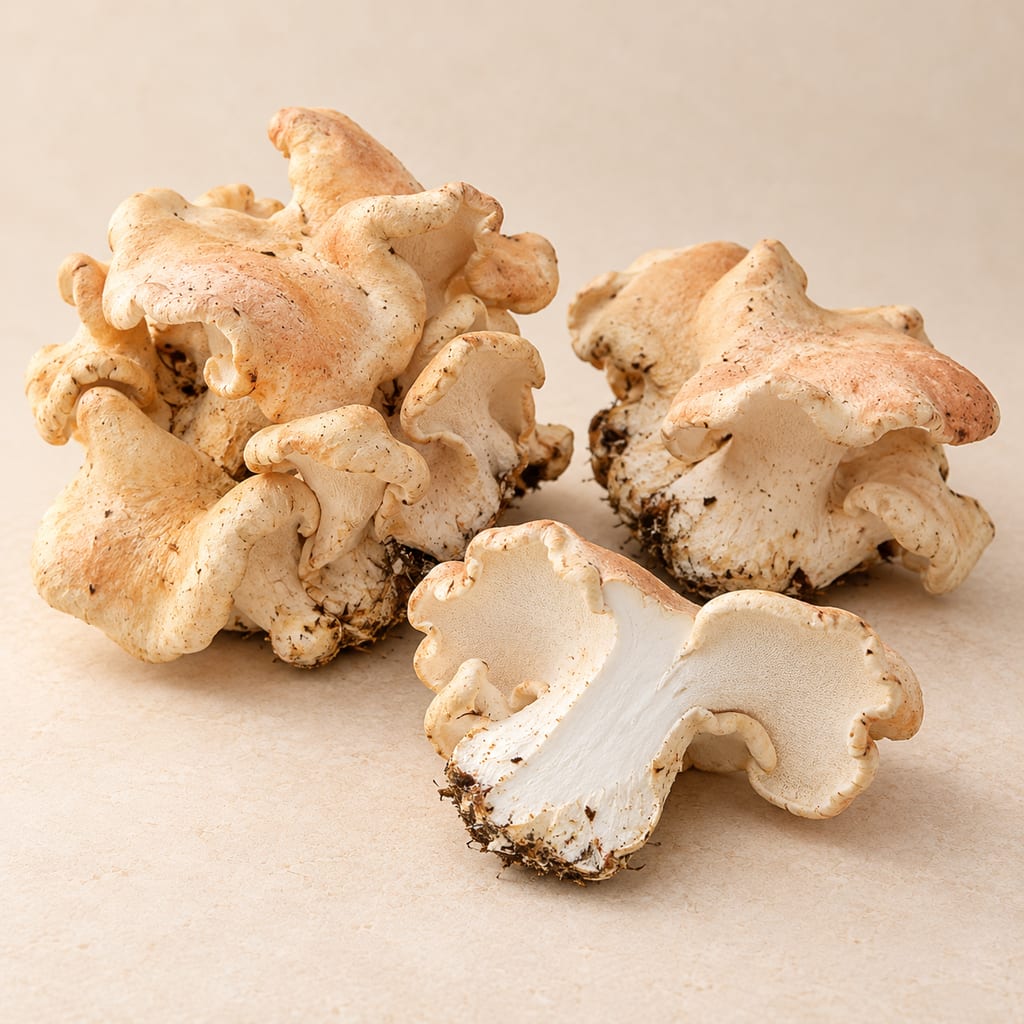
Albatrellus confluens is a ground-growing polypore with fused buff-orange caps. Sources document Chinese market use and regional edibility, but others reject it as too bitter; taxonomy also varies between Albatrellus and Albatrellopsis.
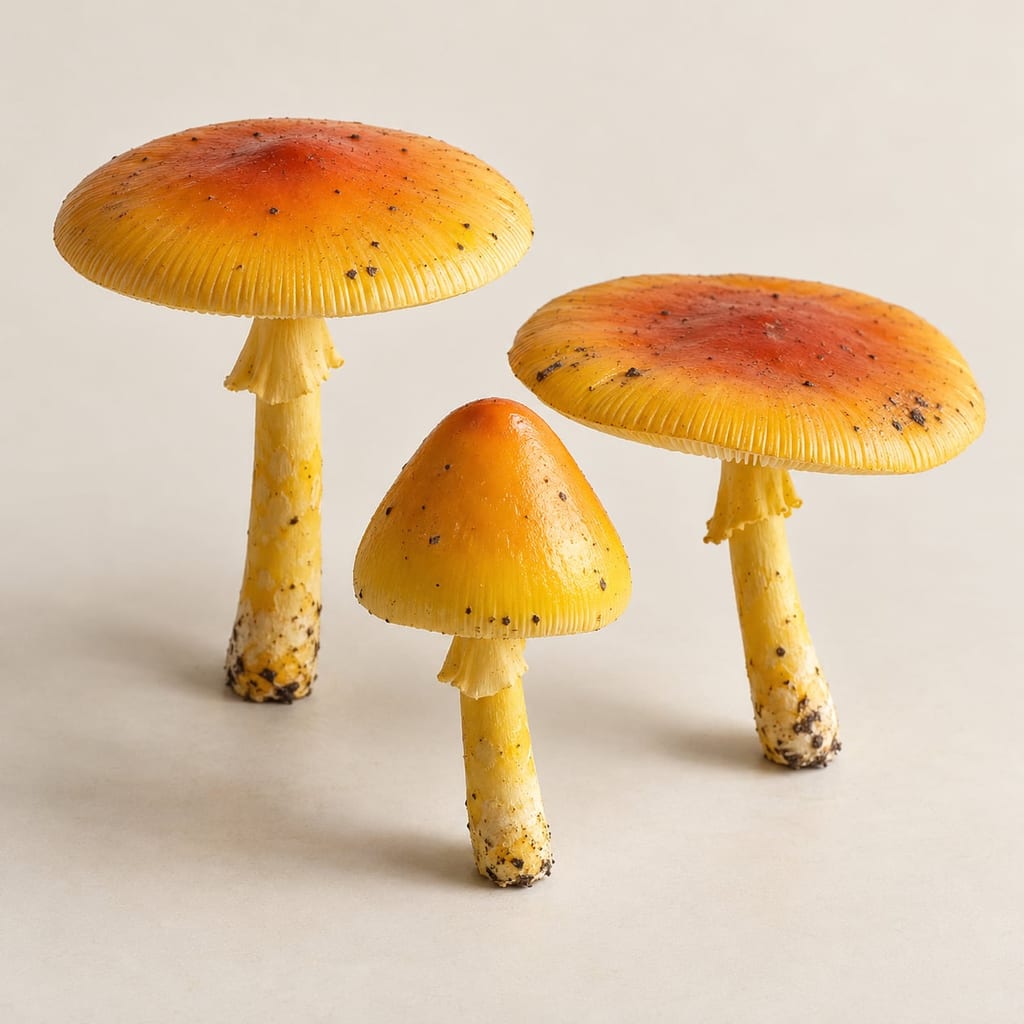
A wild Amanita recorded from China in a 2026 checklist of edible and medicinal fungi. The genus holds deadly species, so this page gives no identification or edibility verdict.
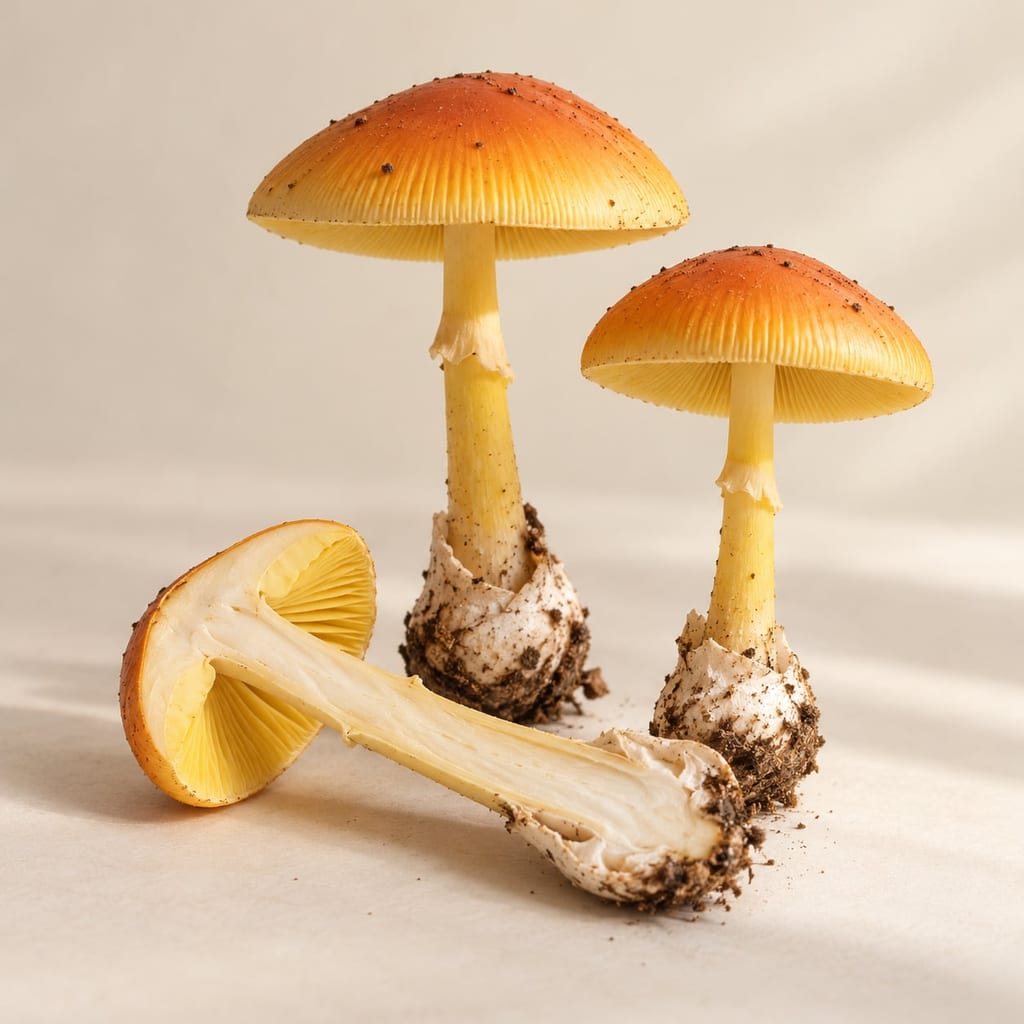
A wild Amanita of China, first reported there and listed as edible in a Yunnan ethnomycology study. The genus contains deadly species, so this page does not support identifying or eating it.
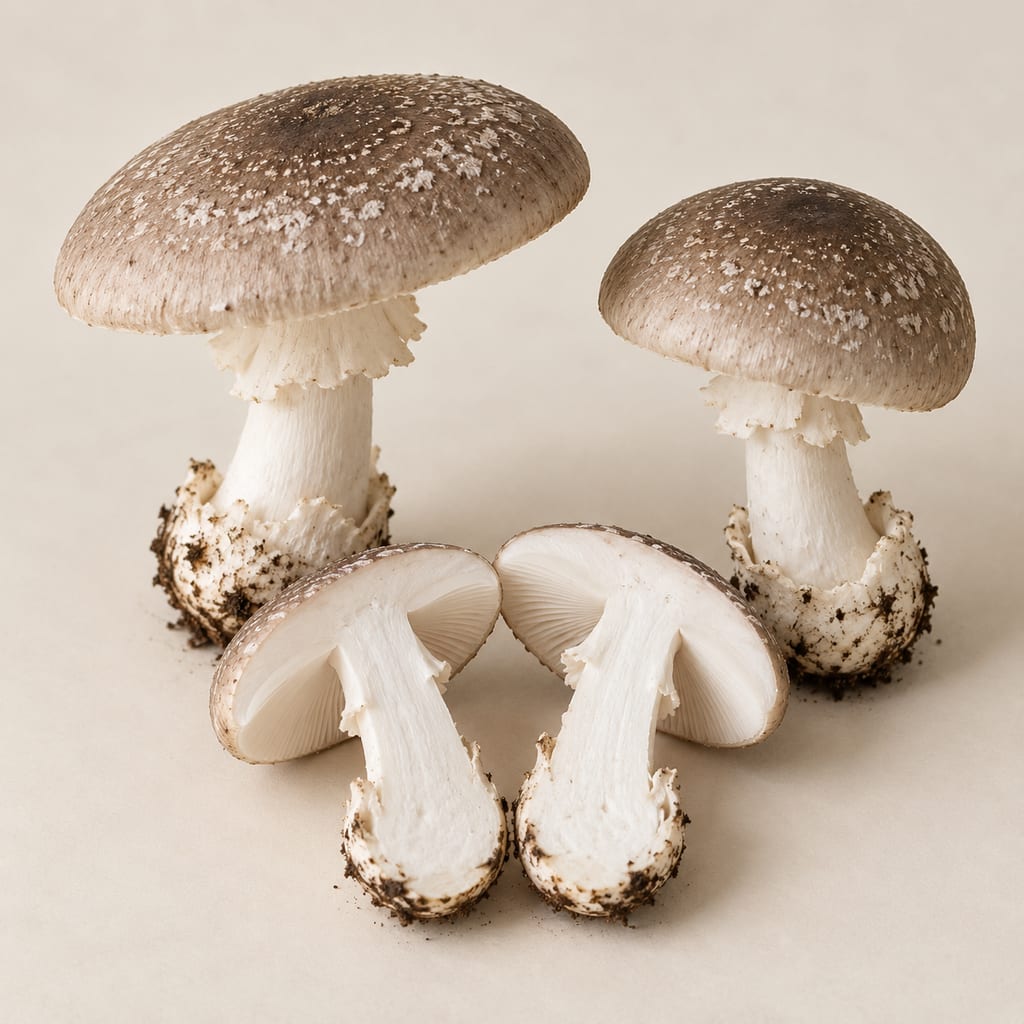
Amanita yuaniana is a Chinese Amanita that a 2023 Yanshan survey and a Yunnan ethnomycology survey list among edible species. No source tests it for safety, and the genus holds the most lethal mushrooms.
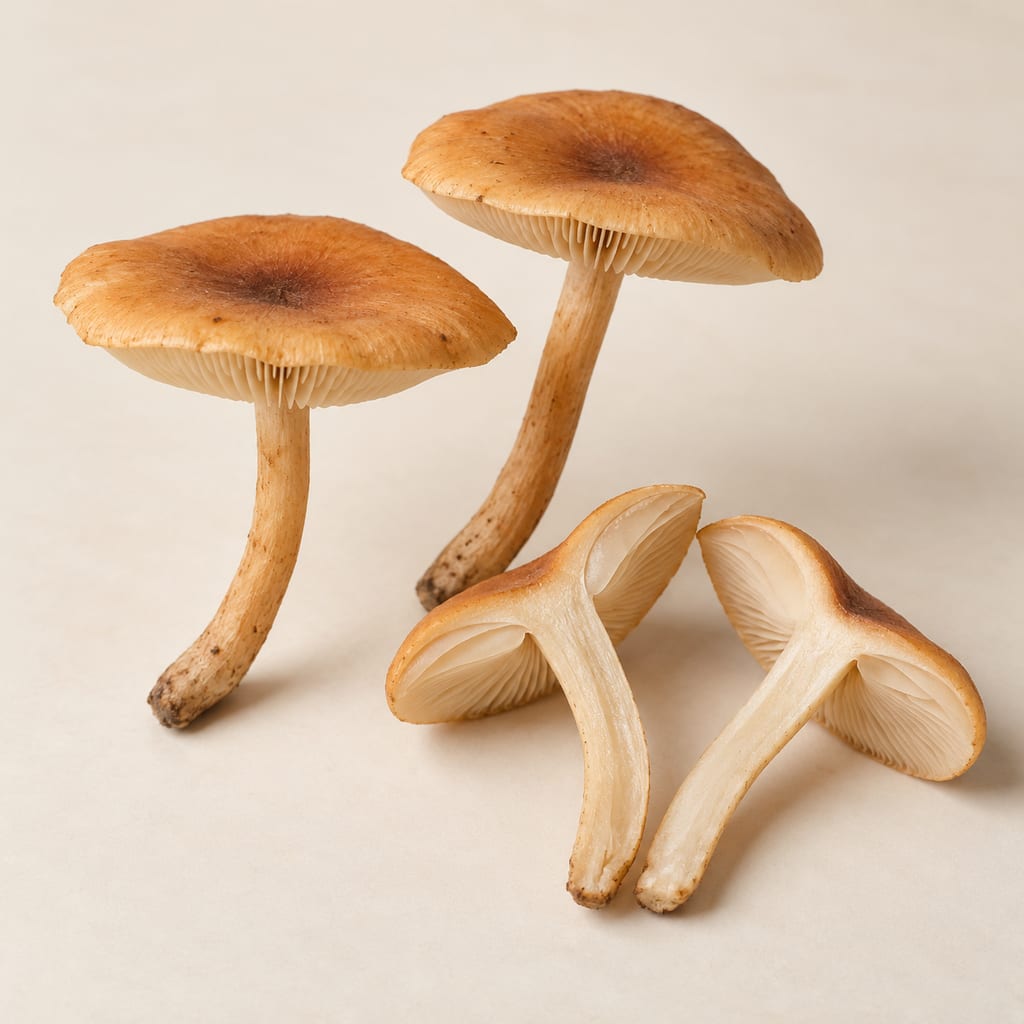
A wood-associated Armillaria recorded in Yunnan and Sichuan, China, and listed as edible in a 2026 Chinese catalogue.
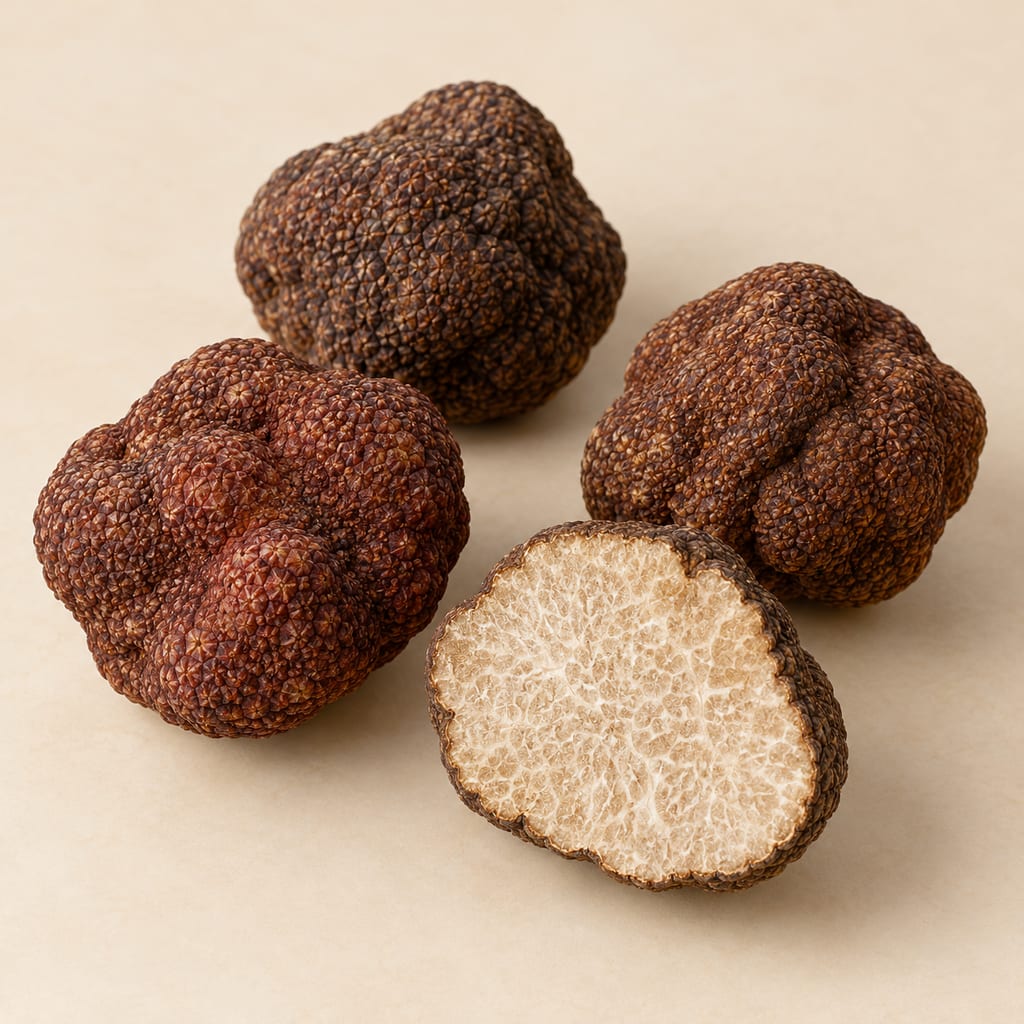
Tuber pseudohimalayense is a wild black truffle from Yunnan, China, listed as edible in a Chinese species catalogue. No independent assessment of its culinary use or safety is available.
No community contributions have been published for this entry yet.
Sign in to contribute. Published comments and photos are free to read.
WikipediaIdentity · Food · Taxonomy
Naematelia aurantialbaScientific name, synonym Tremella aurantialba Bandoni & M.Zang (1990), combination by Millanes & Wedin (2015)
Yellow gelatinous fruit bodies; parasitic on Stereum hirsutum on broadleaf trees
Chinese name jin'er (golden ear); cultivated for food and medicinal purposes; no culinary preparation described
Specimens called N. aurantialba in China found to represent a species complex; N. sinensis described
Cited in: What it is; Names and the species question; Food use and habitat; Safety and identification
Journal of Fungal Research (CAST)Food · Catalogue
Catalogue of edible and medicinal fungi of China (Chinese species catalogue, 2026)Catalogue record for golden-ear relative: edible, high-altitude southwestern China, subalpine habitat, supply wild (catalogue entry only; full text not read)
Cited in: Food use and habitat; Safety and identification
Journal of Fungi (MDPI)Taxonomy
Journal of Fungi article doi 10.3390/jof10120845 (catalogue-cited)Named in the catalogue as a source for the species complex and cultivation caveat (full text not read in this recovery)
Cited in: Names and the species question