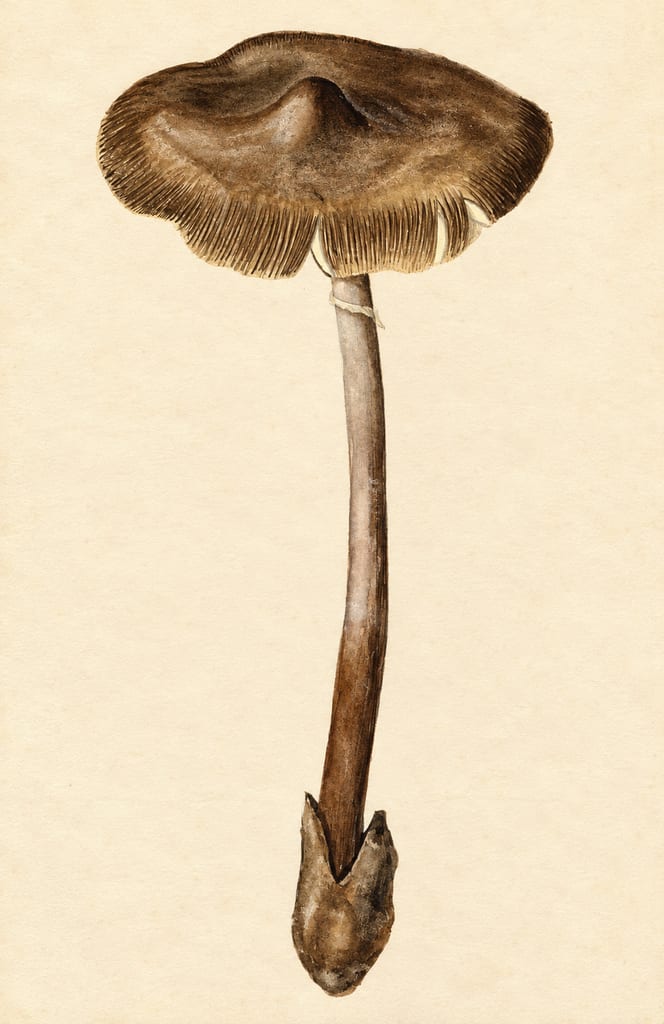
Amanita annulatovaginata
A wild ectomycorrhizal Amanita of the Congo rainforest, recorded as locally consumed in Tshopo province. Its preparation was not established, and the genus includes deadly species.
 FermenteaWhere food goes to change
Mushrooms
Gymnopilus zenkeri is a forest mushroom recorded as eaten locally in Tshopo province, DR Congo. The genus is described as unsafe to eat, and no preparation or safety assessment for this species has been established.
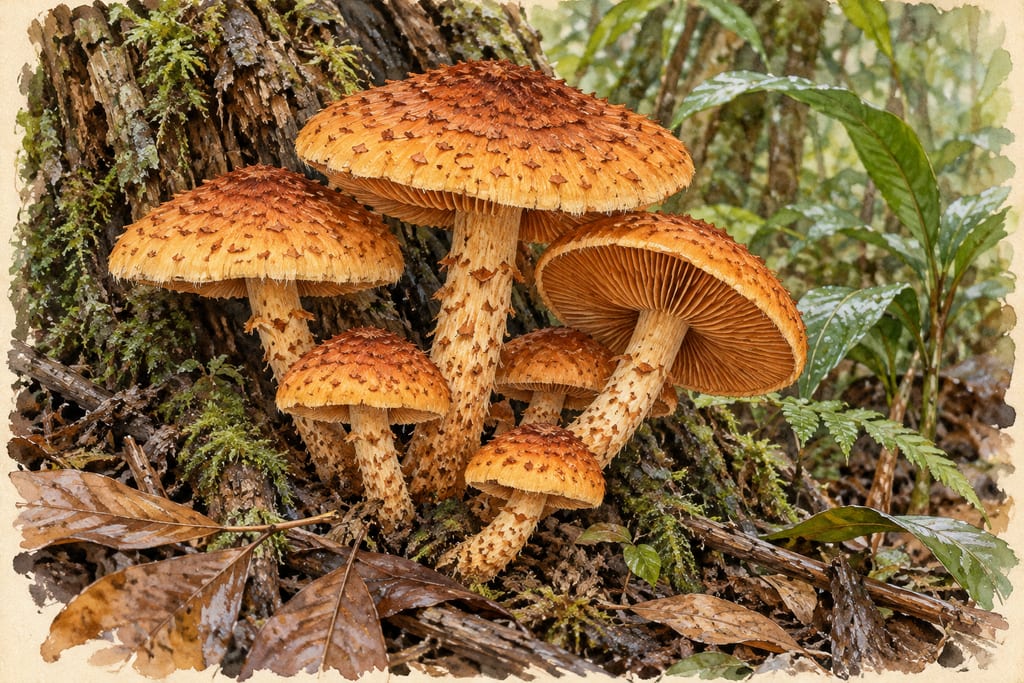
Gymnopilus zenkeri is a gilled mushroom of the genus Gymnopilus, a group of agarics; the catalogue records this species as a forest saprotroph. The catalogue describes the species as a forest saprotroph. It has no common name in the catalogue.
The genus is known for a safety problem. Its members are not reliably separated from the poisonous Galerina by eye, and some Gymnopilus species contain psilocybin. A name in this genus should not be taken as a sign of a safe food.
The catalogue records the species as locally consumed in interviews from Tshopo province, backed by herbarium vouchers. The record does not say how the mushroom is cooked, which dishes it appears in, or how often it is gathered.
A wider study of wild fungi around Yangambi and Yoko found that local communities use many species for food, and that women carry most of the harvesting knowledge. That study is the setting for the food record, but the part of that study read in a search summary did not name Gymnopilus zenkeri. The genus overview cites earlier reports that at least one Gymnopilus species is eaten in the Democratic Republic of the Congo; it does not name the species.
The genus overview states that the use of Gymnopilus as food is not safe. It also records that several Galerina species are lethal, that the two genera can look alike, and that only microscopic examination separates them with certainty. A field identification is therefore not enough to eat a Gymnopilus.
Fourteen Gymnopilus species are recorded as containing psilocybin. The overview notes no indication that African Gymnopilus are used for recreational purposes. None of the sources reviewed here tests the constituents of Gymnopilus zenkeri, so whether this species contains psilocybin or any other compound is not established.
The catalogue states that its food record is not an independent toxicological assessment. No preparation that makes this species safe has been established, and this page gives none.
Open points: the preparation, the local name, the frequency of use and any constituent or toxicity data for Gymnopilus zenkeri are unknown from the sources reviewed. The 2018 Tshopo species list should be checked directly before the species is treated as a documented food.
Local food use recorded in the catalogue's ethnomycological source. The catalogue does not state that the species is eaten elsewhere, and the record is not a safety finding.
A wild ectomycorrhizal Amanita of the Congo rainforest, recorded as locally consumed in Tshopo province. Its preparation was not established, and the genus includes deadly species.
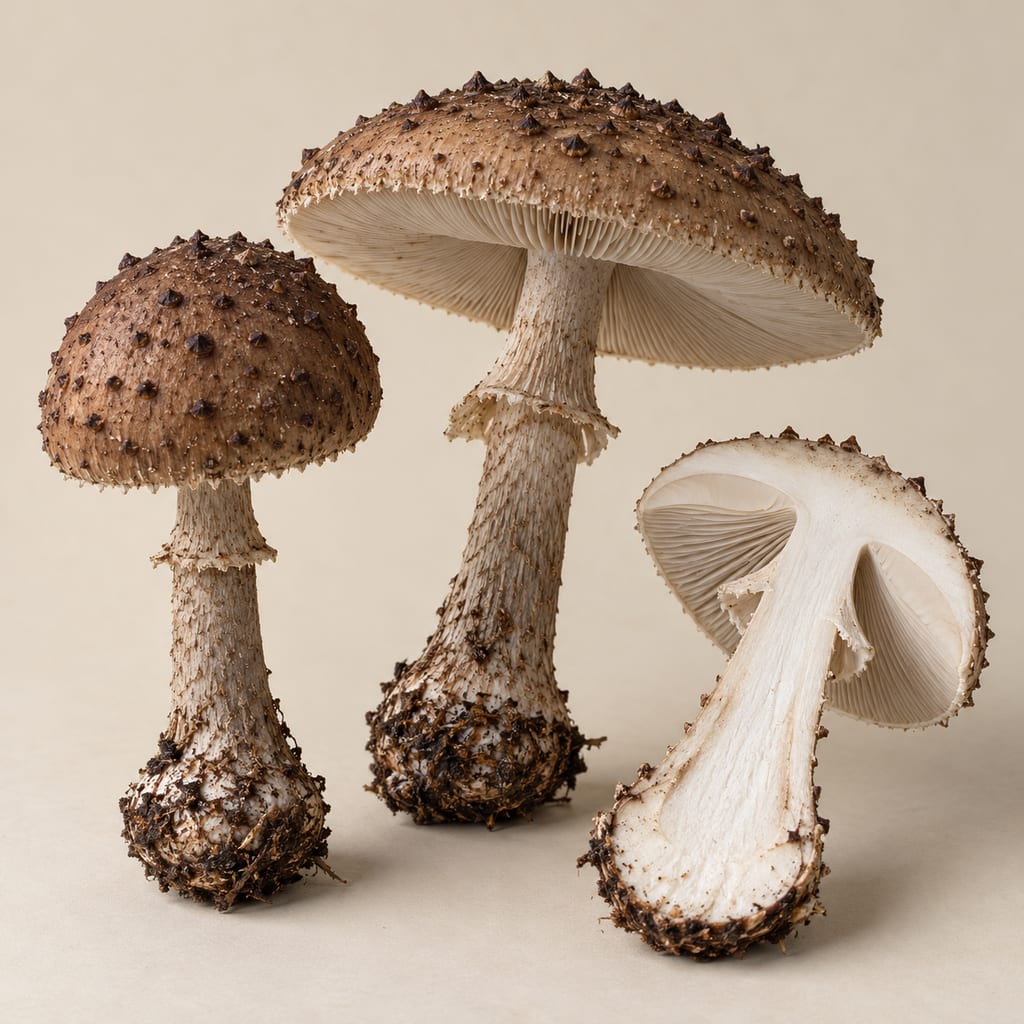
A wild ectomycorrhizal Amanita of the Congo rainforest, recorded as locally consumed in Tshopo province. Its preparation was not established, and the genus includes deadly species.
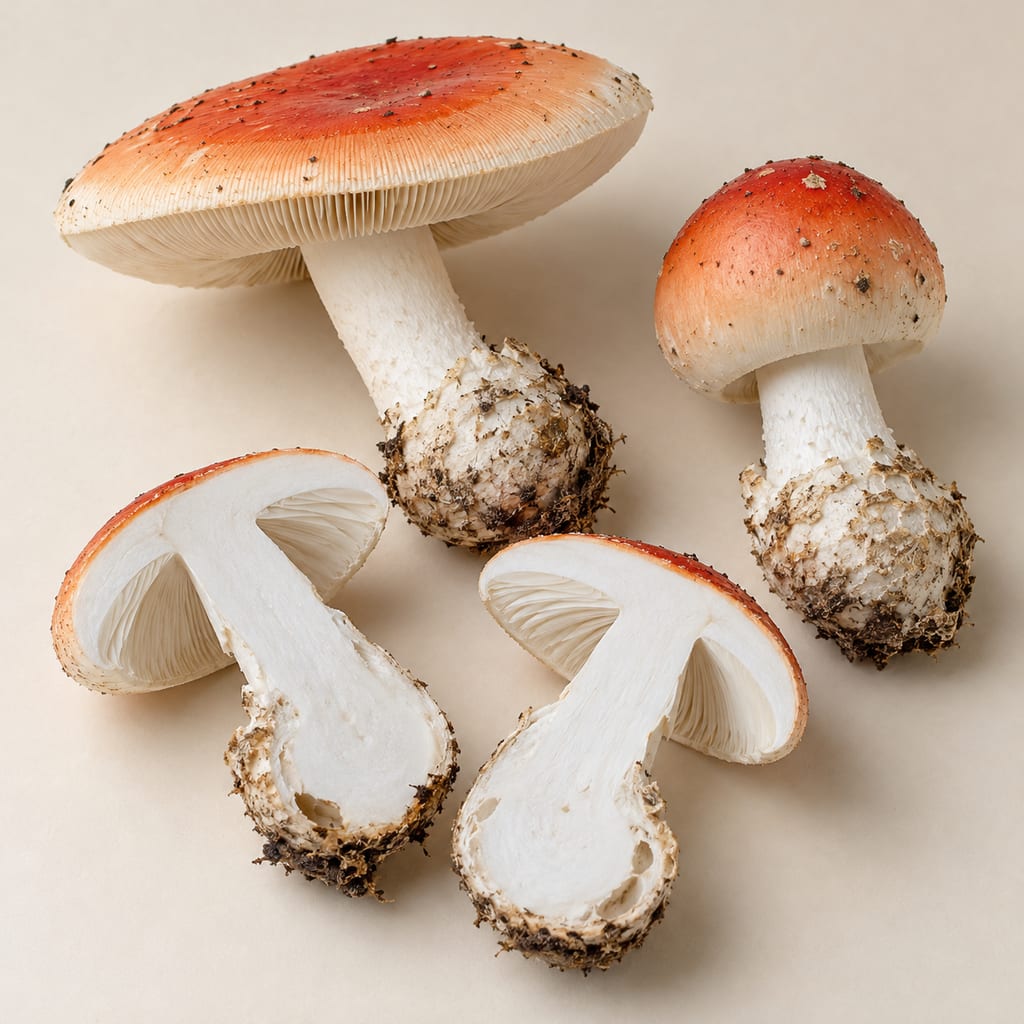
Amanita robusta Beeli is a poorly documented Central African Amanita known from voucher-backed rainforest collections in the Democratic Republic of the Congo and Cameroon. A Tshopo study reports local food use for a taxonomically supported voucher, but neither that record nor the name makes an unknown Amanita safe to identify or eat.
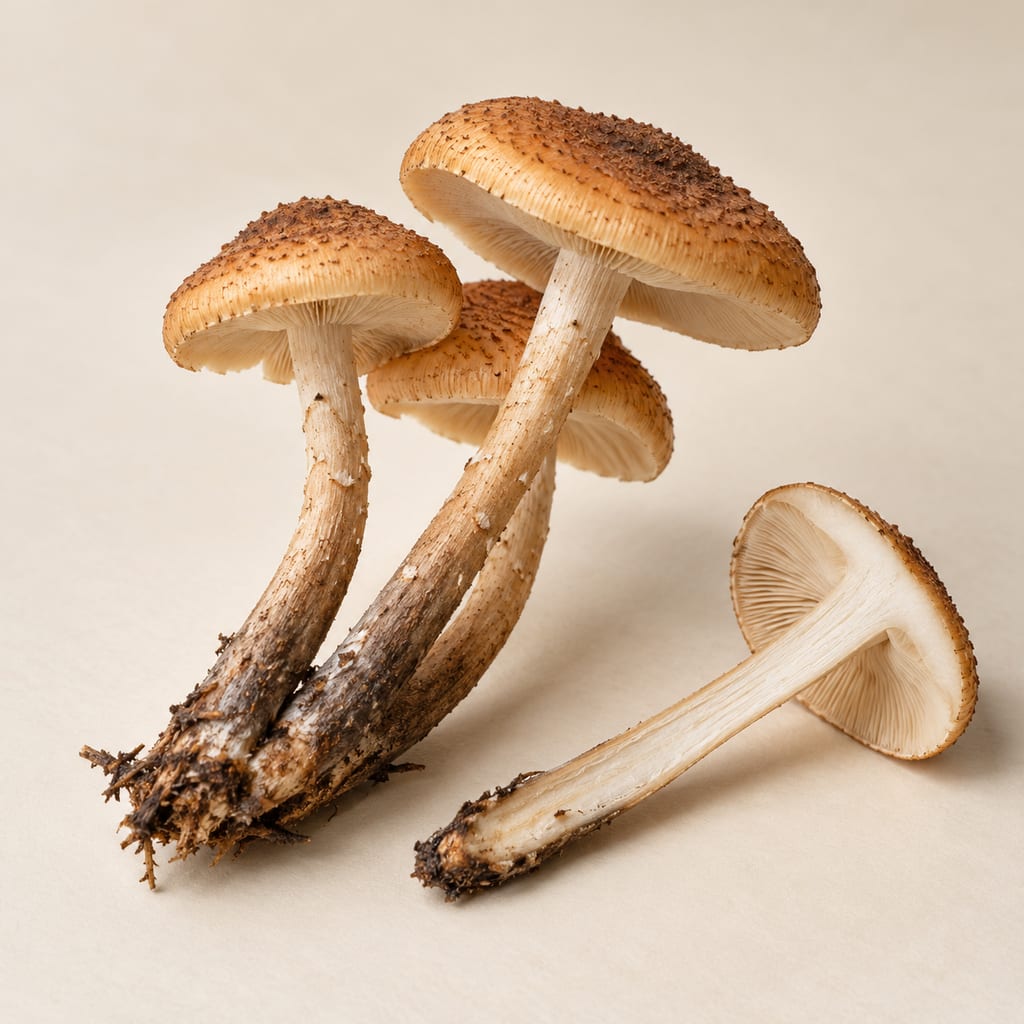
Armillaria heimii is a saprotrophic fungus of the honey-fungus genus, recorded as a wild food in Tshopo province, DR Congo. Its preparation and safety are not established in the sources.
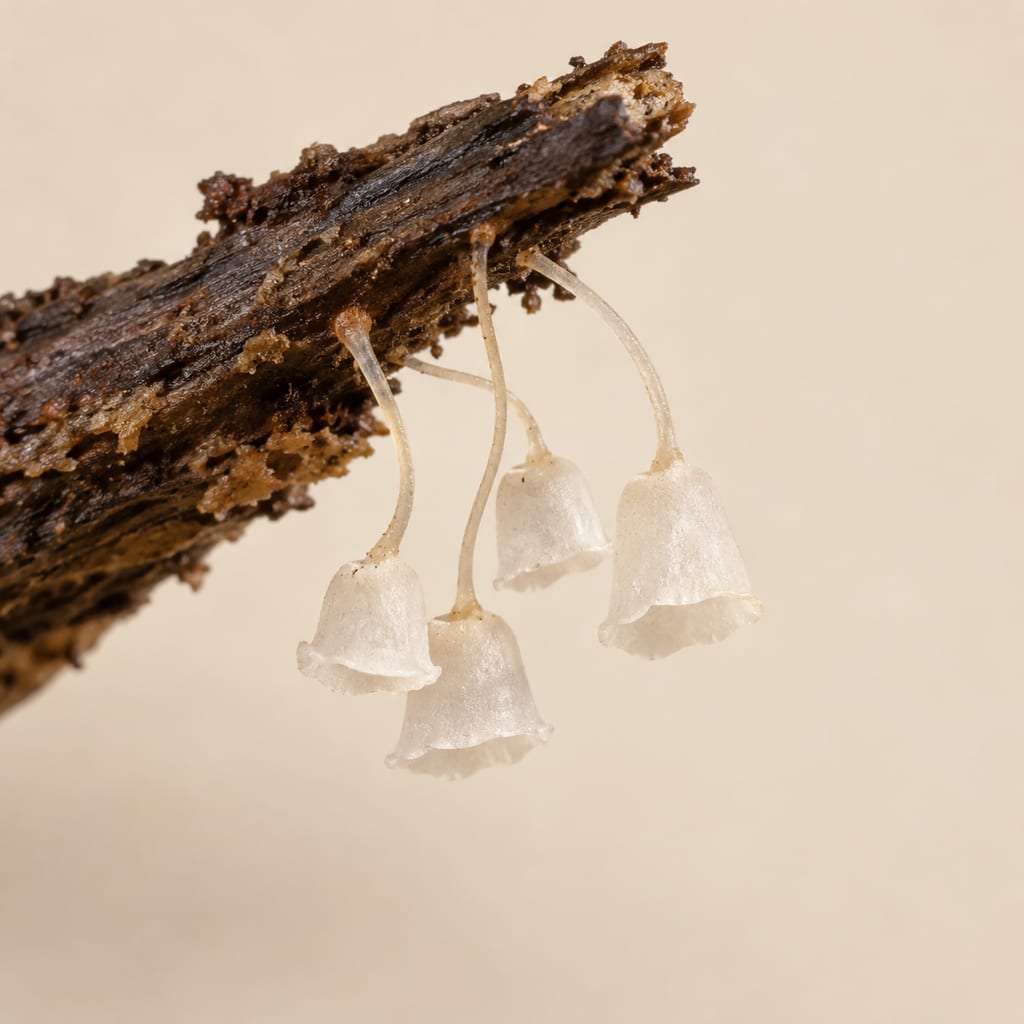
Calyptella longipes is a wood and litter decaying fungus of the rainforests of Tshopo province, DR Congo, where some ethnic groups in voucher-backed interviews eat it. Its preparation was not recorded.
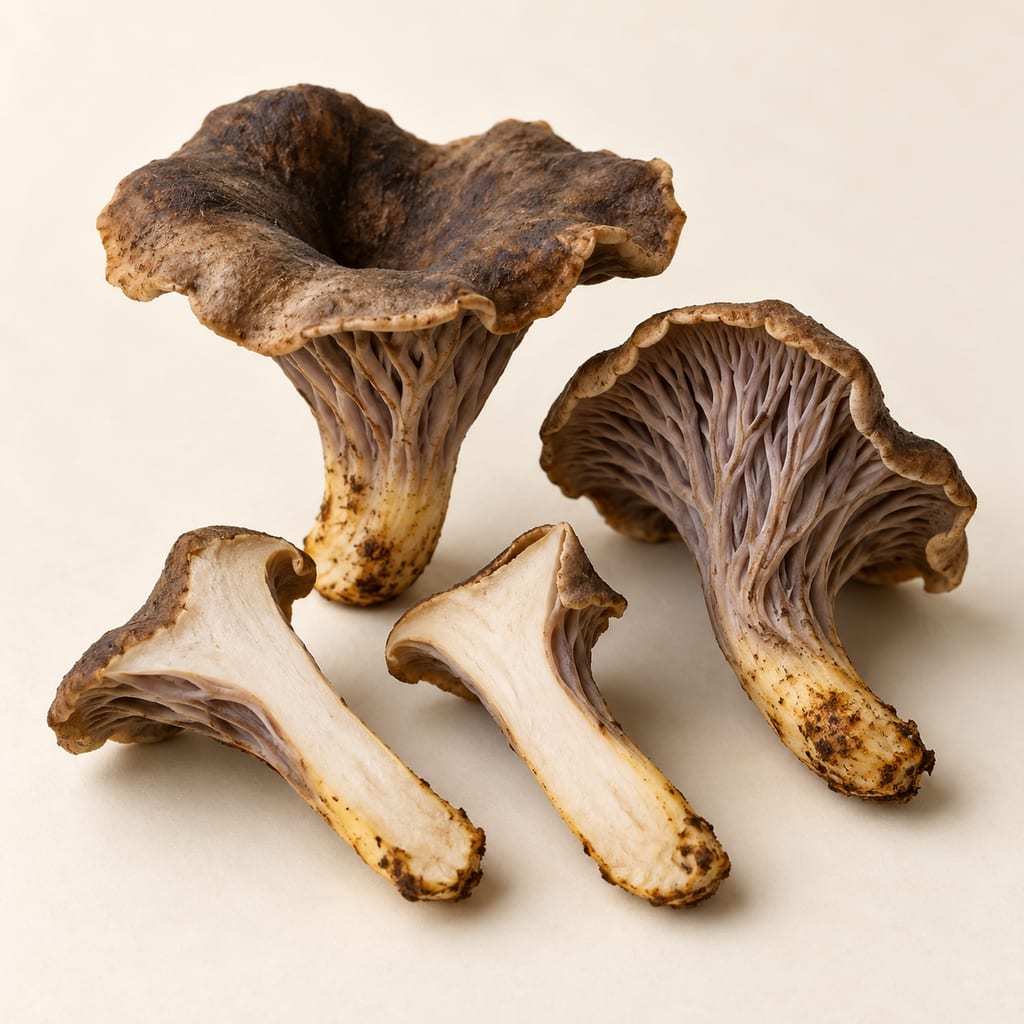
Cantharellus congolensis is an ectomycorrhizal chanterelle of sub-Saharan Africa, eaten in the Democratic Republic of the Congo under local names. Its edibility rests on food-use surveys, not on toxicity tests.
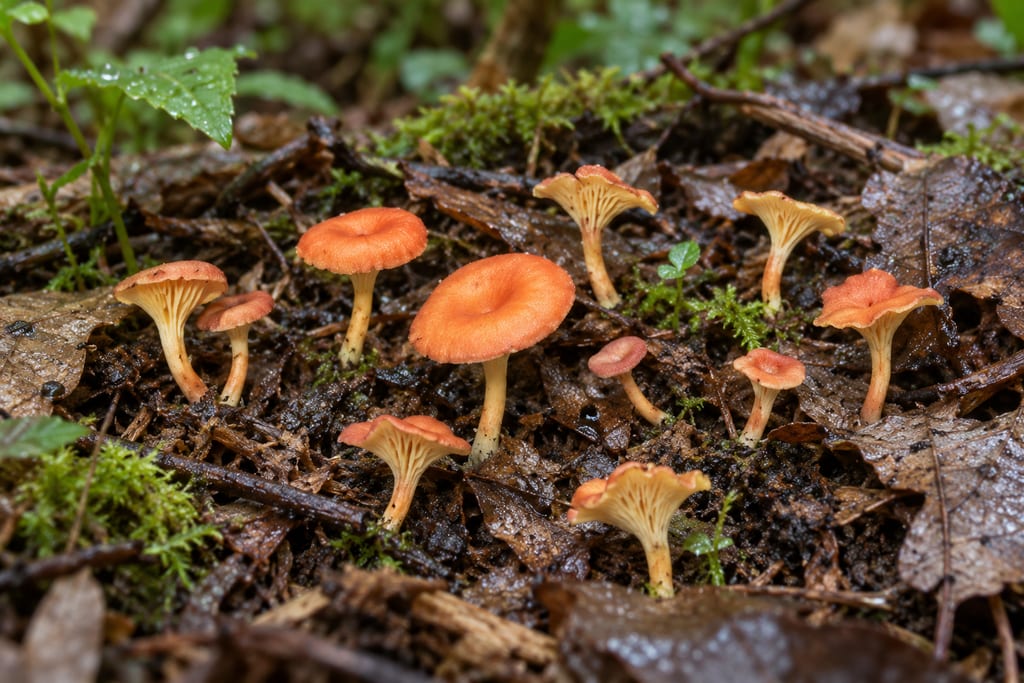
Cantharellus floridulus is an ectomycorrhizal rainforest fungus that informants in Tshopo province, DR Congo, eat in voucher-backed interviews. Its preparation is not recorded, and the source gives no toxicity statement.
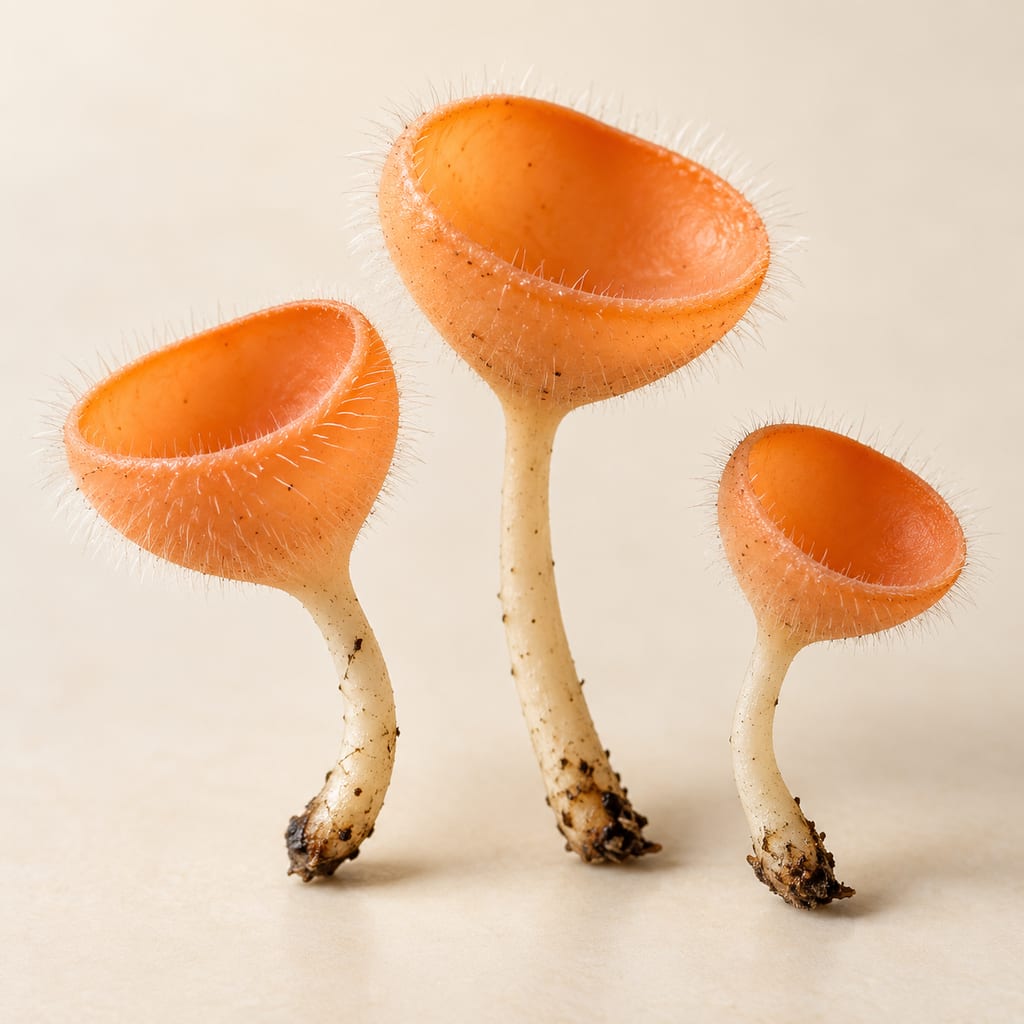
A forest cup fungus of the Tshopo province in the Democratic Republic of the Congo, recorded in local interviews as eaten. The species-level preparation is not established.
No community contributions have been published for this entry yet.
Sign in to contribute. Published comments and photos are free to read.
European Fungal TaxonomySafety · Identification · Food
Genus Gymnopilus, European Fungal Taxonomy (English version)At least one species is used as food in D.R. Congo (citing Musibono et al., 1991, and Eyi et al., 2011); the use of Gymnopilus as food is not safe; several Galerina species are lethal and contain alpha-amanitin and amatoxin; confusion with Galerina is possible and only microscopic examination separates them with certainty; 14 species of Gymnopilus contain psilocybin; no indication that African Gymnopilus are used recreationally.
Cited in: What it is; Food use in DR Congo; Safety
Journal of Ethnobiology and EthnomedicineFood · Ethnomycology
Uses and importance of wild fungi: traditional knowledge from the Tshopo province in the Democratic Republic of the CongoSix ethnic communities around Yangambi and Yoko use 73 wild fungus species: 68 for food, 9 as medicine, 2 in a recreational context and 7 in myths and beliefs (species counts overlap across uses); women are the main harvesters and holders of fungal knowledge. The part read in a search summary did not name Gymnopilus zenkeri; the full species list was not read.
Cited in: Food use in DR Congo; Notes
PubMed CentralFood · Ethnomycology
Supplied catalogue record (PMC7011311)Supplied catalogue source for voucher-backed Tshopo interviews recording the species as locally consumed; species-specific preparation not established; the catalogue states this is an ethnomycological food-use record, not a toxicological assessment. The page could not be read in this session.
Cited in: Food use in DR Congo; Safety