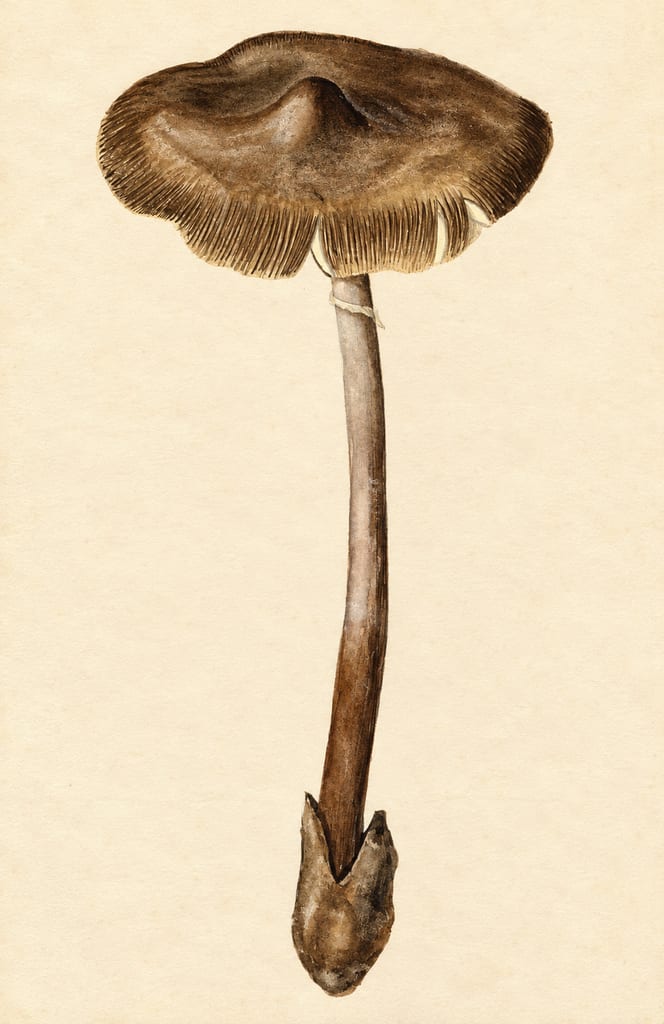
Amanita annulatovaginata
A wild ectomycorrhizal Amanita of the Congo rainforest, recorded as locally consumed in Tshopo province. Its preparation was not established, and the genus includes deadly species.
 FermenteaWhere food goes to change
Substrates
Auricularia cornea, a gelatinous wood-decay fungus recorded as food in the Congo and Asia, and cultivated and sold dried in China. It is mild in taste, and its name has been confused with Auricularia polytricha.
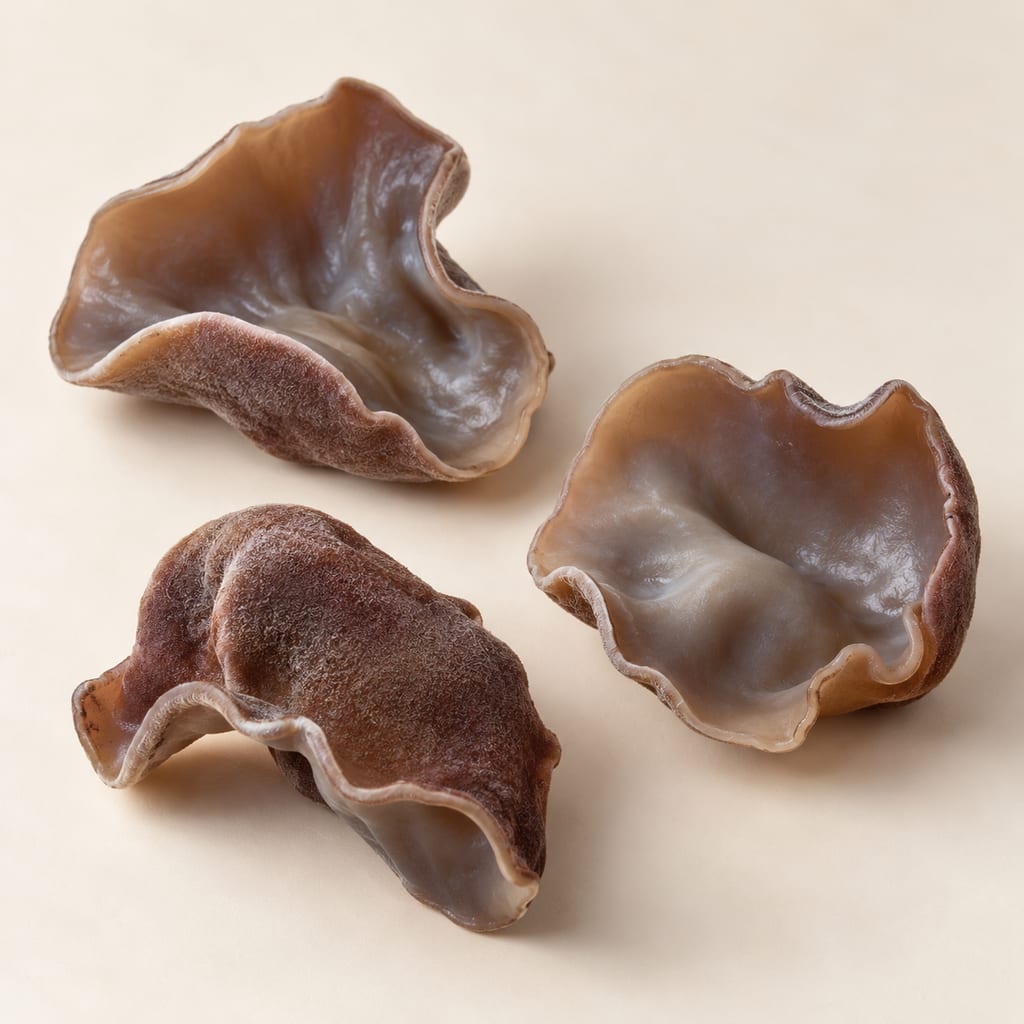
Auricularia cornea is a gelatinous fungus that grows on wood. It is called the hairy wood ear in English, and its common names in the catalogue include wood ear and cloud ear. The catalogue also records the Māori name hakeke for New Zealand material.
The species is a wood-decay fungus. Its fruiting bodies are soft and rubbery, and the texture is described as slippery but slightly crunchy. The taste is mild.
Auricularia cornea was often misidentified as A. polytricha in the older literature. The catalogue notes that the Asian cultivation name A. polytricha is frequently misapplied, and that true A. polytricha belongs with A. nigricans.
Sources on Congolese and Asian species may use older names, so any species list should be checked against current taxonomy before the name is used for a food claim.
The catalogue describes the species as a forest saprotroph that grows on decaying wood in tropical forests. A 2018 ethnomycology study of Tshopo province in the Democratic Republic of the Congo reports that the local food species it names, including A. cornea, are all wood-decaying saprotrophs.
In Tshopo, local people use wild mushrooms for food. A 2018 study of traditional knowledge from Tshopo province records 73 wild mushroom species used locally, 68 of them for food, and names A. cornea among five species that are mostly appreciated for food. The study does not give a separate use value for A. cornea, and the catalogue records that the species-specific preparation was not established.
In China, the species is cultivated for food and is usually sold dried. Dried pieces need to be soaked in water before use. Descriptions of Chinese cooking call it edible but tasteless, valued for its texture. In New Zealand, the catalogue records culinary use and a historic dried export to China under the Māori name hakeke.
The catalogue records the supply as wild, unknown and widely cultivated. Cultivation is documented in China, where the species is grown for the dried food market. The catalogue does not give a cultivation method for A. cornea specifically.
The catalogue describes the food-use records as ethnomycological evidence rather than an independent toxicological assessment. Documented occurrence and consumption do not establish a standardised food-safety assessment for the species.
Confusion with other Auricularia species, and with older names, means identity should be confirmed by a specialist. The records here do not establish a safe preparation method for wild material.
The 2018 Tshopo study records local food use; the record does not extend to other parts of the Democratic Republic of the Congo.
Cultivation and dried sale in China; the country is the only location the supplied record supports for this use.
The catalogue records a Māori food name and a historic dried export to China; the country is the only location given.
A wild ectomycorrhizal Amanita of the Congo rainforest, recorded as locally consumed in Tshopo province. Its preparation was not established, and the genus includes deadly species.
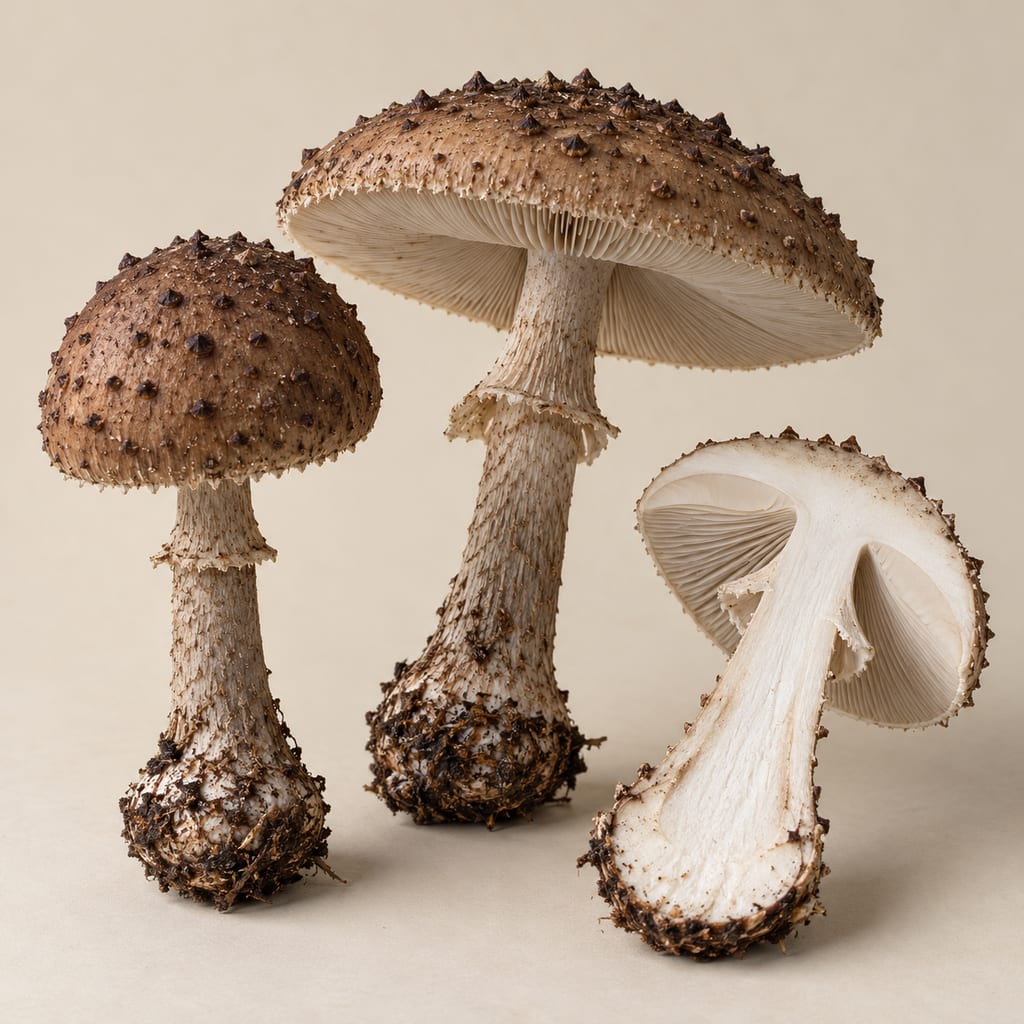
A wild ectomycorrhizal Amanita of the Congo rainforest, recorded as locally consumed in Tshopo province. Its preparation was not established, and the genus includes deadly species.
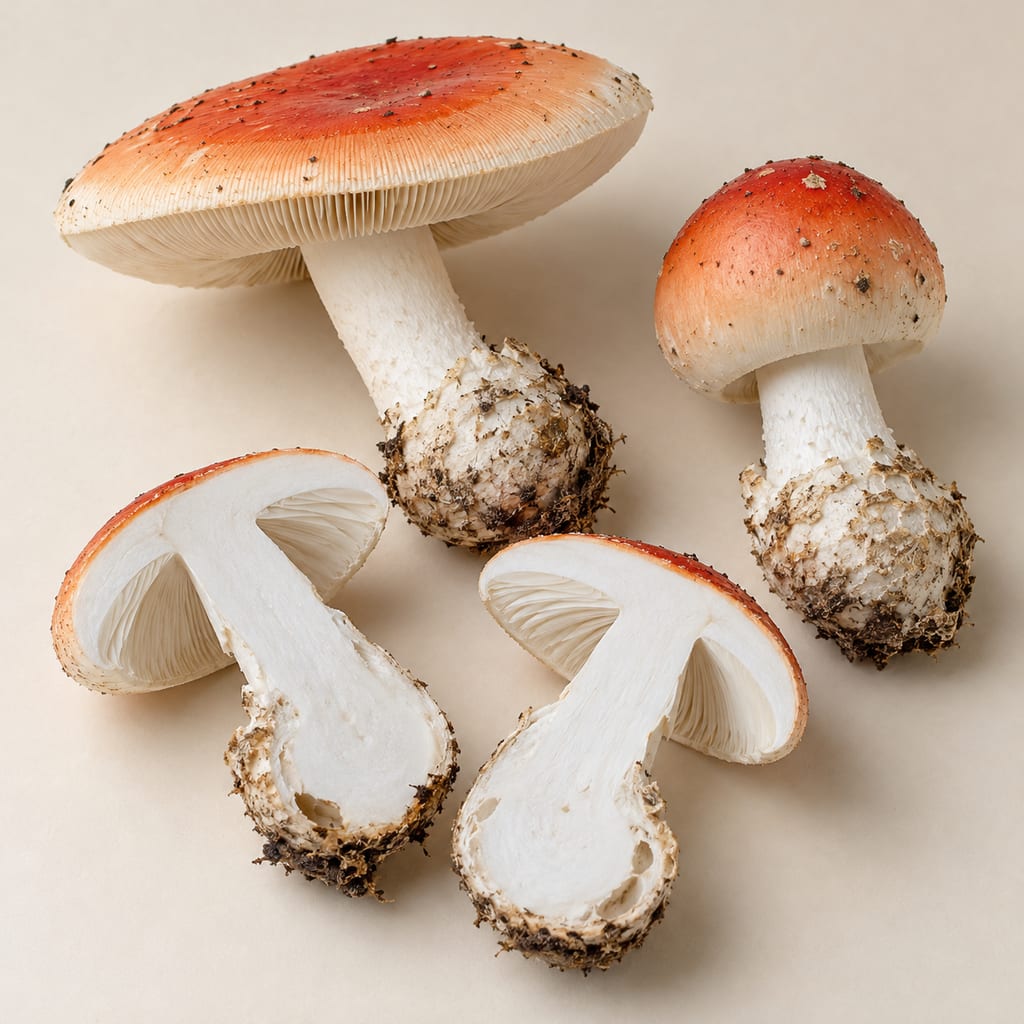
Amanita robusta Beeli is a poorly documented Central African Amanita known from voucher-backed rainforest collections in the Democratic Republic of the Congo and Cameroon. A Tshopo study reports local food use for a taxonomically supported voucher, but neither that record nor the name makes an unknown Amanita safe to identify or eat.
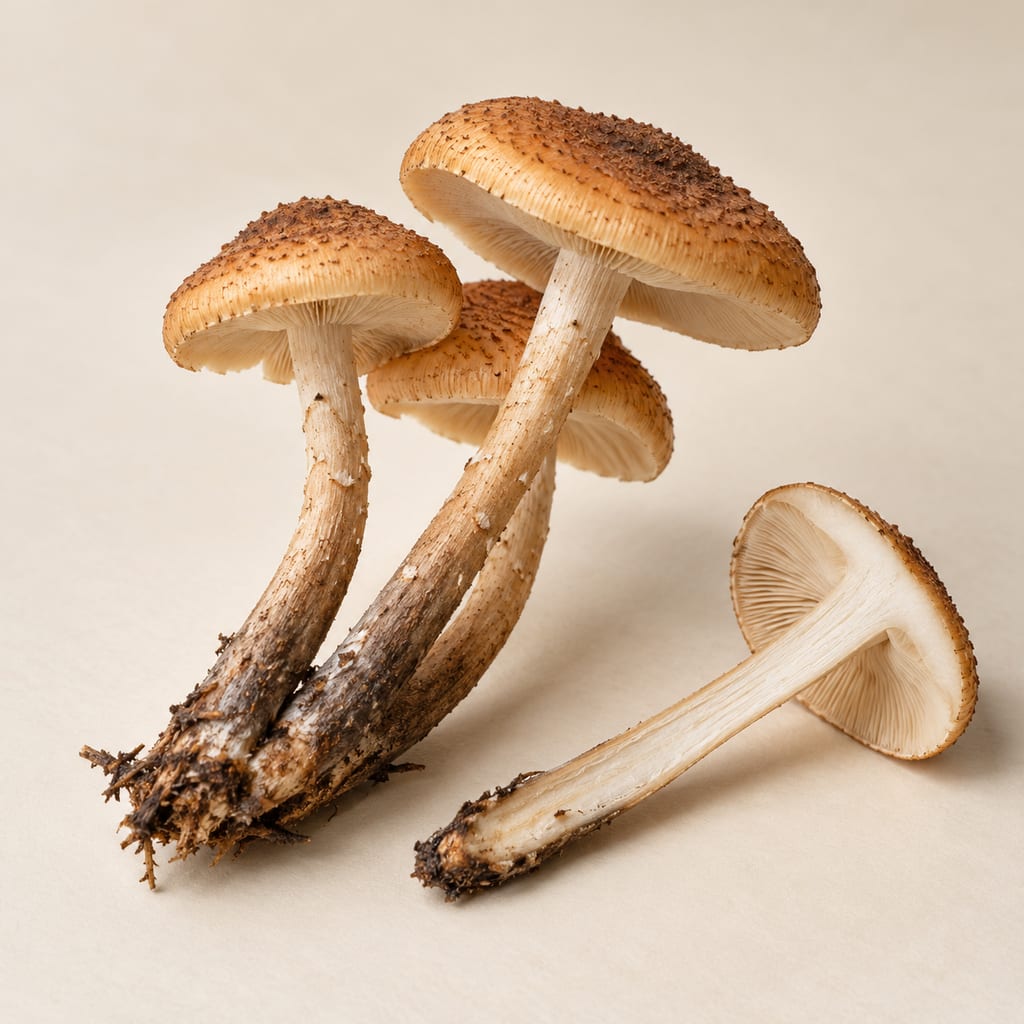
Armillaria heimii is a saprotrophic fungus of the honey-fungus genus, recorded as a wild food in Tshopo province, DR Congo. Its preparation and safety are not established in the sources.
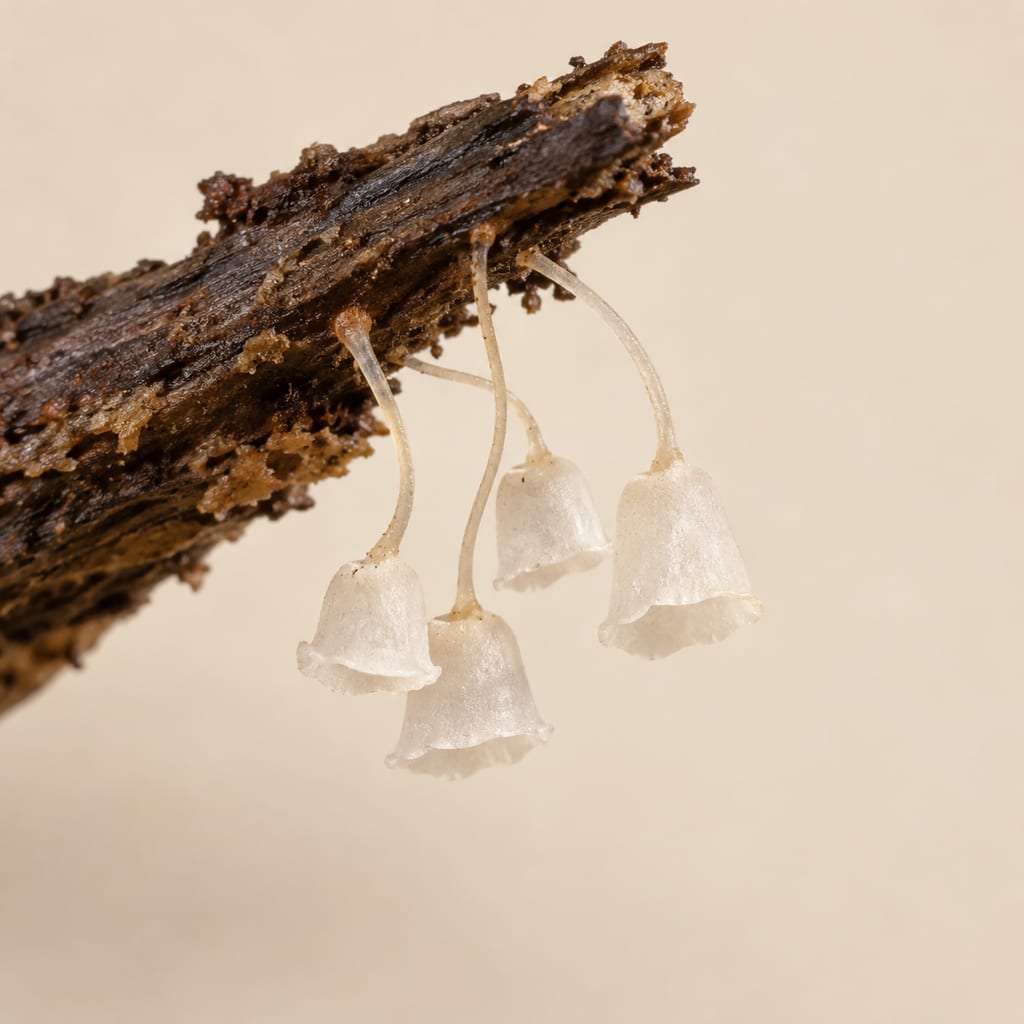
Calyptella longipes is a wood and litter decaying fungus of the rainforests of Tshopo province, DR Congo, where some ethnic groups in voucher-backed interviews eat it. Its preparation was not recorded.
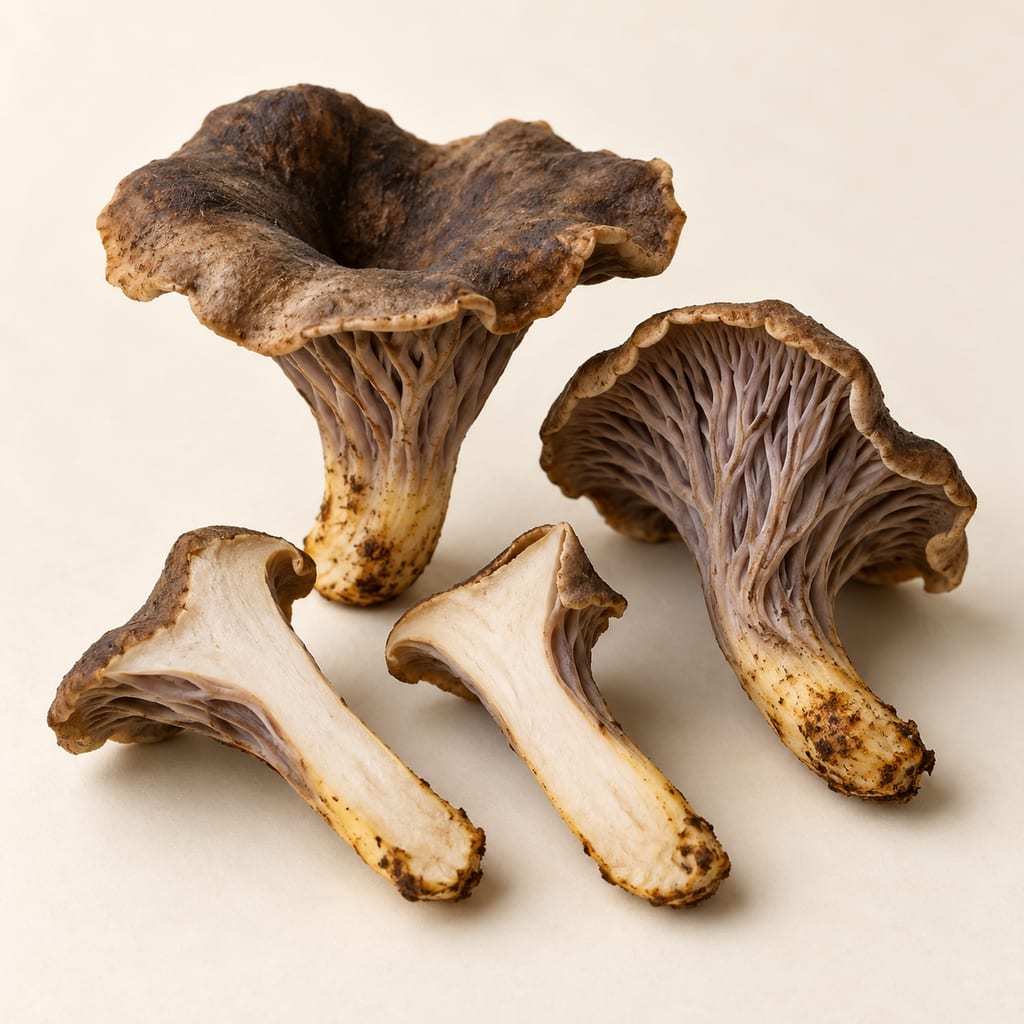
Cantharellus congolensis is an ectomycorrhizal chanterelle of sub-Saharan Africa, eaten in the Democratic Republic of the Congo under local names. Its edibility rests on food-use surveys, not on toxicity tests.
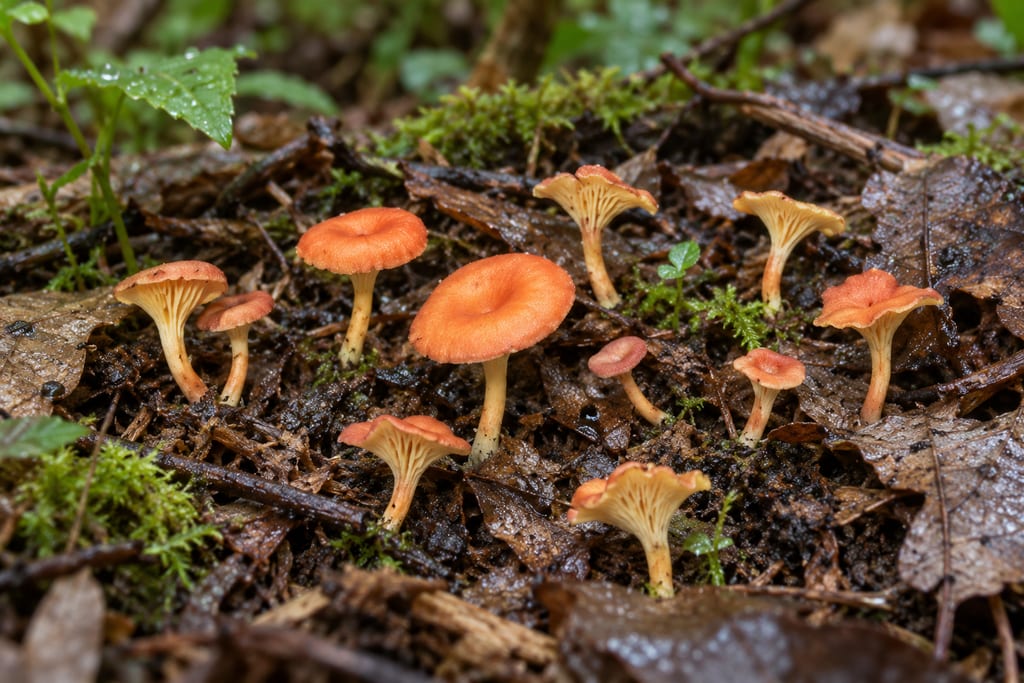
Cantharellus floridulus is an ectomycorrhizal rainforest fungus that informants in Tshopo province, DR Congo, eat in voucher-backed interviews. Its preparation is not recorded, and the source gives no toxicity statement.
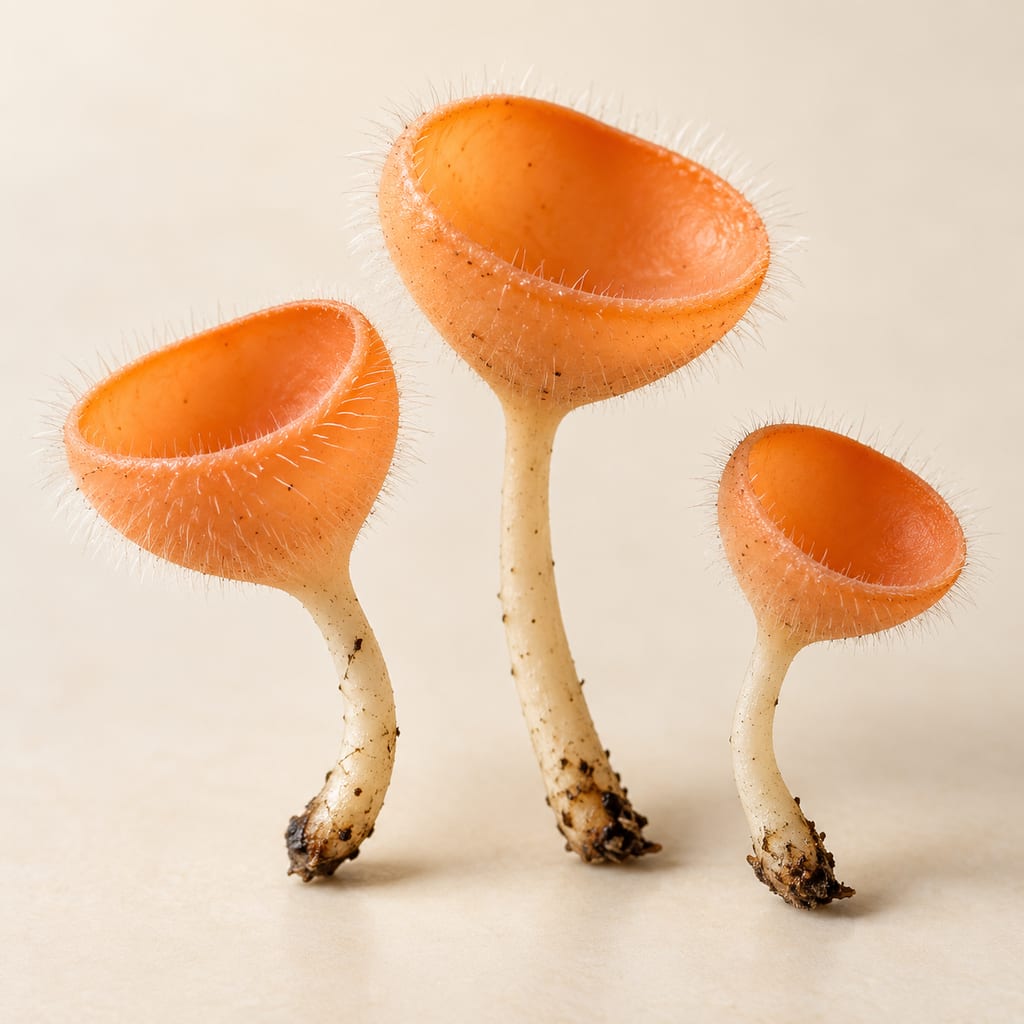
A forest cup fungus of the Tshopo province in the Democratic Republic of the Congo, recorded in local interviews as eaten. The species-level preparation is not established.
No community contributions have been published for this entry yet.
Sign in to contribute. Published comments and photos are free to read.
Journal of Ethnobiology and Ethnomedicine (2018), 14(1):13Food use · Ecology
Uses and importance of wild fungi: traditional knowledge from the Tshopo province in the Democratic Republic of the Congo73 wild mushroom species used locally, 68 for food; Auricularia cornea among five species mostly appreciated for food.
The five species are wood-decaying saprotrophs.
PubMed CentralIngredient · Food use
Supplied catalogue source for Auricularia corneaListed in the supplied catalogue among wood ear sources; cultivation and dried sale in China.
Te Ara, Ministry for Culture and HeritageFood use
Te Ara: fungi (New Zealand Encyclopedia)Māori food and historic dried export to China, as recorded in the supplied catalogue.