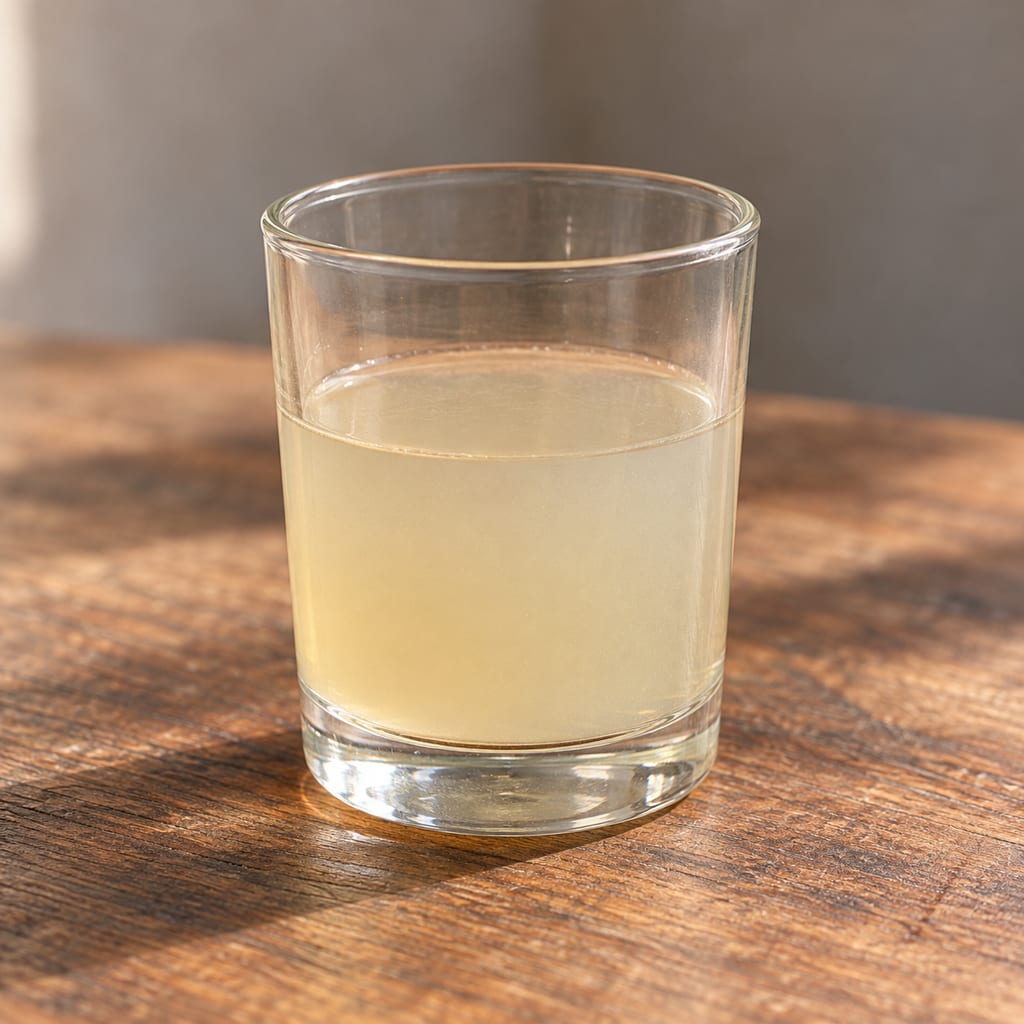
Judima
Judima is a Dimasa fermented rice drink from Assam. A 2022 Dhansiri account describes humao starter and rice fermentation, but sources disagree on the thembra bark species and do not provide a complete or validated home batch.
 FermenteaWhere food goes to change
Cultures
Humao is a sun-dried cereal starter of the Dimasa in Assam, used for Judima rice beer. Accounts of its making are single-household reports and microbial studies describe single sample sets, not a standard.
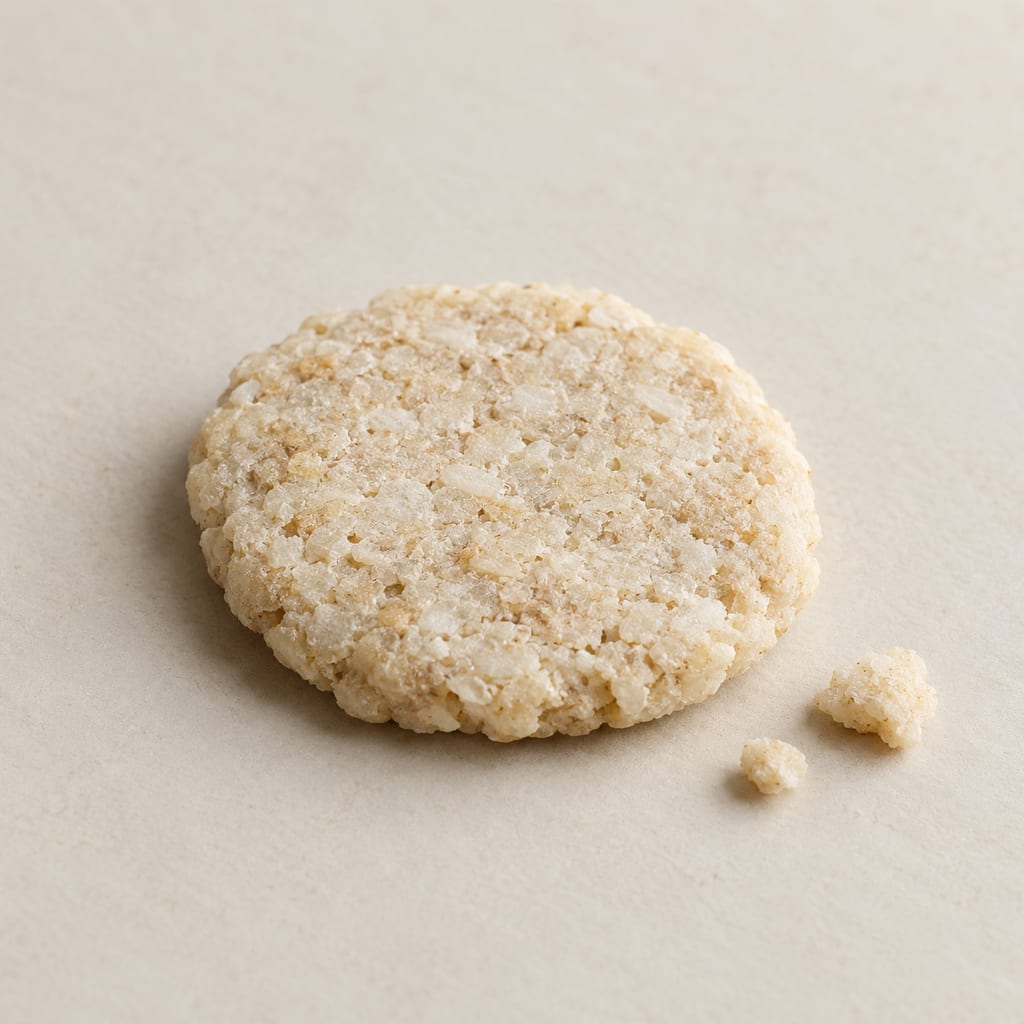
Humao is one of several named sun-dried cereal starters associated with Northeast India. A 2019 study identifies Humao with Assam and lists it alongside Chowan, Dawdim, Hamei, Khekhrii and Phut. This establishes a named starter and a study-region association. It does not mean that all regional cereal cakes, commercial inoculants or laboratory isolates are Humao.
The word Humao alone does not specify a fixed strain or recipe. The study concerns material collected under that name; it does not establish a single origin, a uniform formulation, or the full range of producers’ practices.
A 2018 regional survey groups Emao and Humao in one section. It identifies Emao with the Bodo community and says Dimasa people use the name Humao. A later study documents Bodo Emao separately, and other sources identify Humao as the starter of the Dimasa Kachari for Judima. This supports a comparison between two named traditions, not a single standardized cake and not a claim that one can substitute for the other.
The survey describes a joint Emao/Humao process: rice, plant materials and previously made starter are combined, the dough is shaped into cakes, covered with rice straw, fermented and then sun dried. Because the passage groups two named traditions and gives no quantities or objective endpoints, it is not a definitive Humao recipe. Its details cannot be attributed to Humao specifically until Dimasa makers describe their own practice.
The 2019 researchers included one Humao sample among six named starters collected after preparation, fermentation and sun-drying in Northeast India. They analyzed fungal DNA using high-throughput sequencing. The results describe the sampled material and its detected fungal community. DNA detection does not by itself show that an organism was alive, active, beneficial or safe, and a single sample cannot define every Humao starter.
A separate study collected seven Humao samples and identified representative fungal isolates, and a 2024 metagenomic study analyzed finished Judima beverage rather than dry Humao cakes. These methods and sample sets describe particular materials; they do not establish one universal Humao community or recommend any detected organism as a starter.
The 2019 article’s introduction summarizes a broad cake-making pattern for most of the starters it names: soaked cereal, locally available plants and some previously prepared powdered starter are combined with water, shaped, covered during fermentation and sun-dried. This is background across several named starters, not a Humao-specific formulation.
A 2022 study of Judima in Dhansiri village, Dima Hasao, includes a description of one local Humao cake-making account. The researchers interviewed 100 people and collected fresh and preserved Judima from one family known locally for brewing. They report rice, locally named thempra bark and water in the starter mixture; cakes around 5–7 cm in radius and 80–100 g; and 15–20 g of older rice material sprinkled over the cakes. The article says the cakes were sun-dried for four to five days. It does not identify the older material or explain whether that amount applies per cake or batch, and it gives no bark dose or complete formula.
A 2023 photo essay follows one Dimasa household in Tereh, Dima Hasao. It describes rice and thembra bark pounded together to make Humao cakes and records local ritual and seasonal contexts for Judima.
These are observations from single households, not a universal Humao specification or a reproducible instruction. The identity of the locally named thembra or thempra plant is disputed across sources. This page does not assign the bark to a species or treat proposed plants as interchangeable.
The consulted sources do not document Humao’s earliest history, a unique origin, a complete validated household method, precise plant additions and proportions, objective drying endpoints, Humao-specific stock storage, care or renewal, or food-safety controls. No species, quantity, temperature, duration or storage claim is supplied here beyond the attributed observations above.
The 2019 study maps its sampled Humao to Assam; this does not establish exclusive origin or distribution.
Field accounts from Dhansiri village and from a household in Tereh describe Dimasa Humao cake making; they are single-site observations, not a district-wide standard.
Judima is a Dimasa fermented rice drink from Assam. A 2022 Dhansiri account describes humao starter and rice fermentation, but sources disagree on the thembra bark species and do not provide a complete or validated home batch.
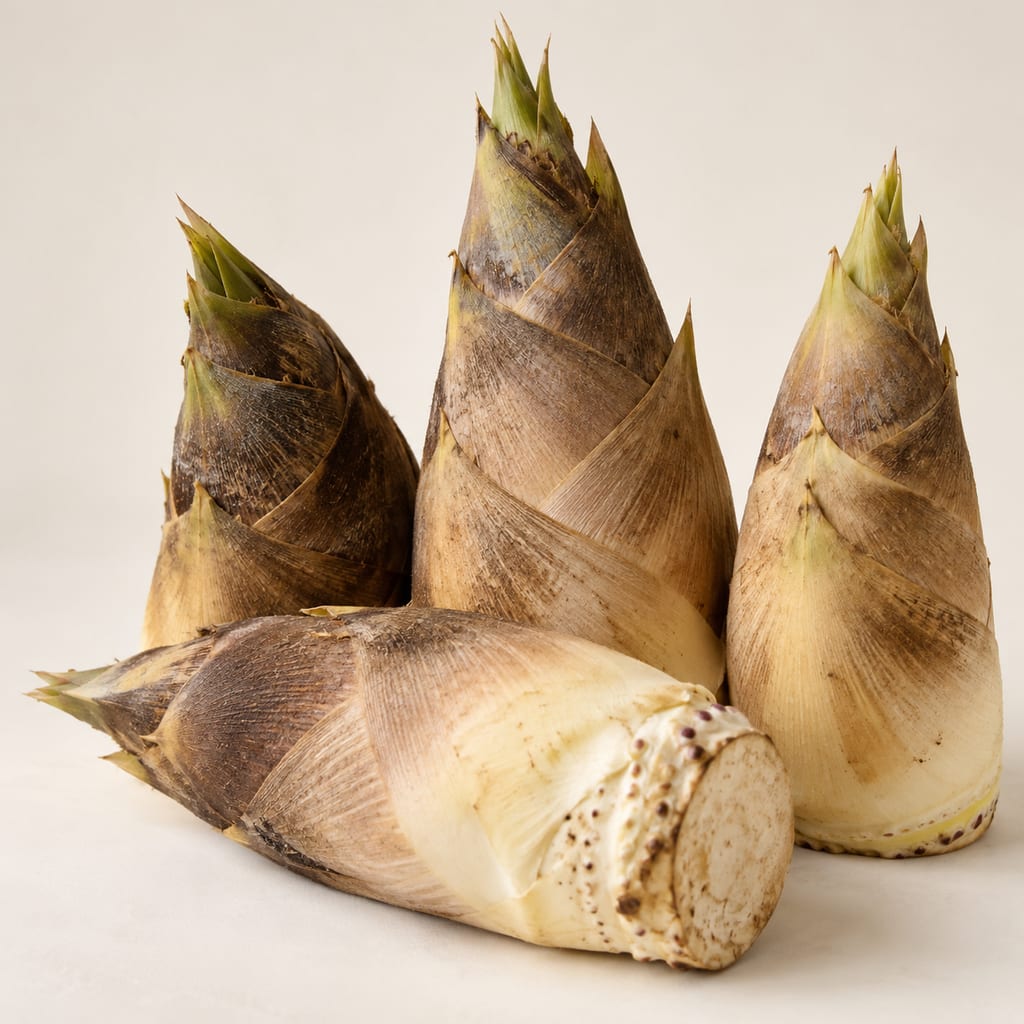
Bamboo shoots are the young culms of many bamboo species, eaten after boiling or leaching in Asia, and fermented into sour and preserved foods in the Himalayas, northeast India and Burma.
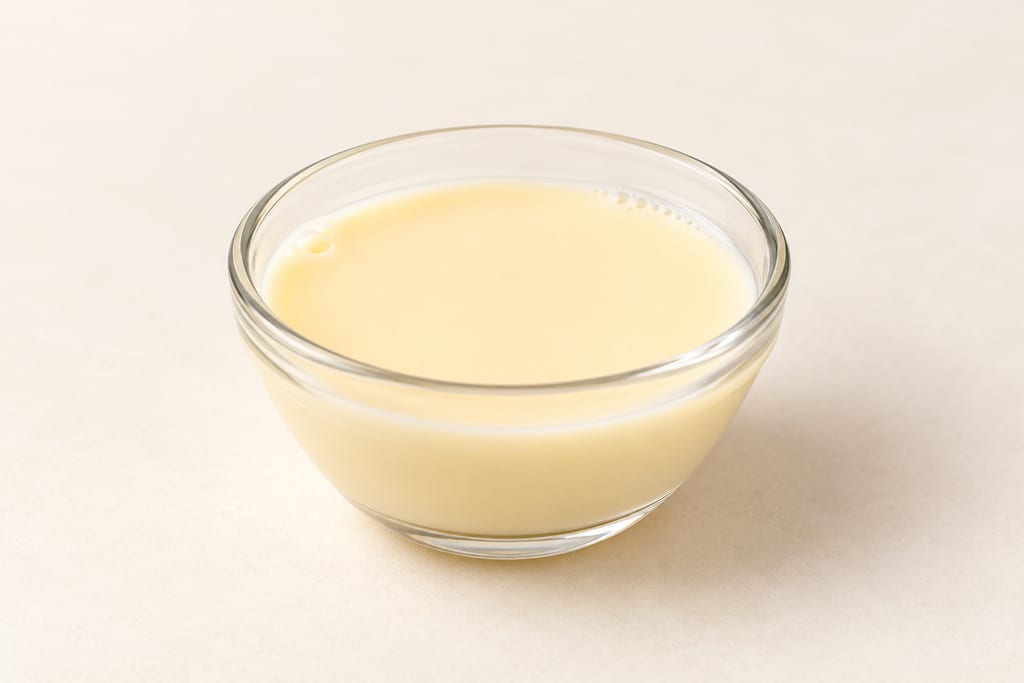
Bovine colostrum is the changing first secretion around calving, concentrated in proteins and maternal immune components; it feeds newborn calves and appears in seasonal foods and processed products.
Puntius is a genus of small freshwater fishes cited as raw material for fermented fish in northeastern South Asia. Shidal studies name the genus broadly; studies of ngari and hentak identify Puntius sophore specifically.
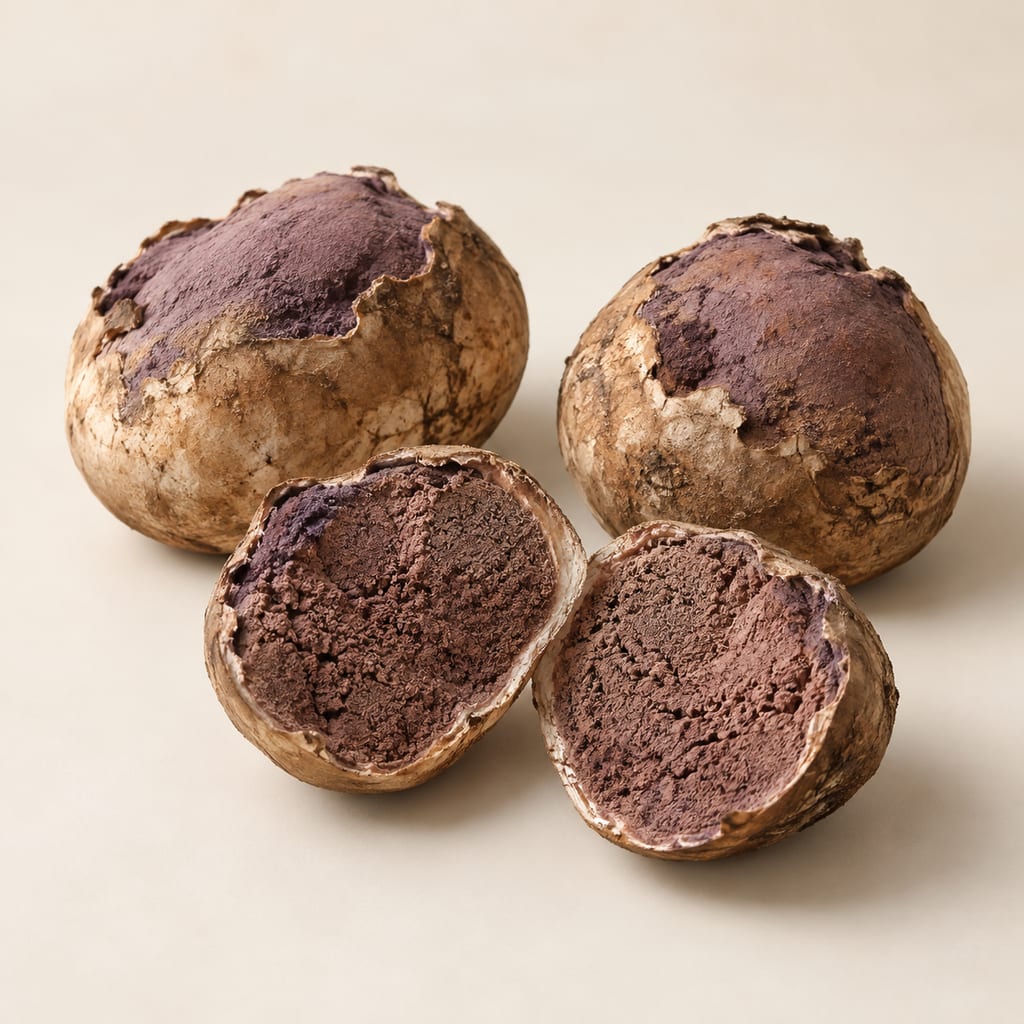
A soil-growing puffball, Calvatia cyathiformis, with white immature gleba that darkens purple as spores mature; food and seasonal records are local and do not establish a universal identification or safety rule.
No community contributions have been published for this entry yet.
Sign in to contribute. Published comments and photos are free to read.
Frontiers in Microbiology, 10, article 348Identity · Geography · Microbiology
Mycobiome Diversity in Traditionally Prepared Starters for Alcoholic Beverages in India by High-Throughput Sequencing MethodThe article names Humao as a sun-dried starter used for alcoholic beverages in Northeast India and maps the sampled Humao to Assam.
Its high-throughput sequencing study included one Humao sample among six different starters collected after fermentation and sun-drying; the reported microbial profile describes the sampled material, not every Humao cake.
The Introduction gives a broad method summary for most listed starters, but not a Humao-specific validated preparation or care protocol.
The article does not establish a first attestation, exact Humao ingredients, local plant species, renewal method, storage limit or food-safety protocol.
Cited in: A named starter, not a standardized culture; What the microbial studies show; Evidence limits
Biosciences Biotechnology Research Asia 19(4), 1133–1138Identity · Method · Geography
Documentation of Traditional Method of Preparation and Characterization of Judima, a Traditional Rice Beer of Dimasa Tribe of Assam and its Comparison with Old Preserved JudimaA field study in Dhansiri village, Dima Hasao documents one local Humao starter-making account as part of its Judima study; its observations are not a general Humao standard.
The described cake mixture includes rice, locally named thempra bark and water; the study reports cake dimensions and weights, sun drying, and older rice material of unspecified identity. It does not provide a full starter formula or clarify the older material's role.
The source's plant naming is not used to settle the disputed botanical identity of thembra/thempra across Dimasa sources.
Cited in: Two Dimasa field accounts; Evidence limits
Indian Journal of Traditional Knowledge; Sikkim University repositoryIdentity · Method
Traditional skill of ethnic people of the Eastern Himalayas and North East India in preserving microbiota as dry amylolytic startersA 2018 regional survey groups Emao and Humao in one section: it identifies Emao with the Bodo community and says Dimasa people use the name Humao.
It describes a joint Emao/Humao process using rice, plant materials and previously made starter, shaping cakes, covering them with rice straw, fermenting and sun drying, without quantities or objective endpoints.
Cited in: Humao and the neighbouring Emao; Evidence limits
The LocavoreIdentity · Method · Community context
Following Judima in Dima Hasao: A Rice Wine StoryA photo essay follows one Dimasa household in Tereh, Dima Hasao; rice and thembra bark are pounded together to make Humao cakes.
It records local ritual and seasonal contexts for Judima; these describe one household, not a region-wide standard.
Cited in: Two Dimasa field accounts
Frontiers in Microbiology; PubMed CentralMicrobiology
Diversity of Filamentous Fungi Isolated From Some Amylase and Alcohol-Producing Starters of IndiaSeven Humao samples were collected and representative fungal isolates identified; the results describe those samples.
Cited in: What the microbial studies show
Frontiers in MicrobiologyIdentity · Microbiology
Metagenomic insights into traditional fermentation of rice-based beverages among ethnic tribes in southern Assam, Northeast IndiaThe study analyzed finished Judima beverage rather than dry Humao cakes, and documents Bodo Emao separately from Dimasa Humao.
Cited in: Humao and the neighbouring Emao; What the microbial studies show
Scientific Reports; PubMed CentralIdentity · Microbiology
Community structure and metabolic potentials of the traditional rice beer starter 'emao'Documents the Bodo starter Emao as a separate named tradition from Humao.
Cited in: Humao and the neighbouring Emao