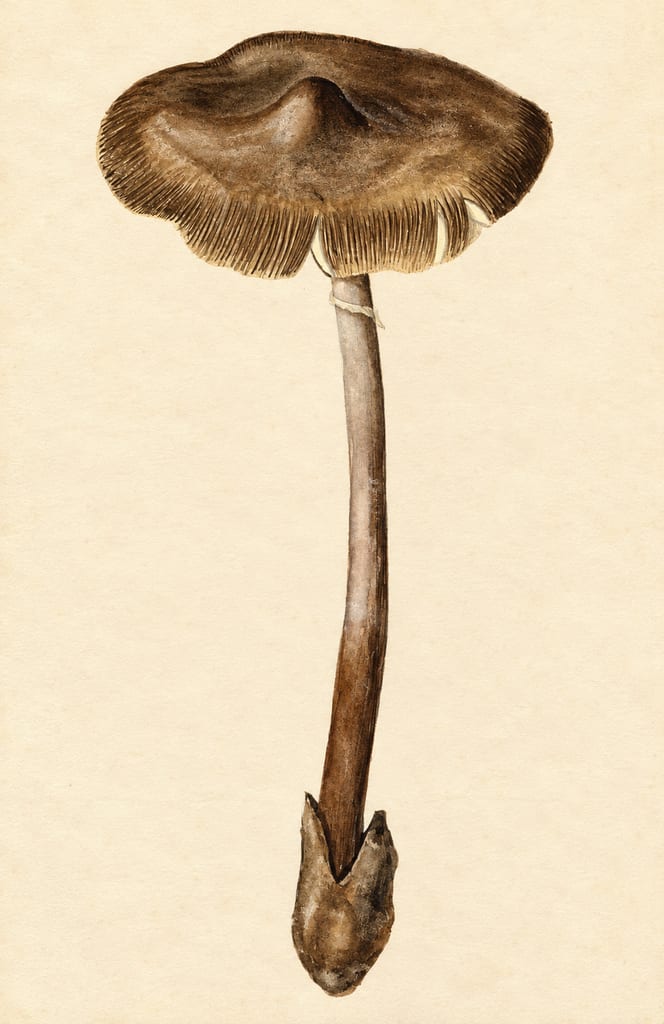
Amanita annulatovaginata
A wild ectomycorrhizal Amanita of the Congo rainforest, recorded as locally consumed in Tshopo province. Its preparation was not established, and the genus includes deadly species.
 FermenteaWhere food goes to change
Mushrooms
Hymenagaricus luteolosporus is a forest mushroom recorded as locally eaten in Tshopo Province, DR Congo, with no preparation or safety assessment established for it.
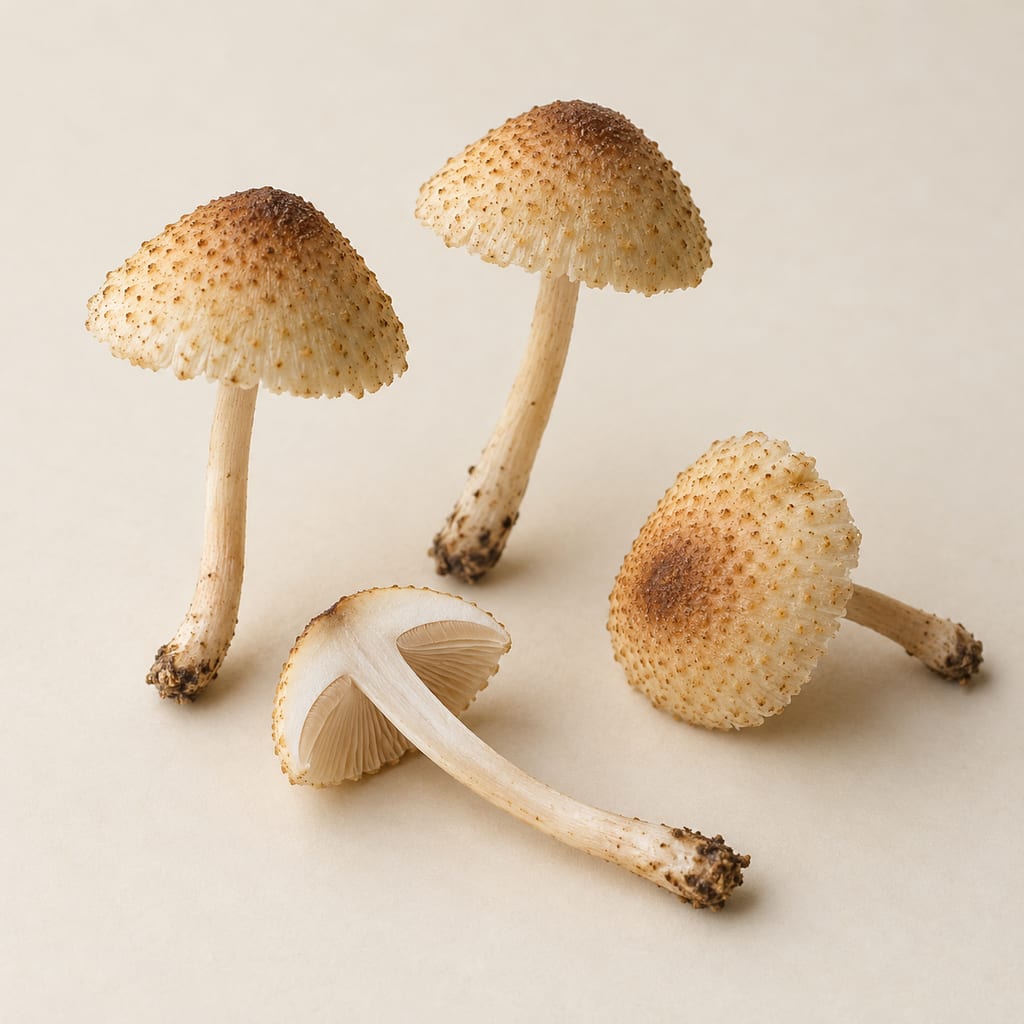
Hymenagaricus luteolosporus is the name under which the species was first described. Heinemann and Little Flower published it in 1984 in the genus Hymenagaricus, a group of agaricoid fungi in the family Agaricaceae. In 1997 Little Flower, Hosagoudar and Abraham transferred it to the genus Xanthagaricus, and the national checklist databases now treat Xanthagaricus luteolosporus as the accepted name. Older catalogues and some regional lists still use the original combination, so a reader meeting either name is probably meeting the same species.
The catalogue that supplied this record keeps the name as a research label and does not reconcile it against a current authority. The identification has therefore not been confirmed in this page. Only the nomenclatural history above is established from the taxonomic databases consulted.
The only food record for this species comes from an ethnomycological study of Tshopo Province in the Democratic Republic of the Congo. Interviews recorded the mushroom as locally consumed, and the interviews were backed by herbarium vouchers. The catalogue says the source does not establish how the mushroom was prepared, so this page does not describe a method.
The source describes the species as a forest saprotroph, a fungus that feeds on dead wood and leaf litter. It is recorded as a wild-collected mushroom. No market sale, cultivation or seasonal pattern is recorded for it.
A record of local consumption shows that people in one place have eaten this mushroom. It does not show that the mushroom is safe for any reader to eat, and it does not identify which mushroom a collector would be handling in the field. The source is an ethnomycological food-use record, not a toxicological assessment, and the catalogue states that no edibility conclusion follows from its inclusion.
Wild mushrooms in the same group of genera include look-alikes that differ in toxicity, and the catalogue does not list any. A safe identification needs a qualified specialist or a reliable local reference, and a reader should not treat this page as one.
Open questions: the species-specific preparation, the local name, the seasons of collection and whether the Tshopo records extend beyond that province are not established. A further check against the original interview record and a current taxonomic review would close the first two gaps.
The catalogue records local consumption from voucher-backed interviews in Tshopo Province. It does not establish a locality or a wider range.
A wild ectomycorrhizal Amanita of the Congo rainforest, recorded as locally consumed in Tshopo province. Its preparation was not established, and the genus includes deadly species.
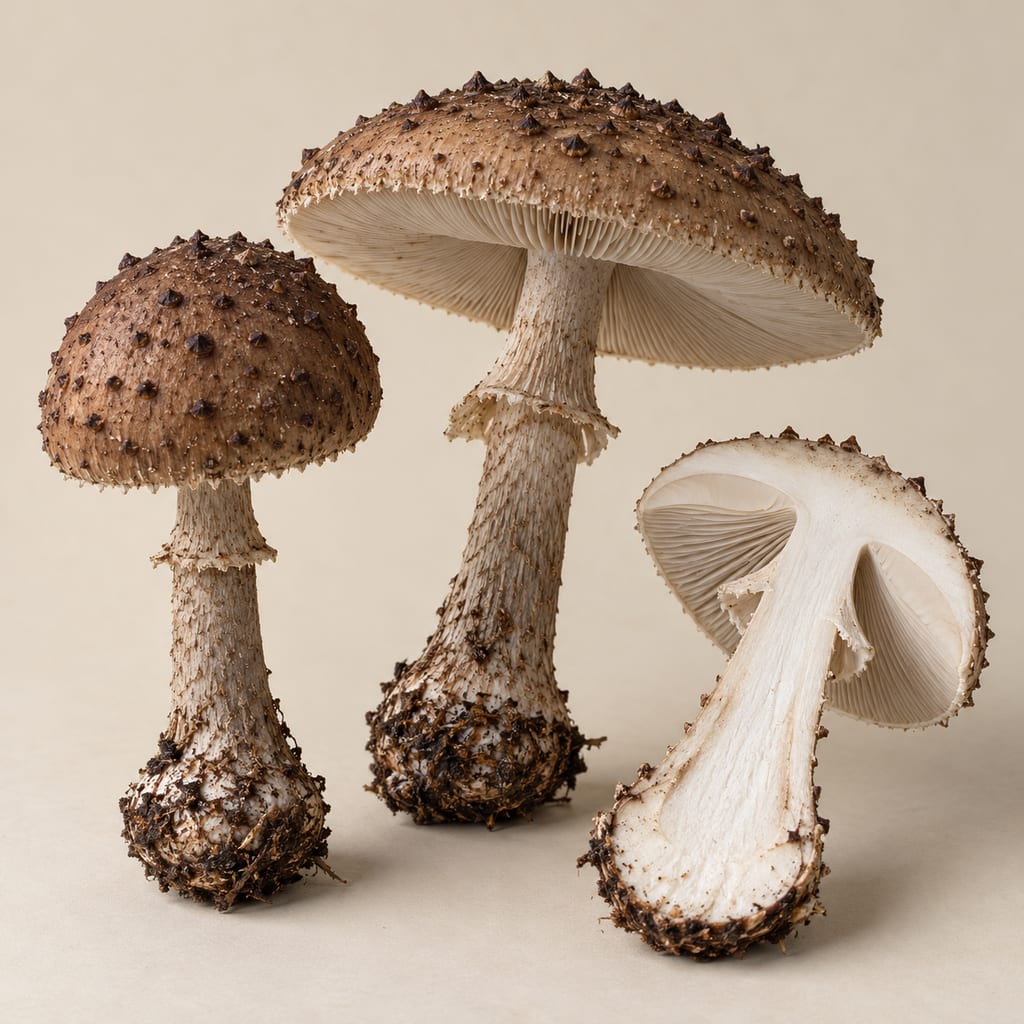
A wild ectomycorrhizal Amanita of the Congo rainforest, recorded as locally consumed in Tshopo province. Its preparation was not established, and the genus includes deadly species.
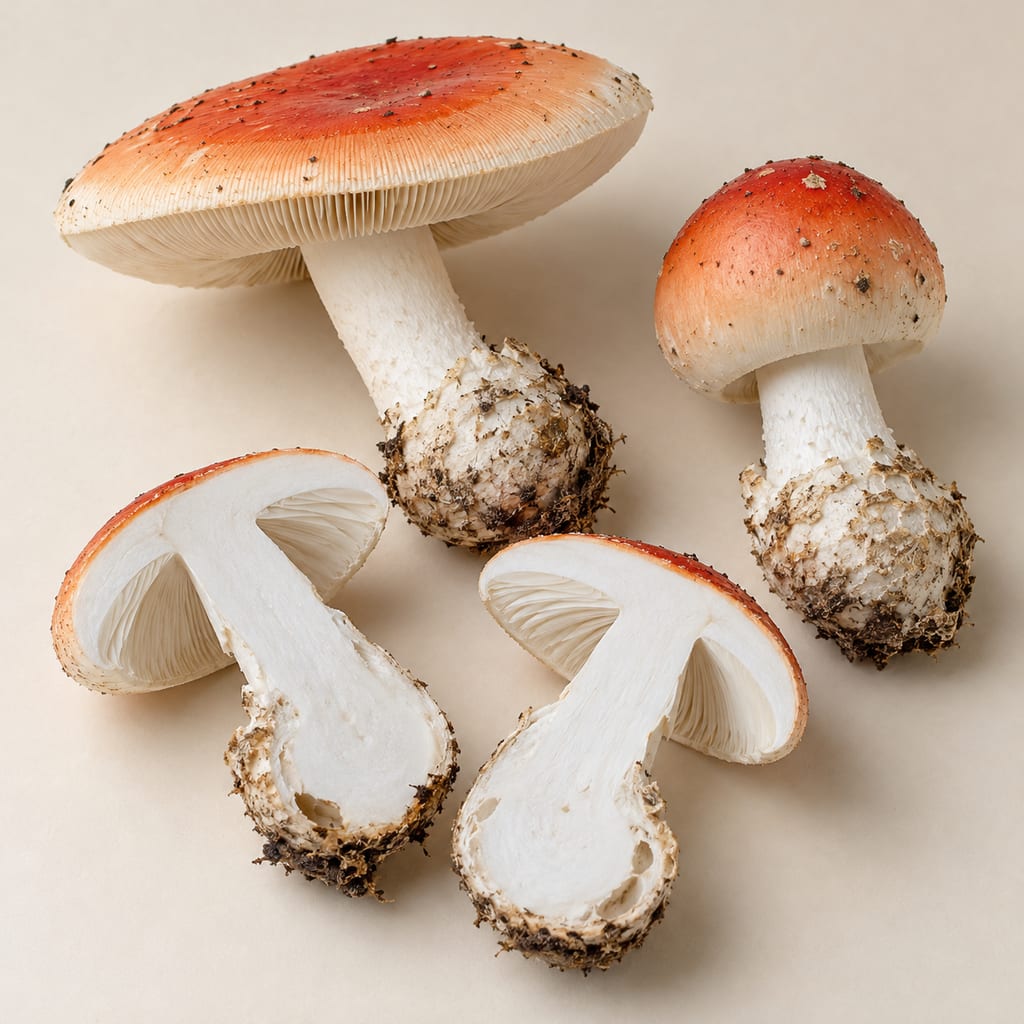
Amanita robusta Beeli is a poorly documented Central African Amanita known from voucher-backed rainforest collections in the Democratic Republic of the Congo and Cameroon. A Tshopo study reports local food use for a taxonomically supported voucher, but neither that record nor the name makes an unknown Amanita safe to identify or eat.
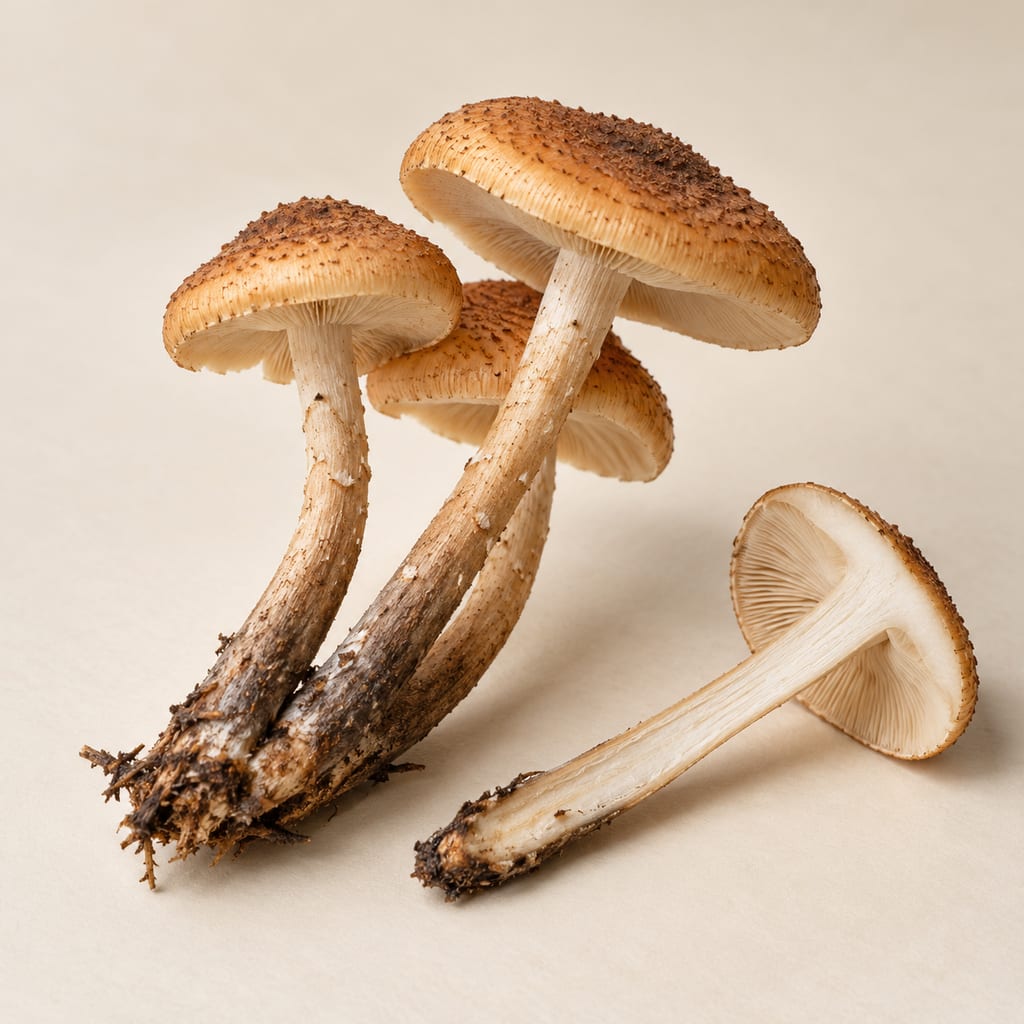
Armillaria heimii is a saprotrophic fungus of the honey-fungus genus, recorded as a wild food in Tshopo province, DR Congo. Its preparation and safety are not established in the sources.
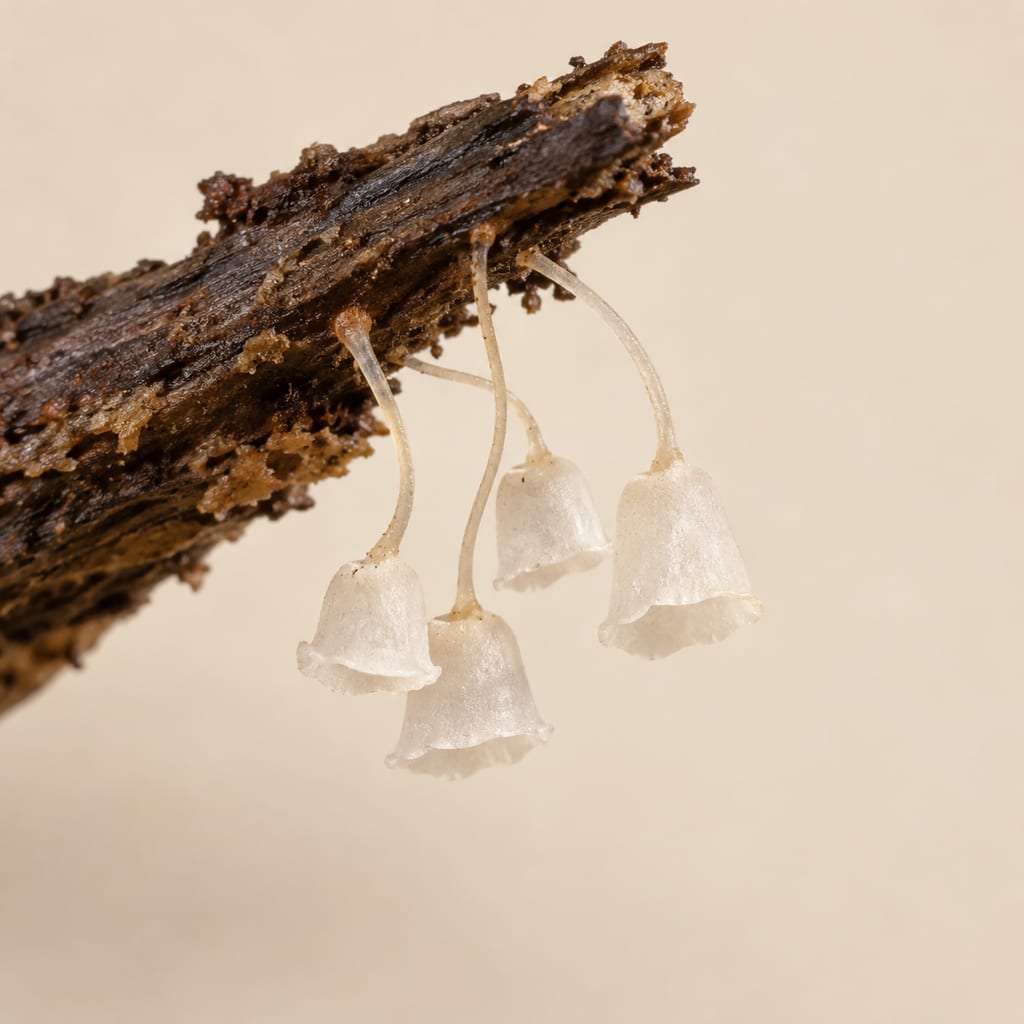
Calyptella longipes is a wood and litter decaying fungus of the rainforests of Tshopo province, DR Congo, where some ethnic groups in voucher-backed interviews eat it. Its preparation was not recorded.
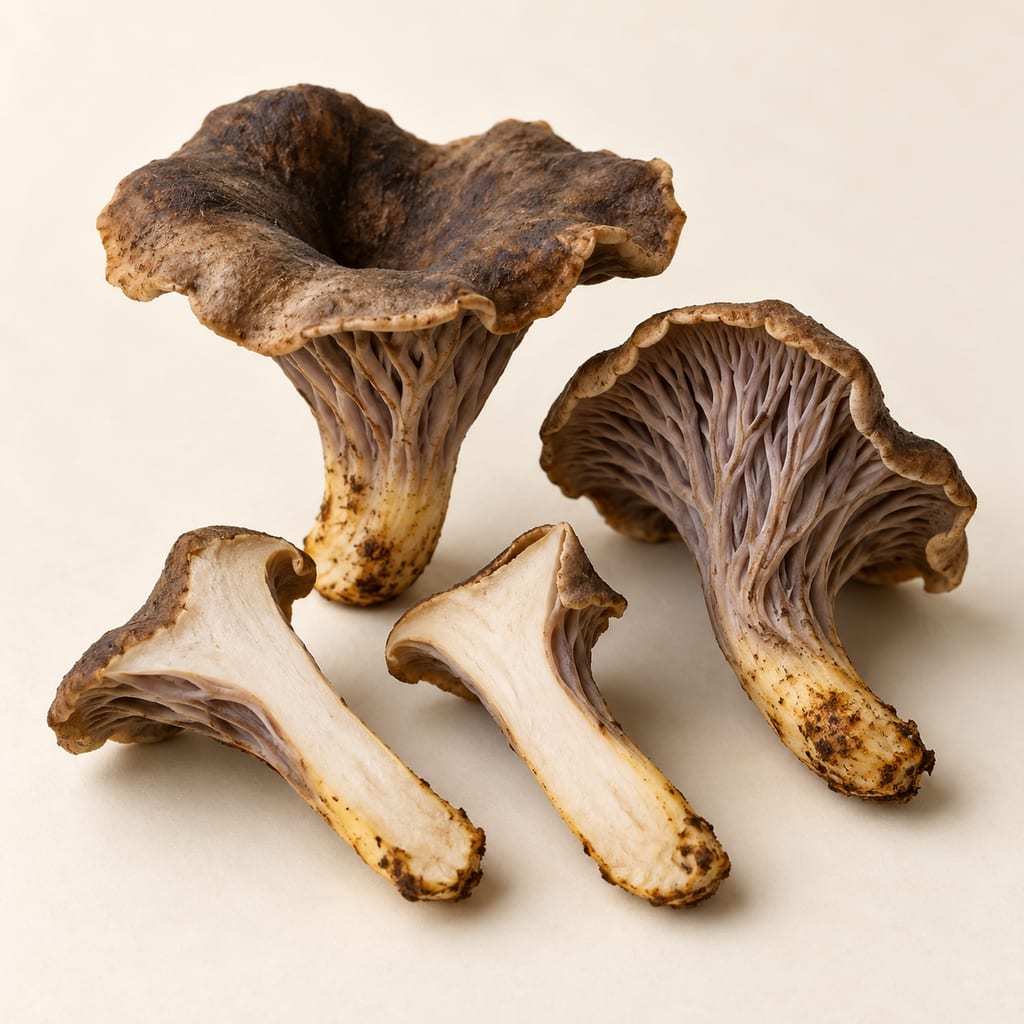
Cantharellus congolensis is an ectomycorrhizal chanterelle of sub-Saharan Africa, eaten in the Democratic Republic of the Congo under local names. Its edibility rests on food-use surveys, not on toxicity tests.
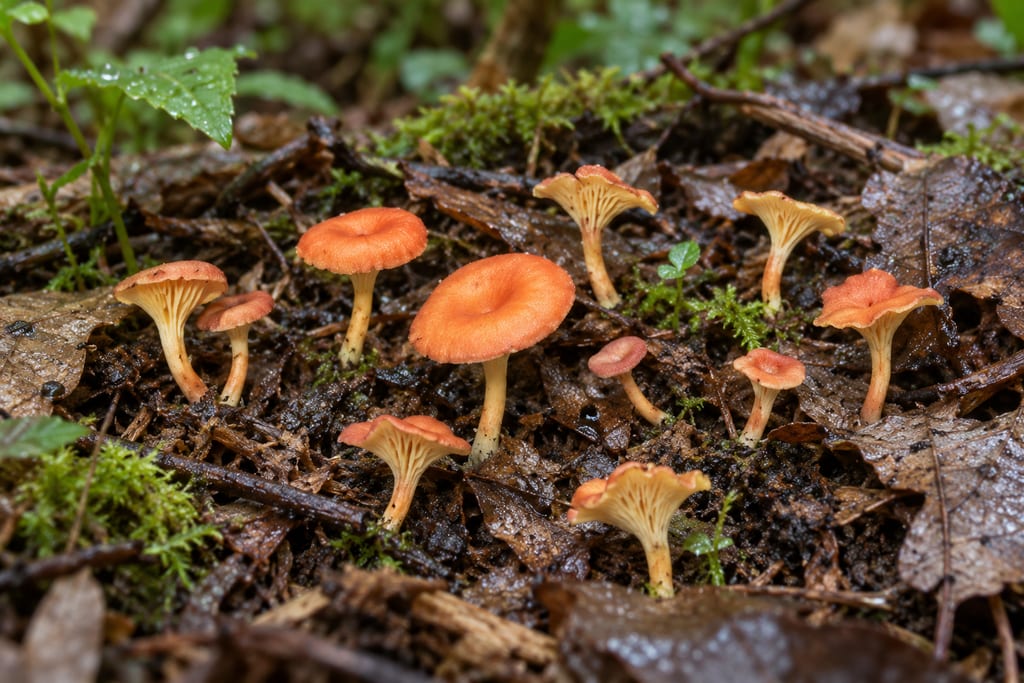
Cantharellus floridulus is an ectomycorrhizal rainforest fungus that informants in Tshopo province, DR Congo, eat in voucher-backed interviews. Its preparation is not recorded, and the source gives no toxicity statement.
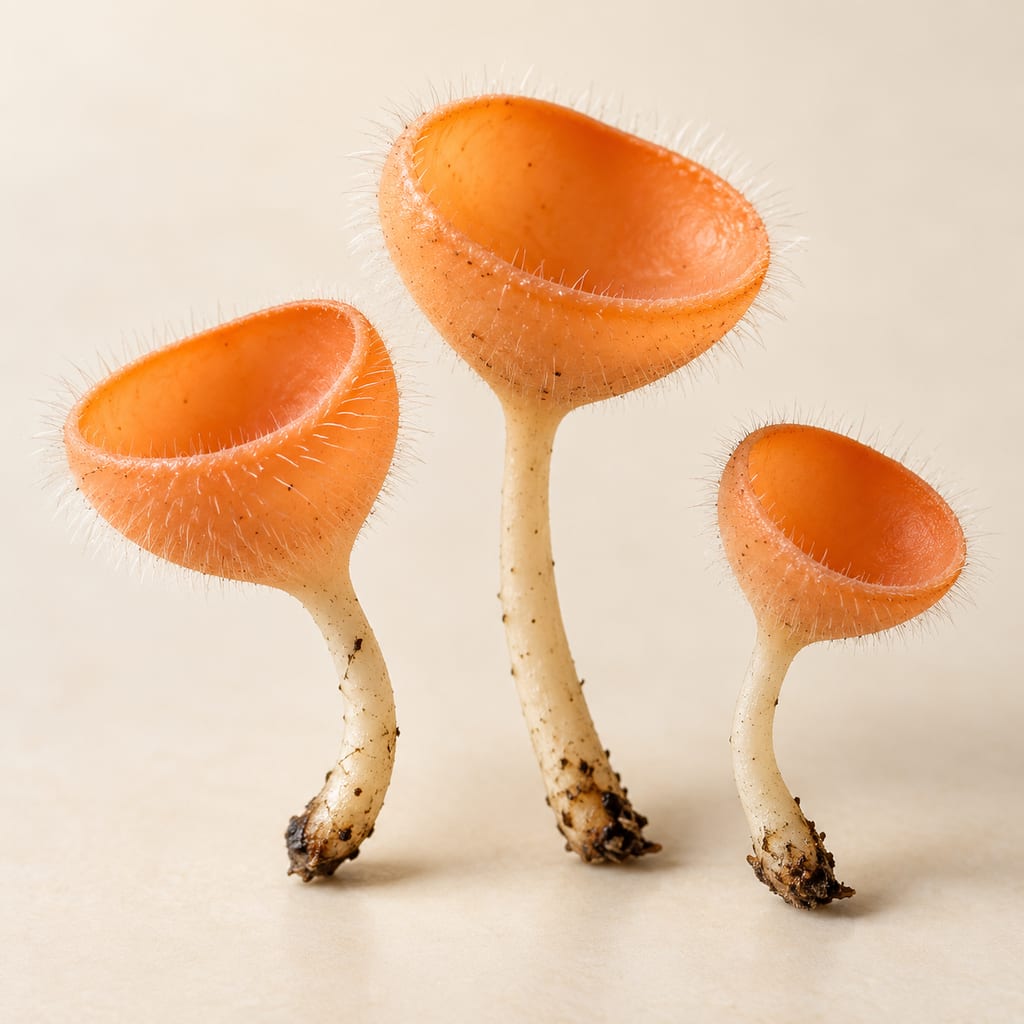
A forest cup fungus of the Tshopo province in the Democratic Republic of the Congo, recorded in local interviews as eaten. The species-level preparation is not established.
No community contributions have been published for this entry yet.
Sign in to contribute. Published comments and photos are free to read.
PubMed CentralFood use · History · Safety
Ethnomycological food-use study, Tshopo (DR Congo), as supplied in the fungi catalogue (entry F-472bddb4dfb1, source S056)Recorded as locally consumed in voucher-backed Tshopo interviews; species-specific preparation was not established in the catalogue.
Forest saprotroph reported in the source. Recorded as an ethnomycological food-use record, not an independent toxicological assessment.
Cited in: Food use in the recorded source; Safety and limits of the record; Notes
National Center for Biotechnology InformationIdentity
NCBI Taxonomy: Xanthagaricus luteolosporus (synonym Hymenagaricus luteolosporus)NCBI lists Xanthagaricus luteolosporus as the current name; the original name is Hymenagaricus luteolosporus Heinem. & Little Flower, 1984.
Cited in: Name and identity
MycoPortalIdentity
MycoPortal taxon page for HymenagaricusMycoPortal still files the species under Hymenagaricus in its North American species list, so older sources may use the original name.
Cited in: Name and identity