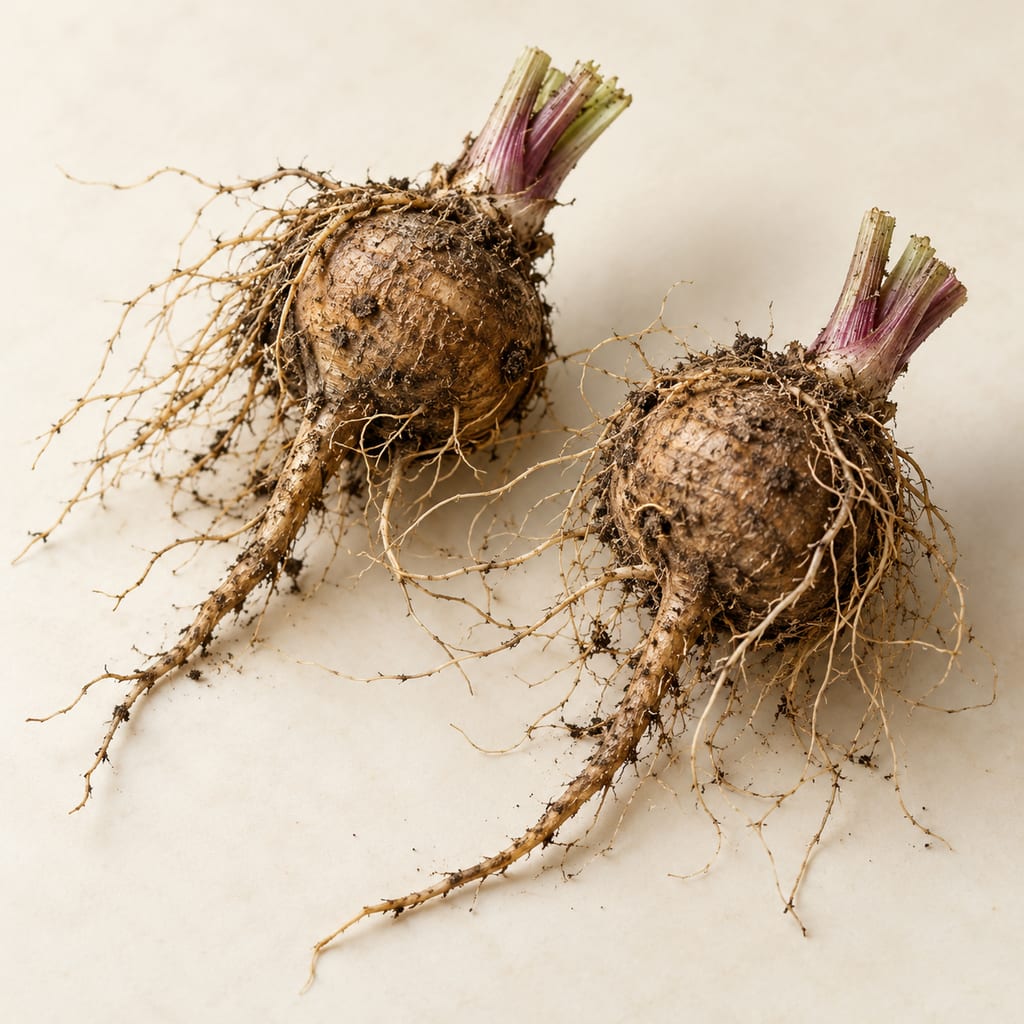
What sibekh is
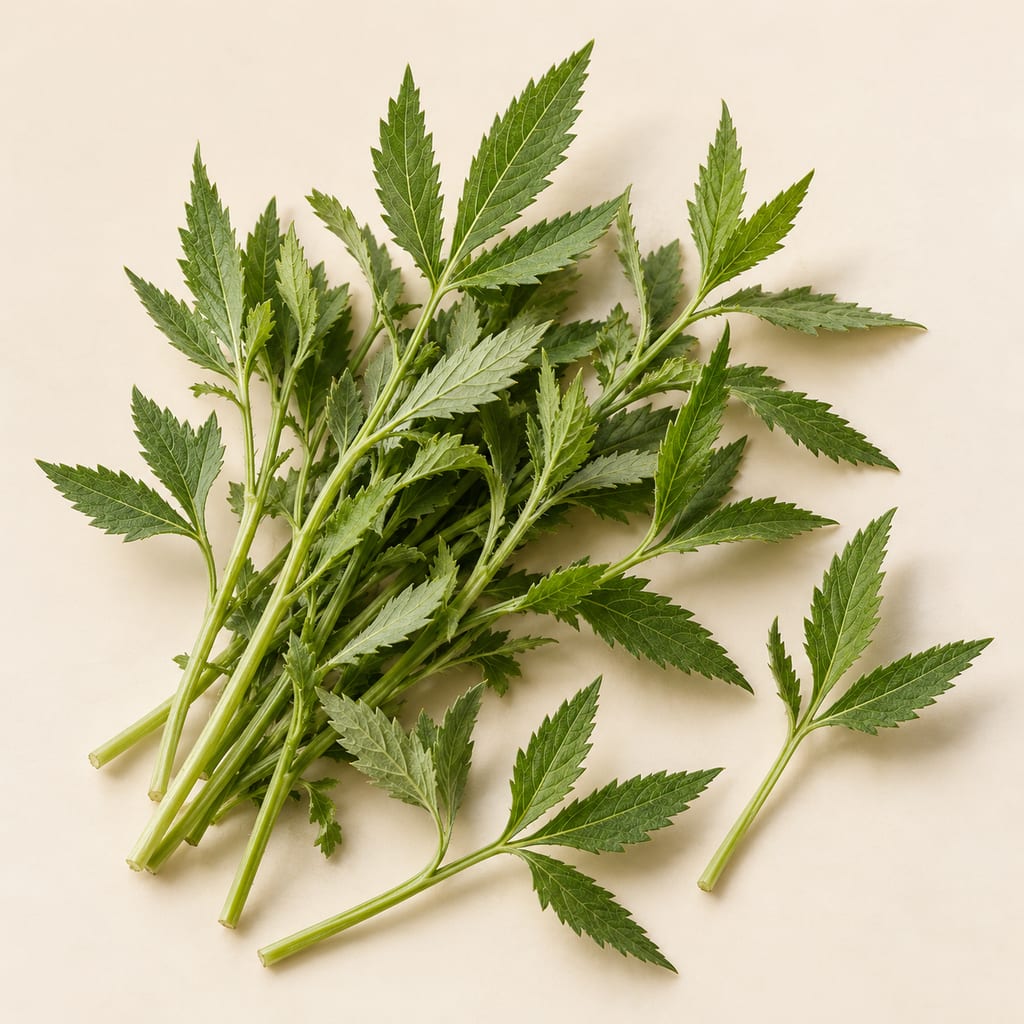
Sibekh is the Armenian name, as recorded in the Yerevan markets, for the young leaves and stems of Falcaria vulgaris Bernh., a herb of the carrot family (Apiaceae). The Integrated Taxonomic Information System accepts that name and lists Falcaria sioides as a synonym. A 2016 study of Yezidi and Kurdish food in Armenia lists the same species as pekhask. Each spelling belongs to the source that printed it; neither is a universal community name.
Because the plant is an Apiaceae herb, its young leaves can be confused with other members of the family. The sources give no field-identification method, and a name alone is not enough to pick the right plant.
Sources for this section
Where it is sold and eaten
A survey of wild plants and fungi sold in Yerevan between 2016 and 2019 lists sibekh among the market greens. Its clearest recorded dish is tapakats sibekh, young leaves fried with eggs. No quantities, timings or method are given for it.
The 2016 Yezidi and Kurdish study draws on fieldwork in more than forty villages in 2013 to 2015 and at about twenty temporary pastoral stations in the high mountains. It places Falcaria among the wild foods and ranks food-use and preparation categories, but it does not tie each plant to a single village.
Sources for this section
An early-spring vegetable
A 1997 article in the Armenian agronomy journal Agrogitutyun treats sibekh as an early-spring vegetable. It describes rosettes and young stems as food and mentions fresh, cooked, dried and pickled forms. The article is available here only as OCR text, so its detail is partial, and its hotbed account concerns raising seedlings, not growing the crop under cover.
Sources for this section
Pickled, fermented and canned forms
The 1997 article and the 2016 food table mention pickled or lacto-fermented greens. No source gives a complete Falcaria batch: no starter, salt or water quantities, conditions or endpoint. A fermentation culture or preservation mechanism for this plant therefore cannot be inferred, and no pickling or fermentation method is stated on this page.
A 2022 field paper notes that the stems were used mainly canned. It describes no canning process.
Sources for this section
Cultivation trial at Ashtarak
Falcaria was grown at Ashtarak in Aragatsotn in a three-year programme from 2019 to 2021, with breeding work starting in 2017. The programme applied manure and phosphorus-potassium fertiliser in autumn, ploughed deeply, worked the soil again in spring and sowed stratified seed at 6 to 8 kg per hectare. Its tape layout is printed as 45x25x5 without explaining the dimensions. Two inter-row cultivations were made, with a nitrogen dressing after the first.
Leaves were harvested in the first ten days of May and young flowering stems in the second ten days. One population line was selected for further breeding. A table lists eight ex-situ accessions from Armavir and Ararat, which is a seed-collection record, not a yield result or a survey of wild stands.
The paper gives no replication, accession identity, yield, soil class or pH, climate data or irrigation details for Falcaria. Its dates describe that programme and are not a national planting calendar.
Sources for this section
What is not known
No measured frost or heat tolerance, photoperiod or humidity response, container or greenhouse trial, or regrowth rate for repeated cutting was found. ITIS's North American distribution does not stand in for Armenian climate data.
An Armenian biodiversity overview notes a general lack of data on productivity and on permissible wild harvest, and it gives no species-specific conservation status or collection rule for Falcaria. A 2025 laboratory paper includes the plant in marker and biochemical work; its table reports vitamin A values of 4.4 to 5.2 mg% while its text reports 0.1 to 0.3 mg%, and the conflict is unresolved. Nothing here establishes food safety, a safe amount, a storage life or a benefit. Smell and taste do not establish safety.
Sources for this section
Places
Armenia
Documented use · Country evidenceMarket sales and household food use are documented in Armenian field studies; the sources assign no single origin.
Yerevan
Documented use · Locality evidenceSold in the markets visited between 2016 and 2019.
Ashtarak
Modern adaptation · Locality evidenceSite of a domestication and cultivation trial, not of traditional use.