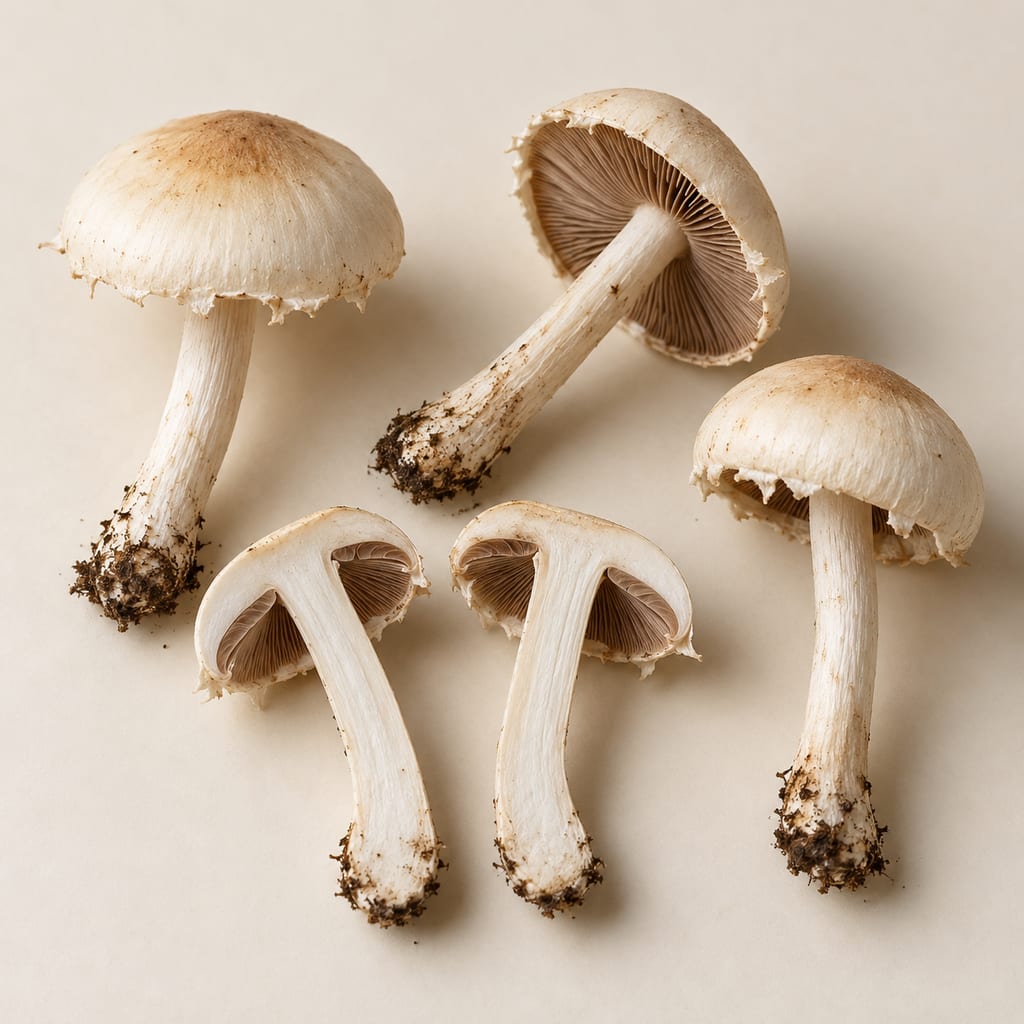
Agrocybe dura
A grassland agaric listed as edible in historical and scientific catalogues for Hong Kong and China. Taxonomic concepts and practical food value vary; the listings do not establish safe identification or culinary practice.
 FermenteaWhere food goes to change
Mushrooms
Pleurotus eryngii, the king oyster, is a fungus native to the Mediterranean region and now grown widely on sawdust and straw. Its firm stems and caps are cooked, and the species is one of the most farmed mushrooms worldwide.
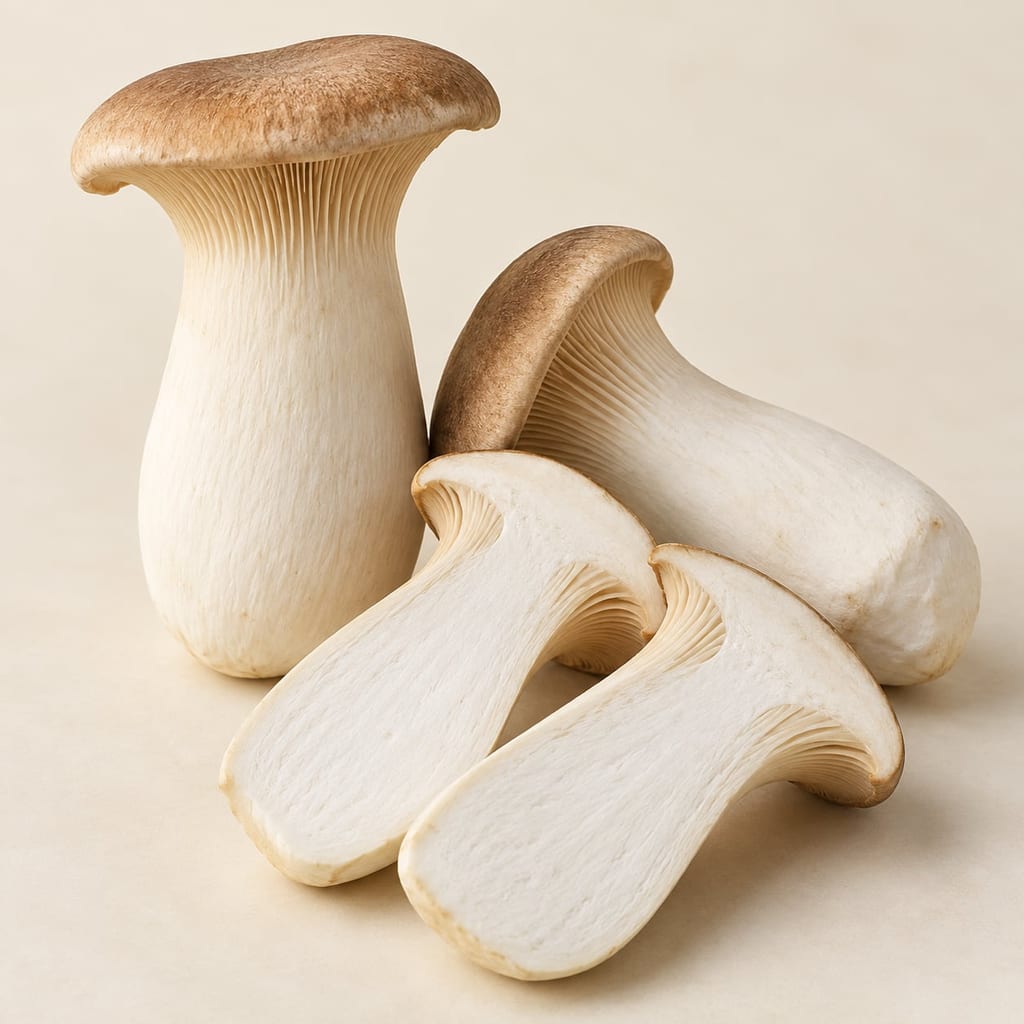
The king oyster, also called king trumpet, is Pleurotus eryngii. It is a firm-fleshed mushroom with a thick stem, and the stem is the part most often cooked. The species is native to the Mediterranean basin and nearby regions, and it has spread through commercial cultivation to many countries.
Its name is tied to the plants it grows with. The catalogue associates it with the roots and remains of plants in the Apiaceae, and sources connect it to Eryngium, the sea holly. The name is therefore a clue to its habitat, not a description of its shape.
The catalogue notes that the eryngii complex contains distinct lineages and varieties. Records under the name P. eryngii can therefore refer to more than one genetic line, and a result for one strain does not automatically carry to another.
The catalogue treats the name as a research label, not as a checked accepted name. Cultivated strains are often sold under variety names, so a commercial product should be matched to its species before its record is used.
Sources place the wild range of the king oyster across the Mediterranean basin, North Africa and the Middle East, with records in parts of Asia and Europe. The species grows in association with the roots or remains of plants of the Apiaceae family.
Sources disagree on the host. One account describes it as a weak parasite on Apiaceae roots rather than a wood decomposer, while another says it grows from hardwood tree roots. The catalogue's record points to the Apiaceae association, and the second account is not supported by the others.
One source records wild foraging of the king oyster in southern Italy since antiquity. The sources do not give a dated text for that foraging, so the statement rests on the source's own account.
Accounts of when cultivation began conflict. One says that the first scientific cultivation trials took place in Italy and France in the 1970s. Another says cultivation began seriously in Italy and France in the early twentieth century. The sources do not reconcile these dates, so none is given as settled here.
Most sources credit Japan with the technique that made commercial production reliable. One account says that Japanese researchers refined fruiting on supplemented sawdust blocks in the 1990s, and that the method then spread to Taiwan, China, Australia, Europe and North America.
Commercial growers usually use sterilised substrates made from hardwood sawdust enriched with wheat or soy bran, in bottle or block systems. In China, substrates include large quantities of sawdust and sugarcane bagasse.
A subtropical study found that paddy straw gave the highest biological efficiency of the substrates it tested. Results depend on the substrate, the strain and the climate, so the study does not establish a universal recipe.
The catalogue records the species as a firm mushroom with stems and caps used for cooking.
The sources read give no recipe that is specific to the species beyond cooking. The catalogue records no traditional preparation, and no preservation method is given here.
The China Edible Fungi Association reports 1.52 million tonnes of P. eryngii cultivated in China in 2022. The Mushroom Almanac calls the king oyster one of the four most commercially important mushroom species in the world.
These are production figures, not a measure of food safety or quality. They describe a cultivated product, and wild and farmed material should be kept distinct in any record.
The catalogue's caution is that the eryngii complex contains distinct lineages and varieties, and that the record is a food, market and cultivation record rather than a safety assessment. The sources read raise no safety concern specific to the cultivated species.
Wild material should be identified by a specialist before it is eaten, and wild and cultivated material should be kept apart in any record.
Native wild range; the wild foraging record in southern Italy is from one source.
Large-scale cultivation; 1.52 million tonnes in 2022 per the China Edible Fungi Association.
Credited by most sources with the cultivation method, per one account's dating of the 1990s.
A grassland agaric listed as edible in historical and scientific catalogues for Hong Kong and China. Taxonomic concepts and practical food value vary; the listings do not establish safe identification or culinary practice.
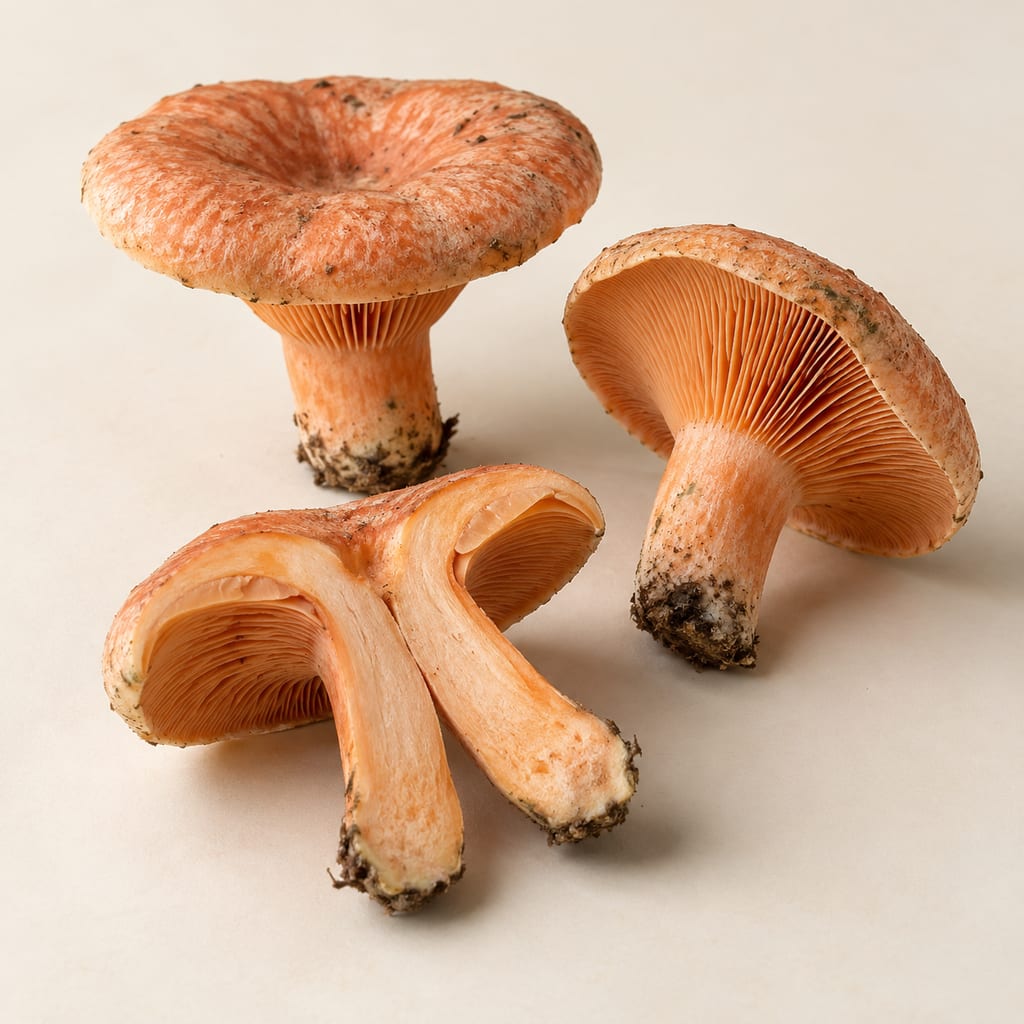
Akahatsu, Lactarius akahatsu, is a wild milkcap of East Asian pine and mixed forests that is sold in Yunnan markets, with its edibility and identity still needing species-level review.
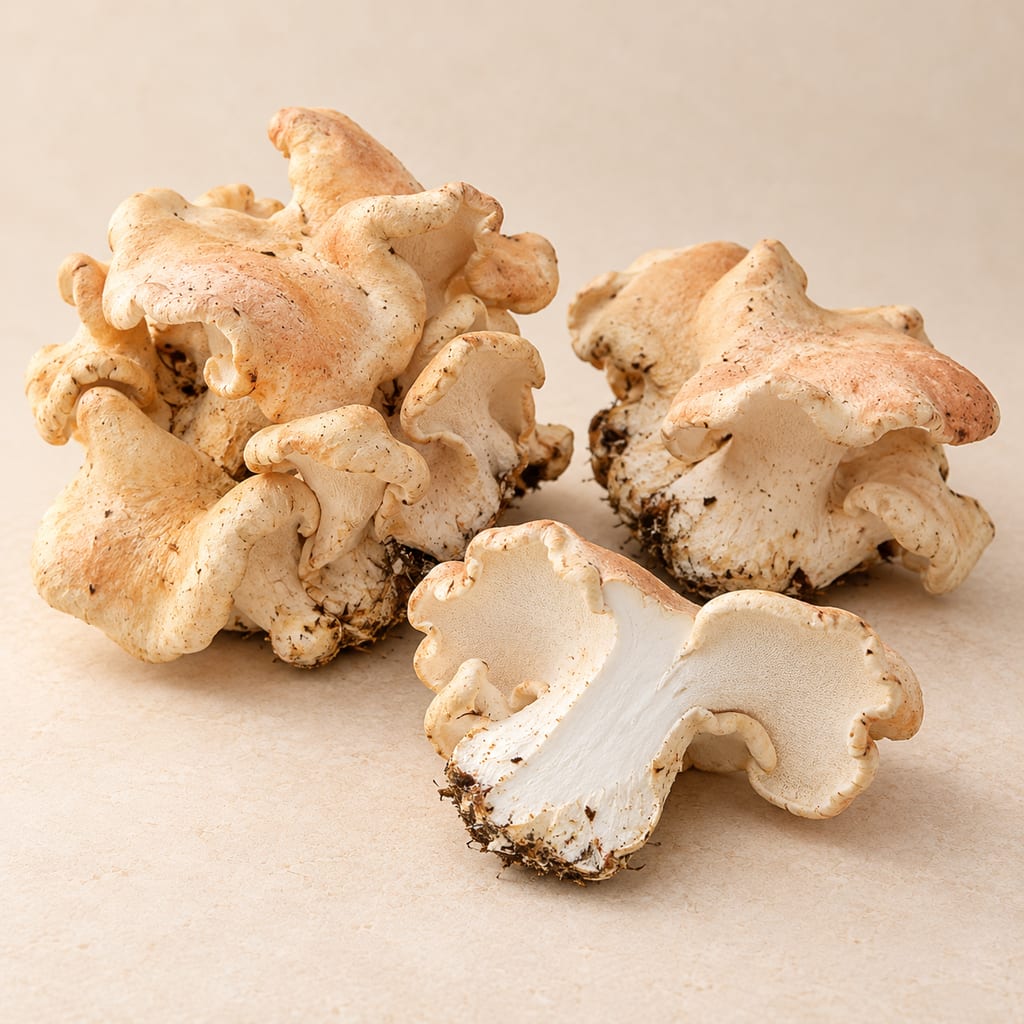
Albatrellus confluens is a ground-growing polypore with fused buff-orange caps. Sources document Chinese market use and regional edibility, but others reject it as too bitter; taxonomy also varies between Albatrellus and Albatrellopsis.
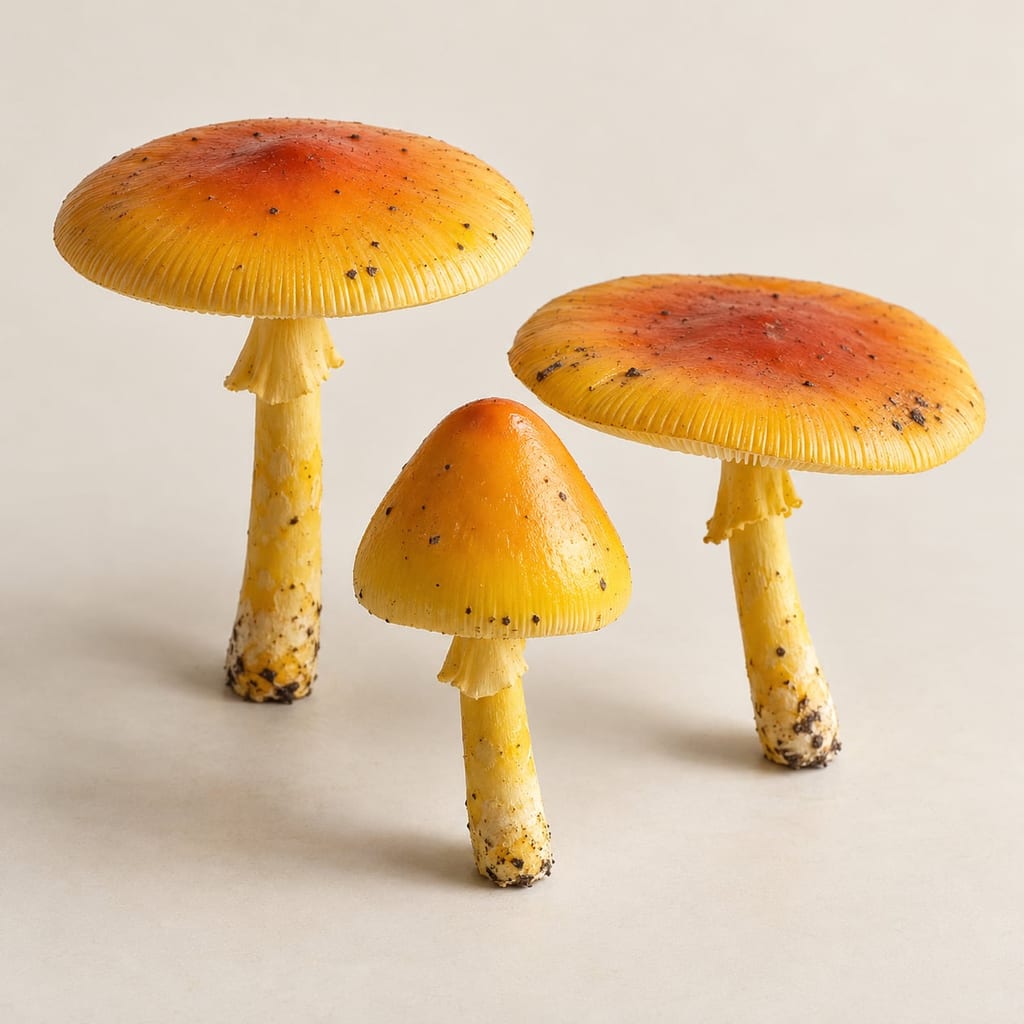
A wild Amanita recorded from China in a 2026 checklist of edible and medicinal fungi. The genus holds deadly species, so this page gives no identification or edibility verdict.
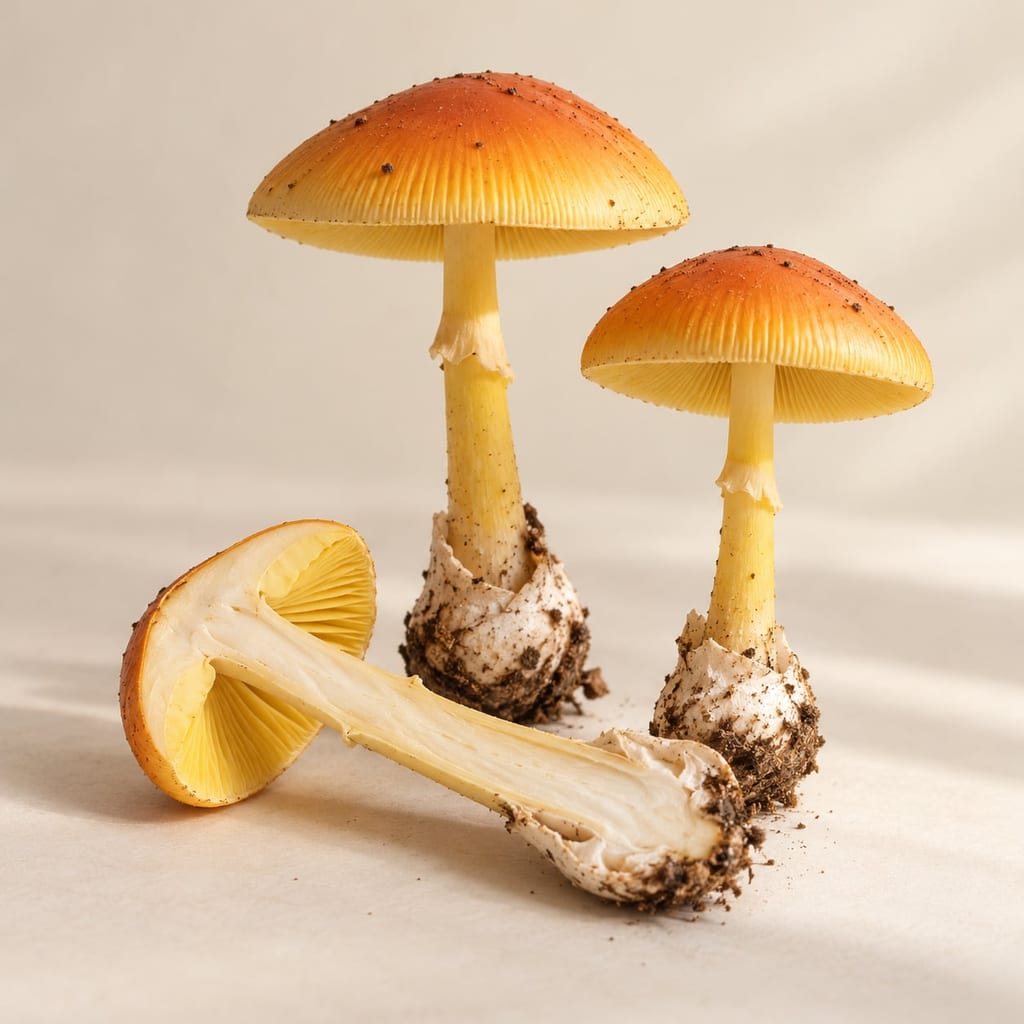
A wild Amanita of China, first reported there and listed as edible in a Yunnan ethnomycology study. The genus contains deadly species, so this page does not support identifying or eating it.
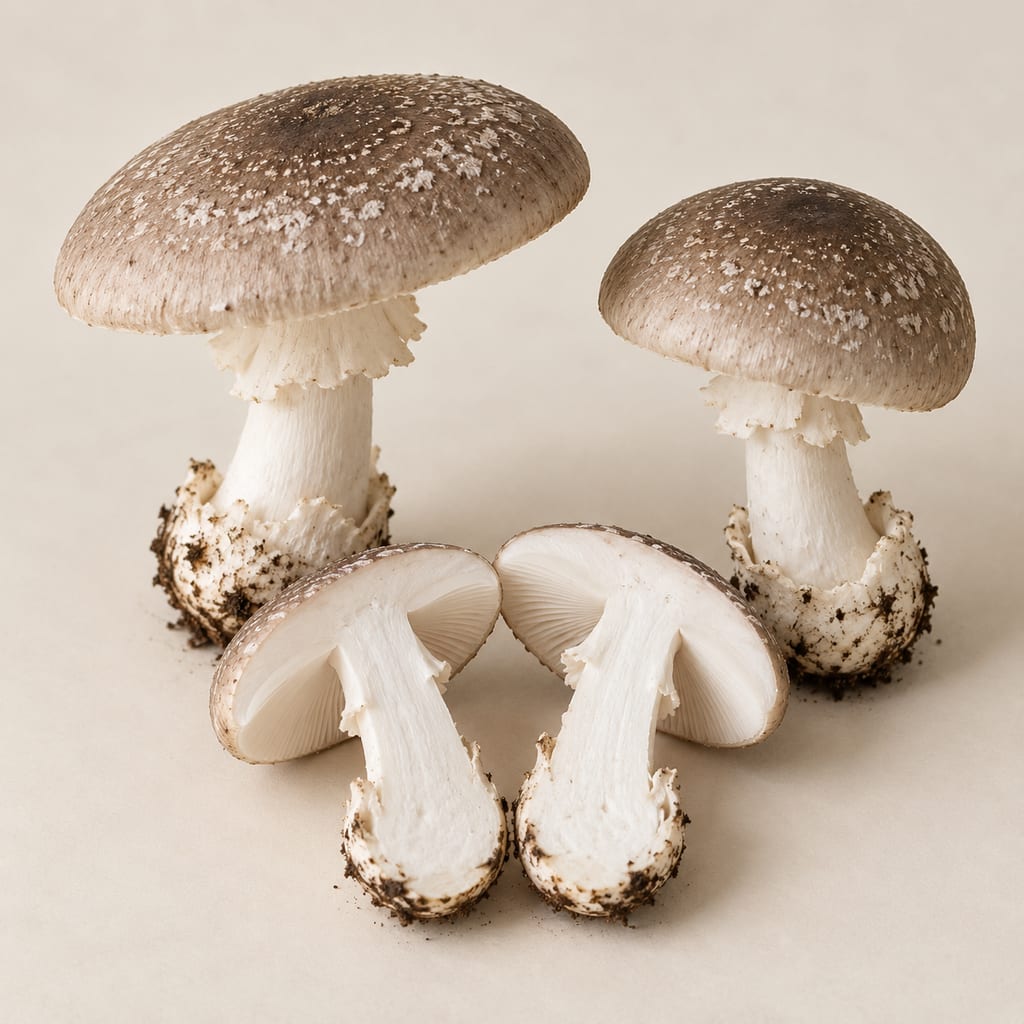
Amanita yuaniana is a Chinese Amanita that a 2023 Yanshan survey and a Yunnan ethnomycology survey list among edible species. No source tests it for safety, and the genus holds the most lethal mushrooms.
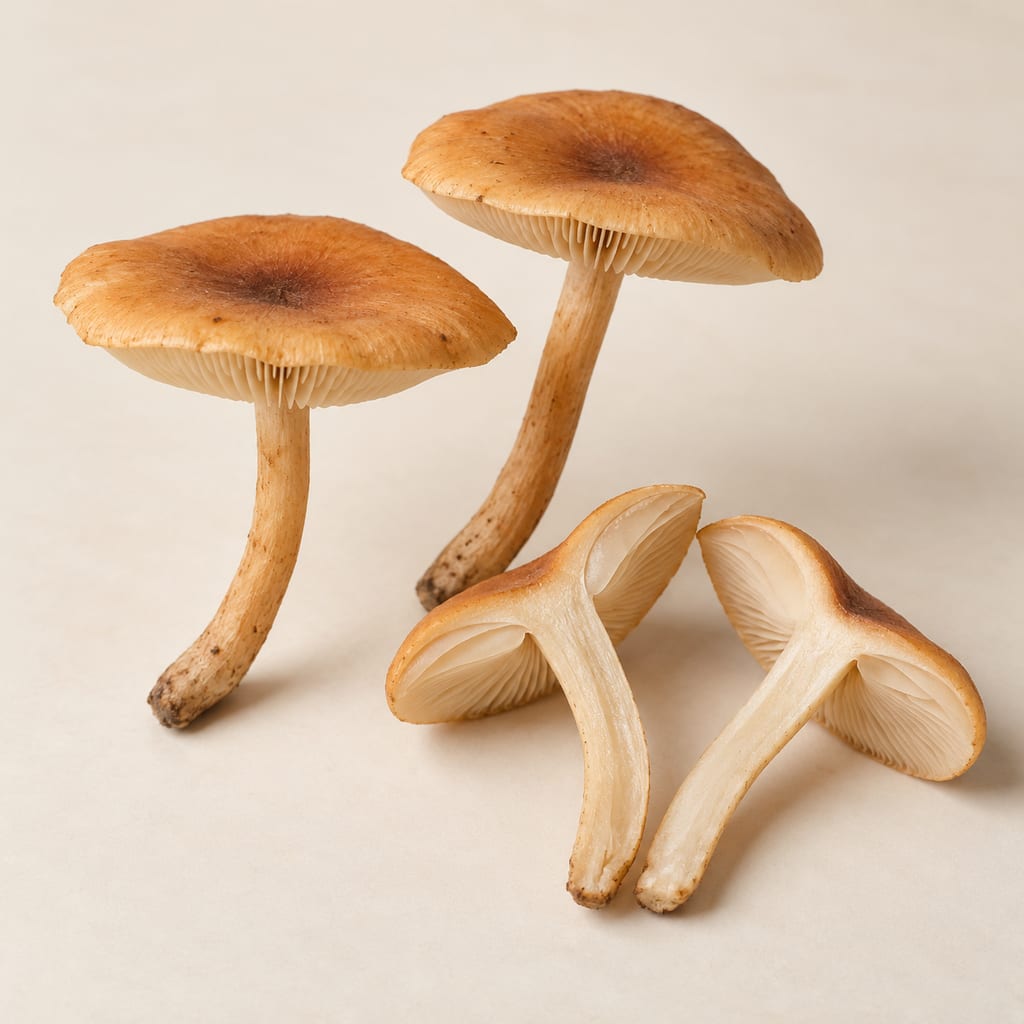
A wood-associated Armillaria recorded in Yunnan and Sichuan, China, and listed as edible in a 2026 Chinese catalogue.
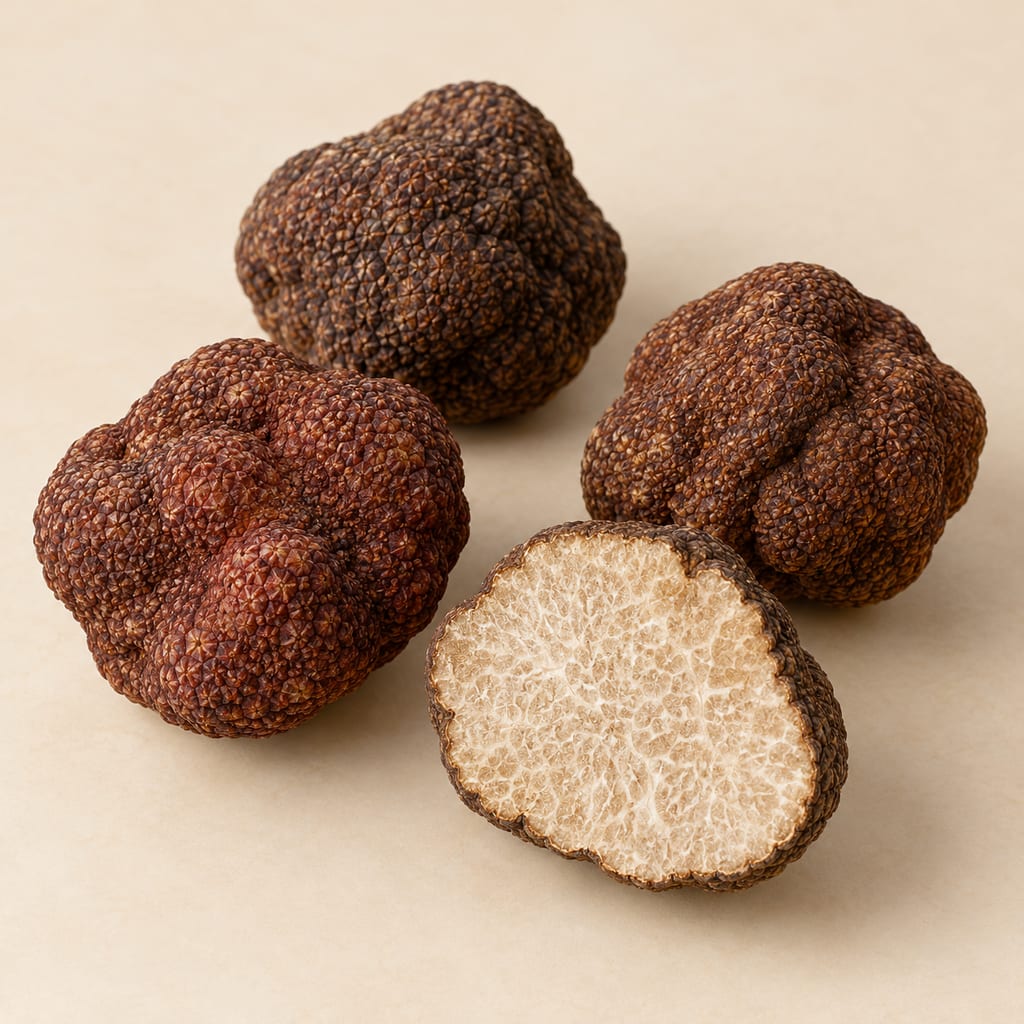
Tuber pseudohimalayense is a wild black truffle from Yunnan, China, listed as edible in a Chinese species catalogue. No independent assessment of its culinary use or safety is available.
No community contributions have been published for this entry yet.
Sign in to contribute. Published comments and photos are free to read.
DiVA PortalTaxonomy · Food use
DiVA record cited by the catalogue for Pleurotus eryngiiThe eryngii complex contains distinct lineages and varieties.
Cited in: Taxonomy; Safety
FloydFungiHistory · Cultivation · Production
Pleurotus eryngiiFirst scientific cultivation trials in Italy and France in the 1970s (disputed).
China cultivated 1.52 million tonnes in 2022 per the China Edible Fungi Association.
Japanese refinement of supplemented sawdust blocks in the 1990s, per one account.
Cited in: Ecology and wild range; History of use and cultivation; Cultivation and substrates; Scale of production
Mushroom AlmanacHistory · Production
How to Grow King Oyster (Pleurotus eryngii): Complete Grow GuideCultivation began seriously in Italy and France in the early twentieth century (disputed).
One of the four most commercially important mushroom species worldwide.
Cited in: Overview; History of use and cultivation; Scale of production
Out-GrowEcology · Food use
King Oyster Mushroom (Pleurotus eryngii)Native to the Mediterranean and nearby regions; grows in association with Apiaceae roots.
Cited in: Overview; Ecology and wild range; Food use
PubMed CentralCultivation · Substrate
Cultivation of Kabul Dhingri (Pleurotus eryngii) mushroom by standardizing protocols in subtropical zones of worldPaddy straw gave the highest biological efficiency among the substrates tested.
Cited in: Cultivation and substrates