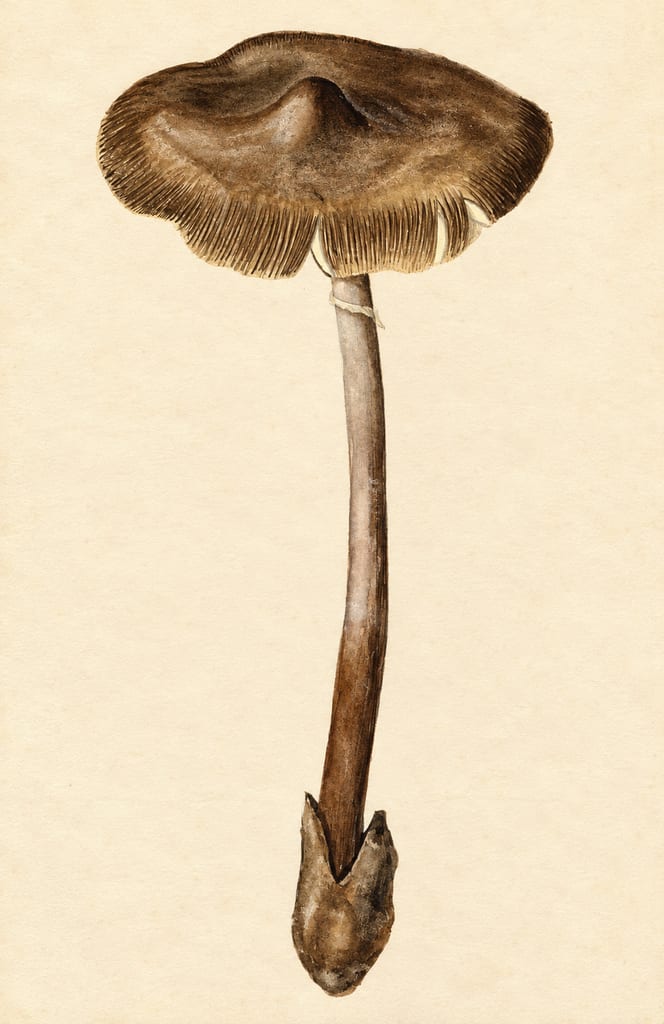
Amanita annulatovaginata
A wild ectomycorrhizal Amanita of the Congo rainforest, recorded as locally consumed in Tshopo province. Its preparation was not established, and the genus includes deadly species.
 FermenteaWhere food goes to change
Mushrooms
Leucocoprinus cepistipes is a forest saprotrophic mushroom of the Congo Basin. A Tshopo consumption report conflicts with inedibility reports, so it is recorded here as a research item, not a food recommendation.
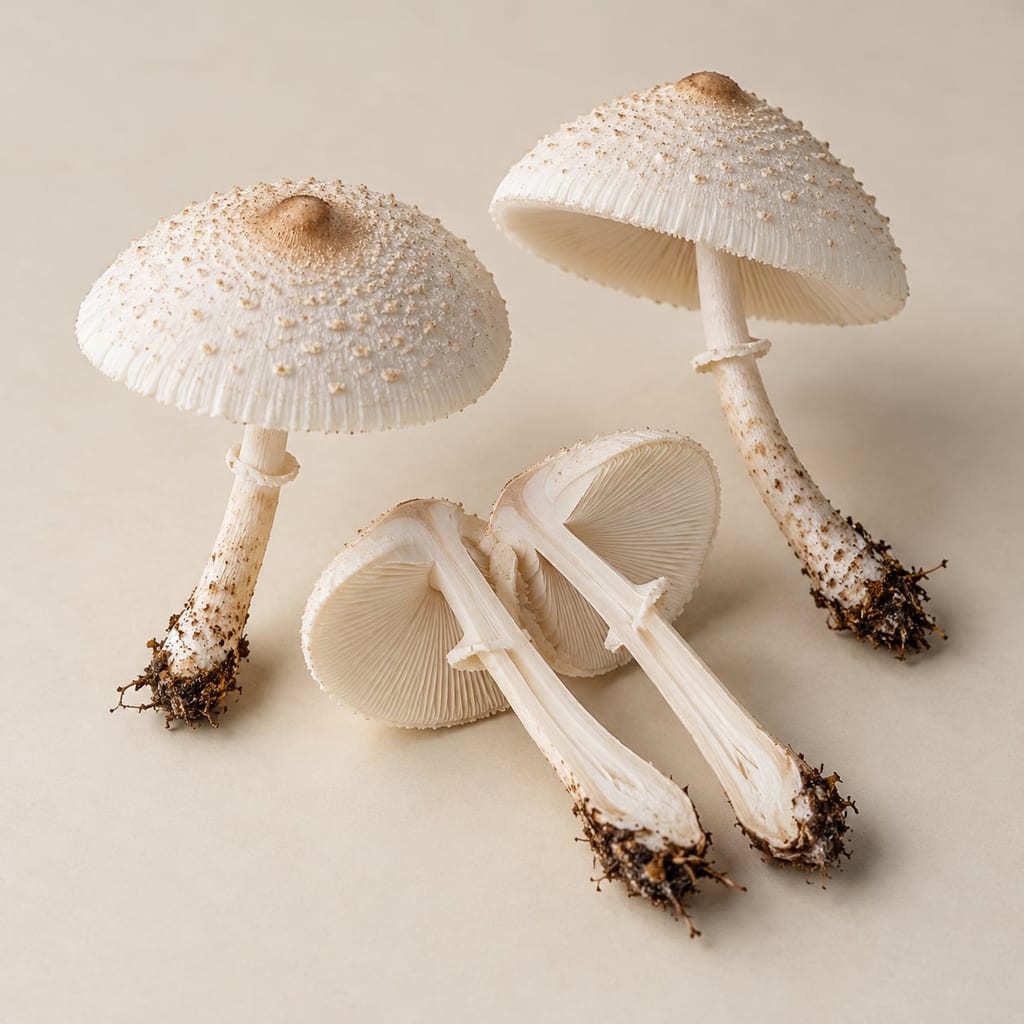
Leucocoprinus cepistipes is a small saprotrophic mushroom of the forest floor. The supplied catalogue records it as a forest saprotroph, growing on decaying material, and its supply as wild. The catalogue searches the species under the names Leucocoprinus cepaestipes and Lepiota cepistipes.
The name has been applied to several look-alike species, so a record labelled cepistipes may refer to a different fungus. Before any food report is read as evidence for this species, the identity should be checked against a voucher specimen.
The Tshopo interviews record the species as eaten locally. Reports of adverse reactions and of inedibility conflict with that record. The catalogue keeps the entry as a research record, and it does not state a preparation that would make the species safe.
The iNaturalist species guide says its edibility is not well known and that it is not recommended for eating. Its Congolese relatives, such as Leucocoprinus cretaceus, have separate food reports that do not apply to this species.
The catalogue states that this is a safety-conflict research item and not a food recommendation. No toxicity data or poisoning record for this species was found in the sources read here, and a single local consumption report does not establish that it is safe.
Mushrooms in this group should be identified by a regional expert from a voucher specimen before any use. The conflicting reports are the reason this page does not recommend eating the species.
The catalogue records a local consumption report in Tshopo that conflicts with adverse-reaction and inedibility reports. The species-specific preparation was not established.
A wild ectomycorrhizal Amanita of the Congo rainforest, recorded as locally consumed in Tshopo province. Its preparation was not established, and the genus includes deadly species.
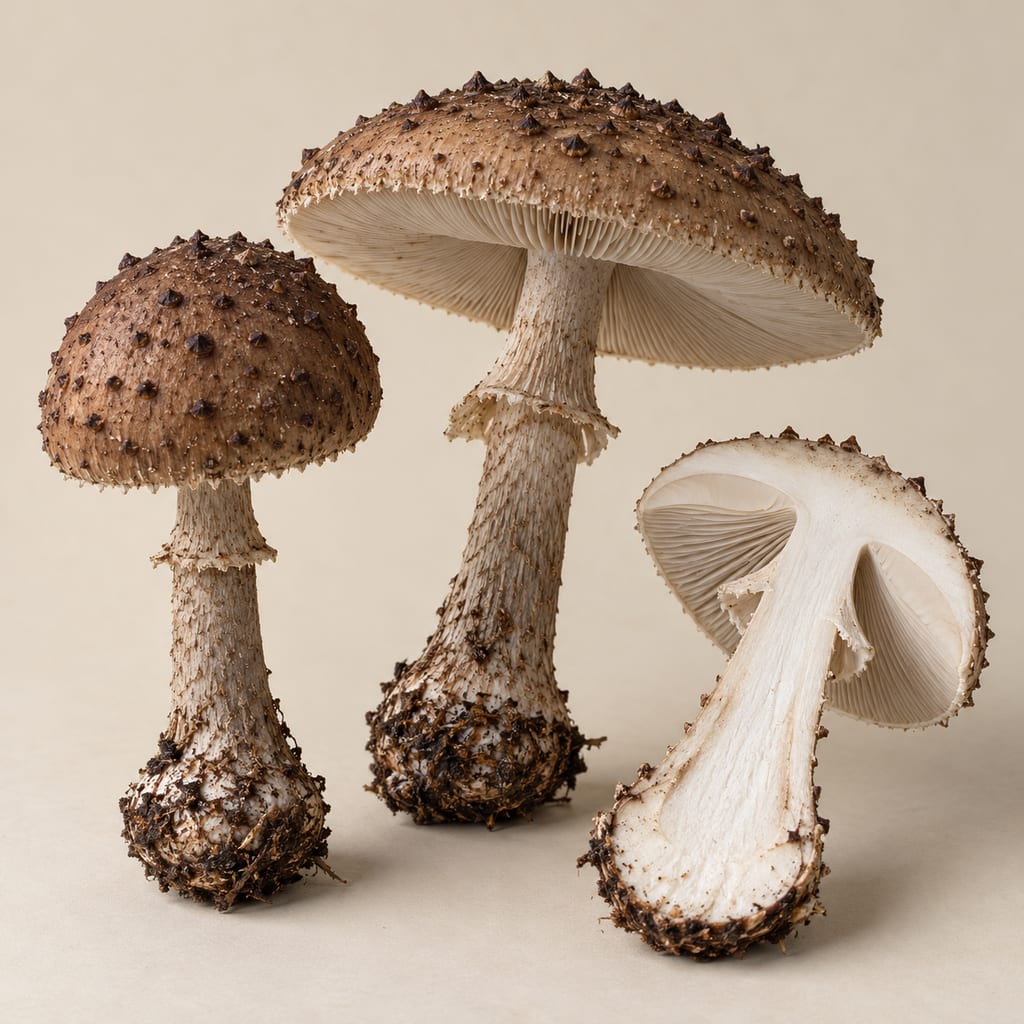
A wild ectomycorrhizal Amanita of the Congo rainforest, recorded as locally consumed in Tshopo province. Its preparation was not established, and the genus includes deadly species.
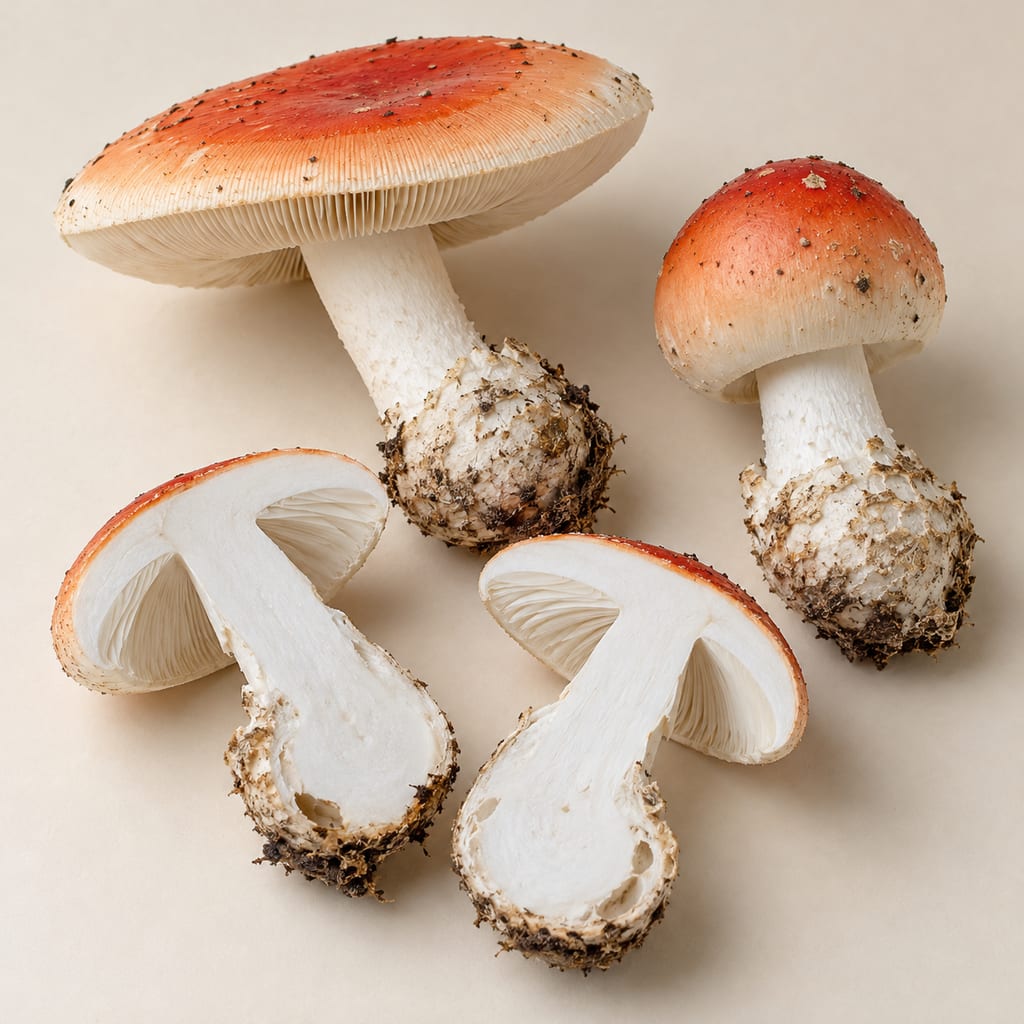
Amanita robusta Beeli is a poorly documented Central African Amanita known from voucher-backed rainforest collections in the Democratic Republic of the Congo and Cameroon. A Tshopo study reports local food use for a taxonomically supported voucher, but neither that record nor the name makes an unknown Amanita safe to identify or eat.
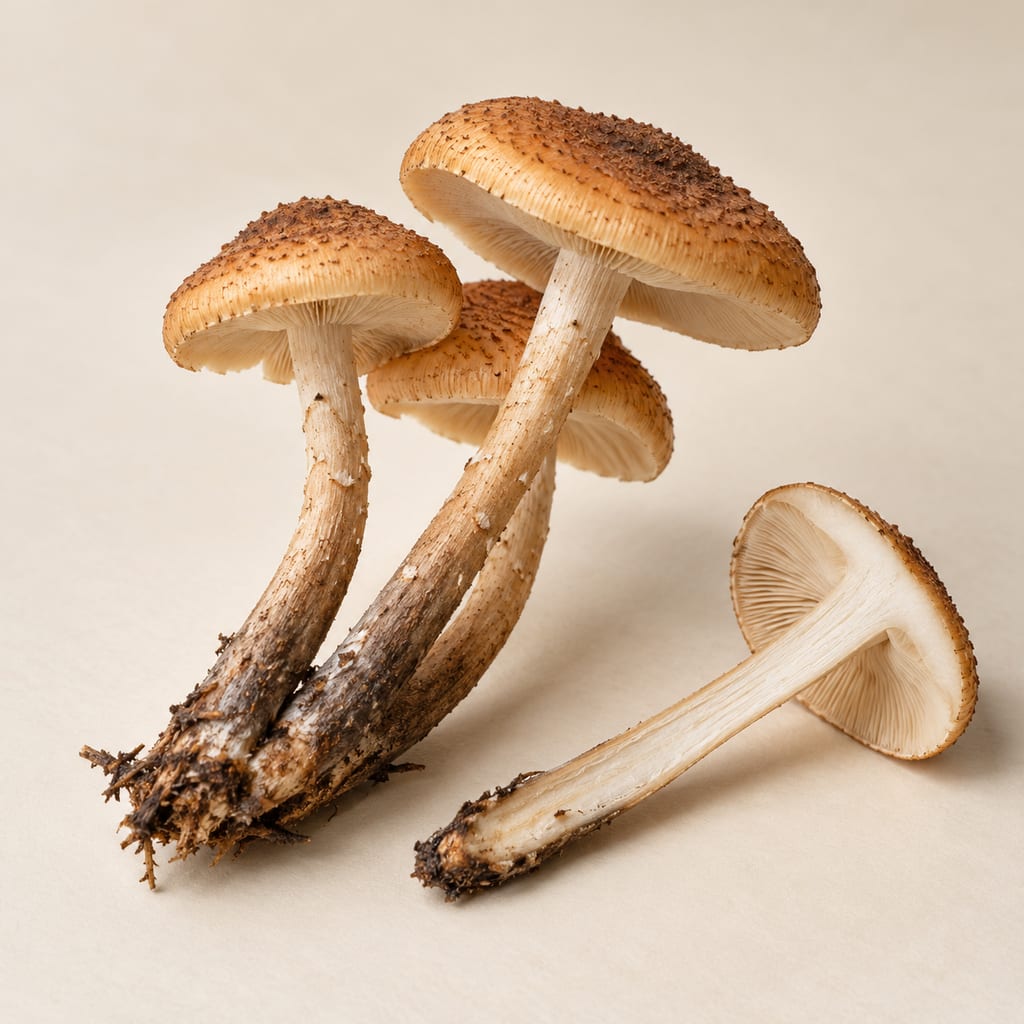
Armillaria heimii is a saprotrophic fungus of the honey-fungus genus, recorded as a wild food in Tshopo province, DR Congo. Its preparation and safety are not established in the sources.
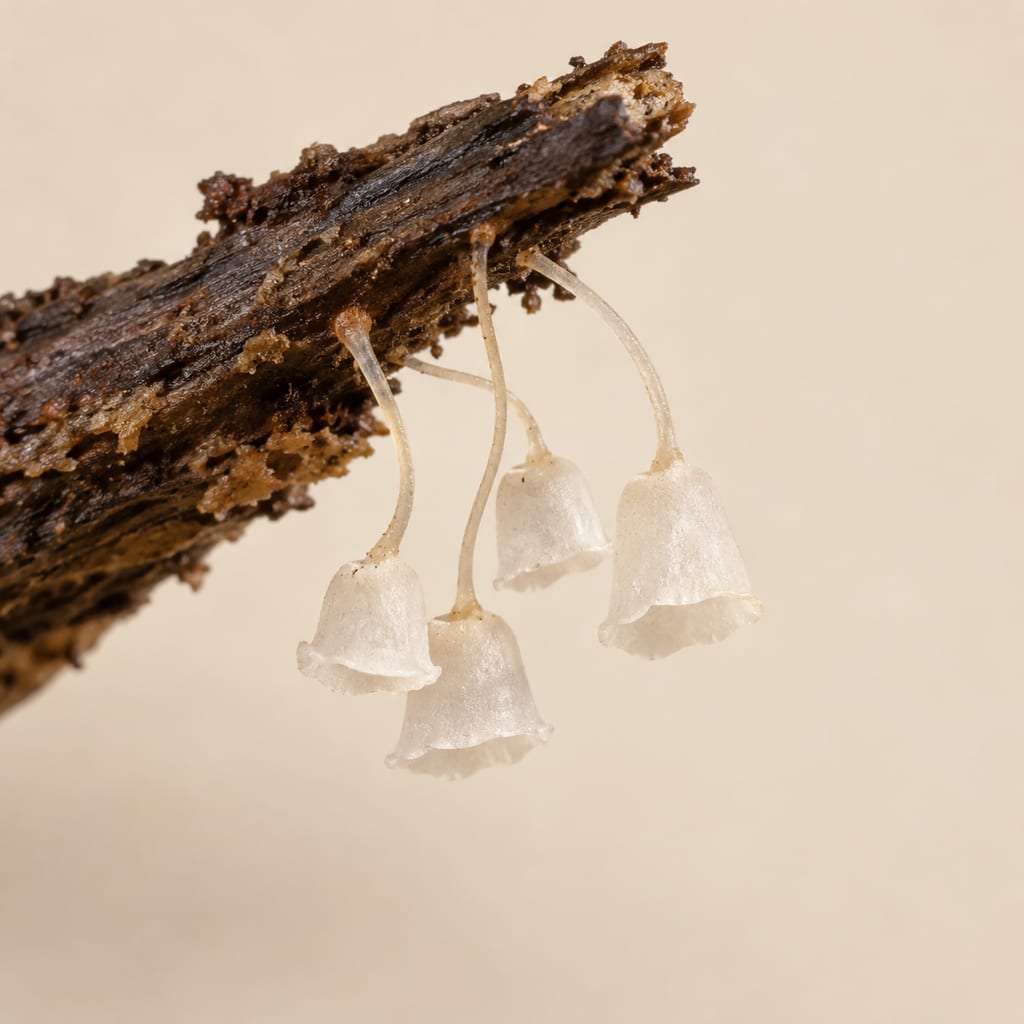
Calyptella longipes is a wood and litter decaying fungus of the rainforests of Tshopo province, DR Congo, where some ethnic groups in voucher-backed interviews eat it. Its preparation was not recorded.
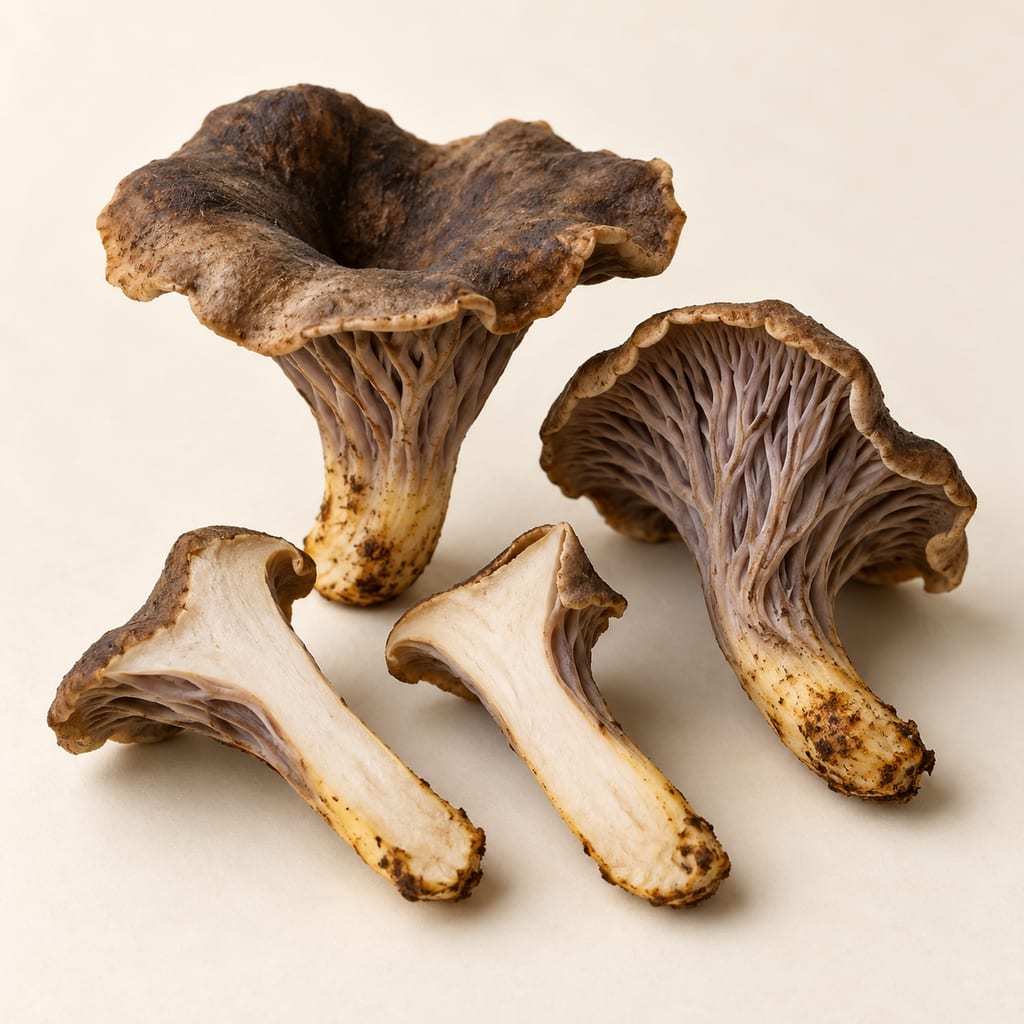
Cantharellus congolensis is an ectomycorrhizal chanterelle of sub-Saharan Africa, eaten in the Democratic Republic of the Congo under local names. Its edibility rests on food-use surveys, not on toxicity tests.
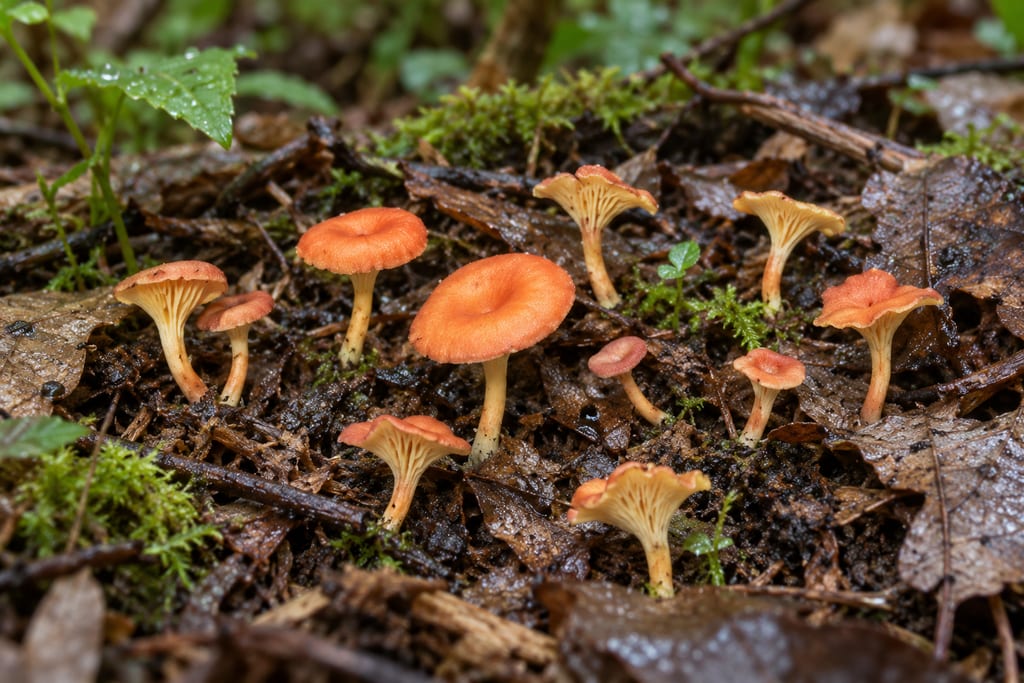
Cantharellus floridulus is an ectomycorrhizal rainforest fungus that informants in Tshopo province, DR Congo, eat in voucher-backed interviews. Its preparation is not recorded, and the source gives no toxicity statement.
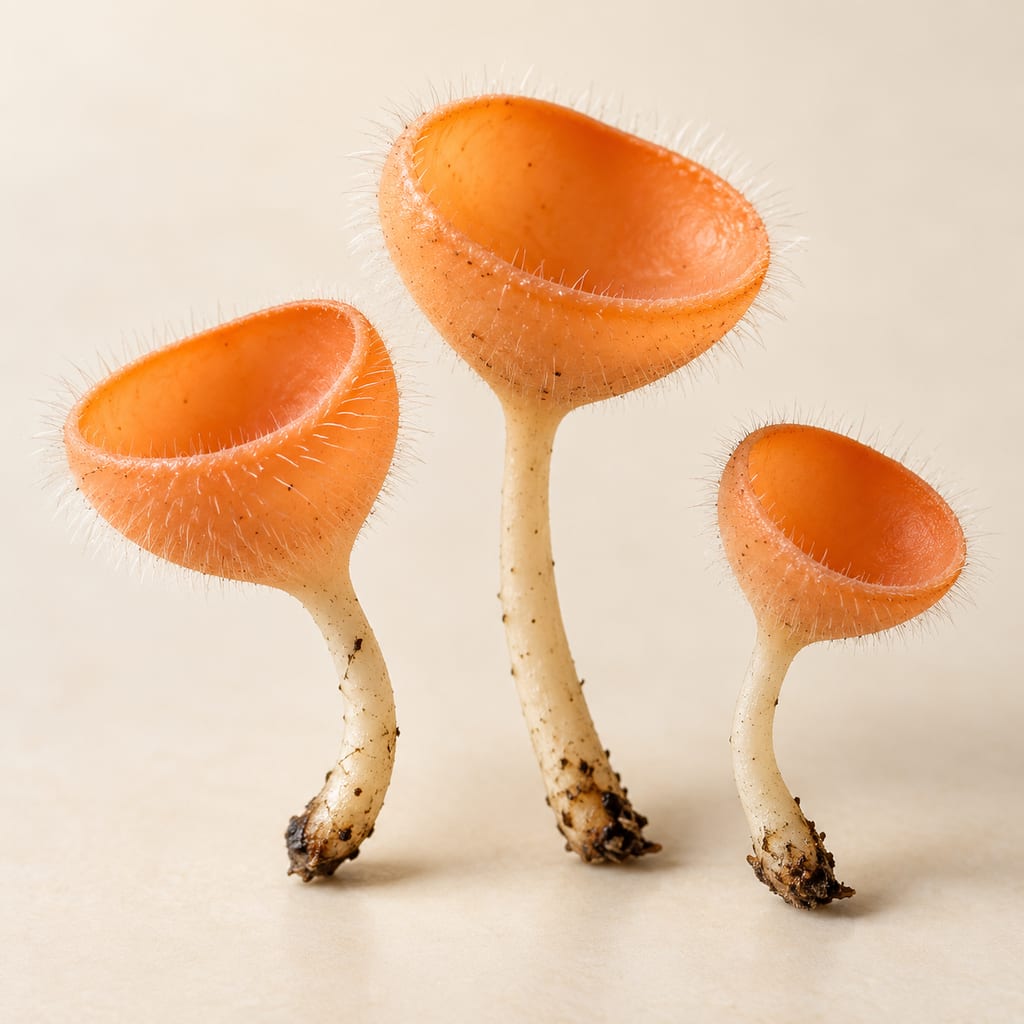
A forest cup fungus of the Tshopo province in the Democratic Republic of the Congo, recorded in local interviews as eaten. The species-level preparation is not established.
No community contributions have been published for this entry yet.
Sign in to contribute. Published comments and photos are free to read.
PubMed Central (via supplied fungi catalogue)Food use · Safety
Wild edible ectomycorrhizal fungi: an underutilized food resource from the rainforests of Tshopo province (Democratic Republic of the Congo)Catalogue: Leucocoprinus cepistipes recorded as locally consumed in voucher-backed Tshopo interviews; the consumption report conflicts with adverse-reaction and inedibility reports; a research record, not a food recommendation
Cited in: Identity and names; Conflicting food records; Safety
iNaturalistSafety · Taxonomy
Leucocoprinus cepistipes, iNaturalist species guideEdibility is not well known, and the species is not recommended for eating
Cited in: Identity and names; Conflicting food records; Safety