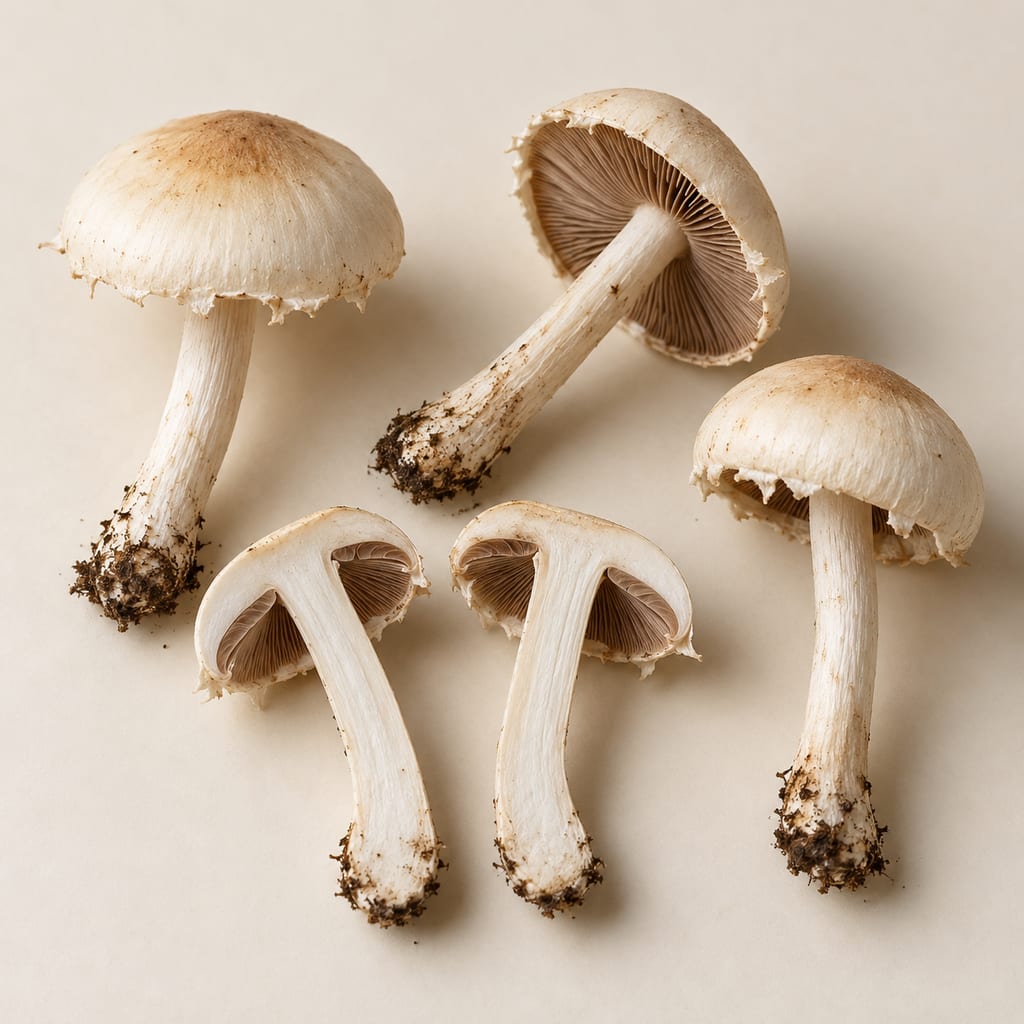
Agrocybe dura
A grassland agaric listed as edible in historical and scientific catalogues for Hong Kong and China. Taxonomic concepts and practical food value vary; the listings do not establish safe identification or culinary practice.
 FermenteaWhere food goes to change
Mushrooms
Morchella importuna is a black morel that is cultivated in China on soil beds, one of the few morel species that can be domesticated there. Raw or undercooked morels have caused illness, so cooking is the one safety rule the sources clearly support.
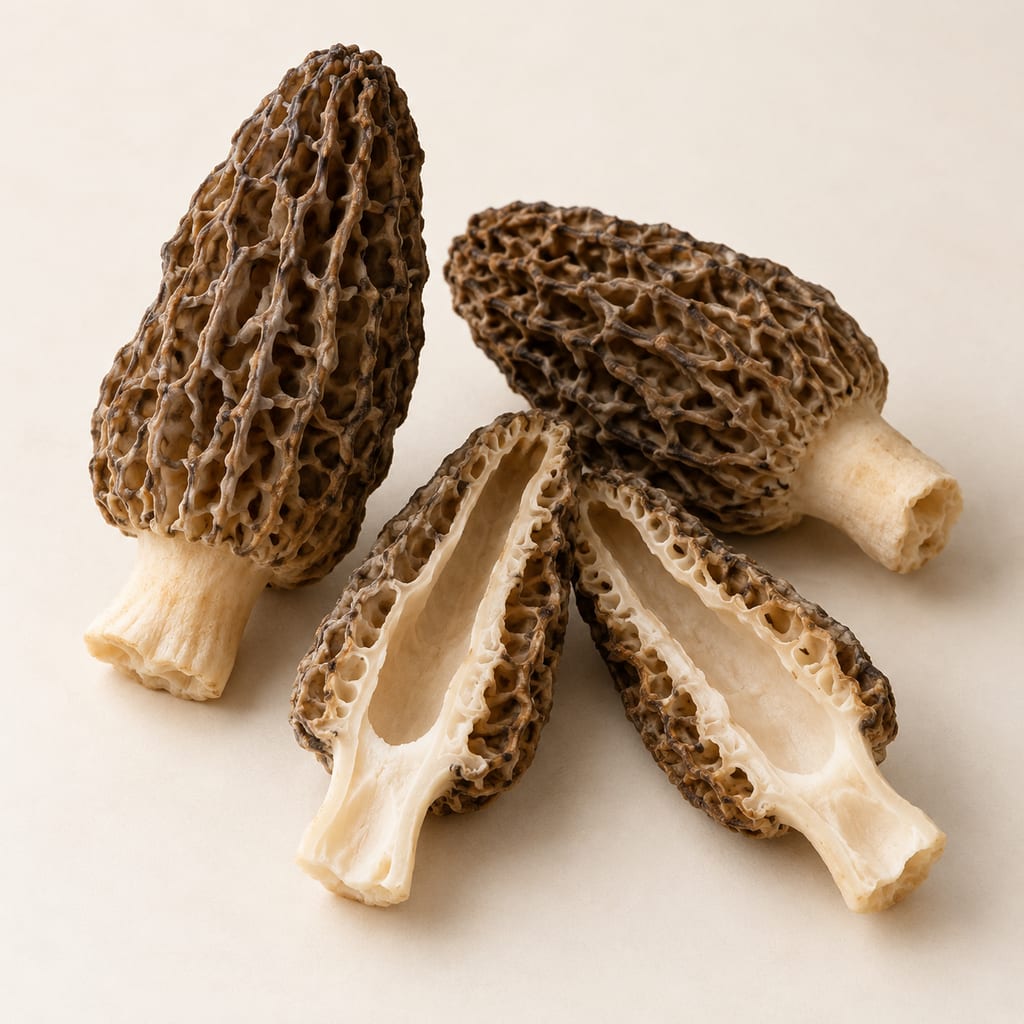
Morchella importuna is the cultivated black morel named in the supplied catalogue. A 2023 review of morel cultivation in Journal of Fungi lists it as one of the main cultivable morels in China, alongside M. sextelata and M. eximia. The review says that the cultivable varieties in China are limited to three to seven species.
The species is a soil-associated ascomycete. Genome-based studies cited in the review support a heterothallic life cycle, in which two compatible mating types are needed for fruiting. The catalogue does not validate the name against current taxonomic authorities, so the accepted name and synonyms are not resolved here.
Morel cultivation in China began at the start of the 21st century, and commercial promotion started around 2012. An early method grew morels on stumps in Yunnan, and that method was later abandoned over concerns for forest protection. Field cultivation now uses soil beds and wheat-based nutrition bags. The review does not describe a substrate specific to M. importuna.
The cultivated area reportedly grew from about 200 hectares to 16,466 hectares in 2021 and 2022, and about 70 percent of growers report unstable yields. In a sample of 185 commercial fruiting bodies from 2014 to 2021, only 10 (5.4 percent) were identified as M. importuna, against 83.78 percent M. sextelata. The review therefore shows that a product sold under a cultivated morel label is not necessarily this species.
Dried morels are a high-value product. The review cites an average price of around USD 200 per kilogram in European and North American markets, a figure that is not specific to M. importuna.
The review gives no culinary preparation for this species. The catalogue describes it as a morel food crop and dried product.
In March and April 2023, a restaurant in Bozeman, Montana, served a dish containing morels, and 51 people developed gastrointestinal illness. Two died and three were hospitalised. A matched case-control study linked the illness to uncooked or undercooked morels, and raw morels showed a stronger association than cooked or partly cooked ones. DNA sequencing of the specimen identified Morchella sextelata, not M. importuna.
The CDC report advises that morels should be cooked thoroughly before eating, because cooking is likely to reduce toxin levels. It does not say that cooking removes the risk, and it notes that morel toxins are not well characterised. The catalogue states that cooking mitigates risk but cannot be treated as an absolute guarantee.
This entry is not an edibility verdict, an identification or a preparation method. The review contains no statement about the toxicity of M. importuna and no statement about the need to cook it. Its general claims about morel health properties are not specific to this species and are not repeated here as a food claim.
Morels are not to be eaten raw. Wild morels, and cultivated ones with an unknown supplier, should be identified by a qualified expert before any use, because the outbreak species was a different morel from the one this entry names.
Cultivation of morels in China began in the early 21st century and spread from Sichuan, Yunnan and Guizhou northward. Of 185 commercial fruiting bodies sampled, only 10 were M. importuna.
A grassland agaric listed as edible in historical and scientific catalogues for Hong Kong and China. Taxonomic concepts and practical food value vary; the listings do not establish safe identification or culinary practice.
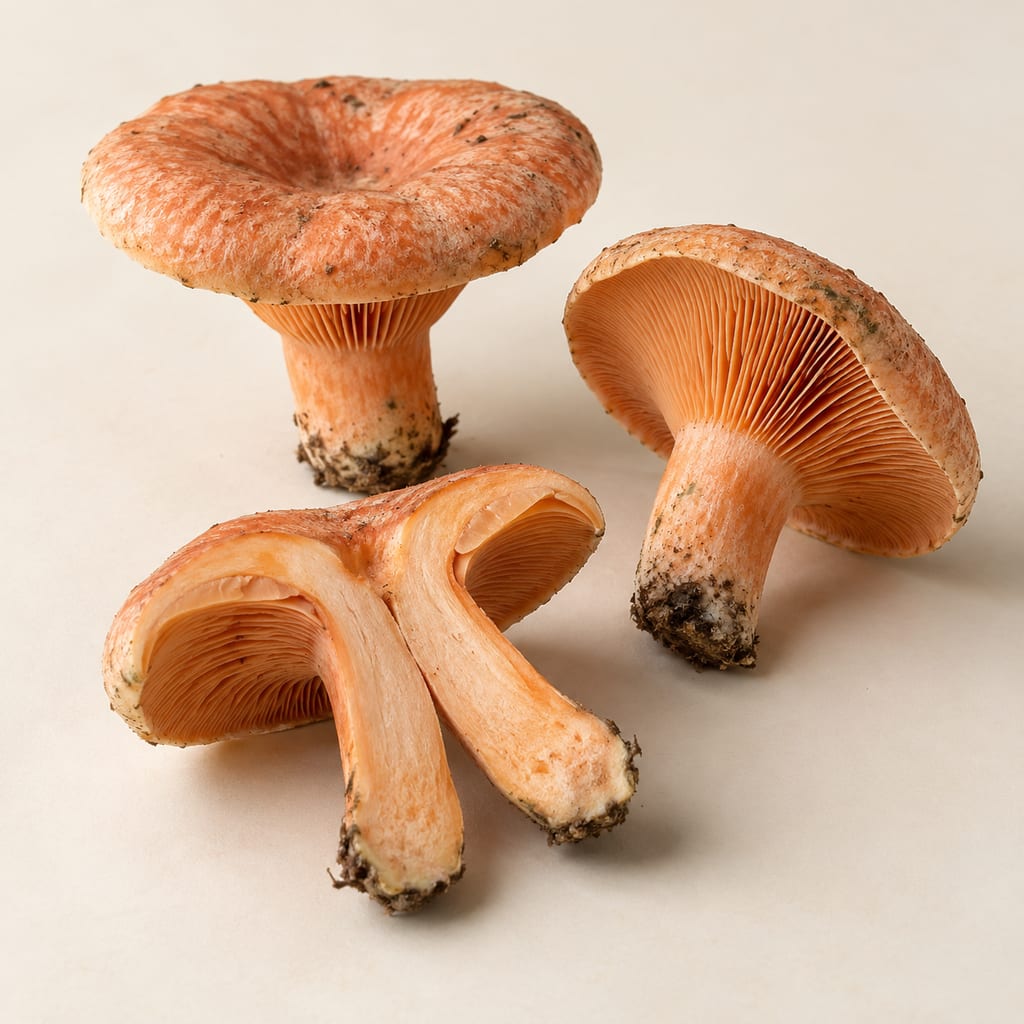
Akahatsu, Lactarius akahatsu, is a wild milkcap of East Asian pine and mixed forests that is sold in Yunnan markets, with its edibility and identity still needing species-level review.
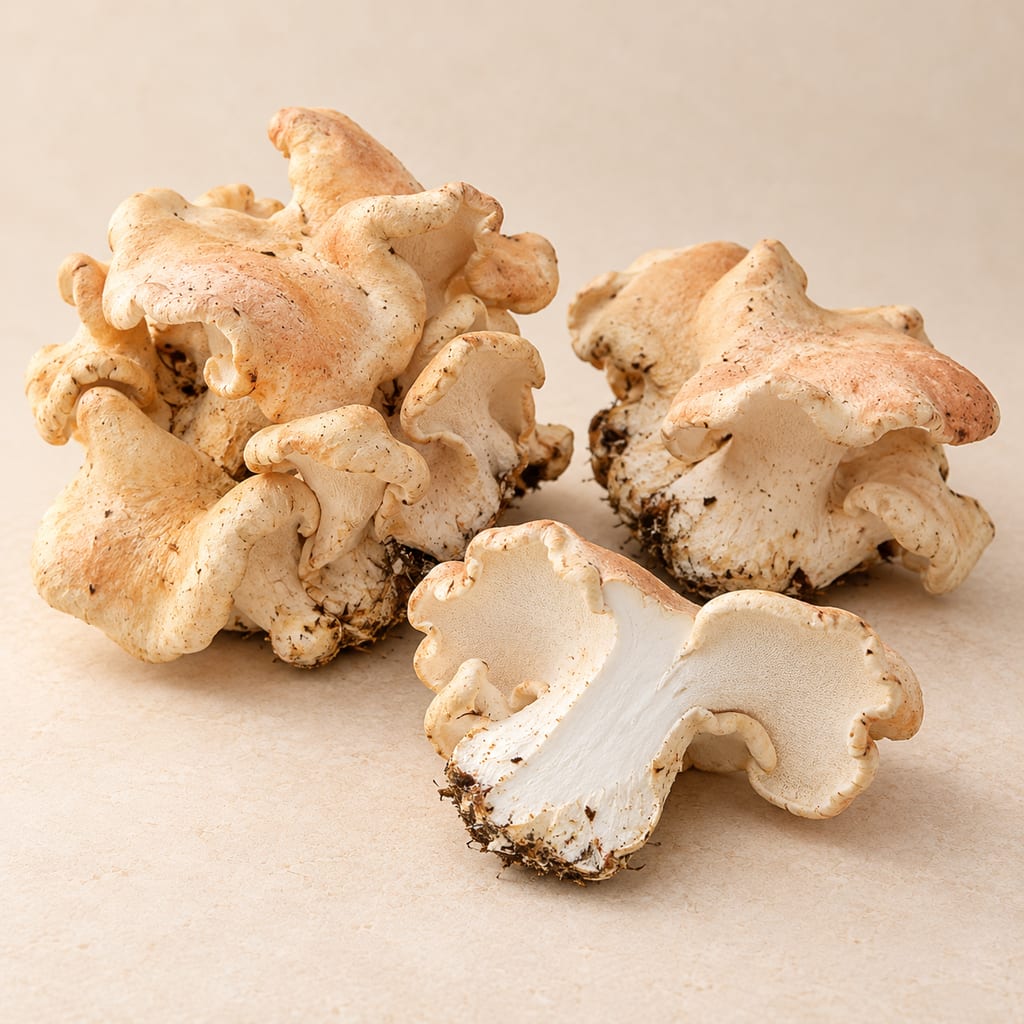
Albatrellus confluens is a ground-growing polypore with fused buff-orange caps. Sources document Chinese market use and regional edibility, but others reject it as too bitter; taxonomy also varies between Albatrellus and Albatrellopsis.
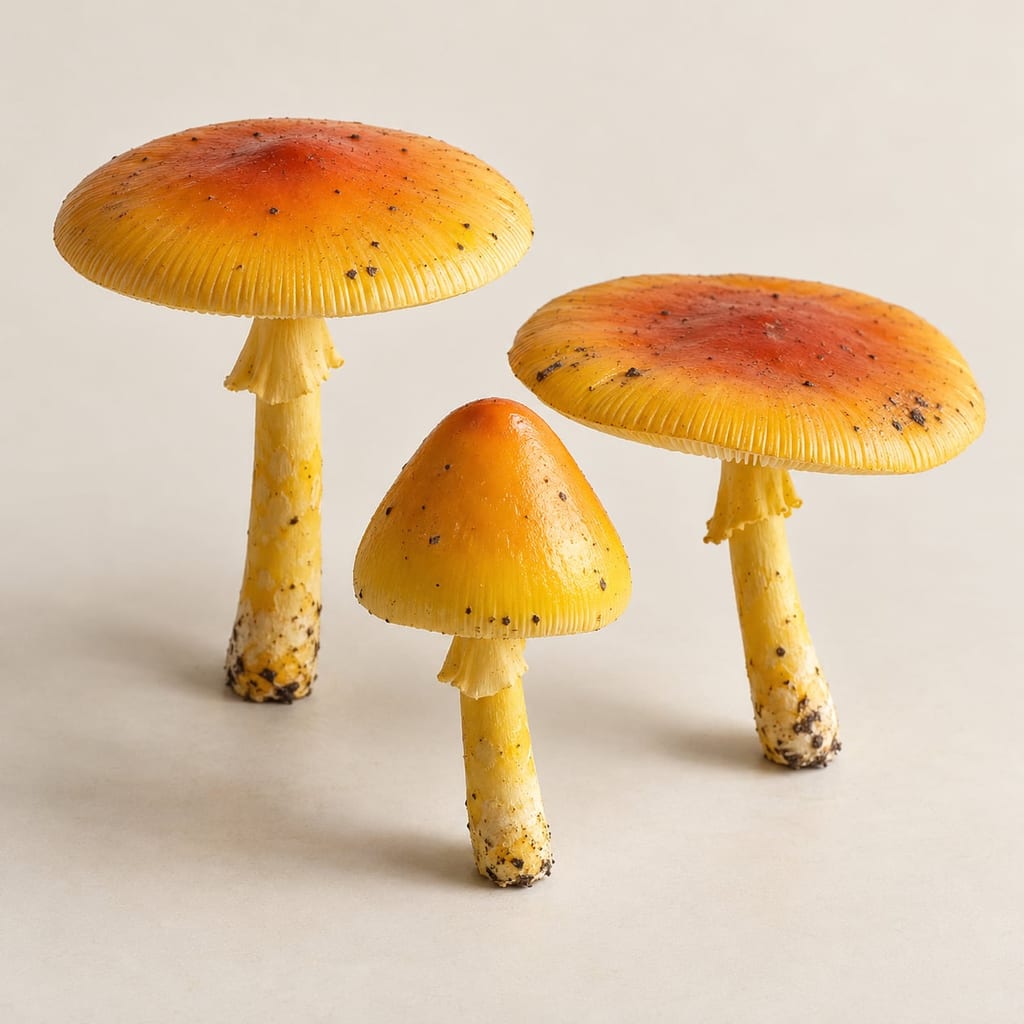
A wild Amanita recorded from China in a 2026 checklist of edible and medicinal fungi. The genus holds deadly species, so this page gives no identification or edibility verdict.
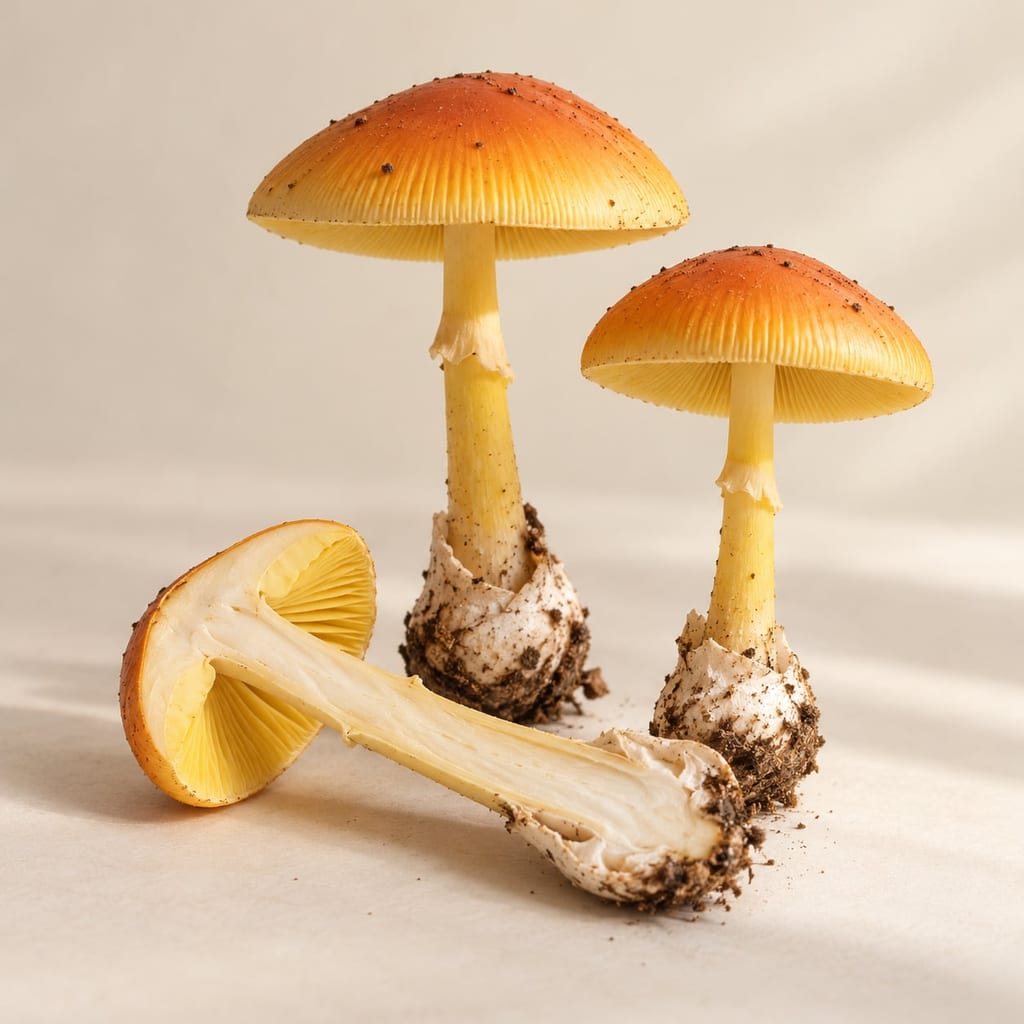
A wild Amanita of China, first reported there and listed as edible in a Yunnan ethnomycology study. The genus contains deadly species, so this page does not support identifying or eating it.
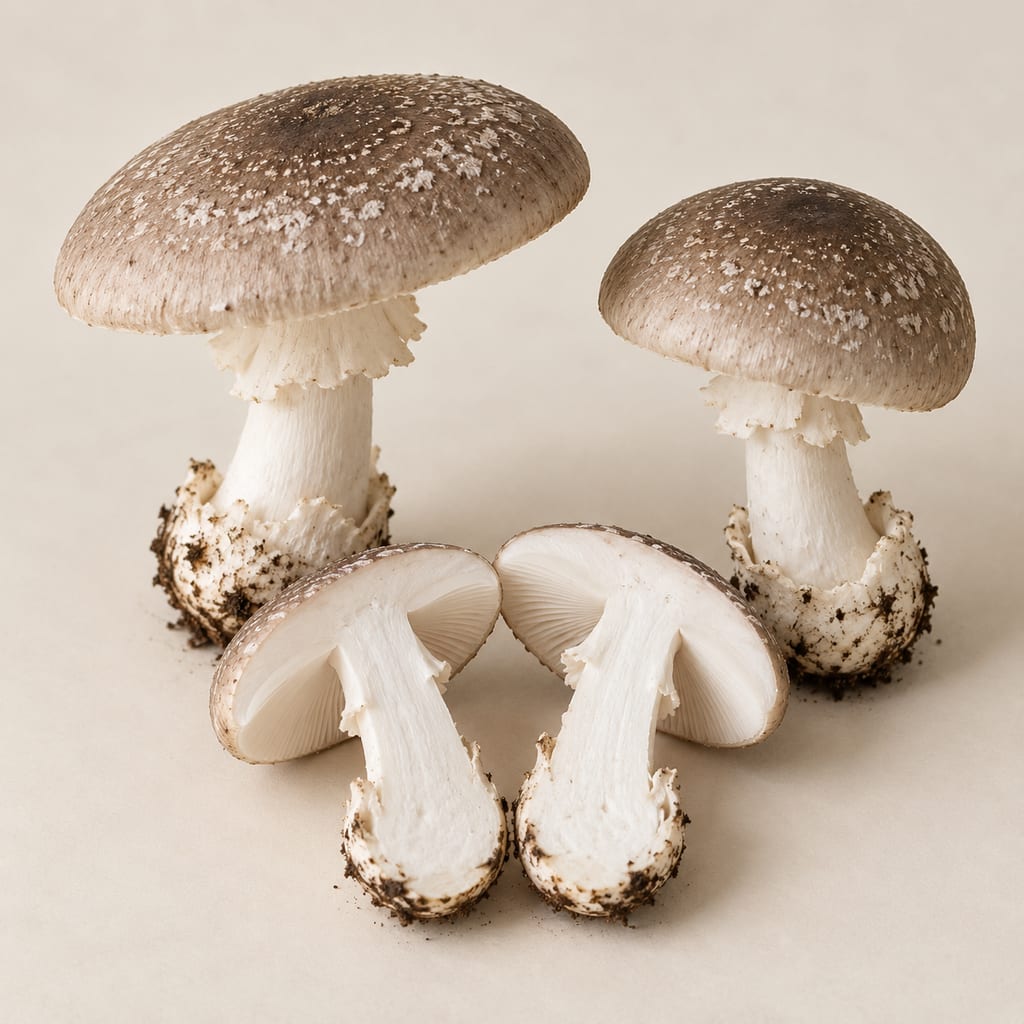
Amanita yuaniana is a Chinese Amanita that a 2023 Yanshan survey and a Yunnan ethnomycology survey list among edible species. No source tests it for safety, and the genus holds the most lethal mushrooms.
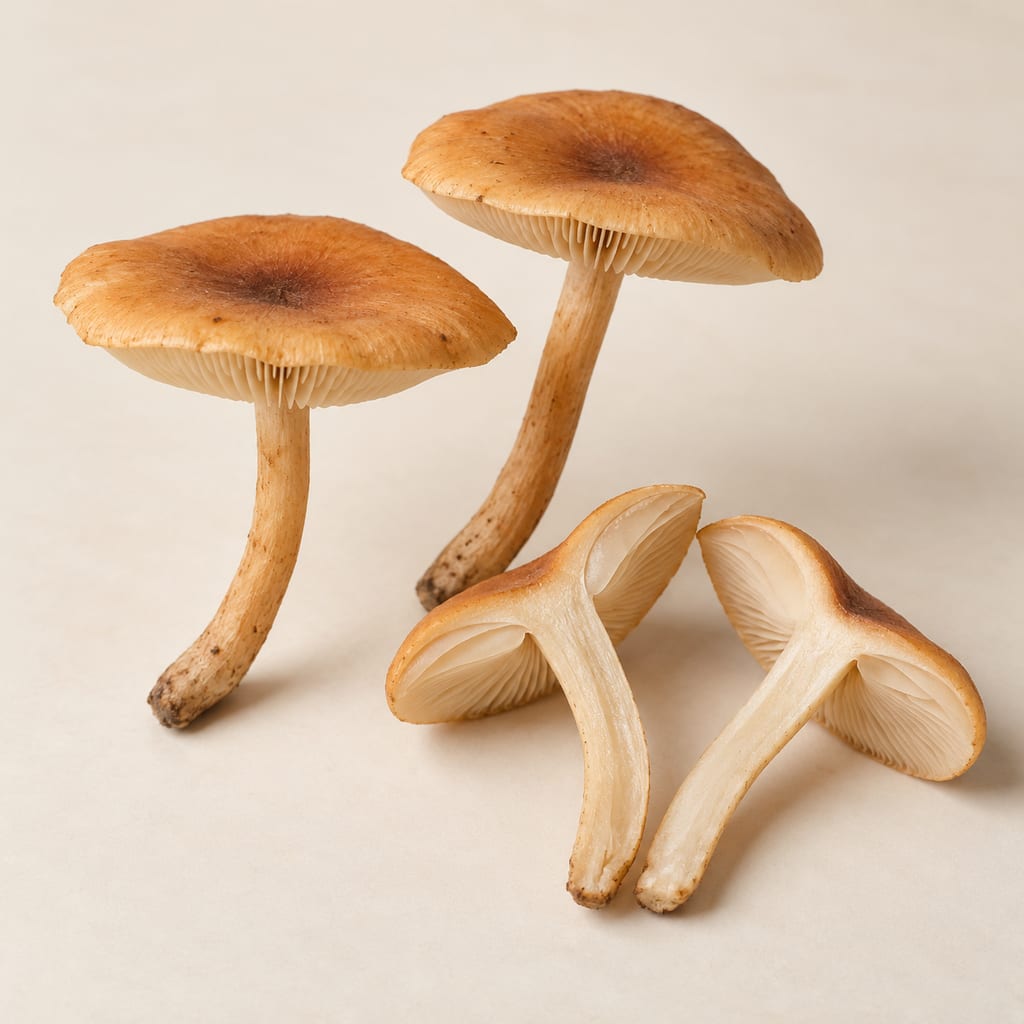
A wood-associated Armillaria recorded in Yunnan and Sichuan, China, and listed as edible in a 2026 Chinese catalogue.
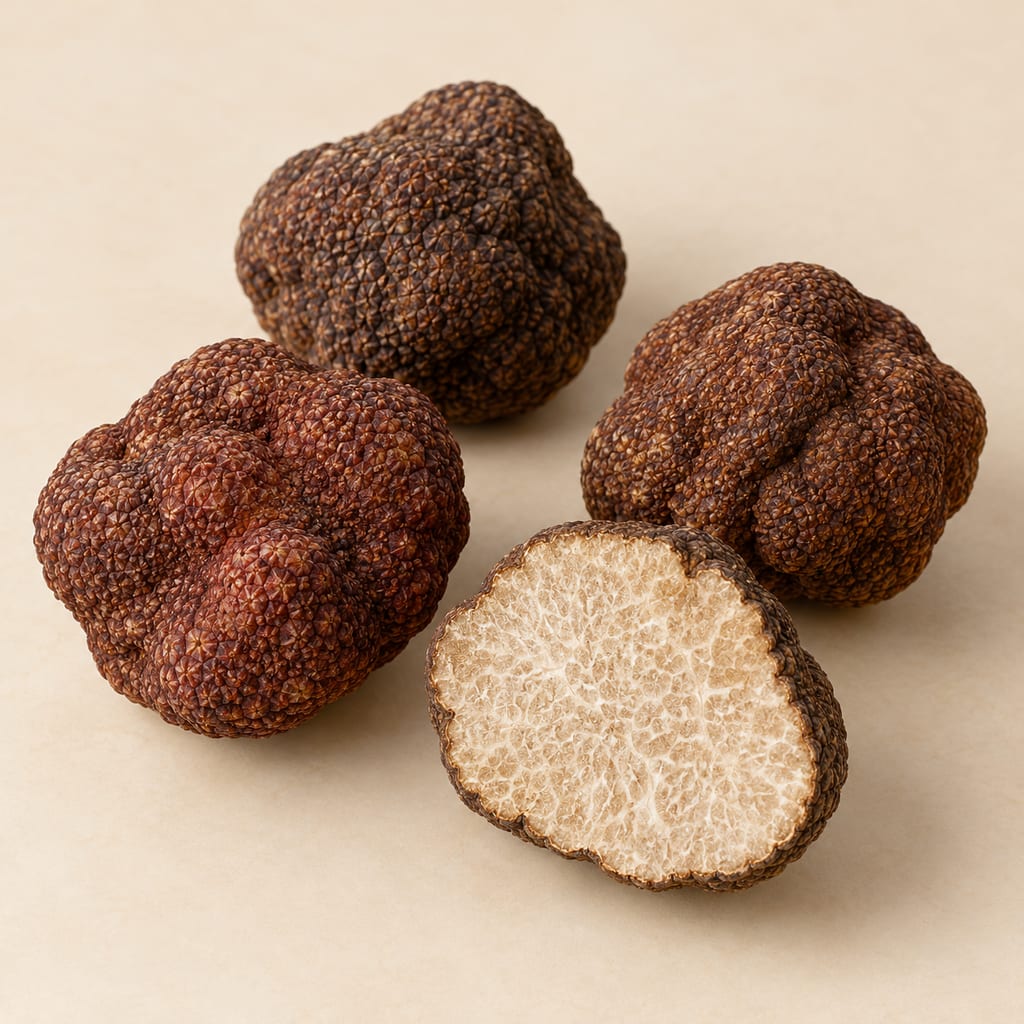
Tuber pseudohimalayense is a wild black truffle from Yunnan, China, listed as edible in a Chinese species catalogue. No independent assessment of its culinary use or safety is available.
No community contributions have been published for this entry yet.
Sign in to contribute. Published comments and photos are free to read.
Journal of Fungi (PubMed Central)History · Method · Safety
Large-Scale Field Cultivation of Morchella and Relevance of Basic Knowledge for Its Steady ProductionCultivable Chinese morels limited to 3 to 7 species; heterothallic life cycle; cultivation history and regions; cultivated area; yield instability; 185-sample identification result (10 M. importuna); dried price figure
Cited in: What it is; Cultivation; Market and use; Raw and undercooked morels; Safety and identification
Centers for Disease Control and PreventionSafety
Notes from the Field: Morel mushroom outbreak, Bozeman, Montana, 2023 (MMWR, March 14, 2024)51 case-patients; two deaths; uncooked or undercooked morels the likely source; Morchella sextelata identified by DNA; morel toxins not well characterized; cooking advice; no claim that cooking eliminates risk
Cited in: Raw and undercooked morels; Safety and identification