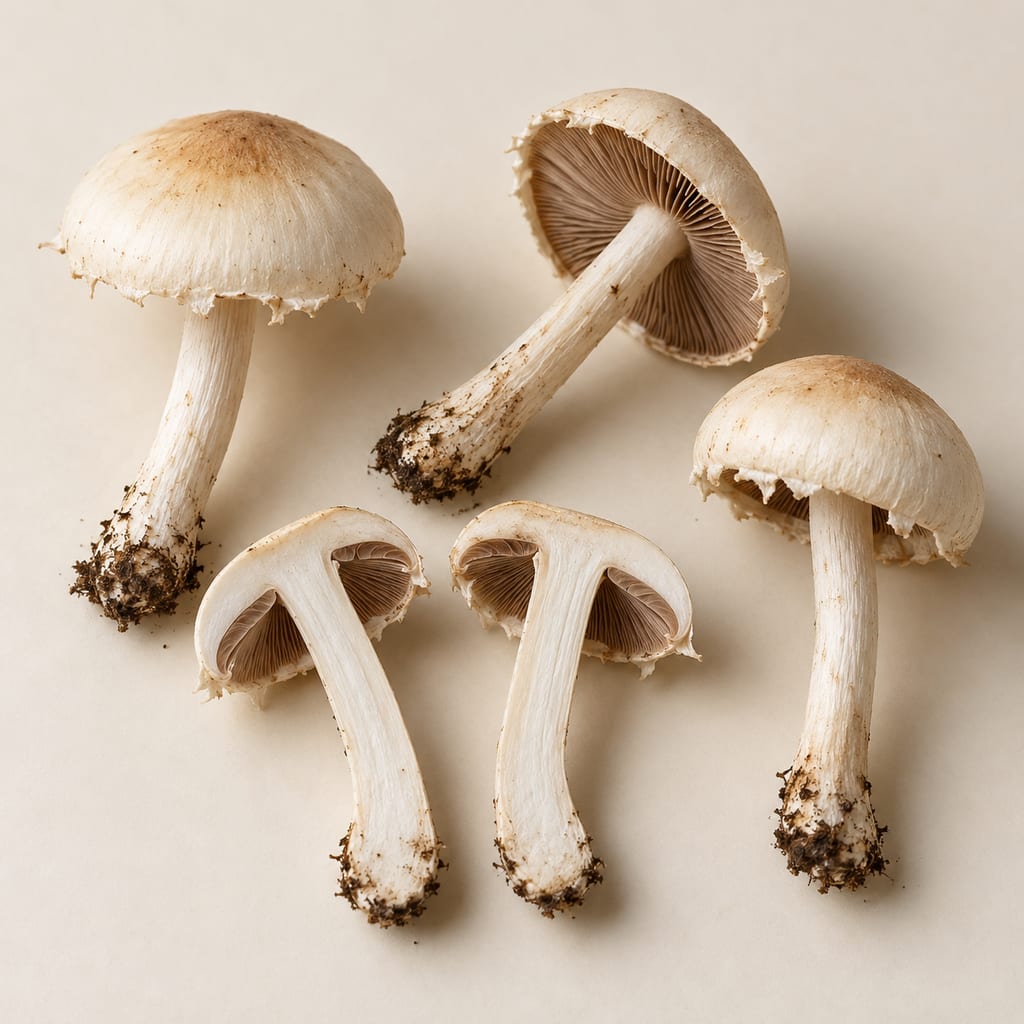
Agrocybe dura
A grassland agaric listed as edible in historical and scientific catalogues for Hong Kong and China. Taxonomic concepts and practical food value vary; the listings do not establish safe identification or culinary practice.
 FermenteaWhere food goes to change
Mushrooms
Morchella sextelata is a cultivated black morel of the Elata clade, grown in managed beds and greenhouses in China. Raw or undercooked morels are associated with illness, and cooking is the main control.
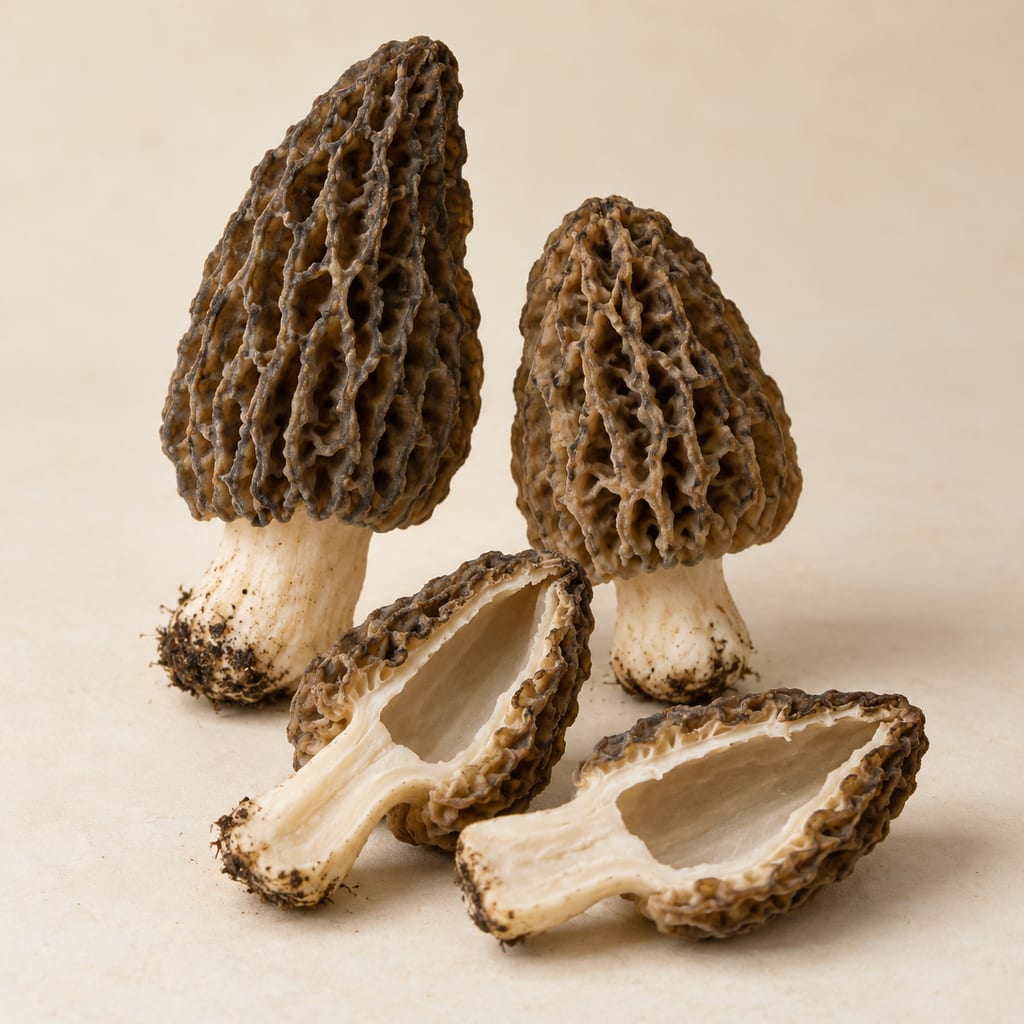
Morchella sextelata is a true morel and one of the black morels of the Elata clade. It is the species grown in managed beds and greenhouses in China, and it is also sold dried. Wild and cultivated morels are often sold under one common name, so records should be checked against the scientific name.
Recent phylogenetic work splits the genus Morchella into three clades. The black morels of the Elata clade include M. sextelata with M. importuna and M. eximia. Most of these species are confined to particular regions, with a few more widely distributed.
The catalogue lists the name as a research label without blanket current-name validation. The species name should be kept separate from the cultivated black morel, which is a common name that can cover more than one species.
Greenhouse methods for black morels were developed in China and have greatly increased production. The main cultivated black morels are soil-saprophytic: they feed on organic matter in the soil and so must be covered with soil during cultivation.
Cultivation remains difficult. Yield is unstable from one season to the next, and pathogens can damage the crop. The sources do not give a standard yield, a temperature schedule or a fixed cycle, and none should be inferred from the general method.
The morel is a food crop and is also dried for sale. Cooking is the main control for the raw-eating risk. The CDC report summarises the advice that morels should be cooked before eating to reduce potential toxic effects.
The 2023 Montana outbreak was linked to a restaurant sushi roll that contained morels. Fifty-one people had gastrointestinal illness and two died. Raw morels were more strongly associated with illness than cooked or partially cooked ones, and the dose-response pattern suggested that more of the roll meant higher risk. No single toxin was confirmed, because morel toxins are not well characterised. Cooking mitigates the risk but is not an absolute guarantee, and the catalogue treats the entry as research rather than a preparation validated for safety.
Appearance, smell and taste do not establish that a morel is safe. Anyone preparing morels should follow an official food safety source rather than this page.
Open points: the exact species identity of much commercial and wild black morel material, the yield and cycle figures for cultivation, and the food history of the species before modern cultivation are not established by the sources reviewed here.
Greenhouse methods for black morels were developed in China and have greatly increased production.
Supplied catalogue scope. The taxonomic study places black morels in several regions; the catalogue's wider temperate note is not independently mapped here.
A grassland agaric listed as edible in historical and scientific catalogues for Hong Kong and China. Taxonomic concepts and practical food value vary; the listings do not establish safe identification or culinary practice.
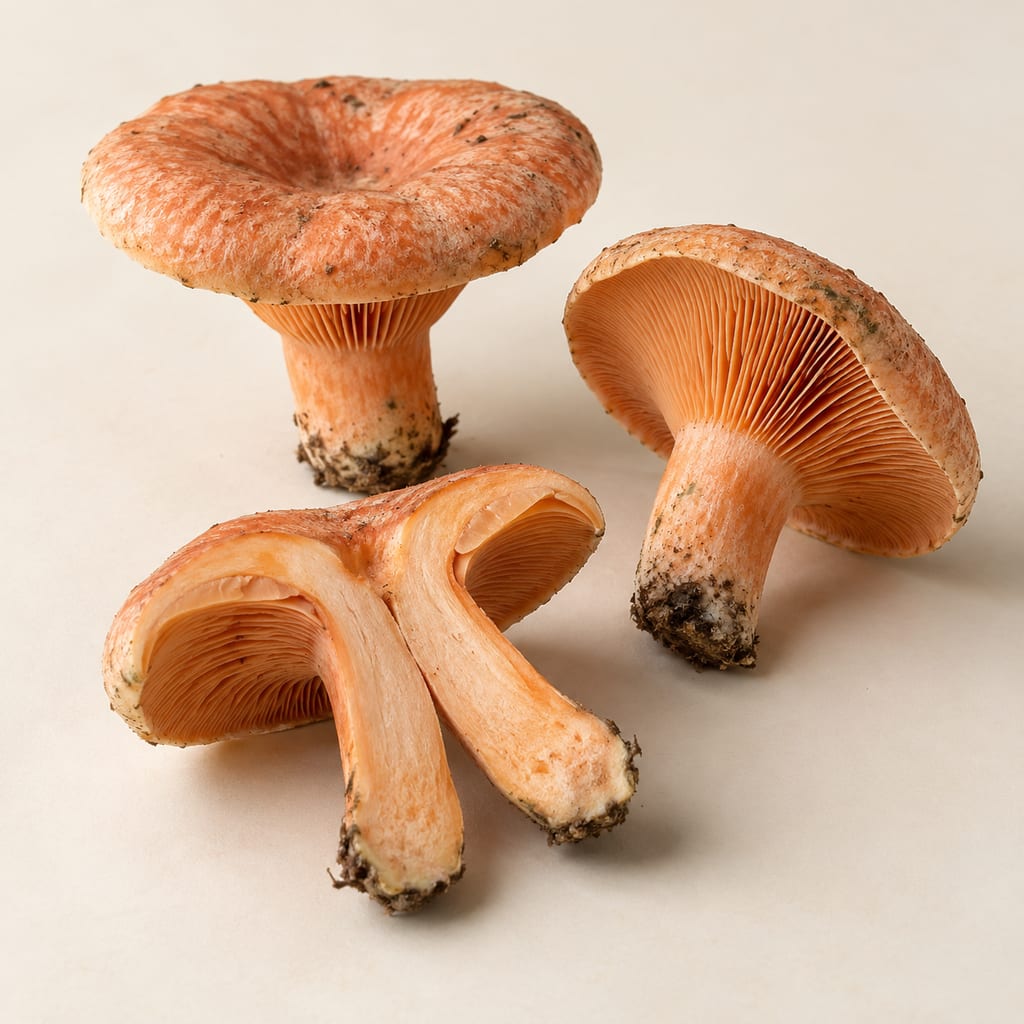
Akahatsu, Lactarius akahatsu, is a wild milkcap of East Asian pine and mixed forests that is sold in Yunnan markets, with its edibility and identity still needing species-level review.
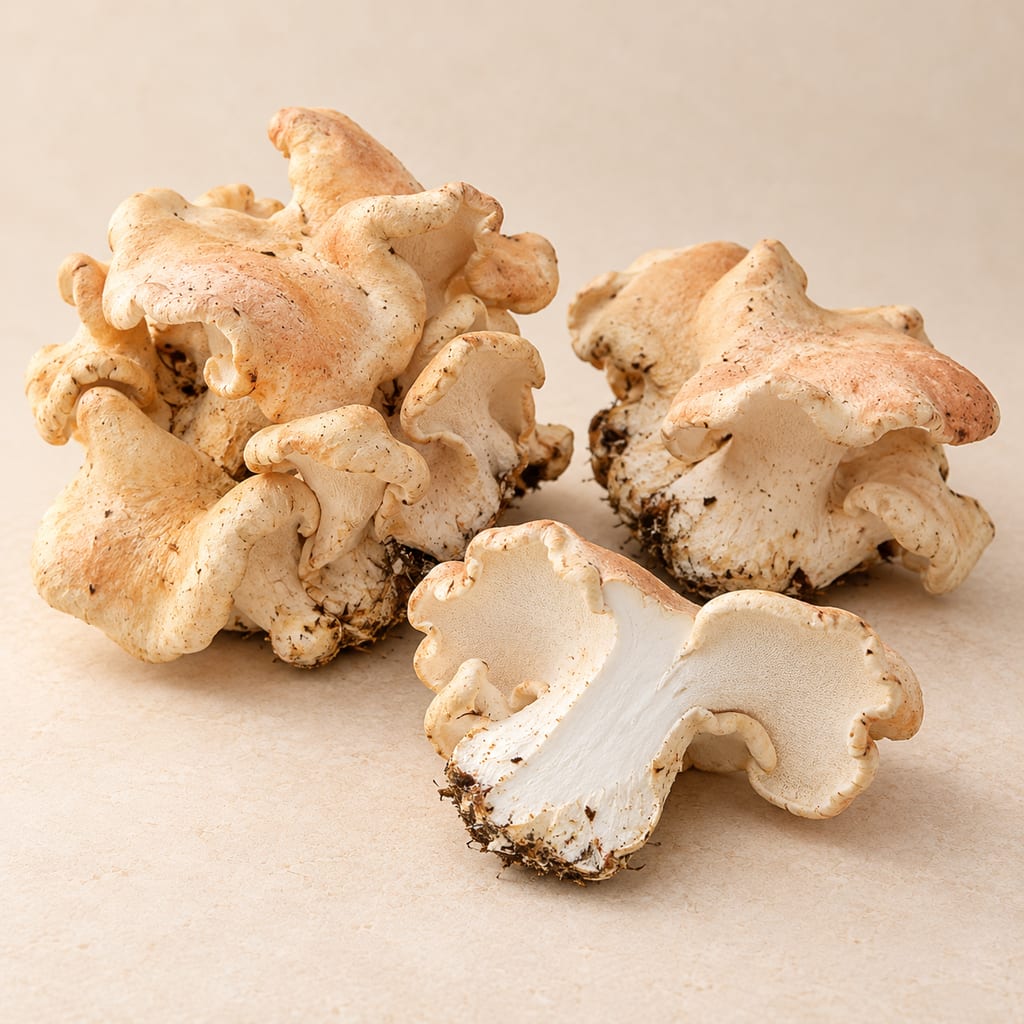
Albatrellus confluens is a ground-growing polypore with fused buff-orange caps. Sources document Chinese market use and regional edibility, but others reject it as too bitter; taxonomy also varies between Albatrellus and Albatrellopsis.
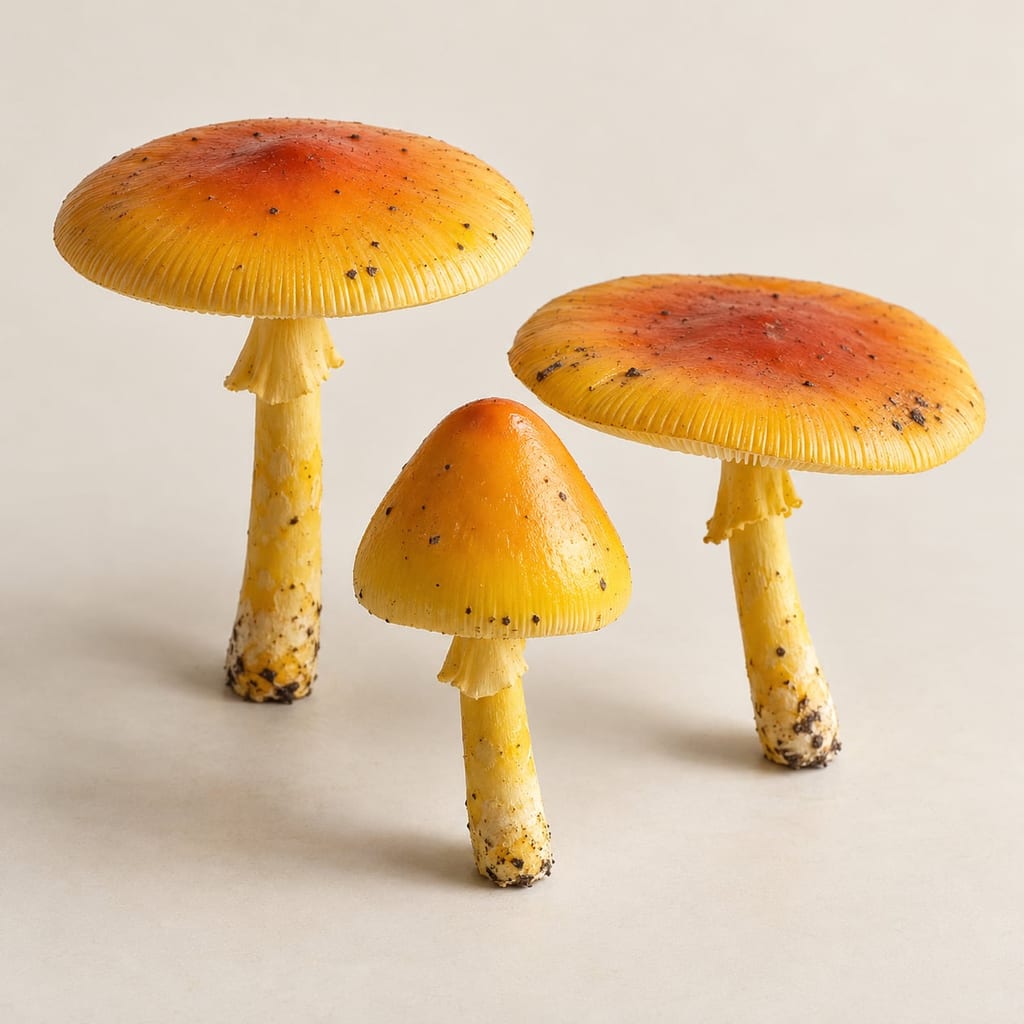
A wild Amanita recorded from China in a 2026 checklist of edible and medicinal fungi. The genus holds deadly species, so this page gives no identification or edibility verdict.
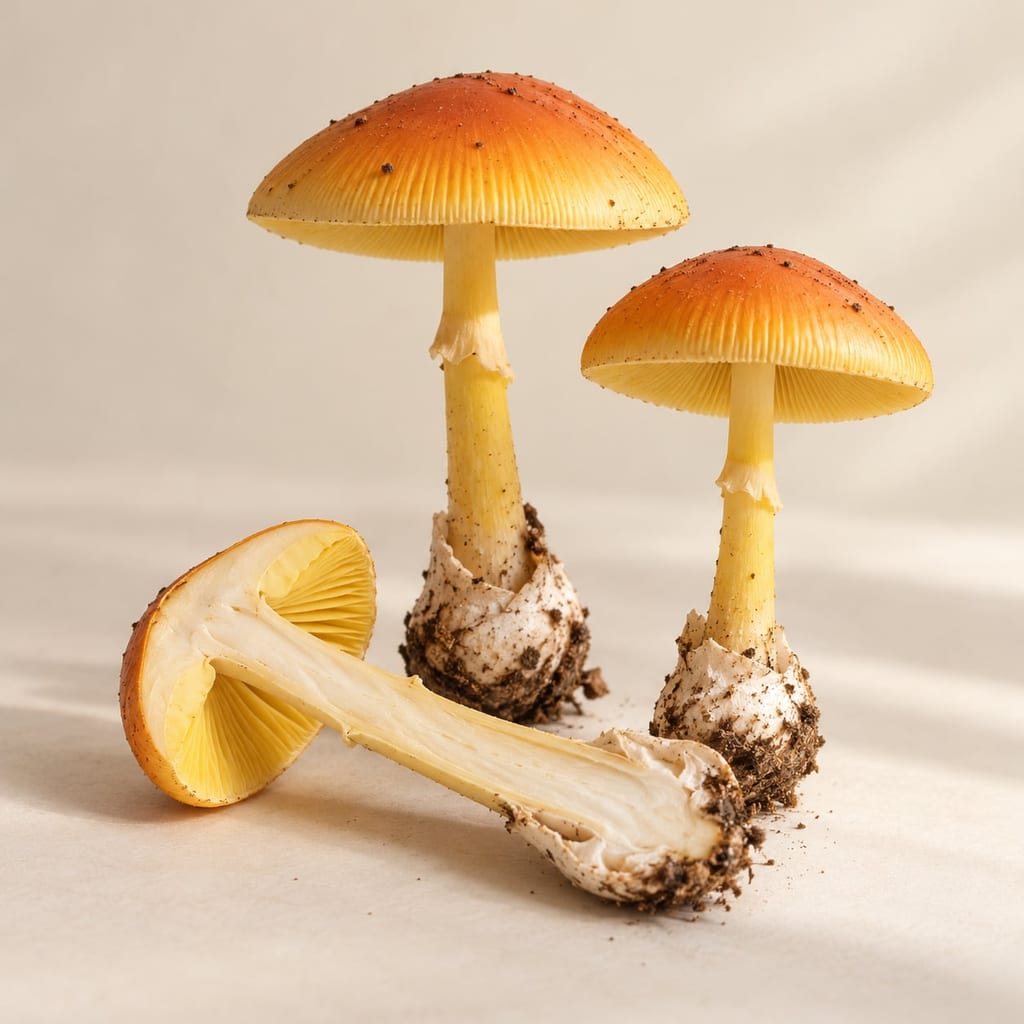
A wild Amanita of China, first reported there and listed as edible in a Yunnan ethnomycology study. The genus contains deadly species, so this page does not support identifying or eating it.
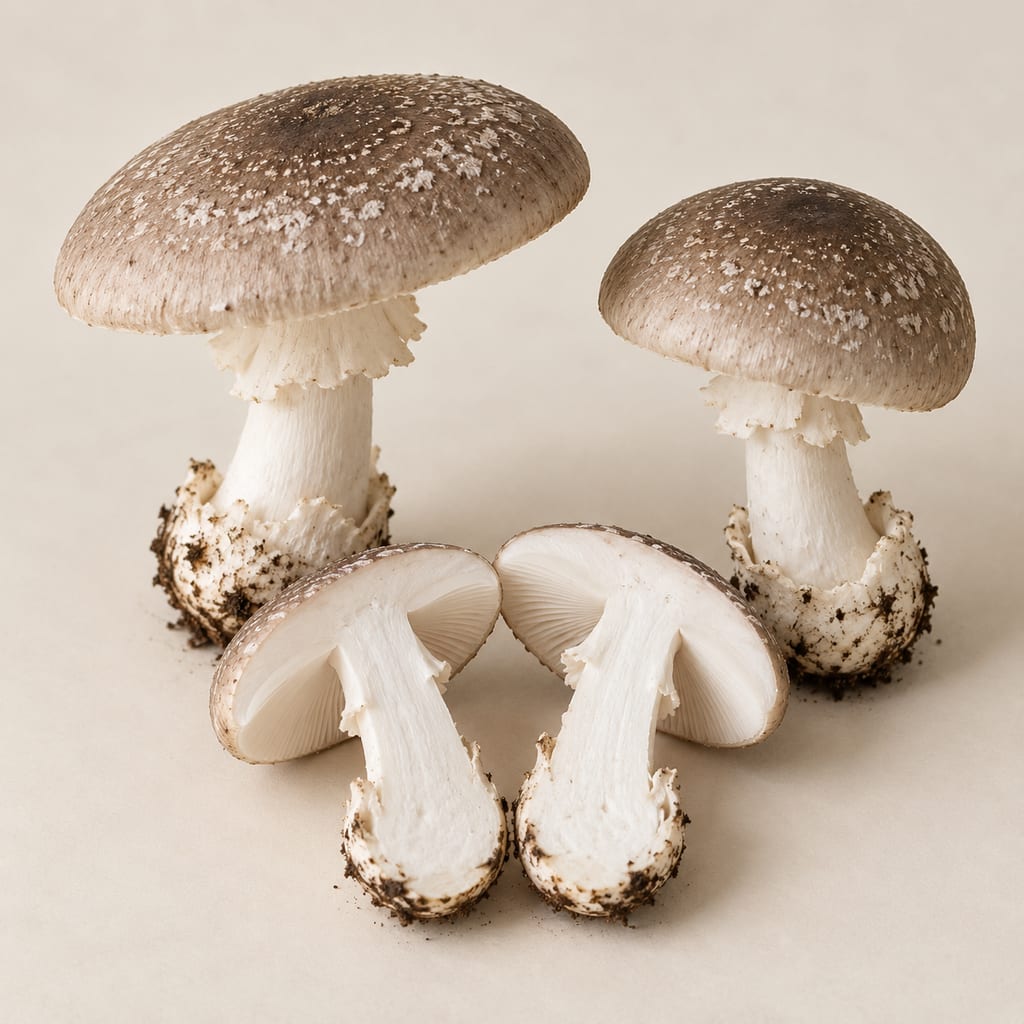
Amanita yuaniana is a Chinese Amanita that a 2023 Yanshan survey and a Yunnan ethnomycology survey list among edible species. No source tests it for safety, and the genus holds the most lethal mushrooms.
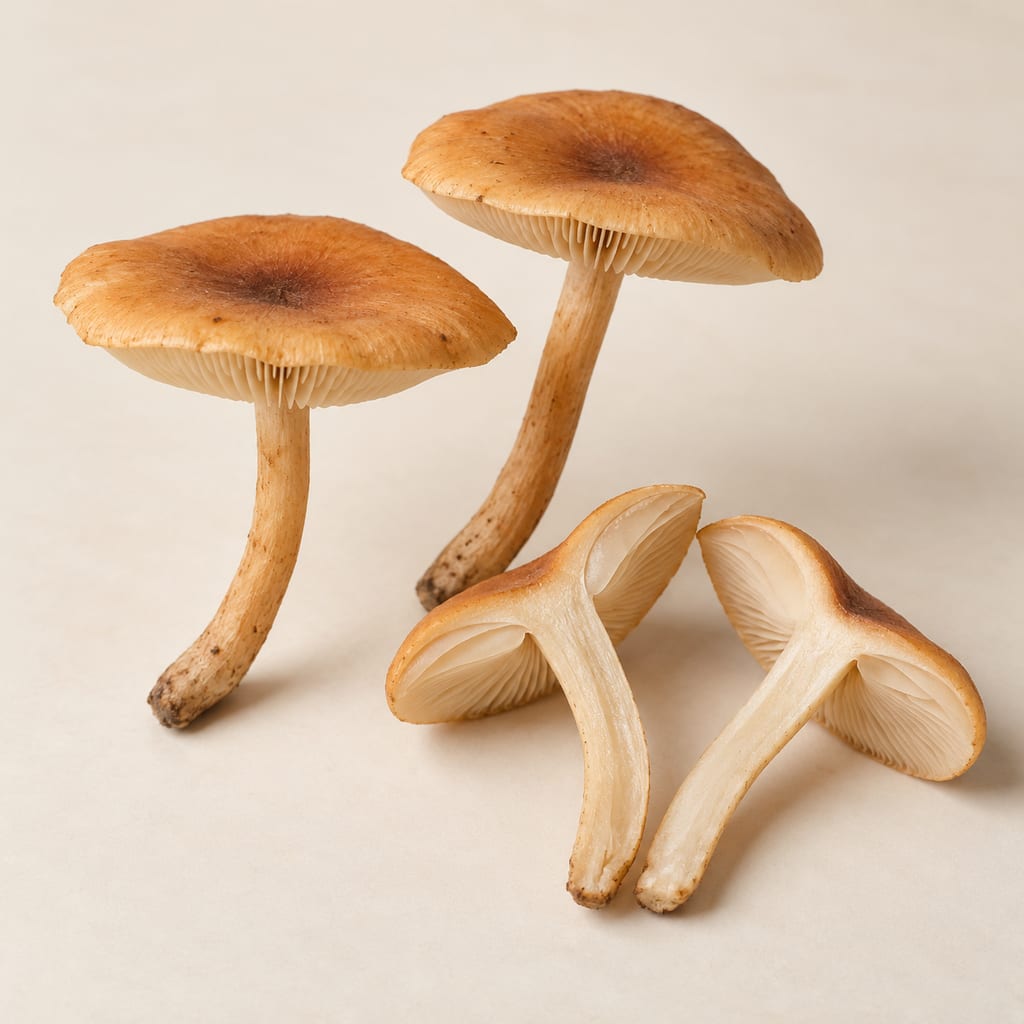
A wood-associated Armillaria recorded in Yunnan and Sichuan, China, and listed as edible in a 2026 Chinese catalogue.
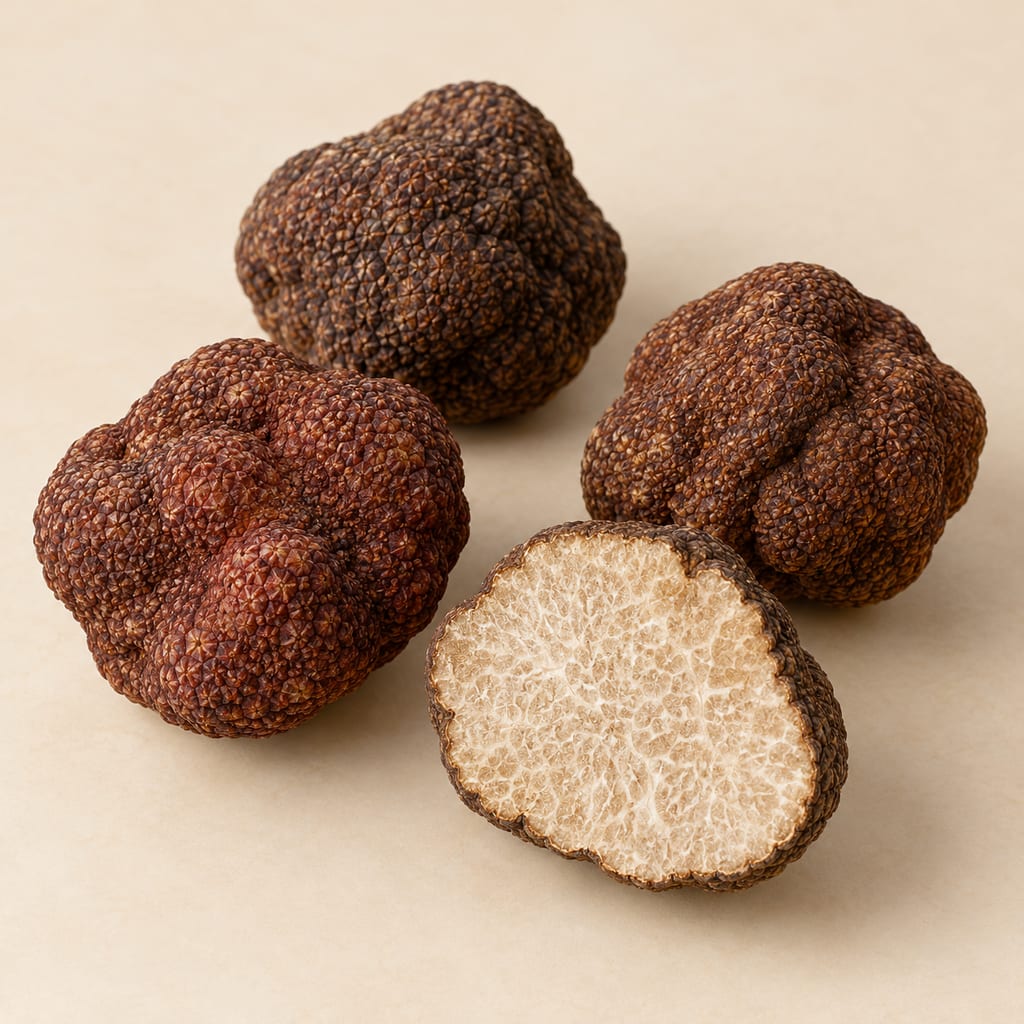
Tuber pseudohimalayense is a wild black truffle from Yunnan, China, listed as edible in a Chinese species catalogue. No independent assessment of its culinary use or safety is available.
No community contributions have been published for this entry yet.
Sign in to contribute. Published comments and photos are free to read.
PeerJCultivation · Taxonomy
Microbial communities associated with the black morel Morchella sextelata cultivated in greenhousesGreenhouse methods for black morels were developed in China and have greatly increased production.
Cited in: What it is; How it is cultivated; Notes
Mycological Progress (Springer)Taxonomy
Black morel phylogeny, Mycological Progress (DOI 10.1007/S11557-017-1309-X)Places M. sextelata in the black morel Elata clade with M. importuna and M. eximia; most of these species are confined to particular regions, a few more widely distributed.
Cited in: What it is; Taxonomy
Frontiers in MicrobiologyCultivation
Frontiers in Microbiology 2023, cultivated black morels (PMC9992412)The three main cultivated black morels are soil-saprophytic and must be covered with soil during cultivation; yield instability and pathogen susceptibility remain major obstacles.
Cited in: How it is cultivated; Notes
MMWR, CDCSafety
Outbreak Linked to Morel Mushroom Exposure, Montana, 202351 people had gastrointestinal illness after eating at one restaurant; two died. Raw morels were more strongly associated with illness than cooked or partially cooked morels; no causative agent was identified and morel toxins are not well characterised. The summary says morels should be cooked before eating to mitigate potential toxic effects.
Cited in: Eating and safety