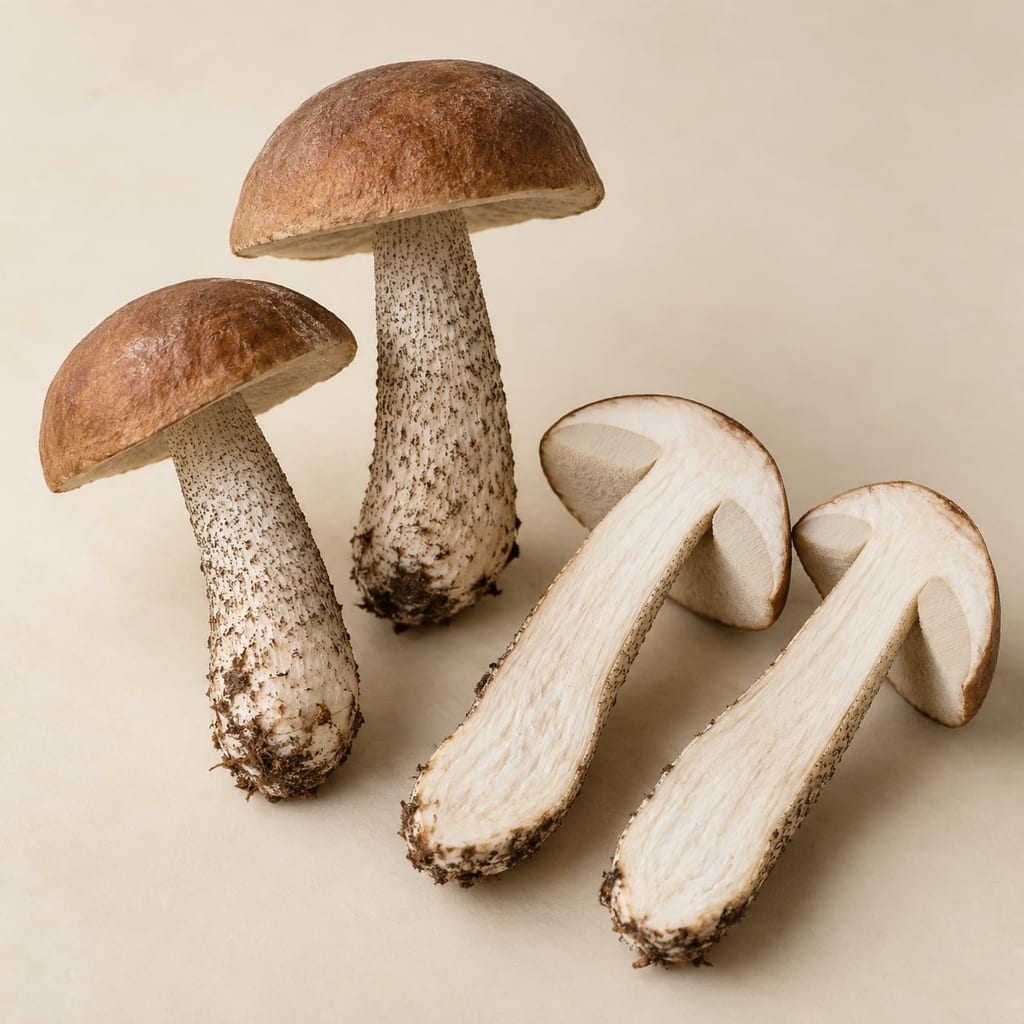
Brown birch bolete
A wild birch-associated bolete eaten in parts of Europe. Its older name, Boletus scaber, remains common in historical sources; regional food records and cooking cautions require source-specific reading.
 FermenteaWhere food goes to change
Mushrooms
Orange bolete is the red-capped scaber-stalk bolete, accepted as Leccinum aurantiacum (Bull.) Gray; Boletus aurantiacus Bull. is its basionym. Culinary accounts are conditional on confident identification and thorough cooking.
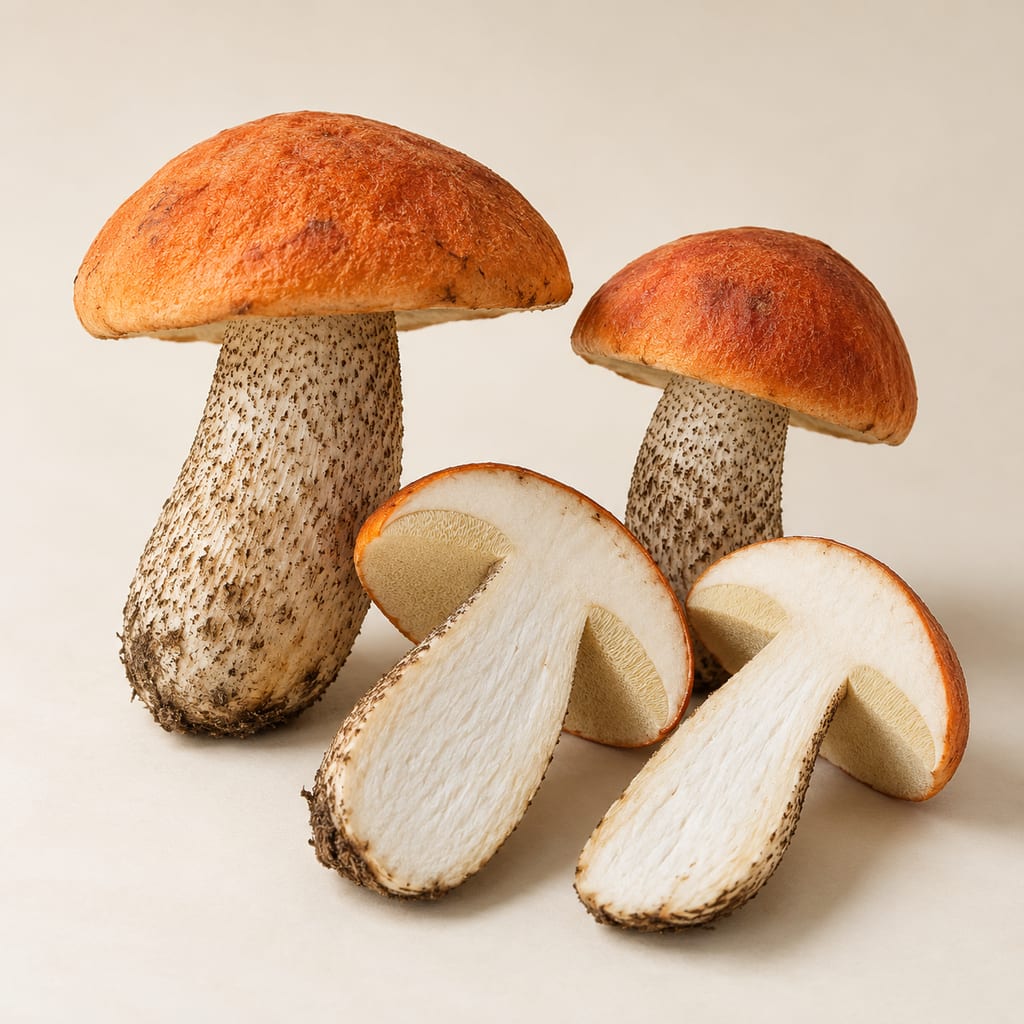
The historical name Boletus aurantiacus Bull. corresponds in current name registries to Leccinum aurantiacum (Bull.) Gray. Species Fungorum and Kew accept the latter combination, and the Natural History Museum dictionary connects both names to the Orange Oak Bolete concept. The common name orange bolete is useful but not a field identification. Typical descriptions show a dry orange to brick-red cap, pale pores rather than gills, and a pale stalk marked with darker scabers. Flesh can darken after cutting or cooking. These broad features overlap with related red-capped Leccinum, so a photograph or name match alone cannot establish that a specimen is this species.
Taxonomic treatments do not always draw the same boundary around L. aurantiacum. The names L. quercinum, L. populinum and L. albostipitatum have been split or synonymized differently across authorities and periods. Some field accounts use the associated tree to distinguish oak- and aspen-linked forms, while broader treatments gather several names into a complex. Keep Boletus aurantiacus visible as a historical synonym, but do not convert every old record or vernacular label into a verified occurrence of one narrowly defined species.
The expanded research index carries an exact Boletus aurantiacus entry attributed to a 2004 FAO country list for Ukraine. Its annotation is deliberately limited: historical source use uncertain; not independently assessed. This is not enough to assert a confirmed Ukrainian tradition, exact preparation method, present-day market or safety. A separate Leccinum aurantiacum catalogue entry summarizes European use as a cooked or dried bolete but also says individual records and the boundaries among related orange boletes need inspection.
A Nordic Council of Ministers assessment describes orange bolete as edible after thorough cooking and discusses gastrointestinal illness reported after insufficiently cooked Leccinum. It does not identify a responsible toxicant or establish that every species or specimen behaves identically. The practical conclusion is conditional: the culinary record is for confidently identified Leccinum receiving thorough heat treatment. It is not a recommendation to eat a wild mushroom based on this page. Raw and undercooked use is unsupported here; local expert guidance should take precedence.
Sources reviewed do not establish a distinctive fermented product made from this bolete. It is best described as a wild food ingredient, not a fermentation culture or a fermenting substrate with a demonstrated tradition. Although some regional guides mention drying, salting or marinating, those secondary descriptions are not a sufficient basis for preservation instructions; this page makes no shelf-stability claim.
Leccinum are ectomycorrhizal fungi: the fruiting body emerges from soil while the fungus associates with living tree roots. Species accounts most often connect L. aurantiacum with aspen or other poplars. Broader Nordic literature also records oak, birch and less frequent willow, lime and beech associations. Because neighboring taxa are treated inconsistently, the tree beneath a mushroom is supporting context rather than a diagnostic test.
The evidence supports a temperate European range for the culinary concept, with a regional Georgia account reporting herbarium records throughout that country and open deciduous woodland, especially aspen. The Ukraine record in the supplied register remains a country-level historical food-use assertion with explicit uncertainty. Ukrainian photographs and flora descriptions corroborate observations under this name, but image captions cannot upgrade the old food record or prove that all collections share one taxonomic concept.
Regional sources place fruiting mainly in summer and autumn. A Georgia account gives those seasons, a French university field guide reports July through November, and a Ukrainian caption gives May through October. These are not a global calendar: latitude, elevation and weather affect fruiting, and the cited sources do not predict a current harvest window.
This candidate consolidates an accepted-name ingredient account with the historical synonym search term. It keeps conditional food use, the uncertain Ukrainian historical attribution, regional seasonality and species-boundary limits visible. It should remain an unpublished draft for editorial assessment; the research does not settle a local collection's identity or provide a toxicological guarantee.
Broad European culinary evidence for Leccinum aurantiacum; taxonomic limits with related orange-capped species differ among sources.
The supplied research index records an FAO historical source entry for Boletus aurantiacus, explicitly classed as uncertain and not independently assessed; it does not support locality or current-practice claims.
A wild birch-associated bolete eaten in parts of Europe. Its older name, Boletus scaber, remains common in historical sources; regional food records and cooking cautions require source-specific reading.
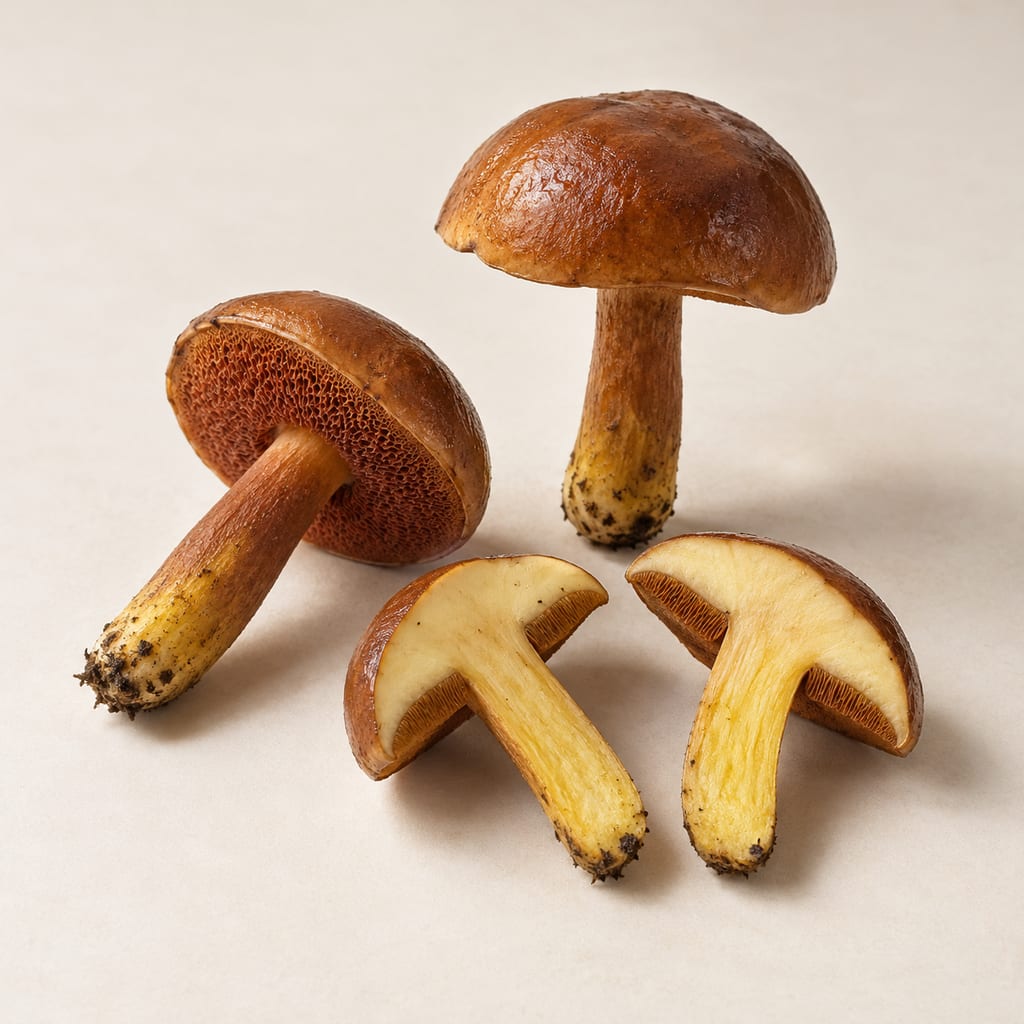
A peppery woodland bolete with historical edible labels and reported condiment use in Querétaro. Current mycological references call its edibility suspect or unestablished; this entry does not recommend consumption.

Chicken eggs supply proteins and yolk fats that set and emulsify. Atlas breads use them in enriched doughs, surface washes and a sourdough pancake batter mixed after fermentation.
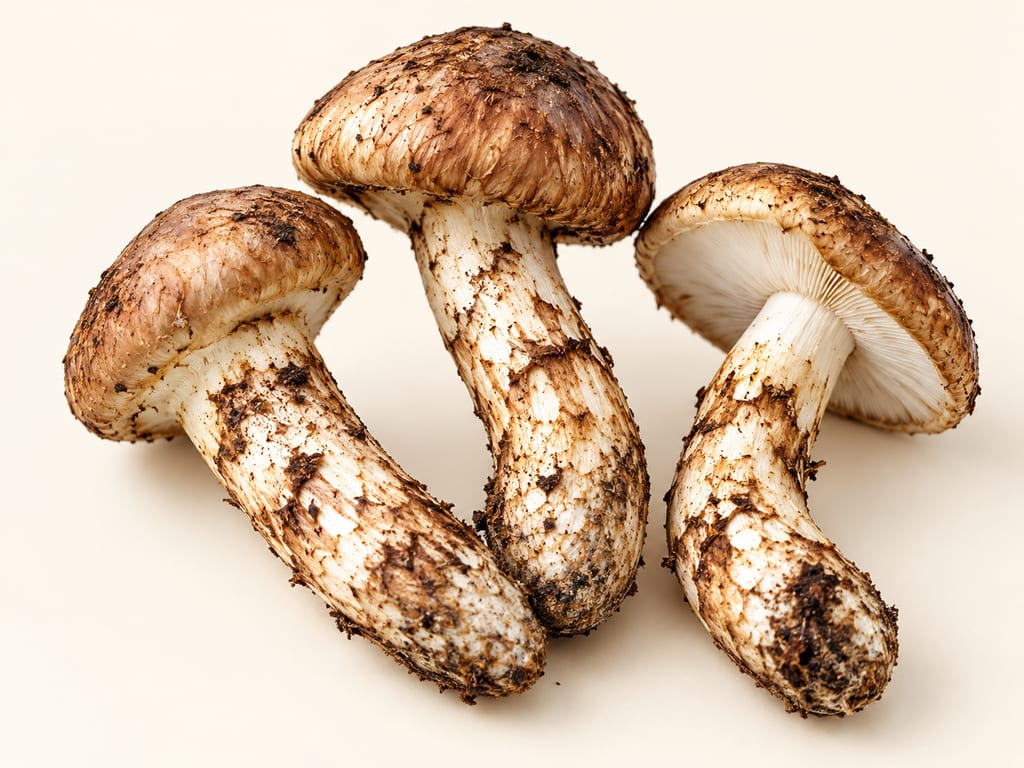
Matsutake is a prized wild ectomycorrhizal mushroom associated with pine and other forest trees, valued especially in Japan, Korea and China for its distinctive spicy aroma, firm texture and seasonal rarity.
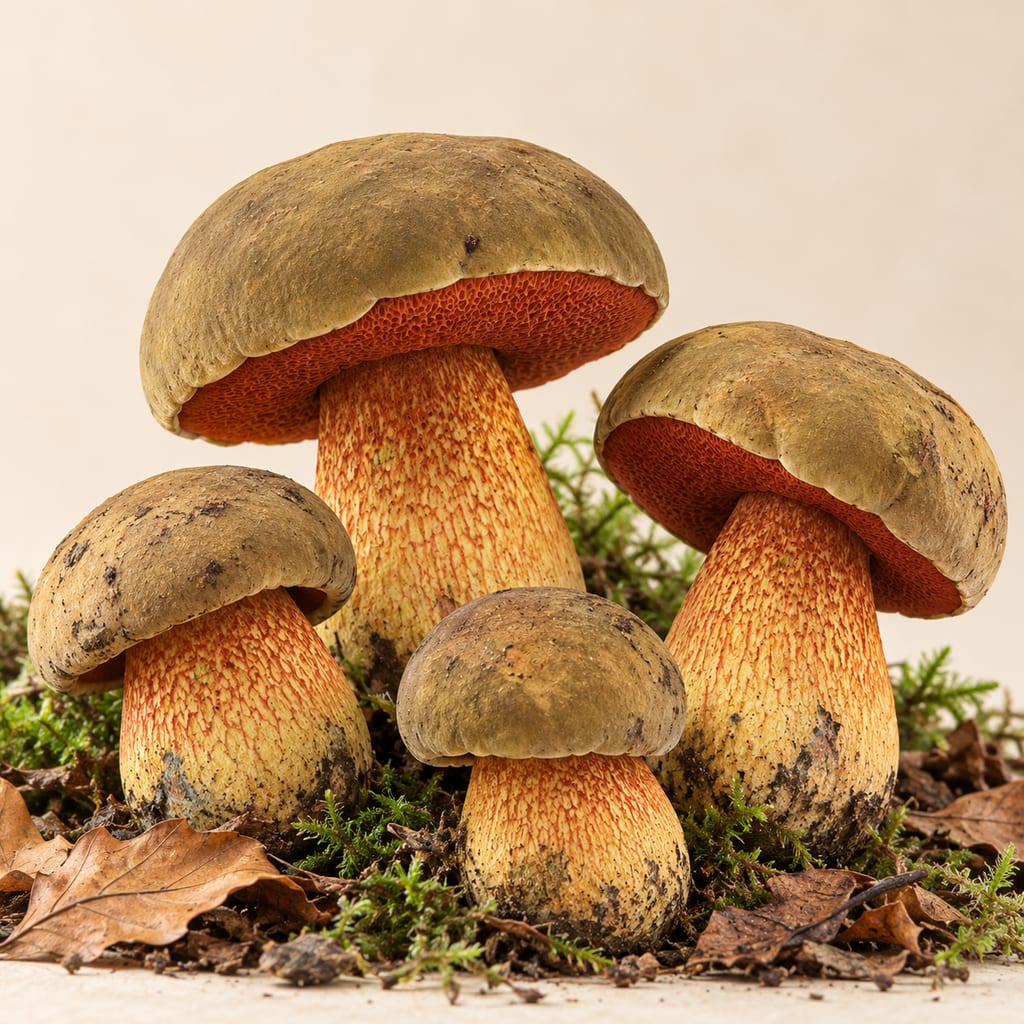
A European bolete reported as food in some regions and treated as toxic or not known to be edible in others. Its name, use and safety cannot be generalized across all records.
No community contributions have been published for this entry yet.
Sign in to contribute. Published comments and photos are free to read.
Species Fungorum / Royal Botanic Gardens, KewTaxonomy
Leccinum aurantiacum name recordAccepts Leccinum aurantiacum (Bull.) Gray and identifies Boletus aurantiacus Bull. as its basionym.
Cited in: A red-capped scaber-stalk bolete; Scope of the record
Royal Botanic Gardens, KewTaxonomy
Leccinum aurantiacumLists Leccinum aurantiacum as accepted and Boletus aurantiacus Bull. among its synonyms.
Cited in: A red-capped scaber-stalk bolete
Natural History MuseumTaxonomy
Orange Oak BoleteTreats Leccinum aurantiacum and Boletus aurantiacus among names associated with Orange Oak Bolete, illustrating historical synonymy.
Cited in: A red-capped scaber-stalk bolete
Nordic Council of MinistersSafety · Culinary use · Ecology
Mushrooms traded as food, Volume IIDescribes Leccinum aurantiacum as edible after thorough cooking; reports gastrointestinal illness after insufficiently cooked Leccinum, toxicant unidentified; lists poplar, oak, birch and less frequent tree associations.
Cited in: Food use and its limits; Trees, range and fruiting season; Scope of the record
Ethnobiology of fungi and lichens of GeorgiaGeography · Season · Habitat · Culinary use
Leccinum aurantiacum (Bull.) GrayReports herbarium occurrence across Georgia, deciduous woodland especially aspen, summer/autumn fruiting, and regional edible-use descriptions; not an independent safety assessment.
Cited in: Trees, range and fruiting season
Food and Agriculture Organization of the United NationsHistorical use
Wild edible fungi: a global overview of their use and importance to peopleThe supplied research register attributes an uncertain historical Ukraine record for Boletus aurantiacus to the FAO compilation; aggregated historical evidence, not a modern safety assessment.
Cited in: Food use and its limits
Université Claude Bernard Lyon 1Season · Identification
Leccinum aurantiacum / quercinumReports a regional July to November period and notes older fibrous stems and overmature flesh are poor culinary material.
Cited in: Trees, range and fruiting season