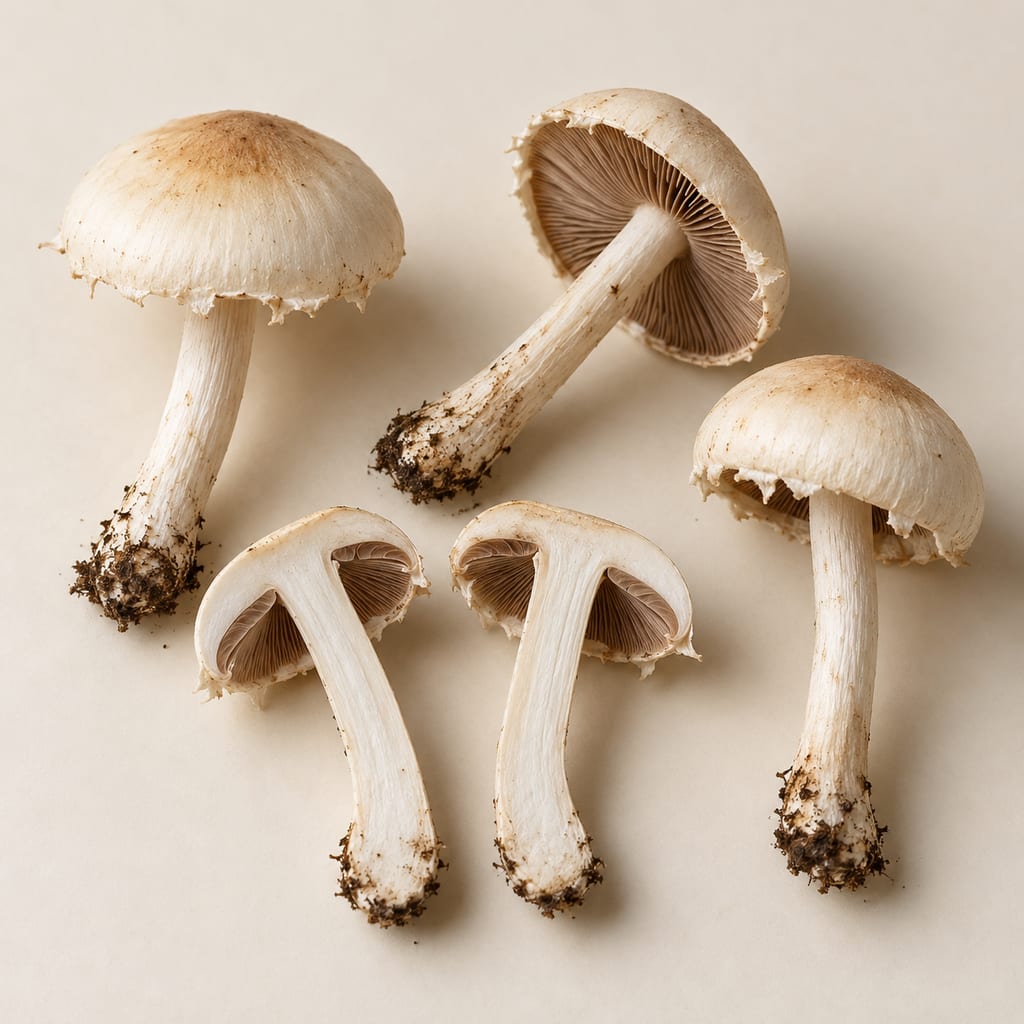
Agrocybe dura
A grassland agaric listed as edible in historical and scientific catalogues for Hong Kong and China. Taxonomic concepts and practical food value vary; the listings do not establish safe identification or culinary practice.
 FermenteaWhere food goes to change
Mushrooms
Gomphus orientalis is a vase-shaped wild mushroom sold in markets in Yunnan Province, China, with its species identity and local safety still unresolved in the sources.
Gomphus orientalis is known as the oriental pig-ear fungus. It belongs to a genus of vase- or club-shaped fungi related to the chanterelles, and the catalogue records it as an ectomycorrhizal forest fungus. The catalogue retains the published regional identification and states that contemporary taxonomy still needs species-level review.
The catalogue also lists Turbinellus floccosus under the synonym Gomphus floccosus. That name is not this species, and it has conflicting edibility reports (see safety).
The fungus grows in forest as a mycorrhizal partner of trees. The catalogue records the supply as wild. Cultivation is not recorded.
The catalogue describes G. orientalis as a marketed vase-shaped mushroom in Yunnan. A 2022 ethnomycology study of wild mushrooms in Pu'er Prefecture recorded local names, habitat, fruiting time, price, cooking and preservation practices for wild edible mushrooms; the species-level details for this name were not confirmed in the sources reviewed, so no preparation is given here.
Identification and safety: a name, a photograph or one regional guide does not confirm that a wild specimen is this species. This page is not a collection key. Edibility statements refer to the named species as understood by each source, not any particular specimen. The catalogue marks the local safety as unresolved and requires species-level review. A German-language overview of Chinese market mushrooms flags Gomphus species as suspicious; the species-level assignment was not confirmed in the source. Turbinellus floccosus, which some sources file as Gomphus floccosus, has conflicting edibility and gastrointestinal-poisoning reports. Nothing here establishes that G. orientalis is safe to eat.
Marketed in Yunnan according to the catalogue and the 2022 Pu'er ethnomycology study; the study species table was not read in full.
A grassland agaric listed as edible in historical and scientific catalogues for Hong Kong and China. Taxonomic concepts and practical food value vary; the listings do not establish safe identification or culinary practice.

Akahatsu, Lactarius akahatsu, is a wild milkcap of East Asian pine and mixed forests that is sold in Yunnan markets, with its edibility and identity still needing species-level review.
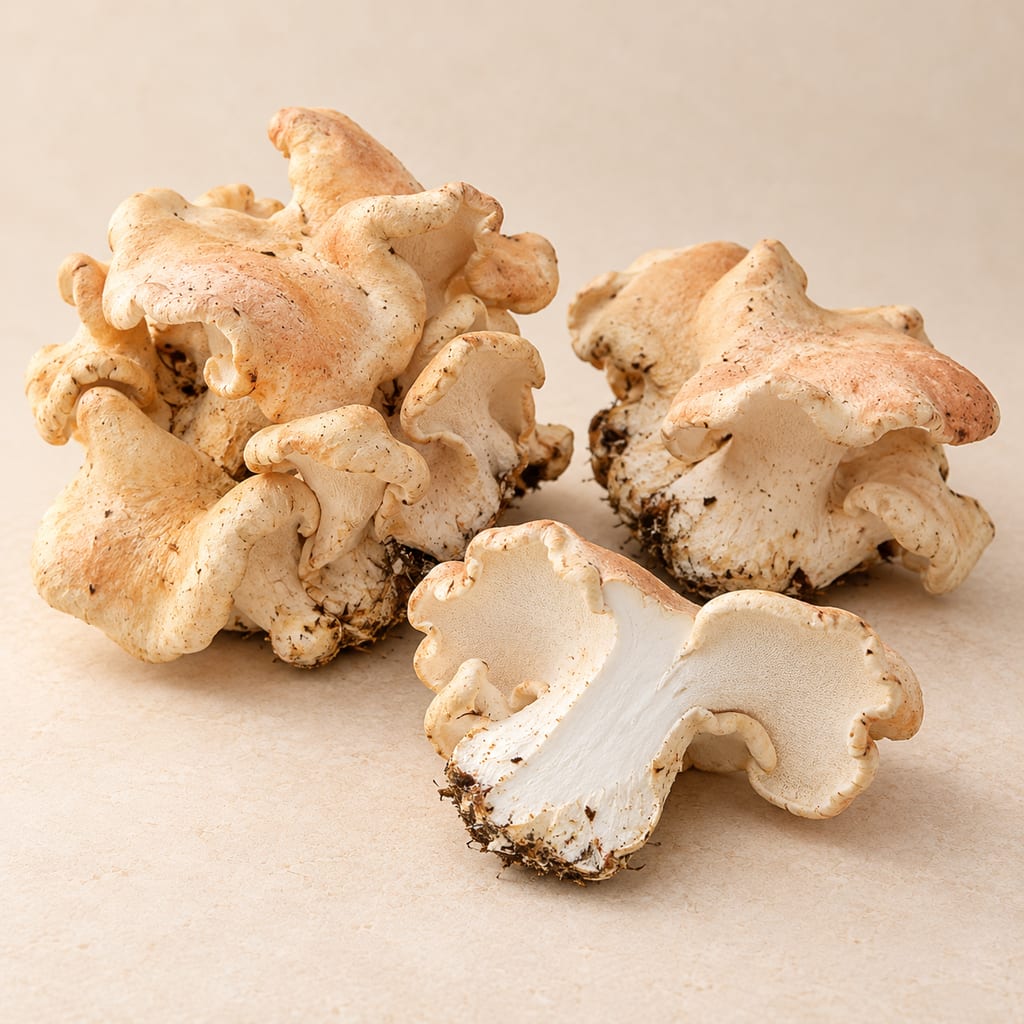
Albatrellus confluens is a ground-growing polypore with fused buff-orange caps. Sources document Chinese market use and regional edibility, but others reject it as too bitter; taxonomy also varies between Albatrellus and Albatrellopsis.
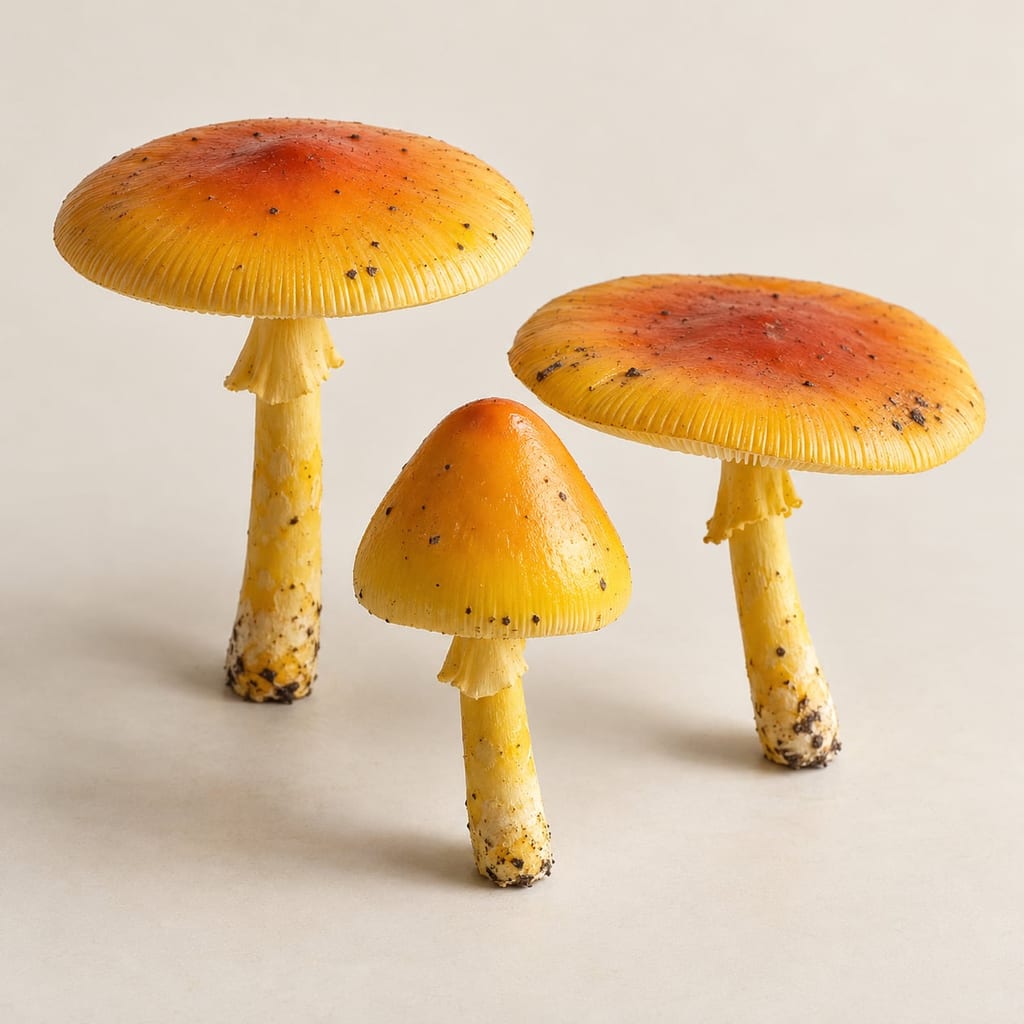
A wild Amanita recorded from China in a 2026 checklist of edible and medicinal fungi. The genus holds deadly species, so this page gives no identification or edibility verdict.
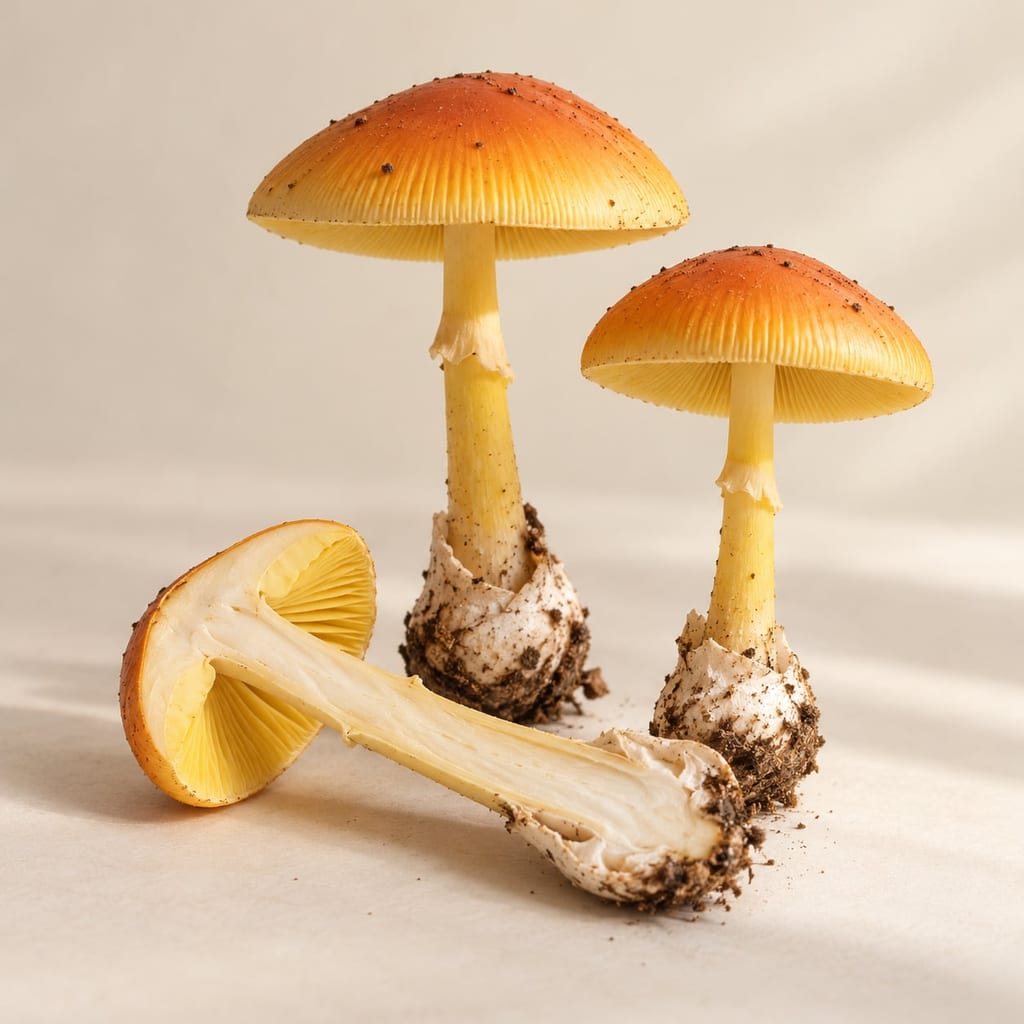
A wild Amanita of China, first reported there and listed as edible in a Yunnan ethnomycology study. The genus contains deadly species, so this page does not support identifying or eating it.
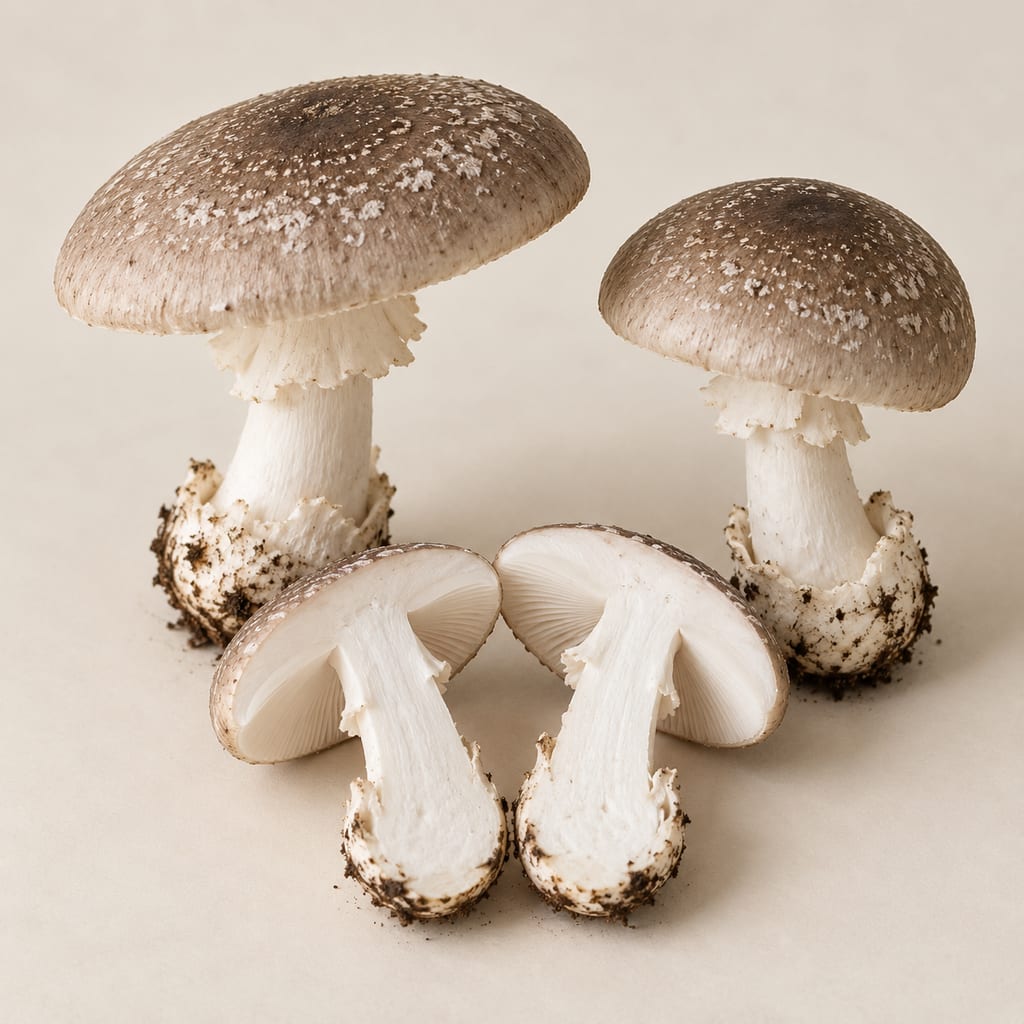
Amanita yuaniana is a Chinese Amanita that a 2023 Yanshan survey and a Yunnan ethnomycology survey list among edible species. No source tests it for safety, and the genus holds the most lethal mushrooms.
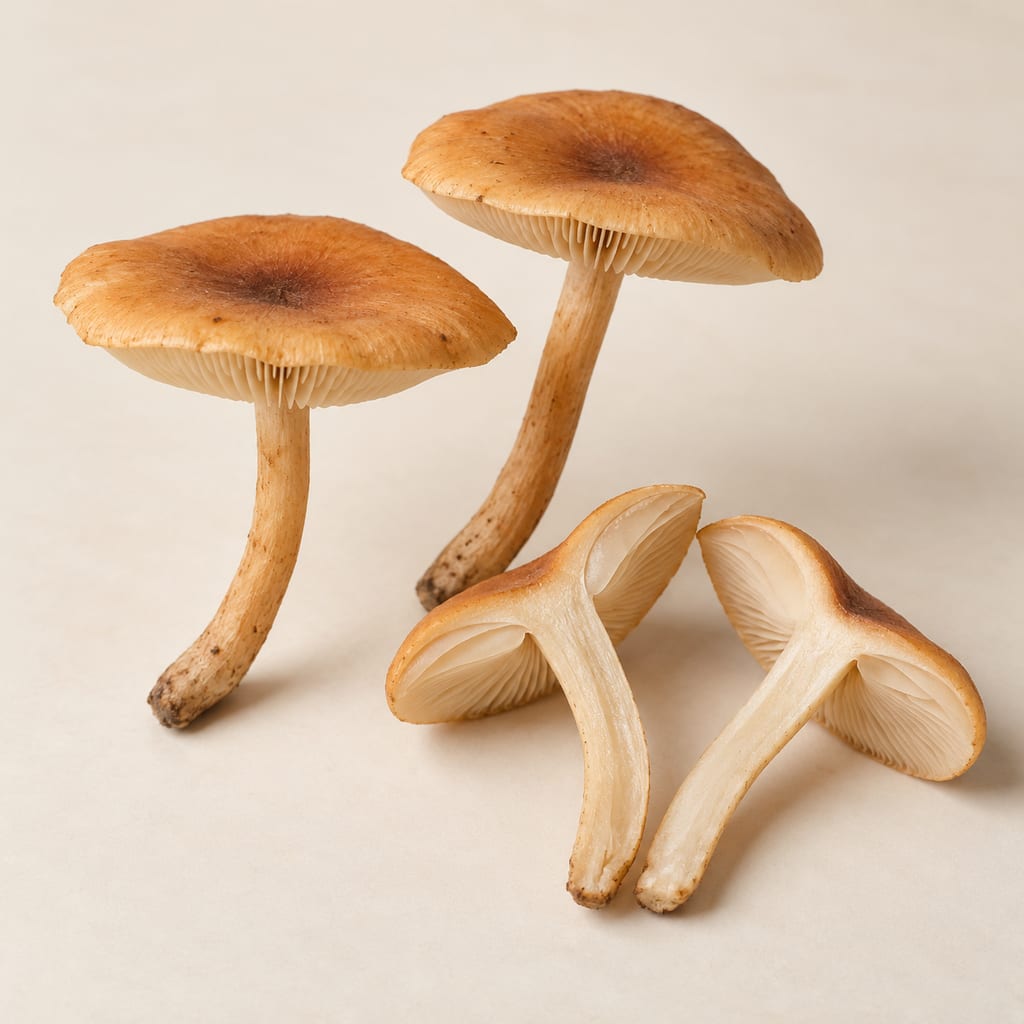
A wood-associated Armillaria recorded in Yunnan and Sichuan, China, and listed as edible in a 2026 Chinese catalogue.
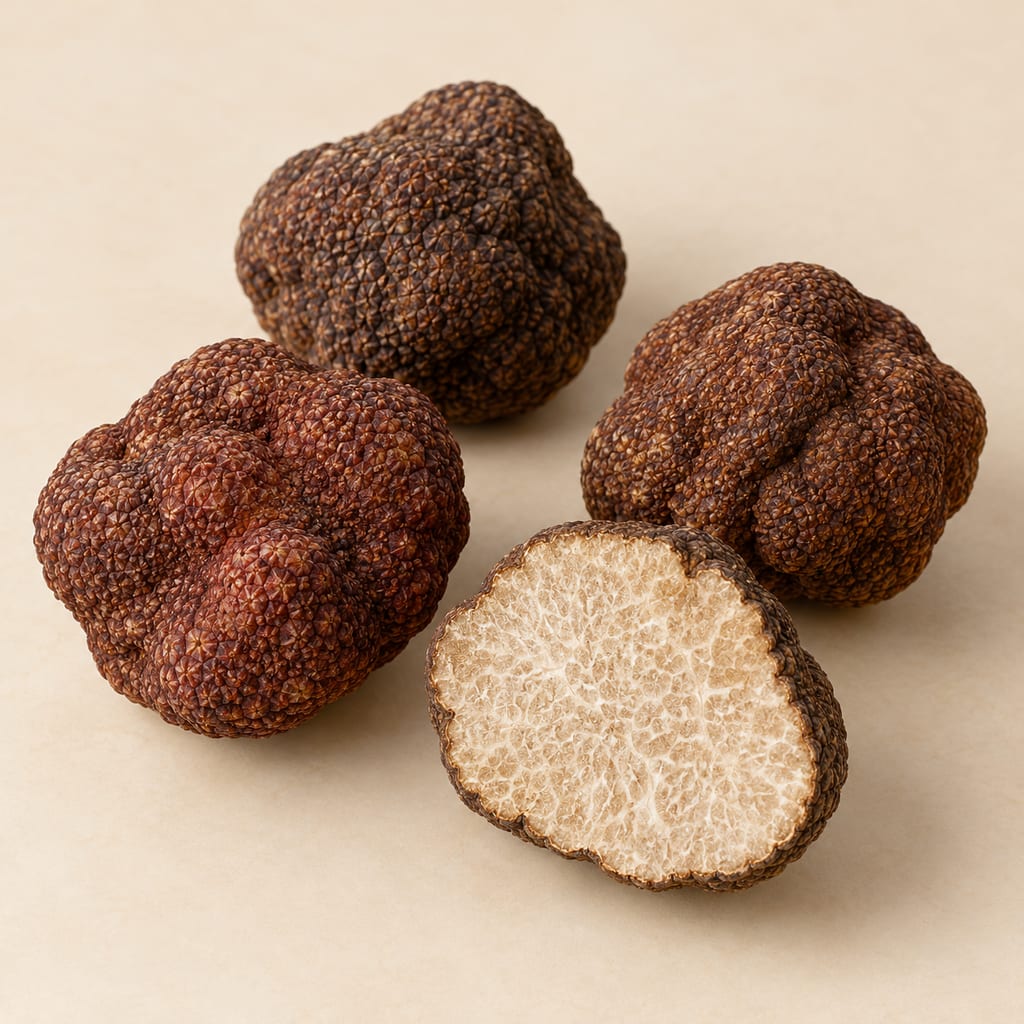
Tuber pseudohimalayense is a wild black truffle from Yunnan, China, listed as edible in a Chinese species catalogue. No independent assessment of its culinary use or safety is available.
No community contributions have been published for this entry yet.
Sign in to contribute. Published comments and photos are free to read.
Springer / BioMed CentralMarket · Food use · Identification
Ethnomycological study on wild mushrooms in Pu'er Prefecture, Southwest Yunnan, China (Journal of Ethnobiology and Ethnomedicine, 2022)Study scope: local names, habitat, fruiting time, identification, price, cooking and preservation of wild edible mushrooms in Pu'er.
Cited in: Identity and name; Habitat and supply; Safety and limits
DOAJMarket
Journal of Ethnobiology and Ethnomedicine (Aug 2022) recordIndex record for the 2022 Pu'er study.
Cited in: Identity and name; Market and food use
MycopediaCaution
Chinesische Marktpilze (Chinese market mushrooms)Classes Gomphus species as suspicious; species-level assignment not confirmed.
Cited in: Safety and limits