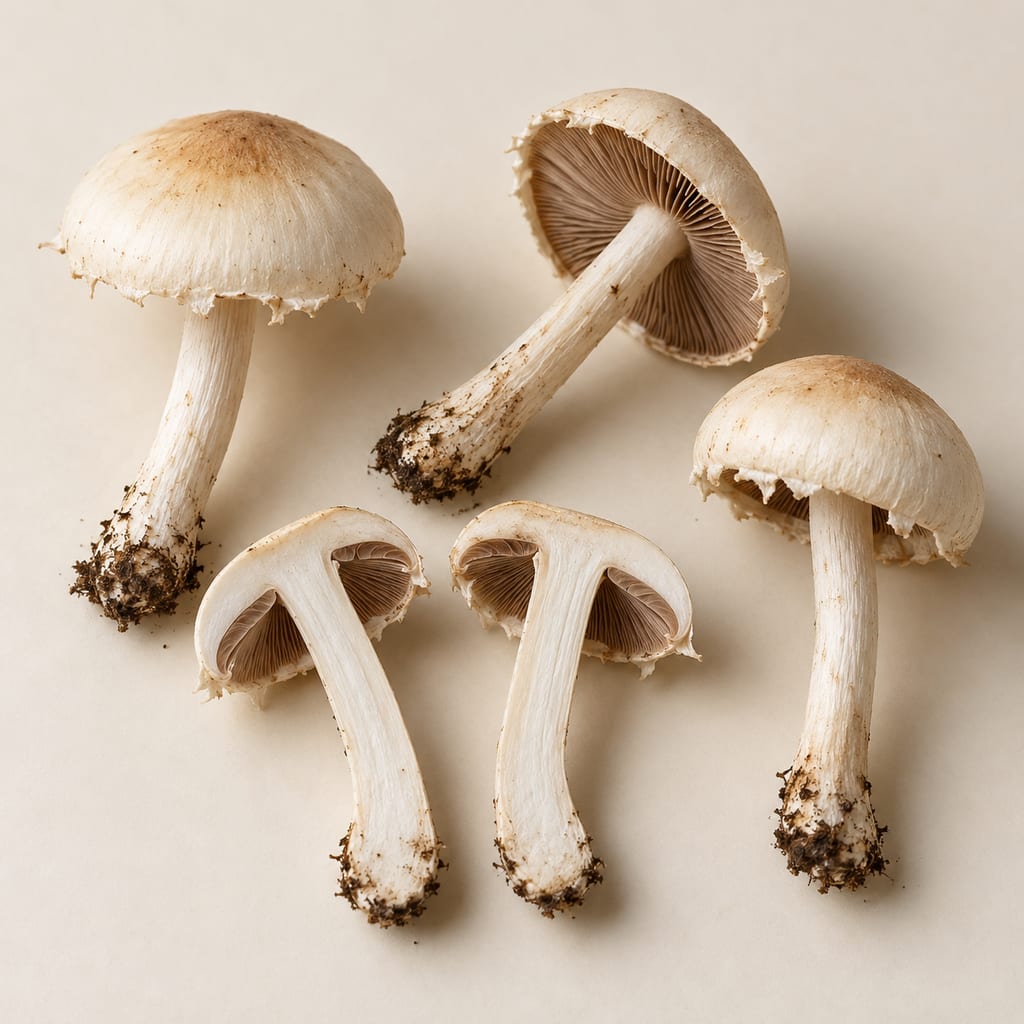
Agrocybe dura
A grassland agaric listed as edible in historical and scientific catalogues for Hong Kong and China. Taxonomic concepts and practical food value vary; the listings do not establish safe identification or culinary practice.
 FermenteaWhere food goes to change
Mushrooms
Paddy straw mushroom, Volvariella volvacea, is a fungus that grows on rice straw and other plant waste. It is cultivated across tropical Asia and sold fresh, canned and dried.
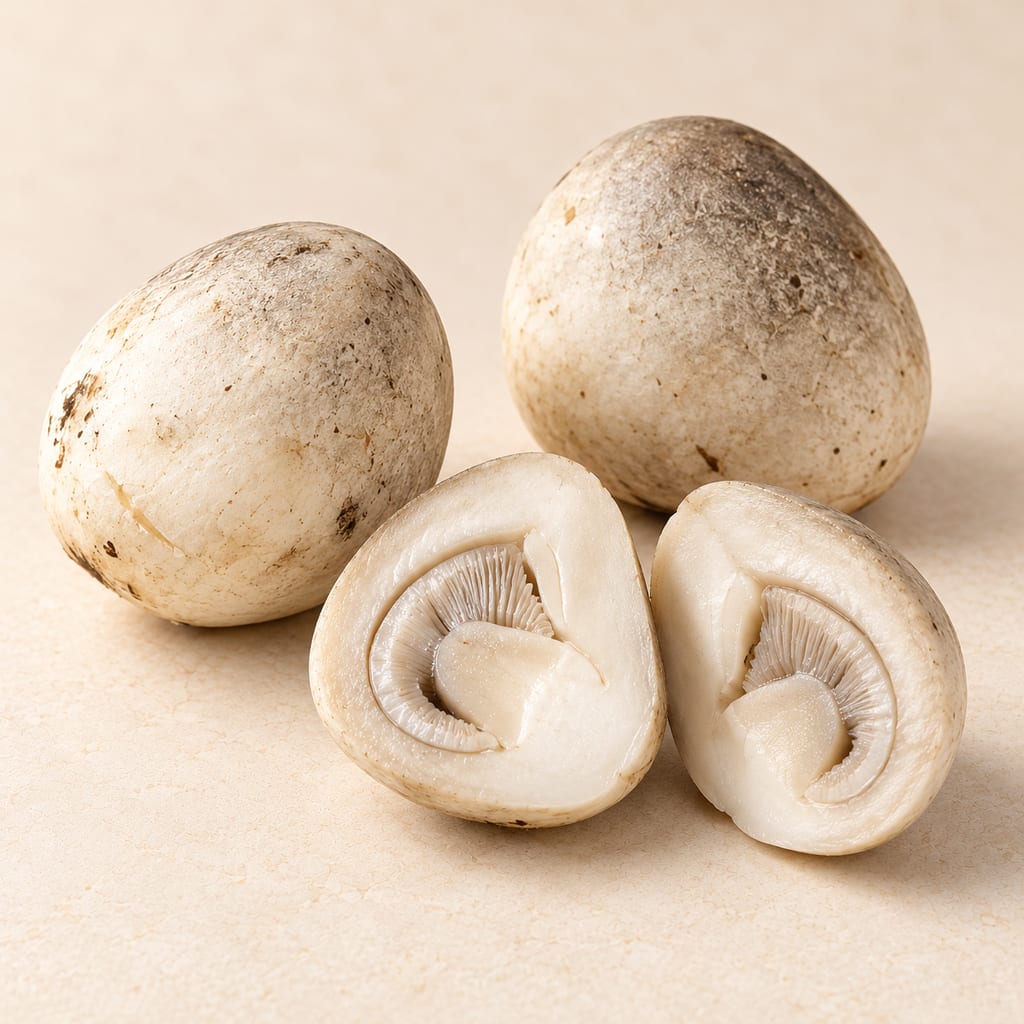
Volvariella volvacea is a gilled fungus that decomposes plant residue. It is known as the paddy straw mushroom, and its scientific synonyms include Volvaria volvacea, Agaricus volvaceus and Volvariopsis volvacea. The catalogue treats Volvariella volvacea as a research name and does not validate it against the current taxonomic authorities, so the synonyms are kept as search aliases.
The fruiting body rises from a grey, egg-shaped sac called the volva. As it matures the volva splits and the cap and stem emerge. The cap is grey to brownish, the gills are free and turn pink as the spores mature, and there is no ring on the stem. The flesh is white and does not change colour when cut.
In the market it is sold as a fresh, canned or dried culinary mushroom. Sources describe its flavour as mild, slightly sweet and nutty, with a soft texture.
The fungus grows naturally on decomposing straw, compost heaps and rotting wood in warm, humid places. Cultivation began on rice straw, the substrate that gave the mushroom its common name. Sources also name sugarcane bagasse and other cellulose waste as substrates.
A change of substrate marked the modern history of the crop. Cotton waste from ginning mills replaced rice straw in Hong Kong around 1971 to 1973. The source that records this describes it as the turning point for yields, which became higher and more stable. Cultivation then became semi-industrialized in Hong Kong, Taiwan, Indonesia, China and Thailand.
Growers in India are usually credited with the first cultivation in 1940 at Coimbatore, with systematic spawn-based production from 1943 onward.
The sources do not agree on when the mushroom was first cultivated. The most common account dates cultivation in China to 1822, when Buddhist monks are said to have grown it at Nanhua Temple, and records a tribute shipment to the Chinese imperial court by 1875. Another source says cultivation probably began before the eighteenth century. A less rigorous source places cultivation in the Tang dynasty, around 700 to 900 AD. None of these dates is confirmed here, and they should be read as the claims of their sources.
Overseas Chinese communities are credited with carrying the cultivation to the Philippines, Malaysia and South Asia in the 1932 to 1935 period. The sources are less precise about the routes and the people involved.
The main hazard named in the sources is the young button stage. Before the cap opens, the fungus looks like a death cap (Amanita phalloides), which is one of the most toxic mushrooms known. The two are separated in the field by the spore print: the straw mushroom has a pink spore print, and the death cap has a white one. Sources report poisonings when people who had moved from Southeast Asia took death caps for the straw mushroom in California and in Australia.
The catalogue gives the warning that immature Amanita can be fatal look-alikes, and that cultivated supply still needs correct identity. A market or cultivation record does not, by itself, establish that a wild specimen is safe to eat. Identification from the appearance of a young fruiting body alone is not reliable, and this page does not offer an identification or a safety verdict for wild material.
The supplied catalogue records the food uses as fresh, canned and dried mushrooms, and the cultivated supply as the main source. Sources say the young egg-stage fruiting body is prized for its texture, and that the mushroom is used in soups, stir-fries, hot pots, curries and noodle dishes, mainly in Chinese and Southeast Asian cooking.
The sources give no tested storage times or temperatures for the fresh mushroom, so none are stated here.
The species records in the catalogue are research labels. The catalogue flags the Chinese listing as a research lead rather than an independent safety assessment. The dates of the first cultivation disagree between sources and have not been checked against primary records. What remains unknown is which cultivated strains are sold under the common name in each market.
Regional food and cultivation record from the supplied catalogue; the individual countries are not separated in this row.
China is the earliest cultivation region named in the sources, but the dates given for it differ between sources (see History).
A grassland agaric listed as edible in historical and scientific catalogues for Hong Kong and China. Taxonomic concepts and practical food value vary; the listings do not establish safe identification or culinary practice.
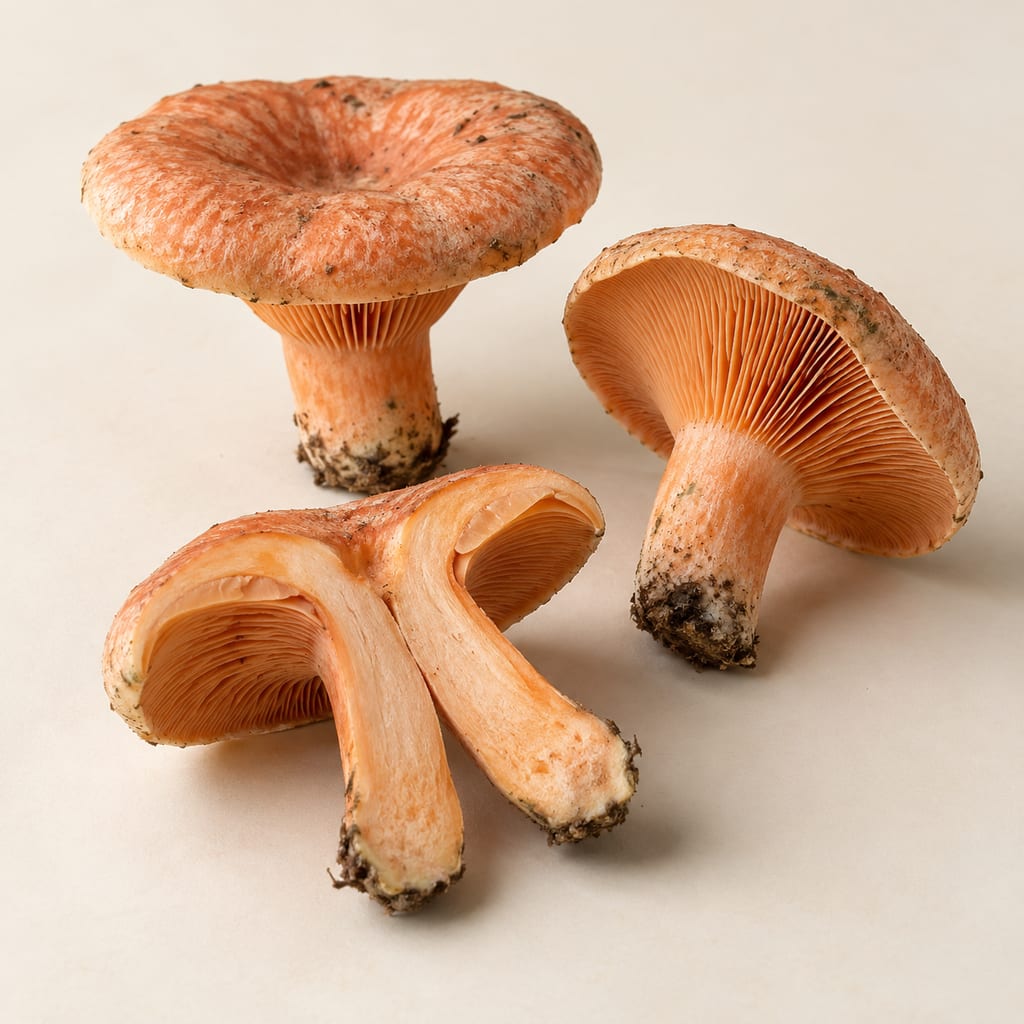
Akahatsu, Lactarius akahatsu, is a wild milkcap of East Asian pine and mixed forests that is sold in Yunnan markets, with its edibility and identity still needing species-level review.
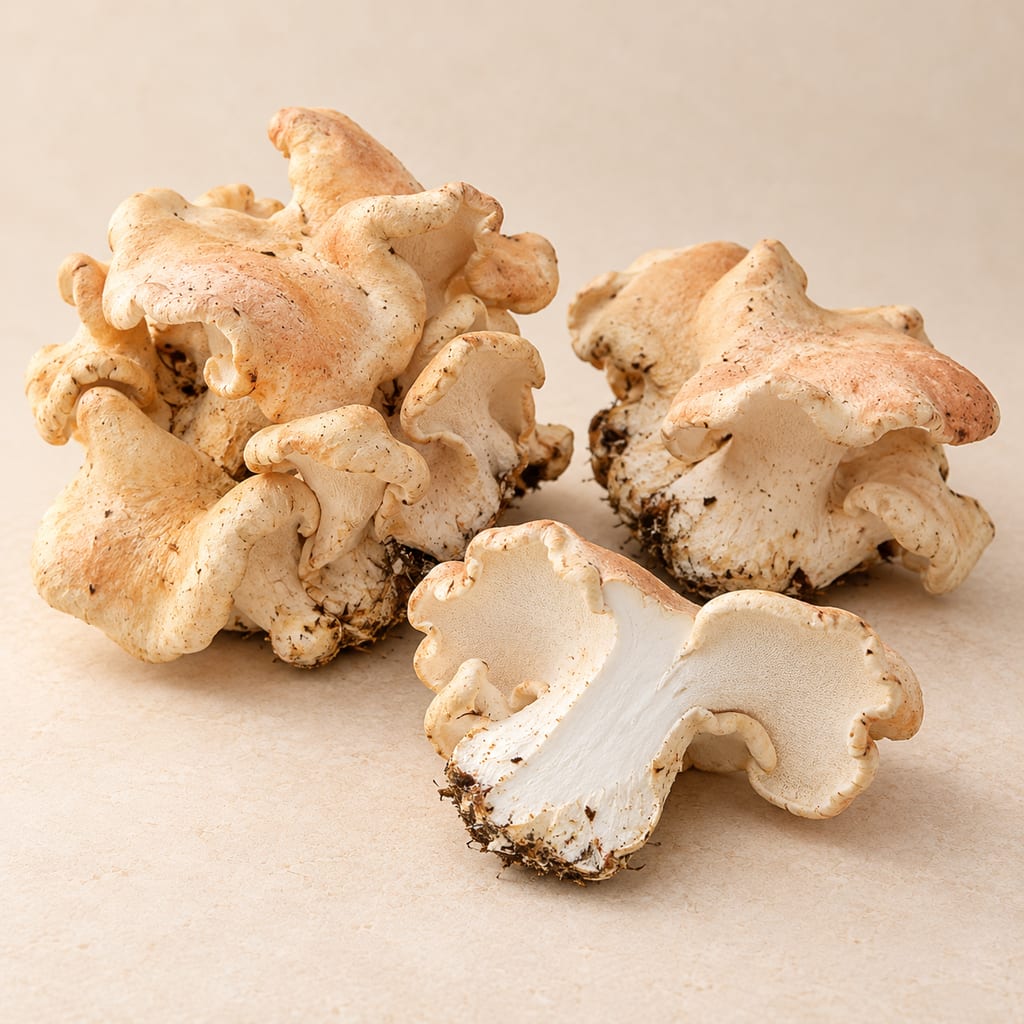
Albatrellus confluens is a ground-growing polypore with fused buff-orange caps. Sources document Chinese market use and regional edibility, but others reject it as too bitter; taxonomy also varies between Albatrellus and Albatrellopsis.
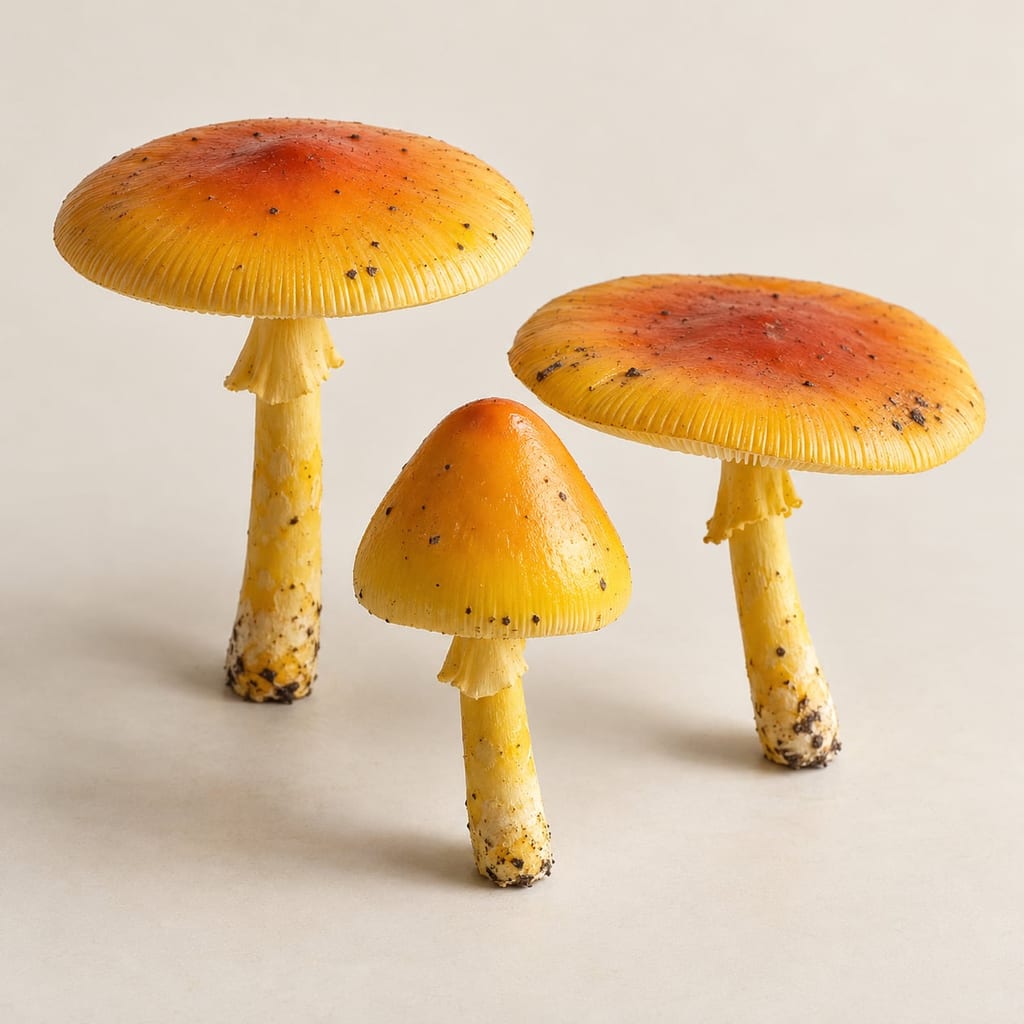
A wild Amanita recorded from China in a 2026 checklist of edible and medicinal fungi. The genus holds deadly species, so this page gives no identification or edibility verdict.
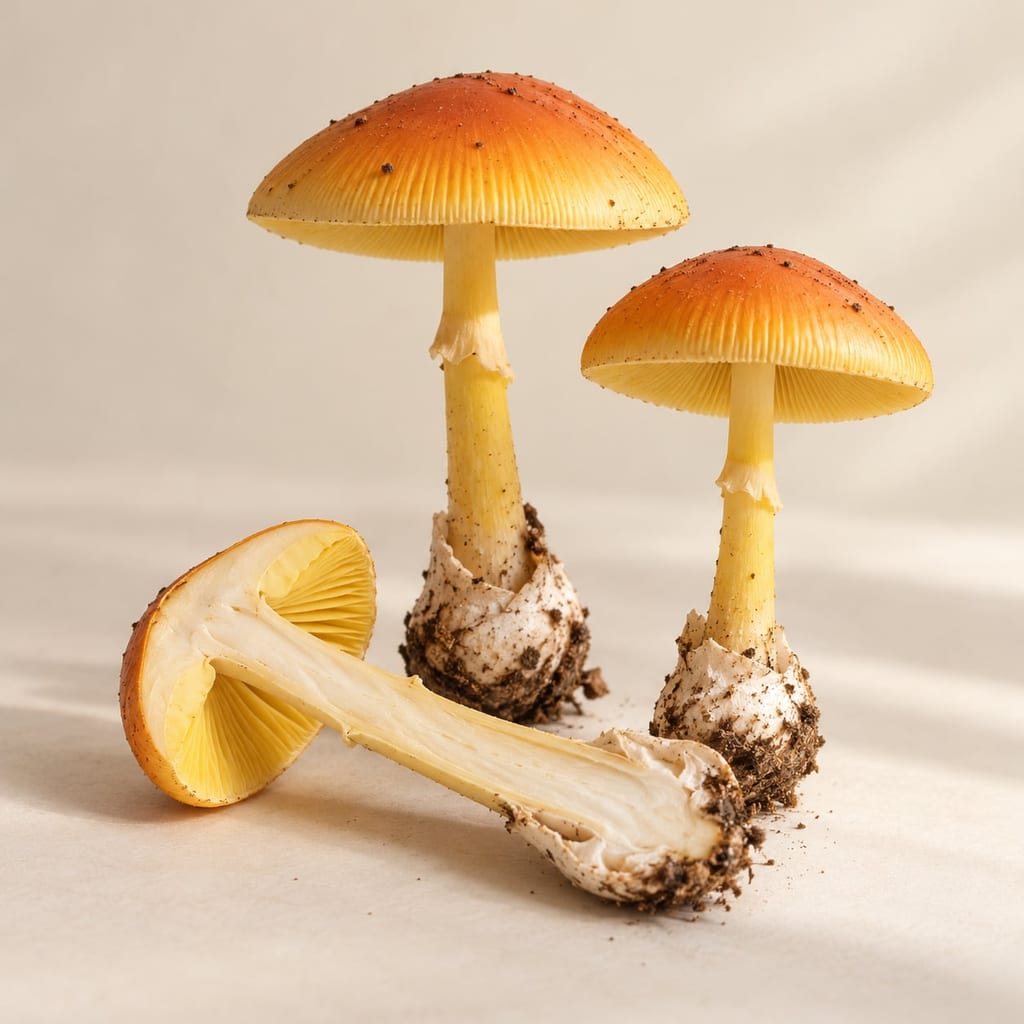
A wild Amanita of China, first reported there and listed as edible in a Yunnan ethnomycology study. The genus contains deadly species, so this page does not support identifying or eating it.
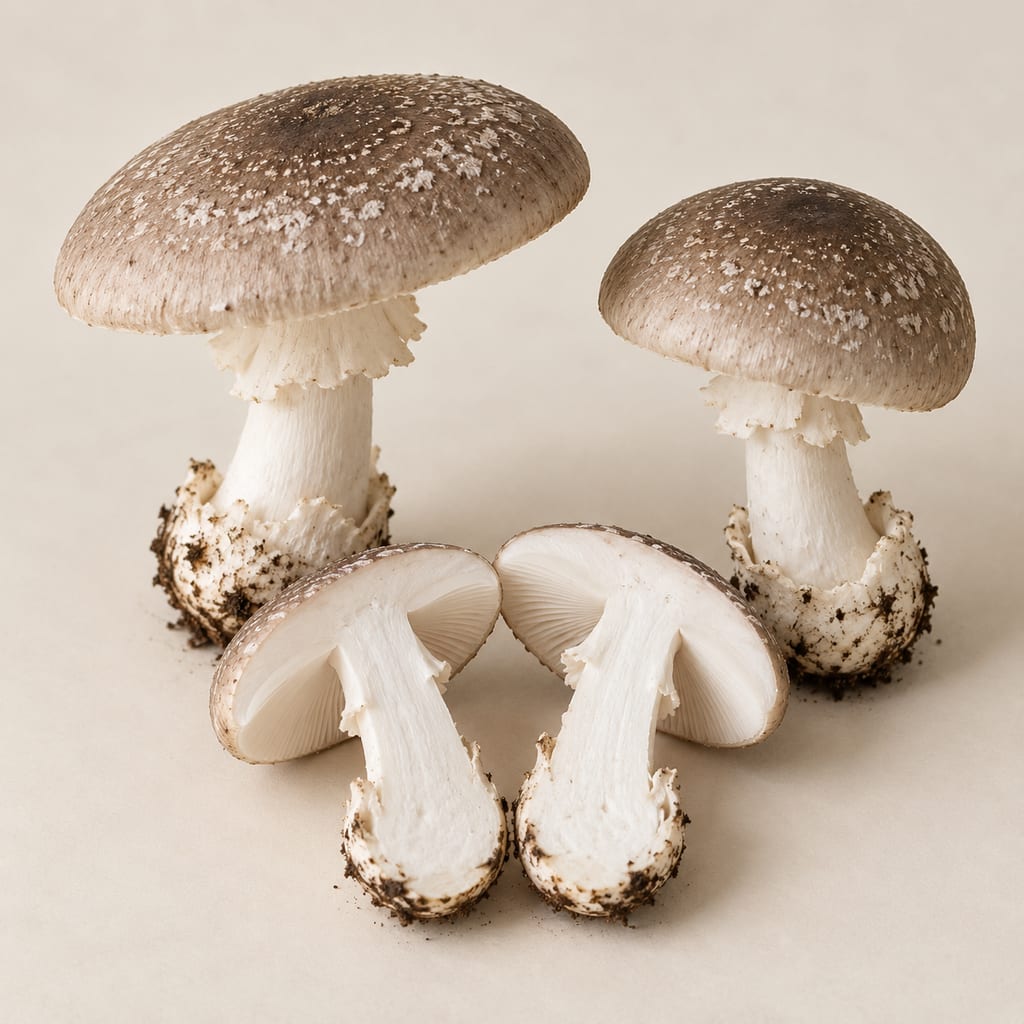
Amanita yuaniana is a Chinese Amanita that a 2023 Yanshan survey and a Yunnan ethnomycology survey list among edible species. No source tests it for safety, and the genus holds the most lethal mushrooms.
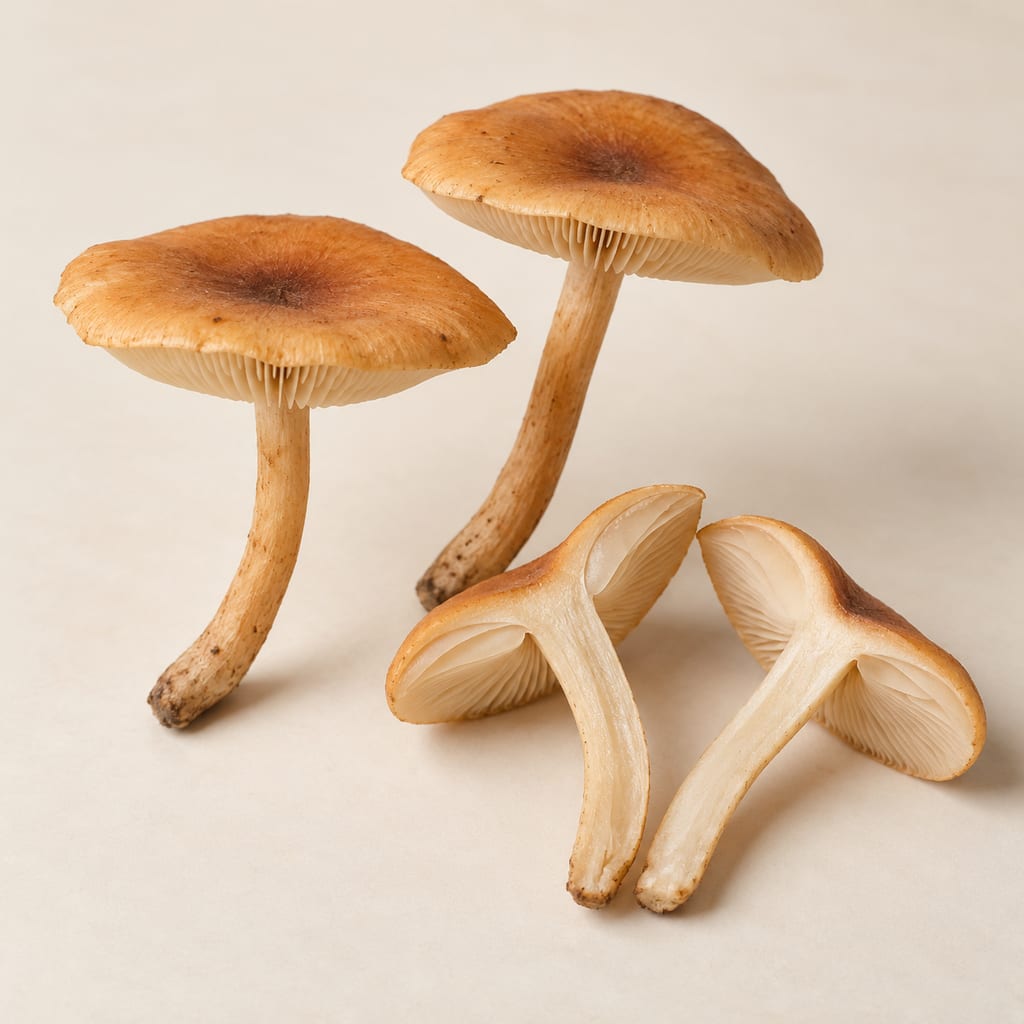
A wood-associated Armillaria recorded in Yunnan and Sichuan, China, and listed as edible in a 2026 Chinese catalogue.
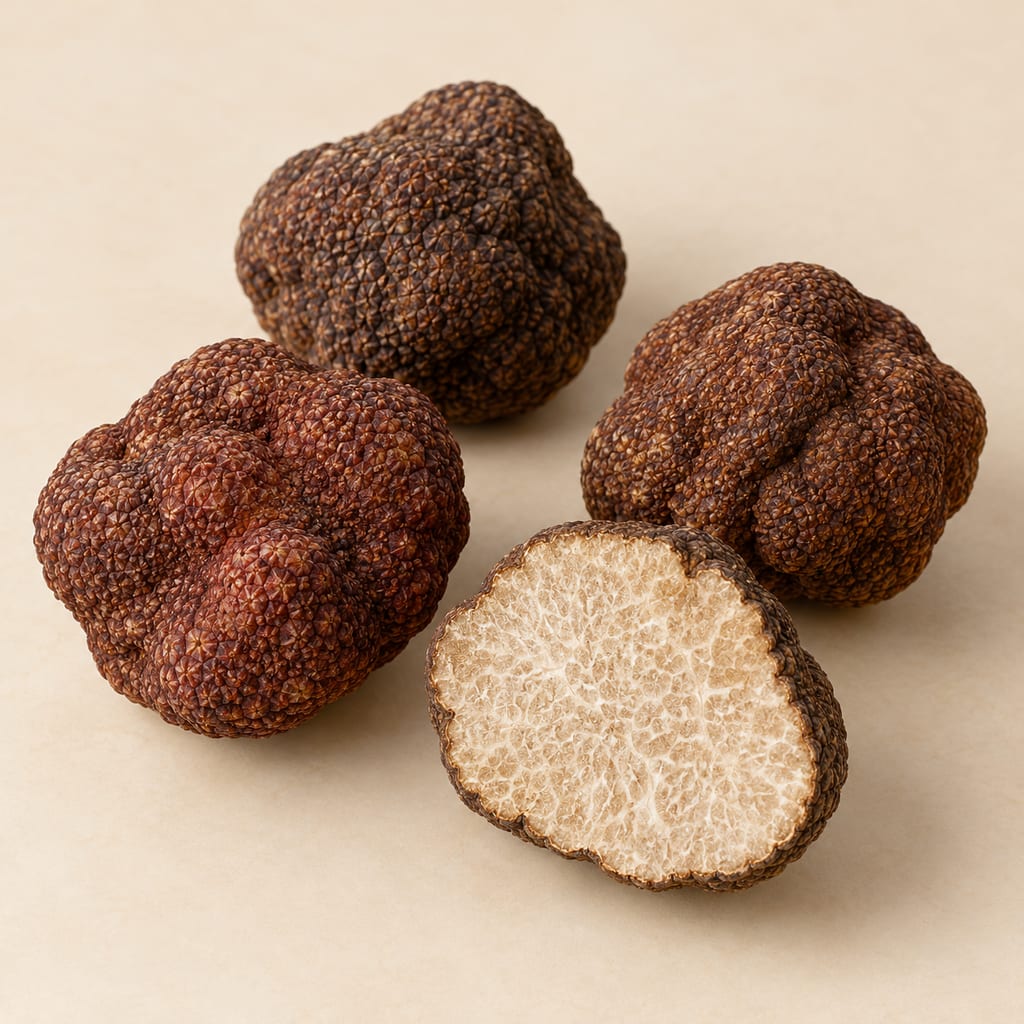
Tuber pseudohimalayense is a wild black truffle from Yunnan, China, listed as edible in a Chinese species catalogue. No independent assessment of its culinary use or safety is available.
No community contributions have been published for this entry yet.
Sign in to contribute. Published comments and photos are free to read.
FungiAtlas.comFood · Cultivation · Identification
Volvariella volvacea (Paddy Straw Mushroom) | Identification & PhotosSynonyms include Volvaria volvacea, Agaricus volvaceus and Volvariopsis volvacea; common names include Paddy Straw Mushroom, Straw Mushroom and Rice Straw Mushroom
Cultivation is done on rice straw, composted straw, cotton waste or sugarcane bagasse
The young egg-stage form is the most valued for cooking and is used in soups, stir-fries and hot pots
Cited in: What the mushroom is; Look-alikes and identification; Use and preparation; Open questions
ResearchGateHistory · Cultivation
Paddy Straw Mushroom (Volvariella volvacea) CultivationRice (paddy) straw was the traditional substrate; cotton waste from ginning mills replaced it in Hong Kong around 1971 to 1973, which the source calls the turning point for yields
Cultivation later became semi-industrialized in Hong Kong, Taiwan, Indonesia, China and Thailand
Cited in: Straw, cotton waste and cultivation; History of cultivation
VikaspediaHistory · Cultivation
Cultivation Technology of Paddy Straw Mushroom (Volvariella volvacea)Cultivation in India is usually dated to 1940 at Coimbatore, with systematic spawn-based cultivation from 1943
Cited in: Straw, cotton waste and cultivation
Zombie MycologyIdentification · Safety
Paddy Straw (Volvariella volvacea)Young button-stage straw mushrooms can resemble death caps (Amanita phalloides); a pink spore print separates the straw mushroom from the white-spored death cap
Cited in: Look-alikes and identification