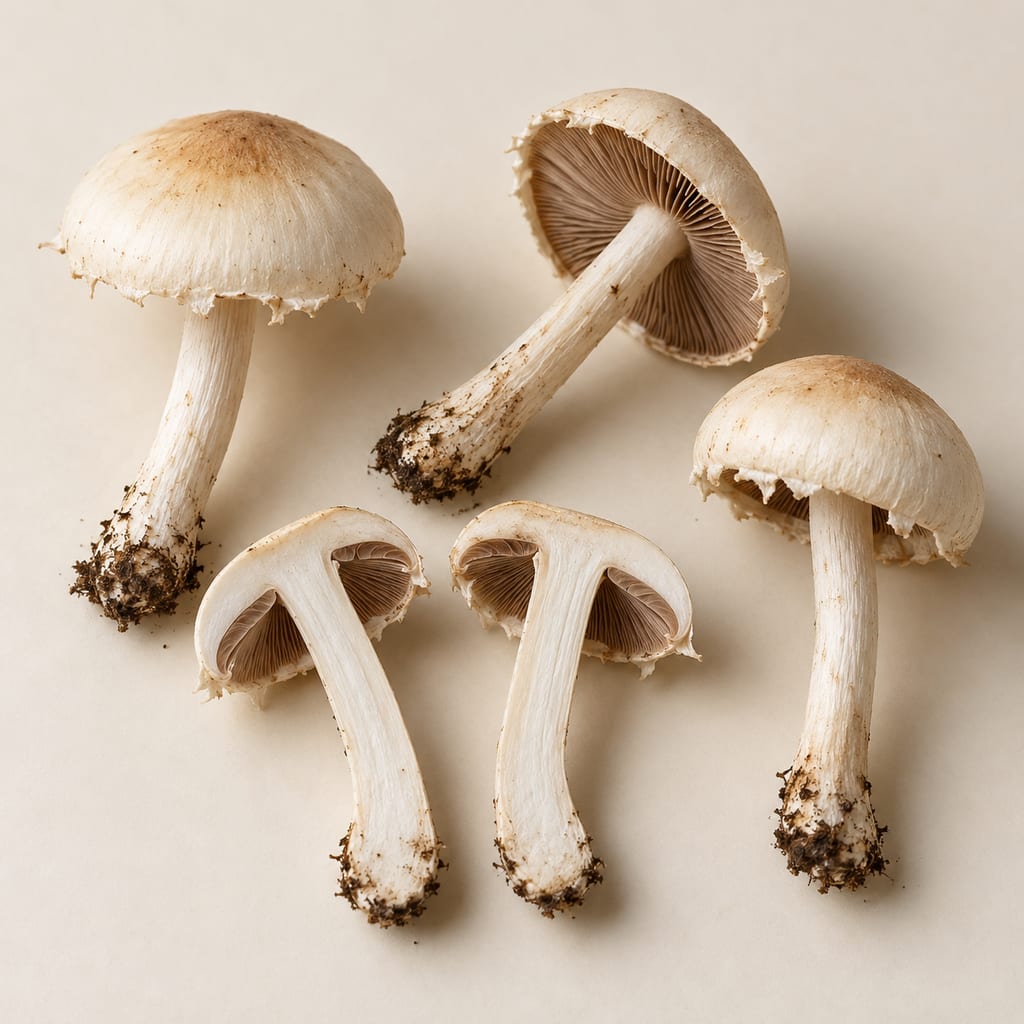
Agrocybe dura
A grassland agaric listed as edible in historical and scientific catalogues for Hong Kong and China. Taxonomic concepts and practical food value vary; the listings do not establish safe identification or culinary practice.
 FermenteaWhere food goes to change
Mushrooms
Phallus echinovolvatus is a bamboo fungus, called zhusun in China, found in bamboo forest litter south of the Yangtze River. It is sold dried, and Chinese products labelled P. indusiatus can belong to several species.
Phallus echinovolvatus is a stinkhorn-family fungus. It was discovered in Hunan Province, China, in 1988 and first described as Dictyophora echinovolvata. In 1996 Kreisel placed Dictyophora in the genus Phallus as a section, and molecular studies since then have supported the change, so the species is now named Phallus echinovolvatus. Some studies still use the name Dictyophora, and the catalogue records the synonyms Dictyophora echinovolvata and Dictyophora indusiata as search aliases.
The common names include bamboo fungus and zhusun, and the English name spiny-cup bamboo fungus is used in some sources. The fungus grows in the decayed litter of bamboo forest, where it is a saprotroph on plant litter and soil. The catalogue lists its cultivation as regional.
Phallus echinovolvatus is one of several edible bamboo fungi, alongside P. indusiatus, P. duplicatus and P. rubrovolvatus. The species is separated from P. indusiatus by morphology: the shape of the cap and the echinulate surface of the volva differ. A mitogenome study reports that the mitochondrial genome of P. echinovolvatus is about 50 kb, while that of P. indusiatus is about 89 kb.
The catalogue notes that Chinese products often labelled P. indusiatus belong to several distinct species. A dried product sold under that name therefore does not show which species it came from. The strain and the product should be identified before the product is linked to this species.
The catalogue records P. echinovolvatus as a commercial bamboo-fungus food, identified in market-product research, and as a product of the international dried food trade. The genome paper describes it as widely consumed as a functional food in China, Japan, Germany and North America. The sources give that statement as a general one, so it is not a regional or market record in itself.
No preparation method, storage time or drying procedure is established in the sources used here, and none is stated.
A chromosome-level genome assembly of a dikaryotic strain of the species has been published. It is about 36.54 Mb in size, and it places the species close to Clathrus columnatus within the core Phallales. Few genetic studies of the species had been published before, compared with other edible mushrooms such as Lentinula edodes and Agaricus bisporus.
The catalogue records the species under food, market and specialist evidence, with its review labels kept as supplied. Those labels do not establish identity, edibility or a safe preparation. Inclusion in the catalogue is not an identification and not an edibility conclusion for wild material.
Because the same common name covers several Phallus species, a dried product cannot be assigned to P. echinovolvatus from its label alone. Identification needs the specimen, the strain and the product origin, checked by a specialist. This page gives no safety verdict for any product.
Which products sold as bamboo fungus are this species, and which are P. indusiatus, P. duplicatus or P. rubrovolvatus, is not settled by the sources used here. The catalogue cites a Chinese journal article and a Mycosphere DOI that were not read in this recovery, so no fact is taken from them.
Distribution region named by the genome paper; the food use is recorded for China in general, not for this region alone.
Food use and market record from the supplied catalogue; the product identity needs checking per strain and market.
A grassland agaric listed as edible in historical and scientific catalogues for Hong Kong and China. Taxonomic concepts and practical food value vary; the listings do not establish safe identification or culinary practice.
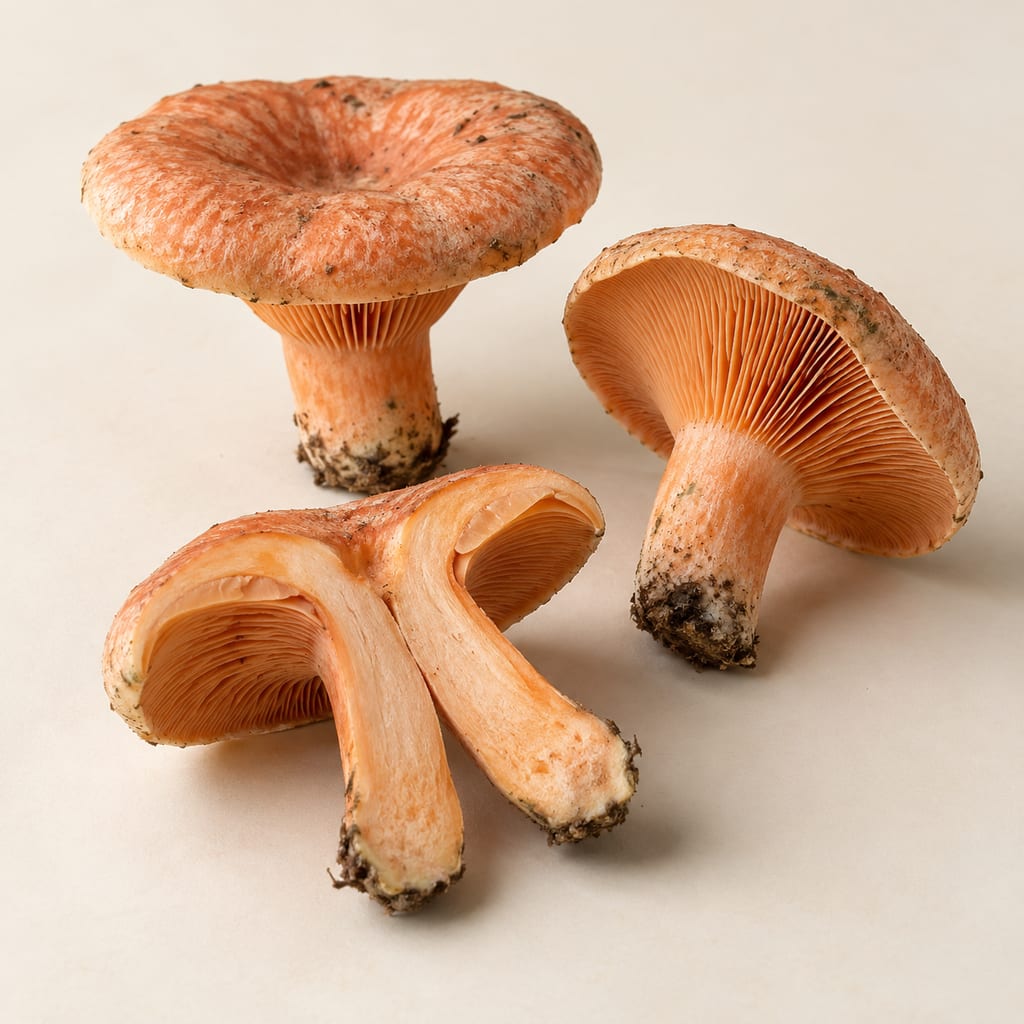
Akahatsu, Lactarius akahatsu, is a wild milkcap of East Asian pine and mixed forests that is sold in Yunnan markets, with its edibility and identity still needing species-level review.
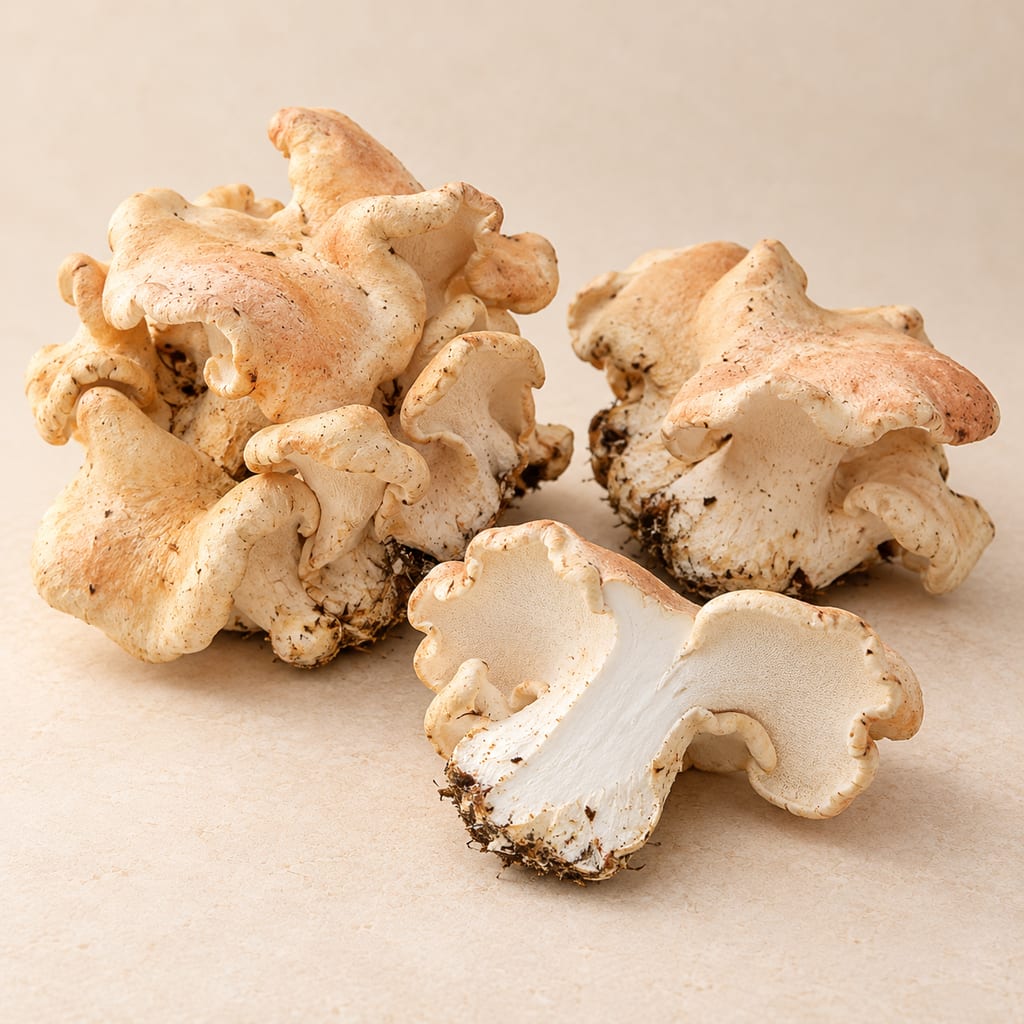
Albatrellus confluens is a ground-growing polypore with fused buff-orange caps. Sources document Chinese market use and regional edibility, but others reject it as too bitter; taxonomy also varies between Albatrellus and Albatrellopsis.
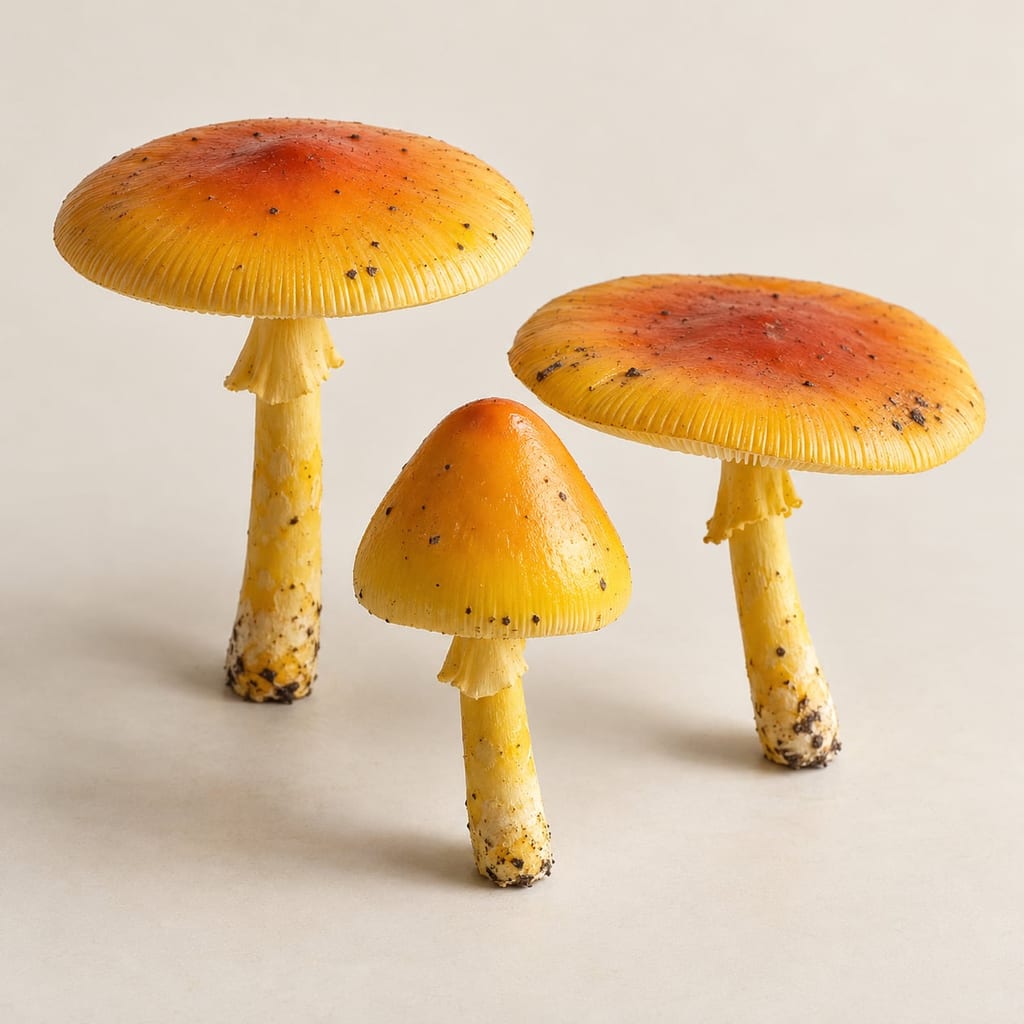
A wild Amanita recorded from China in a 2026 checklist of edible and medicinal fungi. The genus holds deadly species, so this page gives no identification or edibility verdict.
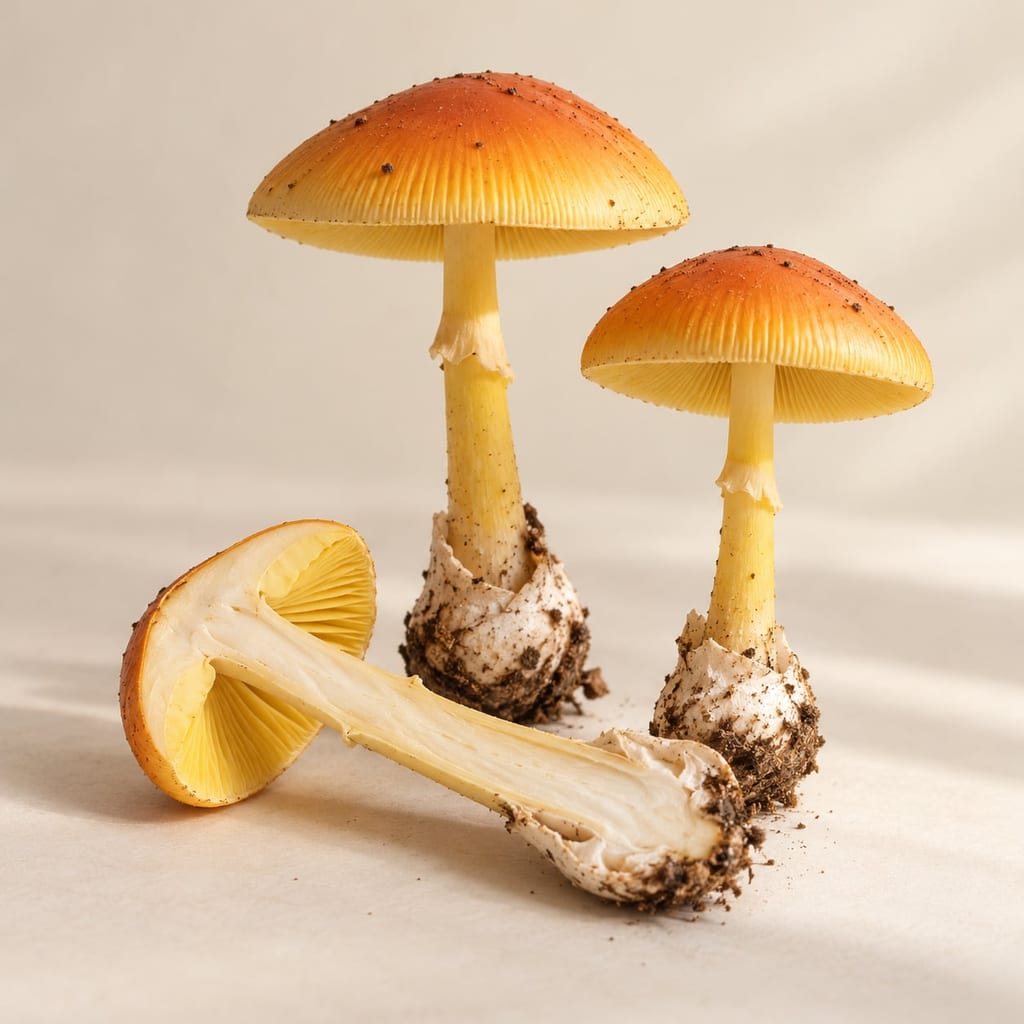
A wild Amanita of China, first reported there and listed as edible in a Yunnan ethnomycology study. The genus contains deadly species, so this page does not support identifying or eating it.
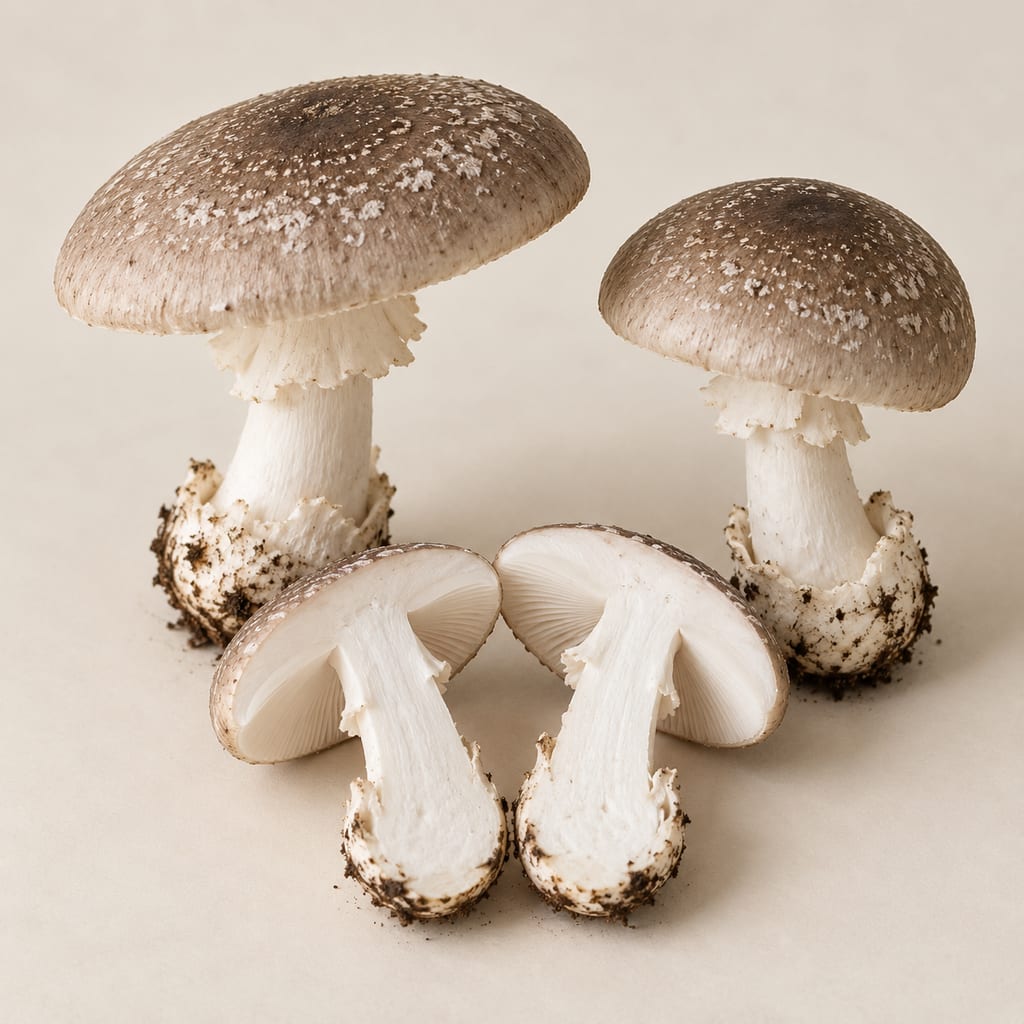
Amanita yuaniana is a Chinese Amanita that a 2023 Yanshan survey and a Yunnan ethnomycology survey list among edible species. No source tests it for safety, and the genus holds the most lethal mushrooms.
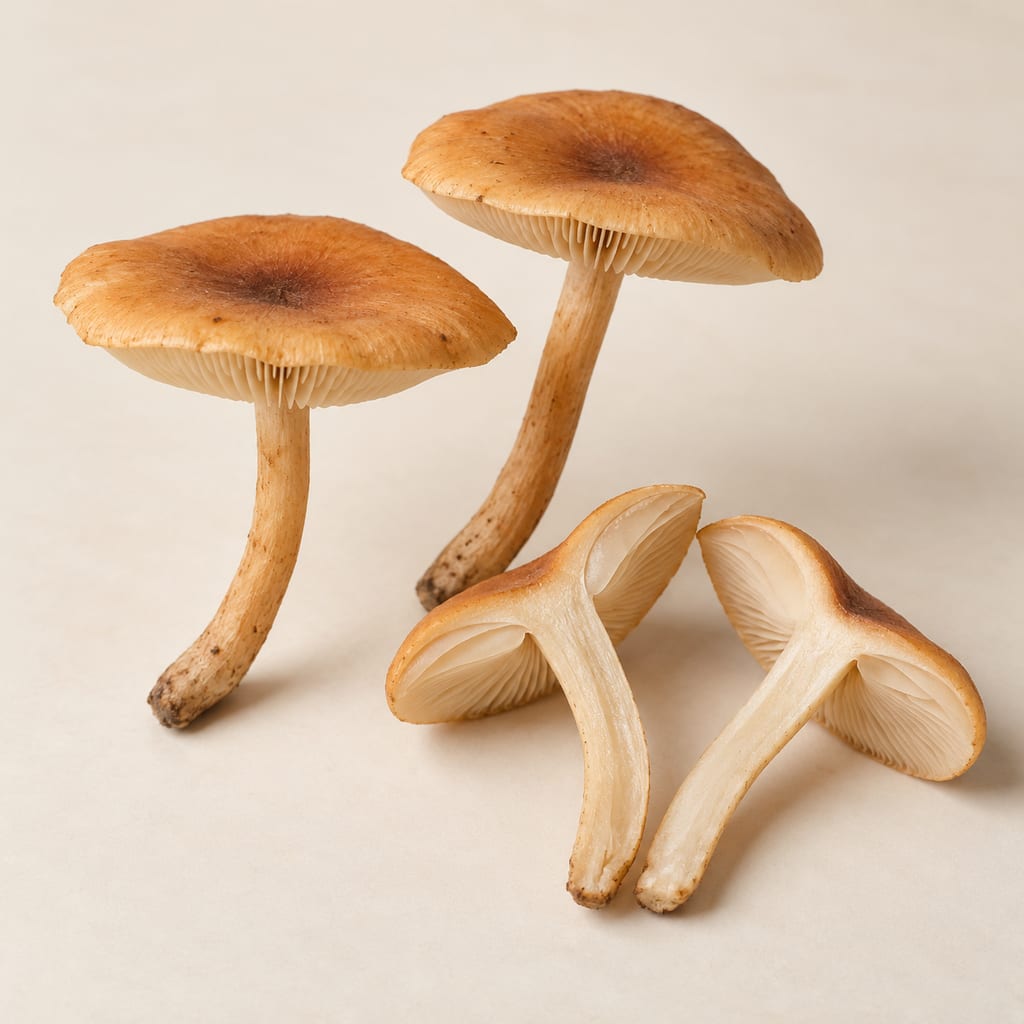
A wood-associated Armillaria recorded in Yunnan and Sichuan, China, and listed as edible in a 2026 Chinese catalogue.
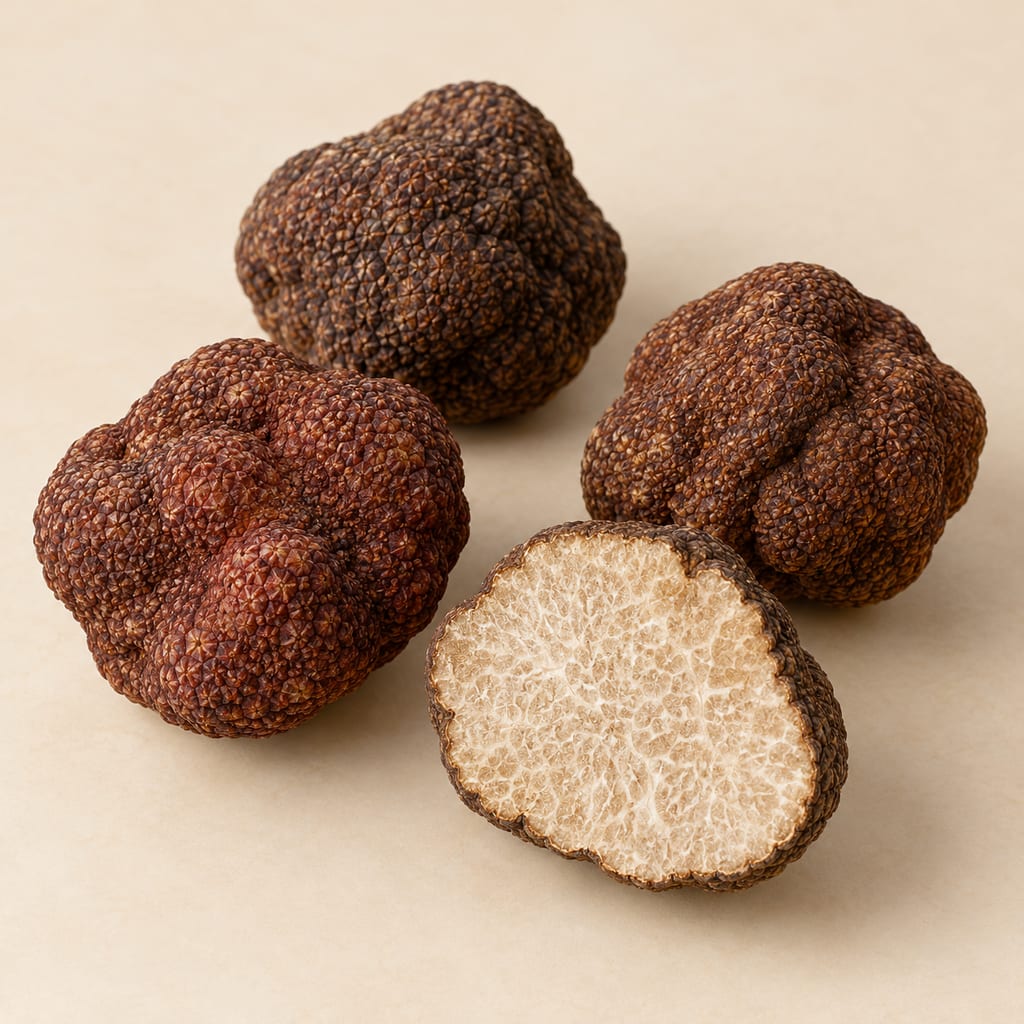
Tuber pseudohimalayense is a wild black truffle from Yunnan, China, listed as edible in a Chinese species catalogue. No independent assessment of its culinary use or safety is available.
No community contributions have been published for this entry yet.
Sign in to contribute. Published comments and photos are free to read.
Journal of Fungi (via PubMed Central)Identification · Food · Background
Chromosome-Level Genome Assembly and Annotation of the Highly Heterozygous Phallus echinovolvatus Provide New Insights into Its GeneticsOriginally discovered in Hunan Province, China, in 1988 and named Dictyophora echinovolvata; widely distributed in regions south of the Yangtze River in China and in Southeast Asia
The genus Dictyophora was placed in Phallus as a section by Kreisel in 1996, and molecular studies support the change, so the species is now named Phallus echinovolvatus
The paper states the species is widely consumed as a functional food in China, Japan, Germany and North America
The genome is about 36.54 Mb in size, as given in the paper's annotation summary
Cited in: What the mushroom is; Food and trade; Genome and research; Identification and safety; Open questions
PubMed CentralIdentification
Mitogenomes of Two Phallus Mushroom Species Reveal Gene Rearrangement, Intron Dynamics, and Basidiomycete PhylogenyThe mitogenome of P. echinovolvatus is about 50 kb, while that of P. indusiatus is about 89 kb, as the search summary of this paper reports
Cited in: Relation to Phallus indusiatus
ResearchGateIdentification
New species of Phallus from a subtropical forest in Xishuangbanna, ChinaCompares P. echinovolvatus with P. indusiatus; the cap shape and the echinulate surface of the volva separate them
Cited in: What the mushroom is; Relation to Phallus indusiatus; Identification and safety